Fertilizer Particle Size Control: How a Rotary Screener Produces Uniform Fertilizer Pellets
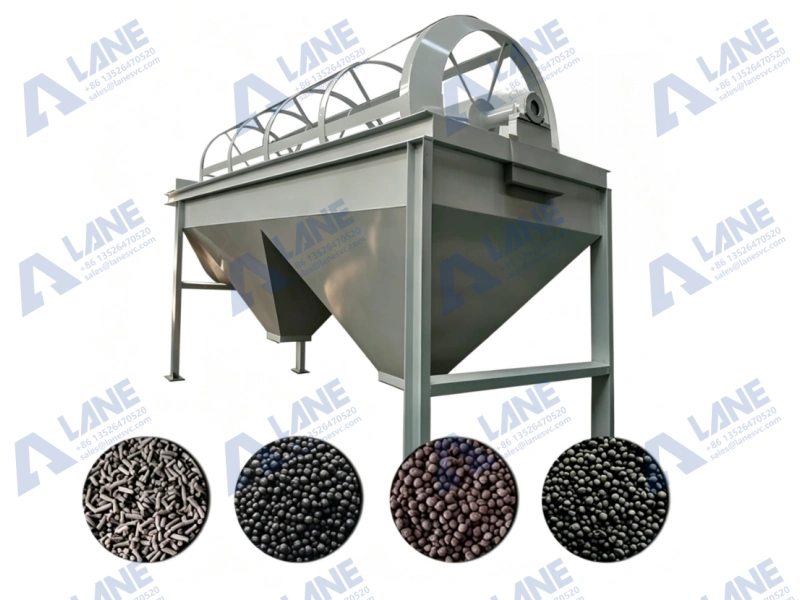
Why Strict Fertilizer Particle Size Control Is Indispensable for Compound Fertilizer
Farmland fertilization requires steady nutrient release. Large fertilizer pellets dissolve slowly while fine powder melts rapidly in soil water.
Poor fertilizer particle size control leads to unbalanced absorption. Crops either get excessive instant nutrients or lack long-term supply.
This irregular release reduces overall fertilizer utilization and cuts crop yield stability.
Fine powder has larger contact area with air and moisture. Unremoved powder caused by poor fertilizer particle size control easily absorbs humidity during storage and transportation.
Micro agglomeration gradually develops into hard caking. Caked fertilizer cannot spread evenly during mechanical sowing.
It increases farmer complaints and reduces repeat order rates for fertilizer manufacturers.
International fertilizer trade has clear standards for pellet diameter range. Unstable fertilizer particle size control makes products fail grade detection.
Mixed oversized pellets and floating powder make product appearance rough and unqualified.
Suppliers with poor pellet uniformity can only sell products at discounted prices in competitive markets.
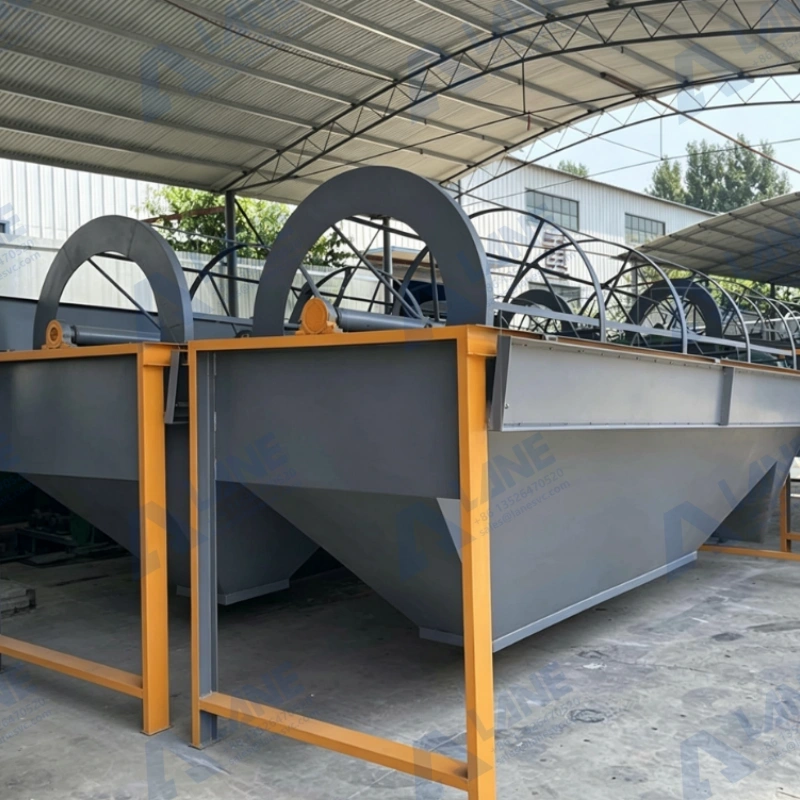
Basic Structure of LANE Rotary Screener for Fertilizer Particle Size Control
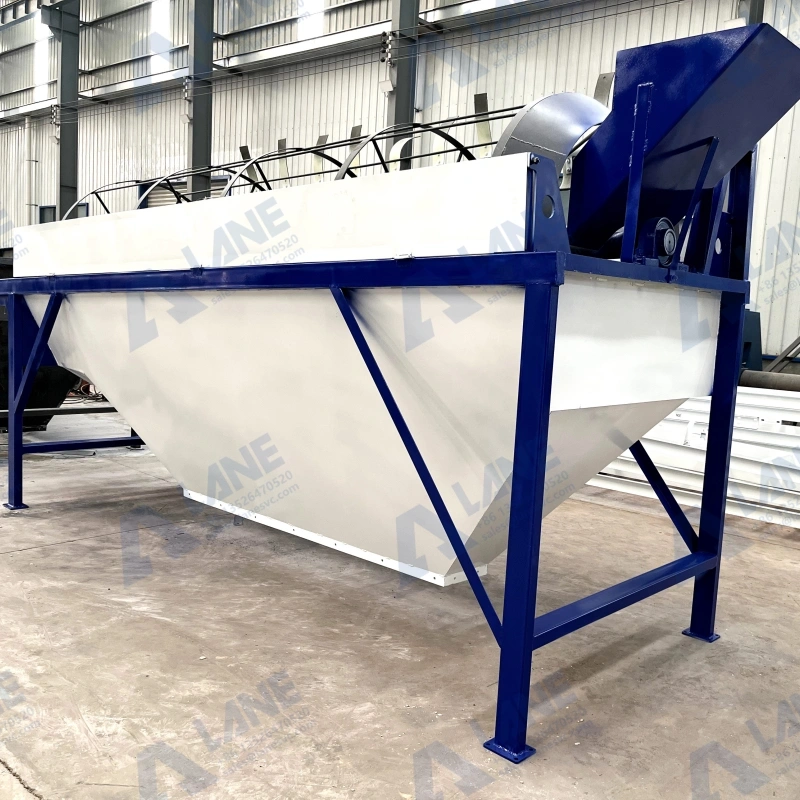
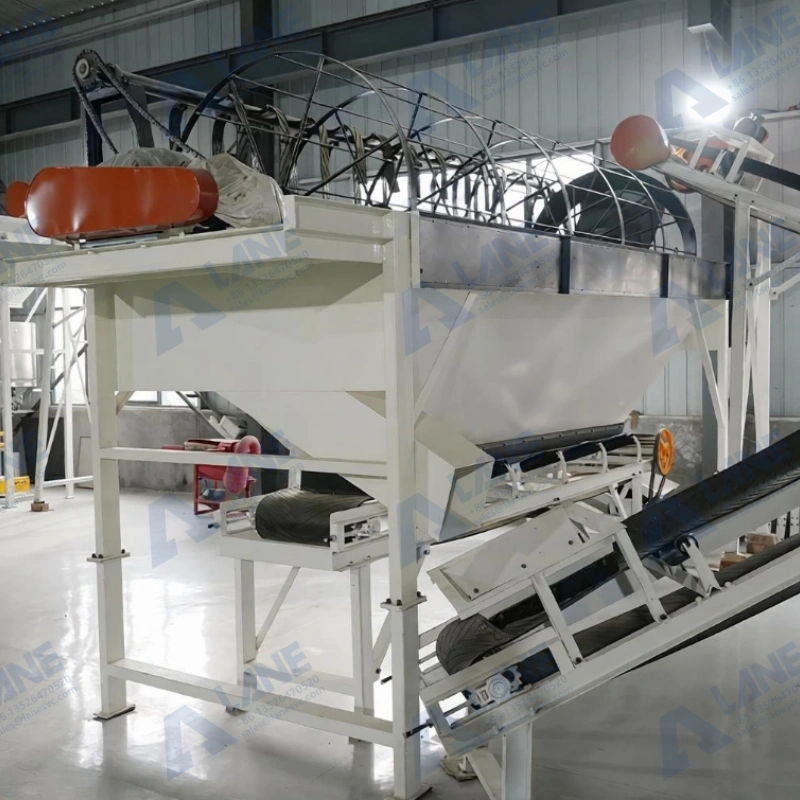
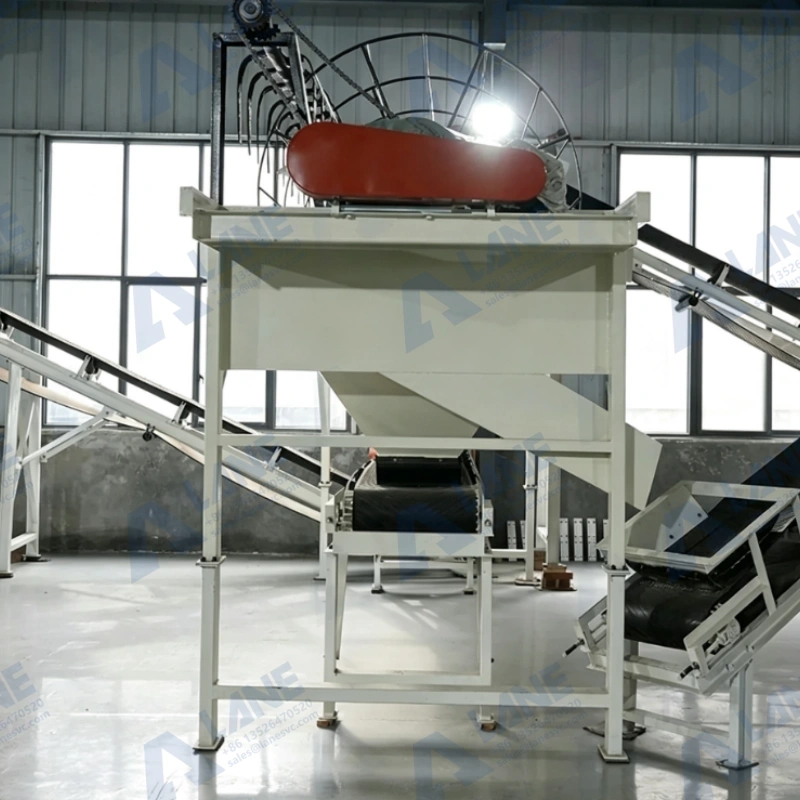
A professional rotary screener is specially structured for compound fertilizer grading. Every component is designed for continuous material separation. Complete machine configuration guarantees stable fertilizer particle size control in long-term mass production.
Our rotary screener adopts integrated welded frame structure. The whole machine runs stably without shaking during high-volume screening.
The rotating drum is the core screening unit. The feeding funnel ensures even material input to avoid instantaneous overflow.
Low-noise transmission parts support 24-hour continuous operation for fertilizer production lines.
Different fertilizer types require different pellet diameter standards. Fixed screen mesh cannot adapt to multi-product production.
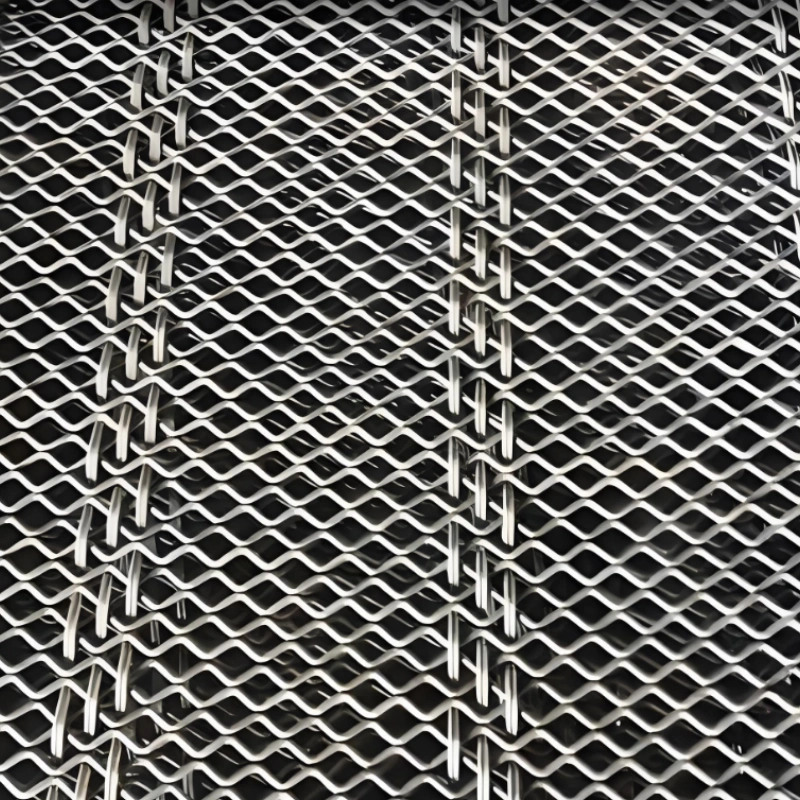
Our combined screen mesh structure supports quick replacement. Factories can switch mesh aperture to adjust fertilizer particle size control standards freely.
This design helps manufacturers produce multiple fertilizer specifications on one single screening device.
Fertilizer fine powder easily sticks to screen holes during screening. Traditional screeners require manual cleaning and cause frequent shutdowns.
Built-in plate-type cleaning device automatically wipes screen holes during drum rotation. It keeps mesh unblocked all the time.
Stable screen permeability maintains consistent fertilizer particle size control without production pause.
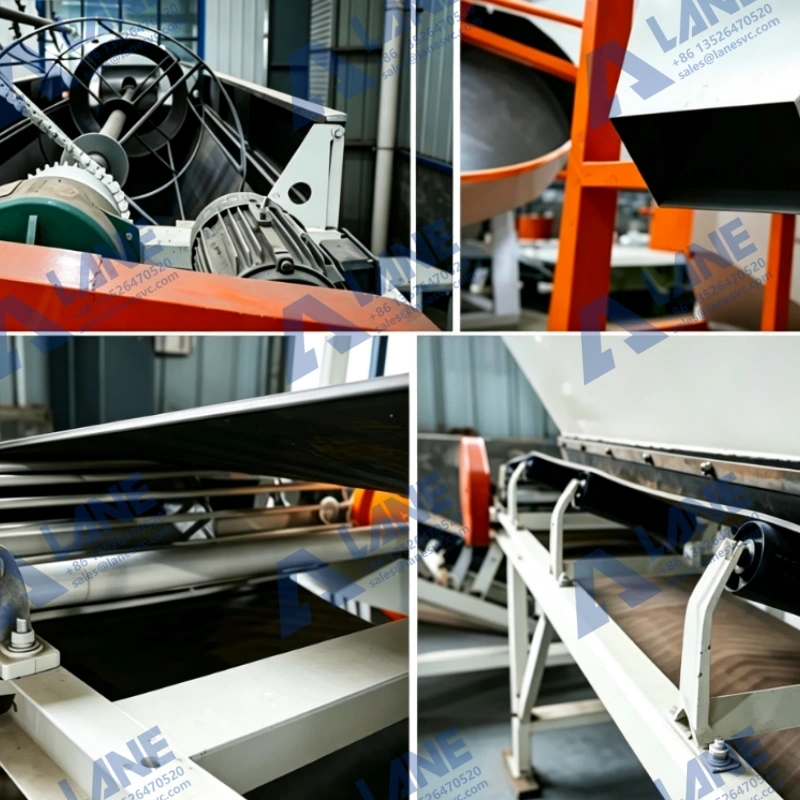
Working Principle of Rotary Screener in Fertilizer Particle Size Control
Different from ordinary vibrating screening equipment, rotary screener adopts inclined rotary drum screening. It realizes progressive material classification through rotating separation and gravity flow, which is more suitable for fertilizer pellet grading.
The drum is installed with a reasonable horizontal inclination angle. Materials do not stay or accumulate inside the drum.
Slow and steady rotating propulsion ensures every pellet gets fully screened. It lays a foundation for accurate fertilizer particle size control.
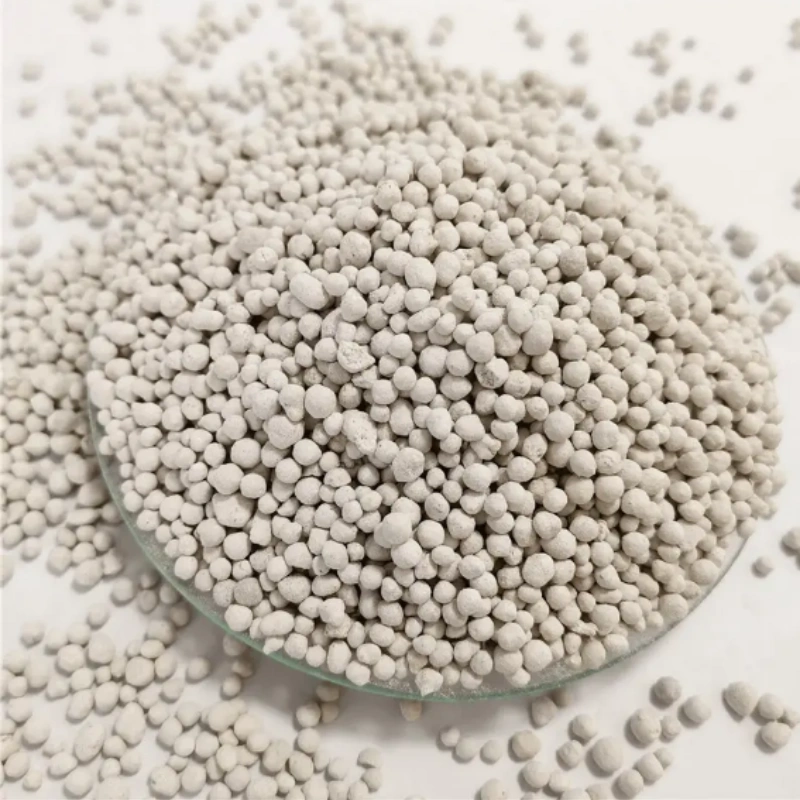
Standard pellets and qualified fine powder fall through the screen mesh under gravity. They enter the finished product conveyor for packaging process.
This step removes unqualified oversized particles effectively and purifies finished pellet grading.
Oversized particles, agglomerated blocks and raw material residues move forward along the inclined drum.
These unqualified materials are discharged from the tail outlet and sent back to the crushing system.
Closed-loop processing reduces material waste and improves overall fertilizer particle size control stability.
| Model | Capacity(tph) | Drum Diameter(m) | Drum Length(m) | Tilt Angle(°) | Rotation Speed(r/min) | Power(kw) |
|---|---|---|---|---|---|---|
| LAS-0.8*2M | 1-2.5 | 0.8 | 2 | 2-3 | 22 | 3 |
| LAS-0.8*3M | 1.5-3 | 0.8 | 3 | 2-3 | 22 | 3 |
| LAS-1*3M | 2-4 | 1 | 3 | 2-3 | 22 | 3 |
| LAS-1.2*4M | 3-5 | 1.2 | 4 | 2-3 | 17 | 4 |
| LAS-1.5*4M | 4-8 | 1.5 | 4 | 2-3 | 17 | 4 |
| LAS-1.5*5M | 5-10 | 1.5 | 5 | 2-3 | 14 | 5.5 |
| LAS-1.5*6M | 5-10 | 1.5 | 6 | 2-3 | 14 | 7.5 |
| LAS-1.8*7M | 10-12 | 1.8 | 7 | 2-3 | 14 | 7.5 |
| LAS-2*6M | 12-15 | 2 | 6 | 2-3 | 14 | 15 |
Core Advantages of Rotary Screener for Fertilizer Particle Size Control
Compared with other screening devices, rotary screener has obvious advantages in fertilizer production scenarios. Its anti-blocking design, stable operation and wide adaptability make it the standard equipment for fertilizer particle size control.
Vibration screeners often pause due to mesh blockage. Rotary screener supports non-stop continuous grading.
Stable screening speed greatly improves hourly output without sacrificing fertilizer particle size control accuracy.
Manual cleaning leads to fluctuating screening effect. Residual powder changes mesh permeability day by day.
Our automatic cleaning mechanism keeps mesh holes clean all day long. It ensures long-term stable fertilizer particle size control for mass production.
Rotary screening mode relies on gravity and slow rotation. It consumes less power than high-frequency vibration equipment.
It adapts to long-hour running requirements of large-scale fertilizer factories and saves daily power cost.
The whole machine has fewer vulnerable parts. Operators do not need professional skills to complete daily inspection.
Simple replacement of screen mesh avoids expensive maintenance fees and keeps fertilizer particle size control consistent.
Fertilizer production has occasional wet materials due to drying fluctuation. Vibration screens are easy to block with wet powder.
Rotary rolling screening handles slightly wet and dry pellets well. It guarantees normal fertilizer particle size control in complex working conditions.
Common Production Problems Caused by Missing Fertilizer Particle Size Control
Many small workshops cancel screening equipment to save cost. The lack of effective fertilizer particle size control will cause repeated quality problems that restrict factory sales.
Without professional screening, uncrushed bulk materials directly enter finished product piles.
Chaotic particle grading makes it impossible to meet standard fertilizer particle size control requirements.
Unscreened fine powder stays inside finished pellets. High fine powder rate greatly increases moisture absorption probability.
Batch caking occurs during bulk storage, leading to large-scale product unqualified problems.
Farm machinery spreads fertilizer evenly based on fixed pellet size. Uneven pellets affect mechanical sowing uniformity.
Poor fertilizer particle size control results in partial over-fertilization or nutrient deficiency in farmland.
Uncontrolled pellet size produces more unqualified materials. These returns need repeated crushing and molding.
Repeated processing consumes extra electricity and reduces overall production efficiency.
Factories without automatic screening have to pick oversized particles manually. Manual sorting cannot guarantee stable fertilizer particle size control.
It wastes human resources and limits daily production output.
Practical Operation Skills to Optimize Fertilizer Particle Size Control
Only standard operation can maximize rotary screener performance. Simple daily adjustments can greatly improve fertilizer particle size control and reduce unqualified rate.
Different countries have different pellet standards for compound fertilizer. Operators must select mesh size before production.
Accurate mesh selection is the premise of precise fertilizer particle size control.
High speed reduces material staying time. Low speed improves grading precision but lowers output.
Factory staff should set balanced speed to stabilize fertilizer particle size control and output.
The cleaning plate may get stuck by hard impurities. Daily inspection avoids screen blockage failure.
Normal cleaning function ensures long-term stable fertilizer particle size control effect.
Sudden material surge causes material accumulation inside the drum. Overstocking leads to incomplete screening.
Steady feeding speed keeps each pellet fully screened and maintains qualified fertilizer particle size control.
Long-term friction causes mesh hole deformation. Deformed mesh cannot filter oversized particles effectively.
Timely replacement prevents fertilizer particle size control deviation in mass production.
FAQ
Overseas compound fertilizer manufacturers often consult about pellet grading and rotary screener operation. We summarize five high-frequency practical questions for fertilizer particle size control.
A1: It can remove more than 98% of floating and unqualified fine powder. A tiny amount of bonded fine powder on pellet surfaces cannot be eliminated by screening. This purification level fully meets international fertilizer particle size control standards for commercial sales.
A2: It fits NPK compound fertilizer, organic fertilizer, blended fertilizer and granular phosphate fertilizer. It adapts to most granular fertilizer production scenarios and achieves stable fertilizer particle size control for diverse material types.
A3: Most global commercial fertilizers adopt 2mm to 4mm pellet standard. You can install matched mesh apertures according to local trade requirements. Our technical team provides free mesh selection guidance for accurate fertilizer particle size control.
A4: Slightly wet pellets will not cause blockage thanks to the automatic cleaning structure. For extremely wet materials, you need to adjust feeding speed properly to ensure effective fertilizer particle size control and complete screening.
A5: Under normal continuous production, the screen mesh can work for 6 to 10 months. Regular inspection and timely replacement avoid fertilizer particle size control deviation caused by mesh wear and deformation.
Conclusion
Stable fertilizer particle size control is the key to producing high-grade compound fertilizer. A qualified rotary screener uses inclined drum rotation and automatic cleaning structure to achieve precise pellet grading. It eliminates fine powder, oversized particles and unqualified returns from finished products. With correct model selection and standardized operation, fertilizer factories can maintain uniform pellet size, reduce caking problems and improve overall product market competitiveness.