7 Common Fertilizer Production Conveyor Belt Problems
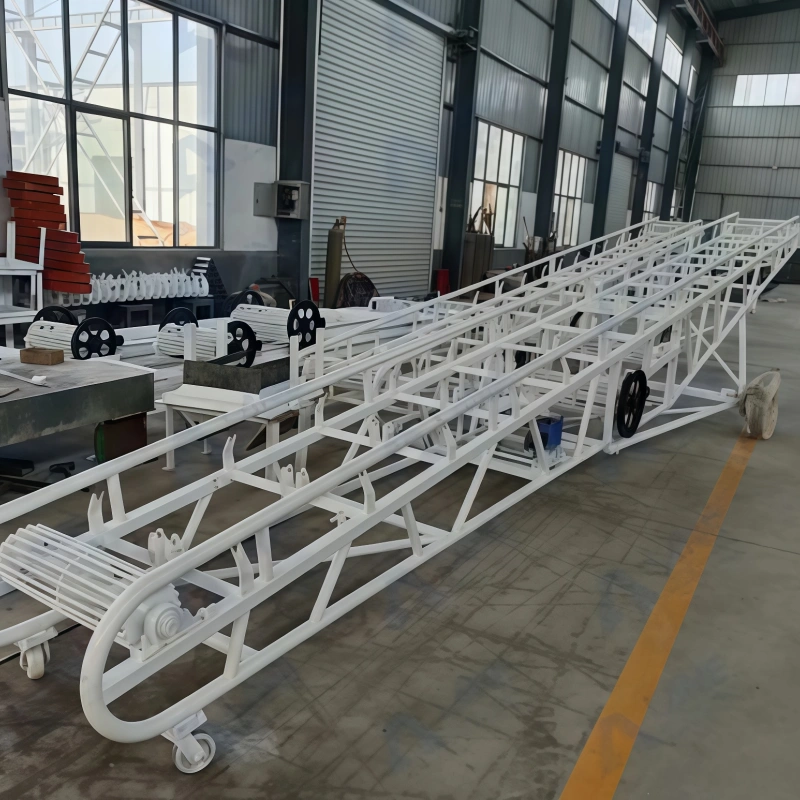
A conveyor belt may look like one of the simpler parts of a fertilizer production line, but problems with conveying can quickly affect the whole process. When material starts spilling, the belt runs to one side, or the conveyor cannot keep up with production, the problem is not always the belt itself.
In many Fertilizer Production Conveyor Belt Problems, the actual cause can be found in the feeding point, material condition, belt tension, rollers, loading rate, or the capacity relationship between upstream and downstream equipment.
This is particularly important for fertilizer plants handling different materials. Organic fertilizer may contain more moisture and sticky particles, while compound fertilizer and NPK materials are often handled as relatively dry powders or granules. These differences change how the conveyor should operate.
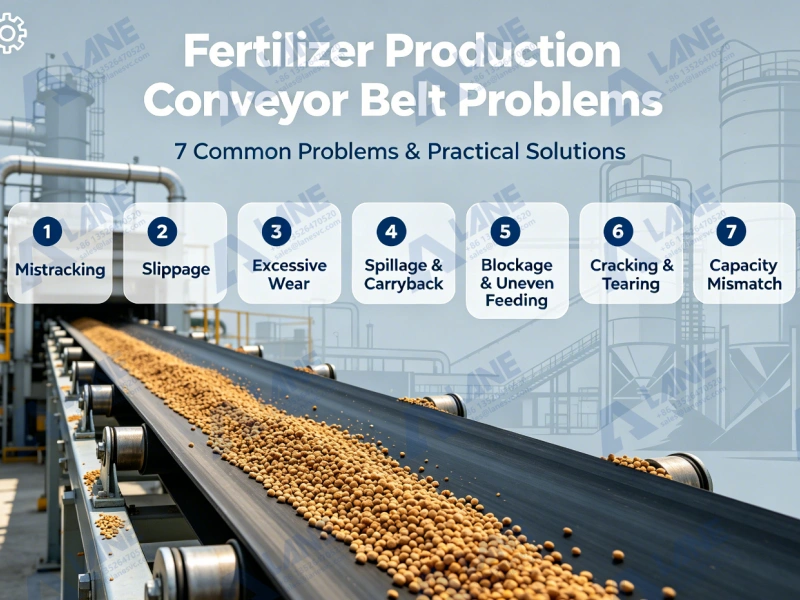
The following are seven common Fertilizer Production Conveyor Belt Problems, along with the causes and practical ways to solve them.
1. Fertilizer Conveyor Belt Mistracking
Belt mistracking is one of the most visible Fertilizer Production Conveyor Belt Problems. Instead of running along the center of the conveyor frame, the belt gradually moves toward one side.
At first, this may seem like a small adjustment issue. If it continues, however, the belt edge can rub against the frame, material may fall from one side, and belt wear can increase rapidly.
Why Does a Fertilizer Conveyor Belt Move to One Side?
The most common reason is uneven loading.
If fertilizer enters the belt closer to one side rather than near the center, the load is distributed unevenly. This is one of the most common Fertilizer Production Conveyor Belt Problems, especially easy to see when a feeder delivers material continuously but the discharge position is not properly aligned with the conveyor.
Other possible causes include:
• Misaligned idlers or pulleys
• Uneven belt tension
• Material buildup on rollers
• Fertilizer accumulation around the belt
• An improperly installed conveyor frame
• Long-term operation under uneven loading
Moist fertilizer can make the situation more difficult. Material that sticks to a roller or accumulates underneath the belt can gradually change the running condition.
How to Solve Belt Mistracking
The solution should start with the cause rather than immediately increasing belt tension.
First, check whether the fertilizer enters the center of the belt. Then inspect the pulleys and idlers for alignment and abnormal buildup. If the belt tension is uneven, correct it before making further adjustments.
For a fertilizer production system, cleaning is also part of the solution. Accumulated material should not be treated as a minor housekeeping issue because it can affect both belt tracking and roller movement.
In LANE fertilizer equipment projects, conveyor selection and installation are normally considered together with the feeding position and material characteristics. This approach helps prevent Fertilizer Production Conveyor Belt Problems, because a well-designed conveyor should receive material in a stable way instead of relying on later adjustments to compensate for poor feeding.
2. Fertilizer Conveyor Belt Slippage
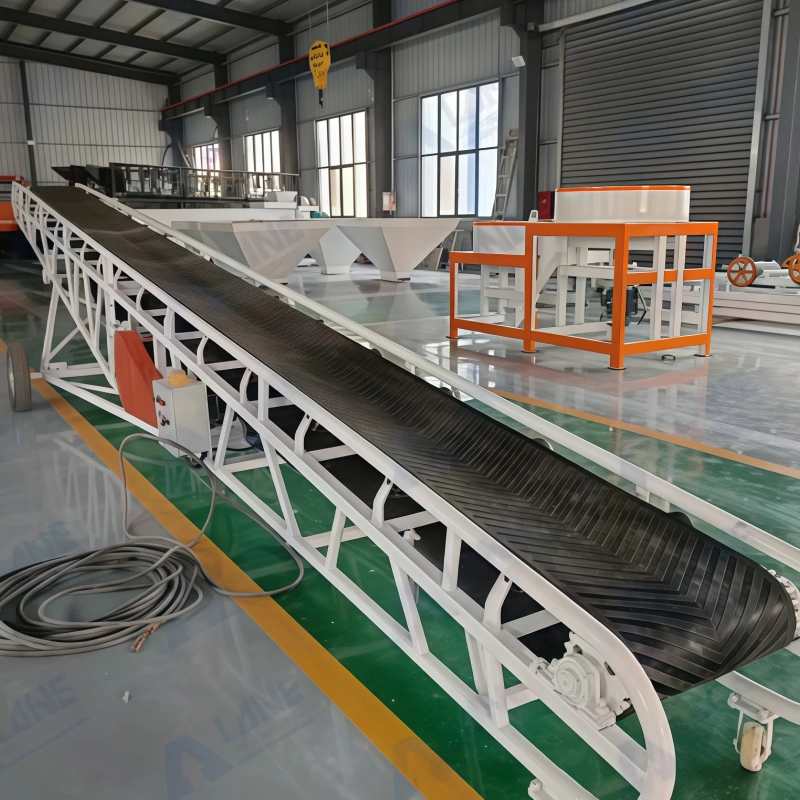
Another common group of Fertilizer Production Conveyor Belt Problems is belt slippage. Slippage occurs when the belt does not maintain sufficient traction with the drive pulley and begins moving differently from the pulley.
This is different from fertilizer sliding on the belt surface. The first is a mechanical transmission problem, while the second is related to material movement.
What Causes Conveyor Belt Slippage?
Several conditions can cause a fertilizer conveyor to slip:
• Insufficient belt tension
• Excessive loading
• Poor contact between belt and drive pulley
• Material buildup around the drive area
• Moisture affecting the operating condition
• A drive system that is not properly matched to the load
A conveyor that normally runs well when empty may begin slipping after fertilizer production reaches a higher load. This is an important clue when diagnosing Fertilizer Production Conveyor Belt Problems. It suggests that the problem may be related to loading or drive conditions rather than simply a damaged belt.
How to Stop the Belt from Slipping
Start by checking the actual load instead of immediately tightening the belt.
If the conveyor is overloaded, reducing the instantaneous feed rate may solve the problem. The drive pulley and belt should also be inspected for contamination or buildup.
Belt tension needs to be sufficient for stable transmission, but excessive tension is not automatically better. Too much tension can increase stress on the belt and other components.
For fertilizer plants, the condition of the material should also be considered. If wet or sticky material accumulates around the conveyor, the operating resistance can increase and create additional load on the drive system.
The practical approach to these Fertilizer Production Conveyor Belt Problems is therefore to check load, tension, drive condition, and material condition together.
3. Excessive Conveyor Belt Wear
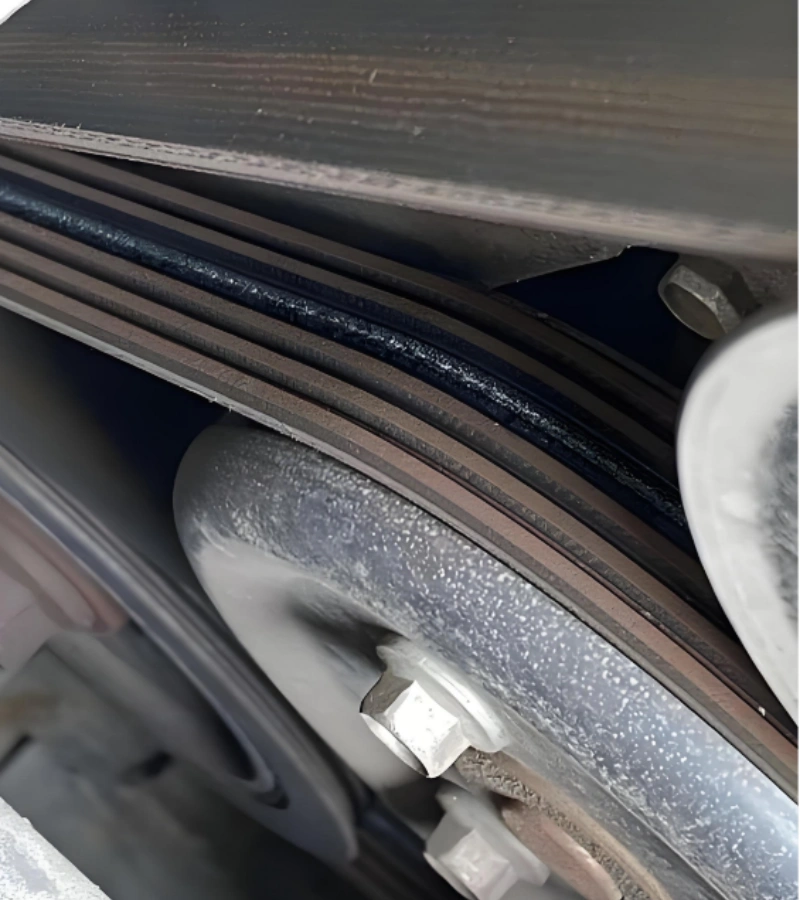
A conveyor belt can continue running even when it is already experiencing excessive wear. This makes wear one of the less obvious Fertilizer Production Conveyor Belt Problems because production may continue until the damage becomes serious.
Replacing the belt solves the immediate maintenance problem, but it does not necessarily solve the reason why the belt wore out early.
Why Does a Fertilizer Conveyor Belt Wear So Quickly?
Fertilizer materials can create different wear conditions depending on their physical properties.
Granular fertilizer can create repeated contact with the belt surface, while some raw materials may contain harder particles that increase abrasion. Organic fertilizer with higher moisture may behave differently again, particularly when material sticks to components.
Common causes include:
• Continuous contact with abrasive material
• Excessive impact at the loading point
• Belt mistracking
• Damaged or seized idlers
• Uneven loading
• Incorrect belt specification
• Material buildup around moving components
The loading point deserves particular attention. If fertilizer drops onto the belt from too high a position, the impact is concentrated in one area. Over time, this can accelerate belt surface damage.
How to Reduce Conveyor Belt Wear
The first step is to identify where the wear is occurring.
If wear is concentrated along one edge, belt tracking or uneven loading should be investigated. If the entire carrying surface is wearing rapidly, material properties, loading conditions, and belt selection deserve more attention.
If the damage is concentrated near the loading point, reducing unnecessary impact can be more effective than simply replacing the belt with the same specification.
The same principle applies to rollers. A damaged idler can create continuous friction against the belt and turn a relatively small mechanical problem into long-term belt damage.
When addressing Fertilizer Production Conveyor Belt Problems, preventive maintenance should therefore focus on the interaction between the belt, material, rollers, loading point, and operating load.
4. Fertilizer Spillage and Material Carryback
Material spillage is another common source of Fertilizer Production Conveyor Belt Problems. Fertilizer falling from the sides of the conveyor may appear to be a simple cleanup issue, but repeated spillage can create secondary problems.
Lost material reduces effective production, while accumulated fertilizer around the conveyor can interfere with rollers, increase dust, and contribute to belt tracking problems.
Carryback creates a similar issue. Some material remains attached to the return side of the belt after passing the discharge point and is carried back toward the conveyor structure.
Why Does Fertilizer Spill from the Conveyor?
Typical causes include:
• Off-center feeding
• Excessive feed rate
• Overloading
• Incorrect loading-point design
• Belt mistracking
• Inadequate side containment
• Material sticking to the belt
The material itself matters. Dry granular fertilizer may flow cleanly, while damp organic material can adhere to the belt and accumulate over time.
A conveyor designed around one material may therefore behave differently when the material condition changes.
How to Reduce Spillage and Carryback
Start at the loading point.
The incoming fertilizer should be distributed as evenly as possible across the usable belt width. If material consistently enters from one side, the conveyor may eventually develop tracking and edge-wear problems as well.
The feed rate should also match the conveyor’s practical loading capacity. A belt that is physically wide enough may still spill material if the loading pattern is poor.
To reduce Fertilizer Production Conveyor Belt Problems such as carryback, appropriate belt cleaning equipment and regular inspection are important. The objective is not simply to keep the floor clean. It is to prevent fertilizer from remaining attached to the belt and creating buildup around the return system.
These Fertilizer Production Conveyor Belt Problems show why material handling should be considered as part of fertilizer equipment design rather than as an isolated conveyor issue.
5. Conveyor Belt Blockage and Uneven Feeding
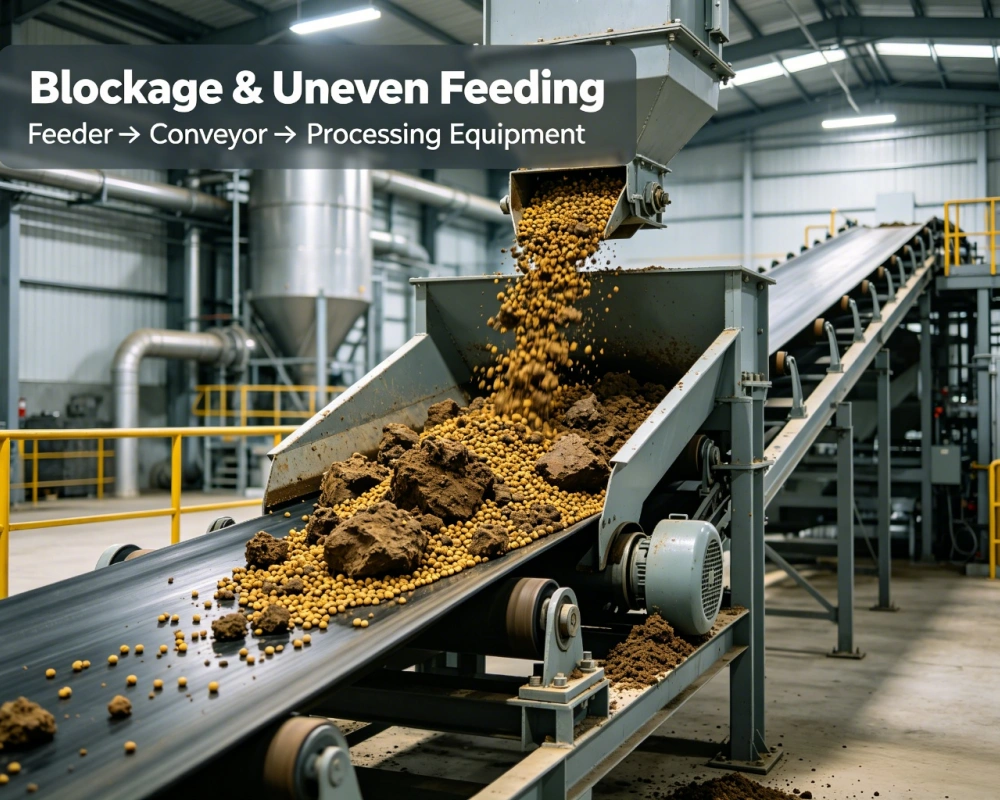
Not every conveyor problem is caused by the belt. Blockage and unstable feeding are good examples of Fertilizer Production Conveyor Belt Problems where the real cause may be somewhere else in the process.
A conveyor may stop, surge, or receive material unevenly because the upstream feeding system is not stable.
What Causes Conveyor Blockage?
Common causes include:
• Excessive instantaneous feeding
• Fertilizer lumps
• High-moisture raw materials
• Sticky material
• Poorly designed transfer points
• Insufficient downstream processing capacity
• Material accumulation inside the conveying path
This becomes more important when handling organic fertilizer raw materials. Material with higher moisture may form lumps or adhere to surfaces, particularly if storage and feeding conditions are not well controlled.
The same issue can occur when a crusher or mixer sends material forward faster than the conveyor can reliably handle.
How to Prevent Blockage and Uneven Feeding
The first question should be:
Is the conveyor receiving material at a stable rate?
If the answer is no, replacing the belt will not solve the underlying problem.
The feeding equipment should be checked together with the conveyor. The relationship can be viewed simply as:
Feeder → Conveyor → Processing Equipment
The three stages need to work together.
For example, if the upstream equipment continuously sends a short-term surge above the conveyor’s practical handling capacity, the conveyor may experience spillage or blockage even though its average hourly capacity appears sufficient.
LANE takes this relationship into account when configuring fertilizer handling equipment. The conveyor should be selected according to the actual material and production conditions rather than treated as an independent machine.
This approach can prevent many Fertilizer Production Conveyor Belt Problems before they become regular production interruptions.
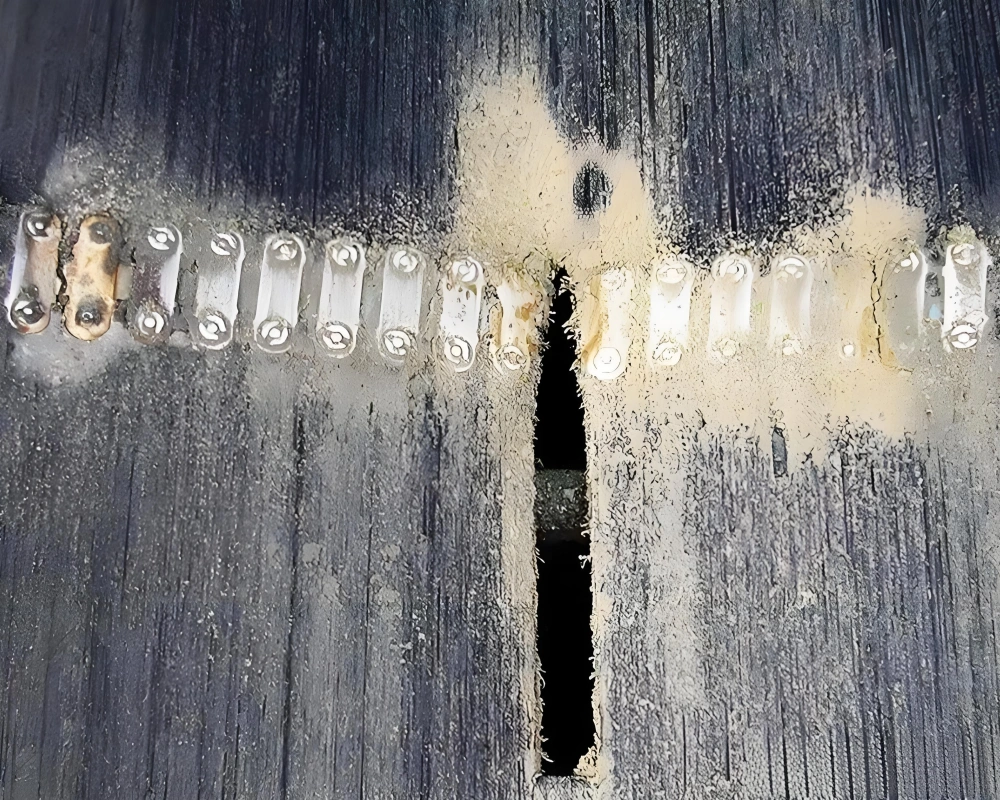
6. Conveyor Belt Cracking, Tearing, or Edge Damage
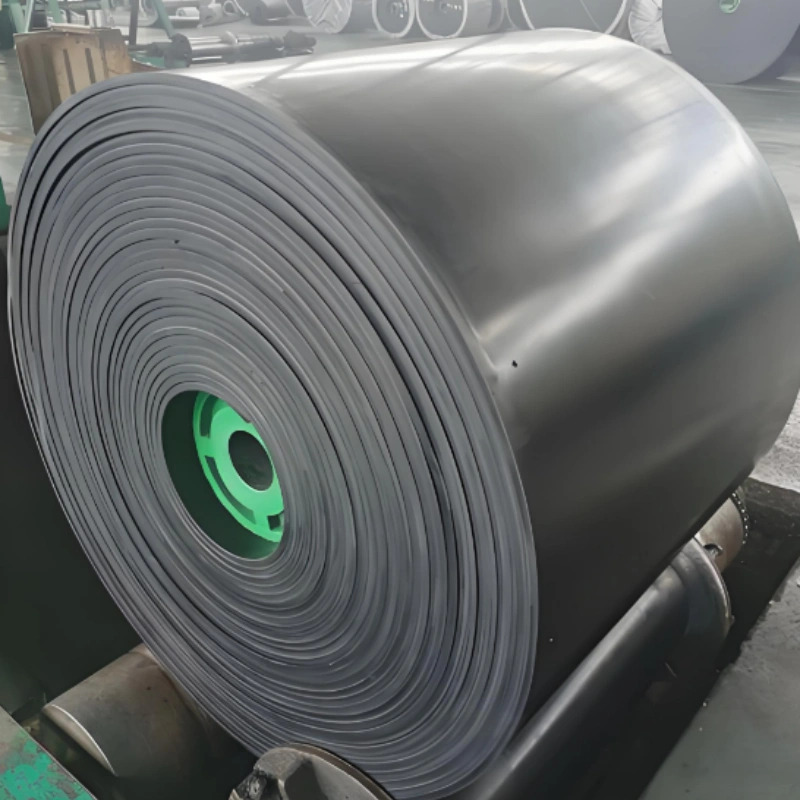
Cracking and tearing are more serious Fertilizer Production Conveyor Belt Problems because they can lead to unexpected downtime.
A damaged belt should not simply be replaced without checking why the damage occurred. Otherwise, the new belt may experience the same operating condition and fail again.
Why Does Belt Damage Happen?
Different damage patterns often point to different causes.
Edge damage may indicate prolonged mistracking or contact with the conveyor frame. A damaged section near the loading point may suggest excessive impact. Long cuts or tears can be associated with foreign objects or abnormal contact with conveyor components.
Other causes include:
• Excessive loading
• Incorrect belt tension
• Large or sharp material
• Foreign objects
• Damaged idlers
• Repeated belt mistracking
• Excessive impact at transfer points
For fertilizer production, it is also important to consider what material is actually being conveyed. Raw materials, intermediate products, and finished fertilizer granules can have different particle sizes and handling characteristics.
How to Deal with Belt Damage
If the damage is minor and localized, repair may be possible depending on the belt condition and the operating environment.
If the belt has major structural damage, replacement may be necessary. But the replacement should be accompanied by a cause inspection.
Check:
• Where did the damage start?
• Did it occur during loading or normal conveying?
• Was the belt running centrally?
• Were the rollers moving normally?
• Was the conveyor overloaded?
• Was there an abnormal object in the material?
This is more effective than simply installing a new belt and waiting for the same problem to return.
7. Conveyor Capacity Does Not Match Fertilizer Production
Capacity mismatch is one of the most important Fertilizer Production Conveyor Belt Problems when designing or upgrading a fertilizer plant.
The conveyor may not be physically damaged at all. The problem is that it cannot continuously deliver the required amount of fertilizer to the next stage.
Why Can a Conveyor Fail to Keep Up with Production?
Conveyor capacity is affected by more than belt width.
The actual conveying condition also depends on:
• Belt speed
• Belt loading
• Material bulk density
• Feeding stability
• Conveyor inclination
• Material flow characteristics
• Transfer-point design
• Upstream equipment capacity
• Downstream equipment capacity
For example, suppose a fertilizer plant needs to process 15 T/H. Selecting a conveyor simply because its stated capacity is 15 T/H does not automatically guarantee stable 15 T/H operation.
If the material is loaded unevenly, the conveyor is inclined, the feed fluctuates, or the actual material characteristics differ from the conditions used for the rated capacity, the practical throughput may be lower.
This is why capacity-related Fertilizer Production Conveyor Belt Problems should be evaluated using the actual production conditions.
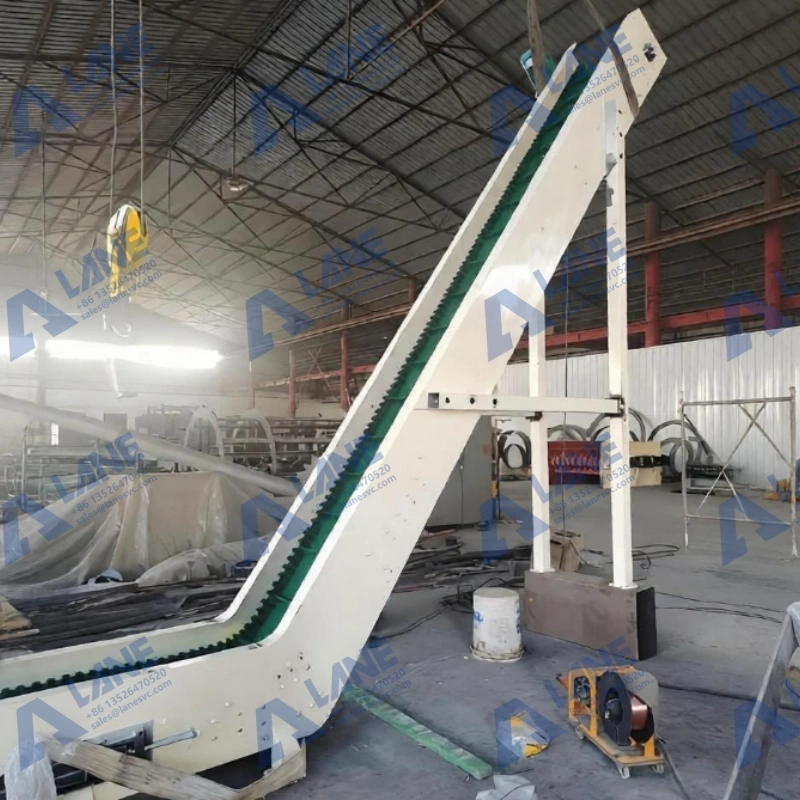
How to Match Conveyor Capacity with Fertilizer Production
A practical capacity check should follow the material flow:
Required production → Feeding capacity → Conveyor capacity → Processing capacity
The conveyor should not become the bottleneck between two properly sized machines.
For example, if a granulator is capable of handling the required fertilizer output but the conveyor after it cannot continuously move that amount, the effective production capacity of the system is limited by the conveyor.
This is also where equipment integration becomes important. When LANE engineers evaluate fertilizer conveying requirements, the conveyor is considered together with the equipment before and after it. This helps avoid selecting a conveyor based only on an isolated catalog capacity.
For buyers planning a new fertilizer production line, this type of capacity check is often more useful than simply comparing conveyor models.
How to Diagnose Fertilizer Production Conveyor Belt Problems
When Fertilizer Production Conveyor Belt Problems occur repeatedly, changing components one by one can become expensive and time-consuming. A simple diagnosis sequence is usually more effective.
• Confirm when the problem occurs.
Check whether the problem appears during startup, empty operation, normal loading, or peak production.
• Check the material entering the belt.
Look for off-center feeding, sudden feed surges, lumps, or excessive moisture.
• Inspect the belt and running components.
Check belt condition, idlers, pulleys, and visible material buildup.
• Check the operating load.
Determine whether the conveyor is being asked to move more material than its practical capacity.
• Look at upstream and downstream equipment.
A conveyor may appear to be the problem when the actual issue is unstable feeding or insufficient downstream capacity.
• Correct the root cause before replacing components.
A new belt cannot compensate for poor loading, damaged rollers, or an incorrectly matched conveying system.
This method also makes maintenance decisions more useful. Instead of asking only, “Why is the belt damaged?”, the better question is, “What operating condition is causing the damage?”
How to Prevent Fertilizer Production Conveyor Belt Problems
Most Fertilizer Production Conveyor Belt Problems are easier to prevent than to correct after repeated downtime.
The most important measures are straightforward:
• Select the conveyor according to the actual fertilizer material.
• Keep feeding as stable and centered as possible.
• Avoid continuous operation beyond the practical conveying capacity.
• Inspect rollers and pulleys regularly.
• Remove fertilizer buildup before it affects moving components.
• Check belt tension and tracking during routine maintenance.
• Pay particular attention to loading and transfer points.
• Match conveyor capacity with the equipment before and after it.
Material condition should also be part of the maintenance routine. If a fertilizer raw material becomes wetter than normal, forms lumps, or becomes more adhesive, the conveying behavior may change even though the conveyor itself has not changed.
This is why a good fertilizer conveying system should be designed around actual production conditions instead of relying only on standard equipment specifications.
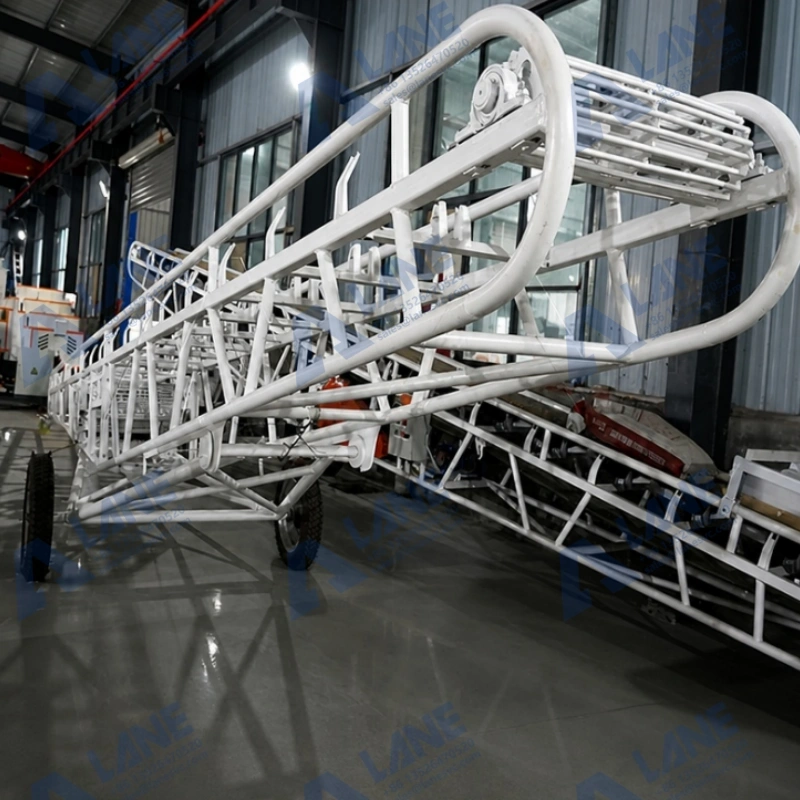
For manufacturers such as LANE, the conveyor is one part of a larger fertilizer equipment system. The objective is not simply to make the belt run. It is to keep material moving consistently from one processing stage to the next without creating a new bottleneck.
FAQ
What causes a fertilizer conveyor belt to slip?
The most common causes include insufficient tension, excessive loading, poor drive-pulley contact, material buildup, and abnormal operating resistance. Check the load and drive condition before simply increasing belt tension.
How do you stop a fertilizer conveyor belt from mistracking?
Start by checking whether fertilizer is entering the belt evenly. Then inspect idlers, pulleys, belt tension, and material buildup. Correcting the loading condition is often as important as adjusting the belt itself.
Why does a fertilizer conveyor belt wear out quickly?
Rapid wear can result from abrasive fertilizer, excessive loading-point impact, damaged rollers, mistracking, uneven loading, or an unsuitable belt specification. Replacing the belt without correcting the cause may lead to repeated failures.
How do you prevent fertilizer from spilling on a conveyor?
Keep the feed centered, avoid overloading, control the feed rate, check belt tracking, and maintain the loading and transfer points. For sticky fertilizer materials, regular belt cleaning is also important.
How do you match conveyor capacity with fertilizer production?
Consider the required production rate together with belt width, speed, material characteristics, loading condition, inclination, and the capacity of upstream and downstream equipment. A conveyor should be evaluated as part of the fertilizer conveying system rather than by its rated capacity alone.
Conclusion
The seven Fertilizer Production Conveyor Belt Problems discussed above cover more than simple belt maintenance. Mistracking, slippage, wear, spillage, blockage, belt damage, and insufficient conveying capacity can all affect fertilizer production, but their root causes are often different.
A reliable solution starts with the actual production condition:
Material characteristics → Feeding condition → Conveyor operation → Equipment matching → Maintenance
This is why diagnosing Fertilizer Production Conveyor Belt Problems should not begin and end with the belt itself. The loading point, material condition, conveyor components, and surrounding fertilizer equipment all influence how reliably the system operates.
For a new fertilizer production line or an existing system that needs improvement, LANE can evaluate the conveying requirement together with the related fertilizer equipment, production capacity, and material characteristics. This makes it easier to identify whether the right solution is a belt adjustment, component change, feeding improvement, capacity adjustment, or a different conveying arrangement altogether.