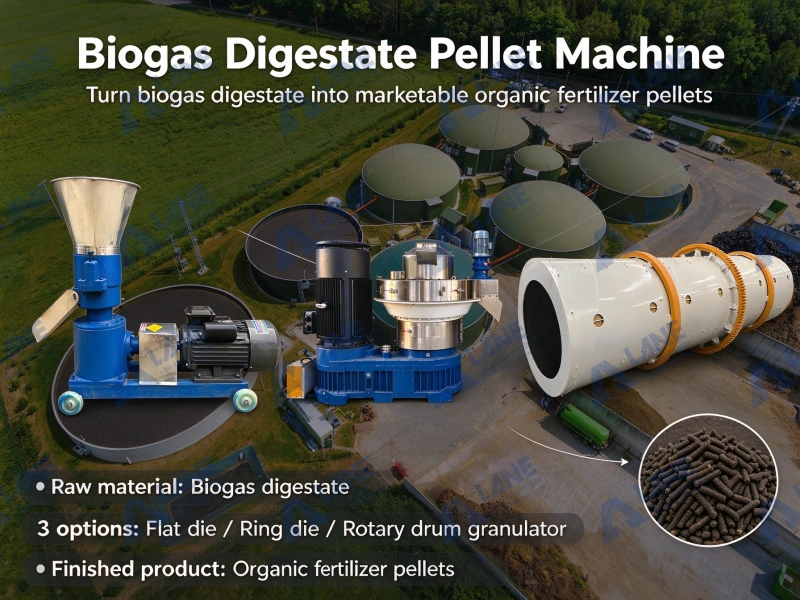
Biogas Digestate Pellet Machine: Turn Wet Digestate into Profitable Fertilizer Pellets
1. The Hidden Trouble Behind a Booming Biogas Industry
Global green energy transition has driven massive growth in biogas plants. As more biogas facilities go online, digestate byproduct handling has turned into the biggest operational headache for plant owners. Wet digestate comes with obvious drawbacks: huge bulk, extremely high moisture content and strong odor. Land application has strict limits. Direct land spreading of liquid digestate is constrained by available land area and seasonal windows — spreading is often impossible in winter and summer. Tighter environmental regulations add dual pressure. Rules including EU Fertiliser Regulation EU 2019/1009, US EPA 503 standard and the new RENURE framework impose strict controls on liquid discharge, odor emissions and total nitrogen application rates.
2. Prime Window for Organic Fertilizer Substitution
Fertilizer prices keep swinging at high levels worldwide. Farmers, large-scale growers and fertilizer distributors are actively searching for stable, transportable, organic-rich alternative fertilizer sources. Loose bulk digestate cannot enter formal commodity sales channels. Pelletized digestate becomes the most practical way to turn digestate into a marketable product.
3. Direct Commercial Benefits from Pelletizing
Processing loose digestate into uniform pellets with a reliable Biogas Digestate Pellet Machine creates transformative value:
• Dramatic volume reduction to cut storage space
• Fully compliant logistics: no leakage, minimal odor, stackable for long-distance transport
• Standardized nutrient levels with even distribution, ideal for mechanical fertilization
• Brand-ready packaged products for high-margin retail markets
Wet loose digestate (environmental liability, costly disposal fees) → After pretreatment and processing → Premium pellet fertilizer (high-value commodity, ready for long-distance sales)
4. The Real Dilemma Faced by Buyers
As fertilizer equipment manufacturers, we understand your core struggle is not simply “whether to buy a machine”. Your real question is: digestate keeps coming out every day, environmental inspections keep coming, and we know there is market demand for this fertilizer — but which production line should I choose? Will the die keep clogging? Can I recover my investment? This is exactly why a properly matched Biogas Digestate Pellet Machine, selected for your raw material characteristics, forms the core of a profitable biogas business loop.
Raw Material Evaluation: What Is the Actual Condition of Your Digestate?
Before purchasing a Biogas Digestate Pellet Machine, you must assess your feedstock. Digestate from different biogas feedstocks behaves very differently.
1. Material Characteristics of Common Digestate Types
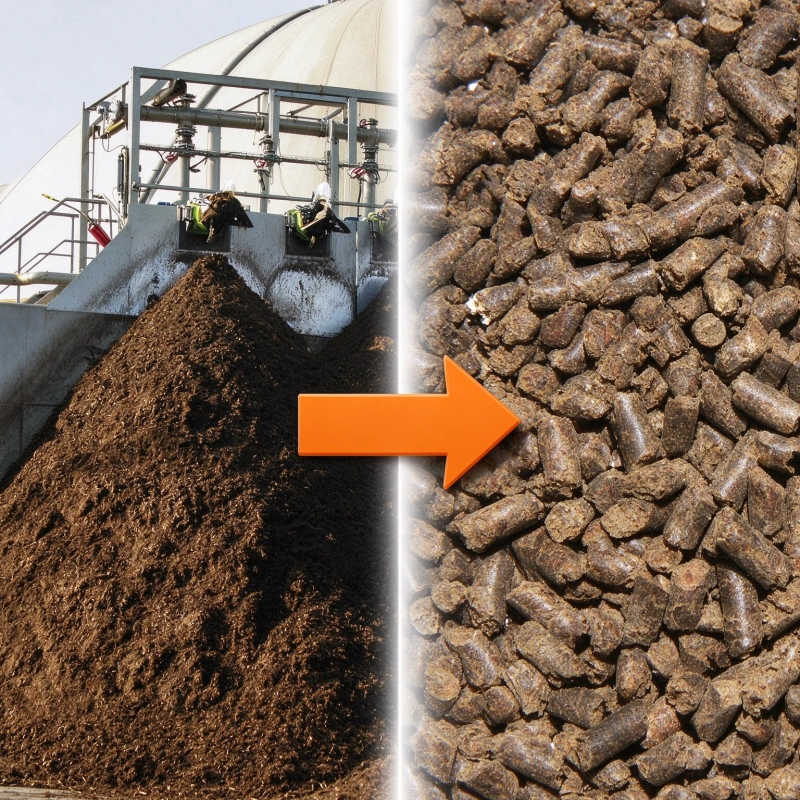
• Cattle manure digestate: long fiber length, high moisture, medium viscosity. Fiber size control is required before pelletizing.
• Pig manure digestate: higher moisture, high nitrogen content, strong odor. Equipment needs corrosion resistance and dedicated workshop odor control.
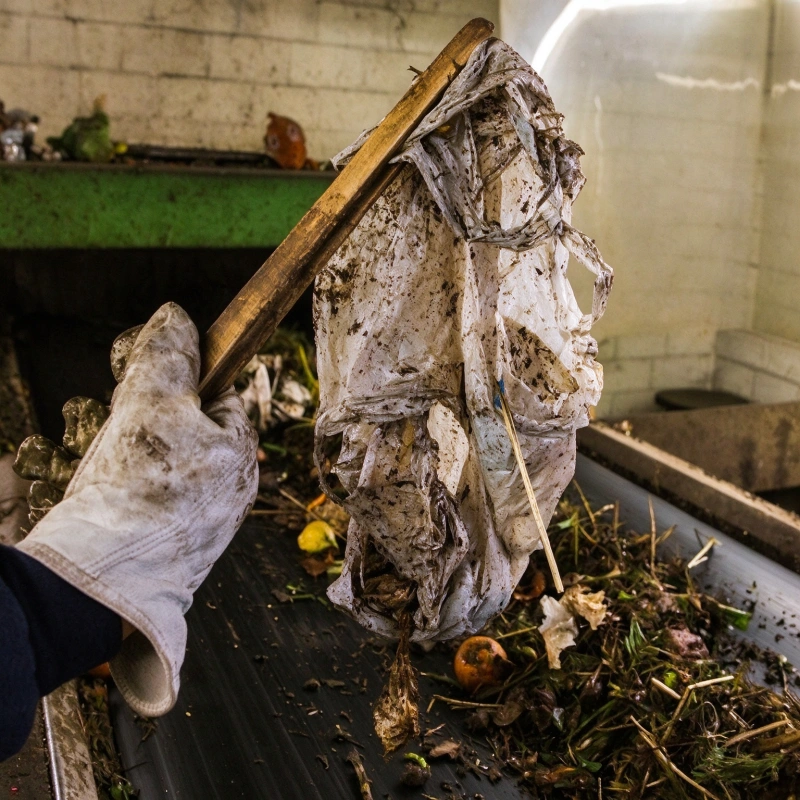
• Food waste digestate: high oil and salt content, sticky texture, mixed impurities such as plastic and glass. Heavy-duty pre-sorting is mandatory.
• Crop straw digestate: high crude fiber content, relatively easy to form pellets, but causes faster die wear.
• Municipal organic waste digestate: highly variable composition and high impurity risk. Fine grinding and magnetic separation are required.
2. Four Grades of Digestate and Their Compatibility with Pelletizing
Digestate at different maturity stages matches differently with a Biogas Digestate Pellet Machine:
• Grade 1 Fresh digestate: 70%–90% moisture → Cannot be pelletized directly
• Grade 2 After screw dewatering: 60%–65% moisture → Still unfit for pelletizing; requires composting or drying
• Grade 3 After aerobic composting: 40%–50% moisture → Suitable for wet granulation, or the upper feed limit for certain flat die machines
• Grade 4 After drying and grinding: 10%–15% moisture → Ideal state for high-density industrial pellet production
3. Core Pain Points and Key Takeaway
Stockpiled digestate occupies valuable land and triggers environmental fines. Direct liquid spreading is restricted, and hauling it away means paying third-party waste disposal fees. The most common costly mistake: hearing pelletizing is profitable and feeding raw wet digestate straight into the machine. This leads to instant die blockage and burnt motors. Iron rule: feedstock condition defines which machine you can use. Poor pretreatment makes any Biogas Digestate Pellet Machine a waste of capital. The production line must be matched to your digestate’s physical properties.
Pelletizer Selection: Core Decision-Making Framework
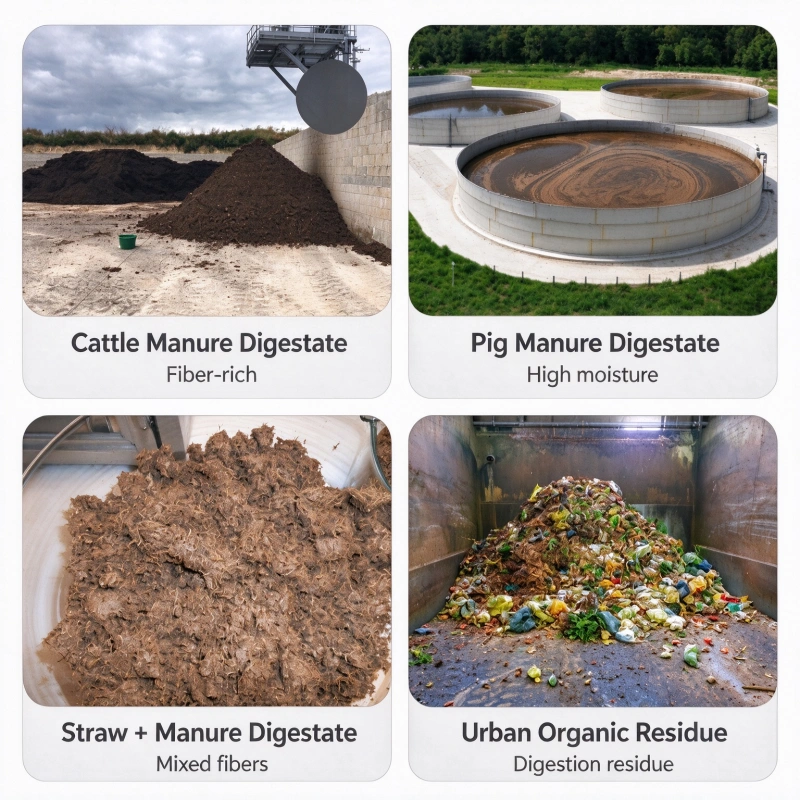
Below is a comparison of the three mainstream pelletizing machines suited for digestate, based on its unique physical traits. Roller extrusion granulators are excluded here because they do not work well with high-fiber digestate, helping you rule out unsuitable options early.
| Machine Type | Suitable Project Scale | Pretreated Digestate Condition | Typical Output | Limitations & Common Pitfalls |
|---|---|---|---|---|
| Flat Die Pellet Mill | Small farms, cooperatives, pilot projects | Dewatered + composted, 20%–35% moisture, fiber length <3 cm | 0.3 – 1 t/h | Die clogging above 35% moisture; not designed for 24/7 heavy industrial operation; low maximum output |
| Ring Die Pellet Mill | Commercial fertilizer plants, medium & large biogas projects | Dewatered + composted + dried, strictly controlled 15%–20% moisture, fiber length <2 cm | 1 – 10 t/h | Minor moisture excess causes blockage; expensive dies; high fiber accelerates wear; fine grinding and conditioning are required |
| Wet Rotary Drum Granulator | Large biogas plants, big compound fertilizer manufacturers | Composted wet feed, 25%–40% moisture, tolerant of sticky, mixed fibers | 3 – 20 t/h | Must pair with heavy-duty post drying, cooling and screening; high return fines; produces spherical pellets instead of cylindrical pellets |
💡 Three Simple Selection Rules from Fertilizer Equipment Specialists
• Wet feed, low output target, tight budget → Choose flat die Biogas Digestate Pellet Machine
• Stable drying capacity, premium commercial fertilizer output, strict certification requirements → Choose ring die Biogas Digestate Pellet Machine
• Wet and highly variable feedstock, very large daily output, unwilling to invest heavily in upfront drying equipment → Choose rotary drum granulation line
Production Process: From Wet Digestate to Finished Pellets
Your equipment choice sets the full supporting configuration. We design auxiliary systems backward from the core Biogas Digestate Pellet Machine.
1. Closed-Loop Process for Each Machine Type
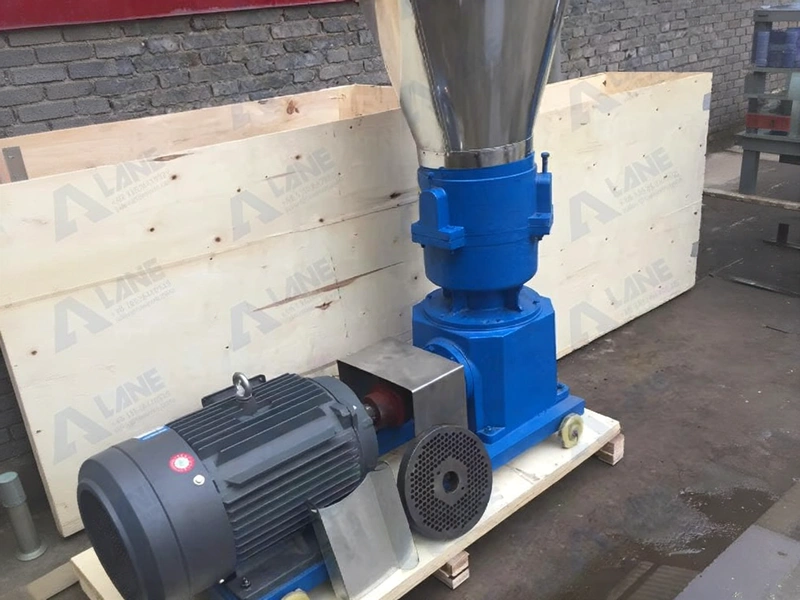
Flat Die Line: Wet digestate → Mechanical dewatering → Channel / static pile composting → Simple grinding & mixing → Flat die Biogas Digestate Pellet Machine → Natural / air cooling → Automatic bagging
Ring Die Line: Wet digestate → High-efficiency dewatering → Enclosed aerobic composting → Forced drying to 15% moisture → Fine grinding + steam conditioning → Ring die Biogas Digestate Pellet Machine → Counterflow forced cooling → Vibrating screening → Pellet coating (gloss & moisture resistance) → Fully automatic packaging
Rotary Drum Line: Wet digestate → Mechanical dewatering → Deep trench high-volume composting → Automatic batching system (inorganic nutrient blending) → Wet rotary drum granulator → Heavy-duty hot air drying → Drum cooling → Drum screening → Bulk / small bag packaging
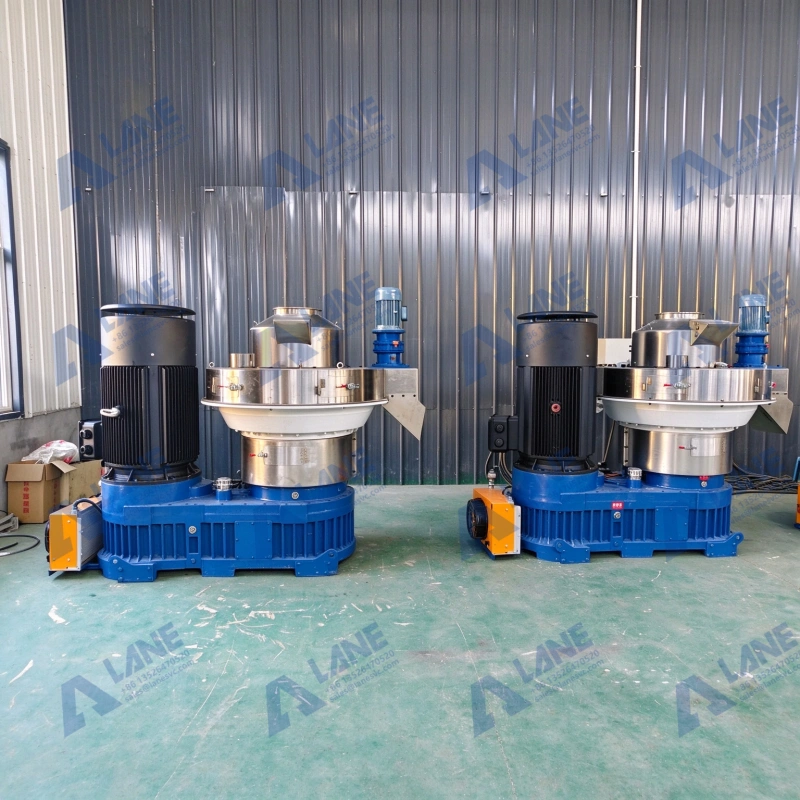
2. Reference Specifications for Standard Commercial Digestate Pellet Lines
| Production Line | Total Installed Power | Core Equipment List | Typical Footprint | Recommended Operators Per Shift |
|---|---|---|---|---|
| 0.5 t/h Flat Die Line | 45–60 kW | Solid-liquid separator, flat die Biogas Digestate Pellet Machine, belt conveyors, simple packing scale | 150–200 m² | 2 – 3 |
| 3 t/h Ring Die Line | 160–220 kW | Solid-liquid separator, compost turner, rotary dryer, hammer mill, ring die Biogas Digestate Pellet Machine, counterflow cooler, automatic packaging machine | 800–1200 m² | 4 – 5 |
| 10 t/h Rotary Drum Line | ≥450 kW | Large compost system, multi-bin batching scale, rotary drum granulator, heavy-duty industrial dryer, cooler, rotary screener, bulk bag packer | ≥3000 m² | 6 – 8 |
End Markets: Who Buys Your Pellets & How to Generate Revenue
This is the part clients care most about — turning pellets into steady income. Digestate pellets have three clear, profitable market routes.
📈 Channel 1: Premium Fertilizer Market (First Priority)
Target buyers: organic farms, commercial orchards, greenhouse growing media, field crop bases, mine land remediation projects
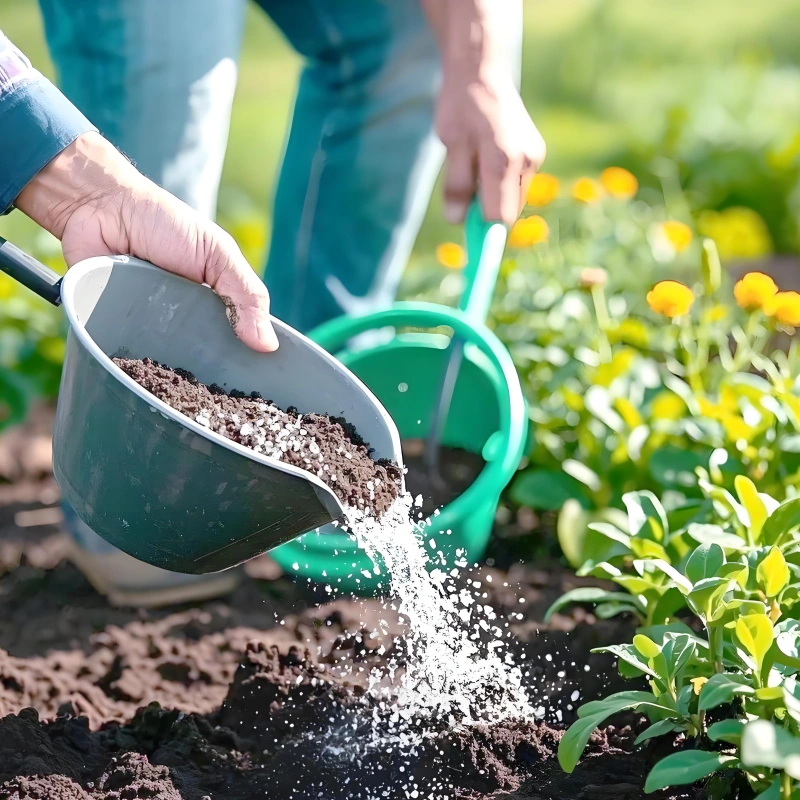
Key selling points: rich in active organic matter and trace elements, slow-release nutrient profile, excellent performance for mitigating soil compaction, can reduce chemical fertilizer reliance.
Pellet Size Guide by Crop
• 3 mm: High-value dense vegetables, premium turf, urban landscaping
• 4 mm: Field crops (corn, wheat, soybean) for side-dressing with farm machinery
• 6–8 mm: Fruit trees, tea plantations, forestry as base fertilizer for deep placement
🔥 Channel 2: Biomass Fuel Market (Backup Option for High-Fiber Digestate)
If digestate has low NPK but high crude fiber (straw or lignocellulosic feedstock fermentation), you can compress it into biomass fuel pellets using a high-compression Biogas Digestate Pellet Machine.
Target buyers: industrial boilers, district heating plants, biomass power stations
Key technical specs: stable lower heating value ~15 MJ/kg, comparable to mid-grade wood pellets; finished pellet moisture <10% for high combustion efficiency
🔄 Channel 3: On-Site Circular Economy (Internal Biogas Plant Loop)
Circular workflow: Biogas Digestate Pellet Machine produces pellets from on-site digestate → pellets return to fields to grow silage corn → harvested silage corn feeds the biogas digester.
Commercial value: Energy + fertilizer dual circular system, eligible for carbon reduction and sustainable agriculture subsidies.
Regional Market Scenarios & Matching Line Solutions
Regulatory rules, labor costs and input economics vary widely across regions. We have developed three tailored turnkey packages.
European Market Solution
Scenario opening: On a 1.2 MW cattle manure biogas plant in Bavaria, Germany, roughly 18 tonnes of wet digestate are generated daily. Owners struggle with expensive odor treatment and heavy environmental fines…
Customer profile: Medium biogas plant operators, organic fertilizer certification consultants
Core pain points: Strict EU 2019/1009 rules, stringent odor control, very high labor costs
Recommended setup: 2–5 t/h ring die configuration + full automation + fully enclosed negative pressure odor abatement system. The ring die Biogas Digestate Pellet Machine produces high-density, low-dust pellets compliant with European organic fertilizer standards.
🌍 Africa & French-Speaking Region Solution
Scenario opening: On the outskirts of Dakar, Senegal, an agricultural cooperative manages large stretches of sandy soil depleted of organic matter. Chemical fertilizer is prohibitively expensive locally, while nearby livestock farms pile up digestate with no outlet…
Customer profile: Small and medium farmers, agricultural cooperatives, government demonstration projects
Core pain points: Tight capital budget, unstable grid power, limited skilled maintenance technicians
Recommended setup: 0.5–2 t/h flat die modular low-power line + simple biomass / firewood drying. Flat die Biogas Digestate Pellet Machine features simple construction, low maintenance, easy for local workers to learn.
North American Market Solution
Scenario opening: A large dairy operation in Wisconsin, USA runs a biogas system serving thousands of cattle, generating hundreds of tonnes of digestate every day. Surrounding farmland cannot absorb the volume, so long-distance cross-state transport is required…
Customer profile: Large ranch biogas operators, bulk fertilizer inter-state traders
Core pain points: Extreme daily digestate output, transport distances of hundreds of kilometers, demand for high continuous hourly throughput
Recommended setup: 5–15 t/h heavy-duty ring die line + CHP waste heat recovery for drying + industrial bulk bag automation. The high-capacity Biogas Digestate Pellet Machine runs 24/7 to convert waste into tradable pellets for long-distance shipment.
ROI Analysis: Clear Profit Calculation
Can you earn back your investment in a Biogas Digestate Pellet Machine line? The breakdown below uses straightforward numbers.
1. Cost Side vs Revenue Side
Costs: Equipment depreciation, pretreatment (dewatering / composting) operational cost, electricity and thermal energy, labor, packaging bags Revenues: Saved digestate disposal fees (direct profit) + sales revenue from pellet fertilizer
2. Three Profit Tiers by Pellet Grade
Profit margins rise step by step based on post-processing: Tier 1 Plain organic pellets: pure digestate, soil amendment focus → moderate margin Tier 2 NPK blended organic pellets: digestate mixed with mineral nutrients → high margin Tier 3 Coated functional bio-pellets: inoculated with functional microbes and surface coated, for premium horticulture and specialty crops → very high margin
3. Typical Payback Timeline
Flat die simple line: lower upfront investment, payback 8–18 months Standard ring die industrial line: higher initial spend on drying and automation, but larger output and premium pellet pricing, payback 1.5–3 years
📝 Simple Self-Check ROI Formula Annual Net Profit = (Selling Price Per Ton – Total Production Cost Per Ton) × Annual Output Volume + Annual Digestate Disposal Cost Saved
Six Costly Mistakes Veteran Fertilizer Plant Managers Warn You to Avoid
We have seen countless buyers lose money on poor equipment choices. Check these before ordering your Biogas Digestate Pellet Machine:
• Buying equipment without raw material testing: no moisture and fiber testing on your own digestate, leading to wrong machine selection
• Undersized upstream dewatering: focusing only on the pelletizer, while the screw press cannot keep up, leaving the downstream Biogas Digestate Pellet Machine idle
• Rushing pelletizing before full compost maturity: incompletely stabilized digestate pellets re-ferment inside bags, swell, break apart and release foul odor
• Incorrect die compression ratio: generic dies not matched to your digestate fiber hardness, actual output drops to 60% of rated capacity and dies wear rapidly
• European projects ignoring compliance: skipping heavy metal and pathogen testing and fertilizer certification, finished pellets cannot legally enter EU markets
• Over-specifying full automation for Africa: complex PLC systems fail easily with unstable power and limited local technicians, halting the whole line when one sensor breaks
Our Core Equipment & Turnkey Project Packages
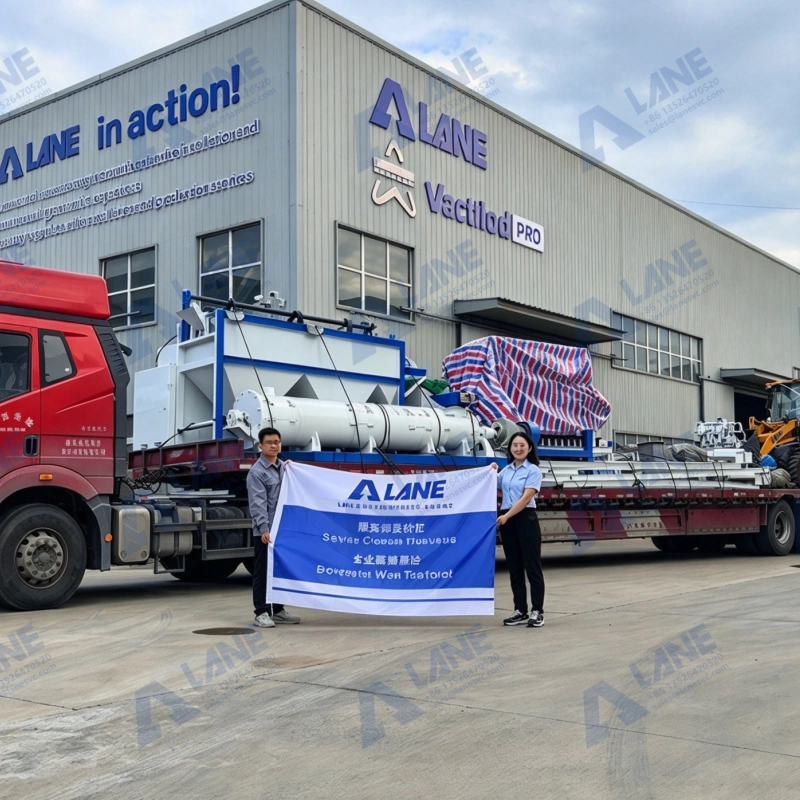
We do not only manufacture reliable Biogas Digestate Pellet Machine units. We understand every process step turning liquid digestate into high-value solid pellets. We deliver complete turnkey solutions.
Three Standard Production Lines
• Small Pilot Line 0.25–1 t/h: low energy use, compact footprint, stable operation for on-farm use
• Medium Standard Line 2–5 t/h: cost-effective ring die setup for continuous commercial fertilizer production
• Industrial Master Line 5–20 t/h: heavy rotary drum or multi-ring die parallel configuration for large group operators
2. Premium Customization Options
• Waste heat recovery: reuse hot water or flue gas from biogas CHP generators for low-cost digestate drying
• Intelligent workshop odor control: biofilter + UV treatment to meet strict emission standards
• Multilingual custom PLC: English, French, Spanish, Russian and Chinese interfaces with remote global diagnostic support
3. Full Lifecycle Support
• Free process design: customized 3D layout drawing based on your workshop dimensions
• Global field engineering service: on-site installation, commissioning and operator training
• Spare parts stock: wear-resistant alloy dies and rollers stocked for fast 24-hour shipment
🧪 Exclusive Value-Added Service: Free Sample Trial Run! Seeing is believing. If you worry your feedstock does not pelletize well, send your raw digestate sample to our factory. Our technical team will run tests on our Biogas Digestate Pellet Machine, record full video and send finished pellets back to you before you commit capital.
FAQ: Authoritative Answers to Common Technical Questions
Q1: My digestate sits at 80% moisture. Can I feed it directly into the machine?
A: Absolutely not. No high-density Biogas Digestate Pellet Machine can process feedstock above 40% moisture. Fresh digestate at 80% moisture behaves like slurry. It must first go through solid-liquid separation down to 60% moisture, then compost or dry to 15%–20% moisture, the optimal range for ring die pelletizing.
Q2: What is the core difference between flat die and ring die? Which should I pick?
A: Flat die machines rely on gravity feed, simple structure, best for coarse fiber and projects under 1 ton per hour. Ring die machines use forced feeding, high compression from die and roller contact, producing dense, smooth pellets. Ring die Biogas Digestate Pellet Machine suits continuous commercial production above 2 t/h for premium fertilizer.
Q3: Can I make fertilizer pellets and biomass fuel pellets on the same machine?
A: The main machine frame is shared, but die compression ratios must be swapped. Fertilizer pellets and fuel pellets require different density and fiber bonding targets. A fertilizer die will produce weak fuel pellets, and a fuel die overloads the machine for fertilizer. We recommend two custom die sets for one Biogas Digestate Pellet Machine.
Q4: Can digestate pellets pass European organic certification?
A: Yes, provided your biogas feedstock is clean (pure livestock manure or crop straw, no toxic municipal sludge with heavy metals). Composting must maintain temperatures above 55°C long enough to kill weed seeds and pathogens. Our process design fully meets these compliance requirements.
Q5: Are dies consumable parts? How long do they last and what is the replacement cost?
A: Dies and rollers are high-wear consumables. With our specially heat-treated alloy dies, properly ground feedstock and metal-free input, average service life reaches 800–1200 operating hours. Die prices vary by machine size from thousands to tens of thousands of RMB, and wear cost per ton remains controllable alongside electricity and maintenance expense.