Rock Phosphate Processing Equipment | Crushing & Granulation Line
  • By LANE
  • 26/11/2026

Why Global Buyers Target Rock Phosphate Processing Equipment

Global agricultural expansion keeps pushing up the demand for phosphate fertilizers. Factories producing single superphosphate (SSP), triple superphosphate (TSP), NPK compound fertilizers and organic-inorganic blended fertilizers are rushing to secure high-quality phosphate rock feedstock. For fertilizer plant investors, picking a well-matched full set of Rock Phosphate Processing Equipment directly determines granulation ball formation rate, nutrient conversion efficiency and per-ton production cost at later stages.

Phosphate rock processing and fertilizer manufacturers worldwide are now stuck with four major headaches:

• Phosphate rock grade keeps falling: High-grade rich ore is drying up. Medium and low-grade phosphate rock has to go through precise crushing, grinding and screening purification before acidulation or granulation.

• Large share of wet and sticky ore: Open-pit mining and rainy seasons drive up raw ore moisture content. Ordinary grinding machines easily get material stuck on inner walls, clog the grinding chamber and block discharge outlets, leading to frequent shutdowns for cleaning.

• Tighter environmental emission rules: Uncontrolled dust leakage and substandard tail gas treatment may result in heavy fines, or even forced production suspension.

• High energy consumption and wear part costs: Wrong machine selection causes fast wear on hammers and chains. High electricity bills and repeated downtime for part replacement eat into fertilizer plant net profits.

To tackle these pain points, modern Rock Phosphate Processing Equipment integrating primary crushing, fine grinding, hot-air drying, screening, granulation, cooling and automatic packaging has become standard equipment for large global agrochemical suppliers to cut costs and lift efficiency.
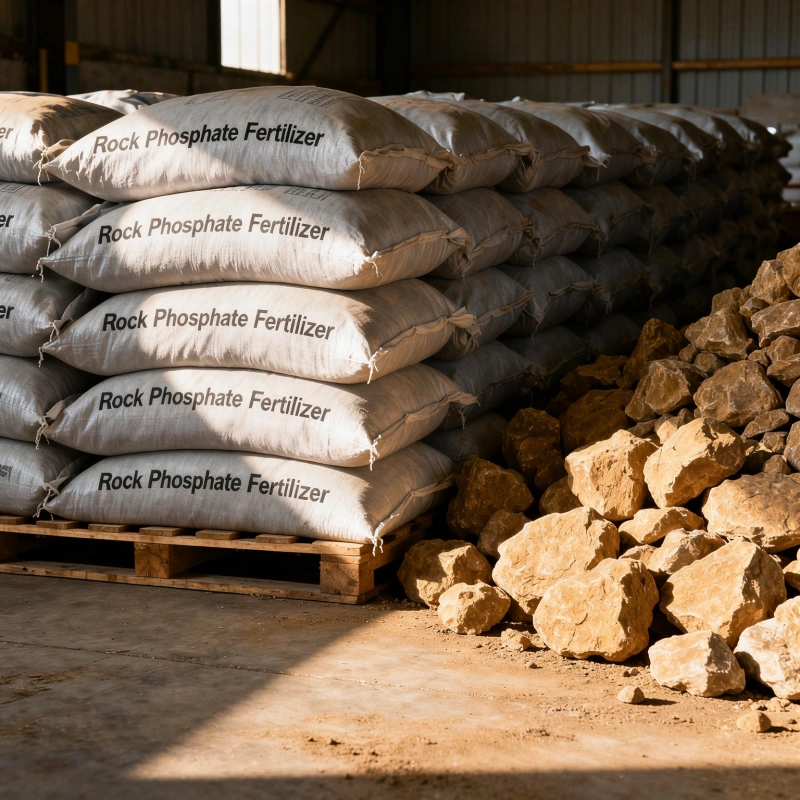
Rock Phosphate Processing Equipment

Raw Material Section

Many fertilizer plants run at a loss right after commissioning, simply because operators order equipment without fully understanding the characteristics of their phosphate rock. Before configuring Rock Phosphate Processing Equipment, three technical thresholds for raw materials must be strictly followed:

Ore formation type and base grade:

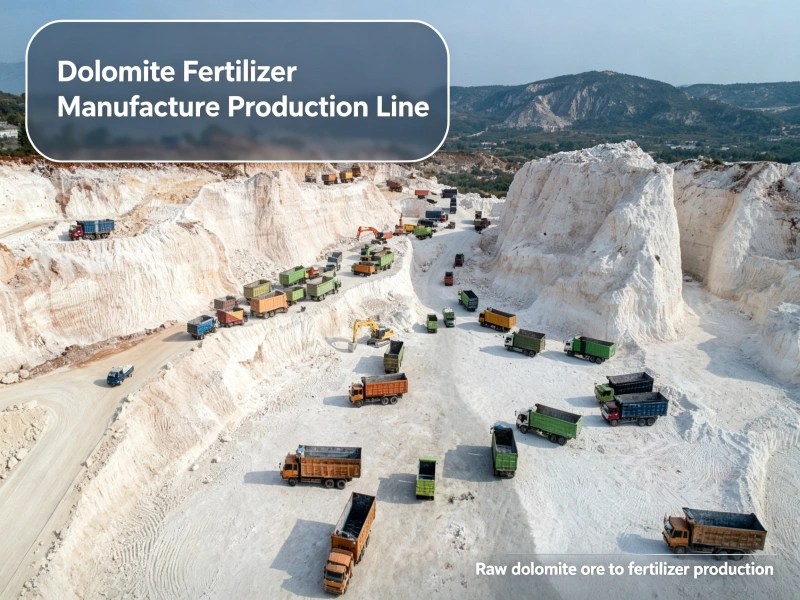
✅ Sedimentary phosphorite (typical mines in Jordan, Egypt, Morocco and West Africa, raw ore P₂O₅: 25%–31%):

The rock structure is relatively loose but often mixed with clay and moisture. The priority is anti-sticking design, anti-clogging and wet-material grinding capability.

✅ Igneous apatite (high-hardness mining zones, Mohs hardness 5–6):

Dense crystalline structure. Primary and secondary crushing sections must adopt high-manganese steel / high-chromium wear-resistant alloy components, otherwise liners and hammers wear out extremely fast.

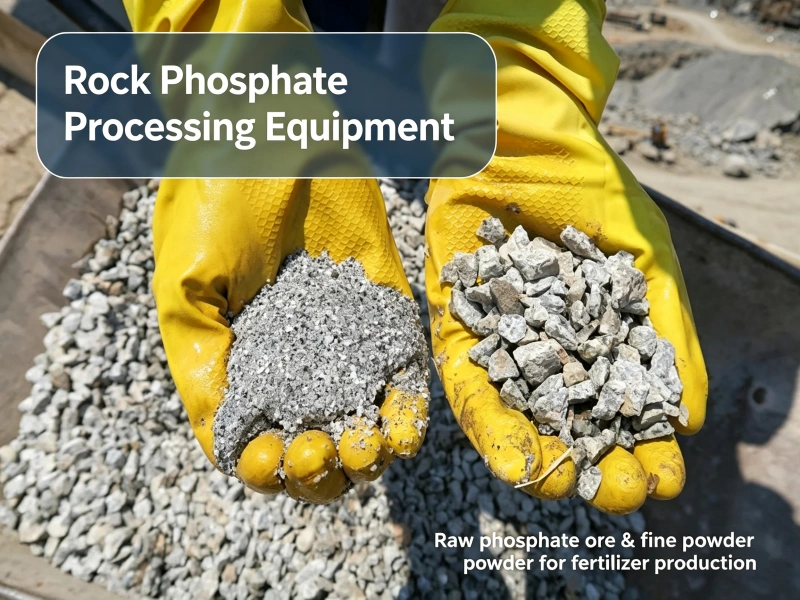
Raw ore moisture limit: Wet ore with 15%–25% moisture must first be fed into a rotary drum dryer to reduce water content, or sent directly into anti-caking wet-material crushers for primary crushing, followed by drying and fine grinding to eliminate material clogging.

Standard pre-treatment workflow: Large run-of-mine ore (≤ 500mm) → Apron / vibrating feeder (stable feeding to prevent jamming) → Jaw crusher (primary crushing down to 50–80mm) → Heavy-duty chain / hammer crusher (secondary crushing to 3–5mm) → Rotary / vibrating screener (qualified material flows to buffer silo; oversize particles return for re-crushing in closed circuit)

Custom purification & activation branches:

• High-silicon / high-magnesium impurity ore: Add scrubbing desliming or flotation units at front end to lift concentrate P₂O₅ grade above 30%, preventing foaming and pipeline scaling during subsequent acidulation.

• Biological / organic activation route: Medium-low grade phosphate rock powder mixes directly with humic acid and organic fertilizer materials for fermentation. Complex chemical purification is not required, while available phosphorus release improves greatly.

Practical benefit: Stable particle size and moisture of raw feed → Better acidulation reaction or higher granulation ball rate at downstream stages → Lower consumption of concentrated sulfuric acid and binders.
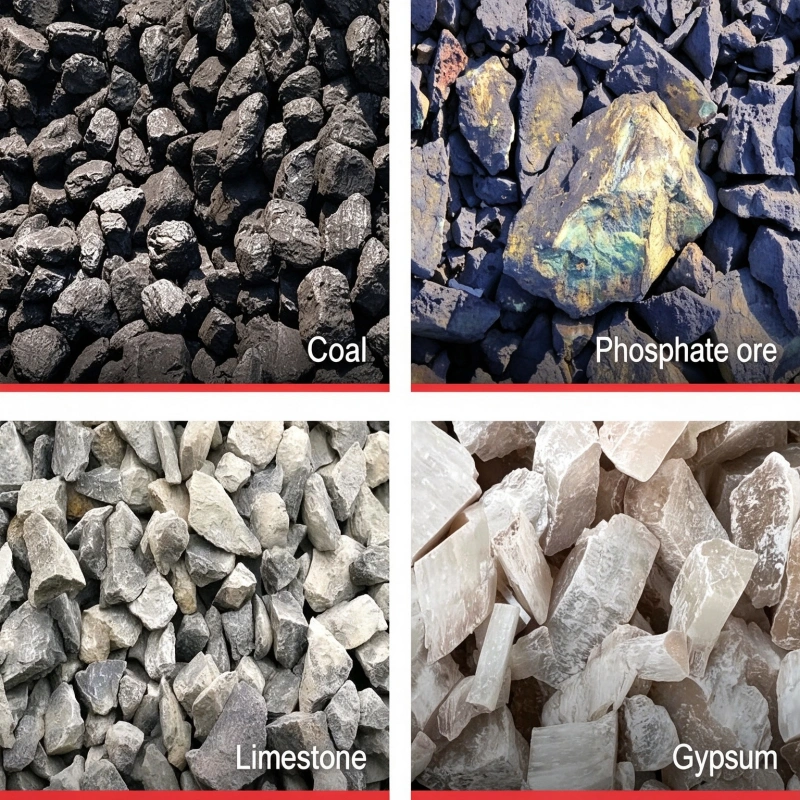
Rock Phosphate Processing Equipment

How to Select Crushers

The grinding stage controls the specific surface area of phosphate rock powder and the fineness for later granulation. It acts as the technical heart of Rock Phosphate Processing Equipment. Follow this rule for selection: check raw material moisture and hardness first, then match main crushers based on target capacity.

Two optional process routes:

• Dry grinding route:

Raw ore is dried in a rotary dryer until moisture ≤ 5%, then sent to fine grinders. Finished dry phosphate rock powder can be used directly for SSP production, NPK granulation or bulk bag sales.

• Direct grinding route for high-moisture feed:

For rainy-season wet ore or blends with organic matter, use wet-material crushers with no sieve plate design to get rid of frequent sieve blockages common on traditional machines.

Crusher selection matrix for fertilizer plants:

Feed Condition Recommended Machine Key Features
High-moisture / sticky phosphate rock (15%–30% moisture) Semi-wet material crusher Double rotor, no sieve plate; upper & lower rotors perform high-speed bidirectional shearing crushing; anti-stick lining plates fitted inside the chamber, ideal for rainy wet ore
Medium-hard lumpy phosphate rock, primary & secondary crushing (5–30 t/h) Heavy-duty vertical / horizontal chain crusher High-strength wear-resistant alloy chains and hammers, strong impact resistance; uniform discharge size (1–5mm); wear part replacement takes only 15 minutes
Fine powder making, high fineness requirement (60–200 mesh) High-efficiency hammer mill / cage mill Matched with air classification and pulse dust collection, produces smooth and consistent fine powder, core Rock Phosphate Processing Equipment for commercial rock phosphate powder and fine fertilizer production

Finished powder fineness matching downstream applications:

20–60 mesh (coarse / fine granules): Filler material for NPK rotary / disc granulation and organic-inorganic blended fertilizer

60–120 mesh (standard fine powder): Acidulation for SSP production, activated phosphate rock powder for direct application on acidic soil

120–200 mesh (superfine powder): Feedstock for high-efficiency water-soluble fertilizers and fine phosphate chemical processing
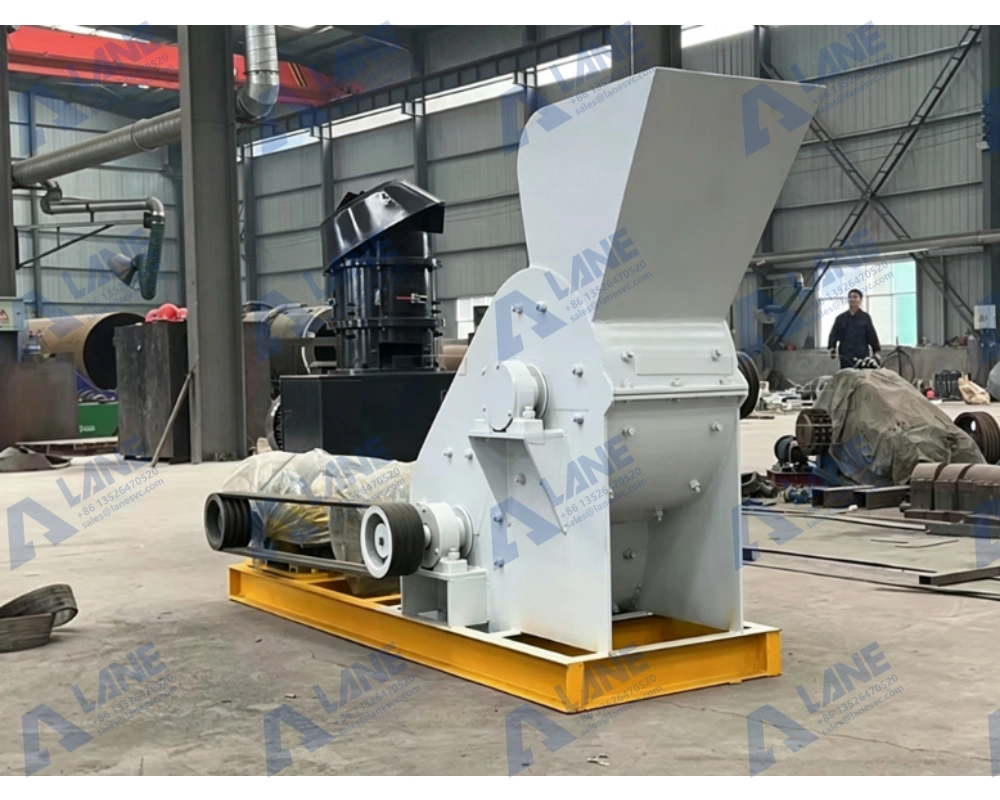
Hammer Crusher, Rock Phosphate Processing Equipment

 Application Section

Purchasing Rock Phosphate Processing Equipment is only a fixed-asset investment. Turning grey-black phosphate rock into high-value commercial fertilizer is the real target. There are four profitable downstream channels:

✅ Channel 1: Sell commercial phosphate rock powder (simplest setup, fastest payback)

In acidic red soil zones across Southeast Asia, Latin America and West Africa, 80–100 mesh phosphate rock powder can be spread directly on farmland without complicated chemical processing. It slowly releases available phosphorus and mitigates soil acidity. The line only requires crushing + drying + grinding + packaging, with low capital input and fast cash flow recovery.

✅ Channel 2: Manufacture SSP & TSP (stable high-demand agrochemical products)

Ground phosphate rock powder mixes with sulfuric acid in an acidulation mixer, then goes through curing, re-crushing, granulation and drying to form granular phosphate fertilizer, doubling the per-ton added value.

✅ Channel 3: Serve as core phosphorus source for NPK compound fertilizer and organic fertilizer (steady order volume)

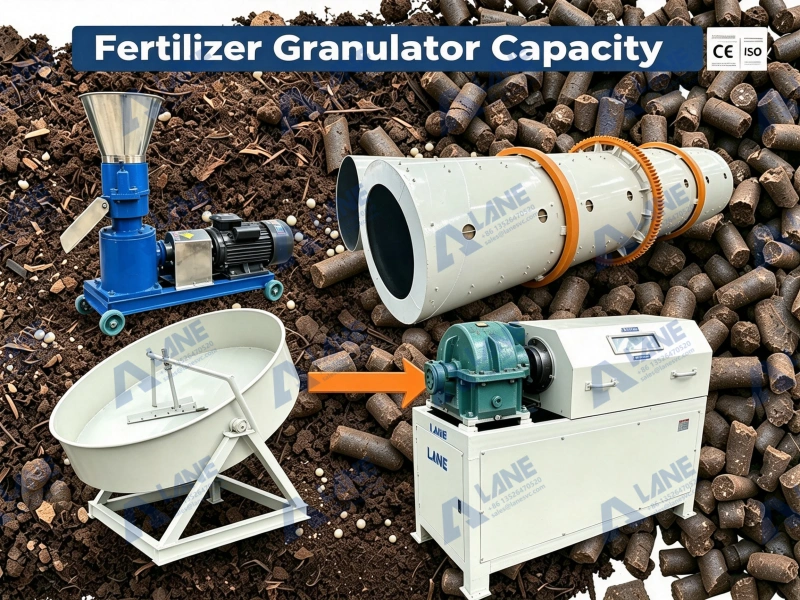
Paired with our twin-shaft mixer, rotary / disc granulator, dryer and cooler, phosphate rock powder blends with nitrogen, potassium or organic materials for granulation, helping you build your own high-margin compound fertilizer brand with consistent market demand.

Real profit breakdown from operating fertilizer plants: Better fineness control and uniform particle size → Larger specific surface area of rock powder → More sufficient sulfuric acid reaction and granulation bonding. Based on site data from running fertilizer factories, upgrading to high-performance Rock Phosphate Processing Equipment raises acid conversion rate of raw ore by 2%–4%, and pushes granulation ball formation rate above 92%. For a 100,000-ton annual output plant, savings from reduced return-material energy cost and lower sulfuric acid / binder consumption alone add up to hundreds of thousands US dollars every year.
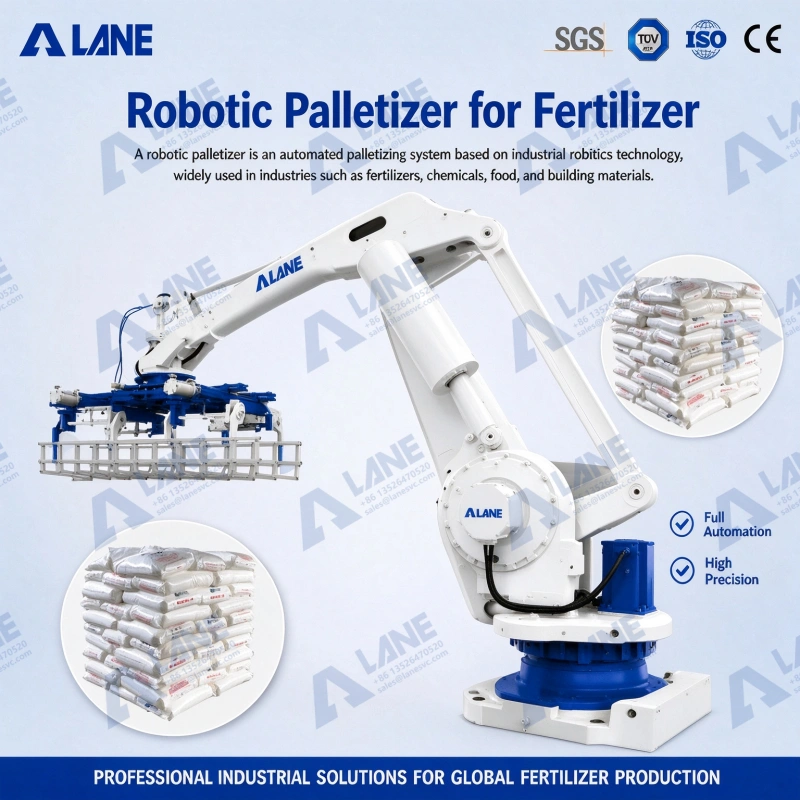
Robotic Palletizer for Fertilizer, Rock Phosphate Processing Equipment

Regional Market Pain Points & Custom Machine Packages Worldwide

Ore characteristics, climate and infrastructure differ widely from country to country. When delivering Rock Phosphate Processing Equipment globally, we have developed tailored configuration packages for five key markets:

🔹 North Africa / Middle East (Egypt, Jordan, Morocco, Tunisia)

Market pain points: Large reserves of high-grade sedimentary phosphate rock, yet extremely hot and windy climate with scarce water supply. Clients prefer fully dry processes, large throughput and low dust emission.

Recommended Rock Phosphate Processing Equipment package: Jaw crusher + heavy-duty vertical / hammer crusher cluster + pulse baghouse dust collection system + automatic ton-bag packaging line. Zero water consumption, heat and sand resistant, single line capacity can easily hit 30–50 t/h.

🔹 West Africa French-speaking zone (Senegal, Mali, Burkina Faso, Côte d’Ivoire)

Market pain points: Mainly medium-low grade ore. Long rainy seasons bring extremely wet raw ore that easily sticks to equipment. Local power grid is unstable, and buyers are mostly small fertilizer factories or agricultural cooperatives.

Recommended Rock Phosphate Processing Equipment package: Semi-wet material crusher + rotary drum dryer + cage mill + disc granulation line. Compatible with diesel generator power supply, no sticking or clogging for wet ore.

🔹 Southeast Asia / South Asia (Indonesia, India, Vietnam, Malaysia)

Market pain points: High humidity under tropical rainforest climate. Large-scale NPK and SSP plants are concentrated here, requiring Rock Phosphate Processing Equipment for 7×24 heavy-duty continuous operation and acid fog corrosion resistance.

Recommended Rock Phosphate Processing Equipment package: Anti-stick semi-wet crusher + rotary drying & cooling system + integrated acidulation mixing & granulation line. Material contact parts use 304/316L stainless steel for anti-corrosion.

🔹 Europe / North America (USA, Eastern Europe mining zones, Morocco export lines for Europe)

Market pain points: Strict environmental regulations and high on-site maintenance labor cost. Buyers demand high automation and zero dust leakage.

Recommended Rock Phosphate Processing Equipment package: Fully enclosed high-efficiency hammer grinding unit + PLC unattended intelligent control system + negative-pressure pulse dust abatement system. Dust emission meets strict European and American environmental standards.
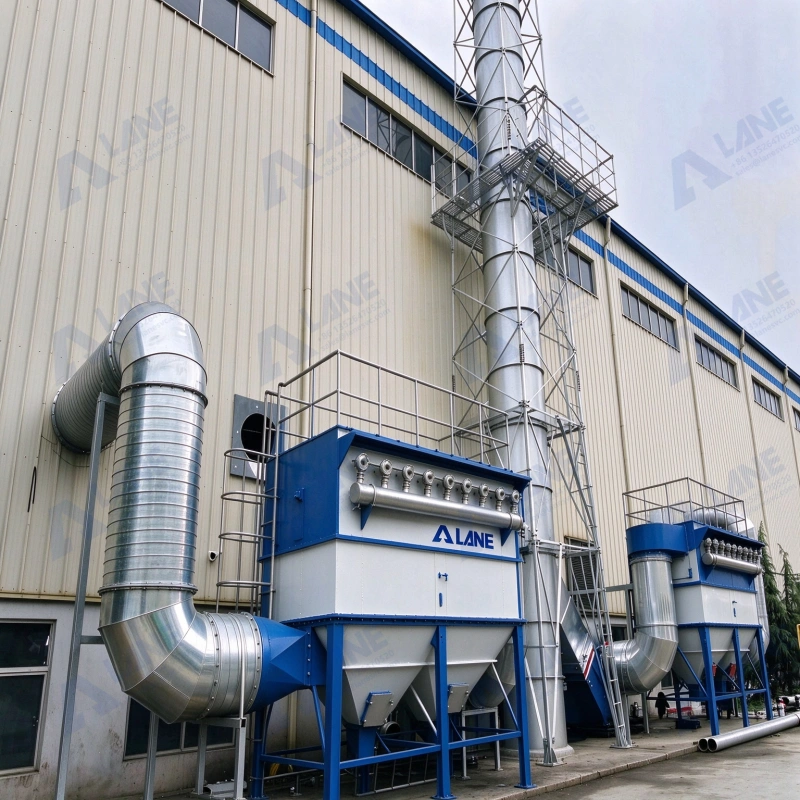
Fertilizer Baghouse Dust Collector, Rock Phosphate Processing Equipment

🔹 Latin America (Brazil, Peru, Chile)

Market pain points: Major agricultural regions. Strongly acidic soil across Amazon plains and surrounding areas fuels booming demand for SSP and directly applied activated phosphate rock powder.

Recommended Rock Phosphate Processing Equipment package: Heavy-duty chain crusher + SSP acidulation, curing and granulation line. Fineness stably locked at 80–120 mesh to maximize available phosphorus release.

Full-Line Process Layout & Scope of Supply

To help procurement and engineering teams align on process nodes quickly, here is our standardized modular workflow for Rock Phosphate Processing Equipment: Ore stockyard → Apron / vibrating feeder → Jaw crusher (primary crushing) → Semi-wet / chain crusher (secondary crushing) → Rotary drum dryer (mandatory for high-moisture ore) → High-efficiency hammer / cage mill (fine powder making) → Cyclone + pulse bag dust collection → Rotary screener → Finished silo → Automatic quantitative packaging / downstream granulation, drying, cooling and coating line

Our core supply scope for turnkey Rock Phosphate Processing Equipment: Complete feeding & crushing units, full series of semi-wet / chain / hammer / cage crushers, rotary dryers, coolers, screeners, mixers, granulators, pulse environmental dust collectors, belt & bucket elevators, PLC electric control cabinets and automatic packaging machines. All these are core equipment manufactured in our own factory.

Flexible auxiliary supply scope: For very low-grade ore requiring flotation cells or large thickeners, we offer standard process interface design and joint EPC coordination.

Rock Phosphate Processing Equipment

Pre-Selection Checklist for Procurement Managers

Before project initiation or inquiry, fill in these 7 core parameters, and we can match the correct Rock Phosphate Processing Equipment model and quotation plan precisely.

Core Check Parameter Corresponding Equipment & Process Solution
1. Raw ore P₂O₅ grade ≥ 28%: Direct crushing & grinding line; < 25%: Add scrubbing desliming or organic activation process
2. Total moisture of raw ore ≤ 8%: Run with standard crushers; 10%–25%: Semi-wet crusher + rotary dryer required
3. Mohs hardness of ore Soft / medium-hard sedimentary ore: Jaw crusher + chain crusher; Hard igneous ore: Jaw crusher + heavy hammer crusher
4. Target finished fineness 20–60 mesh (for granulation): Chain crusher; 60–200 mesh (powder / acidulation): Hammer mill / cage mill
5. Required hourly output 3–10 t/h: Single standard grinding unit; 10–30 t/h: Parallel heavy high-capacity crusher lines
6. Final product form Sell rock phosphate powder: Finished silo + packaging machine; Sell granular fertilizer: Add mixer + granulator + dryer & cooler at downstream
7. Power supply & site condition Unstable grid: Optional diesel generator package; Limited workshop height: Horizontal crusher layout

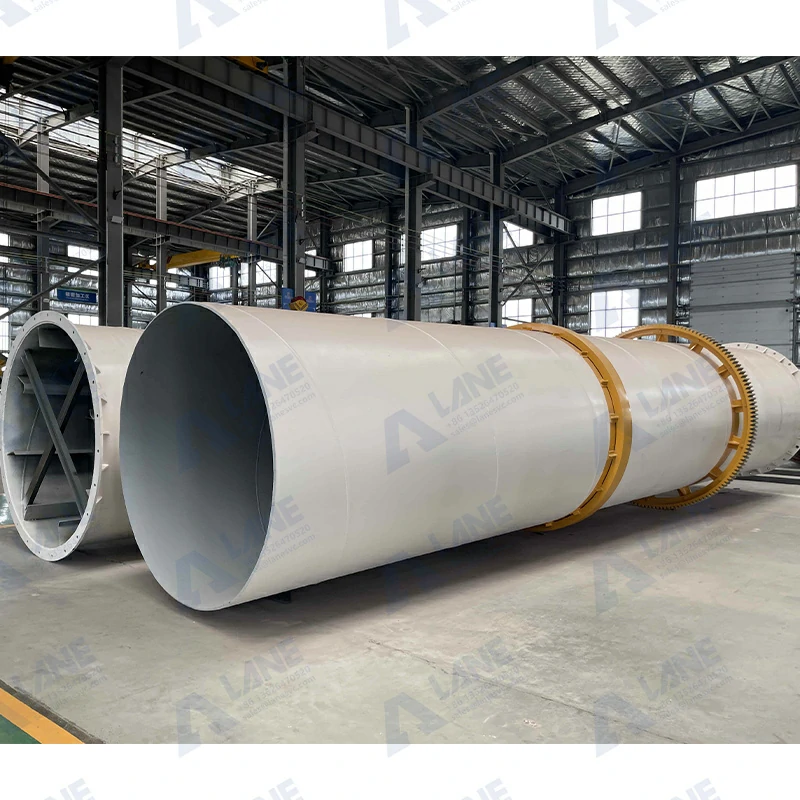
Rock Phosphate Processing Equipment, Rotary Drum Dryer, Rotary Dryer Temperature Control Problems, A rotary dryer works under continuous exposure to heat, moisture, dust, chemicals, and moving bulk materials. Over time, these conditions can affect the drum shell, lifting flights, welds, seals, and other internal components. Among the problems that can shorten equipment life, Rotary Dryer Rust and Corrosion deserves particular attention because it may develop gradually before becoming visible. For fertilizer, mineral, chemical, biomass, and other industrial drying applications, corrosion is rarely caused by one factor. High feed moisture, acidic materials, condensation, material buildup, poor surface protection, and unsuitable construction materials can all contribute to Rotary Dryer Rust and Corrosion. The most effective solution is therefore not simply removing rust after it appears. Operators need to understand where corrosion starts, why certain sections are more vulnerable, how to repair damaged surfaces, and how dryer design and operating conditions can reduce the risk from the beginning. This guide explains the causes of Rotary Dryer Rust and Corrosion, the most vulnerable parts of a rotary dryer, practical rust removal and repair methods, and prevention strategies for long-term industrial operation. What Is Rotary Dryer Rust and Corrosion? Rotary Dryer Rust and Corrosion refers to the deterioration of metal surfaces caused by chemical or electrochemical reactions with the surrounding environment. Rust is one visible form of corrosion. When iron or steel is exposed to moisture and oxygen, oxidation produces iron oxides that commonly appear as reddish-brown deposits. However, corrosion inside a rotary dryer does not always look like ordinary rust. It can appear as: • Brown or reddish surface discoloration • Blackened or chemically stained areas • Pitting • Flaking metal • Localized thinning • Corrosion around welds • Damaged lifting flights • Coating failure • Cracks or perforations in severe cases This distinction matters because Rotary Dryer Rust and Corrocsion an exist beneath material buildup or protective coatings before operators notice obvious rust on the surface. It is also important to distinguish corrosion from abrasion. Abrasion occurs when particles physically wear the metal surface. Corrosion results from chemical reactions. In many industrial dryers, however, the two problems happen simultaneously. For example: Moisture + chemicals → corrosion Solid particles + movement → abrasion Corrosion + abrasion → accelerated material loss The FEECO Rotary Dryer Handbook similarly distinguishes corrosion as a chemical process from abrasion caused by physical contact with material, while recommending appropriate construction materials and protective measures for both conditions. What Causes Rotary Dryer Rust and Corrosion? Understanding the causes of Rotary Dryer Rust and Corrosion is the first step toward selecting an effective prevention strategy. High feed moisture Moisture is one of the most important factors. The feed entering a rotary dryer normally contains its highest moisture content at the beginning of the drying process. This means the inlet area can remain exposed to wet material while evaporation is taking place. If the material contains dissolved salts, acids, or other chemically active components, moisture can increase their contact with the metal surface. The basic relationship is: High moisture → longer wet contact → higher corrosion potential This is particularly important in fertilizer drying because different fertilizer formulations can have significantly different moisture and chemical characteristics. A fertilizer dryer therefore needs to be evaluated according to the actual material entering the drum rather than simply according to its nominal capacity. Acidic or chemically aggressive materials Some raw materials are much more corrosive than others. Phosphate fertilizers are a good example. Phosphoric acid incorporated into phosphate fertilizer can create corrosion concerns during drying, particularly around the inlet where moisture content is high. Industry guidance recommends considering corrosion-resistant alloys and reinforcing high-wear areas when selecting phosphate drying equipment. This means Rotary Dryer Rust and Corrosion cannot be separated from raw material selection. The design relationship is: Material composition → chemical environment → construction material → corrosion resistance For one material, carbon steel may be suitable for most sections. For another, selected areas may require stainless steel, special alloys, protective coatings, or replaceable corrosion-resistant components. This targeted approach can be more practical than using expensive corrosion-resistant material throughout the entire drum. Material buildup inside the drum Material buildup is another major cause of Rotary Dryer Rust and Corrosion. When wet or sticky material adheres to the drum shell or lifting flights, the deposit can trap moisture and corrosive compounds against the metal. The process can develop into: Wet material → buildup → trapped moisture → prolonged chemical contact → localized corrosion Buildup also affects drying performance. It can reduce effective heat transfer, change material residence time, and place additional stress on internal components. Chemical Engineering guidance for rotary dryers notes that corrosive buildup can promote excessive corrosive wear on dryer walls and flights. This creates a strong internal-link opportunity for an article about material buildup in rotary dryers or how to prevent rotary dryer buildup. Condensation Condensation is another source of Rotary Dryer Rust and Corrosion that is easy to overlook. A rotary dryer may contain hot, humid air during operation. When a cooler metal surface comes into contact with this air, water can condense. This may occur during: • Startup • Shutdown • Low-load operation • Long periods of downtime • Poor exhaust control • Insufficient insulation If condensed water remains on a metal surface, corrosion can continue even when the dryer is not actively processing material. For this reason, corrosion prevention should cover both production and shutdown conditions. Poor cleaning practices Cleaning is important, but improper cleaning can also increase Rotary Dryer Rust and Corrosion. Excessive water left inside the drum can increase moisture exposure. At the same time, aggressive chemicals may damage coatings or react with the construction material. A better cleaning procedure should consider: • What material has accumulated? • Where is the buildup located? • What cleaning method is compatible with the drum material? • Can the surface be completely dried afterward? The goal is not simply to make the drum look clean. The goal is to remove corrosive deposits without creating a new moisture problem. Which Parts Are Most Vulnerable to Rotary Dryer Rust and Corrosion? Not every section of a rotary dryer experiences the same level of Rotary Dryer Rust and Corrosion. The following areas deserve particular attention during inspection. Feed inlet The feed inlet is often one of the highest-risk areas. Incoming material normally has its highest moisture content here. If the material is acidic or chemically aggressive, the combination of moisture and chemical exposure can accelerate corrosion. This is especially relevant for phosphate fertilizer dryers. Industry sources specifically identify the dryer inlet as a corrosion-sensitive area because moisture content is higher there. A useful internal link can be placed here to your fertilizer drying machine or fertilizer production line page. Drum shell The drum shell is the main containment surface of the drying process. Surface corrosion may initially appear harmless, but localized metal loss can gradually reduce shell thickness. Operators should check for: • Rust patches • Pitting • Flaking • Uneven surface thickness • Cracks • Deformation • Previous repair areas The shell should receive additional attention wherever wet material tends to remain attached. Lifting flights Lifting flights repeatedly contact the processed material and therefore experience both chemical and mechanical stress. They are exposed to: Moisture Chemicals Abrasive particles Repeated heating and cooling Material impact Material buildup Severe Rotary Dryer Rust and Corrosion on flights can weaken their structure and eventually affect material lifting and heat transfer. This section is also an excellent place to internally link to content about rotary dryer lifting flights or rotary dryer material buildup. Welded areas Welded areas deserve special inspection because surface irregularities, crevices, residual stress, and poor finishing can create localized weak points. For phosphate drying equipment, industry guidance recommends grinding welds smooth to reduce locations where material can collect and corrode. It also recommends properly welding internal flights to help deter corrosion. Therefore, Rotary Dryer Rust and Corrosion prevention is not only about choosing the right steel. It also involves fabrication quality. Discharge and exhaust areas The discharge and exhaust sections experience different conditions from the feed end. Hot and humid exhaust gas can create condensation when temperatures fall unexpectedly. Therefore, an inspection for Rotary Dryer Rust and Corrosion should cover the entire process path rather than focusing only on the area where rust is most visible. How to Identify Rotary Dryer Rust and Corrosion Early Early detection can prevent a small problem from becoming an expensive repair. Operators should watch for: • Reddish-brown rust • Dark discoloration • Flaking surfaces • Small pits • Coating failure • Rust around welds • Corrosion beneath buildup • Damaged lifting flights • Unusual dust leakage • Localized holes or thinning One of the most important warning signs is localized corrosion. A drum may look acceptable from the outside while significant corrosion is developing underneath accumulated material. For this reason, visual inspection should be combined with physical inspection when necessary. Depending on the severity of Rotary Dryer Rust and Corrosion, maintenance teams may need thickness measurements or other inspection methods to determine whether the shell remains suitable for continued operation. The earlier the problem is identified, the more likely the repair will remain localized. How to Remove Rust From a Rotary Dryer Removing visible rust is only part of the solution. A practical rotary dryer rust removal process should determine whether the damage is superficial or structural. Step 1: Stop and isolate the dryer Before maintenance begins, stop and isolate the dryer according to the site's safety procedures. Allow the equipment to cool to a suitable maintenance temperature. Step 2: Remove material buildup Remove accumulated material before evaluating the metal surface. Otherwise, deposits can hide the actual extent of Rotary Dryer Rust and Corrosion. Pay particular attention to: • Feed sections • Lifting flights • Welded areas • Shell joints • Discharge sections Step 3: Remove loose rust For light surface rust, appropriate mechanical cleaning can be used depending on the construction material and maintenance procedure. Possible methods include: • Wire brushing • Mechanical abrasion • Sanding • Suitable abrasive blasting The objective is to expose the actual metal surface. Step 4: Inspect the exposed surface After rust removal, inspect the metal again. Ask: • Is the corrosion superficial? • Are there pits? • Has the metal become thinner? • Is the weld damaged? • Is cracking present? • Are flights severely weakened? • Has the protective coating failed? This step is critical because painting over damaged metal does not restore lost thickness. How to Repair Rotary Dryer Rust and Corrosion The correct repair method depends on the severity of Rotary Dryer Rust and Corrosion. Minor surface corrosion For light surface corrosion: Clean → Remove rust → Inspect → Treat surface → Apply protection The surface should be properly prepared before a protective coating is applied. Localized corrosion If corrosion has caused measurable metal loss in one section, the damaged area may require: • Local plate replacement • Flight replacement • Reinforcement • Surface restoration • Protective coating • Corrosion-resistant replacement material The objective is to restore the affected area and address the reason corrosion developed there. Severe shell corrosion If the drum shell has significant metal loss, cracks, or holes, simply applying a coating is not enough. A qualified maintenance or engineering team should evaluate the structural condition. Depending on the damage, a shell section may need to be replaced or reconstructed. This is why early inspection of Rotary Dryer Rust and Corrosion is usually much more practical than waiting until a major shutdown is required. How to Prevent Rotary Dryer Rust and Corrosion Effective Rotary Dryer Rust and Corrosion Prevention begins with equipment design and continues through daily operation. Select materials according to the processed material Construction materials should be selected according to the actual feed characteristics. Important factors include: • Chemical composition • Moisture content • Acidity or alkalinity • Chloride content • Abrasiveness • Operating temperature • Material residence time • Cleaning conditions It notes that selecting stainless steel or suitable alloys can help minimize corrosion and that construction material should be considered in relation to the material being processed. The most economical solution is not necessarily to build the whole dryer from premium material. A more targeted approach can be: High-risk section → corrosion-resistant material High-wear section → wear-resistant material Normal section → suitable standard construction material This approach can balance equipment life and investment cost. Protect high-risk areas High-risk areas can receive additional protection through: Corrosion-resistant alloys Protective coatings Replaceable components Reinforced plates Improved surface finishing This is especially useful when the corrosion risk is concentrated around the wet feed end. For example: Wet inlet zone → higher corrosion protection Middle drying zone → standard protection Dry discharge zone → condition-based protection The exact configuration should depend on the processed material and operating conditions. Improve weld and surface design Good fabrication practices can reduce Rotary Dryer Rust and Corrosion by minimizing areas where moisture and material can remain trapped. Design and fabrication should pay attention to: • Weld quality • Smooth surface finishing • Crevices • Material catch points • Internal flight connections • Previous repair locations This is particularly important for corrosive fertilizer materials. A smoother internal surface makes it harder for wet material to remain attached and reduces the opportunity for localized corrosion. Control material buildup Controlling buildup is one of the most practical methods of reducing Rotary Dryer Rust and Corrosion. Operators should monitor: • Feed moisture • Feeding rate • Material stickiness • Drum speed • Drying temperature • Airflow • Flight condition When buildup begins: Identify the cause → Remove buildup → Correct operating conditions → Inspect the metal surface Mechanical knockers and other buildup-control methods can also be considered depending on the dryer design and material characteristics. This provides another natural internal-link opportunity to an article about how to prevent material buildup in a rotary dryer. How Temperature Control Affects Rotary Dryer Rust and Corrosion Temperature control does not automatically create Rotary Dryer Rust and Corrosion, but unstable drying conditions can indirectly increase corrosion risk. For example: High feed moisture → increased evaporation load → unstable drying → wet material zones → buildup → longer chemical contact → higher corrosion risk At the same time, excessive temperature can change material behavior, increase thermal stress, or cause unwanted product reactions. Therefore, dryer operation needs to balance: Heating capacity + airflow + feed rate + material moisture + drum speed This is closely related to Rotary Dryer Temperature Control Problems, which can affect moisture consistency, energy consumption, drying capacity, and overall equipment performance. LANE's existing technical article discusses how heat-source supply, airflow, material feeding, and dryer configuration interact to maintain stable drying conditions. This section should contain an internal link to your existing Rotary Dryer Temperature Control Problems article. That gives the two articles a clear topical relationship: Corrosion article → temperature control article Temperature control article → corrosion article Rotary Dryer Rust and Corrosion in Fertilizer Production Fertilizer production deserves special attention because fertilizer materials can combine moisture, chemicals, fine particles, and buildup tendencies. Phosphate fertilizer Phosphate fertilizer can create significant corrosion challenges during drying. Because phosphoric acid can be present, corrosion may be particularly important around the wet feed end. Industry guidance recommends corrosion-resistant alloys and reinforcement of high-wear sections for suitable phosphate drying applications. The internal-link opportunity here is your phosphate fertilizer production or fertilizer production line content. NPK fertilizer NPK fertilizer production usually requires drying after granulation. A simplified process can be represented as: Raw Material Preparation → Crushing → Batching → Mixing → Granulation → Rotary Dryer → Rotary Cooler → Rotary Screener → Packaging The dryer therefore works as part of a larger system rather than as an isolated machine. Drying performance affects: • Final moisture • Granule strength • Cooling load • Screening efficiency • Packaging performance If you have a dedicated NPK fertilizer production line page, this section is a natural place to add an internal link. Organic fertilizer Organic fertilizer materials can contain significant moisture and may behave differently during drying depending on the formulation. Some materials can become sticky during the early drying stage, increasing the risk of buildup. That creates the following relationship: Organic material → high moisture → sticking → buildup → trapped moisture → corrosion risk Therefore, controlling buildup is important for both drying efficiency and Rotary Dryer Rust and Corrosion prevention. This section can naturally link to an organic fertilizer production line article or an organic fertilizer dryer page. Why Buildup and Corrosion Should Be Solved Together One of the most important points in Rotary Dryer Rust and Corrosion prevention is that corrosion and buildup can reinforce each other. Consider the following cycle: Sticky material → surface buildup → trapped moisture → chemical exposure → corrosion → rougher surface → easier material adhesion → more buildup Once this cycle begins, simply removing rust may not solve the problem. The operator also needs to determine why the material is sticking. Possible causes include: • Excessive feed moisture • Incorrect drying temperature • Poor airflow • Incorrect drum speed • Unsuitable lifting-flight configuration • Material characteristics • Insufficient cleaning This is why corrosion analysis should consider both the metal surface and the process conditions. Rotary Dryer Rust and Corrosion Maintenance Checklist A practical maintenance program should combine daily observation with scheduled inspection. During operation Monitor: • Feed moisture • Material flow • Inlet temperature • Outlet temperature • Exhaust conditions • Material buildup • Unusual vibration • Dust leakage During routine inspection Check: • Feed inlet • Drum shell • Lifting flights • Welds • Discharge section • Exhaust section • Seals • Protective coatings • Previous repair areas During shutdown Use a basic sequence: Material removal → Cleaning → Internal inspection → Corrosion assessment → Repair → Surface protection → Final inspection This systematic approach makes Rotary Dryer Rust and Corrosion easier to control before it develops into a major equipment problem. How LANE Approaches Rotary Dryer Rust and Corrosion Control For a fertilizer equipment manufacturer, Rotary Dryer Rust and Corrosion should be considered during equipment selection and process design, not only after the dryer has been installed. LANE Machinery provides fertilizer machinery and complete fertilizer production solutions. Its rotary dryer design approach can consider factors such as raw material characteristics, initial moisture, production capacity, drying requirements, heat source, airflow, and equipment configuration. The design logic can be summarized as: Raw material → Material characteristics → Moisture analysis → Drying requirement → Dryer configuration → Heating system → Operating parameters → Corrosion protection This approach is particularly useful when the material has high moisture, acidic characteristics, or a tendency to form buildup. For example, a dryer processing phosphate fertilizer may require more attention to corrosion-resistant materials around the wet inlet section, while a dryer processing sticky organic fertilizer may require greater attention to buildup prevention. LANE can therefore consider Rotary Dryer Rust and Corrosion as part of the overall drying-system configuration rather than treating it only as a maintenance issue. The dryer also needs to work together with other equipment in the production line, including the Hot Blast Stove, Rotary Cooler, Rotary Screener, conveying equipment, and other fertilizer processing machines. This is where a complete fertilizer production line approach becomes more useful than selecting a dryer based only on capacity. Conclution Rotary Dryer Rust and Corrosion is not simply a cosmetic problem. It can begin with moisture, chemical exposure, condensation, or material buildup and gradually develop into pitting, metal loss, damaged flights, weakened welds, or serious structural problems. The most effective strategy is therefore: Identify the cause → Inspect vulnerable areas → Remove buildup → Remove rust → Evaluate metal loss → Repair damaged sections → Improve protection → Stabilize operation → Inspect regularly For fertilizer drying applications, particular attention should be given to the wet feed inlet, acidic materials, lifting flights, welded areas, and locations where material buildup occurs. The key is to prevent the corrosion cycle before it becomes difficult to control. A well-designed rotary dryer should therefore consider not only drying capacity, but also: • Material characteristics • Moisture profile • Chemical properties • Abrasion • Buildup tendency • Construction materials • Surface protection • Temperature control • Maintenance requirements When these factors are considered together, Rotary Dryer Rust and Corrosion can be managed more effectively while maintaining stable drying performance and extending equipment service life.

FAQ

Q1: Does your full Rock Phosphate Processing Equipment line include downstream granulation and packaging machines?

A: Yes, they are fully included and this is one of our key strengths. As a professional fertilizer equipment manufacturer from the source, we provide not only front-end crushing, drying and grinding machines, but also one-stop supporting mixers, disc / rotary granulators, dryers, coolers, screeners, coating machines and automatic quantitative packaging machines. We deliver true turnkey projects where raw ore goes in and finished granular fertilizer comes out.

Q2: If phosphate rock dug out in rainy seasons carries high moisture, will it clog the crusher directly?

A: It will not jam as long as you select the dedicated machine. For wet ore with 15%–30% moisture, our no-sieve double-rotor semi-wet material crusher is designed for this scenario. It runs high-speed bidirectional shearing with inner anti-stick lining plates. The ore goes through primary crushing first, then rotary drum drying and fine grinding to completely eliminate shutdowns caused by sticky wet feed in rainy periods.

Q3: We plan to build a plant in French-speaking zones of West Africa or North Africa. Can you supply all French technical documents and after-sales service?

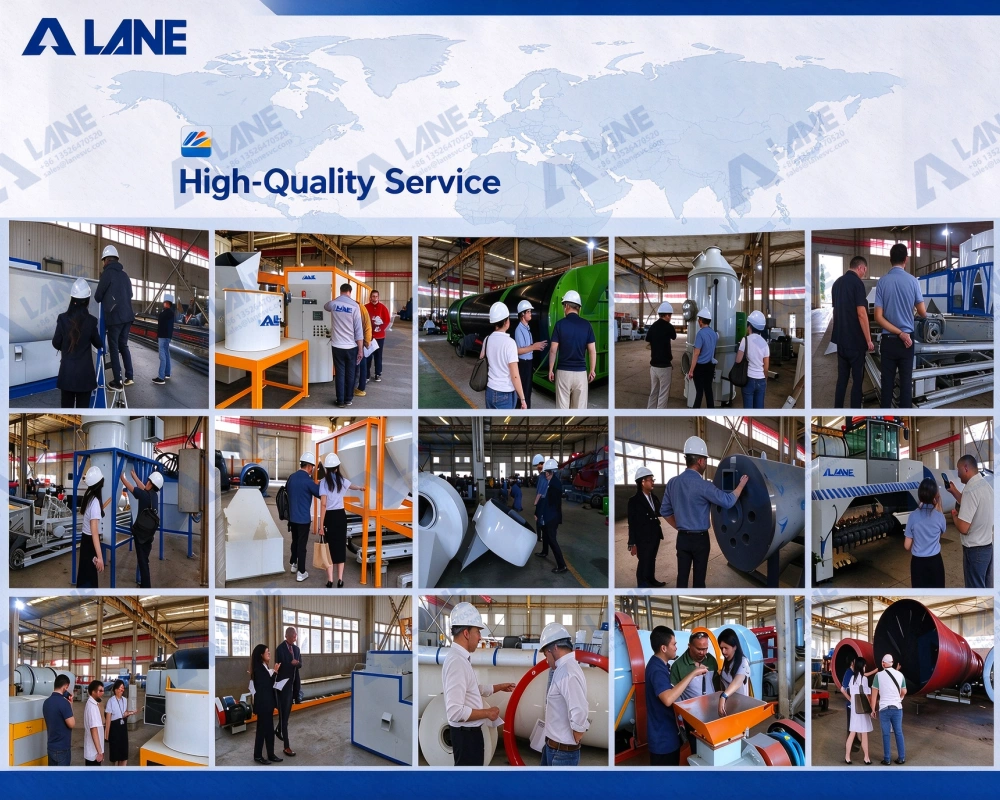
A: We offer fully French-language support for the whole project. We have rich experience delivering fertilizer plant projects in Morocco, Senegal, Mali, Algeria and other French-speaking countries. Our service covers French version process flow diagrams (PFD), equipment operation & maintenance manuals, French labels on electric control panels at the preparation stage, as well as on-site commissioning and hands-on training for local workers by French-speaking engineers after delivery.
Rock Phosphate Processing Equipment