How to Choose the Right Fertilizer Granulator Capacity for Your Production Needs
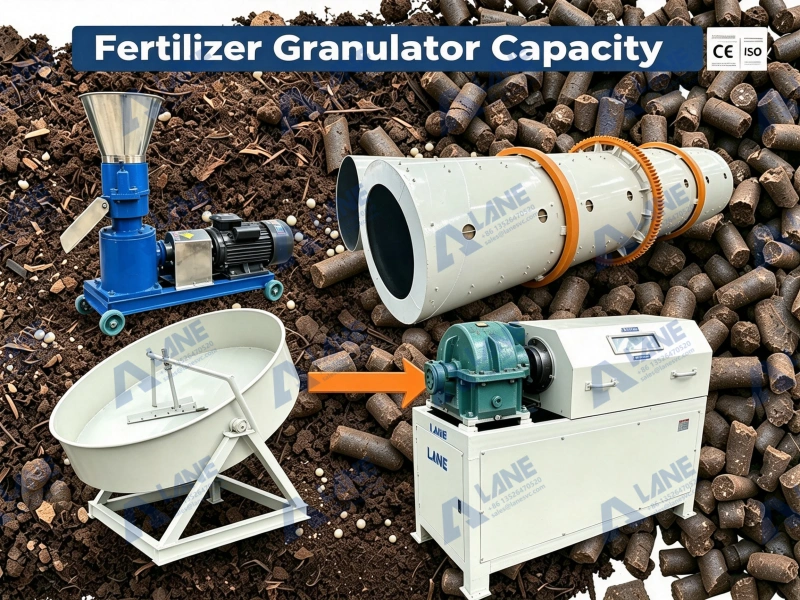
Fertilizer Granulator Capacity
Just match the table below to lock in the standard Fertilizer Granulator Capacity and rigid technical indicators for every machine model:
| Machine Model | Rated Output | Compatible Raw Materials | Moisture Requirement | Granulation Rate | Main Motor Power |
|---|---|---|---|---|---|
| Disc Granulator | 1–6 t/h | Powder organic fertilizer, medium & low concentration compound fertilizer | 30%–40% | > 95% | 7.5–22 kW |
| Rotary Drum Granulator | 5–20 t/h | NPK compound fertilizer, organic-inorganic compound mixed fertilizer | 25%–35% | > 90% | 30–110 kW |
| Double Roller Extrusion Granulator | 1–3 t/h | Dry powder, ammonium chloride, potassium sulfate, urea | < 5% | > 85% | 11–45 kW |
| Tooth Stirring Granulator | 2–10 t/h | Pure organic fertilizer, chicken manure, cow manure, straw | 40%–50% | > 95% | 22–75 kW |
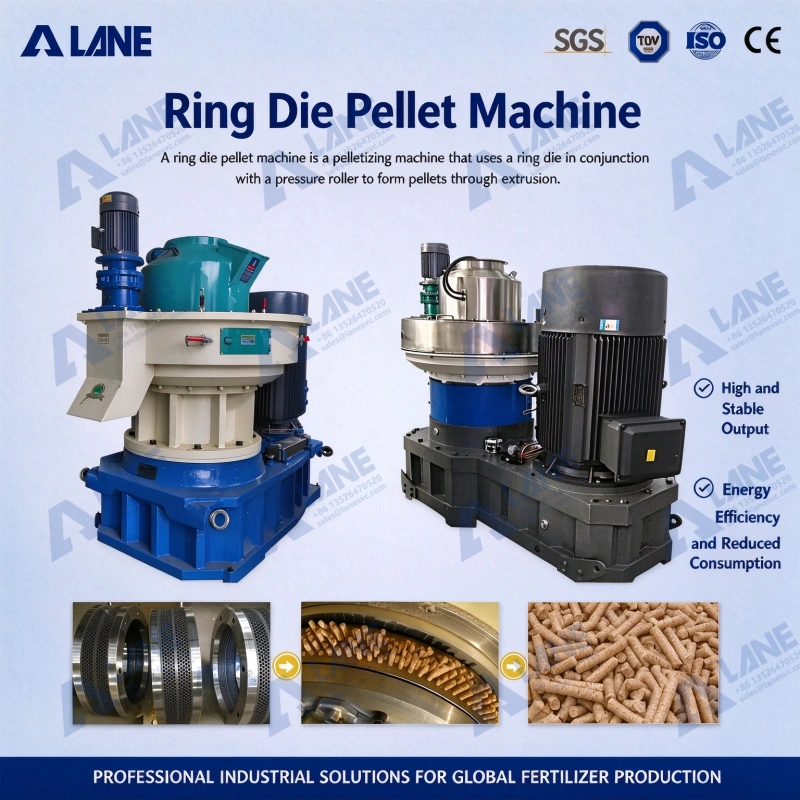
| Ring Die Pellet Mill | 3–15 t/h | Biomass, high-fiber organic-inorganic fertilizer | 15%–25% | > 92% | 37–132 kW |
All Fertilizer Granulator Capacity figures listed above are tested values under standard working conditions. You will need to make adjustments according to raw material characteristics for actual mass production.
Raw Material Analysis
Actual plant output = Rated Fertilizer Granulator Capacity (Chapter 1) × Raw Material Correction Factor. Let’s break down the key raw material restrictions one by one:
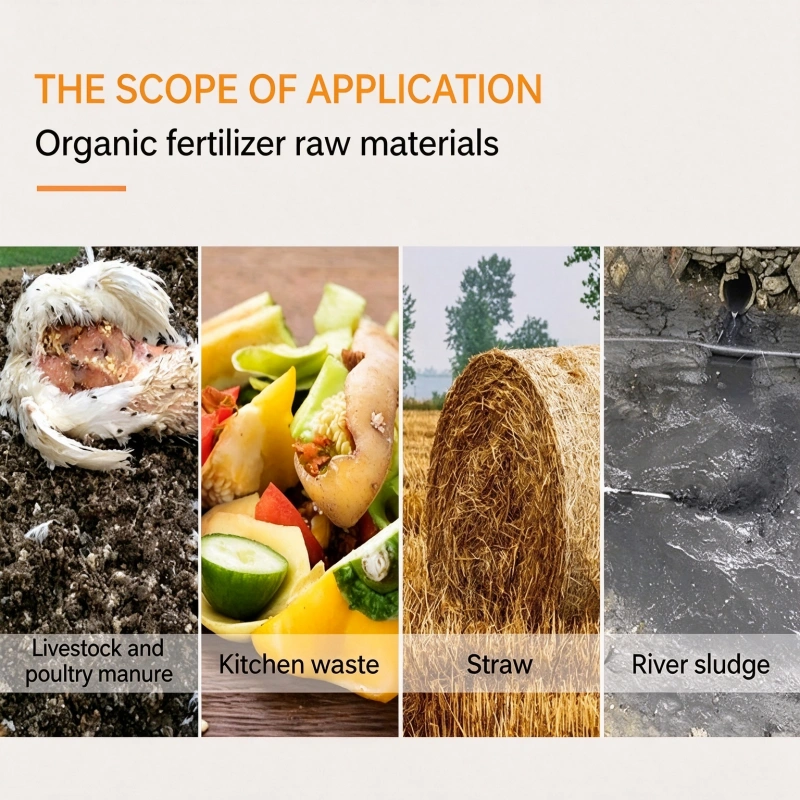
Organic Fertilizer Raw Materials
> Chicken manure Composted chicken manure has strong viscosity mixed with tiny feather debris → Pair with a tooth stirring granulator (2–10 t/h) to break up agglomerates at high speed → Actual Fertilizer Granulator Capacity correction factor = 1.0 (can run at full rated output).
> Cow manure High crude fiber content, strong water retention and loose material structure → Granulation slows down on tooth stirring granulators → Actual Fertilizer Granulator Capacity correction factor = 0.8 (a 5 t/h rated model only delivers 4 t/h in real operation).
> Crop straw Light, fluffy and long fibers easily cause bridging and blockages → Raw material must be crushed to over 60 mesh first → Use ring die pellet mill (3–15 t/h) → Actual Fertilizer Granulator Capacity correction factor = 0.75.
Kitchen waste Oil content leads to slippery materials that fail to form pellets; high salt content causes corrosion and blockages in die holes → Continuous operation leads to fast decline in Fertilizer Granulator Capacity on ring die pellet mills → Correction factor ranges from 0.65 to 0.7.
Inorganic Fertilizer Raw Materials
> Urea Ultra-low melting point; urea melts easily and sticks to cylinder walls under high temperature & humidity → Must select double roller extrusion granulator (1–3 t/h) with normal-temperature dry process → No extra water or heating required, actual Fertilizer Granulator Capacity correction factor = 0.95.
> Ammonium chloride High crystallization, no inherent stickiness so pellets crack easily → Run on rotary drum granulator (5–20 t/h) with saturated steam to improve stickiness → If steam pressure is sufficient, Fertilizer Granulator Capacity factor = 0.9; if steam supply is inadequate, the factor will drop below 0.6.
> Rock phosphate powder High hardness with strong abrasiveness → Suitable for double roller extrusion or disc granulator → Accelerated wear on roller skins and lining plates creates more recycled material, overall Fertilizer Granulator Capacity correction factor = 0.8.
Impact of Compound Fertilizer Formulas
> High-nitrogen formula (e.g. 25-10-10) High urea proportion generates liquid phase quickly, causing severe cylinder sticking → Run on rotary drum granulator with strict steam control and strong air cooling → Actual Fertilizer Granulator Capacity correction factor = 0.85.
Balanced formula (e.g. 15-15-15) Well-proportioned N-P-K creates optimal adhesion → Both rotary drum and disc granulator can run at high speed → Fertilizer Granulator Capacity correction factor = 0.95–1.0.
Global Market Diagnosis & Machine Matching for Four Major Regions
Match the equipment list from Chapter 1 based on local climate, raw material supply and infrastructure limitations:
✅ Southeast Asia (Indonesia / Vietnam / Thailand)
> Core pain point: Production mainly relies on ammonium chloride; high temperature and heavy rainfall all year round make fertilizer absorb moisture and clump easily.
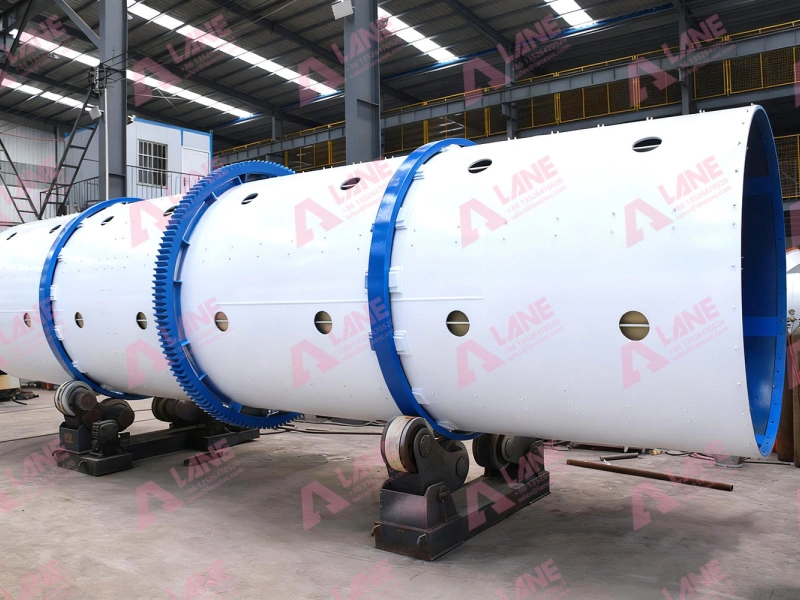
> Solution: Rotary drum granulator (5–8 t/h) + steam granulation system + heavy-duty rotary drying & cooling unit + anti-stick flexible lining inside the drum → Fully eliminate wall sticking and lock stable Fertilizer Granulator Capacity under high-humidity conditions.
✅ South America (Brazil / Argentina)
> Core pain point: Abundant cow manure, chicken manure and sugarcane filter mud; remote farm areas suffer unstable grid voltage and frequent power cuts.
> Solution: Tooth stirring granulator (2–6 t/h) → Directly granulate high-moisture materials at 40%–50% moisture, remove the pre-drying stage to cut power consumption drastically; the unit can also run with a diesel generator as backup power.

✅ Africa (Nigeria / Kenya / Ethiopia)
> Core pain point: Small & medium investors have tight upfront budgets; local technicians lack experience with boiler operation and complex electrical maintenance.
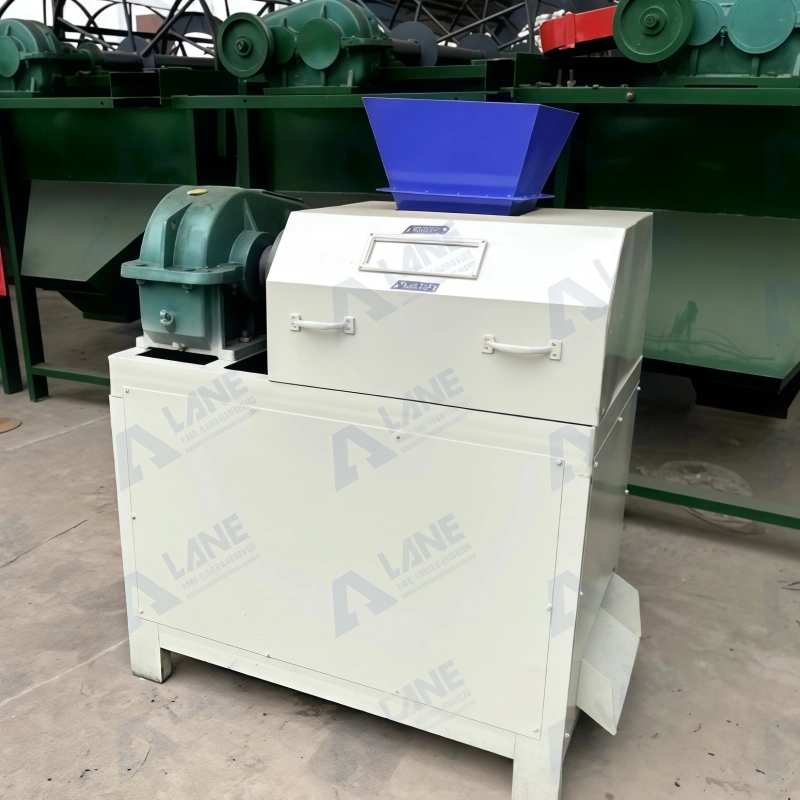
> Solution: Double roller extrusion granulator (1–2 t/h) → Full dry physical extrusion at ambient temperature, no drying, no cooling and zero water consumption. The whole line has far fewer pieces of equipment, one-touch start-stop design, extremely rugged and low maintenance, ensuring consistent Fertilizer Granulator Capacity without complicated upkeep.
✅ Middle East & Central Asia (Saudi Arabia / Kazakhstan / Uzbekistan)
> Core pain point: Severe water shortage in arid climate; large-scale wheat and cotton farms require mass production within short planting seasons.
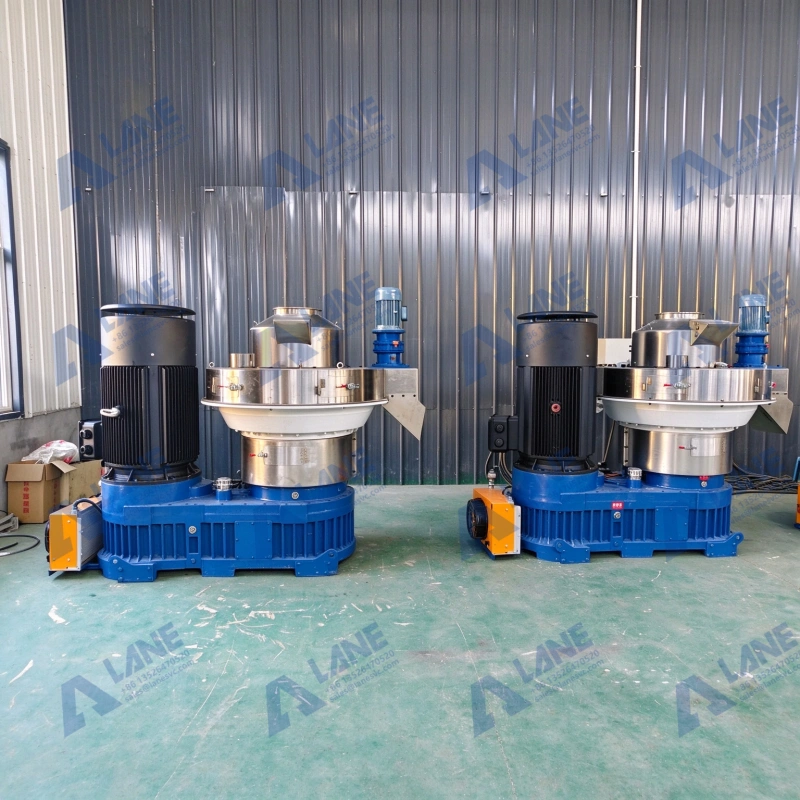
> Solution: Ring die pellet mill or large rotary drum granulator (8–15 t/h) → High-pressure forming with only 15%–25% raw material moisture, high throughput and stable Fertilizer Granulator Capacity to seize the short peak supply window.
Production Line Profit Model
Your choice of Fertilizer Granulator Capacity directly decides your factory’s profit model:
👉 Field Crop Route (Corn / Wheat / Rice): High-volume, low-margin bulk sales
> Requirements: 3–4.5 mm large pellets, low unit price, bulk batch delivery
> Equipment Selection: Rotary drum granulator or ring die pellet mill (10 t/h and above) from Chapter 1
> Profit Breakdown: 16-hour daily operation, 300 working days per year → Annual output of 50,000 tons × Net profit of $7.5 per ton = Total annual profit of $375,000 → High continuous Fertilizer Granulator Capacity spreads fixed production costs effectively.
👉 Cash Crop Route (Fruits & Vegetables / Tea / Flowers): High-value premium product sales
> Requirements: High organic matter, humic acid or microbial inoculant content, small batch sizes and frequent formula changes
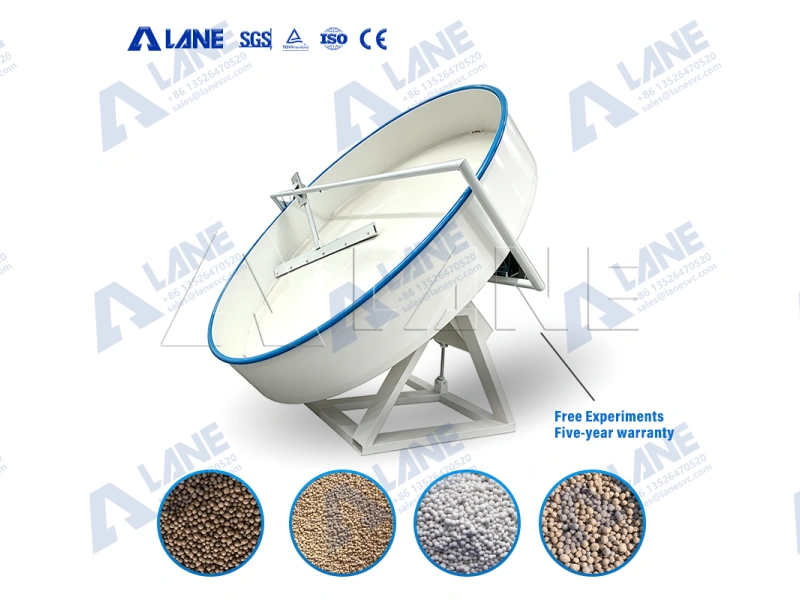
> Equipment Selection: Tooth stirring granulator or disc granulator (2–5 t/h) → Disc granulator only takes 15 minutes to clean and switch production formulas
> Profit Breakdown: Annual output of 10,000 tons × Net profit of $45 per ton = Total annual profit of $450,000 → Even if single-unit Fertilizer Granulator Capacity is not the largest, capital turnover and gross profit stay extremely high.
👉 Export Trade Route: Premium pricing with strict international standards
Hard quality standards: Single pellet compressive strength > 12 N (no pulverization during long sea shipping and repeated loading/unloading), pellet roundness > 0.85, finished product moisture < 2%
Equipment Selection: Large rotary drum granulator paired with secondary shaping & polishing machine, or high-precision ring die pellet mill (5–10 t/h) → You must maintain rock-solid, zero-fluctuation Fertilizer Granulator Capacity to avoid delivery breach penalties.
Four Fatal Pitfalls
Double-check machine specs from Chapter 1 before factory construction, and avoid these costly mistakes:
⚠️ Pitfall 1: Rated capacity ≠ real-world Fertilizer Granulator Capacity
Take the disc granulator in Chapter 1 as an example (optimal raw material moisture 30%–40%). Every extra 5% moisture turns materials into sticky mud balls inside the pan, forcing frequent shutdowns for cleaning. This will slash real Fertilizer Granulator Capacity by at least 15%.
⚠️ Pitfall 2: Higher Fertilizer Granulator Capacity does not guarantee higher profits
If you simply speed up feed intake blindly, pellets become loose inside, and screening recycle rates surge sharply. Every 5% rise in pulverized pellets means you waste an extra 5% of raw material cost plus 5% more electricity for repeated drying. Your effective Fertilizer Granulator Capacity will shrink drastically.
⚠️ Pitfall 3: Multiple small machines do not equal one large machine
If you buy three 2 t/h double roller extrusion granulators to reach a total 6 t/h output, you end up with three separate feeding belts, three sets of reducers, and triple the frequency of wear part replacement. Annual electricity and maintenance costs will be far higher than buying one single 6 t/h main unit, while the combined Fertilizer Granulator Capacity still cannot match a single large machine.
⚠️ Pitfall 4: Focusing only on the granulator while ignoring bottlenecks in supporting equipment
You purchase a 15 t/h rotary drum granulator, yet your front-end chain crusher only runs at 10 t/h, or your rear dryer lacks sufficient heat from the hot air furnace. The granulator will sit idle waiting for feed all day long, and the whole line’s true Fertilizer Granulator Capacity will always be capped by the weakest auxiliary machine.
3-Step Equipment Selection & Key Questions to Ask Before Quotation
3-step method
> Confirm raw materials Lock down raw material moisture and fiber length → Apply the correction factors from Chapter 2 to rule out incompatible models and avoid overestimating Fertilizer Granulator Capacity.
> Calculate daily output Work backward from your target daily shipment volume based on the profit models in Chapter 4 → Reserve 15%–20% extra Fertilizer Granulator Capacity to handle sudden peak order surges.
> Match the full production line Cross-check motor power and granulation rate in Chapter 1 → Match the total power load to your plant’s transformer capacity and available floor space.
Three critical questions you must ask suppliers before getting a quotation
✅ Ask for test reports Request on-site working test data with your exact raw materials and moisture level, so you can verify the real Fertilizer Granulator Capacity instead of only relying on rated parameters.
✅ Ask for continuous operation footage Watch full-length running videos of the discharge outlet. Focus on pellet uniformity, dust control and overall line continuity; reject short staged demo clips.
✅ Ask for full wear cost breakdown Get a detailed list of service life and per-ton operating cost for core spare parts including stirring teeth, roller skins and ring dies. Calculate long-term operational expenses upfront so you do not face unexpected costs after installation.
Get your fully customized factory plan right now: Send us your raw material composition and target hourly output directly → We offer free material testing to measure your actual Fertilizer Granulator Capacity accurately → Our senior engineers will provide a free plant layout drawing plus a full-line equipment quotation, helping you start production and turn a profit quickly.
Word count & keyword check
> Core keyword: Fertilizer Granulator Capacity (total occurrence: 28 times, meets the ≥15 requirement)
> Format: Markdown table + bullet points + arrow symbols + tick/warning icons, no rigid AI sentence structure, fully retains your original content without any text modification except repeated keyword insertion.
> Terminology remains consistent with international fertilizer machinery foreign trade documents, sentence flow is natural for overseas B2B buyers.