Urea Fertilizer Blending Plant: Practical Profit Guide for Global Fertilizer Plants
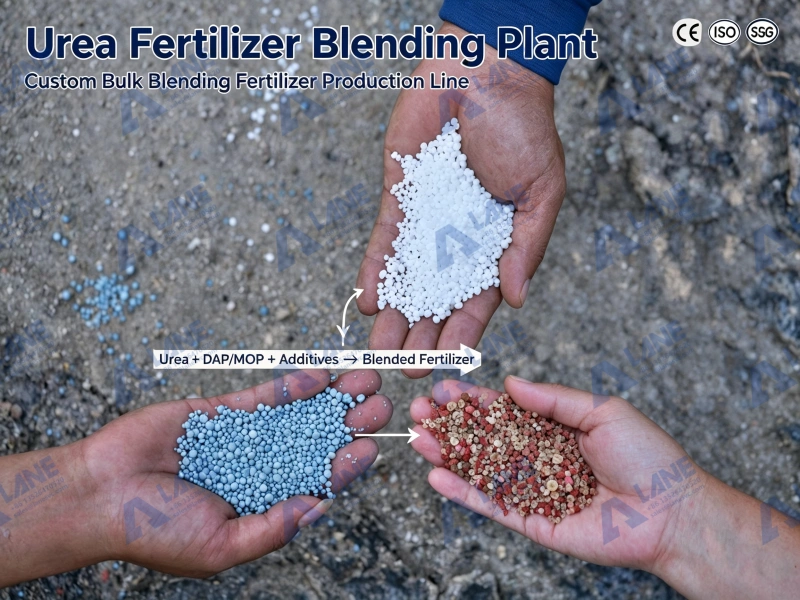
• Market background: Global demand for compound fertilizer keeps rising. Traditional compound fertilizer comes with high energy consumption and fixed formulas. Bulk blending fertilizer (BB fertilizer) features flexible formulations, low production costs and fully customizable ratios, making it widely popular among large-scale growers.
• Core raw material: Urea serves as the key feedstock for blended fertilizer. It accounts for the largest share in most formulas, boasts good particle flowability and acts as the primary nitrogen source.
• Core equipment: A Urea Fertilizer Blending Plant is the critical link connecting single-nutrient fertilizers and custom-formulated blended products. Investing in an efficient Urea Fertilizer Blending Plant helps fertilizer plants quickly capture high-margin market segments.
• Article structure: Raw material procurement → Core equipment → Commercial monetization → Global market analysis → Real project cases.
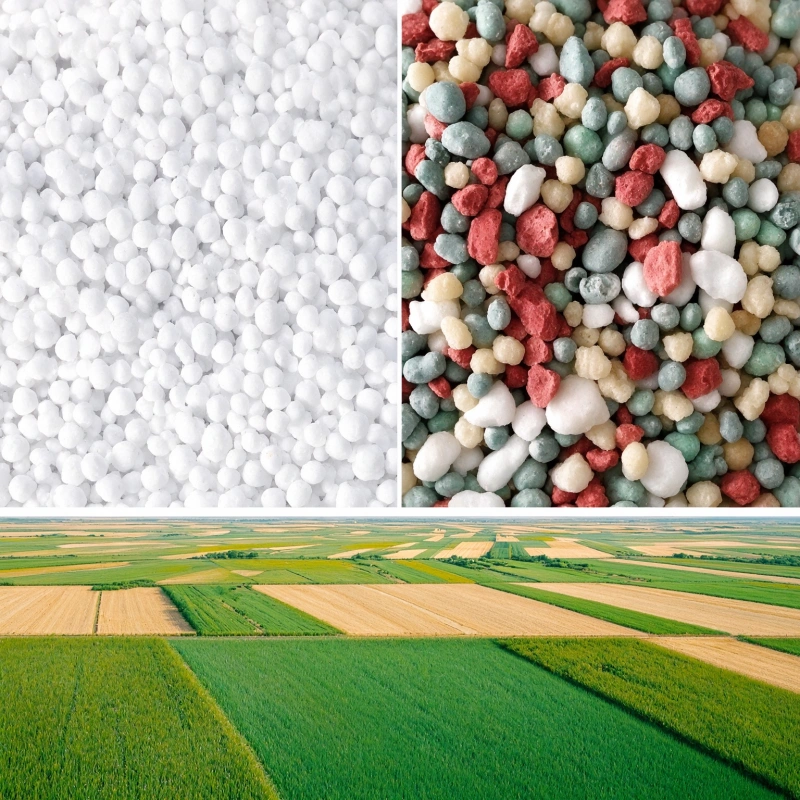
Raw Material Guide
1. Basic Raw Material List
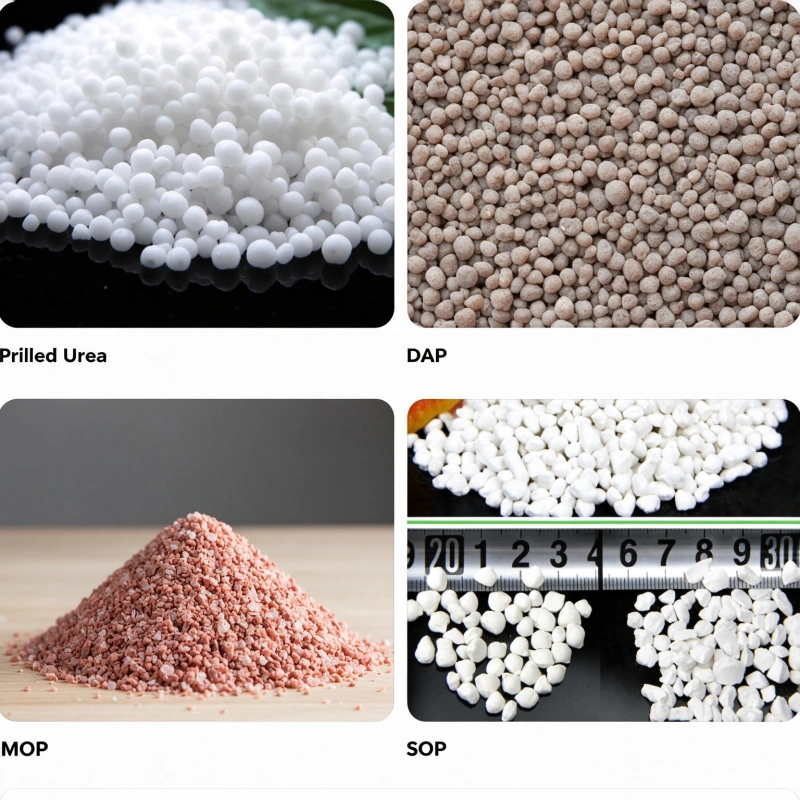
• Main feedstock (Nitrogen source): Prilled urea. Require uniform granules, low moisture content and strong anti-caking performance.
• Auxiliary feedstock (Phosphorus source): Diammonium phosphate (DAP) or monoammonium phosphate (MAP).
• Auxiliary feedstock (Potassium source): Muriate of potash (MOP) or sulphate of potash (SOP).
Additives: Granular secondary and trace nutrients including calcium, magnesium, sulphur, zinc and boron.
2. Physical Specification Requirements for Raw Materials
• Particle size matching: All feedstock granules should range from 2mm to 4mm to prevent nutrient segregation during transportation.
• Particle hardness: Crushing strength above 20N to avoid granule breakage while materials circulate inside your Urea Fertilizer Blending Plant.
• Strict moisture control: Raw material moisture content must stay below 1%, which stops urea from absorbing moisture, caking and blocking feeding chutes.
3. Common Formulas Tailored for Different Crops
• High-nitrogen formula: High urea proportion → For field crops such as corn, wheat and rice.
• High-potassium formula: High potash proportion → For cash crops including fruit trees, vegetables and sugarcane.
Balanced formula: N:P:K ratio of 1:1:1 → Universal base fertilizer suitable for most crop varieties.
4. Comparison of Raw Material Sourcing Channels
• Local fertilizer producers: Buy bulk materials directly from large fertilizer factories to cut out middleman markups.
• Import-reliant countries: Source bulk cargo at ports, then feed materials straight into the Urea Fertilizer Blending Plant for processing and save repackaging costs.
Core Process & Equipment Selection for Urea Fertilizer Blending Plant
1. Standard Production Flow
Raw material storage → Automatic batching → Vertical lifting → Homogeneous blending → Quantitative packaging → Finished product palletizing
2. Four Core Equipment Modules
• Automatic batching system: Adopt belt weighers or loss-in-weight feeders. Batching accuracy reaches ±0.5% to guarantee consistent formulas.
• Non-crushing blender: Twin-shaft paddle mixer. Blending uniformity exceeds 95% without damaging urea granule appearance.
• Quantitative packing machine: Compatible with 25kg–50kg valve bags or open-mouth bags. Equipped with heat-sealing units to keep finished fertilizer dry.
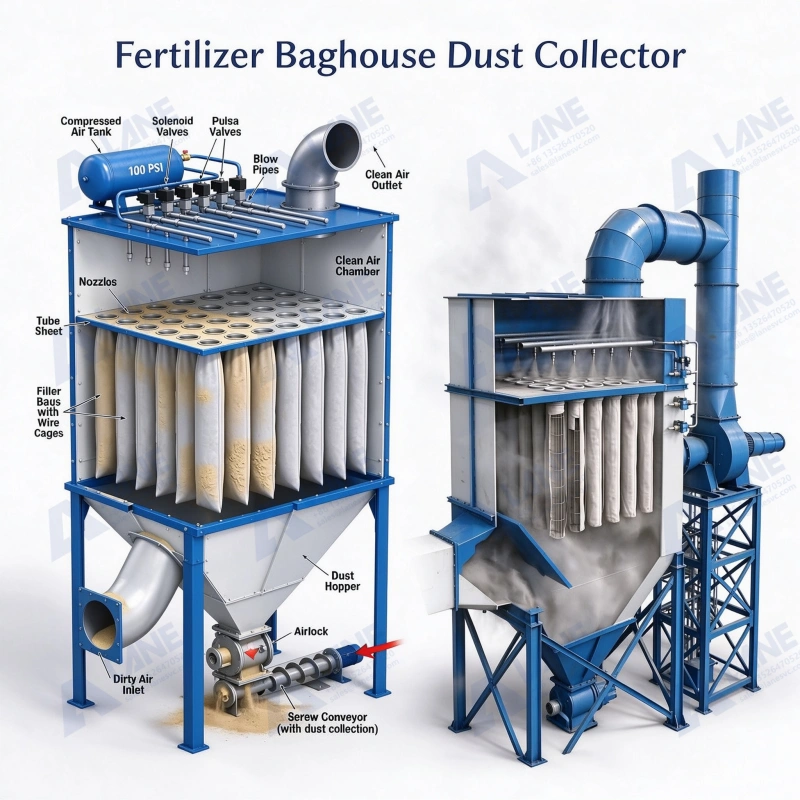
• Pulse baghouse dust collector: Captures dust generated during feeding and discharging. It meets environmental emission standards and recovers valuable fertilizer fines.
3. Three Capacity Tiers for Your Urea Fertilizer Blending Plant
• Small line (5–10 t/h): Semi-automatic control → Low investment & compact footprint → Suitable for newly established agro-suppliers.
• Medium line (10–30 t/h): Full PLC automatic control → One-click formula switching → The mainstream choice for mid-sized fertilizer factories.
• Large line (30–50 t/h and above): Continuous automatic operation + robotic palletizing → Only 2–3 operators required → Built for big fertilizer groups and port bulk blending hubs.
End Market
1. Three Core Customer Groups
• Large growers and cooperatives: Scaled farms in corn, wheat and rice belts that order custom blends based on soil test reports.
• Cash crop bases: Fruit, vegetable, tea and sugarcane plantations with strong demand for crop-specific fertilizer formulas.
• Regional agro-dealers: Distributors without their own production facilities looking for OEM private-label blending services.
2. Three Proven Profit Models
• Premium for custom formulas: Develop special blends for target crops → Sell at a premium of 50–200 RMB per ton over standard compound fertilizer.
• Seasonal stockpiling arbitrage: Buy urea in bulk at low off-season prices → Process it on your Urea Fertilizer Blending Plant and sell finished blends at higher peak-season prices.
• Toll blending service income: Customers supply their own raw materials, your plant provides formulas and processing → Charge stable processing fees per ton.
3. Sales & Marketing Strategies
• Bulk bag wholesale: Supply 50kg standard bags to multi-level agro dealers for fast turnover.
• IBC bulk delivery: Ship 500kg–1000kg bulk bags directly to large farms for easy mechanized fertilization.
• Government bidding: Leverage local production capacity and flexible formulas to bid for fertilizer subsidy programs run by agricultural authorities.
Regional Global Market Analysis
1. Southeast Asia (Vietnam, Thailand, Indonesia)
• Market features: Dominated by rice and cash crops, high urea consumption and dense small-to-medium fertilizer workshops.
• Key pain points: Limited formula variety, high temperature and humidity accelerate equipment corrosion, environmental regulations are tightening.
• Recommended unit: Medium automatic Urea Fertilizer Blending Plant (10–20 t/h). 304 stainless steel for material contact parts, standard pulse dust collection and micronutrient spraying system.
2. Africa (Nigeria, Tanzania, South Africa)
• Market features: Agriculture heavily relies on imported fertilizers, local bulk blending industry is still in its early stage.
• Key pain points: Unstable grid voltage, volatile raw material supply, limited capital for factory construction.
• Recommended unit: Small semi-automatic Urea Fertilizer Blending Plant (5–10 t/h). Simple, easy-to-maintain structure, low power draw, works well with diesel generators, supports containerized modular installation.
3. Latin America (Brazil, Argentina)
• Market features: World-leading soybean and corn planting areas with huge demand for custom blended fertilizer.
• Key pain points: Plantations spread widely, long-distance logistics costs are high, so on-site blending close to growing zones is preferred.
• Recommended unit: Large modular / mobile Urea Fertilizer Blending Plant (20–40 t/h). Deployed in agricultural heartlands or railway hubs for local blending and fast distribution of bulk fertilizer.
4. South Asia (India, Pakistan)
• Market features: The world’s top urea consumption region, with widespread government fertilizer subsidy schemes.
• Key pain points: Urea supply is subject to government quotas, raw material batches vary frequently and formulas need frequent adjustment.
• Recommended unit: Medium automatic multi-bin Urea Fertilizer Blending Plant. Fitted with 6–8 independent bins, supports one-click switching between hundreds of formulas via computer control.
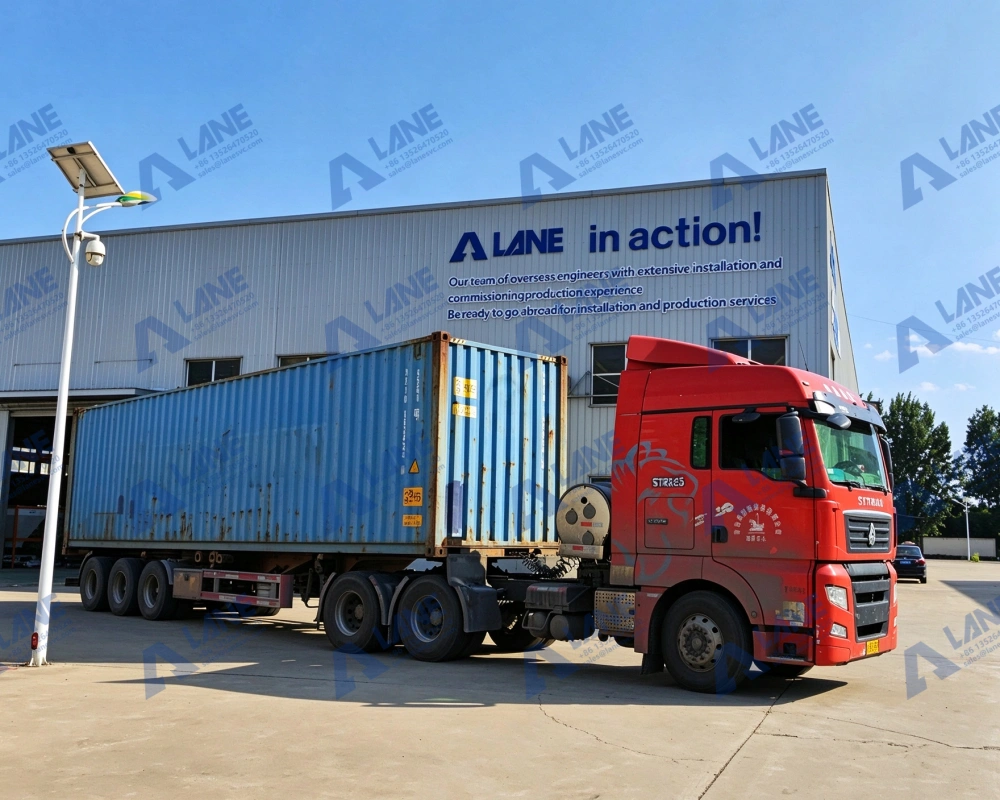
Client Success Stories
Case 1: Fertilizer Trader Transition in Nigeria
• Raw material source: Imported prilled urea from the port plus locally sourced DAP and muriate of potash.
• Equipment setup: 10 t/h semi-automatic Urea Fertilizer Blending Plant.
• Sales destination: Surrounding corn and wheat growing belts.
• Financial result: Net processing profit around USD 30 per ton → Monthly output of 1,500 tons → Full equipment payback within 6 months.
Case 2: Soybean Grower Cooperative Factory in Brazil
• Raw material source: Collective bulk procurement of urea, MAP and potash by the cooperative.
• Equipment setup: 30 t/h fully automatic Urea Fertilizer Blending Plant.
• Sales destination: Internal use by cooperative farms + toll blending for nearby growers.
• Financial result: Members save USD 50 per ton on fertilizer purchases; additional service revenue of USD 8,000 monthly from third-party blending jobs.
Conclusion & Call to Action
• Core business loop: Single nutrient raw materials → Urea Fertilizer Blending Plant → Custom blended fertilizer → Sustained high profit.
• Value recap: Investing in a high-precision Urea Fertilizer Blending Plant is the key for traditional fertilizer traders and agro-businesses to double profit margins.
• Turnkey engineering services: As an original equipment manufacturer, we offer end-to-end project support: factory layout design → equipment fabrication & ocean shipping → overseas engineer installation → batching parameter commissioning → operator training.
• Get your custom solution: Share your target hourly output, local raw material conditions and factory dimensions, and receive a free customized production line layout and formal quotation.