Water-Soluble Fertilizer Manufacturing Equipment: Precision & Corrosion-Resistant Lines
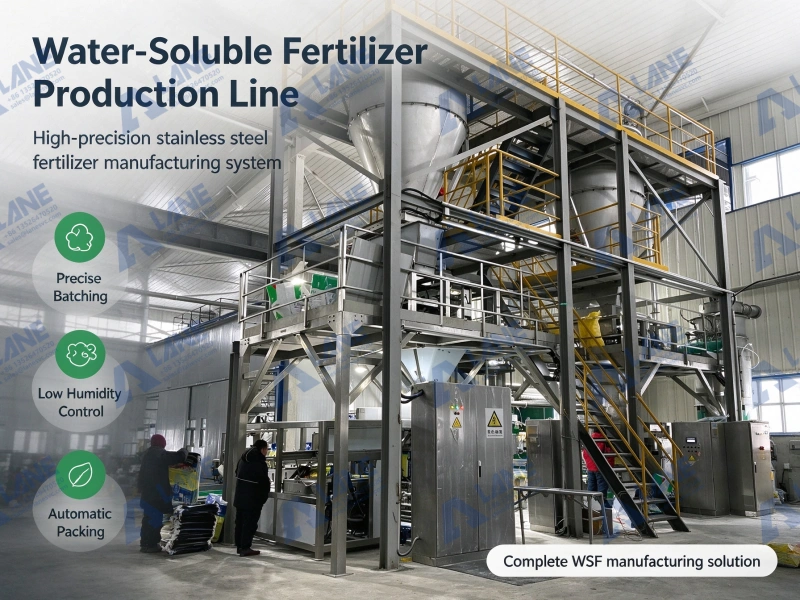
With the explosive growth of precision agriculture worldwide, water-soluble fertilizers (WSF) have become the market’s new favorite due to their high utilization efficiency and perfect compatibility with drip irrigation systems. For fertilizer manufacturers, establishing a high-efficiency production line is key to capturing market share. In this context, selecting high-performance water-soluble fertilizer manufacturing equipment is the cornerstone that determines the success or failure of the project.
1. Why Has Demand for Water-Soluble Fertilizers Exploded Recently?
• Water scarcity constraints — Drip irrigation and water-fertilizer integration technologies have become widely adopted globally.
• Significantly improved absorption rates — Traditional compound fertilizers have an absorption rate of only about 30%, while water-soluble fertilizers can reach over 80%.
• Green and low-carbon policies — Governments worldwide are providing substantial subsidies for precision fertilization to reduce non-point source pollution from chemical fertilizers.
2. Process Challenges and Stringent Equipment Requirements
Due to their extremely high water solubility, water-soluble fertilizers face significant challenges during production and storage:
• Prone to moisture absorption and caking — leading to packaging difficulties and clogged spray nozzles during use.
• Precise formulation ratios — trace elements are added in extremely small amounts, requiring exceptionally high uniformity in the mixing process.
3. The Key Value of Core Equipment
For this very reason, an advanced water-soluble fertilizer manufacturing system is not merely a collection of machines, but the key to resolving the aforementioned challenges:
• Precise control — Ensures absolute accuracy in the feeding of multiple elements.
• Moisture and Corrosion Protection — Extends equipment lifespan and ensures the free-flowing nature of the finished granules or powder.
Investing in a high-quality water-soluble fertilizer manufacturing system —> means achieving higher production efficiency —> means producing water-soluble fertilizers that are more competitive in the market. Next, we will delve into the core component systems essential to this advanced water-soluble fertilizer manufacturing equipment.
II. Core System and Equipment Configuration
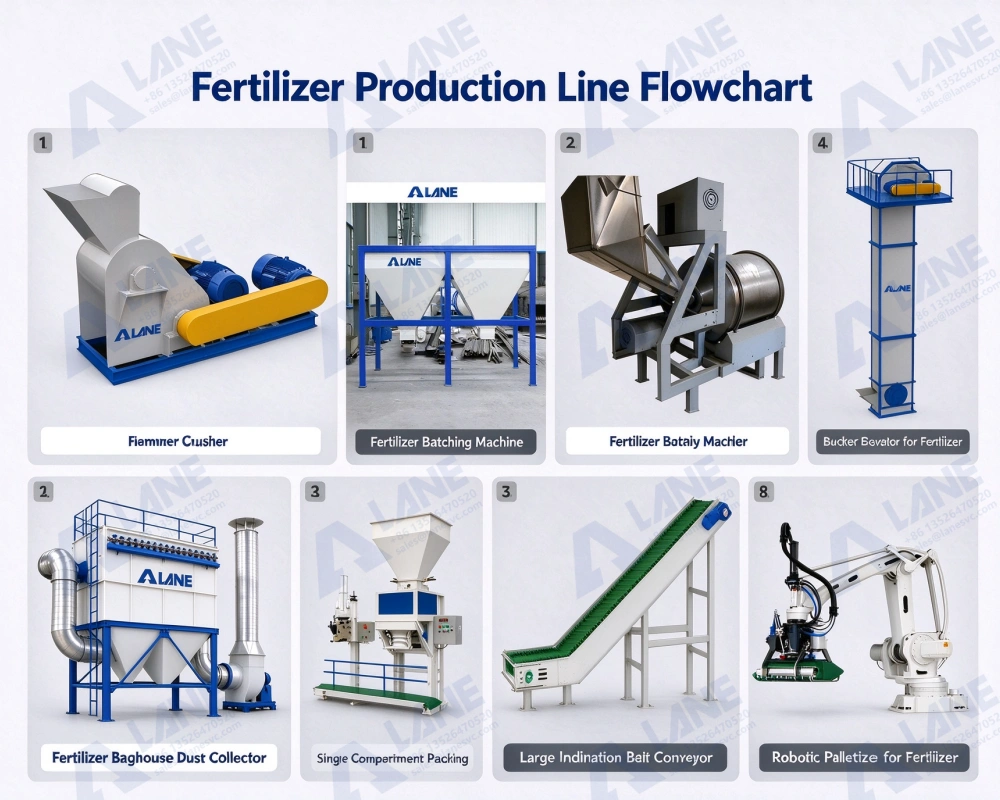
To meet the unique production requirements of water-soluble fertilizers—which demand high precision, are prone to moisture absorption, and involve highly corrosive conditions—high-quality water-soluble fertilizer manufacturing equipment must adhere to extremely high technical standards in its hardware design. The entire production line not only includes the core mixing and packaging processes but also encompasses raw material pretreatment systems and production environment control systems. The following provides a detailed description and configuration overview of the complete system:
1. High-Precision Automated Batching System — Ensuring “Formulation Accuracy”
Water-soluble fertilizers typically contain large amounts of macronutrients (N, P, K) and micronutrients (chelated iron, zinc, copper, etc.). Since micronutrients are added in extremely small quantities, standard equipment is highly prone to causing uneven mixing.
• Multi-bin trace element dosing ──> Utilizes high-precision Mettler weighing sensors ──> Dynamic dosing accuracy reaches ±0.1% to ±0.2%.
• Intelligent PLC integration ──> One-click access to hundreds of formulas via computer ──> Strictly prevents cross-bin contamination—a key indicator of the intelligence
level in modern water-soluble fertilizer manufacturing equipment.
2. Fully 304/316 Stainless Steel Corrosion-Resistant Design — Ensuring “Acid and Alkali Resistance”
Since water-soluble fertilizer raw materials (such as potassium dihydrogen phosphate, urea, and ammonium salts) are highly hygroscopic and chemically corrosive, standard carbon steel equipment will rust and corrode within a short period, compromising fertilizer efficacy.
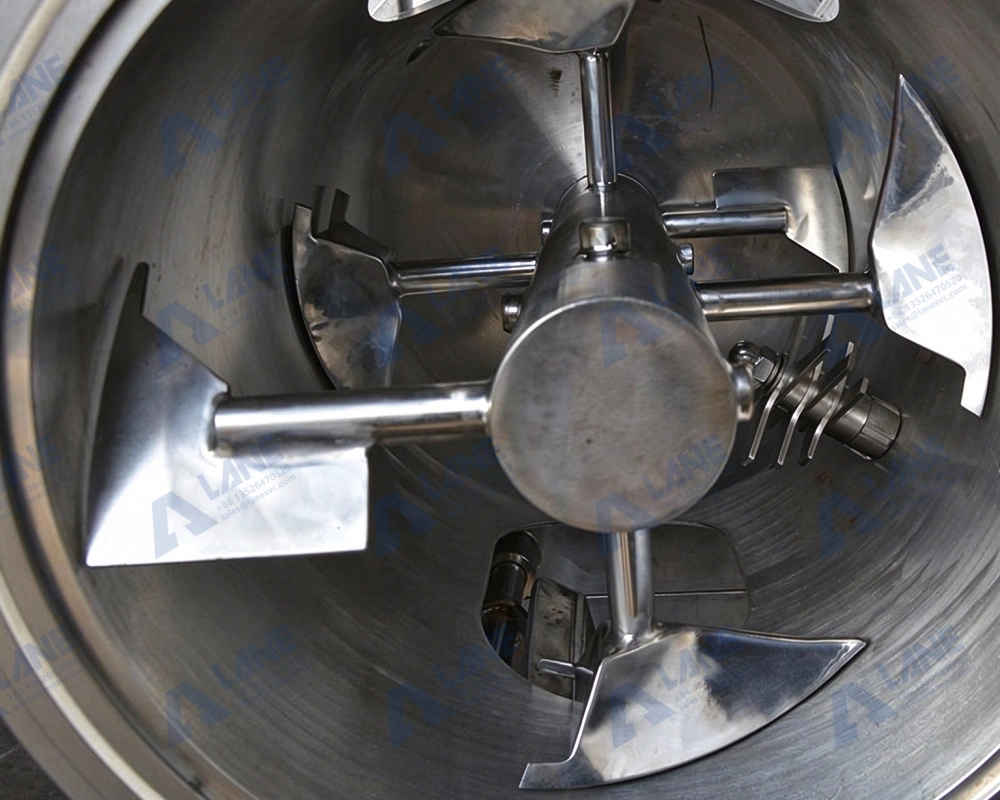
• All-Stainless-Steel Material-Contact Components — The interior of the mixer, the elevator, and the silo are fully constructed from 304 or 316L industrial-grade stainless steel.
• Mirror-Polished Inner Wall Finish — Extremely low surface roughness —> Zero material residue, no material buildup on walls —> Fundamentally extends the service life of water-soluble fertilizer manufacturing equipment.
water-soluble fertilizer manufacturing equipment
| CORE EQUIPMENT MODULE | KEY TECHNICAL PARAMETERS | MATERIALS AND CORROSION PROTECTION SPECIFICATIONS | KEY ROLE IN WATER-SOLUBLE FERTILIZER MANUFACTURING EQUIPMENT |
|---|---|---|---|
| Raw Material Crushing and Deagglomeration System (e.g., urea crusher) |
Crushing fineness: 60–120 mesh Processing capacity: 2–10 t/h |
Blades and liners: high-hardness stainless steel Housing: resistant to strong corrosion |
Resolves material caking issues by grinding agglomerated crystalline raw materials into fine powder, enabling faster, more uniform mixing and dissolution in subsequent processes. |
| Automated Micronutrient Dosing System | Dynamic accuracy: ±0.1% Weighing range: 10 kg–2 t |
Product-contact components: SUS304 / SUS316L High-precision Mettler sensors |
Automatically adjusts NPK and micronutrient ratios to ensure accurate formulation, which directly determines the quality and effectiveness of the fertilizer. |
| All-Stainless-Steel Ploughshare Mixer | Mixing uniformity: ≥99.5% Mixing time: 2–5 min/batch |
Entirely manufactured from SUS304 / SUS316L stainless steel Combined pneumatic and vibration sealing at the shaft ends |
Enables rapid, efficient mixing without damaging the original crystal structure of the raw materials, helping prevent segregation during subsequent handling and storage. |
| Low-Breakage, Moisture-Proof Bucket Elevator | Conveying capacity: 3–15 t/h Fully enclosed design |
Chains / buckets: reinforced nylon Casing: SUS304 stainless steel |
Provides enclosed vertical conveying to minimize exposure to ambient moisture and help prevent material caking at the source. |
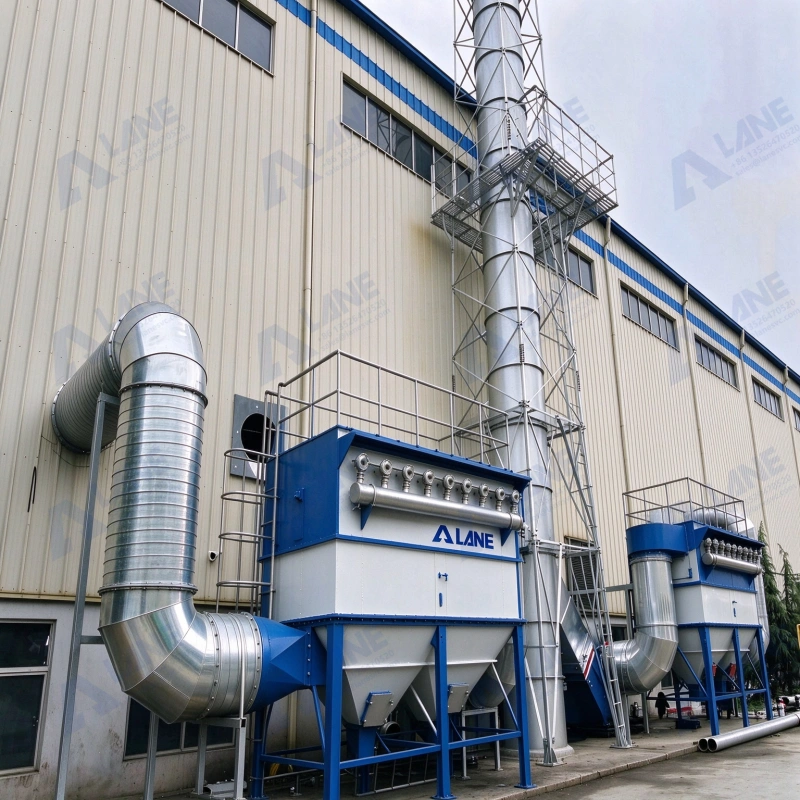
| Intelligent Dehumidification and Workshop Air Purification System | Humidity control: RH ≤ 40% Dust collection efficiency: 99.9% |
Integrated high-efficiency pulse-jet baghouse dust collection and dehumidification unit Stainless steel ductwork |
Captures dust and reduces workshop humidity, providing a dry, dust-controlled operating environment for the entire water-soluble fertilizer manufacturing equipment system. |
| Automatic Weighing and Anti-Sticking Packaging Machine | Packaging speed: 200–400 bags/h Weighing range: 5–50 kg/bag |
Ultrasonic pneumatic valve control Mirror-polished product-contact surfaces |
Provides fast, accurate quantitative filling. Its specialized anti-sticking structure prevents powder from adhering to the weighing unit, improving packaging efficiency. |
| Intelligent Downstream Conveying and Palletizing System | Palletizing speed: 400–600 bags/h Maximum gripping weight: 50 kg |
Heavy-duty carbon steel frame Corrosion-resistant stainless steel grippers |
Automatically arranges and stacks packaged products, enabling the entire water-soluble fertilizer manufacturing equipment line to operate with minimal manual intervention. |
Raw Material Compatibility and Process Adaptation
The formulations of water-soluble fertilizers are extremely complex, and the physical properties of different raw materials—such as hygroscopicity, crystal shape, and pH—vary greatly. A truly excellent set of water-soluble fertilizer manufacturing equipment must possess exceptional material compatibility to ensure that the production process is free of blockages, wall adhesion, and precipitation.
1. Precise Handling and Conveyance of Major Nutrient (NPK) Raw Materials
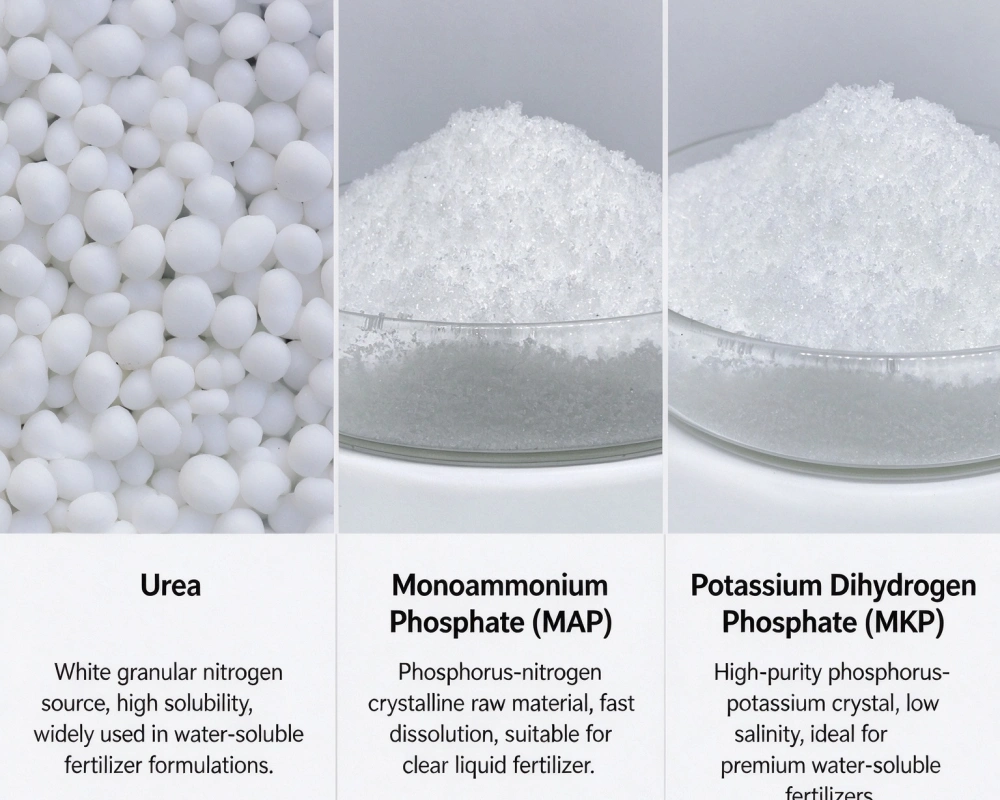
• Urea and Ammonium Salts (Nitrogen Sources) — Extremely low critical relative humidity; highly prone to moisture absorption and desorption —> Conveyance pipelines must be equipped with electric heat tracing or anti-condensation jackets.
• Potassium Dihydrogen Phosphate and Monoammonium Phosphate (Phosphorus and Potassium Sources) — High crystal hardness —> Equipment feed inlets and crushers must be equipped with hardened, wear-resistant linings to prevent metal wear from contaminating fertilizer efficacy.
• Material Reaction Neutralization — Specially designed mixer blades —> Prevent physical reactions between highly chemically active raw materials during mixing —> Ensure the interior of water-soluble fertilizer manufacturing equipment remains dry.
2. Technology for the Micro-Addition of Secondary and Micronutrients (Chelated and Inorganic Salts)
Secondary and micronutrients (such as EDTA-chelated iron, zinc, manganese, copper, and borax) account for an extremely small proportion of the formulation (typically between 0.5% and 2%), yet their role is crucial.
• Multi-stage premixing process — Trace elements are first preliminarily mixed with some of the major elements —> then fed as a whole into the main mixing unit —> ensuring that even the smallest doses of elements are uniformly distributed in the final product.
• Anti-static Design — Ultrafine powdered trace elements are highly prone to static electricity generated by friction, causing them to adhere to the chamber walls —> The entire set of water-soluble fertilizer manufacturing equipment must be systematically grounded to eliminate static electricity —> Preventing dead spots in material feeding.
3. Specialized Processes for Specific Additives
As fertilizer efficacy improves, modern water-soluble fertilizers often include organic substances such as humic acid, amino acids, and seaweed extract.
• Anti-adhesion mixing blades — Organic powders have high viscosity —> Mixing blades are coated with Teflon or feature a high-gloss mirror finish —> This resolves the issue of material sticking to the tank walls.
• Shear-resistant, non-destructive design — protects special crystals or granules from being crushed by excessive force —> maintains the finished product’s excellent instant-dissolving properties.
Water-soluble fertilizer manufacturing equipment capable of perfectly handling the complex materials across the diverse categories mentioned above is the top choice for established fertilizer companies when selecting equipment. Only by resolving material compatibility issues at the source can this water-soluble fertilizer manufacturing equipment truly demonstrate its capabilities in the diverse and varied downstream application scenarios.
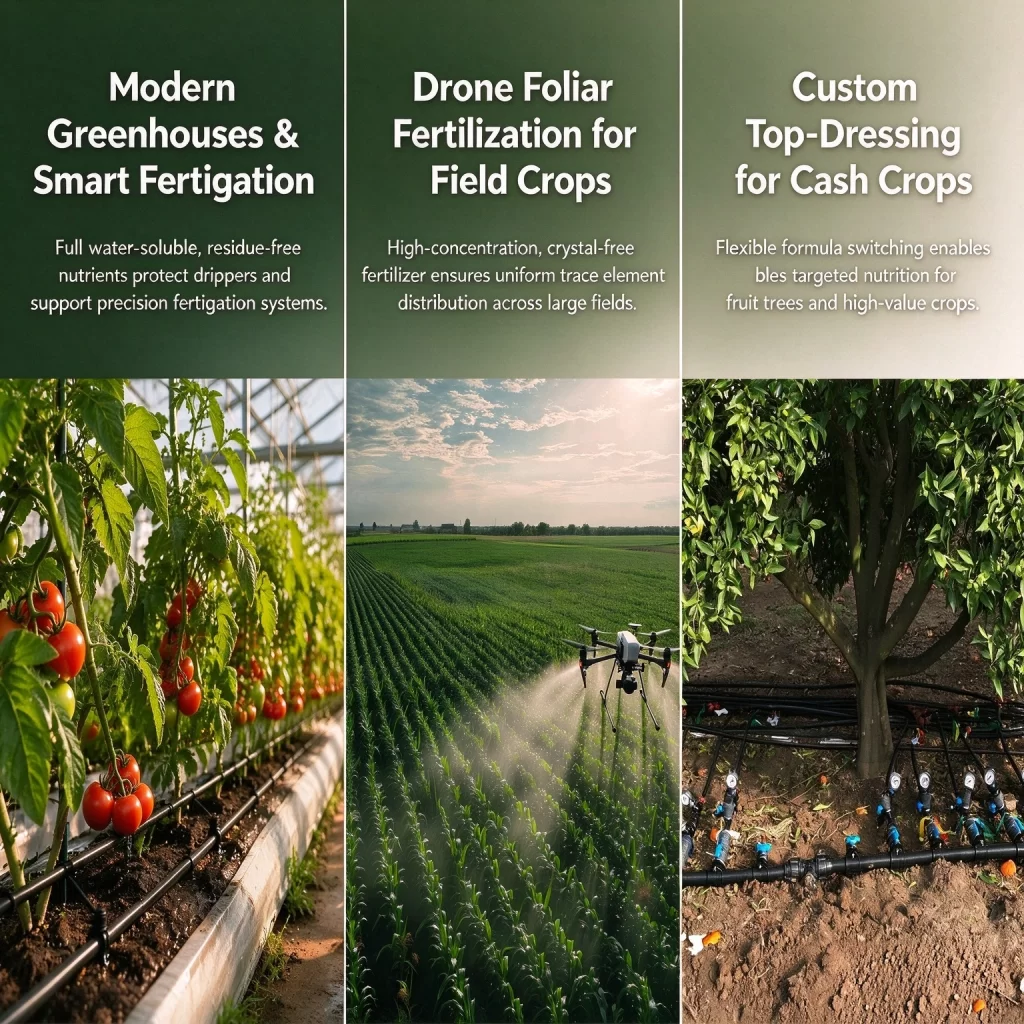
Diverse Downstream Application Scenarios
When investing in water-soluble fertilizer manufacturing equipment, fertilizer producers must look beyond current formulations and focus on the diverse applications in the downstream agricultural market. Different crops and irrigation systems around the world impose vastly different and stringent requirements on the form and dissolution rate of water-soluble fertilizers.
1. Modern Greenhouses and Smart Water-Fertilizer Integration Systems
In high-end agricultural projects—whether in open fields or greenhouses—drip irrigation and micro-sprinkler systems impose the most stringent requirements on fertilizers:
• 100% fully water-soluble with no residue—any undissolved particles will directly cause dripper blockages → resulting in widespread crop wilting and seedling death.
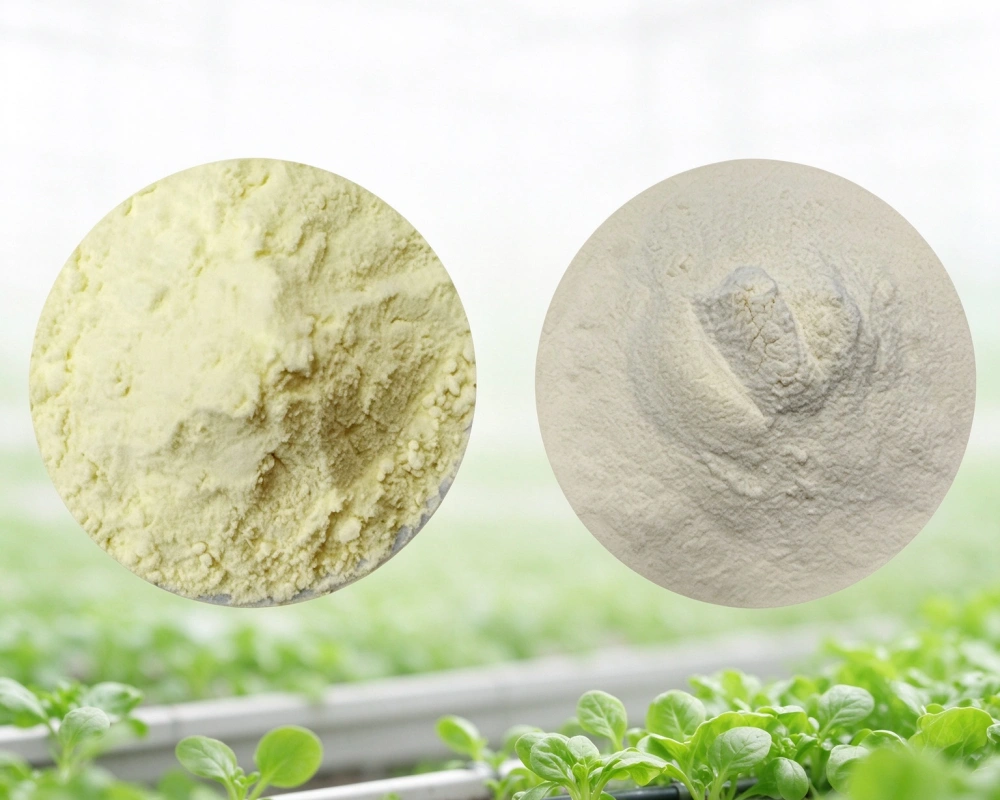
• Demand for clear-liquid water-soluble fertilizers — Powders finely blended using this professional-grade water-soluble fertilizer manufacturing equipment dissolve completely within seconds, resulting in a clear solution.
• Compatibility with automated irrigation — Stable, impurity-free nutrient solution —> Perfectly compatible with smart centralized water-fertigation systems in the Netherlands, Israel, and other countries.
2. Drone Foliar Spraying for Field Crops (Wheat, Corn, Rice)
With the widespread adoption of drone-based pest control technology, the use of drones for large-scale foliar fertilization has become the absolute mainstream in markets such as Europe, the United States, and China:
• Ultra-high concentration and adhesion — Since drone spraying uses extremely small amounts of water, the fertilizer must be highly concentrated and free from crystallization.
• Guaranteed high uniformity — Fertilizers mixed using advanced water-soluble fertilizer manufacturing equipment ensure extremely uniform distribution of micronutrients —> guaranteeing completely consistent fertilizer efficacy per mu of land during drone spraying.
3. Customized Top-Dressing for Cash Crops (Fruit Trees, Vegetables, and Medicinal Herbs)
High-value fruit trees (such as citrus, grapes, and blueberries) require completely different nutrient ratios during different growth stages (root development, seedling establishment, flower induction, and fruit enlargement).
• Rapid switching between multiple varieties — the market is constantly changing —> High-quality water-soluble fertilizer manufacturing equipment features one-touch tank flushing and rapid formula change capabilities.
• Customization of high-premium specialty fertilizers — helping manufacturers quickly mass-produce customized, high-end top-dressing fertilizers tailored to the specific needs of different cash crops.
Whether dealing with the demanding requirements of greenhouse drip irrigation or large-scale drone-based crop protection, a versatile set of water-soluble fertilizer manufacturing equipment can help enterprises effortlessly expand their products’ downstream application scenarios. Through the implementation of these diverse and highly profitable agricultural applications, this water-soluble fertilizer manufacturing equipment will demonstrate remarkable production efficiency and cost-control capabilities in the upcoming return on investment analysis.
Core Technological Advantages and Customer Benefits
For fertilizer investors, introducing a brand-new set of water-soluble fertilizer manufacturing equipment should not be viewed as a “cost,” but rather as a “high-return investment.” The following three highly impactful business dashboards visually illustrate its core benefits:
📊 Core Business Benefits Dashboard (Business Dashboard)
🛠️ [Dashboard 1: Direct Reduction in Operating Costs] — Eliminating Hidden Costs
• [Electricity Consumption] — Intelligent Variable-Frequency Drive —> Direct reduction in overall electricity consumption by 20%–30%
• [Material Loss] — Pneumatic Negative-Pressure Pulse Dust Collection —> Raw material loss rate miraculously drops below 0.1%
• [Labor Costs] — Fully Automated Operations —> Total number of workshop operators plummets by over 60%
• [Depreciation Cycle] — All-Stainless-Steel Acid- and Alkali-Resistant Design —> Service life of core components extended by more than 3 times
💰 [Key Result 2: Doubled Product Premium] — Building a Brand Moat
• [Visual Appeal] — Crystal-Intact Protection Process —> High refractive index of fertilizer granules —> Attractive appearance —> Generates a 15% brand premium
• [Warehouse Assurance] — Strict workshop drying and humidity control system —> Eliminates the persistent problem of moisture absorption and caking in global logistics —> Zero return rate
• [Farmer Word-of-Mouth] — 100% rapid dissolution with no residue —> Guarantees zero clogging of drip irrigation emitters —> Customer repurchase rate as high as 92%
🌍 [Pillar 3: Green Compliance Passport] — Breaking Down International Trade Barriers
• [Environmental Impact Assessment Pass Rate] — Negative-pressure sealed pipeline design —> Zero dust leakage from the production facility —> Easily secures local environmental production permits
• 【Carbon Tax Moat】 ── Reduces product lifecycle carbon footprint through low-energy-consumption water-soluble fertilizer manufacturing equipment ──> Helps enterprises easily bypass carbon tariff barriers such as the EU’s CBAM
❓ The Three Key ROI Questions (FAQ) Most Important to Major Clients
Q: What is the approximate payback period for this equipment?
A: Thanks to the precise control of errors in high-value trace elements achieved through automated batching, combined with reductions in labor and electricity costs, the hardware investment for the entire water-soluble fertilizer manufacturing equipment system is typically fully recouped within 8 to 14 months after commencement of operations.
Q: Can it help us transition into the higher-margin “specialty fertilizer” market?
A: Absolutely. The highly flexible process design allows this water-soluble fertilizer manufacturing equipment to seamlessly handle high-viscosity materials such as alginic acid and fulvic acid, enabling R&D teams to rapidly launch high-margin new products with minimal technical barriers.
Q: Will the equipment become obsolete in the face of increasingly stringent environmental policies in the future?
A: No. This water-soluble fertilizer manufacturing equipment is designed with long-term foresight; the entire production line is equipped with low-carbon data interfaces, serving as the core hardware support for companies seeking ISO 9001 quality certification and applying for designation as green model factories.