Fruit Waste Fertilizer Making Machine:High Moisture Dewatering & Granulation
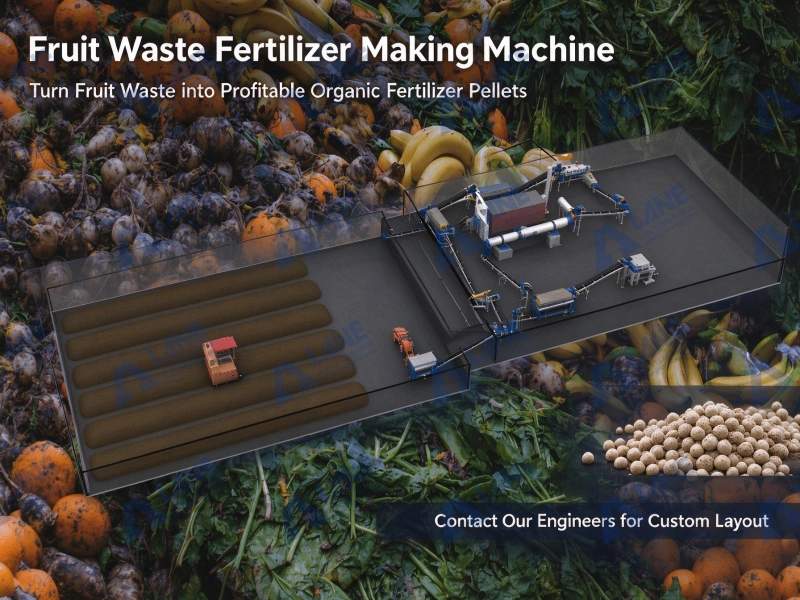
Juice factories, canneries and large orchards produce dozens of tons of apple pomace, citrus peels and rotten dropped fruits daily during peak production. These fruit wastes feature extremely high moisture content, poor storage stability and foul odors. Traditional landfilling or casual composting faces strict environmental audits, and expensive hauling & disposal costs directly erode corporate profits. To tackle this industry challenge, adopting mature Fruit Waste Fertilizer Making Machine becomes a proven solution for fruit processors to locally dispose of fruit waste and turn liabilities into assets.
It converts troublesome environmental waste into high-density, high-value commercial organic fertilizer pellets easy for long-distance transportation, opening up a new green profit channel for enterprises. Next, starting from the unique physical and chemical properties of fruit waste, we will break down the standard production process of this commercial line and provide a checklist for core equipment selection.
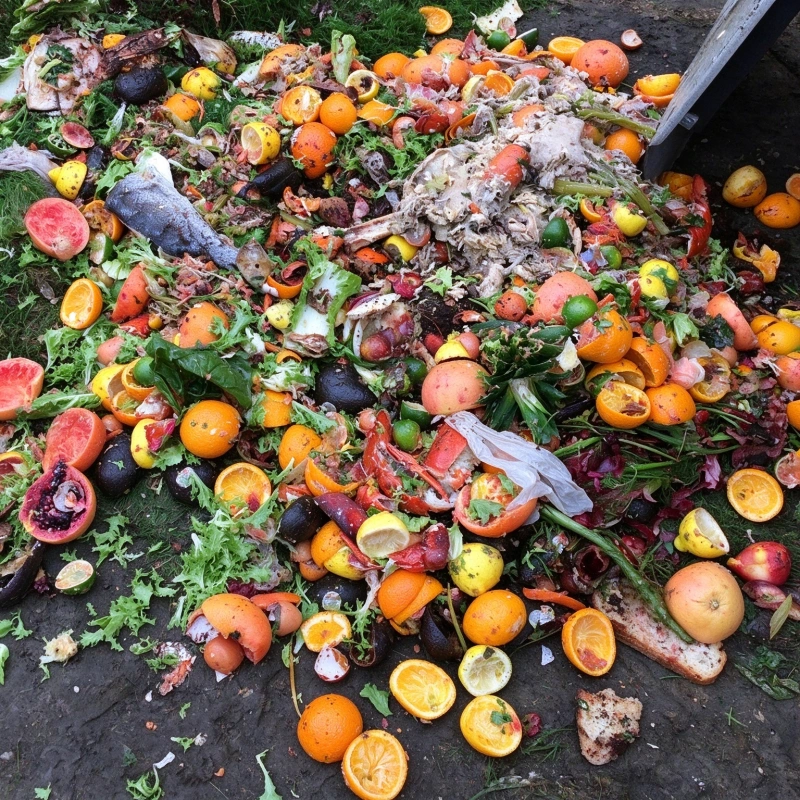
In-depth Analysis of Physicochemical Properties of Fruit Waste (Fruit Waste Characteristics)
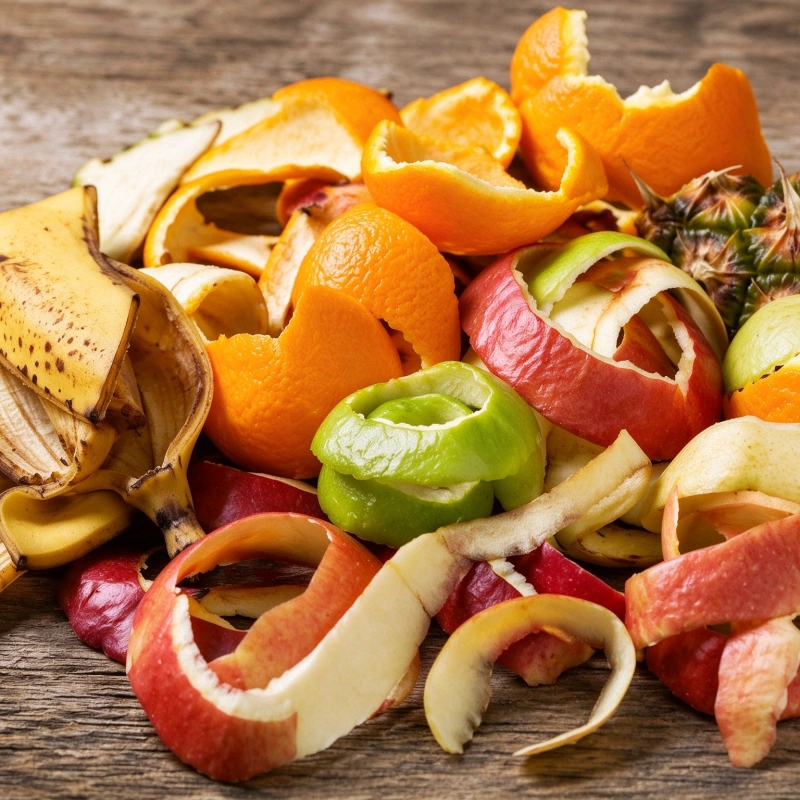
Before feeding materials into the Fruit Waste Fertilizer Making Machine, it is critical to understand the physical and chemical traits of different fruit wastes. Common feedstocks include apple pomace, citrus peel waste, banana peels, pineapple residues, grape pomace, as well as mango and papaya peels and kernels. Differences in cell wall structure and trace elements of these materials exert a decisive influence on the subsequent pelleting process:
| Raw Material Characteristics | Direct Impact on Industrial Pelleting Rate |
|---|---|
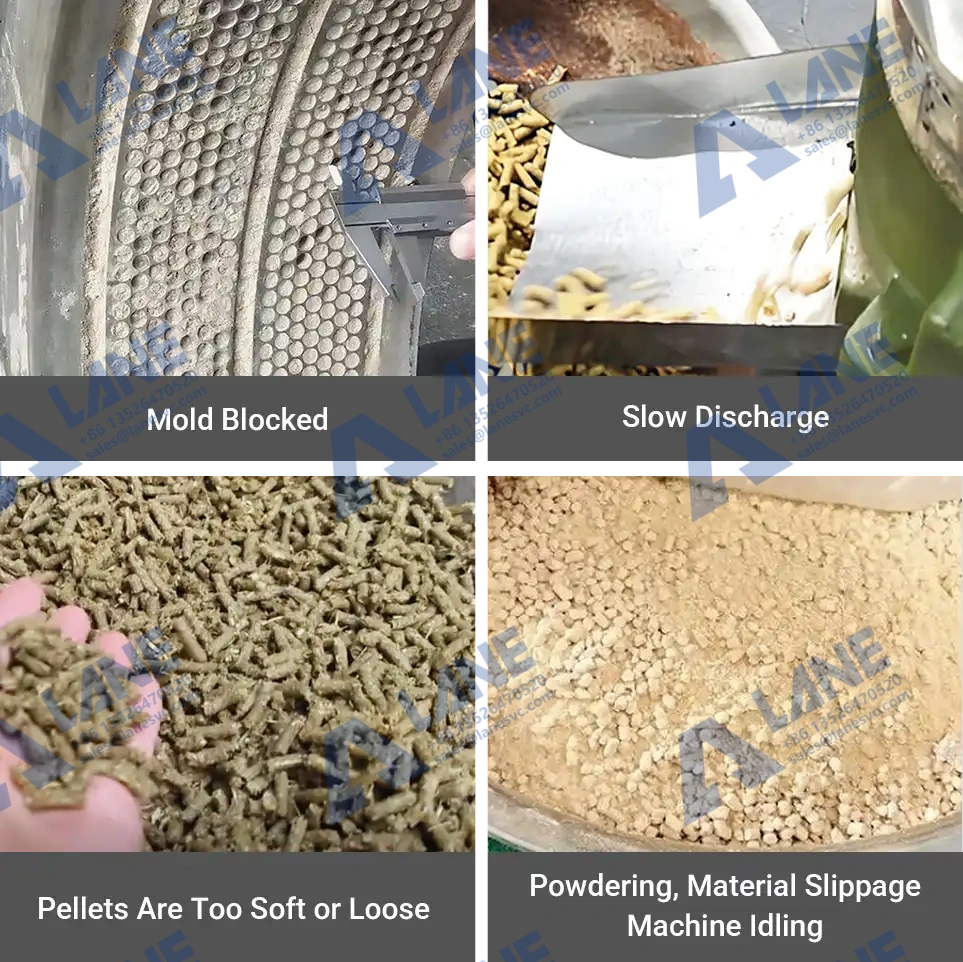
| Ultra-high moisture (70%–85%) | Extremely high free water content. Direct feeding into the Fruit Waste Fertilizer Making Machine causes material slipping and failed mechanical extrusion. Pre-treatment via mechanical dewatering or blending with low-moisture auxiliary materials is mandatory. |
| Rich in crude fiber (citrus, pineapple residues, etc.) | High lignocellulose content tends to wrap around screw shafts and brings high friction against pelleting dies, accelerating component wear. Yet the fibrous framework delivers excellent pellet hardness after forming. Specialized fruit pomace pelleting equipment can effectively solve pressing difficulties for such high-fiber materials. |
| High sugar content & acidic environment | Residual fructose and organic acids raise material viscosity. Anaerobic fermentation quickly generates corrosive acid liquor, placing high requirements on corrosion resistance of steel parts in contact with materials. |
| Soft texture & abundant pectin (banana, mango, etc.) | Materials easily colloidize into sticky mud after crushing with minimal internal voids. Without pre-fermentation and curing modification, pellets cannot break and form properly under compression. |
3. Production Process: Material Flow & Core Equipment Coordination (How the Machine Works)
To clearly illustrate how fruit pomace turns into premium fertilizer pellets step by step, below is the complete process and equipment coordination table:
| Production Procedure | Material State Change (From Raw Material to Finished Product) | Process Purpose & Technical Details |
|---|---|---|
| 1. Shredding | Whole rotten fruits / large peel chunks → uniform 10–20mm fragments | Break cell walls, release free water and expand specific surface area to facilitate subsequent dewatering and fermentation. |
| 2. Dewatering | Raw material moisture above 80% → stable wet residue at 55%–60% | Heavy-duty screw press dehydrator mechanically squeezes and removes excess juice from fruit waste rapidly. |
| 3. Fermentation | Strong-acid fresh fruit waste → weak-acid / neutral humified compost | 7–15 days of high-temperature aerobic fermentation. It kills pathogens and parasite eggs, and degrades fruit acids and macromolecular fibers. |
| 4. Crushing | Caked and agglomerated fermented material → fine powder ≤2mm | Semi-wet material vertical crusher thoroughly breaks lumps to guarantee uniform particle size before downstream processing. |
| 5. Mixing | Pure fruit pomace powder → balanced compound organic fertilizer precursor | Adjust C/N ratio, spray compound bacterial agents online precisely according to formulas, and add conditioners or minor NPK nutrients. |
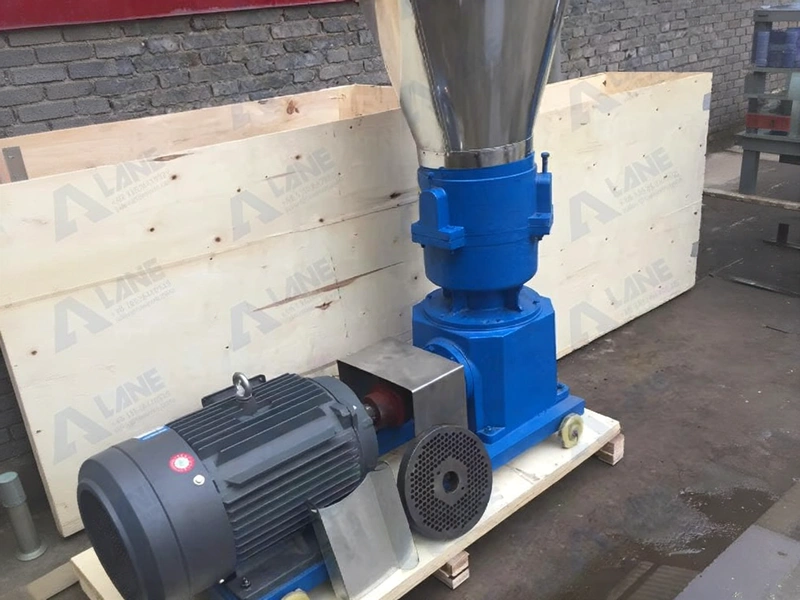
| 6. Granulating | Loose powder → compressed spherical / cylindrical pellets of 3–5mm | Core procedure. Materials are subjected to strong mechanical extrusion inside the Fruit Waste Fertilizer Making Machine for shaping. |
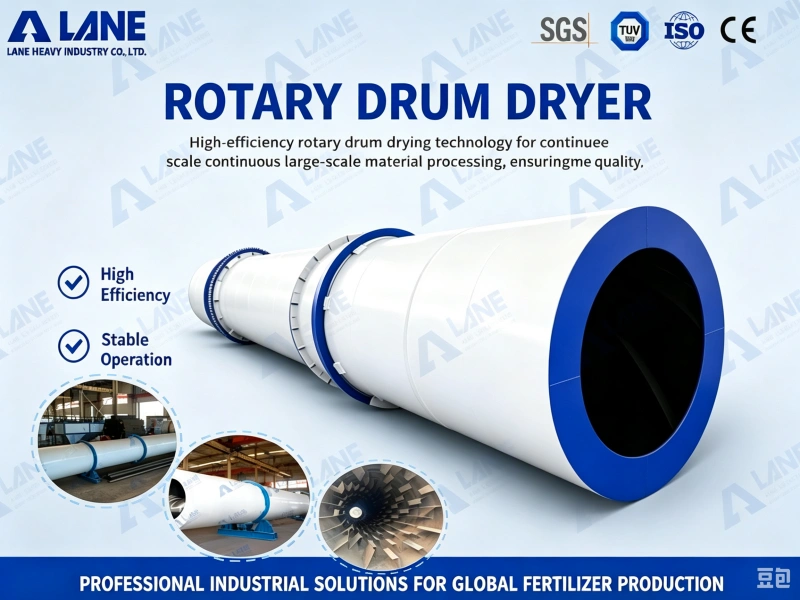
| 7. Drying & Cooling | High-temperature wet pellets (~100℃) → pellets at ambient stable temperature | Rotary dryer reduces pellet moisture to the critical range of 10–15%, followed by counter-flow cooler for rapid cooling to prevent caking inside bags. |
| 8. Screening | Mixed-size pellets → finished pellets with standard uniform size | Vibrating sieve intercepts fine powder and oversize pellets online, which are automatically recycled back to the fruit pomace pelleting system for re-granulation. |
| 9. Packing | Bulk finished pellets → standard commercial bags of 25kg / 50kg | Automatic computerized weighing, filling, heat sealing and stitching for direct warehousing or shipment for sale. |
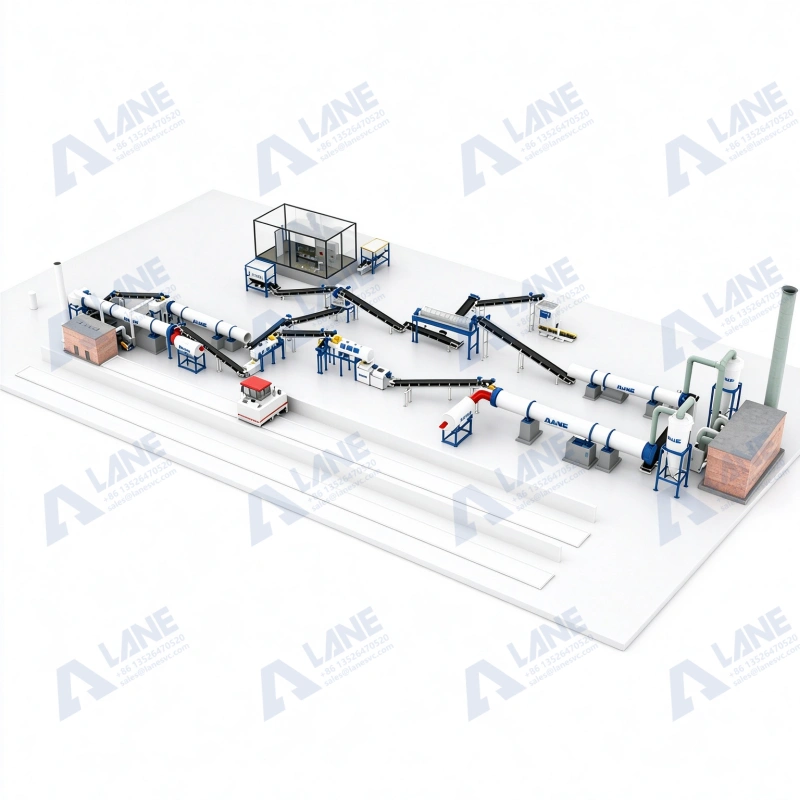
4. Commercial Production Line Configuration Matrix (Complete Production Line Configuration)
Based on daily processing capacity and project budget, production lines centered on the Fruit Waste Fertilizer Making Machine are generally divided into three commercial grades:
• Small Standard Line (0.5–1 t/h): Suitable for small ecological farms or trial production for new projects. Configuration: Primary shredder + small screw dehydrator + trough compost turner + disc-type Fruit Waste Fertilizer Making Machine + simple drying drum + manual weighing packer. Selection logic: Low investment and fast payback, for handling fallen fruits from own orchards and local waste disposal.
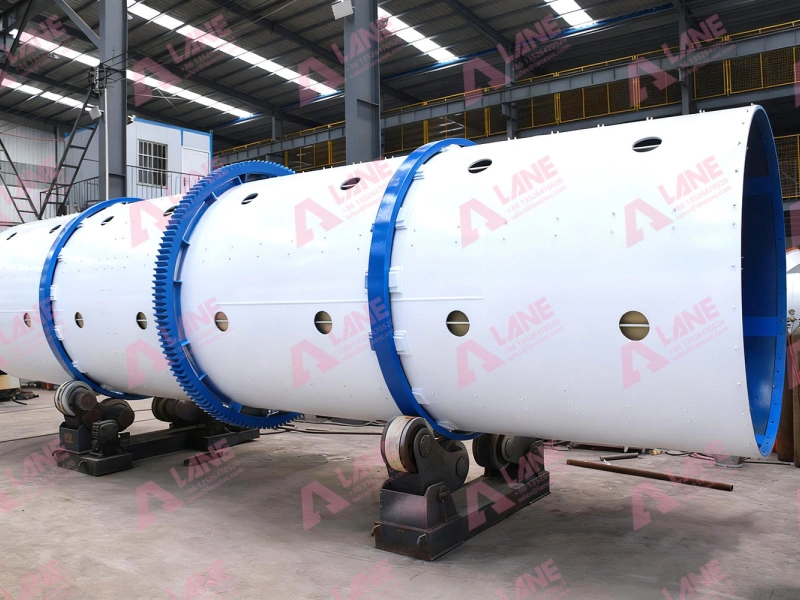
• Medium Commercial Line (2–5 t/h): Suitable for regional organic fertilizer plants or medium-sized fruit canneries. Configuration: Automatic dynamic batching system + high-efficiency chain plate compost turner + rotary drum fruit pomace pelleting machine + closed-loop integrated drying, cooling and screening system. Selection logic: Significantly upgraded automation for continuous commercial operation; the mainstream cost-effective option on the market.
• Large Industrial Line (6–10 t/h): Suitable for large juice factories or municipal solid waste centralized treatment centers. Configuration: PLC full-line digital control system + closed continuous fermentation tank + new integrated tooth-stirring drum Fruit Waste Fertilizer Making Machine + dual-stage high-capacity drying line. Selection logic: Minimal on-site labor, fully linked automation, heavy wear-resistant design for non-stop 24-hour intensive operation.
💡 Practical Tip: A full complete assembly line is not mandatory for every client. If your factory already has mature fermented base materials, you may skip the front-end fermentation section and purchase only the core granulating unit, connecting your existing production line with a standalone Fruit Waste Fertilizer Making Machine.
5.Fruit Waste Fertilizer Making Machine Core Granulator
When building your production line, the type of fruit pomace pelleting equipment directly determines pellet quality and overall operating cost. Four mainstream designs are available on the market with distinct strengths, weaknesses and applicable feedstocks:
• Disc Granulator Features: Ultra-low investment, intuitive operation, and perfectly round organic fertilizer pellets. Application: Best for small-to-medium projects with limited budgets, using well-fermented cohesive wet materials. Widely adopted for startup fruit waste fertilizer projects.
• Rotary Drum Granulator Features: Viscosity adjustable via internal steam or uniform spraying; extremely high single-machine throughput supporting continuous nonstop running. Application: Top choice for large-scale commercial organic fertilizer lines. Ideal if high hourly output is your priority.
• Flat Die / Ring Die Granulator Features: Pure mechanical extrusion to produce high-density cylindrical pellets. Application: Specially designed for high-fiber citrus peel and pineapple residues. Preferred by many high-fiber fruit waste processing plants.
• New Stirring-Tooth Granulator (Wet Mixing Granulator) Features: High-speed rotating stirring teeth force material agglomeration; finished pellets combine good roundness and solid hardness. Application: Perfect for pure organic fruit pomace lacking chemical binders and hard-to-granulate materials. Highly adaptable fruit waste pelleting equipment.
Selection Decision Chain: Choose the granulator model by backward deduction based on three technical indicators: final adjusted moisture of feedstock → fiber content & friction resistance → target hourly throughput.
6. Typical Commercial Application Scenarios (Application Scenarios)
The industrial treatment solution centered on the Fruit Waste Fertilizer Making Machine serves a wide range of segmented commercial scenarios:
• Large juice, concentrated juice and beverage factories: Resolve massive stockpiling and environmental pressure from apple pomace, citrus peels and pineapple residues.
• Fruit dehydration and fruit canning processing bases: Locally dispose of peel and pith scraps generated during peeling and coring processes.
• Modern large orchard cooperatives: Collect non-commercial fallen fruits, thinned fruits and shredded pruning branches for intra-orchard ecological cycles. A Fruit Waste Fertilizer Making • Machine greatly accelerates this closed loop.
• Municipal food waste & agricultural waste co-treatment centers: Co-process market fruit and vegetable waste together with surrounding fruit pomace to produce harmless fertilizer.
• Custom organic fertilizer OEM manufacturers: Purchase Fruit Waste Fertilizer Making Machine to produce exclusive pellet fertilizers for niche high-end markets.
7. Technical Verification Checklist Before Equipment Procurement (How to Choose the Right Machine)
Before signing the procurement contract for the Fruit Waste Fertilizer Making Machine, assign your technical manager to verify each item below:
• Raw material pre-treatment confirmation: Is the Fruit Waste Fertilizer Making Machine solution designed for direct feeding of fresh wet pomace, or for pre-fermented mature feedstock? The mechanical structures differ greatly.
• Actual capacity calculation: Do not blindly trust the theoretical rated capacity provided by manufacturers. For high-sugar sticky fruit waste, multiply the nominal hourly output by a factor of 0.65–0.7 to get a realistic stable production estimate.
• Site layout & environmental compliance: Is the workshop area sufficient for the granulating section? Will fermentation adopt open compost bays or compact odor-contained closed fermentation tanks?
• Target pellet shape for end market: Do local distributors prefer smooth spherical pellets or slow-release cylindrical pellets?
• Wear & corrosion grade of core components: Given natural acidity and abrasive fibers in fruit waste, are liners, screw augers, press rollers and dies in contact with materials upgraded to high-chromium wear-resistant alloy or 304 stainless steel?
• After-sales service & spare parts lead time: Does the supplier offer on-site installation supervision, full-line commissioning and operator training? What is the delivery cycle for consumable parts such as dies and bearings?
✉️ Technical Support: If you have questions about parameter matching, send us your fruit types, initial moisture content and target daily throughput. Our engineering team will prepare a customized Fruit Waste Fertilizer Making Machine line layout proposal free of charge.
8. ROI & Commercial Value of the Project (ROI & Business Value)
Investing in a high-standard Fruit Waste Fertilizer Making Machine production line is far more than an environmental expense; it is a high-return capital investment:
• Remarkable Cost Savings After commissioning, enterprises eliminate heavy third-party solid waste disposal fees completely. Risks of heavy environmental fines caused by open-air fruit pomace stacking and leachate violations are fully avoided.
• Lucrative Revenue Streams Pelleted organic fertilizer made via the Fruit Waste Fertilizer Making Machine features high density and uniform particle size suitable for mechanized fertilization, commanding a much higher wholesale and retail price than loose powder organic fertilizer. High-density pellets extend the economical transportation radius by 3–5 times, enabling sales to citrus orchards, premium tea gardens and medicinal herb bases across regions.
• Potential Policy Incentives In most regions, agricultural waste harmless treatment and resource recycling projects fall under state-supported circular economy programs, eligible for substantial special government subsidies. Investing in a Fruit Waste Fertilizer Making Machine is therefore forward-looking. Qualified projects may apply for carbon emission reduction and carbon trading quotas, bringing additional intangible asset appreciation.
9. Four Common Operational Pitfalls & Routine Maintenance Protocol (Common Mistakes & Maintenance)
To keep your Fruit Waste Fertilizer Making Machine running efficiently and stably long-term, workshop operators must avoid these four widespread industry mistakes:
❌ Mistake 1: Directly feed fresh fruit pomace into the granulator for convenience.
Consequence: Excess free water in fresh pomace causes material slipping between press rollers, die blockage and motor overload shutdown.
Correct practice: Fresh fruit waste must undergo dewatering and thorough aerobic fermentation to stabilize moisture and material structure before entering the Fruit Waste Fertilizer Making Machine.
❌ Mistake 2: Start granulation with incompletely fermented immature material.
Consequence: Under-composted feedstock triggers secondary anaerobic fermentation inside packed bags, leading to bulging and burst sacks. Applied to farmland, it releases heat around crop roots and causes root burn.
Correct practice: Monitor compost turning strictly. Maintain pile core temperature at 55–65℃ for the required duration to guarantee full maturity.
❌ Mistake 3: Overheat the drying drum to speed up drying.
Consequence: Excessive instant heat kills beneficial bacteria such as Bacillus subtilis and degrades heat-sensitive nutrients, losing the premium value of bio-organic fertilizer.
Correct practice: Control hot air temperature for pellet drying within the safe range of 60–80℃.
❌ Mistake 4: Skip internal die and residue cleaning between shifts.
Consequence: Pectin and sugar residues harden after cooling, slashing output sharply on restart or even breaking press rollers and dies.
Correct practice: Enforce a strict rule: flush materials with oil or manually clean dies thoroughly before shutdown after each shift. Inspect wear and deformation of consumable parts of the Fruit Waste Fertilizer Making Machine regularly.
Hot Industry FAQ & Project Cooperation (FAQ & CTA)
📝 Technical FAQ
Q1: Can fresh fruit waste directly go into the Fruit Waste Fertilizer Making Machine production line?
A1: Definitely not. Fresh fruit pomace usually exceeds 80% moisture and contains abundant free fruit acid. It must be dewatered by industrial screw press first, blended with auxiliary materials such as straw powder, and aerobically composted. Only qualified mature feedstock can be fed into the Fruit Waste Fertilizer Making Machine for extrusion pelleting.
Q2: What is the optimal moisture range of fermented pomace powder before granulation?
A2: Practical experience shows that the ideal moisture for fully fermented fruit pomace powder before entering the granulator is 40%–50%. At this level, intermolecular adhesion reaches the peak, delivering high pelleting rate, smooth pellet surface and low subsequent drying energy consumption.
Q3: For high-fiber citrus peel and apple pomace, disc granulator or rotary drum granulator?
A3: The decision depends on target hourly capacity. For lines below 1–2 t/h, disc granulator or stirring-tooth granulator delivers the best cost-performance. For continuous operation above 3 t/h, closed-loop rotary drum Fruit Waste Fertilizer Making Machine or large ring die system is recommended.
Q4: How long does the full aerobic fermentation and curing cycle take for fruit waste?
A4: With professional trough or chain plate turners, standard aerobic fermentation takes 7–15 days. The exact duration depends on ambient temperature, sugar content of raw materials and aeration & turning frequency. Fermentation finishes when pile temperature drops naturally, material turns dark brown and odor disappears.
Q5: Can the Fruit Waste Fertilizer Making Machine adjust finished pellet size freely?
A5: Yes. Pellet diameter is controlled by changing dies with different aperture sizes (or adjusting tilt angle and rotation speed for disc granulators). The most popular commercial organic fertilizer pellet size suitable for mechanized spreading is 3–5mm.
📢 Project Customization & Contact (CTA)
Turning smelly, bulky industrial fruit waste into profitable high-quality green organic fertilizer pellets is a proven lucrative circular environmental business verified by many large agricultural processors. In project implementation, selecting and matching a Fruit Waste Fertilizer Making Machine compatible with your material properties is the decisive factor for stable operation without frequent blockages.
Get your customized solution now: Contact our senior project engineers via the inquiry page. Submit your fruit waste types, estimated daily tonnage and existing fermentation site conditions. We will send you a complete Fruit Waste Fertilizer Making Machine project proposal within 24 hours, including equipment selection, CAD workshop layout and payback period calculation!