Fish Waste Pellet Machine: Turns Smelly Waste into High-Profit Commercial Fertilizer
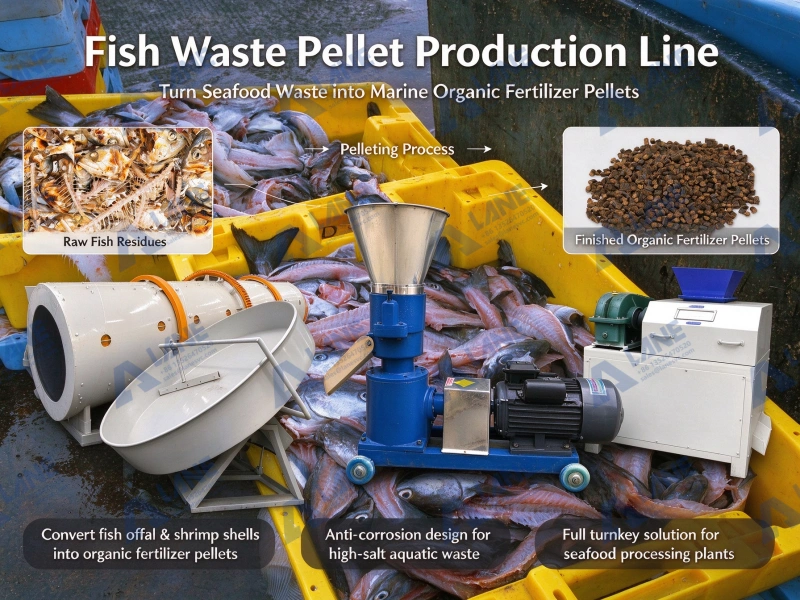
In seafood processing, fishmeal manufacturing and modern aquaculture sectors, fish heads, offal, fish bones, shrimp and crab shells and other aquatic waste have long been a stubborn headache. These waste piles build up, emit foul odors, breed bacteria easily, and are subject to strict environmental inspections. Enterprises pay hefty solid waste disposal fees every year, which eat into their already thin profit margins.
Yet for forward-thinking fertilizer manufacturers and investors, these cold, stinking wet residues are premium raw materials for natural marine organic fertilizer. The core of this transformation lies in an efficient, durable Fish Waste Pellet Machine. It converts these odorous wet materials into uniformly sized organic fertilizer pellets ready for bagging and sale, turning environmental compliance costs into a brand-new profit driver.
1. What business outcomes can you achieve after pelleting fish waste?
For aquatic businesses, investing in a Fish Waste Pellet Machine is far more than buying environmental gear. It is a high-return commercial project with a fast payback period. Pelleting fish waste brings you these tangible benefits:
• Dramatic weight and moisture reduction: After pre-treatment and high-pressure extrusion inside the Fish Waste Pellet Machine, excess moisture is removed, bulk volume shrinks sharply, and odor emission is suppressed.
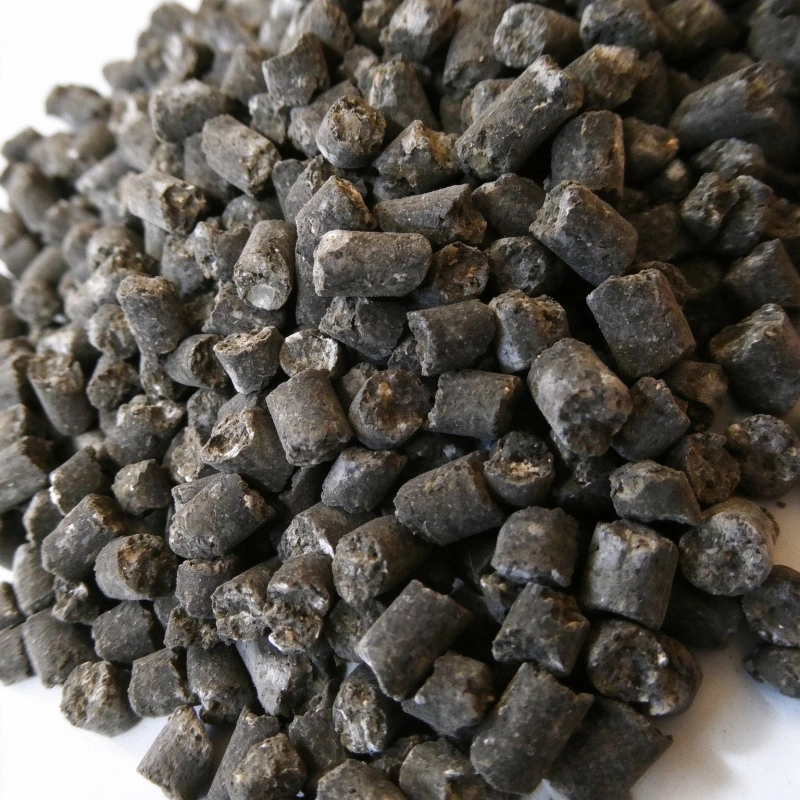
• Consistent premium appearance: It produces cylindrical or spherical pellets ranging from 4mm to 12mm, with smooth surfaces, proper hardness and low dust content, ready for fully automatic packaging lines.
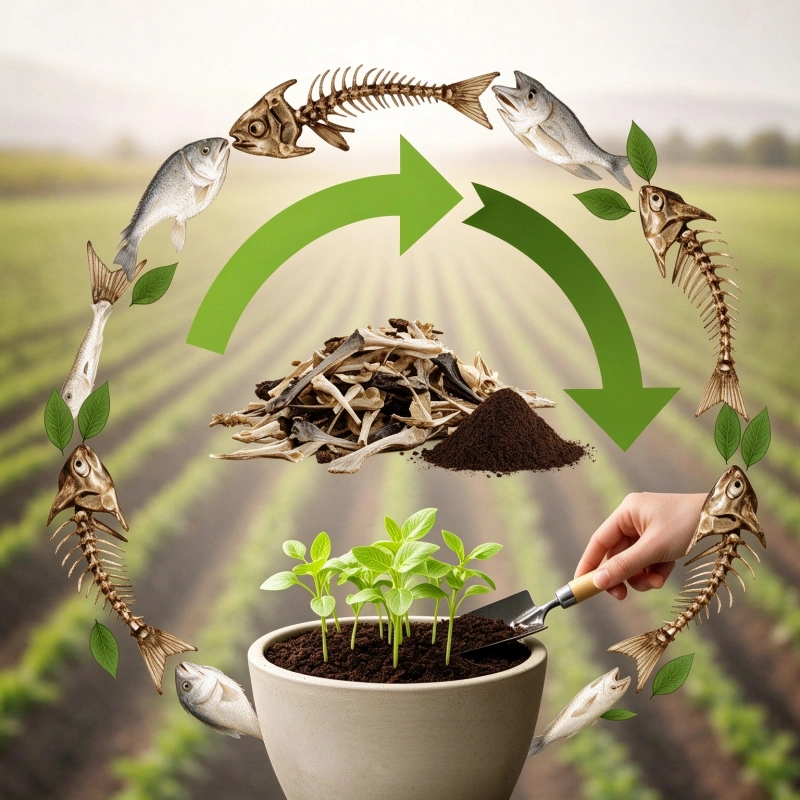
• Access to high-value agriculture markets: Fish fertilizer is rich in high-quality animal protein, amino acids and secondary and trace elements. The finished pellets serve as premium marine organic fertilizer, base fertilizer for crops, and raw material for certified organic high-value crops.
• Dual revenue streams:
✅ Cost saving: Cut expensive per-ton disposal fees for aquatic waste.
✅ New revenue: Gain steady income from sales of finished high-grade organic fertilizer.
• Smooth environmental compliance: No more foul smells or sewage leakage on site. Clear environmental records help you meet green policies focused on zero pollution and resource recycling.
2. Can your raw materials go straight into pelleting?
Many buyers assume that once they own a Fish Waste Pellet Machine, they can toss fresh raw fish offal or whole dead fish directly into the unit. This is wrong. As a professional fertilizer equipment manufacturer, we make it clear: raw fresh fish waste cannot be pelleted directly. Standardized pre-treatment is mandatory.
Suitable feedstock for pelleting
To run your production line smoothly, your materials should fall into the categories below or their blends:
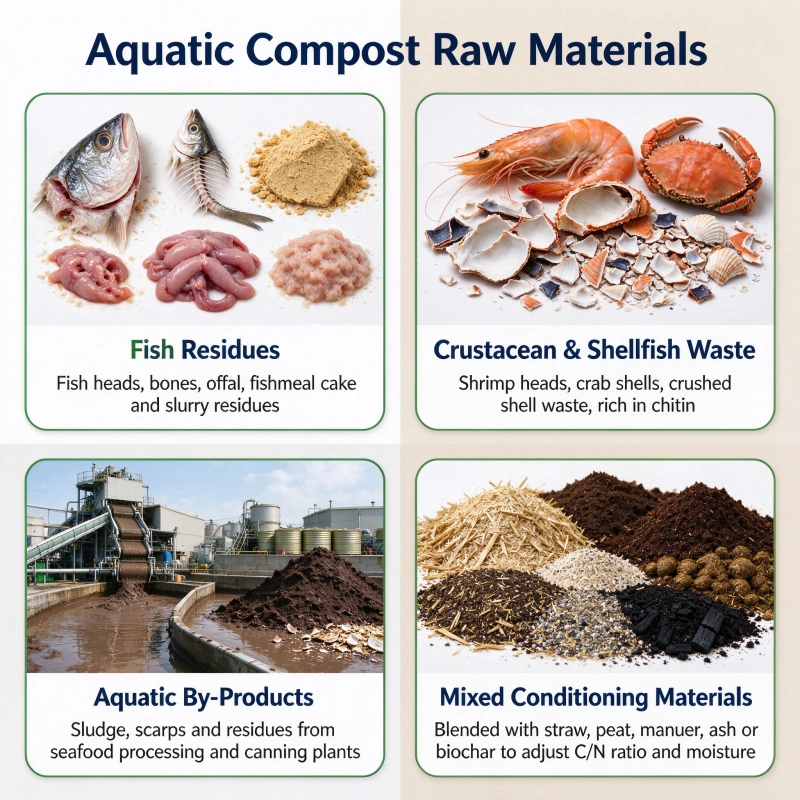
• Fish residues: fish heads, fish bones, offal, fishmeal cake and fish paste residues from fishmeal plants
• Crustacean and shell materials: shrimp heads, crab shells, crushed shell waste (rich in chitin)
• Aquatic by-products: sewage sludge and scraps from seafood processing plants and canneries
• Blended conditioning materials: mixtures with straw powder, peat, livestock manure, plant ash or biochar to adjust carbon-nitrogen (C/N) ratio and moisture
Core transformation principle
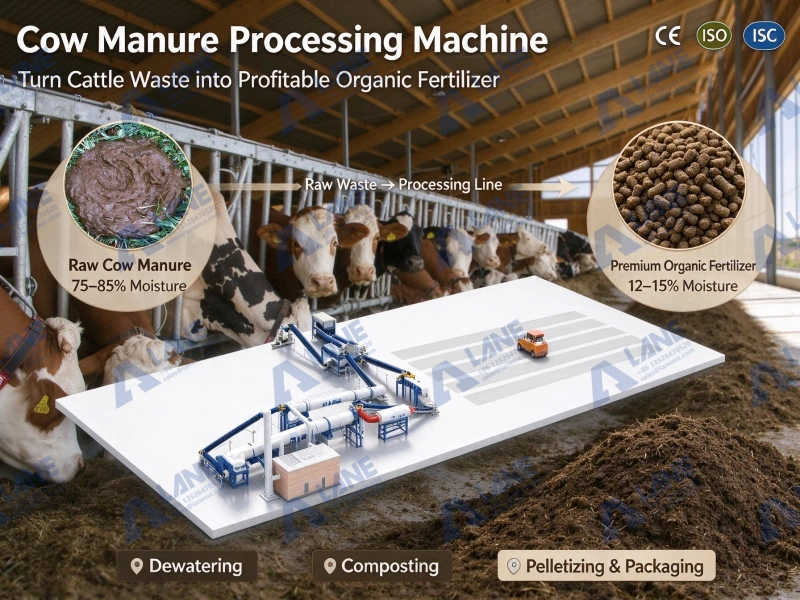
Our technical team designs customized pre-treatment workflows including screw dewatering, high-temperature fermentation and fine grinding based on your raw material’s initial moisture, salt and fat content. Materials must reach the optimal pelleting moisture range of 12%–18% before feeding into the core Fish Waste Pellet Machine.
3. How does a complete fish waste pelleting production line operate?
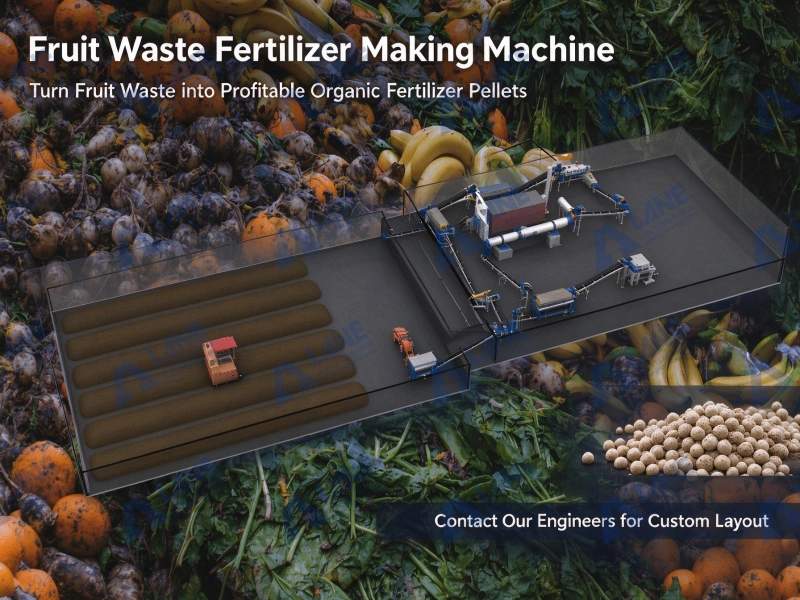
A standalone machine cannot work alone in real production. A full marine organic fertilizer pellet line acts as a coordinated precision system, and the Fish Waste Pellet Machine is the heart of the whole setup.
Raw fish waste → 1. Screw dewaterer → 2. High-temperature fermentation / drying conditioning → 3. High-speed grinder ↓ Automatic packaging line ← 6. Screener ← 5. Counter-flow cooler ← 4. Fish Waste Pellet Machine ← 4. Mixer
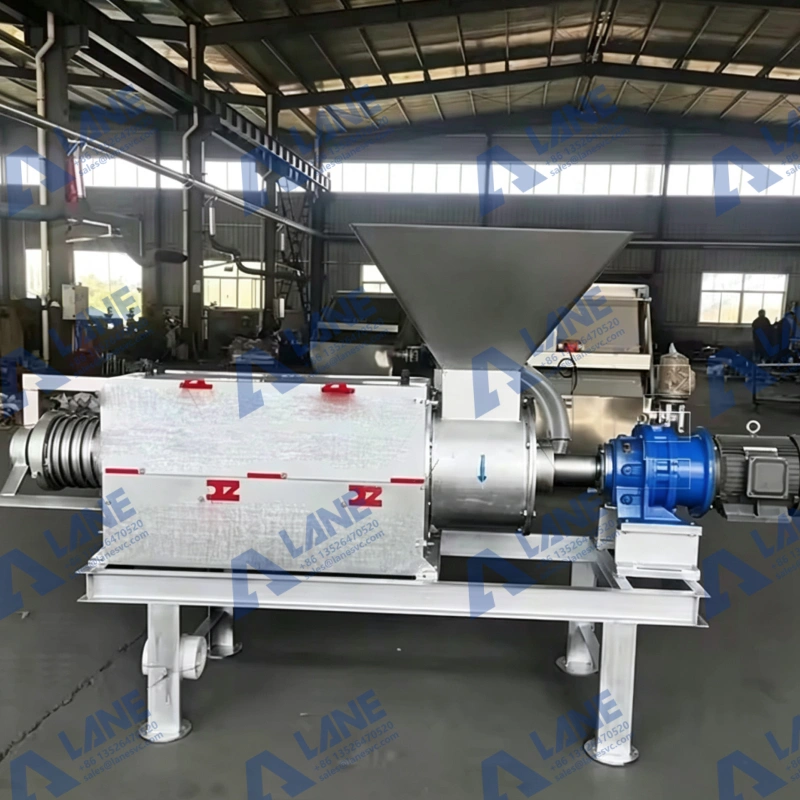
• Screw dewaterer: Removes surface moisture from fresh fish waste at the initial stage.
• High-temperature fermentation / drying conditioning: Eliminates pathogenic bacteria, breaks down large protein molecules into amino acids and stabilizes material moisture.
• High-speed grinder: Reduces bones, hard shells and fermented clumps to 40–60 mesh for smooth forming.
• Mixer: Evenly blends fish material with NPK nutrients or bulking agents.
• Fish Waste Pellet Machine (core pelleting host): Delivers powerful extrusion to form uniform pellets.
• Counter-flow cooler: Hot pellets exiting the machine cool down rapidly to lock moisture and prevent sticking or cracking.
• Vibrating screener: Sifts out fines and defective pellets; off-spec material loops back to the Fish Waste Pellet Machine for reprocessing.
• Automatic packaging machine: Weighs, seals and stacks bags for direct shipment as commercial goods.
4. How to select mainstream models for fish waste pelleting
This is the most critical section for equipment selection. As a fertilizer machinery manufacturer, we avoid flooding you with meaningless technical figures. Instead, we analyze the pros and cons of mainstream seafood waste granulators based purely on your fish waste characteristics to help you pick the right unit and avoid costly mistakes.
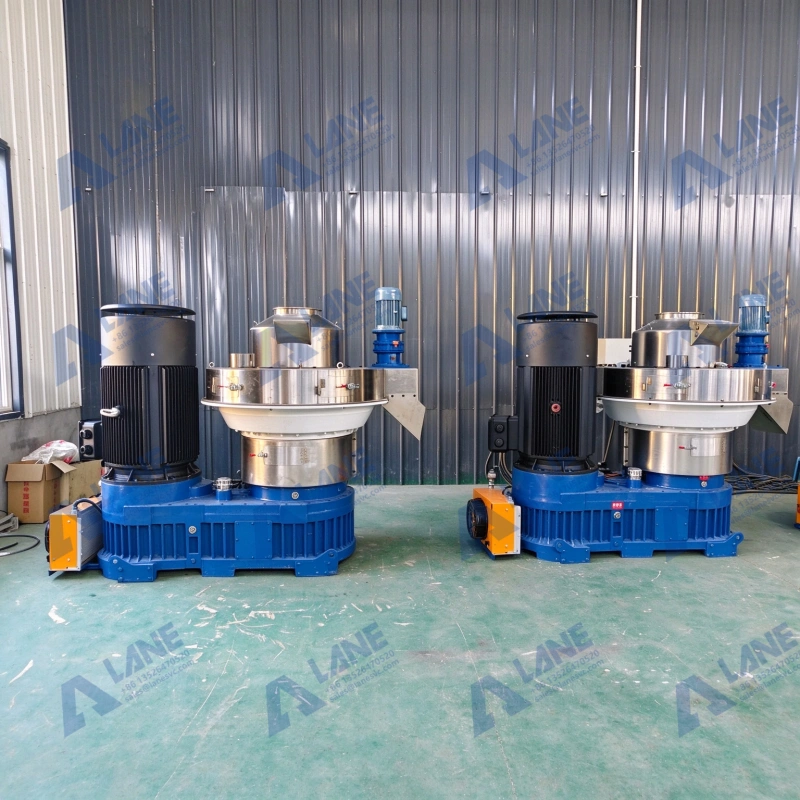
4.1 Ring Die Pellet Mill – Top pick for commercial mass production of fish waste fertilizer
The ring die pellet mill is the standard core for large-scale commercial marine organic fertilizer lines. Its working principle uses internal rollers to force materials through holes in a rotating ring die, with an external cutter cutting the extruded stream into dense cylindrical pellets.
Key strengths:
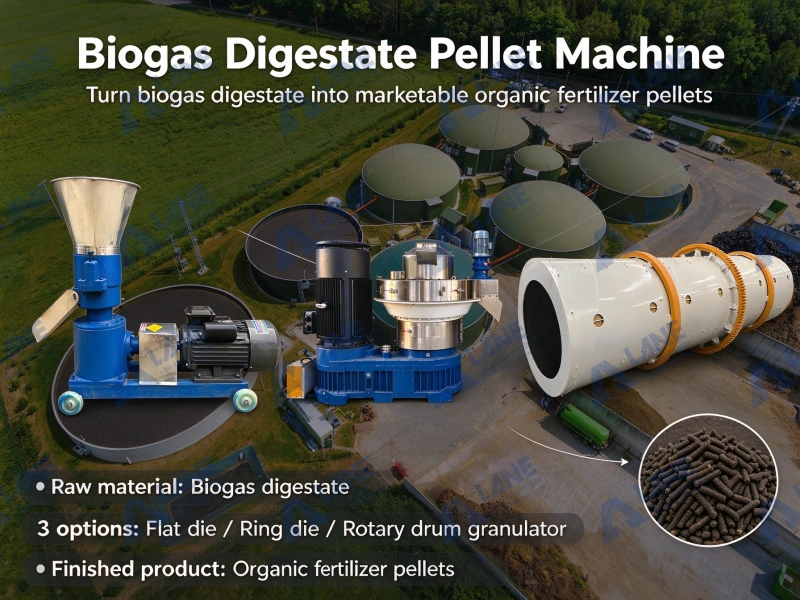
• High throughput: Single-unit capacity ranges from 1 t/h to 10 t/h or higher, easy to scale up production.
• Excellent forming rate: High-density pellets with smooth surfaces, powder rate below 2%, resistant to breakage during long-distance overseas shipping and bulk transport.
• Custom anti-corrosion design: Special stainless steel or alloy ring dies are available for high-salt, high-oil fish waste, extending service life by three times.
• Fully automatic continuous operation: Equipped with forced feeding systems, ideal for non-stop 24-hour factory operation.
Best for: Medium and large seafood processors, fishmeal plants and large-scale commercial organic fertilizer producers.
Sales line: This is not a small workshop setup. It is the reliable heart of a production line capable of steady high-volume daily output.
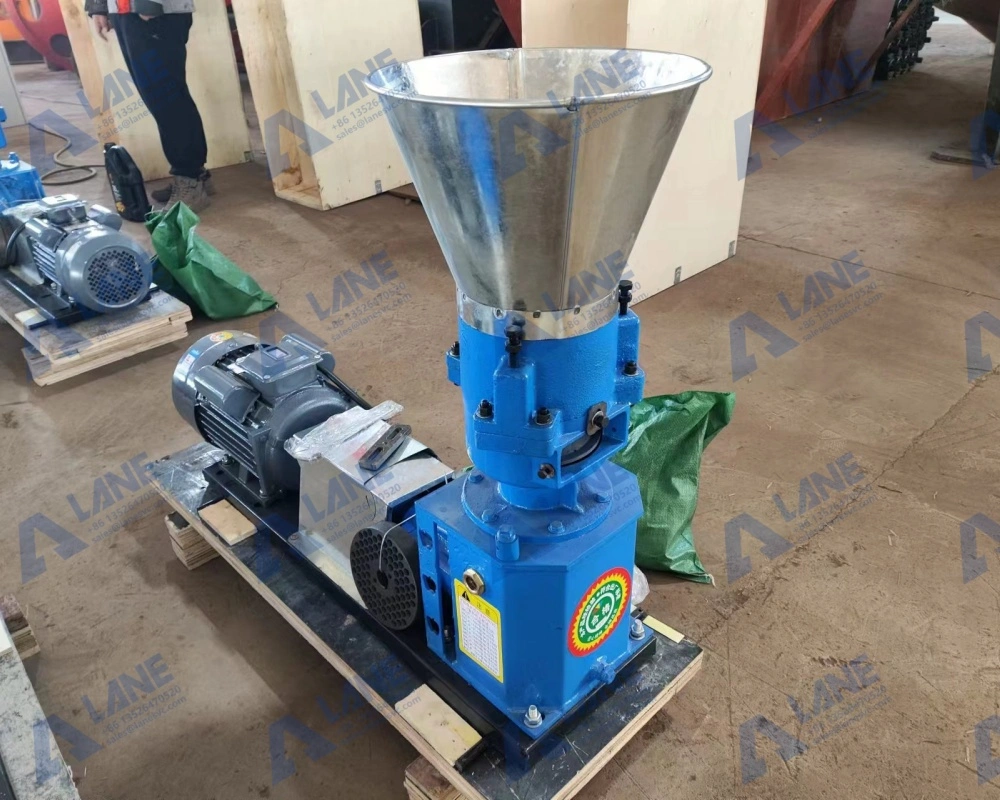
4.2 Flat Die Pellet Machine – Budget-friendly entry choice for small-batch trial runs
Flat die pellet machines work by rollers rolling over a horizontal flat die plate and pressing materials downward through die holes. Its simple structure makes it a good transitional option for early-stage projects.
Key strengths:
• Great cost performance: Compact structure, low upfront investment and simple operation and maintenance.
• Small footprint: Typical output ranges from 0.3 t/h to 1.5 t/h, easy to relocate.
• Good for fine powders: Delivers decent forming results for low-fiber, well-pre-mixed fishmeal powder.
Limitations: It tends to slip or block when handling wet, high-oil and high-salt raw fish waste. Wear speeds up under heavy continuous commercial use.
Best for: Small seafood workshops, on-farm self-use, sample testing and process validation in early-stage projects.
Sales line: If your budget is limited and you want to launch the business first, start with a flat die unit to test the process, and later upgrade seamlessly to a full ring die line as you expand.
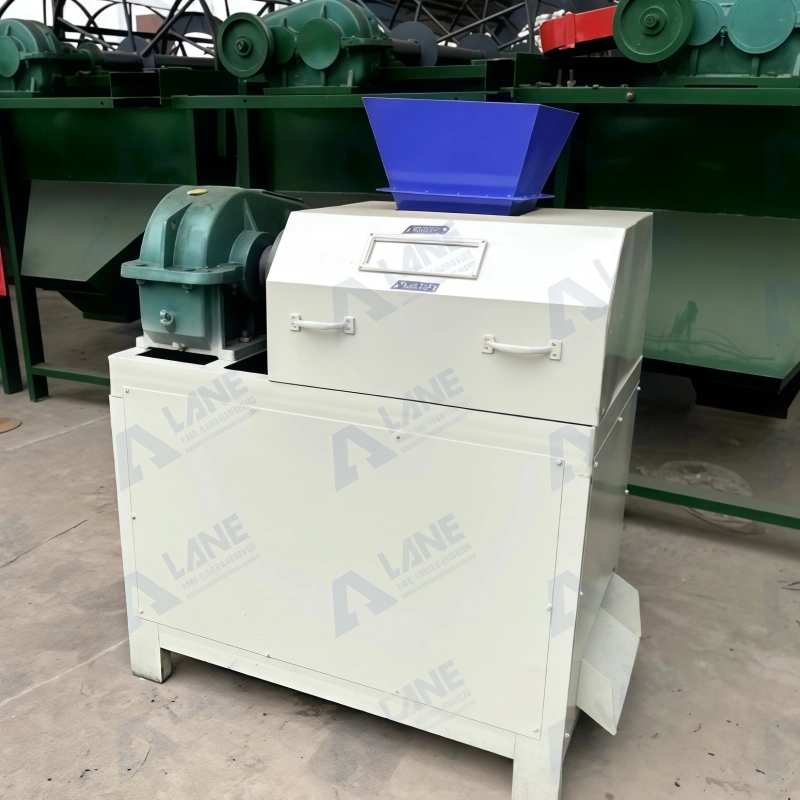
4.3 Roller Press Granulator – Ideal for dry blended powder fertilizers
This machine adopts a fully dry forming process. No extra water is needed. Two counter-rotating rollers compress powder into sheets, which are crushed and screened into oblate or irregular pellets.
Key strengths:
No drying required: Pure dry granulation cuts the need for expensive dryers and cooling equipment, saving energy and space.
Perfect for compound blends: It works well for formulas with high shares of dry fishmeal, urea, ammonium phosphate, potassium chloride and other inorganic ingredients for organic-inorganic compound fertilizer.
Limitations: Never feed high-moisture sticky raw fish offal directly, as it will stick to roller surfaces and stall the machine.
Sales line: If you have stable dry fishmeal or bone powder stock and plan to produce commercial compound fertilizer, this unit delivers consistent forming performance at the finishing stage.
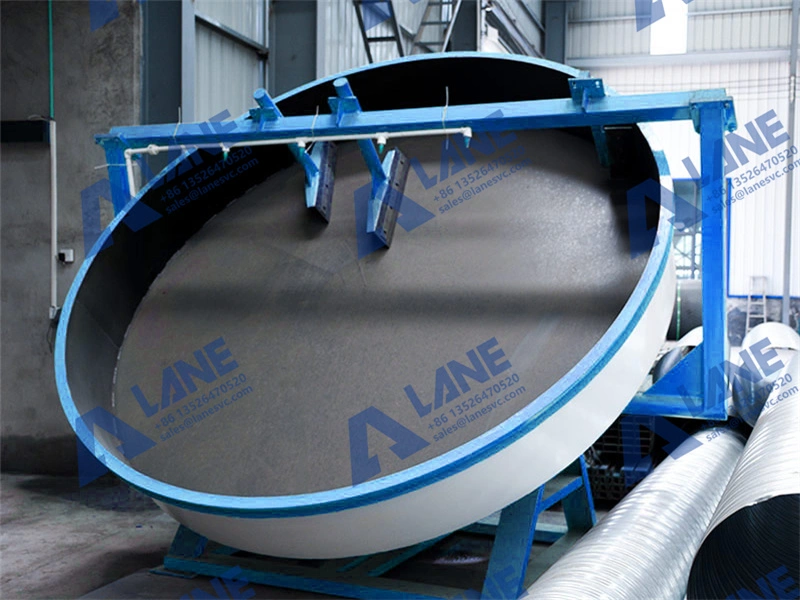
4.4 Disc / Drum Granulator – Classic wet agglomeration route
It uses wet agglomeration. Powdered materials roll inside an inclined rotating pan or large drum. With sprayed water or binders, particles stick together like rolling snowballs to form spherical pellets.
Key strengths:
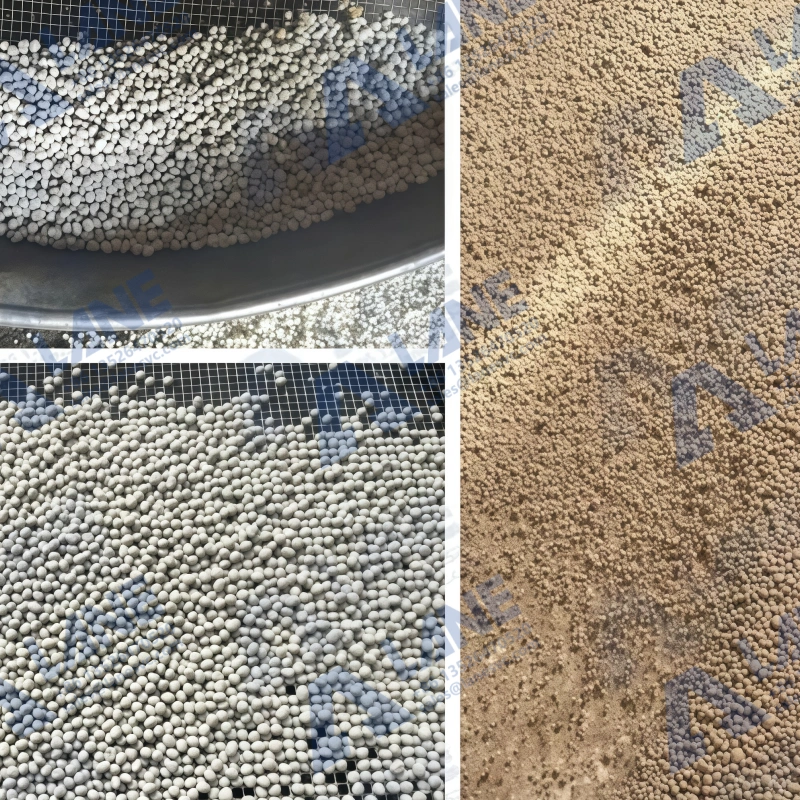
• Attractive round shape: Near-perfect spherical pellets with premium visual appeal, favored by traditional agricultural input markets.
• Compatible with fermented materials: Works well for properly fermented fish sludge with suitable stickiness.
Limitations: Pellet hardness is relatively low, and discharge moisture stays high at 20%–30%. Large coal or gas-fired dryers, hot air furnaces and multi-stage cooling and return systems are mandatory. Total investment and energy consumption are very high.
Best for: Established commercial organic fertilizer plants that already have mature fermentation and deep drying infrastructure.
Sales line: Choose pan granulation if spherical appearance is your priority for premium flower fertilizer or export fertilizer markets. But you must budget enough upfront to turn fish waste into qualified fermented powder feedstock.
4.5 Stirring Granulator – High tolerance for wet material fluctuations
High-speed internal stirring teeth generate mechanical shear and airflow to mix, nucleate, spheroidize and densify fine powder continuously inside the chamber.
Key strengths:
• High wet-material tolerance: It handles big moisture swings easily. Even fermented fish sludge with higher moisture can form pellets smoothly.
• Stable operation: Less prone to jamming caused by overly wet feedstock compared to die-type machines.
Limitations: Final pellet uniformity is slightly lower than ring die output; mixed rod and spherical shapes require heavy reliance on downstream screening and material return loops.
Sales line: If your pre-treatment dewatering process is unstable and moisture fluctuates often, this machine greatly improves line tolerance. It is often recommended as a supporting unit paired with the Fish Waste Pellet Machine in a combined process layout.

Quick Selection Table for Fish Waste Fertilizer Pellet Mills
| Selection Factor | Ring Die Pellet Mill (Recommended) | Flat Die Pellet Machine | Roller Press Granulator | Pan / Drum Granulator | Stirring Granulator |
|---|---|---|---|---|---|
| Preferred Feedstock | Fermented conditioned material (~15% moisture) | Coarse / fine powder | Dry powder (<5% moisture) | Fermented material + binder | High-moisture fish sludge / fermented mass |
| Pellet Shape | Solid cylinder | Short cylinder | Oblate / irregular | Perfect sphere | Rough spherical / mixed granules |
| Hourly Output | 1.0 – 10.0 t/h | 0.3 – 1.5 t/h | 1.0 – 4.0 t/h | 1.5 – 8.0 t/h | 1.0 – 5.0 t/h |
| 24h Heavy-duty Operation | Excellent | Poor (heat and fatigue risk) | Good | Good | Good |
| Drying Requirement | Very low (only cooling needed) | Very low | Zero drying required | Very high (large dryer mandatory) | Moderate drying needed |
| Best Fit | Commercial mass production & full line build | Small output, limited budget | Compound fertilizer shaping | Spherical pellet demand, existing drying system | Unstable wet feed, paired with ring die |
Why our Fish Waste Pellet Machine runs reliably in harsh corrosive environments
Fish waste has three damaging traits: high salt content that corrodes metal, high fat that causes slipping and blockage, and foul volatile compounds that degrade lubrication. Ordinary feed pellet mills or wood pellet mills often fail within three months when processing fish waste, suffering rust, seized bearings or cracked dies.
As an experienced original fertilizer equipment factory, our ring die pellet mill for fish waste is upgraded at the core to solve these industry pain points:
• Stainless steel and special alloy die assembly: Ring dies and all wetted parts avoid ordinary carbon steel. Vacuum heat-treated special stainless steel or high-chromium alloy resists corrosion from fish fluid, salt and fatty acids.
• Custom compression ratio for fish feed characteristics: Fish material is slippery and hard to form when too wet, and clogs easily when too dry. Our engineers draw on test data from hundreds of fish feed formulas, customizing die hole taper and compression ratio to ensure smooth discharge without blockage.
• Military-grade fully sealed bearing system: Multi-layer labyrinth seals plus anti-corrosion retainers stop fish grease and moisture from entering bearings, preventing grease breakdown and bearing seizure.
• Patent quick-change die design: Die replacement takes only 15–30 minutes. You can produce 4mm fine seedling fertilizer in the morning and switch to 8mm field base fertilizer in the afternoon without changing the host Fish Waste Pellet Machine.
• Intelligent auto-lubrication and PLC feed control: The system automatically injects lubricant to key bearings on a timed, metered schedule without shutdown for manual maintenance. PLC adjusts feeding speed in real time; feed slows automatically when main motor current overloads to avoid blockage and motor burnout.
6. Who should invest in this system now?
If you fall into one of these five groups, adding this system will reshape your profit structure:
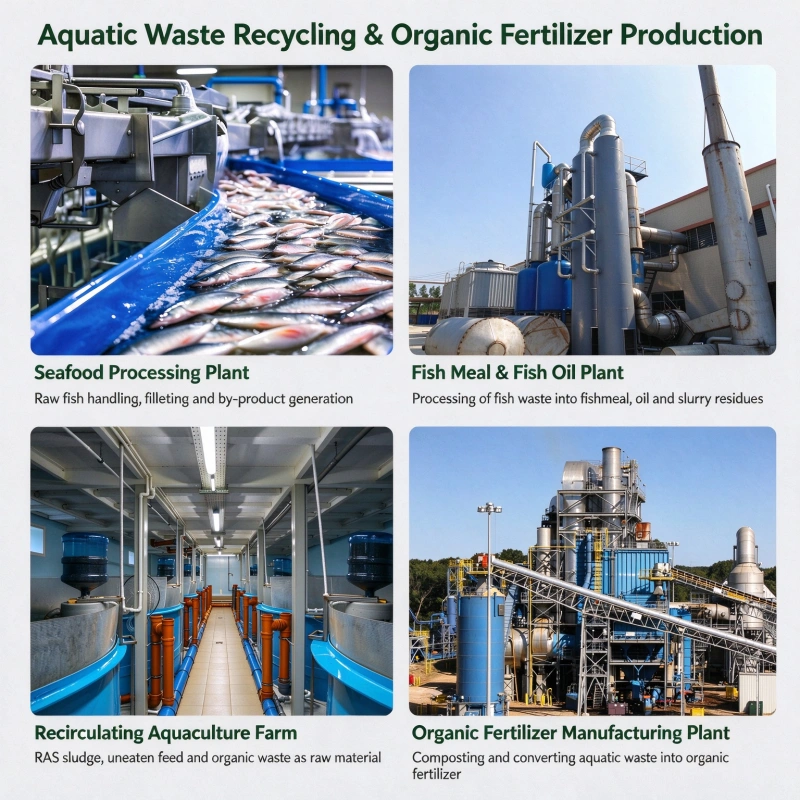
• Seafood and aquatic processing plants: Generating large volumes of fish heads, offal and shrimp shells daily. Stop paying waste handlers and turn residues into saleable marine organic fertilizer on-site.
• Fishmeal and fish oil plants: Residues after oil extraction and bulk fishmeal production can be upgraded into high-value pellets via the Fish Waste Pellet Machine for extra profit streams.
• RAS recirculating aquaculture farms: Fish sludge removed daily from modern farms can be dewatered and pelleted into marketable eco-friendly fertilizer.
• Traditional organic fertilizer manufacturers: Stand out from crowded chicken and cow manure fertilizer markets. Launch premium marine amino acid organic fertilizer with fish waste feedstock.
• Environmental project contractors: This equipment is ideal end-of-line recycling hardware for government-led collaborative treatment projects including urban sludge, dead fish and aquatic waste.
7. Pre-purchase checklist: Answer these 5 questions before selecting equipment
Share these 5 core indicators with our engineers so we can deliver accurate process drawings and formal quotations quickly:
• How many tons of wet fish waste does your site produce per day or per hour? This decides the capacity grade of your Fish Waste Pellet Machine and supporting line.
• What is the initial moisture content of your waste? Is it thick fish sludge, water-bearing offal, or relatively dry fishmeal residue?
• What pellet shape and size do you require? Standard cylindrical pellets such as 6mm or 8mm for field use, or perfectly spherical pellets?
• How much workshop space is available? Do you need fully automatic conveying, cooling and packaging, or just a standalone Fish Waste Pellet Machine with manual bagging?
• What is your project budget range? Are you looking for a cost-effective entry solution, or a full stainless steel industrial automatic line that meets EU standards?
Turn your waste into profit today!
Stop letting potential profits go down the drain with smelly fish waste. As a global fertilizer equipment manufacturer, we offer full-round support. Contact us now and receive:
✅ Free material feasibility assessment and process route planning
✅ Sample testing service: Send your fish waste samples to our factory. We run trials and record pelleting videos so you can inspect pellet hardness and quality directly.
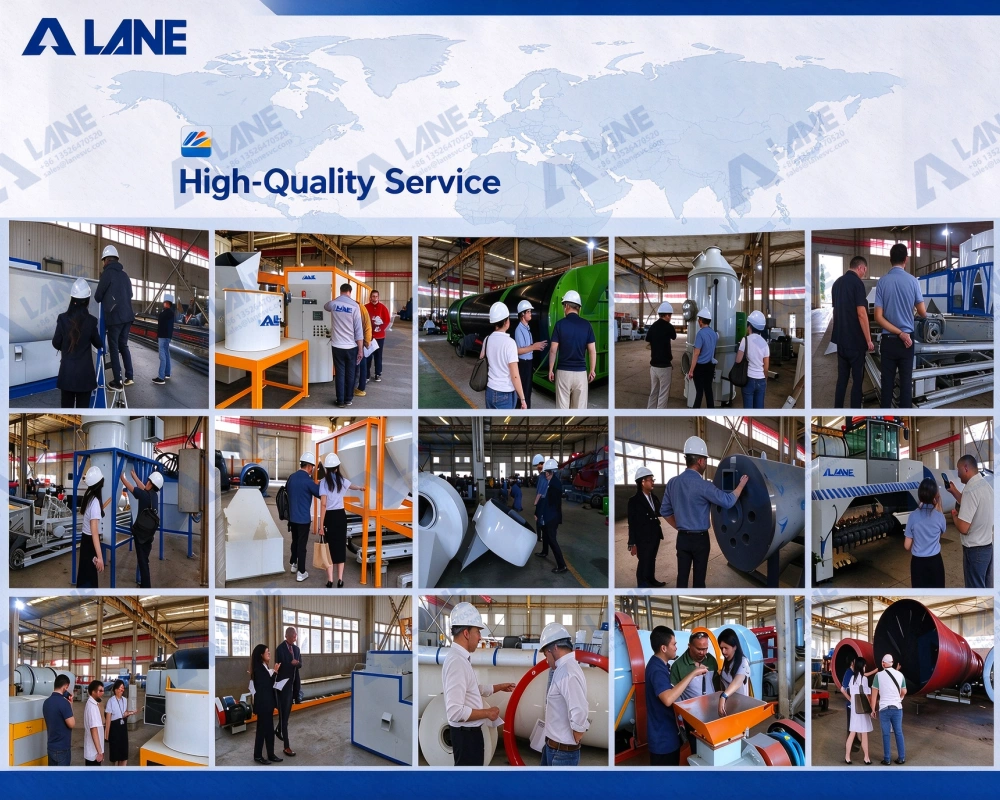
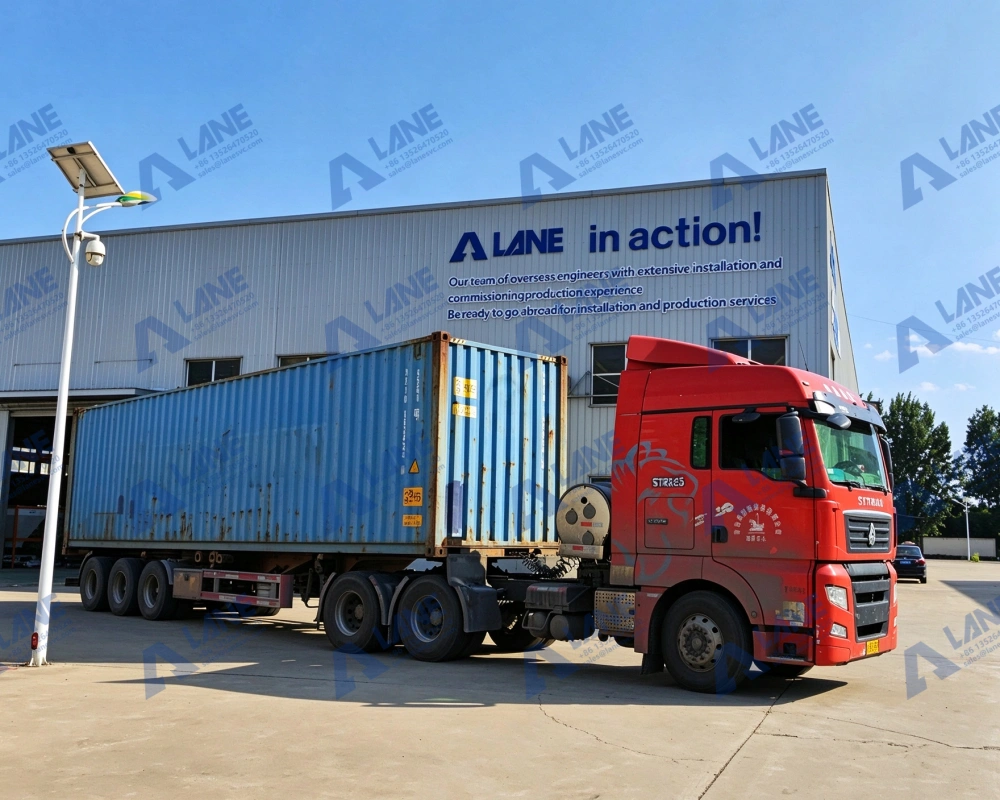
✅ Worldwide after-sales support: Experienced engineers provide overseas installation, commissioning and operator training.
All equipment holds CE and ISO certification and can be shipped globally.