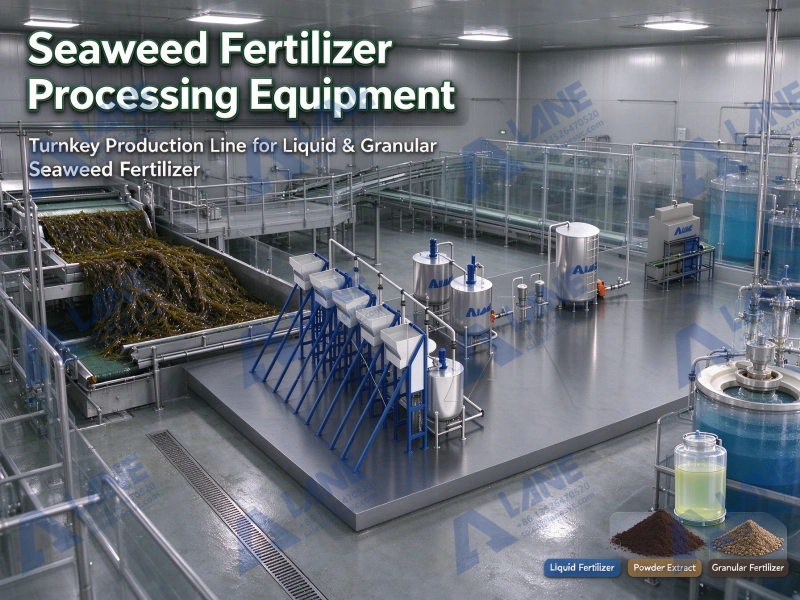
7 Key Differences Between Disc Granulator and Rotary Drum Granulator: Which One Fits Your Production Line?
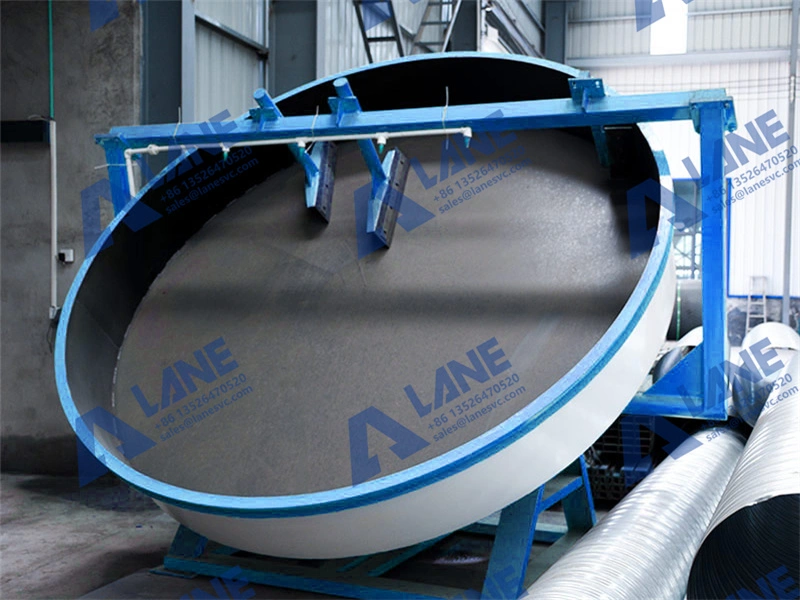
Disc Granulator vs Rotary Drum Granulator: Which Is Better for Your Fertilizer Production?
If you are in the fertilizer manufacturing industry, chances are that you have asked yourself this question: Should I choose the disc granulator or the rotary drum granulator? There is no definite answer to this decision, but it will affect your production capacity, energy consumption, and even the quality of the final granules.
Both of these devices have been in use in the industry for several decades, and they are recognized as the main models in fields such as organic fertilizers, compound fertilizers, mineral processing, and even cat litter production. However, their granulation principles, design production capacity, and their respective trade-offs are completely different. If the wrong one is chosen, either a large amount of money is spent on an unused production capacity, or the equipment operates at full capacity but still cannot meet the orders.
This article will compare these two granulation technologies from seven key aspects, helping you clarify which equipment better meets the actual production requirements.
What Is a Disc Granulator and How Does It Work?
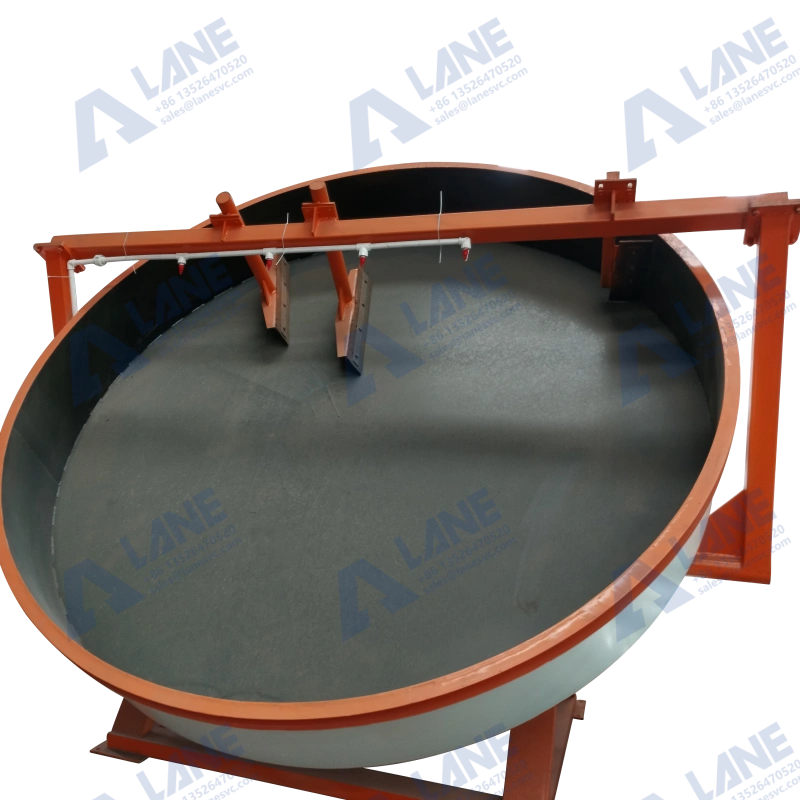
The disc granulator (also known as the circular disc granulator) is a granulation equipment that uses an inclined rotating disc to turn raw powder into spherical particles. The disc is driven by a motor through a reducer and rotates at an angle from the horizontal plane. The powdered material is fed into the disc, and as the disc rotates, the material rolls and rolls. During this process, water or binder is sprayed to help the particles bond together and form granules.
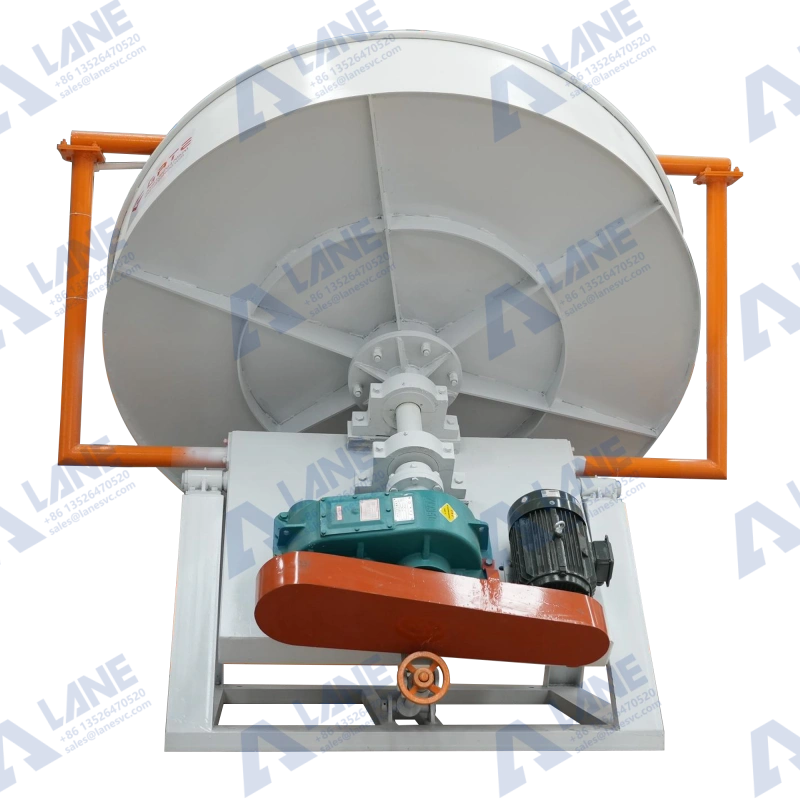
The specific mechanical transmission process is as follows:
- The main motor drives the pulley system, which is then slowed down by the reducer to drive the small gear.
- The small gear meshes with the large gear ring fixed at the bottom of the disc, causing the entire disc to rotate at a constant speed.
- The materials roll continuously on the disc surface, and the particles bond layer by layer to grow larger until they reach the target particle size.
- Along the circumference of the disc, there is an automatic cleaning device to prevent the accumulation of materials on the disc wall and avoid disrupting the granulation rhythm.
| Model | Capacity(tph) | Size(mm) | Power(kw) | Rotation Speed(rpm) | Pan Diameter(mm) | Tilt Angle(°) |
|---|---|---|---|---|---|---|
| LAZD-500 | 0.05-0.1 | 650*600*800 | 0.75 | 32 | 500 | 35-55 |
| LAZD-1000 | 0.1-0.2 | 1800*1200*1600 | 3 | 25 | 1000 | 35-55 |
| LAZD-1200 | 0.2-0.4 | 2000*1400*1950 | 3 | 22 | 1200 | 35-55 |
| LAZD-1500 | 0.4-0.6 | 2200*1800*2050 | 4 | 20 | 1500 | 35-55 |
| LAZD-1800 | 0.6-0.8 | 2600*2000*2450 | 5.5 | 16 | 1800 | 35-55 |
| LAZD-2000 | 0.8-1 | 2900*2100*2750 | 7.5 | 16 | 2000 | 35-55 |
| LAZD-2200 | 1-1.5 | 2530*2100*2800 | 7.5 | 18 | 2200 | 40-50 |
| LAZD-2500 | 1.5-2 | 2630*2600*2800 | 7.5 | 16.2 | 2500 | 40-50 |
| LAZD-2800 | 2-3 | 2850*3020*3110 | 7.5 | 14.2 | 2800 | 40-50 |
| LAZD-3200 | 3-4 | 3600*3030*3310 | 11 | 13.5 | 3200 | 40-50 |
| LAZD-4000 | 4-5 | 4500*3300*4000 | 15 | 12.3 | 4000 | 45 |
| LAZD-4500 | 5-6 | 5100*3700*4400 | 22 | 10 | 4500 | 45 |
| LAZD-6000 | 6-10 | 6400*5000*6000 | 75 | 8.9 | 6000 | 45 |
Feature
The most recognized feature of the disc granulator is its high balling rate, typically reaching over 93%, meaning that most of the input materials can be directly transformed into finished products.
- The bottom of the disc is reinforced by multiple radial steel plates, which will not deform under heavy loads.
- The main gear undergoes high-frequency quenching treatment, doubling its service life.
- The flexible belt drive also enables smoother startup and reduces mechanical shock.
Application scenarios: organic fertilizer production lines, compound fertilizer production lines, cat litter factories, and mineral processing plants.
Another reason for its popularity is the ease of installation – the sturdy base design ensures smooth operation of the equipment, eliminating the need for anchor bolts for fixation, thus saving a lot of construction work.
What Is a Rotary Drum Granulator and How Does It Work?
The rotary drum granulator is a large-scale granulation equipment that uses a rotating cylindrical rotary drum to aggregate powdered materials into particles. It is one of the key equipment in the compound fertilizer industry and is widely applied in both cold and hot granulation processes. The rotary drum rotates continuously, and the materials tumble inside, while water, steam or liquid adhesives are added to form particles.
It adopts the wet granulation and pelletizing process. The materials enter from one end of the cylinder. As the cylinder rotates, the powder and the bonding liquid continuously tumble and mix inside the cylinder. The particles gradually grow into spheres through collisions and extrusion, and finally are discharged from the other end.
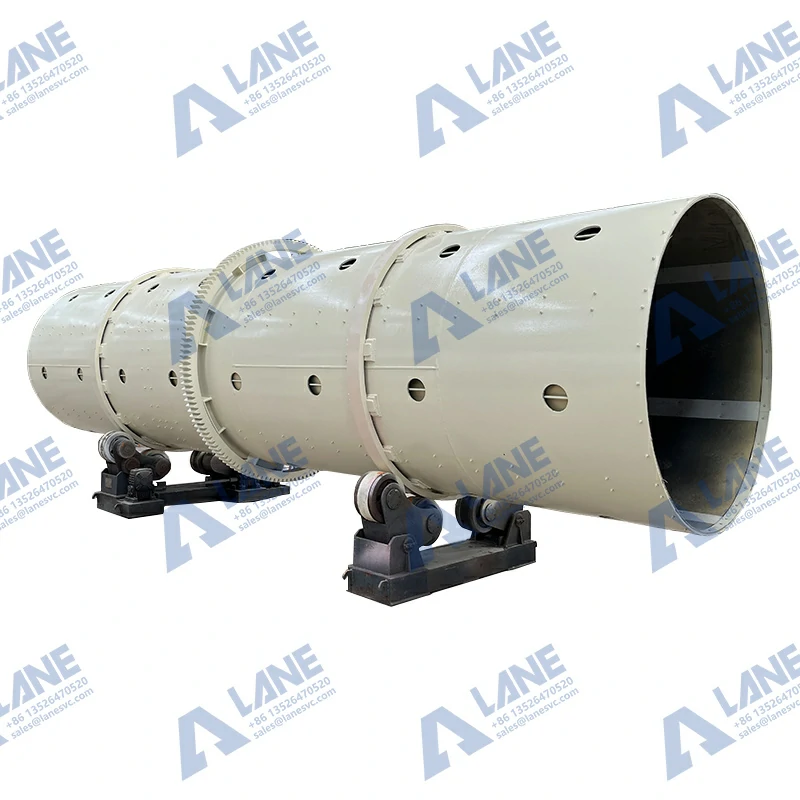
Mechanical Structure
The rotary drum granulator follows an industrial durability approach.
- The frame and supporting structure are welded from channel steel and medium carbon steel. The main motor and reducer usually choose well-known ISO-certified brands.
- The inner lining of the cylinder is usually made of rubber plates or acid-resistant stainless steel plates. It serves two purposes: one is to protect the cylinder from wear and corrosion, and the other is that the inner lining itself has the characteristic of automatic discharging, eliminating the need for traditional scrapers to scrape back and forth on the cylinder wall.
- The Reason Why Factory Managers Prefer the Rotary Drum Granulator
- The initial investment is relatively low, but the production capacity returns are significant, and the investment recovery period is usually quite favorable.
It operates stably, with no waste emissions under normal conditions, and the maintenance is also not difficult to handle.
For scenarios involving large-scale production of conventional nitrogen-phosphorus-potassium compound fertilizers, the economic efficiency of the rotary drum granulator is difficult to be replaced.
Disc Granulator vs Rotary Drum Granulator: Key Differences
Now let’s move on to the details. Here is a detailed comparison of these two machines in terms of the factors that are of greatest concern to fertilizer producers.
Production Capacity
The rotary drum granulator excels in this category. A typical disc granulator can process 1 to 8 tons per hour, while the rotary drum granulator can handle 10 to 30 tons or even more per hour. If you plan to significantly expand your production scale, the rotary drum granulator is the clear choice.
Initial Investment
The initial cost of a disc granulator is much lower. You can obtain a fully functional disc granulator at a fraction of the cost of a rotary drum system. This is often a decisive factor for smaller operations or start-up enterprises.
Operating Costs
The disc granulator also wins on operating costs. It uses less electricity, requires less maintenance, and has fewer parts that need replacing. Over the long run, this can make a big difference to your bottom line.
Granule Quality
Both machines can produce high-quality particles, but they excel in different areas. The disc granulator produces particles with higher roundness and better appearance. The rotary drum granulator produces particles with higher hardness and better uniformity. So it depends on what you value more – appearance or durability.
Raw Material Flexibility
The rotary drum granulator is more tolerant of difficult-to-process raw materials. If your raw materials have high moisture content, high viscosity or unstable quality, the rotary drum granulator can handle them better. The disc granulator prefers more consistent and fluid materials.
Floor Space
The disc granulator occupies much less space. A disc granulator with a production capacity of 5 tons per hour may only require 50 square meters, while a rotary drum granulator with the same production capacity might need 200 square meters or more. If your factory space is limited, this is an important consideration.
Maintenance Requirements
The maintenance of disc granulators is simpler. Its structure is straightforward and there are fewer moving parts. Rotary Drum granulators have more components, more bearings and a more complex system, which means more maintenance work and higher maintenance costs.
How to Choose: Disc Granulator or Rotary Drum Granulator?
Choose a Disc Granulator If:
- You are a small to medium-sized manufacturer – if you are a small organic fertilizer startup, a small farm fertilizer factory, or a medium-sized compound fertilizer plant with limited production capacity, the disc granulator is your best choice. It is cost-effective, easy to operate, and won’t bankrupt you.
- Your budget and space are limited – if you are concerned about the initial investment and don’t have much floor space, a disc granulator is a more practical choice. You can obtain a fully functional granulation system with lower capital expenditure and smaller physical floor space.
- You need flexible control over particle size – if your product needs to offer different particle sizes for different market segments, the disc granulator allows you to easily adjust parameters such as the disc rotation speed and inclination angle to produce different sizes.
- You produce organic fertilizers or biological fertilizers – disc granulators are particularly suitable for the production of organic fertilizers and the application of slow-release fertilizers. They are more gentle on the materials and the produced granules are highly suitable for organic products.
Choose a Rotary Drum Granulator If:
- You need high production capacity – if you are operating a large compound fertilizer plant, the hourly output requirement is 10 tons or more. Rotary Drum granulators are the only practical option. Disk granulators simply cannot keep up with such a production volume.
- You deal with difficult-to-process raw materials – if your raw materials have a high moisture content, high viscosity or significant quality variations, the powerful adaptability of the rotary drum granulator makes it a better choice. It is simply more forgiving.
- You pay attention to the hardness and durability of the particles – if you sell fertilizers to commercial farmers or retailers, they expect high-quality, durable particles that won’t break during transportation. Then the rotary drum granulator can produce harder and more durable particles.
- You are building a fully automated production line – if your goal is to achieve highly automated, large-scale continuous production operations, the rotary drum granulator can be more easily integrated into such a system.
Can You Use Both?
Here is a thought worth considering – some fertilizer plants actually use a combination of disc granulators and rotary drum granulators in series for secondary granulation. This method combines the advantages of both machines. The disc granulator is responsible for the initial shaping, while the rotary drum granulator is responsible for the final rounding and hardening. If your budget and space permit, this might be an excellent way to achieve the best particle quality.
Call to Action – Get Your Quote Today
Have you selected the right granulator for your fertilizer production line? Henan Lain Heavy Industry Technology Co., Ltd. is always ready to assist you in making the right choice.
Contact us with your production requirements:
- What is your target production capacity?
- What type of raw materials are you processing?
- What is your budget and available floor space?
Our engineering team will provide you with customized recommendations, process layout and competitive quotations within 24 hours. There is no pressure – only honest suggestions on what is the best option for you.