Which Fertilizer Granulator Machine Capacity Is Right for You?
When choosing a fertilizer granulator machine, Fertilizer Granulator Machine Capacity is one of the most important factors to consider.
Different granulation methods have different processing capabilities. A small organic fertilizer project may only need several hundred kilograms per hour, while a large organic fertilizer or NPK production line may require several tons or even more than ten tons per hour.
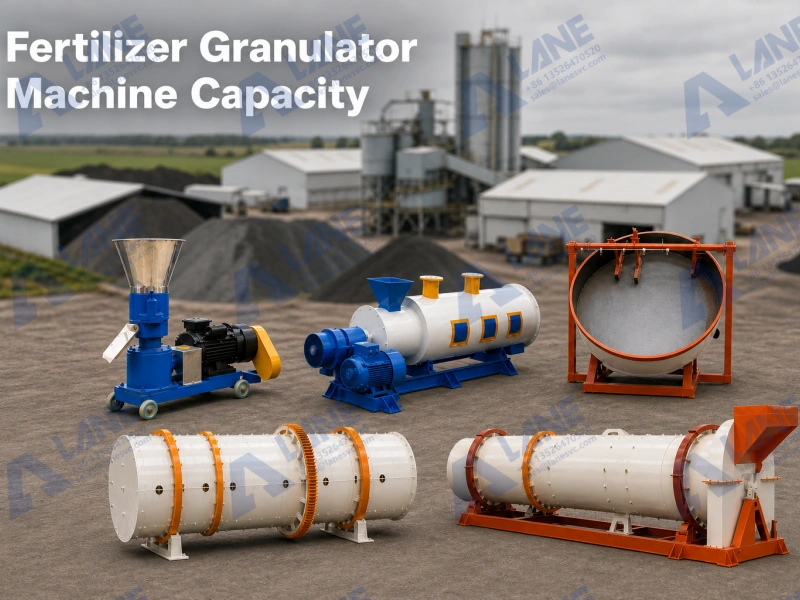
LANE offers several fertilizer granulation solutions, including the Stirring Tooth Granulator, Flat Die Granulator, Double Roller Granulator, Disc Granulator, Rotary Drum Churning Teeth Granulator, and Rotary Drum Granulator.
Therefore, selecting the right Fertilizer Granulator Machine Capacity should not be based only on the maximum output of the machine. The target production capacity, raw materials, granulation process, and the capacity of the complete production line should all be considered.
Fertilizer Granulator Machine Capacity of Different Granulators
Different fertilizer granulators cover different production ranges. Understanding the Fertilizer Granulator Machine Capacity of each type can help determine which machine is suitable for a specific production scale.
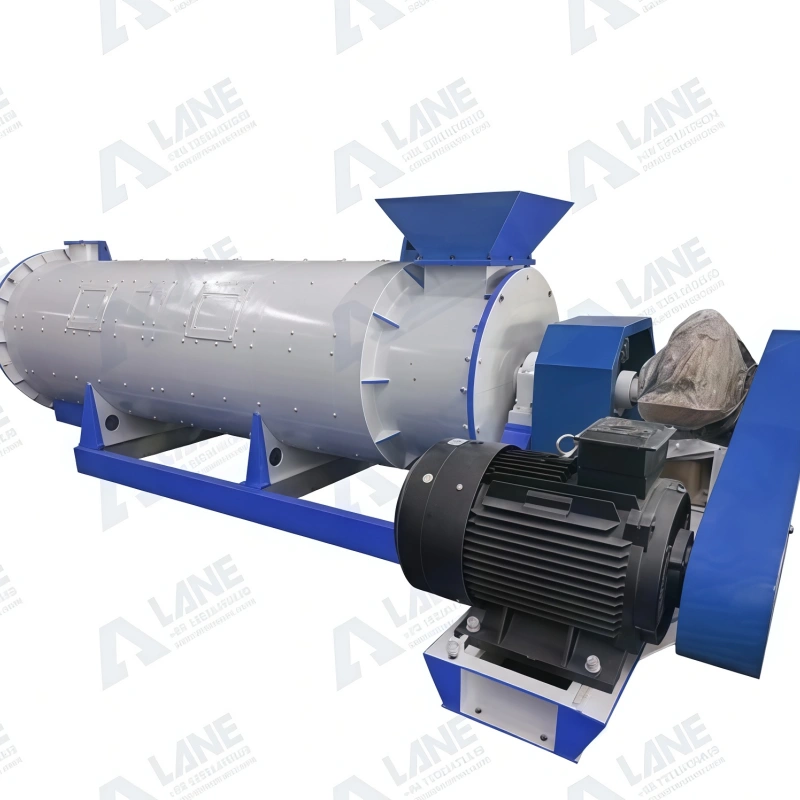
Fertilizer Granulator Machine Capacity: about 1–10 t/h
The Stirring Tooth Granulator uses high-speed stirring, shearing, and agglomeration to gradually form fertilizer particles from powdery materials.
It has good adaptability to organic materials and is commonly used for livestock manure compost, organic waste, and organic fertilizer production.
Its relatively wide capacity range allows it to be used for small projects as well as some medium-scale organic fertilizer production lines.
Suitable materials:
Livestock manure, compost, organic waste, and some compound fertilizer materials.
| Model | Size(mm) | Drum size(mm) | Mixing Shaft(mm) | Capacity(tph) | Power(kw) |
|---|---|---|---|---|---|
| LAZJ-600 | 4500*1500*1050 | Φ600*1800 | 219*10 | 1-2 | 37 |
| LAZJ-800 | 4900*1700*1250 | Φ800*2400 | 245*10 | 2-3 | 45 |
| LAZJ-1000 | 5300*1900*1400 | Φ1000*3000 | 273*10 | 3-5 | 75 |
| LAZJ-1200 | 5700*2100*1700 | Φ1200*3000 | 325*12 | 6-8 | 90 |
| LAZJ-1500 | 6200*2800*2000 | Φ1500*3000 | 325*12 | 8-10 | 110 |
Fertilizer Granulator Machine Capacity: about 0.08–1.2 t/h
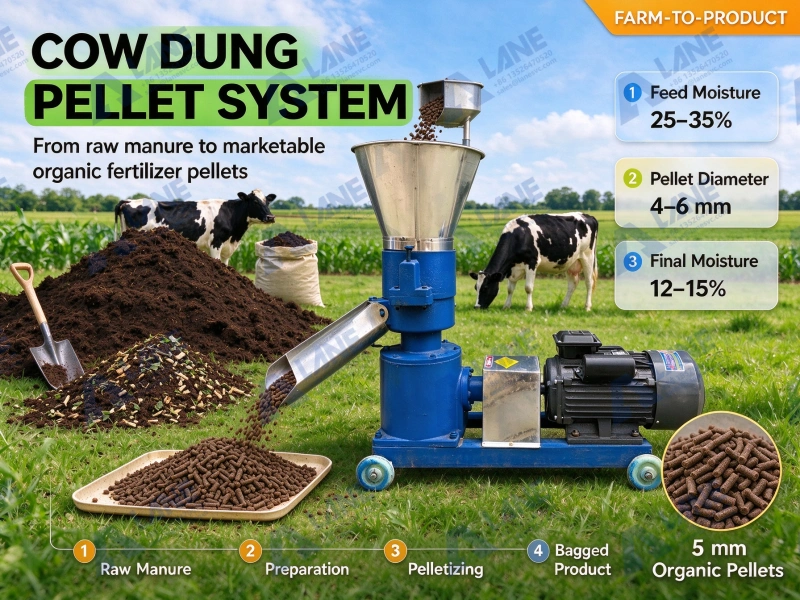
The Flat Die Granulator uses a pressing roller to force the material through die holes to form pellets. Its compact structure and relatively small footprint make it suitable for small-scale fertilizer production.
LANE Flat Die Granulators cover a capacity range of approximately 80–1200 kg/h, allowing different machine sizes to serve different small-scale production requirements.
This makes the machine suitable for projects that do not require a large production capacity and want to keep equipment investment and plant space under control.
Main applications:
Small organic fertilizer plants, farm fertilizer processing, small-scale compound fertilizer production, and projects with relatively low initial production requirements.
| Model | Capacity(kg/h) | Weight(kg) | Power(kw) |
|---|---|---|---|
| LA125 | 80-100 | 35 | 3-4 |
| LA150 | 90-150 | 40 | 3-4 |
| LA160 | 150-200 | 45 | 4.5 |
| LA210 | 200-300 | 110 | 7.5 |
| LA230 | 350-450 | 150 | 11 |
| LA260 | 400-500 | 190 | 15 |
| LA300 | 500-700 | 400 | 22 |
| LA360 | 700-800 | 600 | 22 |
| LA400 | 900-1200 | 750 | 30 |
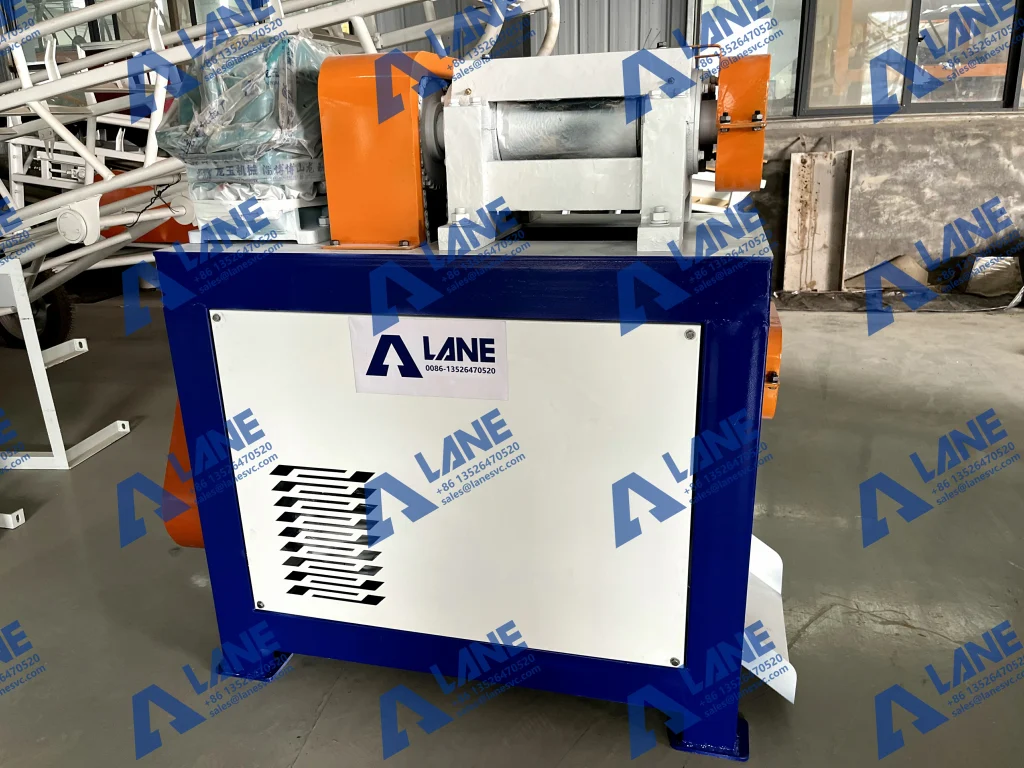
Fertilizer Granulator Machine Capacity: about 0.8–4.5 t/h
The Double Roller Granulator uses dry extrusion granulation. Two counter-rotating rollers compress powdery materials into formed fertilizer particles.
Compared with conventional wet granulation, dry extrusion can reduce or eliminate the need for a conventional drying stage in some production processes.
Its Fertilizer Granulator Machine Capacity mainly covers small- to medium-scale production, making it suitable for compound fertilizer and NPK fertilizer projects.
Suitable materials:
NPK raw materials, compound fertilizer powders, and mineral fertilizer materials suitable for extrusion.
| Model | Capacity(tph | Power(kw) | Size(mm) | Roller size(mm) | Rotation Speed(rpm) |
|---|---|---|---|---|---|
| LAZR-1.0 | 0.8-1 | 11-15 | 1200*700*1000 | Φ150*220 | 1450 |
| LAZR-1.5 | 1-1.5 | 11-15 | 1300*800*1100 | Φ150*300 | 1450 |
| LAZR-2.0 | 2-3 | 22 | 1630*850*1650 | Φ168*300 | 1450 |
| LAZR-3.0 | 3-4.5 | 30 | 1900*1050*1200 | Φ300*300 | 1450 |
Fertilizer Granulator Machine Capacity: about 0.05–5 t/h
The Disc Granulator uses the rolling and agglomeration effect created by the rotating disc to gradually form pellets from powdery materials.
Its capacity range is relatively broad, allowing it to serve small-scale projects as well as some medium-scale fertilizer production lines.
During operation, the feeding rate, disc inclination, rotation speed, and liquid addition can be adjusted to control the pellet formation process.
Suitable materials:
Organic fertilizer, compound fertilizer, and other powdery materials suitable for wet agglomeration.
| Model | Capacity(tph) | Size(mm) | Power(kw) | Rotation Speed(rpm) | Pan Diameter(mm) | Tilt Angle(°) |
|---|---|---|---|---|---|---|
| LAZD-500 | 0.05-0.1 | 650*600*800 | 0.75 | 32 | 500 | 35-55 |
| LAZD-1000 | 0.1-0.2 | 1800*1200*1600 | 3 | 25 | 1000 | 35-55 |
| LAZD-1200 | 0.2-0.4 | 2000*1400*1950 | 3 | 22 | 1200 | 35-55 |
| LAZD-1500 | 0.4-0.6 | 2200*1800*2050 | 4 | 20 | 1500 | 35-55 |
| LAZD-1800 | 0.6-0.8 | 2600*2000*2450 | 5.5 | 16 | 1800 | 35-55 |
| LAZD-2000 | 0.8-1 | 2900*2100*2750 | 7.5 | 16 | 2000 | 35-55 |
| LAZD-2200 | 1-1.5 | 2530*2100*2800 | 7.5 | 18 | 2200 | 40-50 |
| LAZD-2500 | 1.5-2 | 2630*2600*2800 | 7.5 | 16.2 | 2500 | 40-50 |
| LAZD-2800 | 2-3 | 2850*3020*3110 | 7.5 | 14.2 | 2800 | 40-50 |
| LAZD-3200 | 3-4 | 3600*3030*3310 | 11 | 13.5 | 3200 | 40-50 |
| LAZD-4000 | 4-5 | 4500*3300*4000 | 15 | 12.3 | 4000 | 45 |
| LAZD-4500 | 5-6 | 5100*3700*4400 | 22 | 10 | 4500 | 45 |
| LAZD-6000 | 6-10 | 6400*5000*6000 | 75 | 8.9 | 6000 | 45 |
Rotary Drum Churning Teeth Granulator
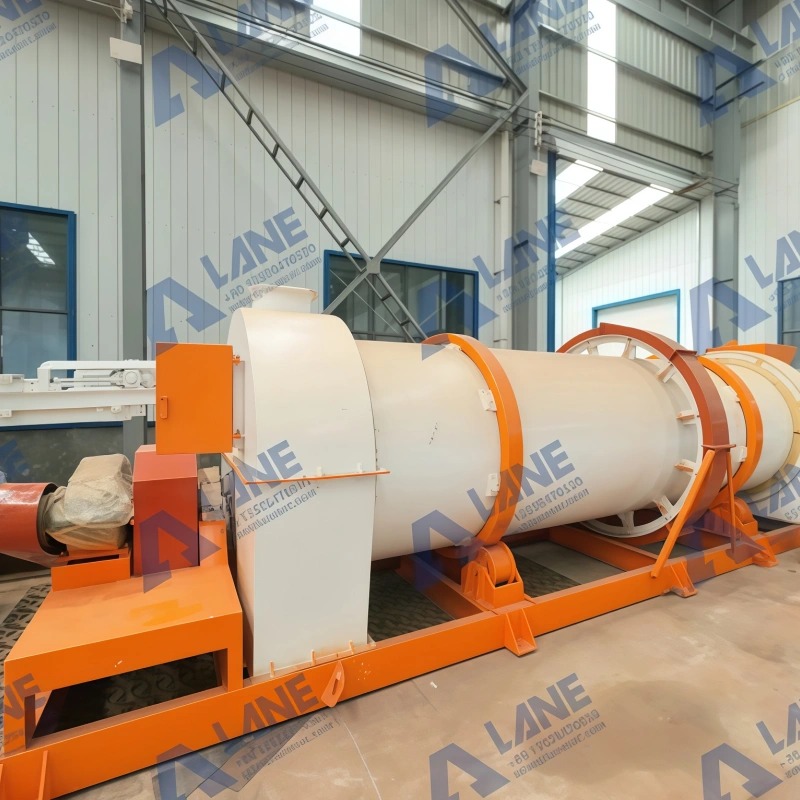
Fertilizer Granulator Machine Capacity: about 1–10 t/h
The Rotary Drum Churning Teeth Granulator combines drum rolling with churning and stirring action.
As the material continuously rolls, mixes, and agglomerates inside the drum, the machine promotes continuous pellet formation.
This design is suitable for projects that require relatively high processing capacity while also paying attention to pellet formation and production stability.
Main applications:
Medium-scale organic fertilizer plants, compound fertilizer projects, and continuous granulation production lines.
| Model | Capacity(tph) | Power(kw) | Casing Thickness(mm) |
|---|---|---|---|
| LAZM-60/120 | 1-2 | 37+7.5 | 8 |
| LAZM-80/160 | 3-5 | 55+11 | 10 |
| LAZM-100/160 | 6-8 | 75+11 | 10 |
| LAZM-100/180 | 8-10 | 55+15 | 12 |
Fertilizer Granulator Machine Capacity: about 2–20 t/h
The Rotary Drum Granulator mainly relies on the rotation of the drum to make materials continuously roll, collide, and agglomerate into fertilizer granules.
Its relatively high Fertilizer Granulator Machine Capacity makes it suitable for medium- to large-scale fertilizer production, particularly projects requiring continuous and high-volume operation.
Main applications:
Large organic fertilizer plants, compound fertilizer production lines, and NPK fertilizer production projects.
| Model | Drum size(mm) | Rotation Speed(rpm) | Thickness(mm) | Capacity(tph) | Power(kw) | Tilt Angle(°) |
|---|---|---|---|---|---|---|
| LAZR-1060 | Φ1000*6000 | 13 | 10 | 2-5 | 7.5 | 2-2.5° |
| LAZR-1260 | Φ1200*6000 | 13 | 10 | 3-6 | 11 | 2-2.5° |
| LAZR-1560 | Φ1500*6000 | 13 | 10 | 6-8 | 15 | 2-2.5° |
| LAZR-1870 | Φ1800*7000 | 13 | 12 | 8-10 | 18.5 | 2-2.5° |
| LAZR-2080 | Φ2000*8000 | 11.5 | 12 | 10-15 | 22 | 2-2.5° |
| LAZR-2290 | Φ2200*9000 | 11.5 | 14 | 15-20 | 30 | 2-2.5° |
| LAZR-2410 | Φ2400*10000 | 11.5 | 16 | 15-20 | 37 | 2-2.5° |
Small-Scale Fertilizer Production: Which Granulators Are Suitable?
For small-scale projects, the key is not simply choosing the machine with the lowest capacity.
The more important question is whether the machine’s Fertilizer Granulator Machine Capacity matches the actual production target.
For example, a project that only needs several hundred kilograms per hour does not necessarily need a large rotary drum granulator. Oversizing the granulator can increase initial investment while also creating capacity mismatches between different production stages.
Flat Die Granulator
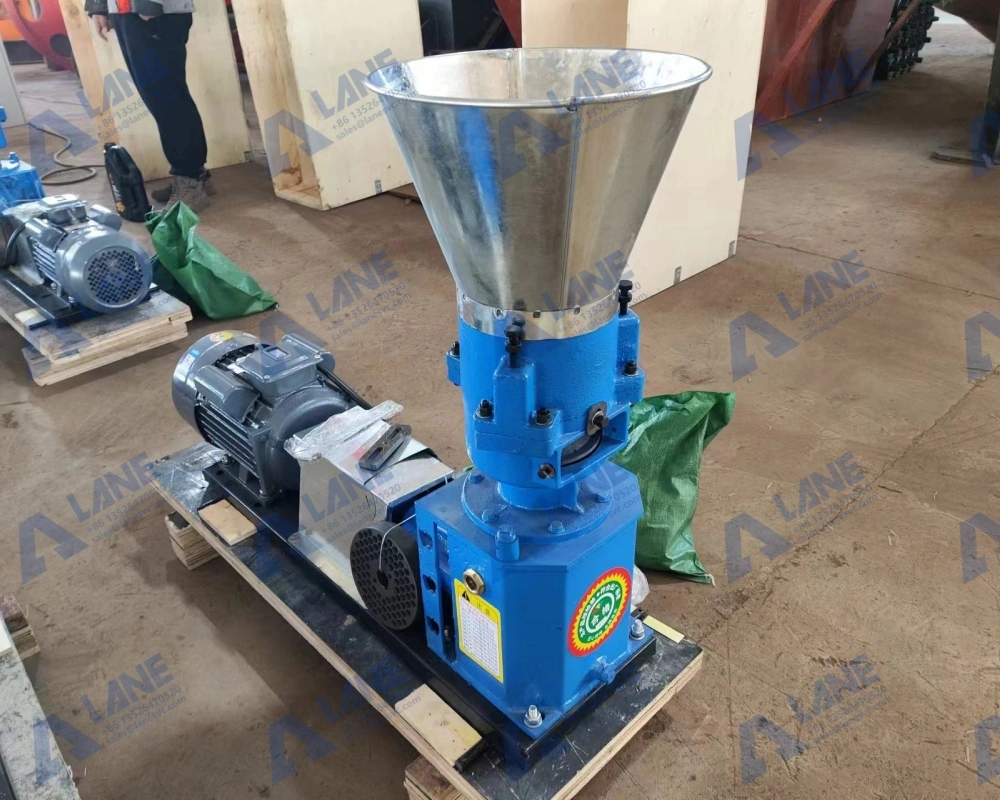
For projects with relatively low production requirements, the Flat Die Granulator can complete the granulation process with a compact equipment configuration.
Its 80–1200 kg/h capacity range can cover many small fertilizer processing projects.
Suitable for:
• Small organic fertilizer production
• Farm fertilizer processing
• Small-scale compound fertilizer production
• Projects with relatively low initial output requirements
Small-scale production line:
Raw Materials → Crushing → Mixing → Flat Die Granulation → Screening → Packaging
Disc Granulator
For small-scale projects that require relatively round fertilizer granules without a particularly high continuous processing capacity, the Disc Granulator can be considered.
Instead of simply pursuing maximum output, small projects often need to focus on equipment configuration and whether the granulator can work smoothly with the drying, cooling, and screening systems.
Suitable for:
• Small organic fertilizer projects
• Small compound fertilizer plants
• Projects requiring relatively round granules
• Projects with limited initial investment
Production line:
Raw Materials → Crushing → Mixing → Disc Granulation → Drying → Cooling → Screening → Packaging
Stirring Tooth Granulator
For small projects using livestock manure, compost, or other organic materials, the Stirring Tooth Granulator provides a wider capacity range than some compact granulation solutions.
If future expansion is planned, the required Fertilizer Granulator Machine Capacity can also be considered in advance to avoid replacing the core granulation equipment too soon.
Production line:
Composting → Crushing → Mixing → Stirring Tooth Granulation → Drying → Cooling → Screening → Packaging
Medium-Scale Fertilizer Production: How Should the Granulator Be Selected?
As production capacity increases, the focus gradually shifts from simply achieving the required output to maintaining continuous and stable production.
At this stage, the Fertilizer Granulator Machine Capacity needs to match the feeding, mixing, drying, cooling, and screening capacities of the complete production line.
Double Roller Granulator
For projects using dry extrusion granulation, the Double Roller Granulator can help create a more compact production process.
If the target output falls within its Fertilizer Granulator Machine Capacity and the raw material is suitable for extrusion, this granulator can reduce the need for conventional wet-granulation drying.
Production line:
Raw Materials → Crushing → Batching → Mixing → Double Roller Granulation → Screening → Packaging
Stirring Tooth Granulator
As the production capacity of an organic fertilizer project increases, the Stirring Tooth Granulator can continue to provide a suitable capacity range.
However, increasing the granulator capacity alone is not enough.
The crushing, mixing, feeding, drying, cooling, and screening equipment should also be checked to ensure that the entire line can keep up with the granulator.
Production line:
Composting → Crushing → Batching → Mixing → Stirring Tooth Granulation → Drying → Cooling → Screening → Packaging
Rotary Drum Churning Teeth Granulator
For medium-scale projects that require continuous production while also paying attention to pellet formation, the Rotary Drum Churning Teeth Granulator can be a suitable option.
Its purpose is not simply to achieve the highest Fertilizer Granulator Machine Capacity, but to maintain a stable balance between processing capacity and granulation performance.
Production line:
Raw Materials → Crushing → Mixing → Rotary Drum Churning Teeth Granulation → Drying → Cooling → Screening → Packaging
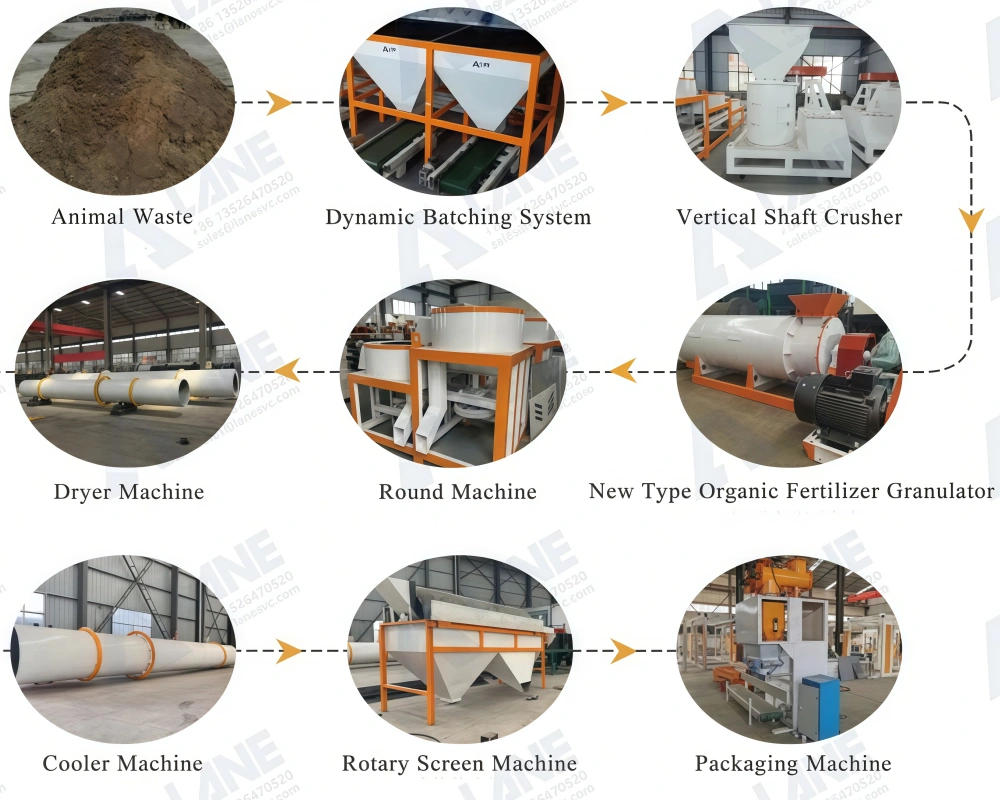
Large-Scale Fertilizer Production: How Should High-Capacity Granulation Be Configured?
When a project enters large-scale production, the granulator normally needs to operate continuously for long periods.
At this stage, Fertilizer Granulator Machine Capacity needs to be considered together with raw material supply, drying, cooling, screening, and packaging capacity.
Rotary Drum Granulator
With a Fertilizer Granulator Machine Capacity of about 2–20 t/h, the Rotary Drum Granulator can meet the requirements of many high-output fertilizer production projects.
For large production lines, the granulator should be considered as part of the complete processing system rather than as an independent machine.
Large-scale production line:
Raw Materials → Crushing → Batching → Mixing → Rotary Drum Granulation → Drying → Cooling → Screening → Packaging
If the target output is high, the upstream equipment must continuously supply enough material, while the downstream equipment must process the newly formed wet granules without creating a bottleneck.
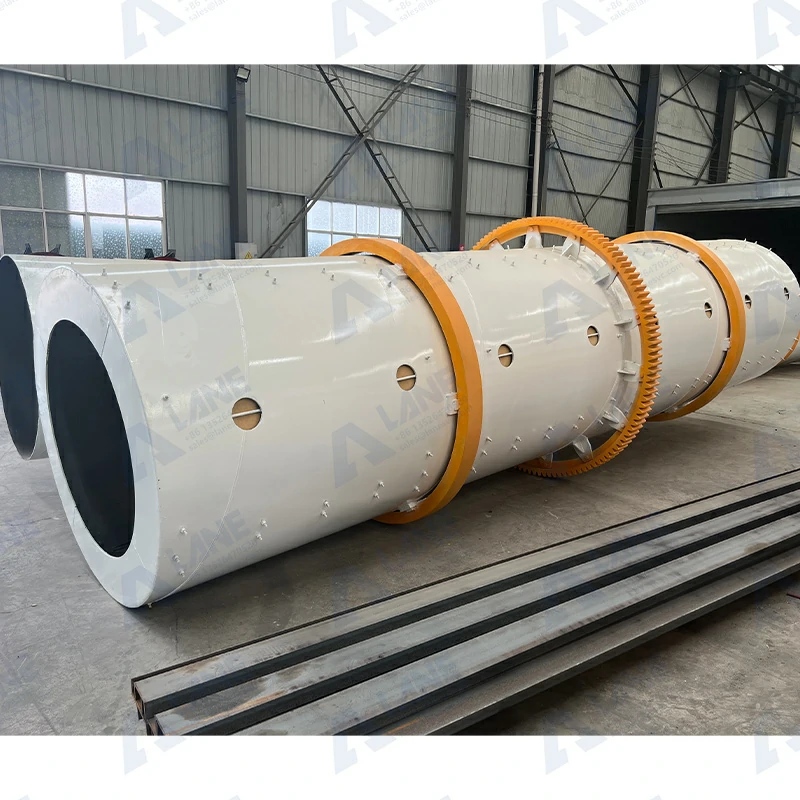
Rotary Drum Churning Teeth Granulator
For projects requiring relatively high processing capacity together with greater control over the granulation process, the Rotary Drum Churning Teeth Granulator can also be used in larger production configurations.
In these projects, the right Fertilizer Granulator Machine Capacity should be matched with the designed capacity of the complete production line rather than simply selecting the largest available granulator.
How to Match Fertilizer Granulator Machine Capacity With the Complete Production Line?
The Fertilizer Granulator Machine Capacity of a granulator does not automatically represent the final output of the entire fertilizer production line.
A complete fertilizer production process may include:
Raw Material Handling → Crushing → Batching → Mixing → Granulation → Drying → Cooling → Screening → Packaging
For example, if a granulator can process 10 t/h but the upstream mixer can only continuously supply 7 t/h, the granulator cannot maintain a real production rate of 10 t/h.
The same problem can occur at the downstream end. If the screening machine cannot process the granulated material quickly enough, material may accumulate and the return rate may increase.
Therefore, after determining the Fertilizer Granulator Machine Capacity, the following equipment should also be checked:
• Crushing capacity
• Batching and mixing capacity
• Continuous feeding capacity
• Drying capacity
• Cooling capacity
• Screening capacity
• Return-material handling capacity
• Packaging speed
A properly matched production line should maintain a balanced relationship:
Feeding Capacity → Granulation Capacity → Drying Capacity → Cooling Capacity → Screening Capacity → Packaging Capacity
This helps the complete system maintain stable and continuous operation.
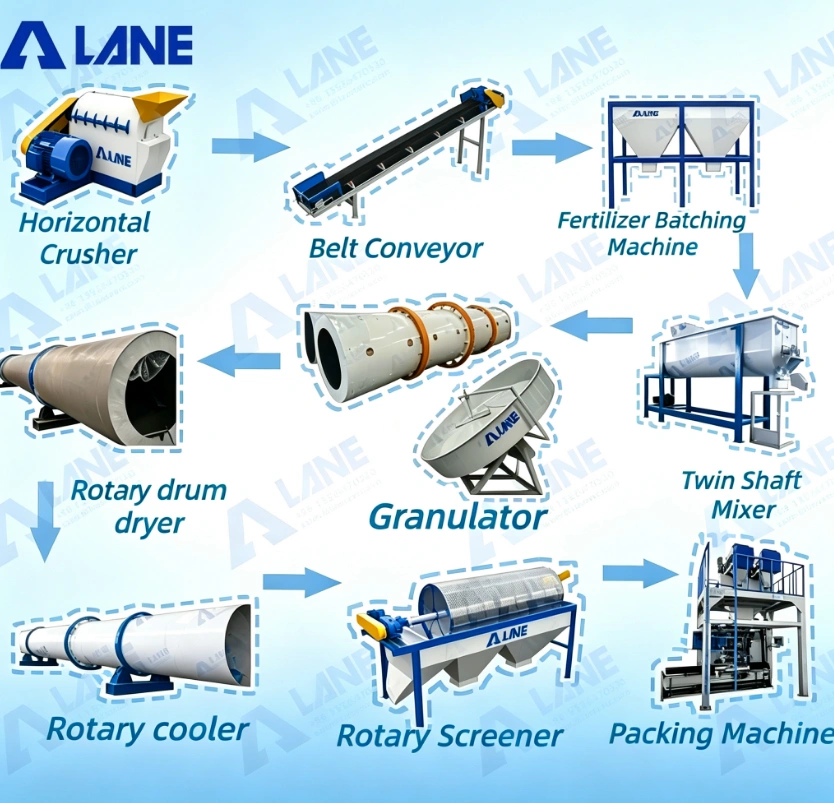
| Product Name | Model | Yield | Detail | Speed | Power |
|---|---|---|---|---|---|
| Crawler Compost Turner | LALG-2500 | 400-1500m*3/h | Stacking height 600mm-1500mm | 5-10m/min | 36-170 horsepower |
| Forklift Feeding Hopper | LAH-1.5-3 | Silo size: 1-4 meters | 2250mm*1050mm*1590mm | 1450r/min | 2.2-3KW |
| Vertical Crucher | LAC-60V | 1-12t/h | ZQ series reducer | 1450r/min | 7.5-37KW |
| Organic Fertilizer Granulator | LAZJ-1000 | 1-8t/h | ZY series reducer | 1450r/min | 7.5-11KW |
| Polishing Machine | LAP2-800 | 2-10t/h | Double bearing | 1450r/min | 3-7.5KW |
| Rotary Drum Drying Machine | LARD:1.2-12 | 1-25t/h | ZQ series reducer | 1450r/min | 5.5-22KW |
| Cooling Machine | LARC-1.0-10 | 1-20t/h | ZQ series reducer | 1450r/min | 5.5-22KW |
| Rotary Screen Machine | LAS-1240 | 1-23t/h | ZQ series reducer | 1450r/min | 3-7.5KW |
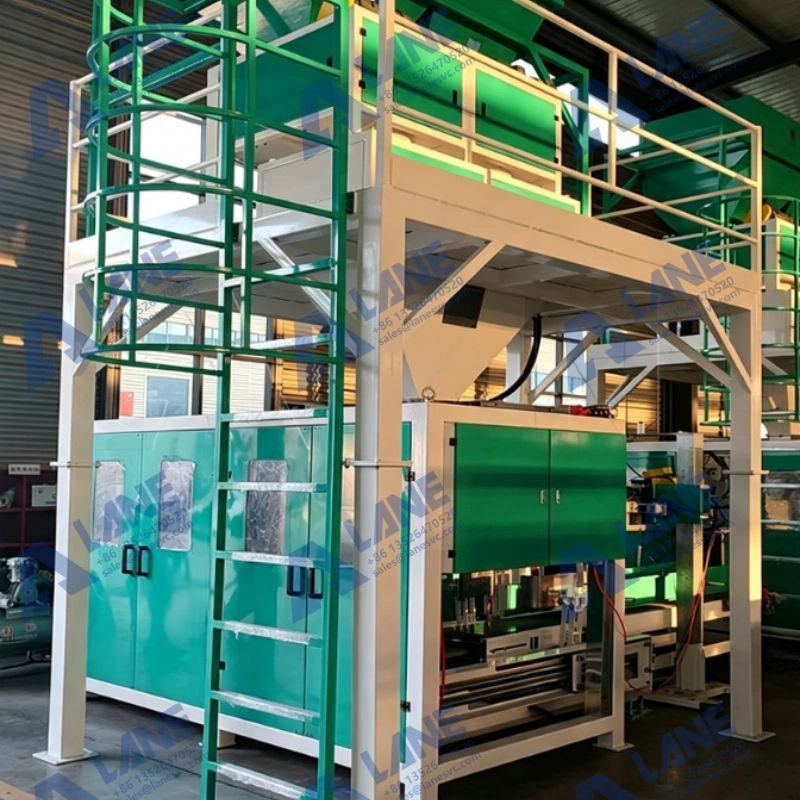
| Pellet Packing Machine | LAB-50K | 4-30 bags/minute | Packaging specification: 20-50kg | 4-6 bags/min | 50Hz/60Hz/220V/380V |
Why Can Actual Output Be Lower Than the Rated Capacity?
Even when the Fertilizer Granulator Machine Capacity has been determined, actual production may still be lower than the theoretical maximum.
Raw Material Moisture
Excessive moisture can cause material to stick to the equipment or form large lumps, reducing granulation efficiency.
Too little moisture may also reduce the agglomeration ability of some materials.
Raw Material Particle Size
If the raw material is not crushed sufficiently, large differences in particle size can affect mixing and granulation.
Particle Size → Mixing Uniformity → Agglomeration → Actual Output
Material Stickiness
Organic fertilizer materials may contain fibers, organic matter, or insufficiently decomposed material, which can increase stickiness.
Excessive stickiness may cause buildup, blockage, and additional screening problems.
Feeding Stability
A granulator requires a relatively stable and continuous feed.
Frequent fluctuations in feeding rate can cause fluctuations in machine load and reduce the actual Fertilizer Granulator Machine Capacity.
Finished Pellet Size
Different pellet sizes require different operating conditions.
If the customer requires specific pellet dimensions, strength, or appearance, the machine may need to operate at a different rate to achieve the required product quality.
Return Material Ratio
Oversized and undersized particles separated during screening are often returned to the production process.
If the return ratio is too high, the system must process more circulating material, while the effective finished-product output may not increase accordingly.
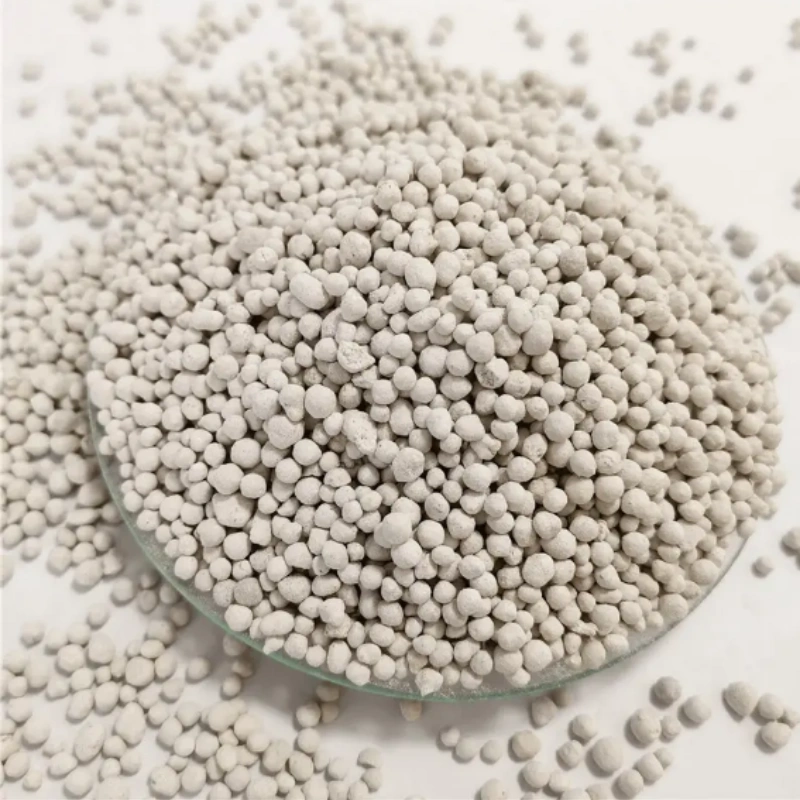
How to Determine the Right Fertilizer Granulator Machine Capacity?
The right Fertilizer Granulator Machine Capacity should be determined according to the actual project requirements.
Step 1: Determine the Target Output
First determine the required daily production and then convert it into the target hourly output.
Daily Demand → Hourly Target Output → Required Granulator Capacity
Step 2: Analyze the Raw Materials
Identify the main raw materials before selecting the granulation technology.
Livestock Manure / Compost → Organic Fertilizer Granulation
NPK Raw Materials → Compound Fertilizer Granulation
Mineral Powders → Granulation Method Based on Material Characteristics
Step 3: Select the Granulation Process
Consider raw material moisture, stickiness, particle size, and product requirements when selecting wet granulation or dry extrusion granulation.
Step 4: Define the Finished Product Requirements
Determine:
• Pellet size
• Pellet shape
• Pellet strength
• Final moisture content
• Screening requirements
These requirements can affect the actual Fertilizer Granulator Machine Capacity needed for the project.
Step 5: Select the Granulator
Match the target output and material characteristics with the appropriate equipment.
Lower Output Requirements → Flat Die Granulator
Small to Some Medium-Scale Projects → Disc Granulator
Organic Fertilizer Production → Stirring Tooth Granulator
Dry Extrusion Granulation → Double Roller Granulator
Medium-Scale Continuous Production → Rotary Drum Churning Teeth Granulator
Medium- to Large-Scale Continuous Production → Rotary Drum Granulator
Step 6: Match the Complete Production Line
After selecting the granulator, check the capacity of the upstream and downstream equipment.
Raw Materials → Crushing → Batching → Mixing → Fertilizer Granulator Machine Capacity → Granulation → Drying → Cooling → Screening → Packaging
The complete production line should be designed as a system rather than based only on the granulator’s rated capacity.
Step 7: Consider Future Expansion
If the project is expected to expand in the future, leave reasonable capacity room when selecting the Fertilizer Granulator Machine Capacity.
This can reduce the need to replace the core granulation equipment when production increases later.
Conclusion
Selecting the appropriate granulator capacity for fertilizer production should not rely solely on comparing the rated output of different granulators. It is essential to comprehensively consider raw material characteristics, desired particle size, target production volume, and the processing capacity of supporting equipment to ensure the entire fertilizer production line operates stably and efficiently.
Depending on various granulation processes and capacity requirements, LANE Machinery can assist customers in selecting and configuring suitable granulation equipment based on their raw materials, production needs, and plant conditions. The goal of equipment selection is not merely to pursue high capacity, but to establish a well-matched and rational fertilizer production system that ensures consistent output and uniform particle quality.