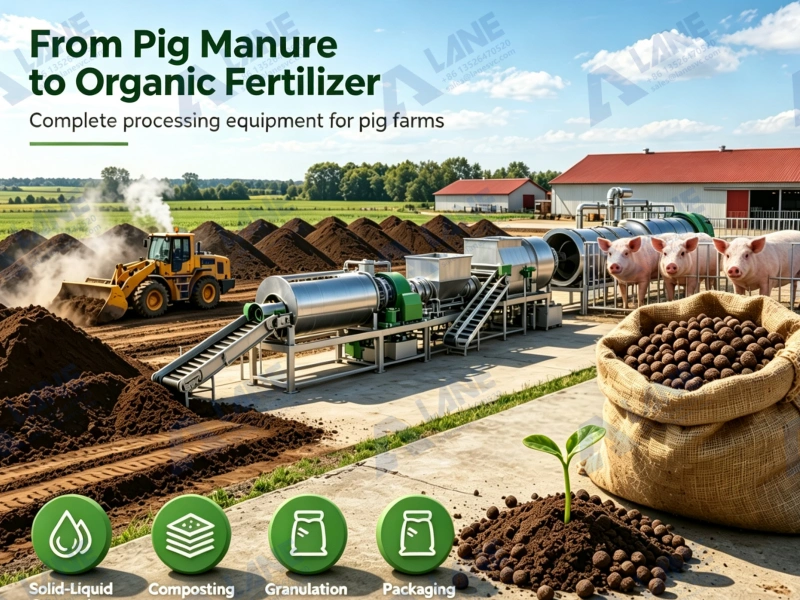
How to Prevent Granulator Corrosion from Livestock Waste?
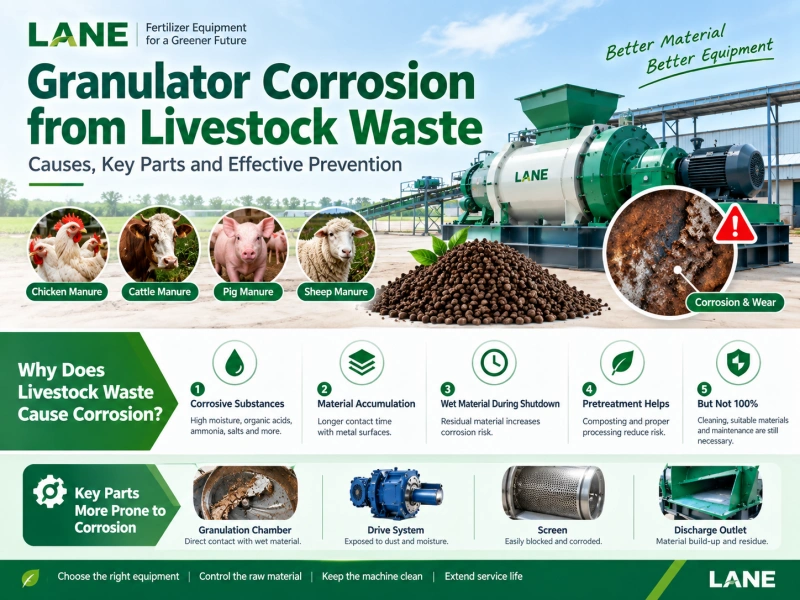
Livestock waste is a common raw material for organic fertilizer production. Chicken manure, cattle manure, pig manure, and sheep manure can all be processed into organic fertilizer products after proper treatment.
However, in actual production, these materials can also create a problem that is easily overlooked—Granulator Corrosion from Livestock Waste.
The high moisture content, organic acids, ammonia, salts, and other substances found in livestock waste may affect metal surfaces inside fertilizer granulation equipment. At the same time, sand, bedding materials, and hard fibers can increase mechanical wear.
If Granulator Corrosion from Livestock Waste and mechanical wear are not controlled for a long time, maintenance requirements may increase, component service life may decrease, and normal production may eventually be affected.
So, how can you prevent Granulator Corrosion from Livestock Waste?
The answer is not simply replacing the machine with a different material. Raw material pretreatment, equipment materials, moisture control, post-production cleaning, and routine maintenance all need to be considered.
At LANE, we usually start by understanding the customer’s raw material characteristics. We then select suitable granulation equipment and auxiliary equipment according to the required capacity and production process. This overall approach helps reduce problems caused by corrosion, wear, and material accumulation.
Why Does Livestock Waste Cause Granulator Corrosion?
Understanding the causes is the first step in controlling Granulator Corrosion from Livestock Waste.
1. The Raw Material Contains Corrosive Substances
From years of production experience, fresh livestock waste usually contains relatively high moisture levels, together with organic acids, ammonia-related compounds, and various salts.
When these substances remain in contact with metal components for a long period, they can gradually affect the machine body and working parts.
This is one of the main reasons behind Granulator Corrosion from Livestock Waste.
2. Material Accumulation Extends the Corrosion Period
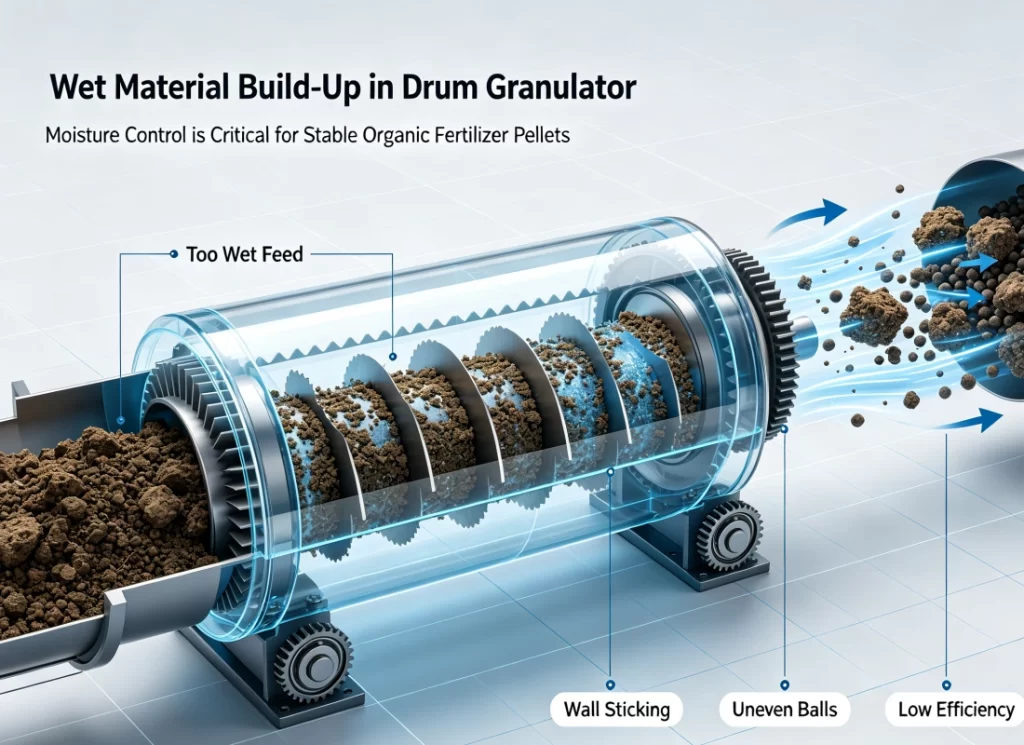
Wet manure that remains inside the equipment creates a longer contact period between the material and metal surfaces.
The process can be understood simply:
High moisture → Material accumulation → Longer contact with metal → Higher corrosion risk
The longer wet material remains inside the granulator, the longer the metal surface is exposed to the surrounding conditions.
Therefore, reducing material accumulation is also an important part of controlling Granulator Corrosion from Livestock Waste.
3. Wet Material Left During Shutdown Can Increase Corrosion
Organic acids can increase the corrosive effect of the material, while ammonia-related compounds may also affect certain metal components.
In actual production, serious Granulator Corrosion from Livestock Waste is sometimes related to a simple operating problem: wet material is left inside the machine after production and remains there during shutdown.
The longer the equipment stays unused with wet manure inside, the greater the potential for corrosion damage.
4. Raw Material Pretreatment Can Reduce Corrosion Risk
Proper composting and pretreatment can make livestock waste more stable and easier to process.
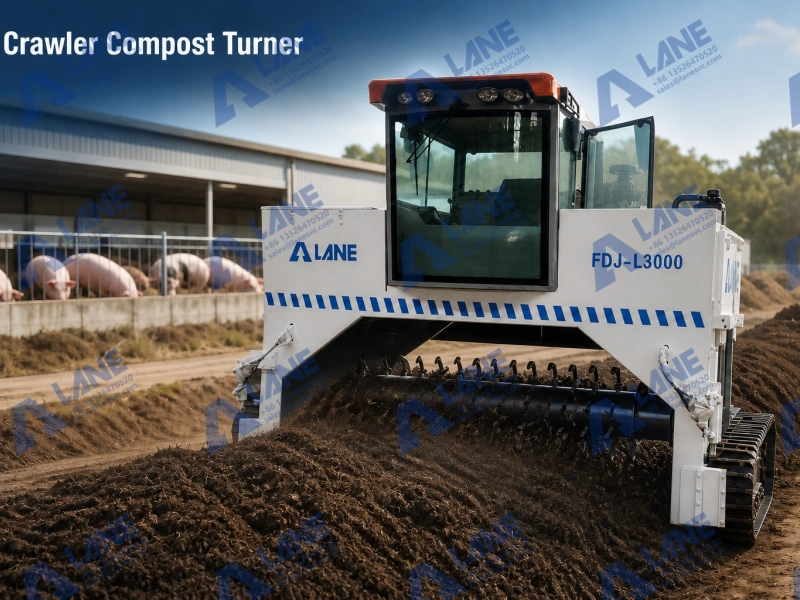
A compost turner can be used to improve mixing and aeration during composting. This helps improve the overall condition of the material before it reaches the granulation stage.
Better raw material conditions can reduce sticking and accumulation inside the granulator and therefore help reduce the risk of Granulator Corrosion from Livestock Waste.
5. Pretreatment Reduces Corrosion but Cannot Eliminate It Completely
Pretreatment improves the condition of the raw material before granulation. However, it does not completely remove the possibility of Granulator Corrosion from Livestock Waste.
Daily cleaning, suitable materials, and regular equipment maintenance are still necessary.
Which Parts of a Granulator Are More Prone to Corrosion?
Not every part of a granulator is exposed to the same level of corrosion.
For Granulator Corrosion from Livestock Waste, the areas that have long-term direct contact with wet material deserve particular attention.
1. Granulation Chamber
The granulation chamber is where the material continuously enters and is processed.
When livestock waste contains too much moisture, part of the material may stick to the chamber wall and working area.
If these residues are not removed after production, they can remain inside the machine during shutdown and increase the risk of Granulator Corrosion from Livestock Waste.
2. Inner Walls and Liners
The inner wall can be affected by both corrosion and mechanical wear.
For example, sand or bedding materials contained in livestock waste may continuously rub against the inner surface during operation.
As the protective layer becomes thinner, the underlying metal may become exposed. Once this happens, corrosion can become more noticeable.
Therefore, inner walls and liners should be checked regularly when the equipment is used for livestock waste.
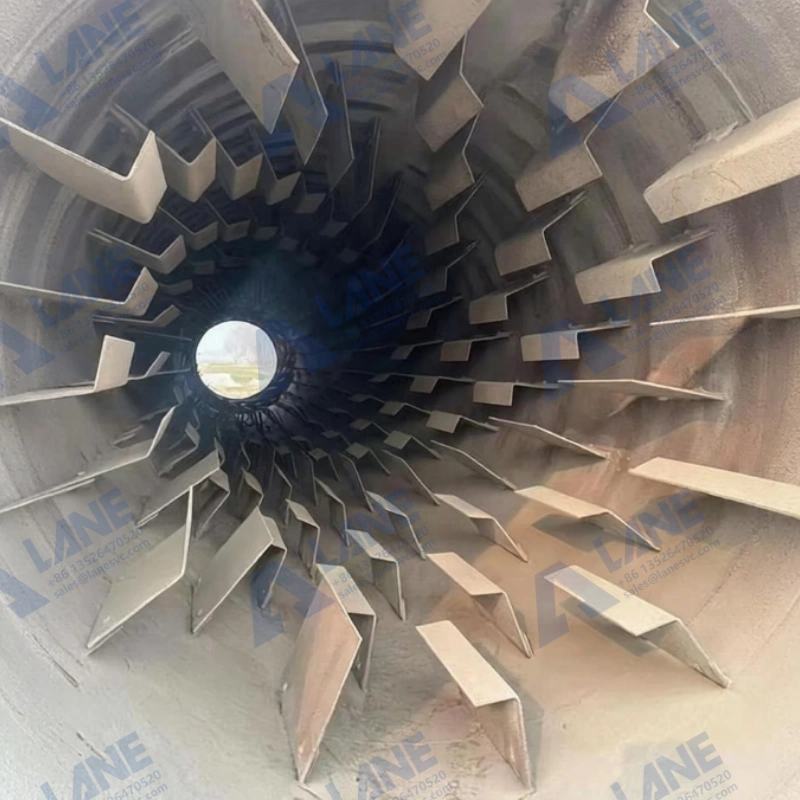
3. Working Components
The working components of a granulator remain in contact with the material while also handling mechanical loads.
If the raw material contains a large amount of hard impurities, mechanical wear may become more serious.
When wear and corrosion occur at the same time, component damage can progress faster. This is another condition that needs to be considered when controlling Granulator Corrosion from Livestock Waste.
4. Feeding and Discharge Areas
The feeding inlet and discharge outlet are also areas where material can accumulate.
When the material is wet, some manure may stick to the equipment surface.
Therefore, cleaning after production should not focus only on the granulation chamber. The feeding and discharge areas should also be checked.
5. Bolts and Connection Components
Bolts, fasteners, and other exposed metal connection components are easy to overlook.
If wet livestock waste remains around these areas for a long time, rust and corrosion may develop.
These small problems may eventually make maintenance more difficult if they are ignored.
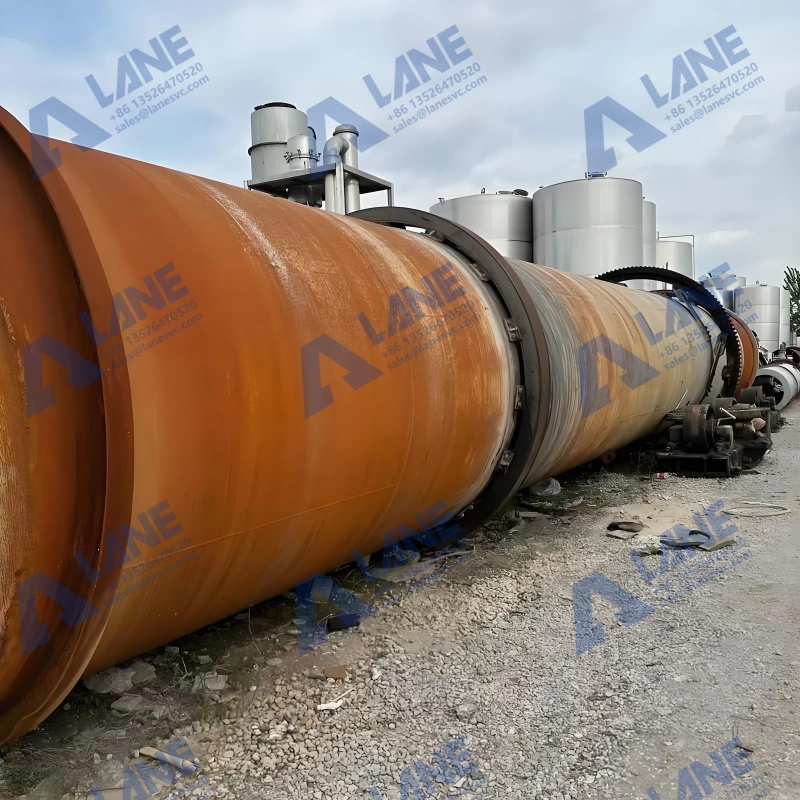
What Factors Can Make Granulator Corrosion Worse?
In actual fertilizer projects, Granulator Corrosion from Livestock Waste is usually related to several factors rather than one single cause.
1. Excessive Raw Material Moisture
High moisture is one of the most common problems when processing livestock waste.
Excessive moisture may lead to:
• More material sticking
• More material accumulation
• Less stable feeding
• Higher blockage risk
• Longer contact between wet material and metal surfaces
Therefore:
High moisture → More sticking → More residue → Higher corrosion risk
However, this does not mean that lower moisture is always better.
If the material becomes too dry, pellet formation and pellet strength may be affected.
In actual production, moisture should be adjusted according to the raw material type, granulation method, and final product requirements instead of simply trying to achieve the lowest possible moisture level.
If stable transportation of treated manure is required, a properly configured screw conveyor can help reduce long-term material accumulation during conveying and maintain continuous feeding.
2. Incomplete Composting
Livestock waste that has not been sufficiently composted is usually less stable.
It may still have high moisture and strong stickiness, making it more likely to adhere to downstream equipment.
Therefore:
Proper composting → More stable material → Less sticking → Smoother processing
This is why livestock waste normally needs composting before granulation rather than being sent directly to the granulator.
Better composting conditions can also help reduce Granulator Corrosion from Livestock Waste by improving the condition of the material before it reaches the machine.
3. Excessive Material Residue After Production
If a large amount of wet material remains inside the machine after every production cycle, the risk of Granulator Corrosion from Livestock Waste can gradually increase.
Especially when:
Production ends → Wet material remains inside → Long shutdown → Longer corrosion exposure
For livestock waste production lines with high-moisture materials, post-production cleaning should therefore become a routine operating step.
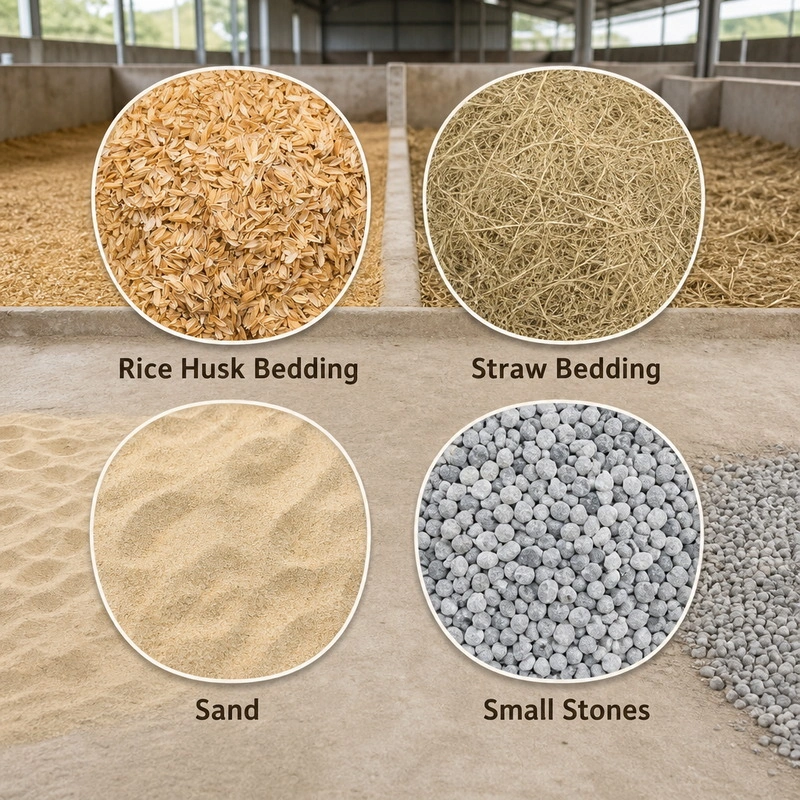
4. Sand, Bedding, and Hard Impurities
Sand, bedding materials, and small stones contained in livestock waste can increase mechanical wear.
If the protective surface has already been worn down, wet manure can then come into contact with the exposed metal.
This can create:
Wear → Metal exposure → Corrosion → Further surface damage
Therefore, controlling impurities in the raw material is also important when dealing with Granulator Corrosion from Livestock Waste.
5. Insufficient Routine Maintenance
When minor rust, local wear, or material accumulation appears, delaying treatment may result in more complicated maintenance later.
A simple inspection sequence can be:
Material residue → Corrosion → Wear → Fasteners → Protective coating → Running condition
This makes it easier to identify abnormal conditions before they develop into larger equipment problems.
How Can You Prevent Granulator Corrosion from Livestock Waste?
Reducing Granulator Corrosion from Livestock Waste cannot rely on one method alone.
From our equipment experience, raw materials, equipment selection, production operation, and maintenance should be considered together.
1. Control Raw Material Moisture
Before livestock waste enters the granulator, adjust its moisture condition so that the material is suitable for the current granulation process.
Actual moisture control can include:
• Check moisture before granulation → Adjust the treatment method according to the condition of chicken, pig, cattle, or sheep manure.
• Excessive moisture → Use dewatering or drying first to reduce sticking, clumping, and material accumulation.
• Insufficient moisture → Add an appropriate amount of water to improve pellet formation.
• Mixed raw materials → Readjust moisture after mixing to avoid locally wet or dry material.
If composted manure is still too wet, improve the material condition through pretreatment before granulation instead of sending high-moisture material directly into the machine.
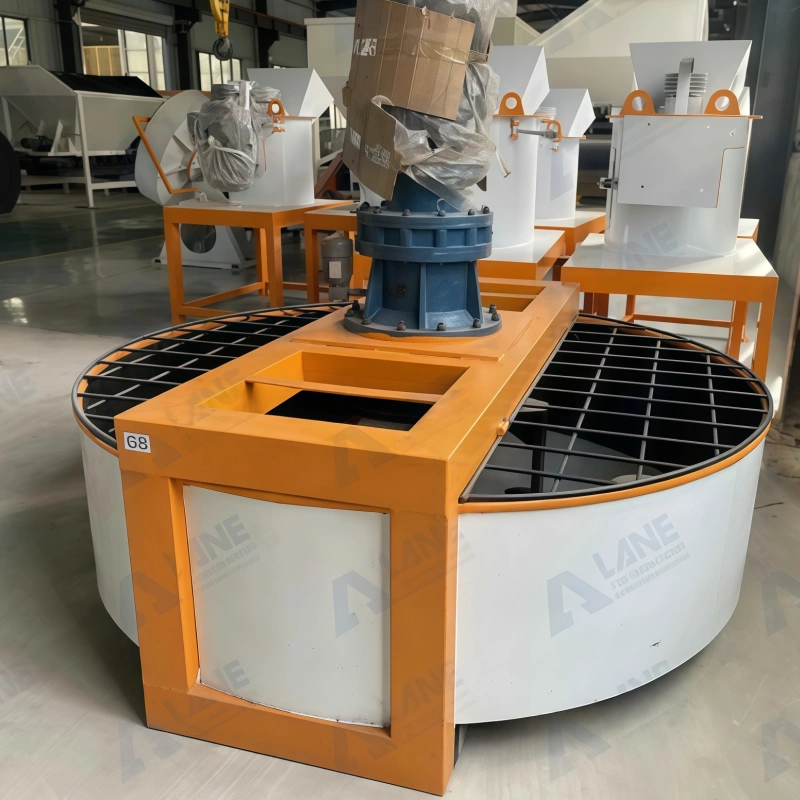
During mixing, a fertilizer mixer can be used to thoroughly mix manure, auxiliary materials, and other raw materials.
This helps distribute moisture more evenly and provides more stable feeding conditions for the granulator.
Proper moisture control is one of the most practical ways to reduce Granulator Corrosion from Livestock Waste.
2. Choose Suitable Corrosion-Resistant Materials
Different parts of a granulator have different contact conditions and mechanical loads.
Therefore, the entire machine does not necessarily need to use exactly the same material.
• High-moisture areas in direct contact with manure → Focus on corrosion resistance
• Parts exposed to continuous material impact and friction → Focus on wear resistance
• Parts exposed to both wet material and friction → Consider both corrosion and wear resistance
Material selection should be based on raw material moisture, corrosiveness, impurity content, operating conditions, and equipment running time.
The basic principle is:
Different working conditions → Different materials → Targeted protection
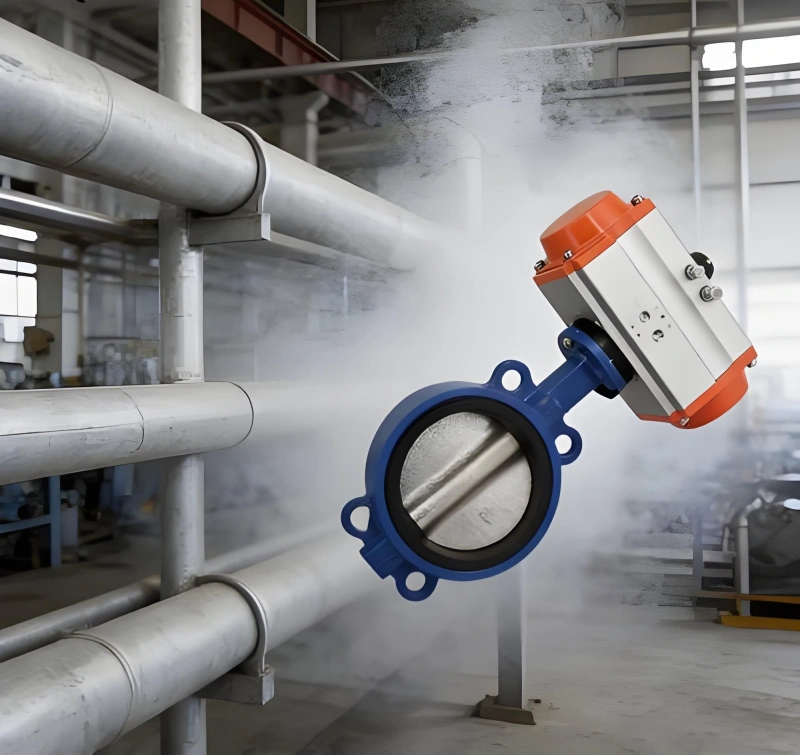
> Chamber and Liners: Consider Stainless Steel
For wet and corrosive working conditions:
• Regular high-moisture conditions → 304 stainless steel
• More corrosive raw materials → 316L stainless steel
• Long-term high-moisture operation → Consider a higher level of corrosion-resistant material where necessary
This can help reduce rust, material deterioration, and maintenance requirements.
> Ring Die and Rollers: Balance Wear and Corrosion Resistance
The ring die and rollers are high-load working components.
They not only come into contact with wet material but also continuously experience pressure and friction during granulation.
Possible solutions include:
• High-chromium cast iron → Suitable for high-wear conditions
• Alloy wear-resistant layers → Improve surface wear and corrosion resistance
• Targeted surface strengthening → Extend the service life of high-wear components
> Frame and External Structure: Carbon Steel + Protective Coating
The frame and support structure usually do not directly contact livestock waste.
Therefore, their corrosion risk is generally lower than that of internal working components.
A common approach is:
Carbon steel → Surface cleaning → Anti-corrosion primer → Protective topcoat
> Targeted Protection Is More Practical Than Upgrading the Whole Machine
Corrosion protection does not always mean using the highest-grade material for every part.
A more practical approach is to identify the areas with the greatest corrosion and wear and reinforce those areas specifically.
• High-corrosion areas → Improve corrosion resistance
• High-wear areas → Improve wear resistance
• Normal external structures → Carbon steel + protective coating
This targeted approach can provide a better balance between corrosion protection, equipment life, and manufacturing cost.
3. Clean the Granulator After Production
After production, clean the granulator promptly, especially the areas where wet livestock waste is likely to accumulate.
Cleaning process:
Stop feeding → Empty the machine → Remove residue → Clean the equipment → Wipe/blow dry → Inspect the machine
> Main Cleaning Areas
• Granulation chamber → Remove wet material stuck to the inner wall
• Die and rollers → Remove material from working surfaces
• Feeding and discharge areas → Prevent material accumulation
• Bolts and connections → Check for residue and rust
• Dead corners → Remove wet material that cannot be discharged normally
> Different Shutdown Conditions
Short shutdown → Empty material → Remove residue → Keep the inside dry
Long shutdown → Thorough cleaning → Dry the equipment → Check for corrosion → Apply rust protection where necessary
For high-moisture livestock waste, post-production cleaning should be included as part of the normal operating procedure.
4. Inspect the Equipment RegularlyRegular inspection helps identify early signs of corrosion, wear, and material accumulation before they affect production.
Focus on:
• Material residue → Remove wet material from the chamber and working areas.
• Corrosion → Check metal surfaces, liners, and other material-contact areas for rust or damaged protective layers.
• Wear → Check ring dies, rollers, liners, and other working components for obvious wear.
• Connections and running condition → Check bolts, fasteners, lubrication points, and abnormal noise or vibration.
• Protective condition → Repair damaged anti-corrosion coatings or protective layers.
Inspection sequence:
Material residue → Corrosion → Wear → Fasteners → Protective coating → Running condition
The inspection and maintenance frequency should be adjusted according to the equipment model, raw material moisture, corrosiveness, and actual production load.
How Should Livestock Waste Be Treated Before Granulation?
Reducing Granulator Corrosion from Livestock Waste does not only depend on protecting the granulator itself.
Front-end raw material treatment also affects the operating condition of the equipment.
For a typical livestock manure organic fertilizer project, the process can be:
Livestock Waste → Composting → Crushing → Mixing → Granulation → Drying → Cooling → Screening → Packaging
Each stage affects the next one.
Livestock Waste → Composting
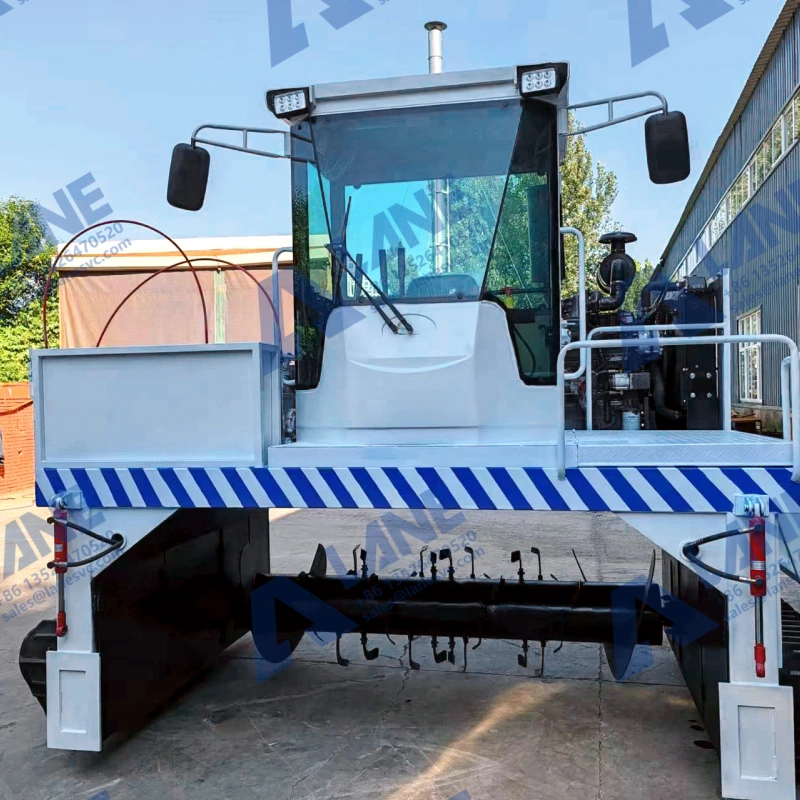
A manure compost turner (internal link to manure compost turner) can be used to improve material mixing and aeration during composting.
This helps make the composting process more uniform and improves the condition of the material before further processing.
Composting → Crushing
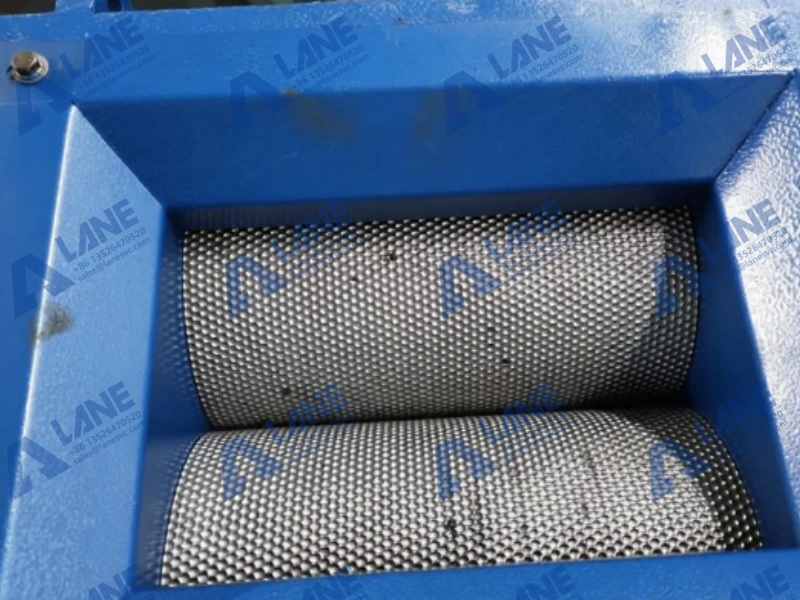
Large pieces and hardened material after composting can be processed using a fertilizer crusher (internal link to fertilizer crusher).
This reduces large clumps and oversized material entering the granulator.
Crushing → Mixing
A fertilizer mixer (internal link to fertilizer mixer) can thoroughly mix different raw materials and improve feeding uniformity.
Mixing → Granulation
When the material condition is stable, the granulator is less likely to experience serious sticking, accumulation, and abnormal wear.
Therefore:
Proper raw material treatment → Stable feeding condition → Less sticking and residue → Lower wear and corrosion risk
From the perspective of the complete organic fertilizer production line, good front-end pretreatment is also an important way to reduce Granulator Corrosion from Livestock Waste.
How Do You Choose a Suitable Granulator for Livestock Waste?
When selecting a granulator for livestock waste, the raw material condition should come first rather than simply looking at production capacity.
The selection process can be:
> Chicken and Pig Manure
For relatively fine and sufficiently composted chicken or pig manure:
Well-composted material → Suitable moisture → Disc granulator
A disc granulator can be considered when the project requires relatively rounded organic fertilizer pellets.
> Cattle and Sheep Manure
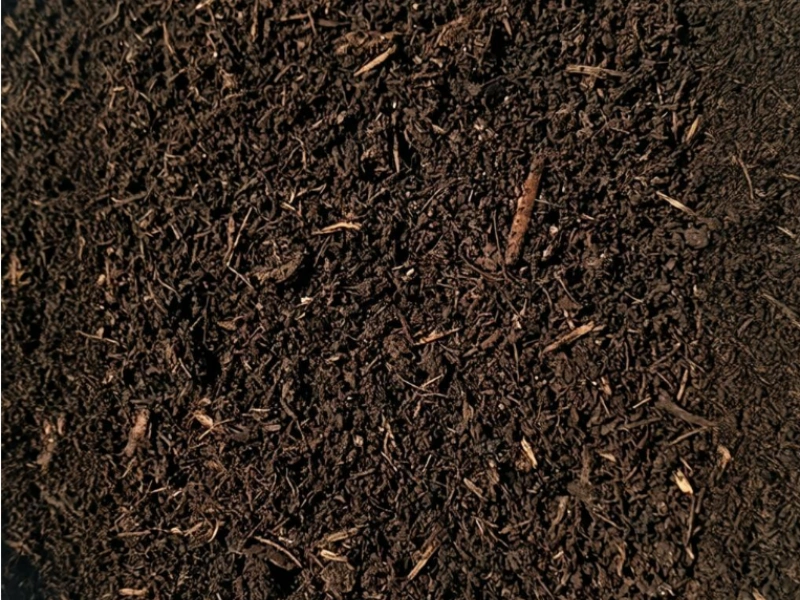
Cattle and sheep manure usually contains more fiber.
The material should normally be crushed first and then evaluated according to moisture and final pellet requirements.
> High-Moisture and Sticky Material
For material with relatively high moisture and strong stickiness, wet granulation equipment such as a stirring tooth granulator can be considered.
> Projects With Higher Pellet Requirements
If the final product has specific requirements for pellet size, strength, or appearance, the granulation method should be selected according to the final product.
> Large Continuous Production Projects
For large-scale continuous production, the granulator should be matched according to the target capacity of the complete production line rather than the granulator’s rated capacity alone.
The selection logic can be summarized as:
Manure type → Moisture and fiber → Pretreatment → Pellet requirements → Capacity → Granulator
At LANE, we match equipment according to the customer’s raw material and final product requirements rather than simply recommending a model based on capacity.
A suitable equipment configuration can also help control Granulator Corrosion from Livestock Waste by improving material handling and reducing unnecessary accumulation and operating problems.
How Does LANE Handle Granulator Corrosion from Livestock Waste?
Granulator Corrosion from Livestock Waste is usually related to material moisture, organic substances, and the maturity of the composted material.
If the material remains highly wet and stays in contact with metal surfaces for a long time, the corrosion risk can increase.
Therefore, corrosion control should not depend only on changing the material of the granulator. It should also begin with raw material treatment and the overall production process.
For livestock manure fertilizer projects, LANE usually considers the following:
• Control raw material moisture → Adjust the material before granulation.
• Improve composting → Make the raw material more stable before entering the equipment.
• Reduce material retention → Improve feeding and discharge conditions.
• Control wear and corrosion together → Consider sand, bedding, and other abrasive impurities.
• Choose suitable materials and equipment structures → Provide targeted protection for important contact areas.
For an actual livestock manure fertilizer line, the upstream and downstream equipment also affects the overall operating condition.
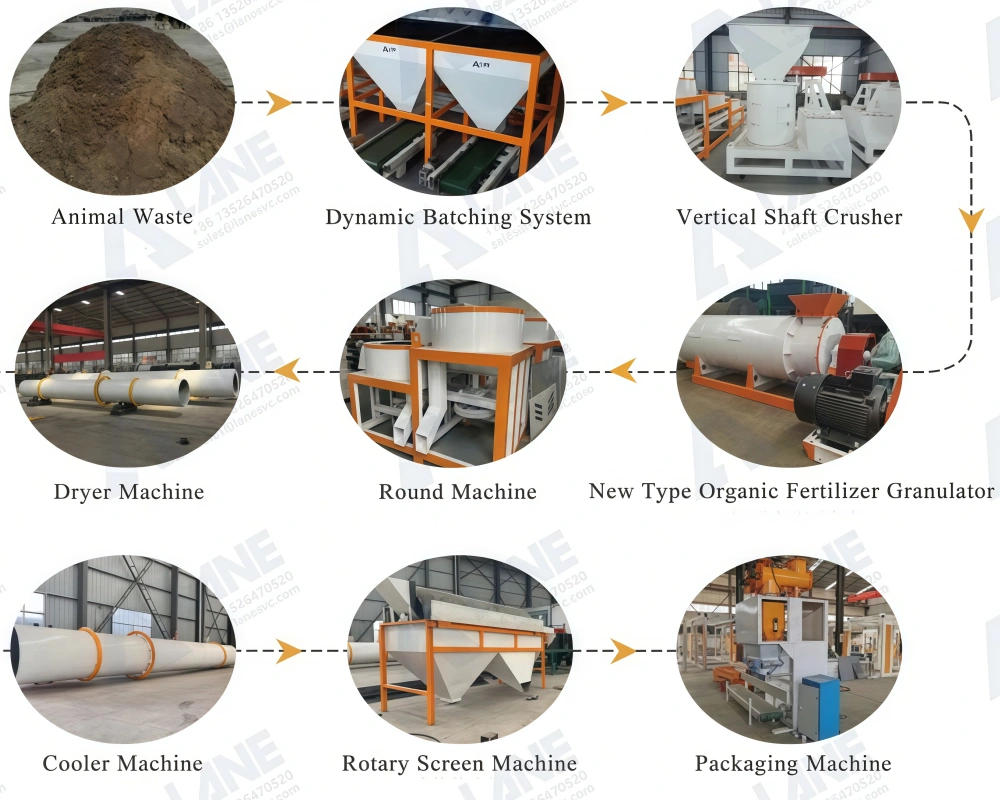
The complete process may be:
Livestock Waste → Composting → Crushing → Mixing → Granulation → Drying → Cooling → Screening → Packaging
If the granulated fertilizer still contains excessive moisture, a rotary drum dryer (internal link to rotary drum dryer) can be used to reduce the moisture content.
The material can then pass through a rotary cooler to reduce its temperature before entering a rotary screener for screening.
This helps reduce the amount of wet and hot material remaining in downstream equipment for long periods.
Therefore, controlling Granulator Corrosion from Livestock Waste is not simply a matter of treating the granulator separately.
The raw material moisture, compost maturity, impurity content, equipment materials, and production process should all be considered together.
When configuring equipment, LANE evaluates these actual conditions and selects a more suitable combination of equipment and process rather than choosing equipment based only on production capacity.
How Can You Extend the Service Life of a Livestock Waste Granulator?
Reducing Granulator Corrosion from Livestock Waste is only one part of keeping the equipment in good working condition.
The way the machine is used also affects its long-term performance.
Avoid Constant Overloading
Select the equipment according to actual production requirements.
Production demand → Suitable model → Stable feeding → Normal operation
Do not continuously overload the granulator simply to increase output.
If production demand increases significantly, the equipment configuration should be adjusted accordingly.
Keep Feeding Conditions Stable
Livestock waste can change considerably in moisture and physical condition.
Try to maintain:
Stable moisture → Uniform mixing → Stable feeding → Stable granulation
Better composting, crushing, and mixing can make the granulator’s job easier.
Do Not Ignore Small Problems
During production, pay attention if you notice:
• Unusual machine noise
• Noticeable vibration
• Irregular feeding
• Sudden changes in pellet size
• A noticeable increase in operating load
A simple approach is:
Abnormal condition → Stop and check → Find the cause → Fix the problem → Resume production
Dealing with a small problem early is generally easier than waiting until it affects a larger component.
Adjust the Equipment to the Actual Production Situation
Different types of livestock waste have different moisture, fiber, and impurity levels.
Therefore, granulator selection should not be based only on the largest possible production capacity.
Consider:
Raw material condition → Production volume → Pellet requirements → Equipment configuration
This approach helps the granulator maintain stable operation over a longer period and can also support better control of Granulator Corrosion from Livestock Waste.
Frequently Asked Questions About Granulator Corrosion from Livestock Waste
Can livestock waste really corrode a fertilizer granulator?
Yes.
Wet livestock waste may contain moisture, organic acids, salts, ammonia-related compounds, and other substances.
When these materials remain inside the equipment for a long time, they can increase the risk of metal corrosion.
This is why Granulator Corrosion from Livestock Waste should be considered when designing and operating a livestock manure fertilizer production line.
Which type of livestock waste is the most corrosive?
There is no simple answer that one type of manure is always the most corrosive.
The actual situation depends on moisture, chemical composition, storage conditions, material residue, and contact time.
Chicken manure, pig manure, cattle manure, and sheep manure should all be evaluated according to their specific processing conditions.
Can stainless steel completely prevent granulator corrosion?
No.
Stainless steel can provide better corrosion resistance, but it cannot completely eliminate Granulator Corrosion from Livestock Waste.
Moisture control, material residue, mechanical wear, cleaning, and the actual working environment still need to be managed.
How often should a livestock waste granulator be cleaned?
In general, the equipment should be cleaned after each production cycle.
When processing high-moisture livestock waste or preparing for a long shutdown, cleaning should be carried out promptly and the inside of the machine should be kept dry.
How should I choose a granulator for livestock waste?
Start with the raw material rather than the equipment model.
Consider:
• Moisture
• Fiber content
• Abrasive impurities
• Production capacity
• Pellet size
• Pellet strength
• Final product requirements
For a complete livestock manure fertilizer project, composting, crushing, mixing, drying, cooling, and screening should also be considered.
Conclusion
Granulator Corrosion from Livestock Waste is usually not caused by one single factor.
High moisture, corrosive substances, material residue, sand and other abrasive impurities, and insufficient maintenance can all increase the risk of corrosion and wear.
A more practical approach is:
Proper raw material pretreatment → Moisture control → Suitable equipment materials → Protection of high-wear areas → Timely cleaning → Regular inspection
For livestock manure fertilizer projects, the granulator should not be considered separately.
Only when the raw material, granulator, and upstream and downstream equipment are properly matched can the production process become more stable and easier to manage.
At LANE, we evaluate the customer’s raw material characteristics, production capacity, and final product requirements before configuring the equipment. This allows us to provide a complete solution covering composting, crushing, mixing, granulation, drying, cooling, screening, and packaging for livestock manure organic fertilizer projects.