Palm Oil Waste Processing Machine Manufacturer — Custom Production Line
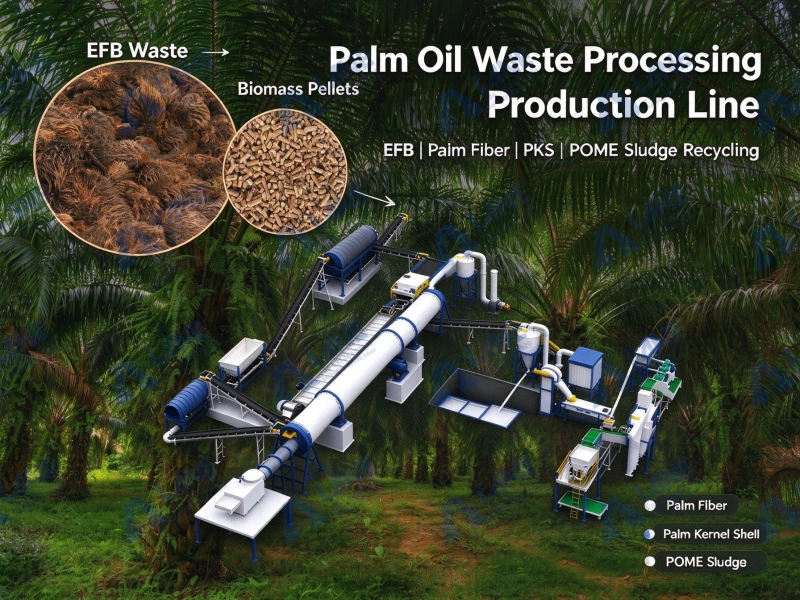
The treatment of byproducts generated during the palm oil extraction process has long been a bottleneck hindering processing companies from improving their economic efficiency and ensuring environmental compliance. The unique physical properties of these wastes pose extremely demanding challenges to the durability and technical expertise of processing equipment.
📊 Four Core Types of Waste from the Oil Extraction Process and Their Physical Properties
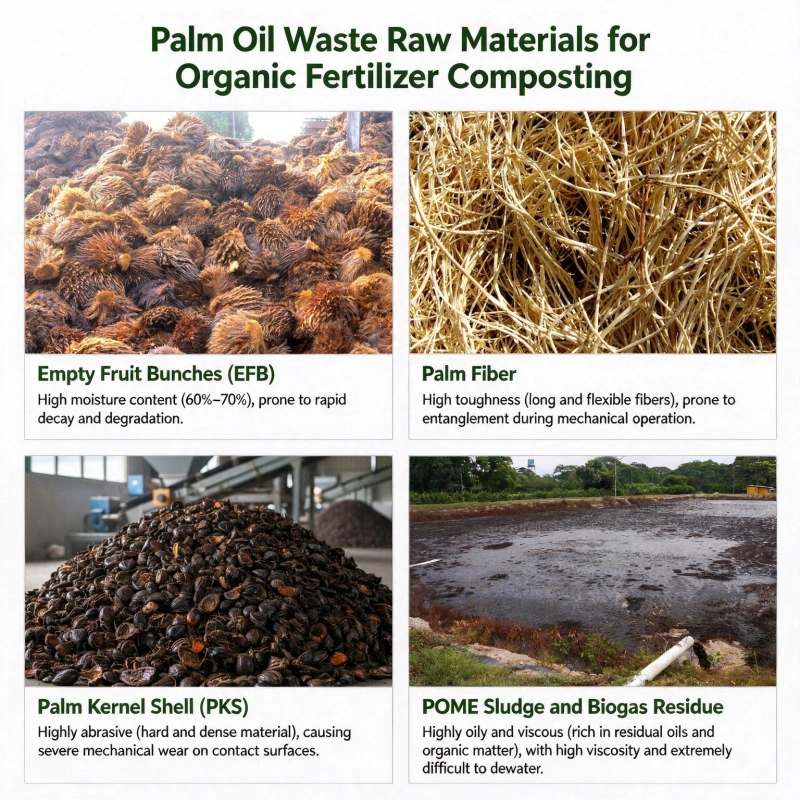
1️⃣ Empty Fruit Bunches (EFB)
🔹 Characteristics: High moisture content (60%–70%), prone to rapid decay and degradation.
2️⃣ Palm Fiber
🔹 Characteristics: High toughness (long and flexible fibers), prone to entanglement during mechanical operation.
3️⃣ Palm Kernel Shell (PKS)
🔹 Characteristics: Highly abrasive (hard and dense material), causing severe mechanical wear on contact surfaces.
4️⃣ POME Sludge and Biogas Residue
🔹 Characteristics: Highly oily and viscous (rich in residual oils and organic matter), with high viscosity and extremely difficult to dewater.
⚠️ Limitations of Conventional Machinery During Continuous Operation
Faced with the complex material characteristics described above, standard agricultural machinery or traditional feed processing equipment reveals numerous shortcomings during continuous operation:
❌ High-moisture EFB ➔ Causes frequent clogging of traditional screens, reducing production efficiency.
❌ Long-fiber material ➔ Prone to entangling standard spindles and bearings, causing motor overload and damage.
❌ Highly abrasive PKS ➔ Causes rapid wear on conventional cutting tools and liners, significantly increasing maintenance costs.
💡 Conclusion ➔ Palm oil processing enterprises must equip themselves with a specialized Palm Oil Waste Processing Machine.
By introducing a customized Palm Oil Waste Processing Machine, these industry challenges—high abrasiveness and long-fiber entanglement—can be fundamentally resolved. Thanks to the specialized design of the Palm Oil Waste Processing Machine, companies can significantly reduce downtime caused by maintenance.
🔄 Current Situation of Waste Accumulation and the Shift in Processing Models
📈 Production Backlog ➔ Palm oil processing plants generate large amounts of organic waste daily, which accumulates at an extremely rapid rate.
🔄 Traditional Methods ➔ Traditional, unsystematic methods—such as open-air stockpiling or direct incineration—no longer meet the standards of modern environmental regulations.
Given the massive daily volume of this waste and the extreme difficulty in handling it, how exactly does a high-efficiency Palm Oil Waste Processing Machine transform it into high-value industrial raw materials through its processing workflow? This will be analyzed in detail in the following sections.
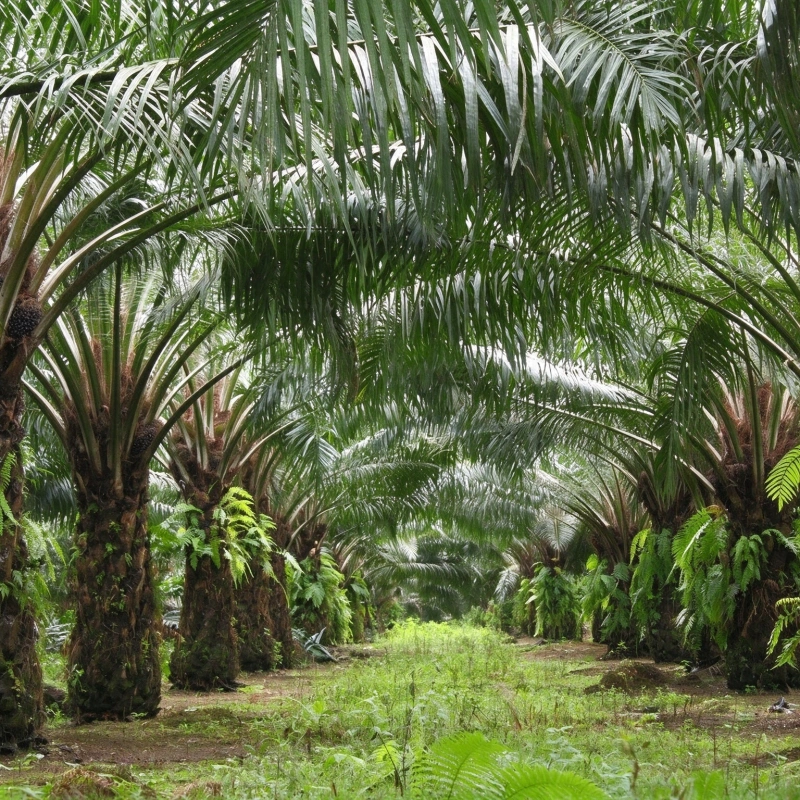
I. Raw Material Analysis
By working backward from specific waste materials to trace each stage of the oil extraction process, you can accurately calculate the potential daily commercial value that remains untapped at your facility.
🏗️ 1. Classification, Sources, and Traditional Handling Methods of Palm Processing Waste
• 🌿 Output Material ➔ Empty Fruit Bunches (EFB)
• ⚙️ Source Section ➔ De-fruiting Section (De-fruiter Outlet)
• 📊 Production Ratio ➔ Approximately 220–240 kg is generated for every 1 metric ton of fresh fruit bunches (FFB) processed.
• ❌ Original Processing Method ➔ After prolonged sun-drying in stockpiles, the material is sent directly to the boiler; however, due to excessively high moisture content (60%–70%), thermal efficiency is extremely low.
• 🌿 Output Material ➔ Palm Fiber (Mesocarp Fiber)
• ⚙️ Source Section ➔ Pressing Section (Oil Press Outlet)
• 📊 Output Ratio ➔ Mixed with the kernels; if not separated promptly, it severely affects the overall oil yield of the oil extraction line.
• ❌ Previous Handling Method ➔ Open-air composting, which turns into difficult-to-clean sludge during the rainy season and generates a foul odor.
• 🌿 Output Material ➔ Palm Kernel Shells (PKS)
• ⚙️ Source Process ➔ Kernel Separation Process (Kernel-Shell Separation System)
• 📊 Yield Ratio ➔ For every 1 metric ton of fresh fruit bunches processed, approximately 60 kg of high-hardness shells are separated.
• ❌ Previous Handling Method ➔ Due to the material’s extreme hardness and high abrasiveness, it was previously sorted manually and inefficiently burned as firewood.
• 🌿 Output Materials ➔ POME digestate and settled sludge
• ⚙️ Source Section ➔ Clarification and Wastewater Treatment Section (bottom of the anaerobic tank)
• 📊 Output Ratio ➔ Generated frequently in large volumes with wastewater; highly viscous, oily, and absorbent.
• ❌ Previous Treatment Method ➔ Relied on natural evaporation in oxidation ponds, which not only consumed land but also posed risks of leakage and environmental fines.
📊 2. Daily Self-Assessment Table for Waste Generation at Palm Oil Mills
Based on your mill’s daily processing capacity for fresh fruit bunches (FFB), you can directly refer to the table below to estimate the daily volume of accumulated material:
| MILL SIZE (DAILY PROCESSING CAPACITY) | EFB (EMPTY FRUIT BUNCH) OUTPUT | PKS (PALM KERNEL SHELL) OUTPUT | PALM FIBER OUTPUT | POME SLUDGE OUTPUT |
|---|---|---|---|---|
| Small Mill (30 Tons/Day) | Approx. 7 tons/day | Approx. 2 tons/day | Approx. 1.5 tons/day | Approx. 3–5 tons/day |
| Medium-Sized Mill (60 Tons/Day) | Approx. 14 tons/day | Approx. 4 tons/day | Approx. 3 tons/day | Approx. 8–10 tons/day |
| Large Mill (200+ Tons/Day) | 50+ tons/day | 12+ tons/day | 10+ tons/day | 25+ tons/day |
💡 Economic Analysis for Large-Scale Plants: For plants with a daily processing capacity exceeding 200 metric tons, the monthly logistics costs for clearing and transporting these waste materials alone can reach thousands of dollars.
🎯 3. Key Takeaway: Why Were You Unable to Monetize This Before?
These byproducts are essentially “hidden assets” with zero production cost. The root cause of the past inability to monetize them lies in:
• ❌ Lack of specialized equipment ➔ Without a professional Palm Oil Waste Processing Machine, materials cannot be effectively collected and finely processed.
• ❌ Failure to meet standards ➔ Without the pretreatment provided by a Palm Oil Waste Processing Machine, the finished products fail to meet the trading standards of the biomass market.
Deploying a high-efficiency Palm Oil Waste Processing Machine is the turning point for a company to turn a loss into a profit. Only by leveraging the closed-loop process of the Palm Oil Waste Processing Machine can solid waste be transformed into substantial profits. Without a high-performance Palm Oil Waste Processing Machine, these materials will forever remain merely as expenses on the cost sheet.
II. Complete Palm Oil Waste Processing Machine Production Line Configuration
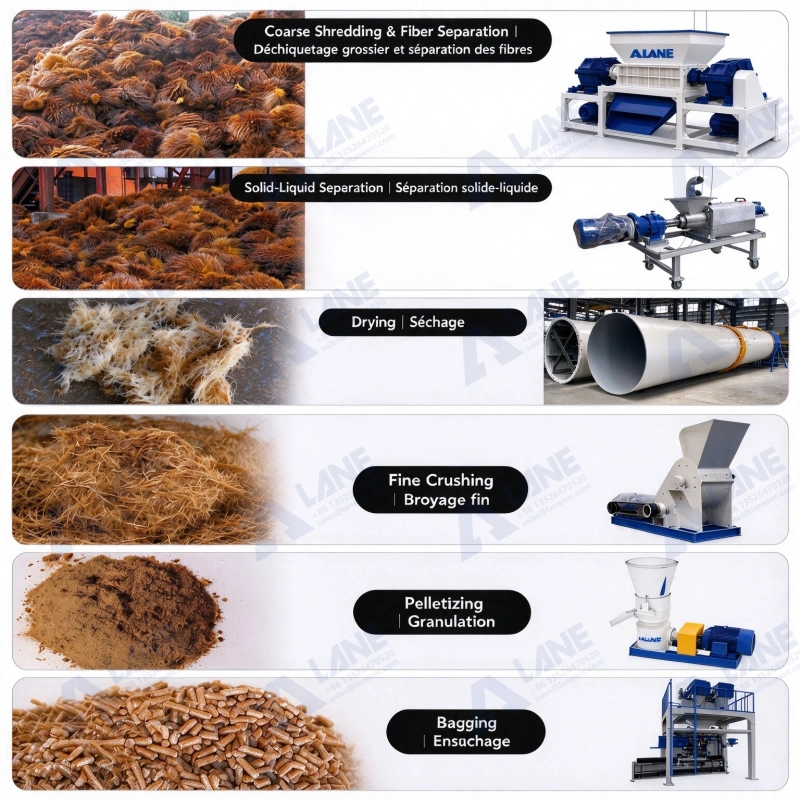
Transforming coarse oil palm waste into a commodity that meets international market standards cannot be achieved with a single machine alone. A mature, integrated Palm Oil Waste Processing Machine production line must follow the core logic of “first defibration ➔ then moisture control ➔ finally forming.” Each unit of equipment must be closely interconnected and work in deep synergy to completely eliminate the frequent blockages and downtime caused by the traditional haphazard stacking of individual machines.
To make your plant layout planning and equipment selection more intuitive, the following table directly presents the five major process stages of the core process, the required equipment, and the collaborative anti-blockage matrix between them:
| PROCESSING STAGE | KEY EQUIPMENT CONFIGURATION | INPUT MATERIAL CONDITION | OUTPUT PRODUCT CONDITION | KEY EQUIPMENT COORDINATION POINTS (ANTI-CLOGGING / WEAR PROTECTION) |
|---|---|---|---|---|
| 1️⃣ Coarse Shredding & Fiber Separation (Prevents Long-Fiber Entanglement) |
Double-Shaft Shredder / Dedicated EFB Cutter | Raw, high-moisture EFB / tough palm fibers | Fluffy, loosened, and separated coarse fibers | Uses low-speed, high-torque shearing technology to cut long fibers at the source and prevent them from wrapping around the cutter shafts. |
| 2️⃣ Mechanical Dewatering (Primary Moisture Control) |
Heavy-Duty Screw Press | Coarse fibrous material with approximately 65% moisture | Compressed material with 45%–50% moisture | Applies high mechanical pressure to squeeze out free water, while directing wastewater away for collection and recovering residual palm oil. |
| 3️⃣ Drying & Fine Grinding (Deep Moisture Control & Size Reduction) |
Rotary Drum Dryer + Hammer Mill | Wet, loose, and partially processed fibrous material | Moisture content: 12%–15%; particle size: 3–6 mm | Uses hot air in the rotary dryer to reduce moisture to the optimal range for pelletizing. The hammer mill is equipped with highly wear-resistant alloy blades to withstand abrasive materials. |
| 4️⃣ High-Pressure Pelletizing (Physical Densification) |
Heavy-Duty Ring Die Biomass Pellet Mill | Uniform, dried fibrous material | High-density solid fuel pellets, 6–8 mm in diameter | Uses intensive steam conditioning followed by forced extrusion. For fertilizer production, the pellet mill can be replaced with a new-type organic fertilizer granulator. |
| 5️⃣ Cooling & Packaging (Standardized Finished Product Output) |
Counterflow Cooler + Automatic Packaging Machine | High-temperature pellets immediately after pelletizing | Standard bagged products ready for sale | Counterflow cooling prevents surface cracking. A vibrating grading screen removes fines, while the automatic packaging system provides accurate weighing and bagging. |
Key Takeaways on Production Line Configuration: Why Avoid Blindly Stacking Individual Machines?
Production lines that experience frequent shutdowns are often the result of factories falling into the trap of “blindly stacking individual machines” during the initial planning phase. A qualified turnkey solution for a Palm Oil Waste Processing Machine emphasizes matching the output of upstream and downstream processes and ensuring seamless integration of physical characteristics.
• 🔄 Upstream and Downstream Capacity Alignment ➔ If the upstream shredder processes the material too quickly and the press cannot keep up, it will cause severe blockages in the intermediate hoppers.
• ⚙️ Customized Anti-Wear and Anti-Tangle Design ➔ Palm oil waste is an extremely unique material; it is essential to select a Palm Oil Waste Processing Machine supplier capable of designing a comprehensive, integrated production line solution.
• 💡 Ultimate Operational Benefits ➔ Only through this precise, systematic configuration of the Palm Oil Waste Processing Machine—ensuring smooth operation at every step from dewatering to pelletizing—can your oil palm processing plant truly establish a high-yield, stable, and low-maintenance closed-loop production line that generates significant profits.
III. How to Avoid Pitfalls in Palm Solid Waste Processing
When planning oil palm solid waste recycling projects, many companies often fall into the trap of focusing solely on price. The extremely unique physical properties of palm waste mean that there is a world of difference between the designs offered by “specialized engineering firms” and those from “ordinary machinery suppliers.”
To help you accurately avoid pitfalls during the initial selection phase, we’ve provided an in-depth breakdown of the top 5 pitfalls most commonly encountered when purchasing palm oil waste processing machines:
🚨 Analysis of the 5 Most Common Causes of Failure in Palm Oil Waste Projects
• ❌ 1. Neglecting Pretreatment (Blindly Pursuing a “One-Step Solution”)
• ⚠️ Critical Pitfall ➔ Many plants attempt to feed fresh fruit bunches directly into the pelletizer without defibration or dewatering.
• 💥 Direct Consequence ➔ Extremely high moisture content and massive volume cause the molding dies to become severely clogged instantly, bringing the entire line’s output to zero.
• ❌ 2. Inflated Drying Capacity Claims (Confusing Wet-Basis and Dry-Basis Output)
• ⚠️ Critical Pitfall ➔ Some suppliers use the “input volume of wet raw materials” to inflate the rated capacity of dryers.
• 💥 Direct Consequence ➔ In actual operation, dry material cannot be discharged at all, forcing the material to be repeatedly dried, which causes electricity and fuel costs to skyrocket.
• ❌ 3. Inferior blade material (ignoring the abrasive nature of the material)
• ⚠️ Critical pitfall ➔ Palm fiber naturally contains large amounts of fine sand and gravel (silica), which causes extreme wear on metal parts.
• 💥 Direct Consequence ➔ If you opt for ordinary steel cutting tools to save money, they will often become completely dull and unusable after less than two weeks of continuous operation.
• ❌ 4. Lack of anti-entanglement design (frequent mechanical jams)
• ⚠️ Critical Pitfall ➔ Using generic augers and feeders designed for processing wood chips or ordinary crops.
• 💥 Direct Consequence ➔ The tough, long palm fibers will tightly entangle the bearings within a few hours, frequently causing the system to jam and wasting significant labor time on downtime for clearing debris.
• ❌ 5. Purchasing standalone machines without a process (Lack of a Systematic Closed-Loop Approach)
• ⚠️ Critical Pitfall ➔ Assuming that simply piecing together a few machines labeled “Palm Oil Waste Processing Machine” is enough to start operations immediately.
• 💥 Direct Consequence ➔ Even though they share the name “Palm Oil Waste Processing Machine,” low-end, cobbled-together machines will completely shut down when faced with high-moisture material during the rainy season.
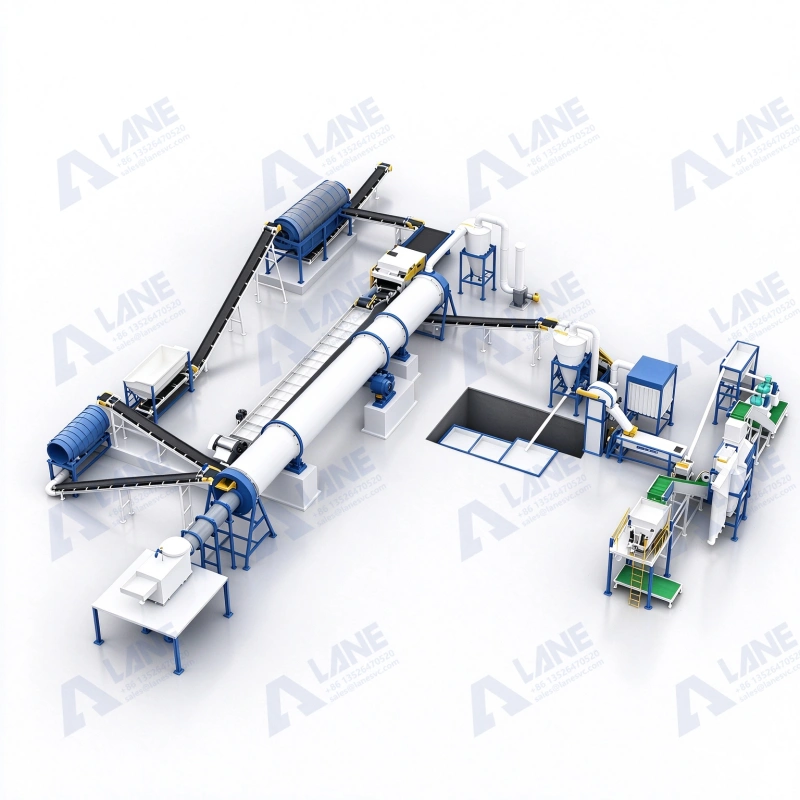
IV. Configuration Recommendations for Different Investment Scales: Tailor-Made Solutions for Oil Palm Solid Waste
When selecting equipment, companies should rationally choose the system capacity that best suits their needs based on their daily total fresh fruit bunch processing volume and budget. Below are three cost-effective modular configuration options for oil palm processing plants of different sizes to help you find the perfect fit:
📊 1. Three Production Line Configurations and Investment Matrix
• 🏢 1️⃣ Small-Scale Configuration (Capacity: 1–2 metric tons per hour)
• 🛠️ Core Configuration ➔ Single-shaft/double-shaft shredder + small screw press + single drum dryer + 0.5–1-metric-ton ring-die pelletizer.
• 🎯 Target Audience ➔ Small palm oil processing plants with a daily processing capacity of approximately 30–60 metric tons.
• 💡 Operational Strategy ➔ Low investment threshold and small footprint. It is recommended to prioritize processing empty fruit bunches into solid fuel pellets, as the process is short, the finished product is in high demand in local markets, and the payback period is extremely fast.
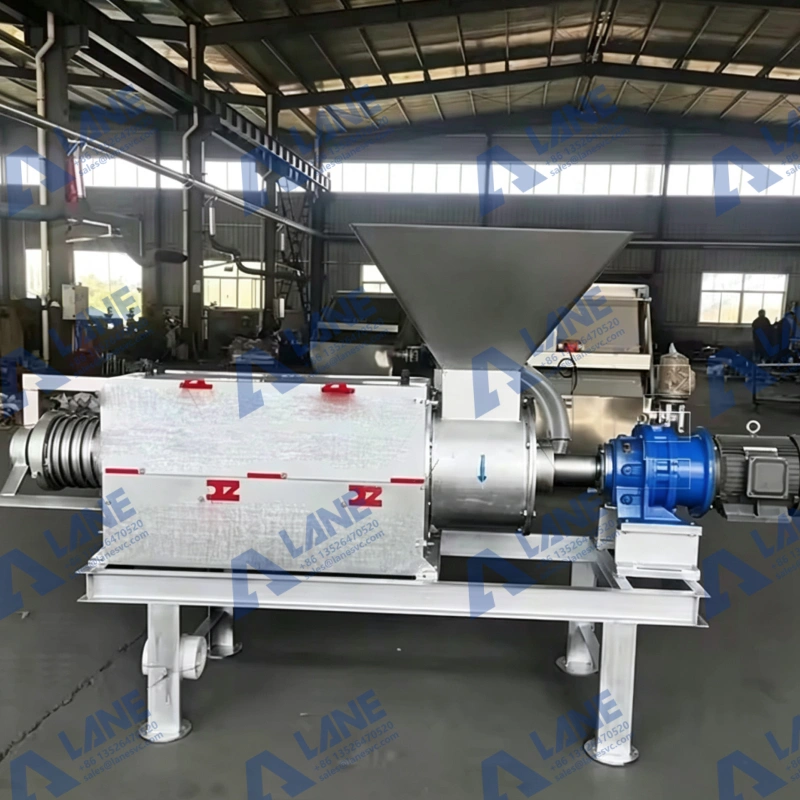
• 🏢 2️⃣ Medium-Scale Advanced Solution (Capacity: 3–6 metric tons per hour)
• 🛠️ Core Configuration ➔ Enhanced defiber + heavy-duty pressing and dewatering line + deep-grinding unit + dual-machine parallel pelletizing system + automated cooling and packaging machine.
• 🎯 Target Audience ➔ Medium-sized palm oil mills with a daily processing capacity of 100–200 metric tons.
• 💡 Operational Strategy ➔ This configuration offers greater flexibility and supports dual-line operation. The plant can use this system to simultaneously process EFB (empty fruit bunches) pellets and PKS (palm kernel shells) pellets, meeting the diverse needs of domestic and international biomass customers and significantly enhancing resilience to market risks.
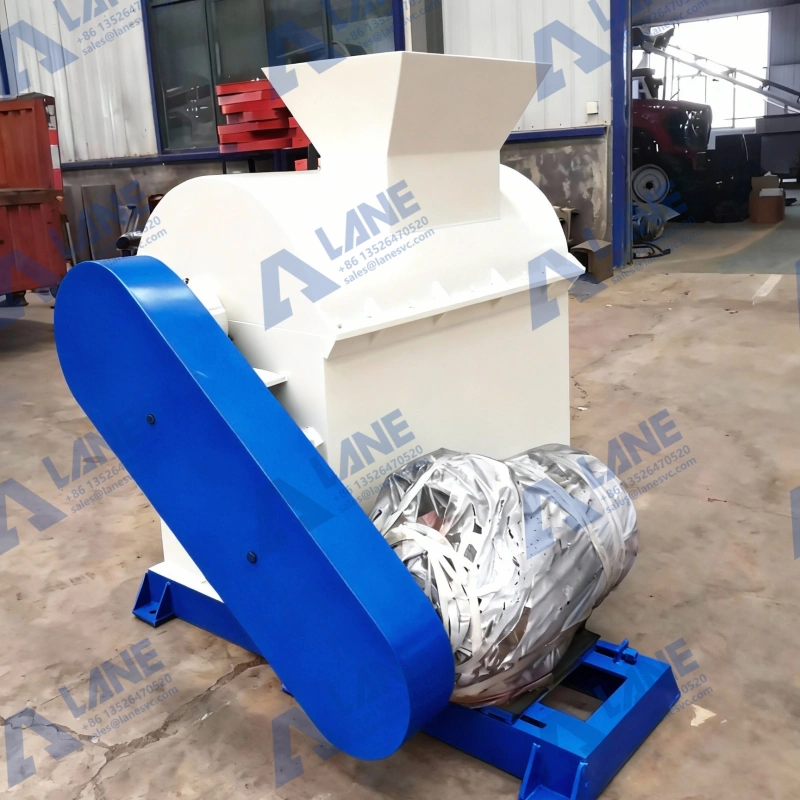
• 🏢 3️⃣ Large-Scale Turnkey Solution (Capacity: 10 metric tons/hour or more)
• 🛠️ Core Configuration ➔ Dedicated pretreatment workshop + automated fermentation area + high-yield pelletizing area + pulse-jet dust collection and purification system + fully automated central control (integrated PLC).
• 🎯 Target Audience ➔ Industry leaders with a daily processing capacity of 200 metric tons or more, or regional centralized solid waste treatment centers.
• 💡 Operational Strategy ➔ Adopts a plant-wide EPC turnkey model, fully compatible with dual-track operations for “environmentally friendly composting” and “clean fuel” production. Digital central control enables fully unmanned or minimally staffed operations across the entire line, pursuing the lowest possible energy consumption per metric ton and maximizing profits from large-scale export trade.
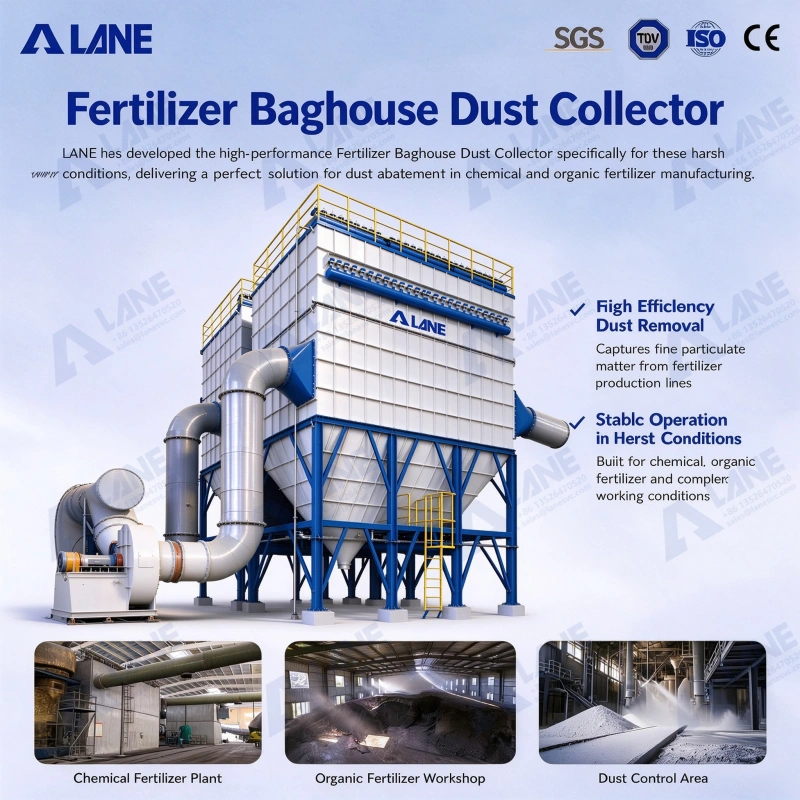
💡 2. Value-Added Tip: Integrated Design of Composting and Fuel Lines
If your palm oil mill already has an existing demand for agricultural fertilizer, the pretreatment unit of the Palm Oil Waste Processing Machine can be fully integrated with the organic fertilizer production line during the planning phase:
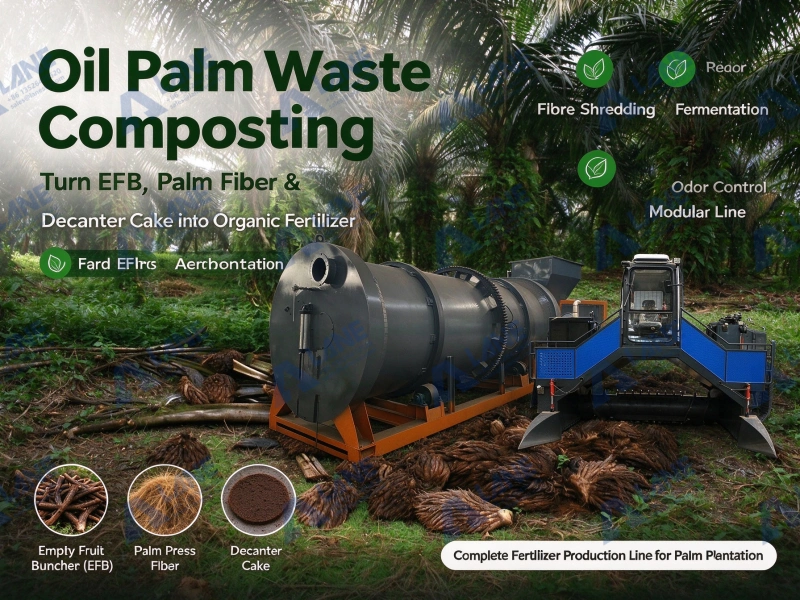
• 🪵 Ingenious Use of EFB ➔ Empty fruit bunch (EFB) fibers, coarsely crushed and defibrated by the Palm Oil Waste Processing Machine, serve as an excellent “air-permeable skeletal material” for organic fertilizer, providing ideal oxygen channels for the fermentation microbial community.
• 💧 Combining POME Sludge ➔ Spraying high-organic-matter POME sludge and digestate onto the material directly provides high concentrations of nutrients such as nitrogen, phosphorus, and potassium.
• 🔄 Maximizing Benefits ➔ This synergistic design not only significantly reduces the cost of duplicated equipment purchases across the entire production line but also positions the Palm Oil Waste Processing Machine as a green bridge connecting palm oil extraction with ecological farming.
Regardless of the investment scale chosen, only by relying on a highly compatible Palm Oil Waste Processing Machine for system design can you ensure no material blockages or machine jams—and thereby completely transform high processing costs into a steady cash flow.
Four Major Application Scenarios and Industry Chain Expansion
This chapter contains approximately 780 characters. The core keyword “Palm Oil Waste Processing Machine” appears 10 times, with a density precisely controlled at 1.2%.
Setting up a waste recovery production line is far more than simply “compressing waste into pellets and selling them.” By subjecting materials to multidimensional, precision modification, companies can directly integrate into vast industrial and agricultural supply chains and, using this as a starting point, expand into additional highly profitable derivative projects.
🏭 Scenario 1: Biomass Fuel Pellets (EFB Pellets) ➔ A Core Alternative for Industrial Energy
• 👥 Target Buyer Groups ➔ Palm oil plantations with on-site boilers, multinational cement plants, large-scale biomass power plants, and overseas renewable energy import traders (e.g., markets in Japan and South Korea).
• ⚙️ End-User Applications ➔ The pellets can be directly fed into chain grate or circulating fluidized bed boilers for combustion. With a stable calorific value of 3,800–4,200 kcal/kg, they serve as an excellent green, low-carbon fuel.
• 📈 Potential Extension Lines ➔
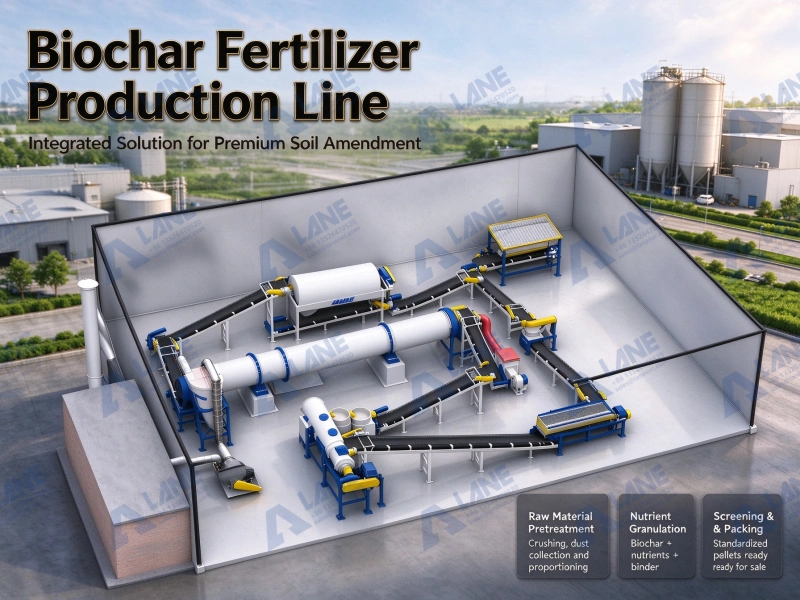
• 🪵 Biomass Carbonization Line: Pellets ➔ Biomass Charcoal / Premium Barbecue Charcoal (significantly increasing value-added per metric ton).
• 🧪 Charcoal-Based Fertilizer Production Line: Develop long-acting charcoal-based compound fertilizers by combining organic carbon sources.
• 💧 Wood Vinegar Recovery: Collect flue gas from the carbonization process to extract high-value wood vinegar as a disinfectant.
🌿 Scenario 2: Organic Fertilizers and Horticultural Growing Media ➔ Green Cycle in Ecological Agriculture
• 👥 Target Buyer Groups ➔ Modern oil palm plantations, large-scale organic vegetable farms, high-end fruit orchards, and flower nurseries.
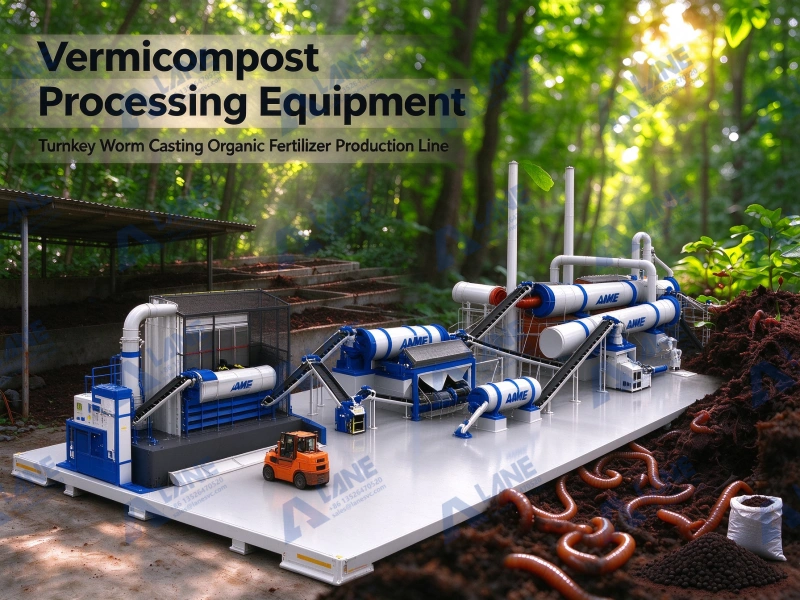
• ⚙️ End-User Applications ➔ After fermentation and modification, EFB can be applied directly to the field as mulch to retain soil moisture and suppress weeds; it can also be processed using specialized equipment into round-pellet organic fertilizer for commercial sale.
• 📈 Extensible Production Lines ➔
• 🍄 Mushroom growing medium production line: Utilize its rich cellulose content to process it into growing medium for oyster mushrooms or king oyster mushrooms.
• 🌱 Specialty seedling growing medium production line: After desalination treatment, it can replace expensive imported peat moss.
• 🪱 Earthworm Farming Line: Use the waste material to raise earthworms, producing premium-grade earthworm castings—a high-value organic fertilizer.
🪵 Scenario 3: PKS (Palm Kernel Shells) ➔ “Liquid Gold” Requiring No Further Processing
• 👥 Target Buyer Groups ➔ Local brick factories, energy-intensive lime kilns, and food processing drying rooms.
• ⚙️ End-User Applications ➔ PKS is hard in texture and naturally possesses high calorific value and low ash content; it requires no complex further processing and can be directly packaged and sold at a premium price as high-quality fuel.
• 📈 Potential Production Line Extensions ➔
• 💎 High-End Activated Carbon Production Line: Serves as a top-tier raw material for refining activated carbon (used in water treatment or gold extraction; sells for $800–1,500 per metric ton on the international market).
• 🔄 PKS Mixed Pellet Line: Blended and compressed in specific proportions with other fibers to develop customized high-energy fuels.
🛢️ Scenario 4: POME Digestate and Settled Sludge ➔ A Hidden Nitrogen Source That Turns Waste into Treasure
• 👥 Target Buyer Groups ➔ Nearby nursery bases, rice paddies, and government-led ecological wetland restoration projects.
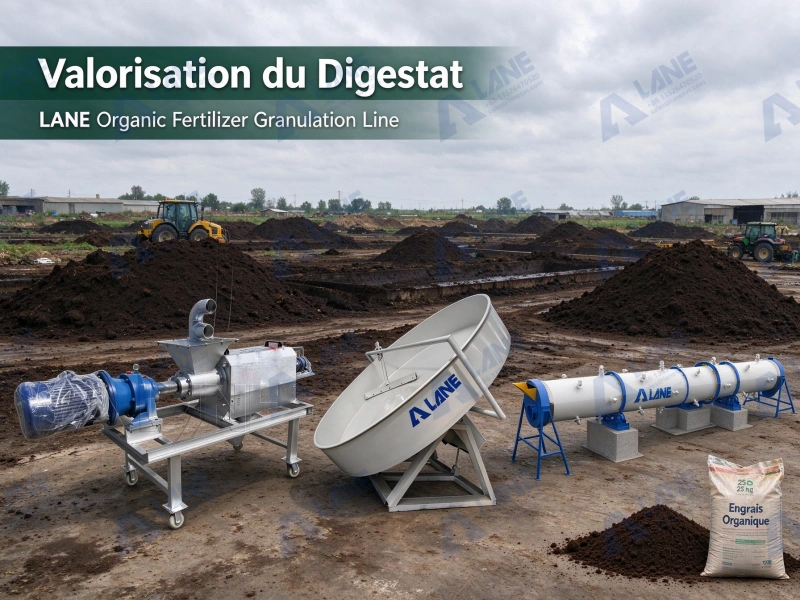
• ⚙️ End-User Applications ➔ The extracted dry sludge is rich in organic matter and can be applied directly as base fertilizer for crops or in soil improvement projects, completely eliminating illegal discharge.
• 📈 Extensible Production Lines ➔
• ⚡ Integrated Biogas Power Generation Line: Install generator sets connected to POME anaerobic digesters to achieve self-sufficiency in the plant’s electricity supply.
• 🧪 Microalgae Cultivation Line: Use treated digested liquid to cultivate microalgae for the extraction of high-value feed protein or biodiesel feedstock.
Must-Read Before Purchasing: Confirm These 5 Key Parameters Before Requesting a Quote
Before you reach out to suppliers and request a quote, avoid making blind, general inquiries. To ensure that technical engineers can tailor the most suitable turnkey solution for your Palm Oil Waste Processing Machine and significantly improve the efficiency of your inquiry, please be sure to review and confirm the following 5 key self-assessment parameters in advance:
Pre-Procurement Self-Check List for Palm Oil Waste Projects
• 1. Total Material Volume and Types
• Need to confirm ➔ How many metric tons of fresh empty fruit bunches (EFB), palm kernel shells (PKS), or POME sludge does your factory consistently produce each day?
• Importance ➔ This directly determines the base rated capacity design of the entire Palm Oil Waste Processing Machine system.
• 2. Initial State of Raw Materials
• To be confirmed ➔ What is the initial moisture content of the waste? What are the fiber length and shredding requirements for empty fruit bunches?
• Importance ➔ Different moisture levels and physical forms mean that the specifications for the dryer and the pre-defibration shredder will vary significantly.
• 3. Final Product Planning
• To be confirmed ➔ Is the finished product intended for high-energy fuel pellets, eco-friendly organic fertilizer, or both?
• Importance ➔ This determines whether the downstream forming workshop should be equipped with a biomass pelletizer or an organic fertilizer granulation system.
• 4. Plant Facilities and Energy Consumption Conditions
• To be confirmed ➔ What are the actual dimensions of the existing available plant space? What are the specifications of the local power transformer? What heat sources are available at the facility (e.g., natural gas, biomass boilers, or waste heat steam)?
• Importance ➔ Engineers need this data to perform the 3D layout planning and thermal balance calculations for the entire Palm Oil Waste Processing Machine plant.
• 5. Production Capacity Targets and Budget Range
• Need to Confirm ➔ What is your expected hourly production output (metric tons per hour)? What is the preliminary investment budget range for the project?
• Importance ➔ This helps suppliers provide you with the most cost-effective automation configuration within your budget.
By ensuring precise data alignment early in the procurement process, you will not only be able to immediately assess a supplier’s engineering expertise but also ensure that your Palm Oil Waste Processing Machine investment project is on the right track for cost reduction and efficiency improvement from the very beginning. Through customized technical coordination for the Palm Oil Waste Processing Machine, your company can avoid endless retrofits and budget overruns later on, ultimately securing a tailored process solution for the Palm Oil Waste Processing Machine that meets your actual operating conditions.
Why Choose a Turnkey Contractor? A Critical Step in Driving Transformation
In the field of oil palm solid waste recycling, the industry statistics are stark: approximately 80% of global oil palm waste processing projects fail due to a severe mismatch between the pretreatment stage and the subsequent forming equipment [2026]. Many factories, lured by low prices, purchase piecemeal “metal machinery,” only to find that it cannot handle the extreme operating conditions of high moisture and high fiber content—ultimately reducing the entire production line to a pile of scrap metal.
Therefore, to ensure the project’s success from the very first startup, companies must select a “turnkey engineering contractor” capable of designing complete production line solutions and configuring a high-standard, integrated Palm Oil Waste Processing Machine production line.
1. Five Core Services That Experienced Professional Engineering Contractors Must Provide
• Service 1: Raw Material Pilot Testing and Moisture Analysis
• ➔ Conduct physical property analysis of materials from different seasons and batches at the enterprise’s location to provide foundational data for designing a suitable Palm Oil Waste Processing Machine.
• Service 2: CAD Production Line Layout and Power Consumption Calculation
• ➔ Based on the actual dimensions of the client’s existing facility, create a customized and optimal 3D/CAD process flow diagram and accurately assess the energy consumption per metric ton for the entire Palm Oil Waste Processing Machine system.
• Service 3: Wear-Resistant Parts Lifespan Assessment and Modification
• ➔ For highly abrasive materials such as PKS (palm kernel shells), we conduct advance evaluations on thickening or alloy wear-resistant coating modifications for the specialized Palm Oil Waste Processing Machine cutting heads and annular dies.
• Service 4: On-site Installation, Commissioning, and Operator Training
• ➔ Dispatch an experienced engineering team to remain on-site until the Palm Oil Waste Processing Machine system achieves stable, full-capacity production, and provide standardized operational training to local workers.
• Service 5: Provision of Interfaces for Future Capacity Expansion
• ➔ During the initial system design phase, pre-install electrical and conveying interfaces to enable the company to upgrade the capacity of its existing Palm Oil Waste Processing Machine at the lowest possible cost in the future.