Biochar Fertilizer Production Equipment and Investment Guide
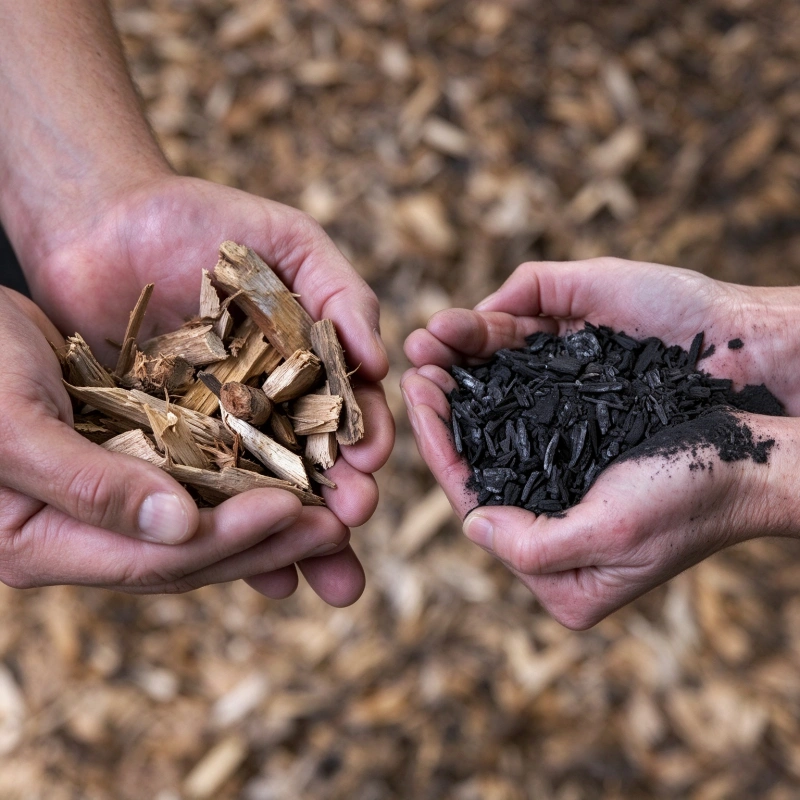
For decades, overreliance on conventional chemical fertilizers has sustained crop yields, yet it has come at a steep cost: accelerated soil degradation, massive nutrient leaching, and rising greenhouse gas emissions. As global agriculture shifts toward sustainability and carbon neutrality, innovative soil amendment technologies have moved beyond cutting-edge research and into mainstream adoption. Among these, biochar — a carbon-rich material produced via biomass pyrolysis — stands out for its outstanding carbon sequestration and soil-improving capabilities. Pure biochar, however, lacks the readily available nutrients required to maintain high crop yields.
To address this limitation, Biochar Fertilizer Production has emerged as one of today’s most promising innovation fields. The process combines biochar’s nutrient adsorption capacity with precise crop nutrition to create a new type of fertilizer through Biochar Fertilizer Production. This article explores the technical pathways, agronomic benefits and market outlook of Biochar Fertilizer Production, examining how this technology serves as a foundational pillar for the next generation of green agriculture.
Raw Material Selection: The Foundation Defining Biochar Quality
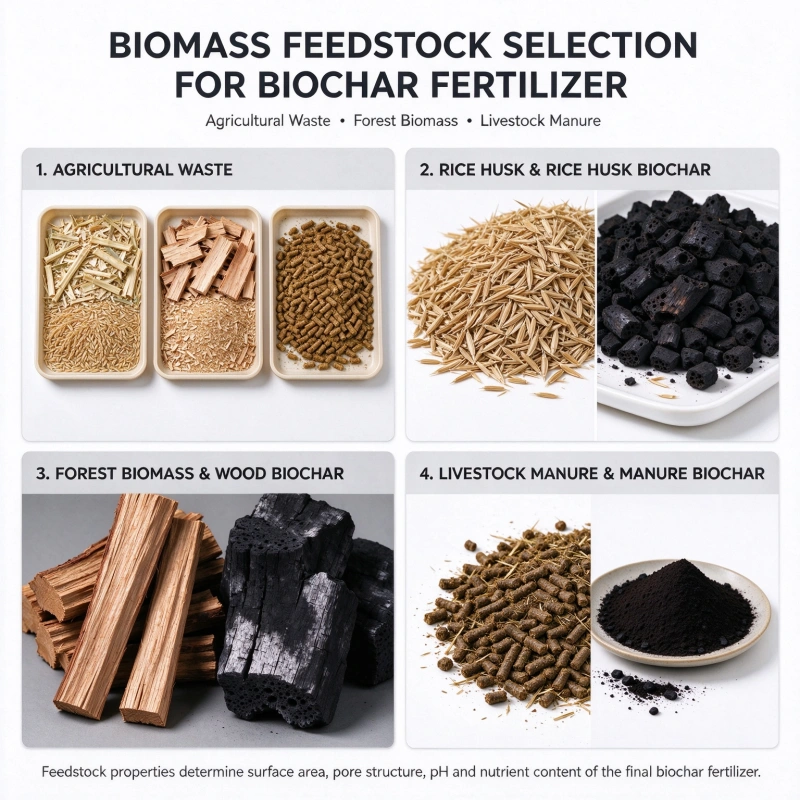
The performance of Biochar Fertilizer Production is fundamentally determined by the properties of starting feedstock. Within Biochar Fertilizer Production, feedstock selection is a strategic decision that dictates the final product’s surface area, pore structure, pH value and baseline nutrient content. Biomass feedstocks generally fall into three main categories:
• Agricultural residues (e.g., crop straw, rice husks): Widely available and rich in silicon. Rice husk biochar, for instance, features highly developed micropores, delivering excellent water retention and subsequent nutrient loading performance, though it contains low inherent nutrient levels.
• Forest biomass (e.g., wood chips, sawdust, bamboo waste): Lignocellulosic materials high in lignin and cellulose yield biochar with high fixed carbon content and exceptional structural stability. This makes it the gold standard for long-term soil carbon sequestration and improved soil aeration, even though pyrolysis typically requires higher temperatures.
• Livestock manure (e.g., chicken manure, cow dung): Unlike plant-based biomass, manure-derived biochar is strongly alkaline and naturally abundant in phosphorus, potassium and trace elements. While its carbon structure offers slightly less long-term stability compared with wood biochar, it provides an excellent natural nutrient base and substantially reduces the need for supplemental chemical nutrients in downstream processing.
In practical operations, raw material cost, local feedstock availability and target soil remediation requirements must all be carefully balanced. This is the core prerequisite for optimizing both economic and agronomic outcomes in Biochar Fertilizer Production.
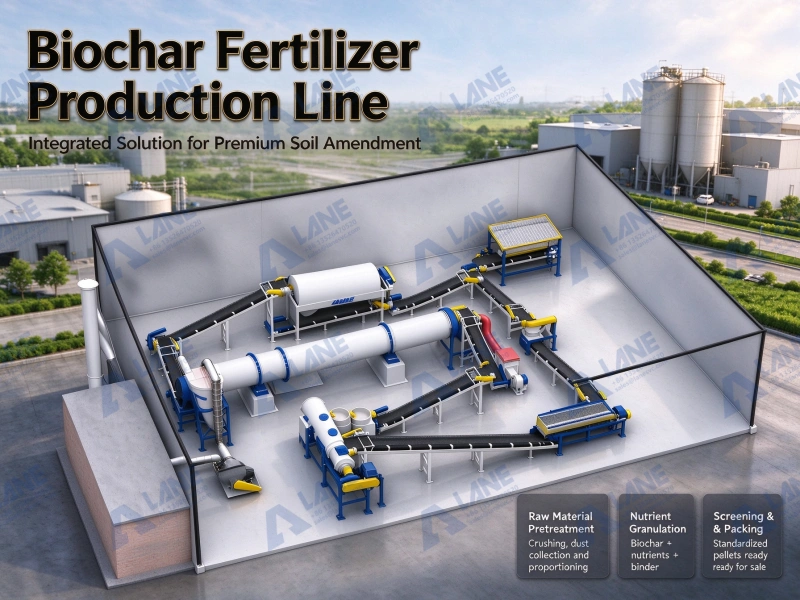
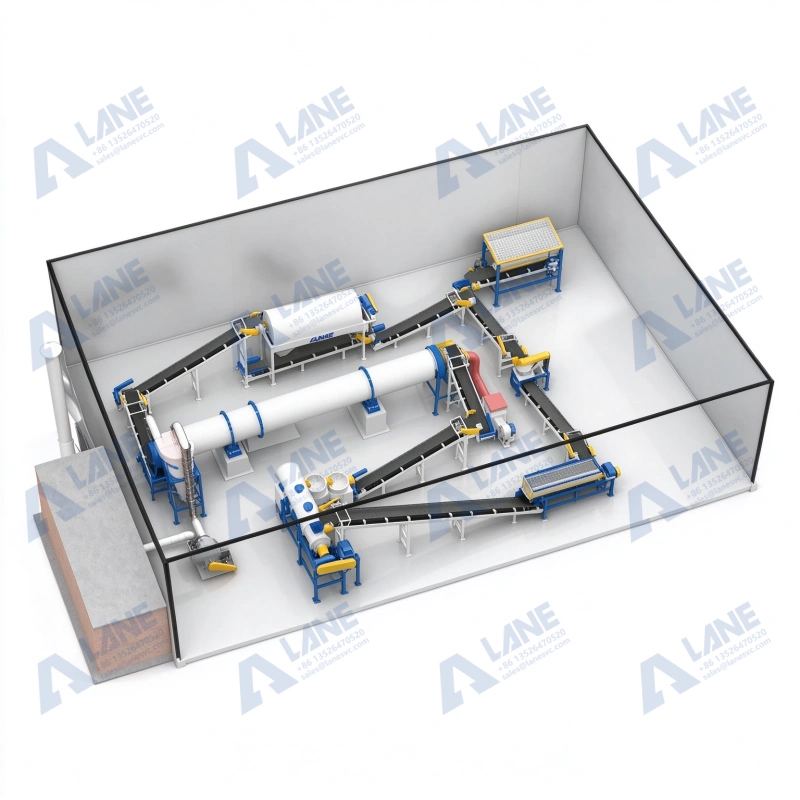
Automatic Production Line Equipment for Biochar Fertilizer Production
| PROCESS STAGE | CORE / AUXILIARY EQUIPMENT | MECHANICAL PROCESSING TECHNICAL ACTION | EQUIPMENT SELLING POINT |
|---|---|---|---|
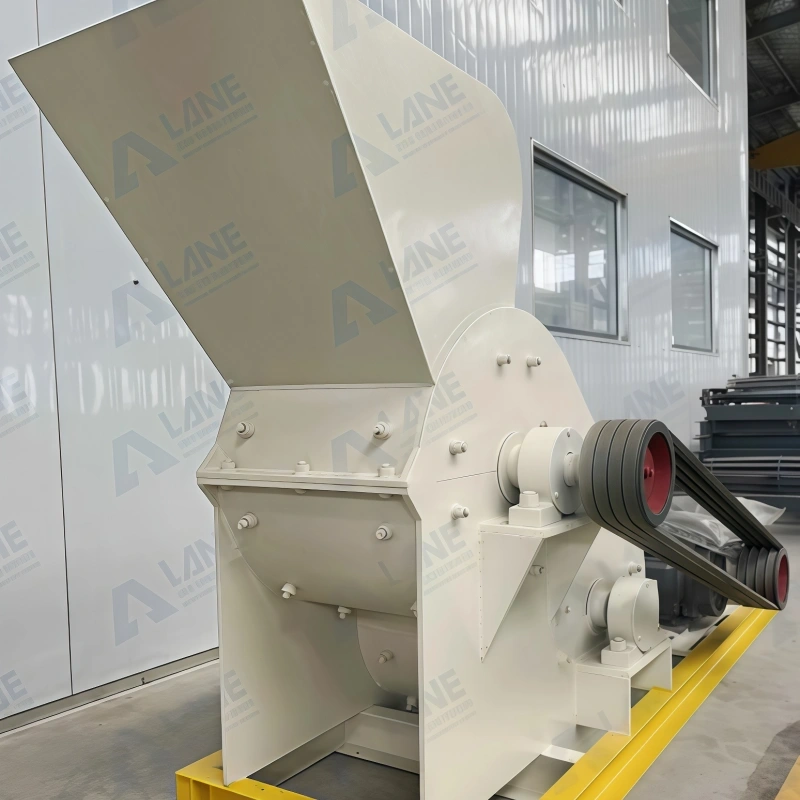
| 1. Pre-treatment | Heavy-duty Hammer Mill
Auxiliary System: Pulse Jet Bag Filter Auxiliary System: Weighing Belt Feeder |
Crush large, hard raw biochar lumps into ultra-fine 80–120 mesh carbon powder at high frequency to fully open micropores.
Standard air suction ports fitted at mill outlets and material drop points capture light, floating carbon powder. Dynamically weigh and proportion carbon powder, inorganic fertilizer and organic matter online before materials enter the mixer. |
【Wear & Impact Resistance】 High-wear-resistant alloy hammers engineered for biochar’s high hardness and abrasiveness, extending service life by 3 times.【Eco-compliant & Zero Waste】 99% filtration efficiency prevents dust from escaping the workshop. Captured carbon powder automatically returns to silos, achieving zero raw material loss.【Intelligent Formula Control】 High-precision weighing sensors linked with frequency converters adjust raw material ratios, with an error of ≤0.5%, ensuring fertilizer formula compliance. |
| 2. Nutrient Prep | Chemical Mixing Tanks
Auxiliary System: Screw Conveyor |
Fully dissolve, heat and maintain a constant volume for urea, ammonium phosphate, trace elements or organic fertilizer liquid inside the tanks.
Convey dry carbon powder and dry fertilizer ingredients in fully enclosed equipment at a set inclination to the feed inlet of the high-intensity mixer. |
【Precision Anti-corrosion Design】 Full 304/316 stainless steel construction resists acid and alkali corrosion. Precision metering pumps ensure accurate fertilizer liquid dosing down to the gram.【Zero Dust Escape】 Fully sealed pipeline structure. Given biochar’s ultra-low bulk density, screw conveying prevents carbon powder drift and reduces dust-related hazards. |
| 3. Inoculation | Twin-Shaft Horizontal Mixer
Auxiliary System: Bucket Elevator |
Blend fine carbon powder, nutrient liquid pumped from tanks and binders. Powerful shear force drives fertilizer liquid deep into biochar micropores.
Vertically lift sticky, wet material discharged from the mixer and feed it evenly into the granulator inlet. |
【Dead-Zone-Free Deep Penetration】 Interleaved forward-reverse twin-shaft blades boost mixing efficiency by 50%, ensuring uniform coating of carbon powder with nutrient liquid and eliminating agglomeration.【Anti-Sticking & Space Saving】 Custom anti-adhesion buckets ensure complete material discharge without material sticking. The vertical layout greatly reduces factory footprint. |
| 4. Granulation | Disc Granulator / Drum Granulator / Double Roller Extrusion Granulator | Overcome biochar’s inherent lack of stickiness. Adjust equipment rotation speed and inclination to turn wet feedstock into uniform 2–5 mm pellets. | 【High Granulation Rate Control】 Custom scrapers and spray systems designed exclusively for carbon fertilizer. The granulation rate exceeds 95%, producing high-hardness pellets that withstand compression during transportation. |
| 5. Drying & Cooling | Rotary Drum Dryer & Cooler | A low-temperature, high-air-volume process rapidly removes excess internal moisture from pellets and cools them for hardening and shaping. | 【Temperature Control to Prevent Biochar Burning】 A precision hot-air distribution system strictly regulates drying temperature to achieve efficient dehydration while eliminating the risk of secondary biochar combustion under properly controlled operating conditions. |
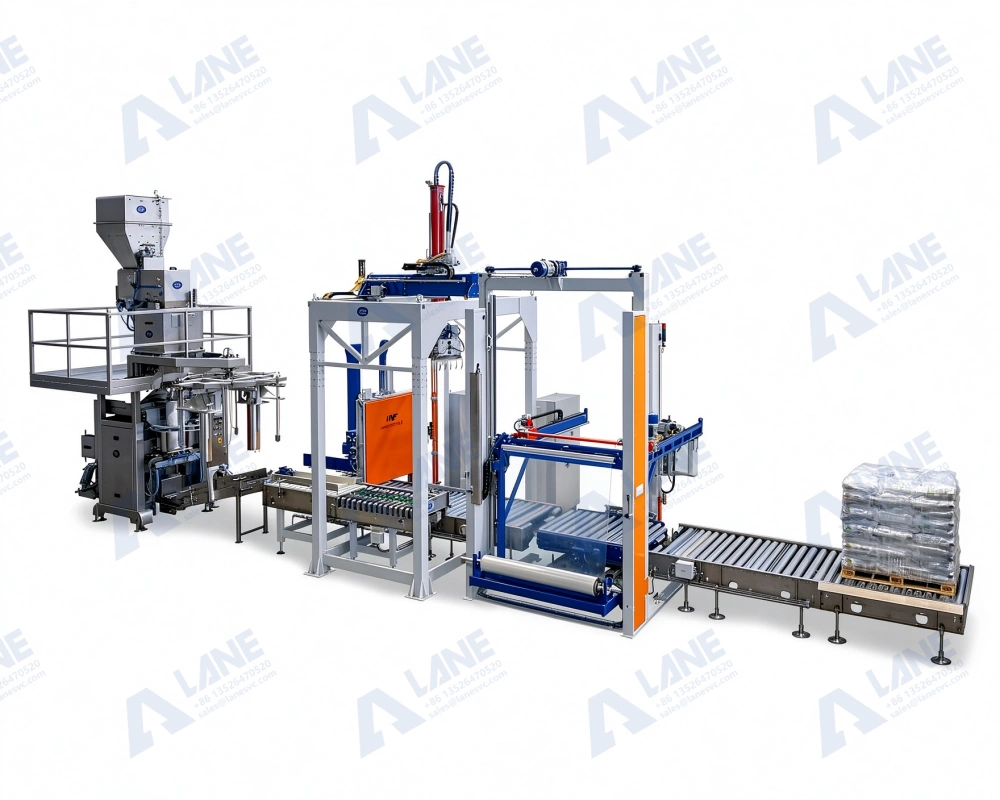
| 6. Screening & Packing | Vibrating Screen & Automatic Quantitative Packing Machine | Grade finished fertilizer by particle size. Return off-spec powder for re-granulation. Automatically weigh, seal and bag qualified pellets for shipment. | 【Fully Automatic Closed-Loop】 Minimizes labor requirements. Finished products go directly into bags for sale. The entire production line can be operated by only 2–3 workers under a suitable level of automation. |
Application Scope & Target Market: Solid Investment Certainty Driven by Massive Sales Channels
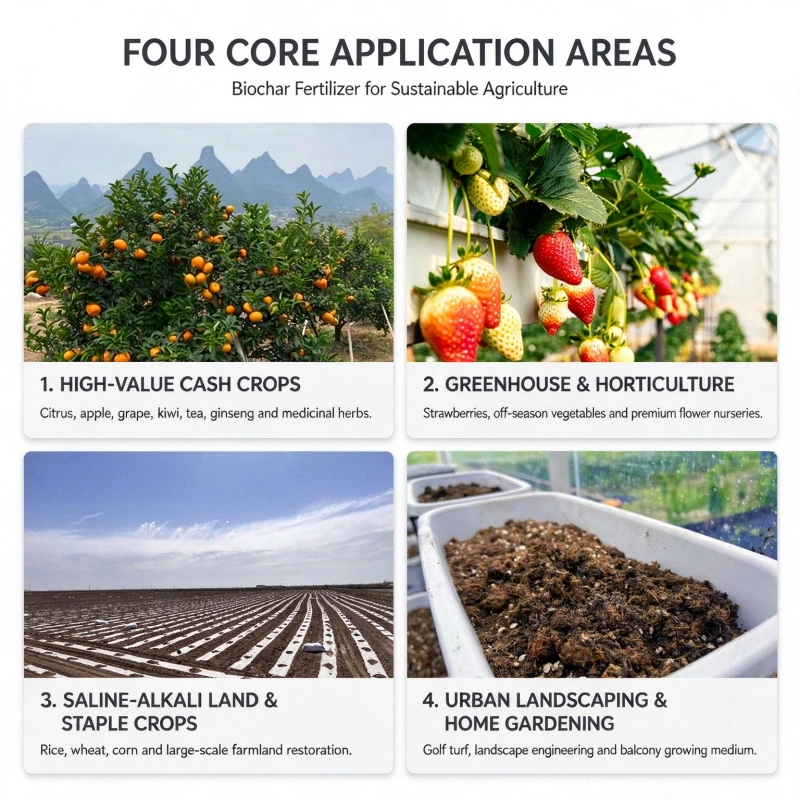
Biochar Fertilizer Production using this complete equipment set delivers dual functions: precise fertilization and soil remediation, so its application scope far exceeds conventional chemical fertilizers. After commissioning, fertilizer plant operators can sell finished products into four large high-demand market segments:
Four Core Application Segments
• High-Value Cash Crops — Primary Profit Driver
Applicable crops: Citrus, apples, grapes, kiwifruit, coffee, tea, ginseng, medicinal herbs.
Pain point: High-value crops are highly vulnerable to soil compaction and acidification, which reduce produce quality and may even cause total crop failure.
Biochar fertilizer benefits: Biochar fertilizer adjusts soil pH, significantly raising fruit sugar content, color and single fruit weight, helping growers sell premium produce at higher prices. This is the fastest payback market for Biochar Fertilizer Production.
• Greenhouse & Horticulture — High Repeat Purchase Market
Application scenarios: Greenhouse strawberries, off-season vegetables, high-end flower nurseries.
Pain point: Continuous cropping inside greenhouses creates severe continuous cropping obstacles, including widespread soil-borne diseases, seedling death and root rot.
Biochar fertilizer benefits: Biochar’s natural porous structure acts as a refuge for beneficial microorganisms. Combined biochar fertilizer effectively suppresses soil-borne diseases in greenhouses and improves root zone ecology, making it a sought-after soil restoration fertilizer for protected cultivation growers.
• Soil Restoration & Staple Crops in Saline-Alkali Land and Sandy Wasteland — Major Market Supported by Policy Subsidies
Application scenarios: Saline-alkali land rehabilitation, sandy arid soil improvement; high-standard farmland for rice, wheat, corn and other staple grains.
Pain point: Sandy soils retain little water and nutrients; saline-alkali soils hinder crop root establishment. Conventional chemical fertilizer nutrient loss can exceed 60%.
Biochar fertilizer benefits: Biochar fertilizer holds many times more water than ordinary fertilizers. In arid sandy land and high-standard farmland demonstration zones, it locks moisture and nutrients firmly. It is a soil amendment fertilizer strongly recommended by national agricultural authorities with substantial procurement subsidies.
• Urban Landscaping & Home Gardening — Emerging High-Margin Blue Ocean Market
Application scenarios: Urban landscape projects, golf course turf maintenance, balcony home gardening growing media.
Pain point: Poor soil quality in urban landscaping, expensive golf turf maintenance, and demand for odor-free green products in home gardening.
Biochar fertilizer benefits: Dust-free, odorless biochar granular fertilizer is standard for premium horticulture and delivers extremely high profit margins.
Market Premium & Business ROI of Biochar Fertilizer
For fertilizer manufacturers, investing in a Biochar Fertilizer Production line is not merely a strategic move aligned with green low-carbon policies. It is a lucrative investment opportunity that unlocks product premium pricing and strong profit margins. Biochar granular fertilizer manufactured with this equipment set holds three decisive competitive advantages on the market:
Three Core Profit Drivers
• Profit Driver 1: Upgrade standard fertilizer into premium functional fertilizer with doubled selling price
• Profit Driver 2: Qualify for generous green agriculture subsidies under national policy frameworks
• Profit Driver 3: Low raw material costs paired with high finished product profit
Business Analysis: Biochar Compound Fertilizer vs. Conventional Chemical Fertilizer
To clearly demonstrate the profitability of this production line, we compare per-ton profit margins of conventional compound fertilizer and biochar granular fertilizer using industry average benchmarks:
| METRIC | TRADITIONAL FERTILIZER | BIOCHAR FERTILIZER | MACHINERY PREMIUM ADVANTAGE |
|---|---|---|---|
| Base Raw Material Cost | High (pure inorganic chemical feedstock, subject to volatile supply chains) | Low (large volumes of low-cost local biochar base material) | Reduces reliance on expensive chemical raw materials for better cost control. |
| Processing Technical Barrier | Very low (widely replicable; competition limited to price undercutting) | Moderate to high (requires precision batching, deep nutrient impregnation and specialized granulation equipment) | 【Technical Moat】Standard equipment cannot produce this product, allowing you to dominate the local premium biochar fertilizer market. |
| Average Market Selling Price | Approximately $350–$450 / ton | Approximately $700–$900 / ton | Price doubled! Positioned as premium fertilizer with water retention, nutrient retention, soil improvement and reduced topdressing requirements. |
| Gross Net Profit per Ton | Approximately $20–$45 / ton | Approximately $120–$180 / ton | Profit jumps 4–6 times, earning hundreds of extra US dollars per ton. |
| Government Subsidy Policy | None (some synthetic chemical fertilizers face environmental production restrictions) | Generous subsidies (qualifies for soil remediation, green agriculture and carbon sequestration policy benefits) | Favorable policy support; easier to obtain non-repayable government grants for plant construction and commissioning. |
| Customer Loyalty (Farmers) | Very low (purchases based purely on price) | Very high (farmers observe non-compacted soil and improved drought tolerance, building brand reliance) | Helps Biochar Fertilizer Production build stable direct sales networks and long-term customer reputation. |
Investment Conclusion
By deploying this fully automatic Biochar Fertilizer Production line, Biochar Fertilizer Production allows you to escape low-price competition. You can quickly capture leading positions in the local agrochemical market with this high-margin “black gold fertilizer”. Based on operating data from existing plant customers, full equipment investment is typically recovered within 6 to 12 months after production startup.
Typical Customer Implementation Cases & Plant Setup Solutions
Successful Customer Case Study: Turning Waste into a 10,000-Ton-Per-Year Black Gold Fertilizer Plant
To help you understand real-world performance of this fully automatic Biochar Fertilizer Production line, we have summarized two representative customer projects. Whether your feedstock is agricultural straw or livestock manure, we can replicate this proven business model.
Case 1: 5 Ton Per Hour “Straw Carbonization + Fertilizer Compounding” Fully Automatic Biochar Fertilizer Production Line
• Customer Background: Large agricultural cooperative in a major agricultural nation in Asia. Abundant local rice straw and rice husk waste faced strict open-burning environmental bans.
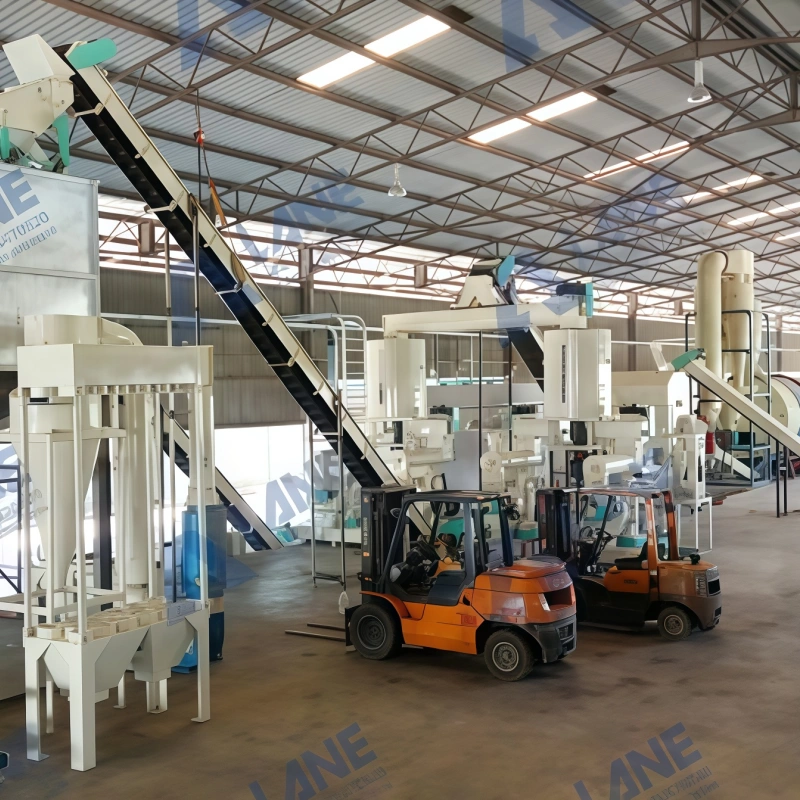
• Equipment Configuration: Special heavy-duty hammer mill + dynamic weighing belt feeder + tubular screw conveyor + twin-shaft horizontal high-power mixer + drum granulator + rotary drying and cooling system + pulse jet bag filter.
• Operational Performance: The project uses rice husk char, a byproduct from local biomass power plants, directly as raw material. Our fully enclosed conveying system completely solves light carbon powder drift issues. Granulation rate remains stable above 96%.
• Commercial Outcome: The finished “biochar-based rice-specific slow-release fertilizer” enjoys strong local demand. Rice treated with this product shows improved lodging resistance and a 12% yield increase. The customer recovered total equipment investment for the whole line within 8 months of startup.
Case 2: 3 Ton Per Hour “Chicken Manure Biochar + Organic-Inorganic Compound” Premium Functional Biochar Fertilizer Production Line
• Customer Background: Large modern livestock group in South America. The company operates dense layer chicken farms and needed to resolve odor pollution from chicken manure while boosting waste value.
• Equipment Configuration: Manure carbonization pre-treatment system + anti-corrosion chemical mixing tanks + twin-shaft horizontal mixer + high-efficiency bucket elevator + disc granulator + low-temperature controlled dryer + automatic quantitative packing machine.
• Operational Performance: Pyrolysis carbonization fully eliminates odors and pathogens in chicken manure. Our anti-corrosion mixing tanks precisely meter and inject inorganic nitrogen-phosphorus-potassium nutrient liquid for deep compounding inside the twin-shaft mixer. The disc granulator produces high-strength 3–4 mm round pellets perfectly suited for mechanized sowing on large local farms.
• Commercial Outcome: This product is marketed as premium soil amendment fertilizer for fruit crops including citrus and coffee, selling at $850 per ton. The plant not only resolved the group’s internal environmental crisis, but also created the group’s most profitable new agrochemical division.
Why Partner with LANE as Your Biochar-Specialized Engineering Partner?
As outlined earlier, biochar’s physical traits: low bulk density, high dusting tendency and caking risks, create handling and granulation challenges that conventional fertilizer machinery manufacturers cannot overcome. Launching Biochar Fertilizer Production requires more than standalone mixers or granulators; you need a fully validated system solution capable of stable industrial-scale manufacturing.
As a global leading supplier of fertilizer production machinery and turnkey EPC solutions, we deliver:
• Custom process design: Site layout and full 3D plant planning tailored to your local raw materials (straw, wood chips or manure) and project budget.
• Heavy-duty wear-resistant and eco-friendly equipment: Upgraded high-wear grinding systems and fully enclosed pulse dust collection systems to help your workshop easily meet environmental standards and protect worker safety.
• One-stop turnkey engineering: We take full responsibility from equipment manufacturing, on-site installation and commissioning to downstream formula guidance, enabling you to start production smoothly and achieve fast payback.
• Recipe & Technical Training: LANE technical specialists provide foundational “biochar – inorganic nutrients – binder” formulation guidance to ensure your production line can manufacture premium fertilizer pellets with over 95% granulation rate from day one of operation.
• 24/7 Wear-Parts Express: Global priority logistics dispatch for wear parts upon customer request, minimizing unplanned downtime.
FAQ
To help you avoid pitfalls during factory planning and equipment selection for a Biochar Fertilizer Production Line, we answer the six most frequently raised critical questions from global clients:
Q1: Pure biochar has no stickiness at all. How does your equipment form hard pellets?
Pure biochar powder behaves like loose sand. Our twin-shaft high-intensity mixer does more than simple blending of biochar and fertilizer. During mixing for Biochar Fertilizer Production, our proprietary eco-friendly carbon-based binders (modified starch, bentonite or plant lignin) are introduced precisely alongside capillary action from fertilizer liquid. The mixture then enters LANE granulators for high-frequency kneading and compaction, producing pellets with high hardness that resist breaking during drop testing and truck transport.
Q2: Biochar creates heavy friction. Does it cause severe wear on mills and mixers? What is equipment service life?
Many manufacturers who retrofit standard fertilizer equipment for Biochar Fertilizer Production see machine failure after only three months of operation. Composed of silica and fixed carbon, biochar is highly abrasive. For this reason, the heavy-duty hammer mills and twin-shaft mixer blades are built from high-wear chromium-manganese alloy steel, with hardfacing surface treatment applied to high-wear components. Under routine maintenance, core wear parts last 3–4 times longer than competing standard equipment, greatly cutting your long-run operational costs.
Q3: When biochar pellets enter the rotary dryer, can high temperature trigger spontaneous combustion?
Biochar carries spontaneous combustion risk under specific high-temperature, dry oxygen conditions. To guarantee complete safety, our rotary drum dryers adopt a low-temperature high-air-volume negative pressure drying process. Hot air temperature inside the drying chamber is strictly capped below safety thresholds. High air flow rapidly removes moisture, delivering multi-ton per hour dehydration performance while eliminating secondary combustion risk during Biochar Fertilizer Production.
Q4: I run a fertilizer plant or livestock farm and have no prior experience with biochar. Can you supply fertilizer recipes?
Yes. We provide turnkey full-line engineering. After equipment installation, LANE technical specialists develop baseline “biochar – inorganic NPK – binder” formulation parameters tailored to your biochar feedstock (straw char / wood char / manure char) and local crop nutrient requirements (rice-specific, fruit tree-specific etc.). We offer on-site guided training until your operators can independently adjust formulas and run the line to produce Biochar Fertilizer Production.
Q5: What are the specific workshop, power and labor requirements for a complete production line?
• Power supply: Total installed power ranges from 120kW to 250kW depending on selected capacity (3 ton/hour or 5 ton/hour). Industrial 3-phase 380V power supply is required.
• Workshop: Recommended minimum building height of 6–8 meters (to accommodate bucket elevators and silos), with floor area of roughly 800–1500 square meters.
• Labor: Thanks to automatic weighing belt feeders and PLC central control systems, apart from front-end forklift feeding and back-end palletizing, only 2–3 operators are required to supervise the full production process.
Q6: What is the expected ROI payback period for equipment investment?
Based on real operating data from our customers across Asia, South America and other regions, biochar fertilizer is a premium functional fertilizer delivering 4–6 times higher per-ton profit than conventional chemical fertilizer. With stable raw material supply (straw / waste / biochar) and 8-hour daily operation, plant owners can generally recover total equipment procurement costs within 6 to 12 months after production starts.