Automatic Fertilizer Weighing: Fix BB Fertilizer Formula Drift from Manual Bulk Blending Batching Errors
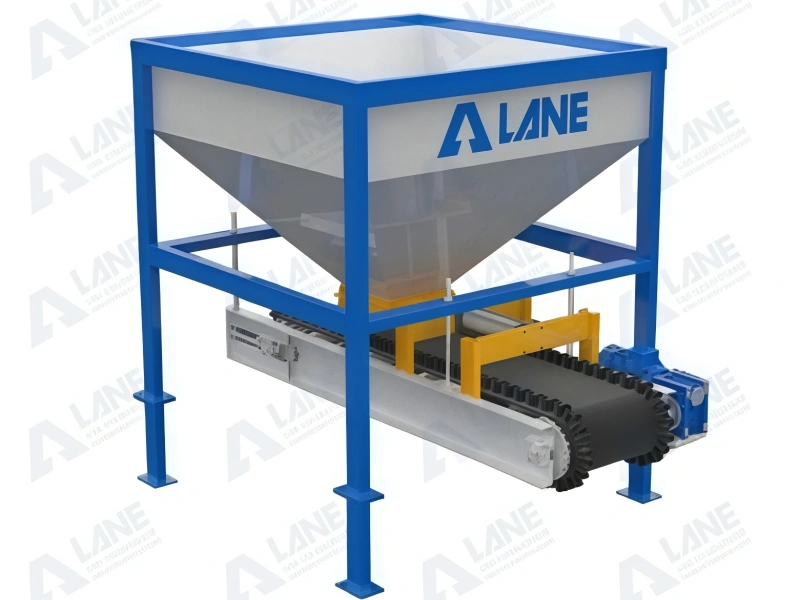
I have managed a BB fertilizer blending plant for 11 years, and formula deviation from manual feeding has always been our biggest headache. Daytime stable weighing data will go wrong when night shift workers get tired. Wrong nitrogen, phosphorus, potassium ratios make finished fertilizer fail nutrient inspection, and bulk orders get rejected by agricultural wholesalers directly. LANE automatic fertilizer weighing carries out whole-process Automatic Fertilizer Weighing with sensor closed-loop adjustment, eliminating artificial weighing deviation at the feeding source for fertilizer blending lines.
Hidden Production Expenses Caused by Manual Fertilizer Batching and Manual Weighing
If you tally up all hidden costs inside the batching workshop, losses from inaccurate fertilizer weighing fall into three clear categories: finished product rejection loss, high-value fertilizer raw material waste, and long-term labor overhead for weighing posts.
> Unstable Nutrient Proportion Triggers Dealer Returns and Local Brand Reputation Decline
Agricultural dealers will take random samples for nutrient testing before signing long-term fertilizer supply contracts. Once the actual effective nutrient content is lower than the labeled value, the whole truck of blended fertilizer will be sent back. Frequent returned goods make regional distributors reluctant to renew cooperation, squeezing the factory’s sales channels year by year.
> Random Over-Dosing of High-Concentration Fertilizer Wastes Costly NPK Raw Materials
Frontline workers often add extra urea or potassium chloride to cover up under-weighing mistakes. Excessive addition of high-cost concentrated fertilizer raises unit production cost sharply. Mis-matched raw materials cannot be remixed later, resulting in piles of unusable leftover fertilizer in the warehouse.
> Day-Night Shifts Require Permanent Weighing Staff with High Turnover Rate
Round-the-clock fertilizer blending production needs two dedicated weighing operators for day shift and night shift separately. Repetitive shovel feeding and weighing work leads to frequent worker resignation. The factory has to spend extra money on job recruitment and basic induction training every single year.
Fertilizer Raw Material Forms Suitable for Stable Automatic Fertilizer Weighing
Fertilizer production covers granular, powdery and lumpy raw materials with different flow features. LANE fertilizer batching machine can adapt all mainstream fertilizer raw materials to deliver steady Automatic Fertilizer Weighing and formula proportioning for blending work.
> Round Granular NPK Materials for Standard BB Blended Fertilizer Production
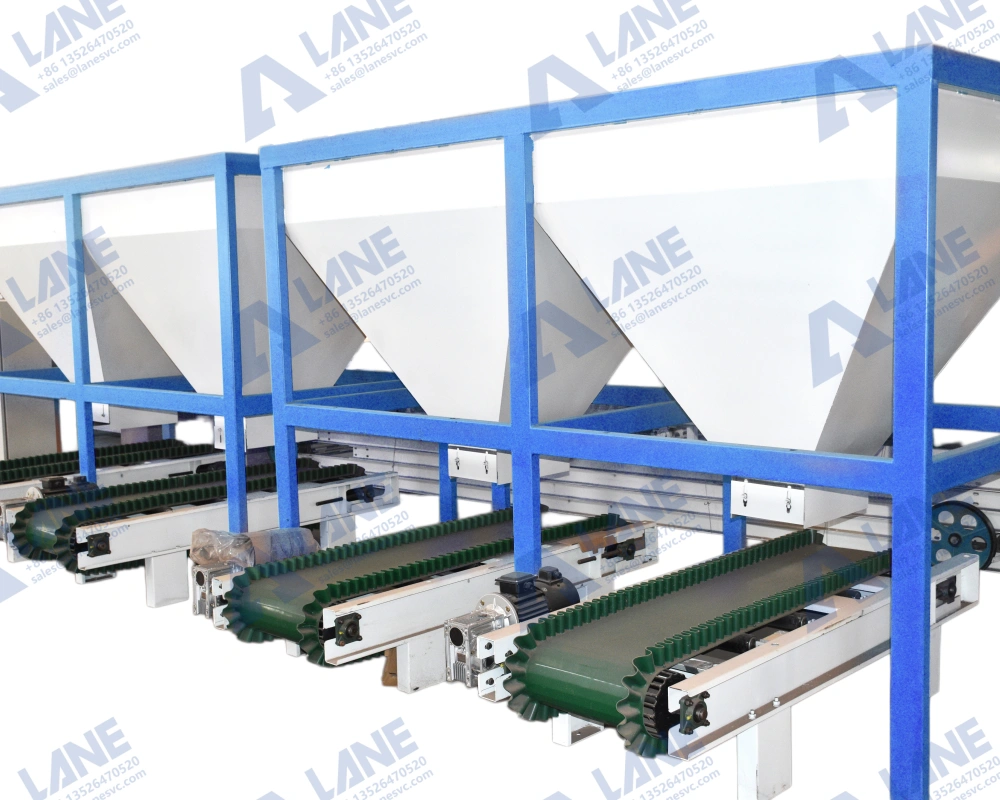
Prilled urea, granular potassium chloride and granular monoammonium phosphate are the core materials for BB fertilizer production. The skirt edge conveyor belt of the batching machine stops round fertilizer particles from rolling off the belt during conveying and weighing.
> Low-Fluidity Mineral Powder and Trace Element Fertilizer Raw Materials
Crushed phosphate rock powder, calcium magnesium silicate powder and chelated trace element powder flow poorly. The adjustable silo discharge gate controls blanking speed to prevent sudden powder surge from interfering with Automatic Fertilizer Weighing precision.
> Caked Organic Manure Fertilizer Blocks from Fermentation Process
Fermented cow manure and chicken manure organic fertilizer will form hard lumps after stacking and drying. The feeding system supports forklift feeding to send blocky organic fertilizer into the storage silo for stable weighing and blending.
Step-by-Step Working Principle of LANE Fertilizer Batching Machine for Automatic Fertilizer Weighing
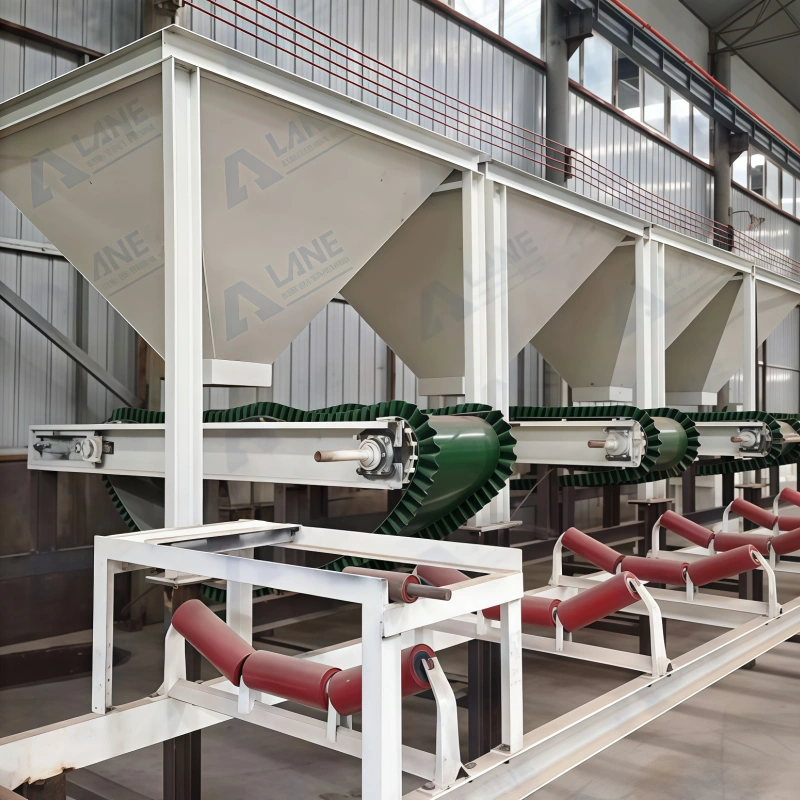
The closed-loop control system built with microprocessor, weight load cell and frequency converter serves as the core of accurate Automatic Fertilizer Weighing on LANE batching equipment. The whole working process is split into five actionable steps: feeding, dynamic weighing, frequency speed regulation, centralized discharging, belt residue cleaning.
> Adjustable Silo Gate Sets Initial Blanking Volume for Raw Material
Fertilizer raw materials fall down from the bottom of the storage hopper onto the skirt conveyor belt through the flow control gate. Operators set the gate opening range based on the confirmed fertilizer formula, avoiding instant large-volume blanking that disturbs weighing stability.
> Load Cell Captures Real-Time Weight and Belt Speed Signals on Weighing Zone
As raw materials pass over the belt scale weighing area, the load cell collects real-time material weight and belt running speed data. The industrial controller converts these signals into instant flow volume and total feeding weight to compare with the preset formula target value.
> 4–20mA Analog Current Signal Adjusts Belt Running Speed Via Frequency Converter
When the total feeding weight exceeds the formula standard value, the system sends 4–20mA analog current to the frequency converter to slow down the belt and narrow the silo gate. If feeding weight is insufficient, the system accelerates the belt automatically to make up the required raw material.
> Main Collecting Belt Merges Multiple Weighed Fertilizer Raw Materials Together
All kinds of accurately proportioned fertilizer raw materials drop onto the main collecting conveyor at the tail of each batching silo. Multiple silo units can operate simultaneously to complete multi-component complex fertilizer formula blending in one go.
> Tail Scraper Cleans Belt Adhesive Residues to Protect Long-Term Weighing Stability
A hard scraper plate is installed under the discharge end of the conveyor belt to scrape off sticky organic fertilizer residues and mineral powder attached to the belt surface. It prevents accumulated materials from shifting the load cell zero point and breaking Automatic Fertilizer Weighing accuracy.
Two Practical Electrical Control Configurations for LANE Fertilizer Batching Machine
We launch two independent electrical control schemes for the fertilizer batching machine according to the factory’s daily output plan and capital budget, catering to small-batch trial production and large-scale non-stop continuous fertilizer production separately.
> Economical Basic Configuration: Load Cell + Independent Weight Controller
This configuration features low overall equipment investment, neat circuit layout and stable basic weighing functions. It fits small fertilizer blending workshops with daily output below 100 tons, and factory maintenance electricians can complete routine inspection and repair easily.
> High-End Stable Configuration: Load Cell + Signal Transmitter + PLC + Touch Screen
The PLC touch screen control panel can store over 50 different fertilizer formulas for one-click production switching. Closed-loop signal transmission delivers stronger stability, perfect for medium and large fertilizer plants running round-the-clock batching without shutdown.
Tangible Cost Reduction After Upgrading to Automatic Fertilizer Weighing Batching Equipment
Fertilizer plant operators care most about equipment payback period. We calculate clear cost-saving benefits from three core dimensions: labor cost cut, raw material utilization improvement and after-sales claim loss elimination.
- Drastic Cut on Fixed Wages for Batching Workshop Operators
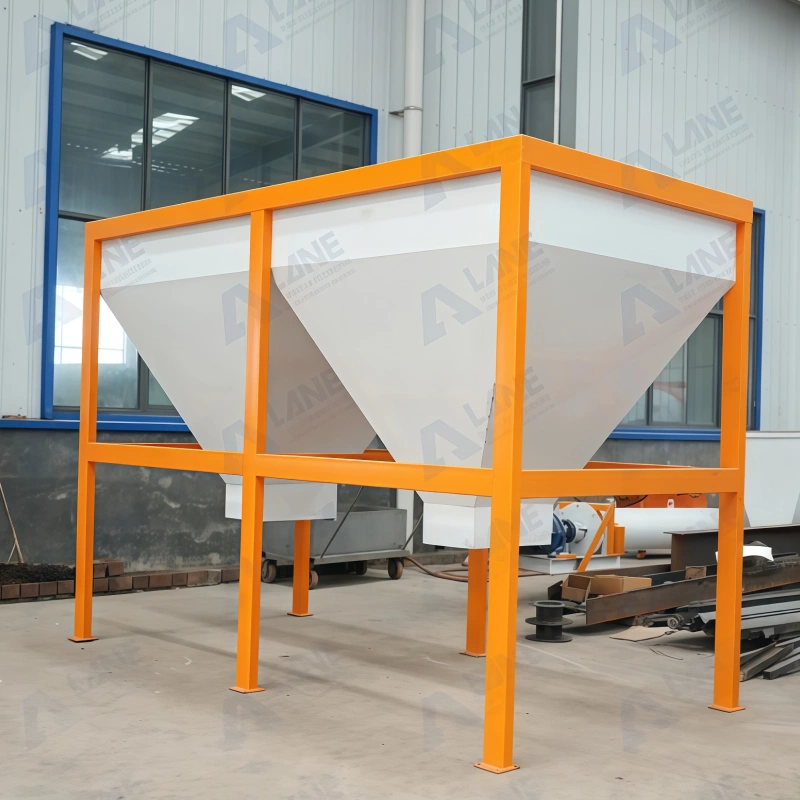
One multi-silo LANE fertilizer batching machine only needs one operator to finish formula setup and daily equipment patrol. The factory can cut salary, social insurance and welfare costs for at least two full-time weighing workers every month.
- Fertilizer Raw Material Utilization Rate Gets Remarkable Improvement
Manual weighing errors create 6% to 9% raw material waste every month during batching production. After adopting automatic batching equipment, overall raw material loss is controlled under 1.5%, saving plenty of high-cost nitrogen and phosphate fertilizer raw materials.
- Zero Massive Return Loss Caused by Unqualified Fertilizer Nutrient Index
Reliable Automatic Fertilizer Weighing keeps finished fertilizer nutrient error within ±0.5%. Fertilizer manufacturers will no longer face huge economic losses brought by full-truck returned goods due to unqualified nutrient indicators.
- Even Feeding Reduces Impact Wear of Downstream Production Equipment
Uniform steady feeding avoids instant heavy material impact on the follow-up mixing machine and conveyor equipment. The service life of downstream production equipment gets extended, and annual maintenance and spare parts replacement costs drop continuously.
| Model | Silo Size(m) | Silo Volume(m³) | Belt Width(mm) | Belt Length(mm) | Power(kw) |
| LADP-2 | 1*1 | 3 | 500 | 2000 | 1.1 |
| According to the number of silos | |||||
| LADP-2 | 1.2*1.2 | 3 | 500 | 2000 | 1.1 |
| According to the number of silos | |||||
| LADP-2 | 1.5*1.5 | 4 | 500 | 3000 | 1.1 |
| According to the number of silos | |||||
| LADP-2 | 1.8*1.8 | 5 | 600 | 3000 | 1.5 |
| According to the number of silos | |||||
| LADP-2 | 2*2 | 5 | 800 | 3000 | 1.5 |
| According to the number of silos |
Mature Application Production Lines for LANE Automatic fertilizer Weighing
The fertilizer batching machine acts as the core front-end metering device for multiple fertilizer production lines, with verified practical application cases on mainstream fertilizer processing projects worldwide.
- Continuous Production Line for BB Bulk Blending Fertilizer
Multi-silo batching equipment matches various granular nitrogen, phosphorus and potassium raw materials, feeding materials directly into the BB fertilizer mixing silo for finished bulk fertilizer packaging and shipment.
- Organic-Inorganic Compound Fertilizer Formulation Production Line
It realizes proportional mixing of organic fermented powder, inorganic granular fertilizer and medium trace element powder. Precise formula batching guarantees stable granulation molding quality for organic-inorganic compound fertilizer.
- Custom Special Fertilizer Formulation Processing Line
Special formulas for fruit tree fertilizer, leafy vegetable fertilizer and soil conditioner can be stored inside the touch screen controller, supporting fast production switching for customized fertilizer bulk orders.
Basic Daily Maintenance Steps to Secure Long-Term Automatic Fertilizer Weighing Precision
Several simple daily maintenance operations can prevent weighing value drift of the batching machine, and maintain long-term stable metering accuracy of Automatic Fertilizer Weighing for daily production.
- Regular Inspection and Cleaning of Belt Surface Sticky Fertilizer Residues
Check the working status of the tail scraper blade every working day. Replace worn scraper blades in time to prevent thick fertilizer accumulation on the belt from interfering with dynamic weighing detection.
- Weekly Inspection on Silo Discharge Gate and Conveyor Belt Tension
Check if hard fertilizer lumps jam the silo discharge gate every week, and adjust the tension of the skirt edge conveyor belt to prevent material deviation and side overflow during material transportation.
Common Minor Equipment Faults and On-Site Quick Troubleshooting Solutions
Minor abnormal conditions will occur after long-time continuous operation of the automatic fertilizer weighing. Simple field adjustment can remove faults rapidly and restore normal Automatic Fertilizer Weighing operation.
- Sharp Fluctuation of Dynamic Instant Flow Weighing Data
Fault cause: Excessively large opening of the silo blanking gate. Solution: Reduce the gate opening to slow down blanking speed and stabilize dynamic weighing reading of the belt scale.
- Conveyor Belt Deviation Causes Side Material Overflow on Skirt Belt
Fault cause: Uneven tension force on the left and right sides of the conveyor belt. Solution: Adjust tension bolts at the conveyor head to correct the running track of the whole belt.
- Frequency Converter Cannot Adjust Conveyor Belt Running Speed
Fault cause: Loose wiring terminals between weight sensor and frequency converter. Solution: Inspect and fasten all signal line terminals to recover closed-loop speed regulation control function.
Conclusion
Traditional manual fertilizer batching and weighing cannot match standardized quality control and large-scale expansion demands in today’s global fertilizer market. LANE fertilizer automatic fertilizer weighing adopts proven closed-loop Automatic Fertilizer Weighing technology to completely resolve manual measurement defects. It helps fertilizer plant operators cut comprehensive production costs, lock stable finished fertilizer quality, and expand long-term cooperation with global agricultural distributors. If you plan to upgrade your fertilizer production line’s batching and weighing system, reach out to our professional engineering team for customized layout design, equipment quotation and full set of after-sales service including field installation and commissioning.