BB Fertilizer Blending: How a 10-20 T/H Production Line Fixes Multi-Formula Changeover & Granule Layering Troubles
As the production supervisor of a medium-sized blended fertilizer factory, I am very clear that the unstable quality of BB fertilizer blending is the biggest obstacle to stable delivery of orders. Most small and medium-sized blended fertilizer plants rely on manual feeding and open ground conveyor operations, and have long been plagued by problems such as formula imbalance, long shutdown time, serious damage to fertilizer particles during transfer, and material stratification and separation.
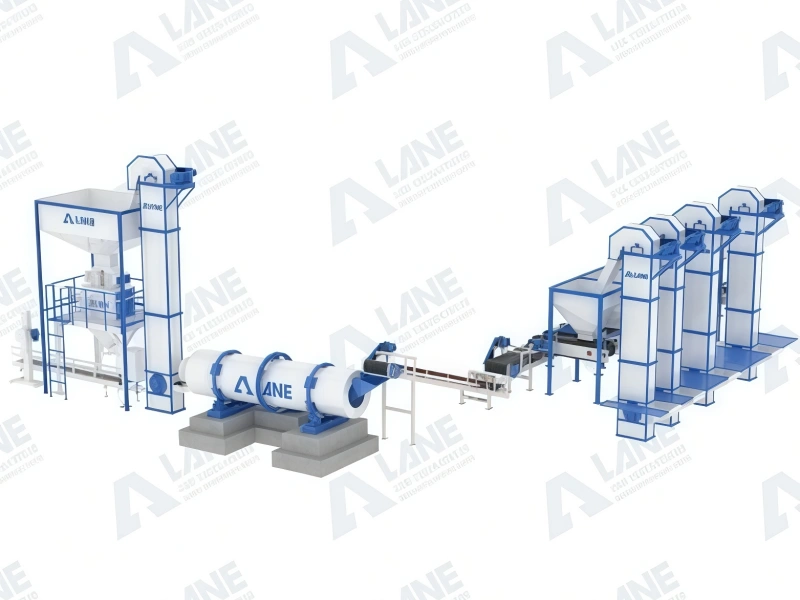
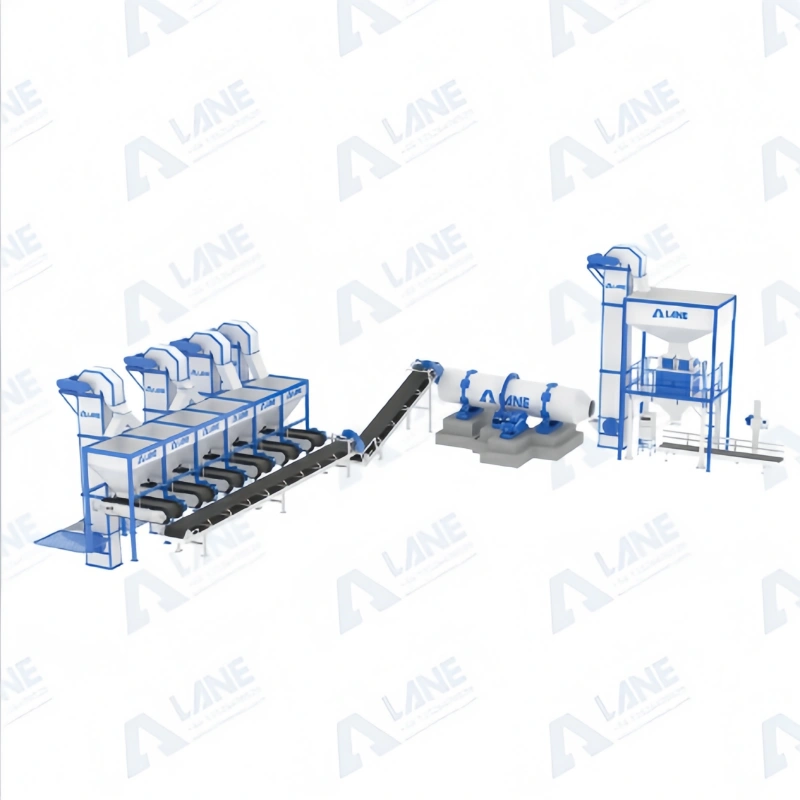
A complete layout of a mature 10-25 ton/hour production line: raw material warehouse → bucket elevator → dynamic feeding system → drum mixer → finished product automatic packaging process. By relying on the closed-loop automated production line, we can once and for all solve all the routine production pain points of BB fertilizer blending under seasonal customized fertilizer orders.
Real Pain Points for Medium-volume BB Fertilizer Factories Facing Frequent Formula Switch
Seasonal planting needs force blending fertilizer manufacturers to adjust fertilizer formulas every few days. Frequent formula replacement will trigger a chain of problems in feeding, conveying and mixing procedures if the production line lacks flexible transformation.
> Manual Batching Causes Nutrient Deviation in BB Fertilizer Blending
Workers finish fertilizer weighing and feeding with portable scales and shovels on site. Long repetitive manual work will make operators tired, and the feeding volume will go up and down randomly.
Tiny weight errors of single nitrogen, phosphorus or potassium raw materials will accumulate in finished BB fertilizer. The final effective nutrient content fails to reach the marked value on fertilizer bags.
Unqualified fertilizer goods will be returned by regional agricultural distributors directly. Bad field fertilizer effect feedback will damage the factory’s local market reputation and cut repeat orders sharply.
> Traditional Fixed Production Lines Cannot Adapt Seasonal Crop Fertilizer Formula Adjustment
Farmers use base fertilizer for spring ploughing grain crops, topdressing for fruits and vegetables in summer, and soil improvement fertilizer in late autumn and winter. Three major fertilizer formulas need to be replaced within half a year.
Old fixed mixing production lines have no independent material bin structure. Workers need to empty residual fertilizer inside silos and mixers manually for every formula switch, leading to 2 to 3 hours of full-line shutdown.
Continuous production shutdown delays delivery for bulk orders. Many factories have to invest extra capital to rebuild workshops and add temporary feeding equipment to cope with peak fertilizer season demands.
> Open Material Conveying Makes Single Nutrient Granules Segregate Before BB Fertilizer Blending
Ordinary horizontal belt conveyors have no sealed outer shell. Different NPK fertilizer granules have different particle weight and diameter, which leads to obvious layered separation during long-distance horizontal transportation.
Stratified raw materials cannot achieve uniform BB Fertilizer Blending in the follow-up mixer. Some fertilizer bags have excessive nitrogen content while others lack potassium nutrients after packaging.
Open conveying generates a large amount of floating fertilizer dust. Dust loss raises raw material consumption cost, and excessive dust emission will attract environmental inspection rectification notices.
Basic Raw Material Composition for Custom BB Fertilizer Blending Formulation
Stable customized BB Fertilizer Blending relies on scientific matching of bulk nitrogen-phosphorus-potassium base fertilizer and functional additive materials. The physical hardness and particle shape of raw materials determine the later mixing quality directly.
• Main Nitrogen, Phosphorus, Potassium Granular Base Fertilizer Materials
Common base materials for BB Fertilizer Blending include granular urea, potassium sulfate, potassium dihydrogen phosphate and ammonium nitrate. These granular raw materials supply core nutrients required for crop root growth and leaf expansion.
Hardness varies among different base fertilizer particles. Urea particles have low hardness and crack easily under strong collision, while potassium sulfate granules have strong compression resistance.
Proper conveying speed and bucket structure selection can avoid particle crushing, keep raw material particle integrity for accurate BB Fertilizer Blending proportion control.
• Auxiliary Additives for Functional BB Fertilizer Customization
Producers add medium trace elements, amino acid powder and beneficial microbial inoculants as functional accessories to upgrade basic BB fertilizer into soil conditioning special fertilizer in BB Fertilizer Blending work.
Microbial bacterial agents cannot bear high-temperature friction, so workers need to put biological additives in the later mixing stage to maintain bacterial activity.
Controlled feeding time of auxiliary materials prevents local additive accumulation, so the finished BB fertilizer can realize balanced functional performance in farmland application.
Complete Process Flow of LANE 10-20 T/H BB Fertilizer Blending Production Line
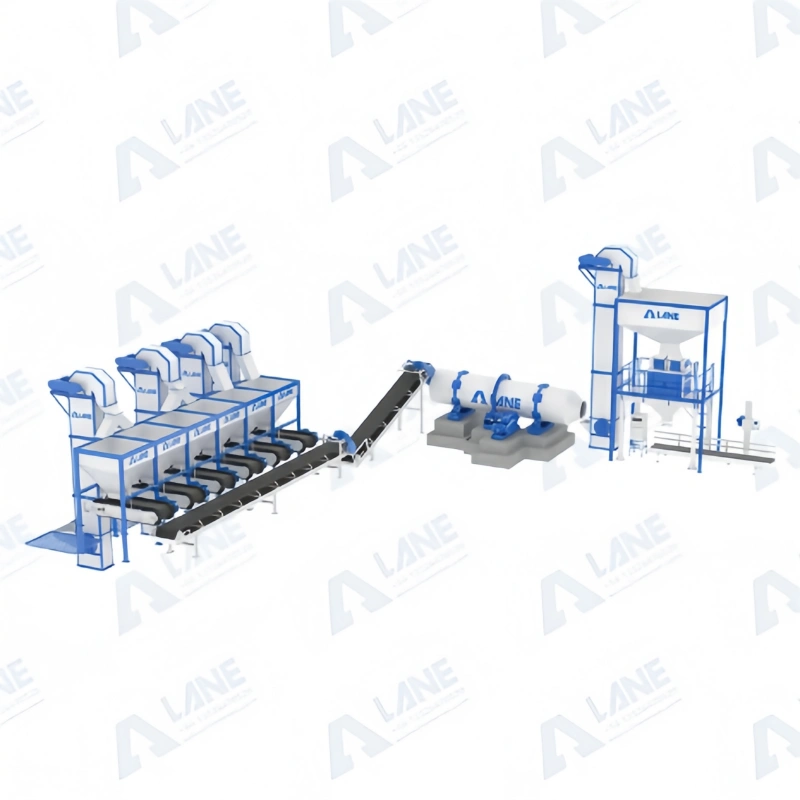
The LANE 10-20 T/H automatic blending fertilizer production line adopts full closed automated production layout, strictly following the process route: Raw Materials →Bucket Elevator →Dynamic Batching System →Drum Mixer →Finished Product Packaging.
> Raw Material Vertical Feeding by Bucket Elevator to Dynamic Batching Silos
Workers pile all kinds of granular fertilizer raw materials on the ground raw material warehouse. The LANE chain bucket elevator lifts granular materials vertically into the upper dynamic batching silo from the ground feeding port.
The fully sealed shell of the bucket elevator blocks dust overflow completely. Vertical lifting eliminates horizontal conveying caused granule layering to guarantee accurate basic weight for batching.
Integrated vertical feeding supports continuous material supply for the dynamic batching system, laying a solid foundation for continuous and stable BB Fertilizer Blending operation.
> Dynamic Automatic Batching for Multi-Formula One-key Parameter Switch
The dynamic batching system is equipped with independent PLC control cabinet. The control panel stores multiple mature fertilizer formulas for one-click calling without manual parameter recalculation.
The whole formula replacement operation can be finished within 10 minutes. The production line resumes normal output rapidly to meet small-batch multi-order flexible production demands.
Automatic continuous batching replaces intermittent manual feeding, keeping stable material level inside the mixer to realize consistent BB Fertilizer Blending effect batch by batch.
> Horizontal Drum Mixer Achieve Homogeneous BB Fertilizer Blending
LANE horizontal drum mixer forms uniform suspended material curtain inside the cylinder through constant speed rotation. All granular raw materials roll and blend evenly in the material curtain area without mixing dead corners.
The mixer has two working modes: intermittent mixing and continuous mixing. Intermittent mode matches small customized fertilizer orders, and continuous mode fits mass bulk fertilizer production.
Even mixing state avoids nutrient unevenness, so the finished BB fertilizer can maintain stable fertilizer efficiency in different farmland plots.
> Finished Fertilizer Direct Delivery to Automatic Packaging Machine
Well-blended finished BB fertilizer flows into the closed chute directly to the quantitative automatic packaging unit without secondary manual carrying and turnover.
Direct closed transportation prevents secondary granule segregation and breakage caused by falling and handling, locking the uniform BB Fertilizer Blending effect after mixing.
The packaging machine completes weighing, bagging and sealing at one time, and finished fertilizer bags are stacked directly in the finished product warehouse to improve delivery efficiency.
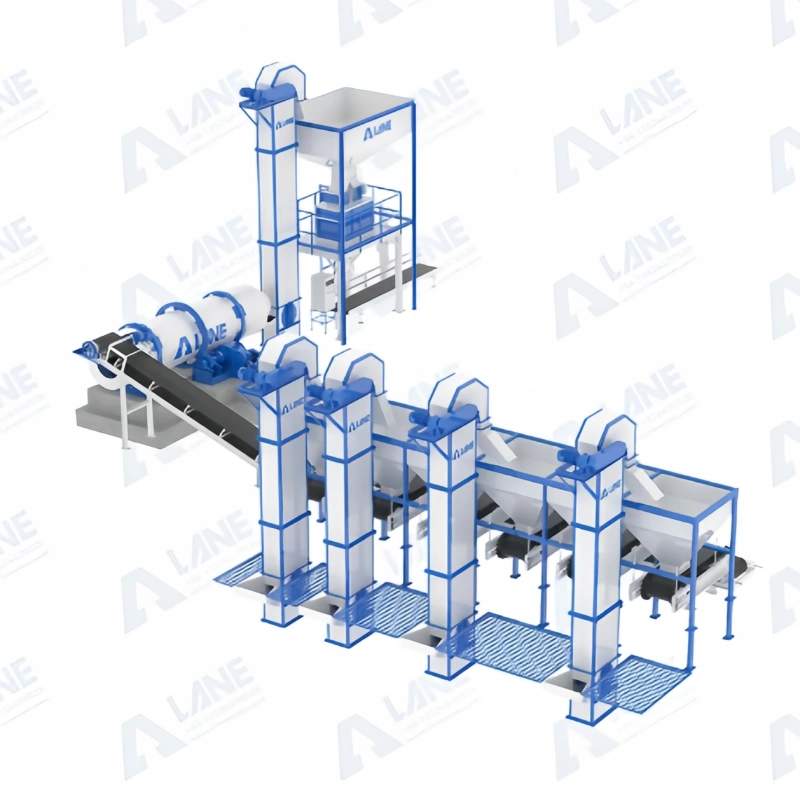
Core Equipment Configuration of LANE 10-20 T/H BB Fertilizer Blending Line
Stable operation and high-precision blending capacity of the 10-20 T/H blending production line depend on matched professional core equipment, every device is optimized for granular fertilizer abrasion and frequent formula switching working conditions.
• Chain-type Bucket Elevator for Abrasive Granular Fertilizer Raw Material
LANE chain-type bucket elevator uses thickened wear-resistant carbon steel buckets to cope with hard NPK granular fertilizer friction and collision during vertical lifting.
The thickened bucket body effectively reduces fertilizer granule breakage rate, keeps complete particle form for subsequent BB Fertilizer Blending processing.
An anti-reversal backstop is installed on the head drive position. It stops material backflow into the tail bin during sudden power failure to avoid cross-contamination of different fertilizer formulas.
• Multi-bin Dynamic Batching Machine for Formula Rapid Modification
Each raw material bin of the multi-bin dynamic batching machine is equipped with an independent weighing sensor module. Starting or stopping one single material bin will not interfere with the whole production operation rhythm.
The touch operation screen stores more than 100 sets of mature fertilizer formulas including grain base fertilizer, fruit tree topdressing and soil conditioner fertilizer for quick switching.
Independent weighing calibration for each bin lowers long-term measurement drift, ensures each batch of BB Fertilizer Blending keeps fixed nutrient proportion.
• Large-volume Drum Mixer for Stable BB Fertilizer Blending Output
The inner volume of the horizontal drum mixer is customized to match the 10-20 T/H hourly output, enough space for full flipping and blending of granular fertilizer materials.
The cylinder has no internal fixed stirring blades to avoid fertilizer residue sticking on the blade surface, reduce residual fertilizer retention after production shutdown.
The inclined discharge outlet empties residual fertilizer quickly during formula replacement, shortens line cleaning time and cuts formula cross pollution risk.
• Quantitative Automatic Packaging Machine for Bagged BB Fertilizer
The automatic packaging machine supports two mainstream fertilizer packaging specifications: 25kg small bag and 50kg large bag, adapting to agricultural retail and bulk wholesaling business modes.
The machine integrates automatic weighing, bag clamping, filling and heat sealing functions to reduce manual intervention in the finished fertilizer packaging link.
Stable packaging weight error avoids customer complaints about insufficient net weight of fertilizer bags after shipment.
| Product Name | Machine Parameters | Speed | ||
|---|---|---|---|---|
| Dynamic Batching System | PVC drive belt: width 0.5m, length 2m | 1.1-2.2KW | SBD series reducer | 1450r/min |
| Bucket Elevator | Maximum feeding size: 25-55cm | Hopper width:160-400mm | Bucket type Q/H: 12/22m*3/h | 1.4m/h |
| BB Fetilizer Mixer | 500L | 7.5KW | 380V or custom-made | 1450r/min |
| Ton Charter Aircraft | 10-40 Bag/H | 5.5KW | 1600*1600*2800mm | AC380V |
Practical Advantages Of 10-20 T/H BB Fertilizer Blending Production Line
Compared with traditional manual feeding and open conveying blending lines, LANE 10-20 T/H automated production line brings tangible cost saving and quality improvement for BB Fertilizer Blending factory operation.
- Automated Whole Line Cuts Labor Input for Batching and Conveying
Traditional blending lines need 3 to 5 full-time workers to finish feeding, material transfer and material cleaning work. The automated line only requires 1 to 2 staff for equipment patrol and parameter adjustment.
Factories can cut monthly labor salary, welfare and accommodation expenses significantly. Labor cost reduction becomes continuous profit growth point for fertilizer plants in long-term operation.
- High-precision Batching Guarantees Consistent Fertilizer Product Quality
The weighing error of the dynamic batching system is controlled within ±0.5%. The nutrient index of finished BB fertilizer stays within the marked standard range stably.
Stable qualified fertilizer products help the factory build stable agent channels in the local agricultural market, realize long-term brand accumulation and market expansion.
- Flexible Formula Adaptation Matches Regional Soil and Crop Demand
Operators adjust nitrogen, phosphorus, potassium and medium element proportion freely according to local soil salinity, crop varieties and planting cycles.
The quick formula switching capacity helps fertilizer factories seize customized fertilizer orders from large planting bases and family farms in the peak fertilizer season.
- Closed Production Reduces Raw Material Waste and Dust Pollution
From bucket elevator feeding to mixer blending, the whole production process adopts closed structural design to cut floating fertilizer dust to the lowest level.
Less dust loss improves raw material utilization rate. Low-dust production mode easily passes local environmental protection inspection and annual environmental assessment filing.
Formula Application Cases for 10-20 T/H BB Fertilizer Blending Line
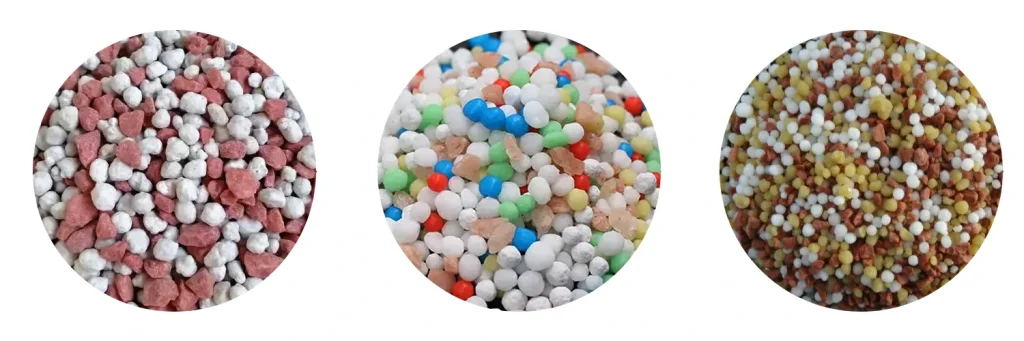
The 10-20 T/H BB Fertilizer Blending production line has stable performance in multiple mature fertilizer formula production scenarios for grain, fruit trees and soil improvement fertilizer.
- Staple Grain Crop Base Fertilizer High-potassium BB Fertilizer Formula Case
For corn and wheat spring base fertilizer production, the factory uses urea, monoammonium phosphate and potassium chloride as main materials to make high-potassium grain base BB fertilizer.
The production line runs continuously for 12 hours during spring fertilizer peak season, formula keeps stable without nutrient fluctuation, and finished fertilizer meets large-scale grain planting base procurement standards.
- Fruit Tree Top Dressing High-nitrogen BB Fertilizer Formula Switch Case
When switching from grain base fertilizer to fruit tree swelling topdressing formula, operators call the stored fruit tree fertilizer formula on the touch screen directly.
Workers only need to open the mixer bottom discharge port to discharge a small amount of residual fertilizer for cleaning. The whole replacement work finishes within 8 minutes to resume fertilizer delivery.
- Soil Conditioner Functional BB Fertilizer Blending Production Case
When producing biological soil conditioner BB fertilizer, workers add microbial inoculant materials in the later mixing stage of the horizontal drum mixer.
Low-speed mixing reduces internal friction temperature inside the mixer, effectively protect the activity of beneficial bacteria inside the functional BB fertilizer finished product.
Equipment Operation Maintenance to Keep BB Fertilizer Blending Line Stable
Simple daily and weekly maintenance work can cut sudden equipment breakdown probability, guarantee long-term continuous BB Fertilizer Blending production of the whole 10-20 T/H line.
• Daily Inspection of Bucket Elevator Chain Tension and Bucket Fastening
Before daily startup, maintenance workers check the tension balance of both sides of the bucket elevator chain and the tightness of each bucket fixing bolt.
Timely tighten loose bolts and adjust uneven chain tension to prevent bucket falling and material leakage during high-speed circulation lifting.
• Post-batch Cleaning for Drum Mixer to Prevent Formula Cross-contamination
After finishing small-batch customized fertilizer order production, open the mixer bottom clean door to clear residual granular fertilizer inside the cylinder.
Simple residual cleaning avoids old formula fertilizer mixing into new batches to guarantee pure formula composition for BB Fertilizer Blending finished products.
• Calibrate Dynamic Batching Scales Weekly to Ensure Weighing Accuracy
Use standard weight blocks to calibrate each independent weighing sensor of the dynamic batching machine every seven days.
Regular calibration eliminates weighing deviation caused by long-term vibration operation, keeps batching precision to stabilize BB Fertilizer Blending nutrient proportion.
Common Troubleshooting for BB Fertilizer Blending Production Line
> Fertilizer Granule Segregation After Mixing
Root cause: Excessive material drop height when finished fertilizer is discharged from the mixer to the packaging machine leads to gravity segregation of large and small fertilizer particles.
Solution: Install diversion buffer plates at the discharge chute to slow down material falling speed and reduce granule separation after BB Fertilizer Blending.
> Formula Ratio Offset in Continuous Production
Root cause: Raw material bridging inside the batching silo leads to intermittent blanking and unstable single raw material feeding volume.
Solution: Install wall vibration devices on the outer wall of each raw material silo to break bridging materials and achieve smooth continuous blanking.
> Mixer Residual Material Pollutes New Fertilizer Formula
Root cause: Sticky fertilizer residue adheres to the inner wall of the mixer cylinder after long-time production.
Solution: Use compressed air blowing to clean the cylinder inner wall before formula replacement to remove adhered residual fertilizer completely.
Conclusion
BB Fertilizer Blending runs through raw material feeding, automatic batching, uniform mixing and finished packaging in the whole blending fertilizer production process. Upgrading outdated scattered production mode to LANE 10-20 T/H closed automatic blending production line solves multiple core pain points including frequent formula switching difficulty, manual measurement error, particle breakage and workshop dust pollution for small and medium blending fertilizer factories.
As a professional complete set of blending fertilizer equipment manufacturer based in China, LANE offers one-stop service covering bucket elevator customized production, dynamic batching system manufacturing, on-site installation debugging and whole plant production line layout planning. We serve global fertilizer processing factories and agricultural material manufacturers, tailor targeted BB Fertilizer Blending production solutions to match local crop planting and soil fertilization demands for overseas customers.