DAP Fertilizer Manufacturing: How Is DAP Fertilizer Made at Industrial Scale?
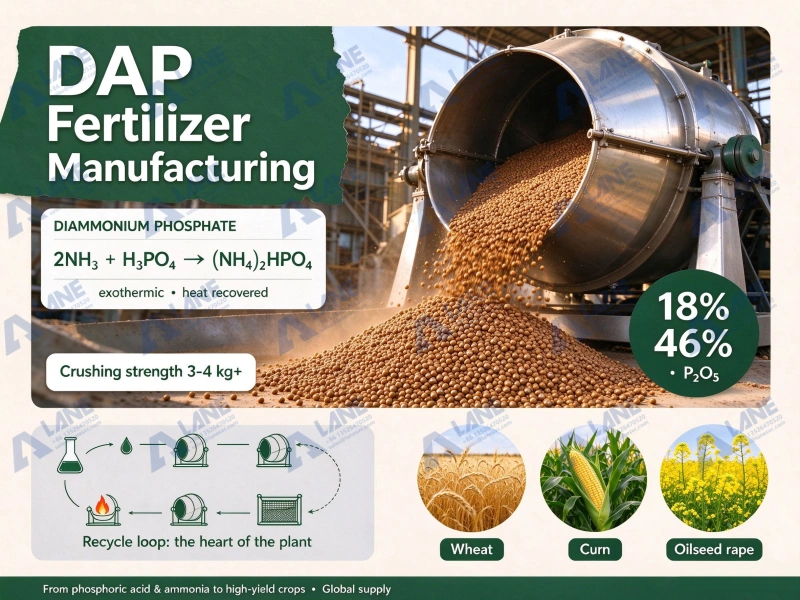
Diammonium phosphate (DAP) is one of the most widely traded high-concentration phosphate fertilizers in the world, best known in the 18-46-0 formulation. This product is widely used in large-scale wheat, corn, and oilseed cultivation projects across North America, Europe, Australia, and India. For bulk buyers—including fertilizer manufacturers, farm managers, technical directors, and international investors—the quality of the product they receive depends entirely on how the production facility is designed and operated.
On an industrial scale, producing diammonium phosphate (DAP) is not simply a matter of mixing ammonia with phosphoric acid and then drying the mixture. The real challenge lies in maintaining a balance among the reaction process, slurry consistency, granulation, moisture content, particle size, circulation flow, and final product quality. This guide will break down this balancing act step by step and provide data and equipment recommendations that are essential for those planning new DAP fertilizer manufacturing projects.
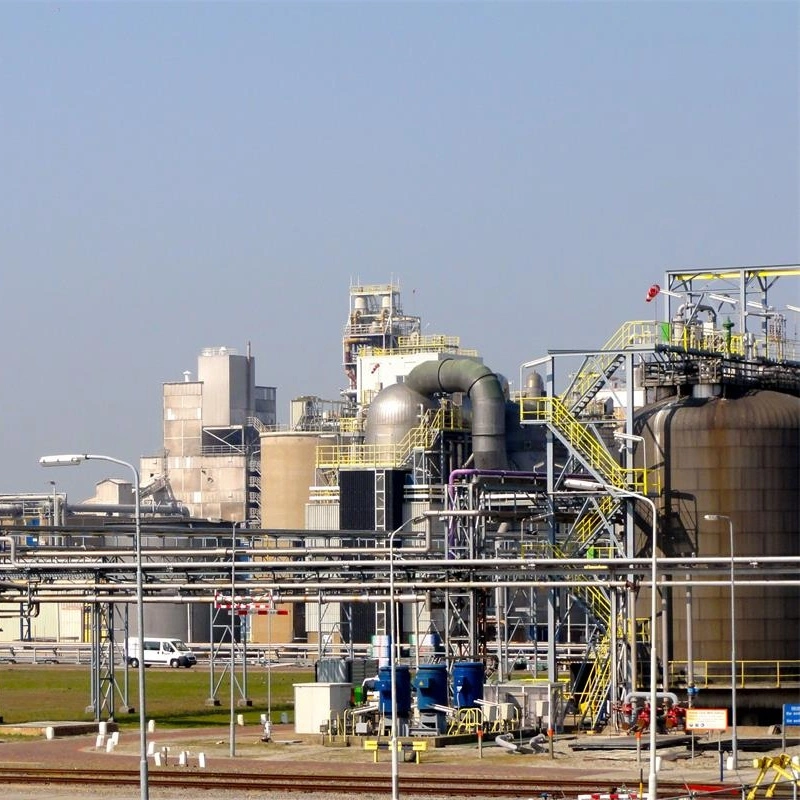
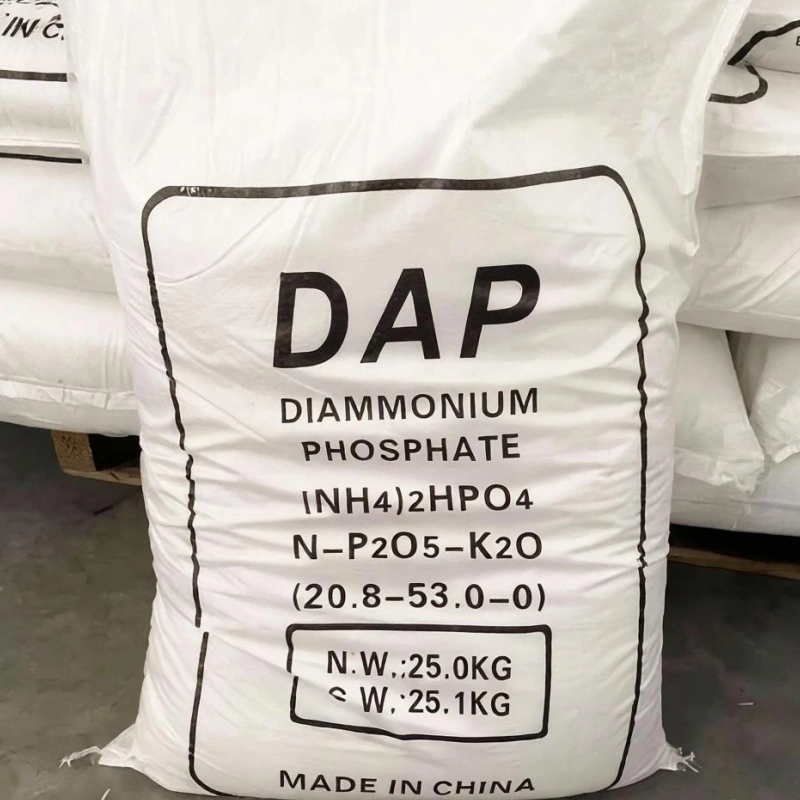
What Is DAP Fertilizer? The 18-46-0 Chemistry Explained
DAP is ammonium dihydrogen phosphate, produced by the reaction of anhydrous ammonia with phosphoric acid. The main reaction is:
2NH₃ + H₃PO₄ → (NH₄)₂HPO₄
This is an exothermic reaction, a fact that is more significant than it may seem at first glance: the heat released during neutralization is a usable resource, not a nuisance to be eliminated. In a well-designed plant, the heat generated by this reaction can be used to evaporate water, thereby reducing the drying load in downstream processes.
For traditional wet-process phosphoric acid, the commercial DAP grade is 18-46-0:
|
Component
|
Typical DAP grade
|
|
Nitrogen (N)
|
18%
|
|
Available phosphate (P₂O₅)
|
46%
|
|
Potash (K₂O)
|
0%
|
The Step-by-Step DAP Fertilizer Manufacturing Process
The best way to understand a DAP fertilizer manufacturing line is to focus on the material flow rather than the list of equipment. A typical industrial process is as follows:
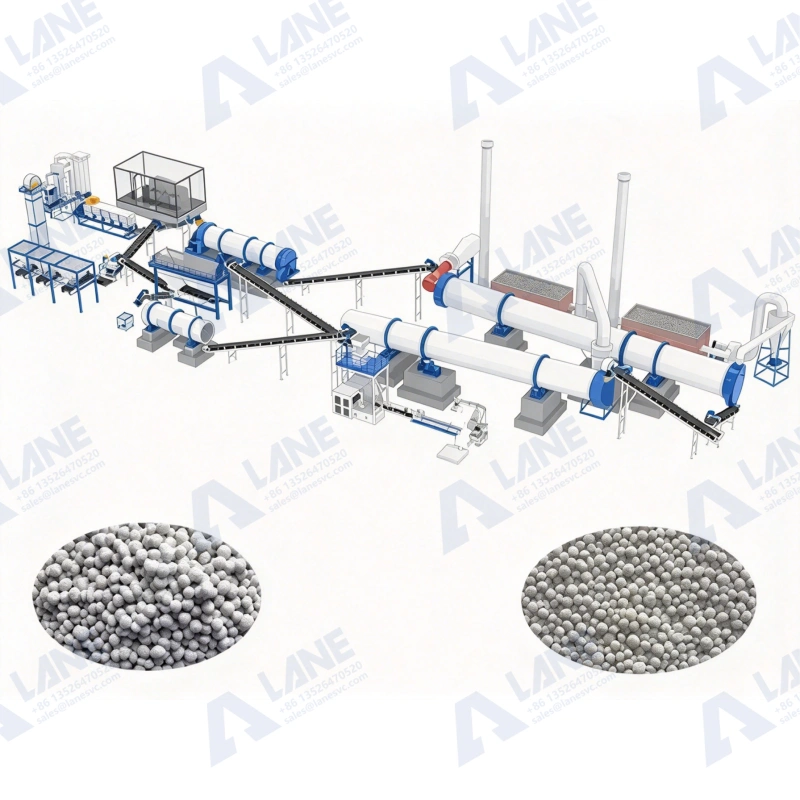
Phosphoric acid + ammonia → Reaction/partial neutralization → DAP slurry → Ammonia treatment + granulation → Drying → Cooling → Screening → Crushing + recovery → Finished DAP granules
EPA process documents list reaction, granulation, drying, cooling, and screening as the basic processes for producing granular DAP fertilizer. The following describes the actual processes that occur within each step.
Phosphoric Acid and Ammonia Enter the Reaction System
The Reaction Produces a DAP Slurry
The Slurry Enters the Granulation System
The slurry is evenly distributed over the moving-bed solid recovery system inside the granulator, while additional ammonia completes the reaction. The moistened material coats existing granules and agglomerates fine particles into larger granules. The rotary drum ammoniation granulator is standard equipment in industrial ammonium phosphate production; The U.S. Environmental Protection Agency (EPA) describes the presence of a rolling-bed system for recovering solids inside the drum, where the slurry is spread over the bed and additional ammonia is introduced during the granulation process.
Slurry + Ammonia + Recovered Solids + Drum Motion → Granule Growth
A granulator never operates in isolation. This interaction is precisely what lies at the heart of stable production of diammonium phosphate fertilizer.
Wet Granules Are Dried
The Product Is Cooled
Drying → Removal of excess moisture → Cooling → Temperature reduction → Storage → Stable operation
Screening Separates the Product by Particle Size
• Oversize → crushing → smaller particles → recycle
• Undersize → recycle
• Correct-size granules → finished product
Why the Recycle Loop Is the Heart of a DAP Fertilizer Manufacturing Plant
Recycling is often just a minor footnote in articles about fertilizers, but in DAP fertilizer manufacturing, the opposite is true. Granulators require a solid base bed to evenly spread and agglomerate the slurry, and this base bed is primarily provided by recycled material.
Material flow is not a straight path from raw materials to packaging, but rather a cyclical system:
Fresh raw materials → Reaction → Granulation → Drying → Screening → Sorting finished products by size; undersized particles are returned for reprocessing; oversized particles are crushed → Returned to granulation
• Granulator loading
• Particle growth
• Moisture balance
• Product size distribution and overall stability
Five Common DAP Production Problems and Their Root Causes
Engineering Levers That a DAP Equipment Partner Brings to Your Line
• Reaction that feeds granulation directly.
LANE’s line feeds phosphoric acid and ammonia into the reactor tank, where neutralization is controlled for temperature, pH, and feed ratio — so the slurry reaching the granulator is consistent and the granules come out uniform.
• One granulator, stable moisture.
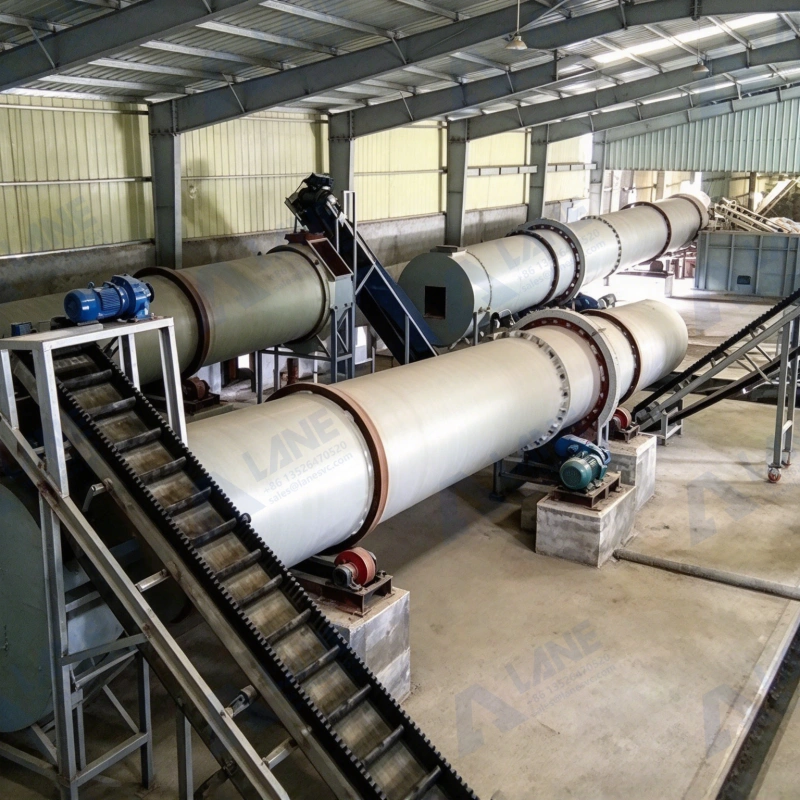
LANE’s rotary drum granulator forms uniform granules, then the rotary dryer and rotary cooler pull moisture down and keep particles stable for storage and shipping — the two stages that protect the product all the way to the customer.
• Screening and packaging that close the loop.
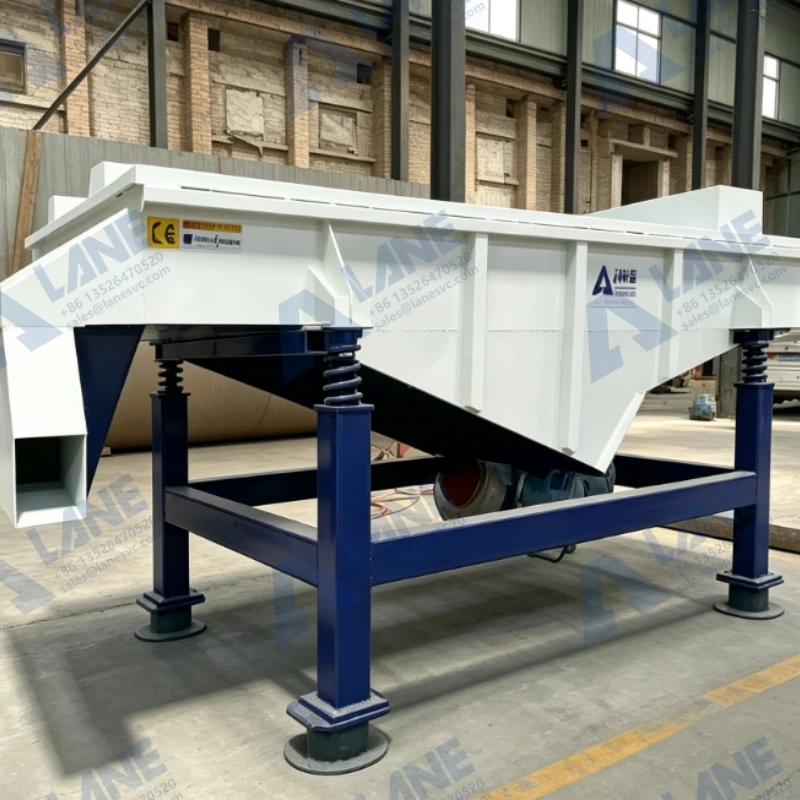
The vibrating screen splits on-size granules from fines and oversize (returned to recycle), and the packaging machine handles bags or bulk loading — a complete line from reactor to finished product.
• A line delivered as a running plant.
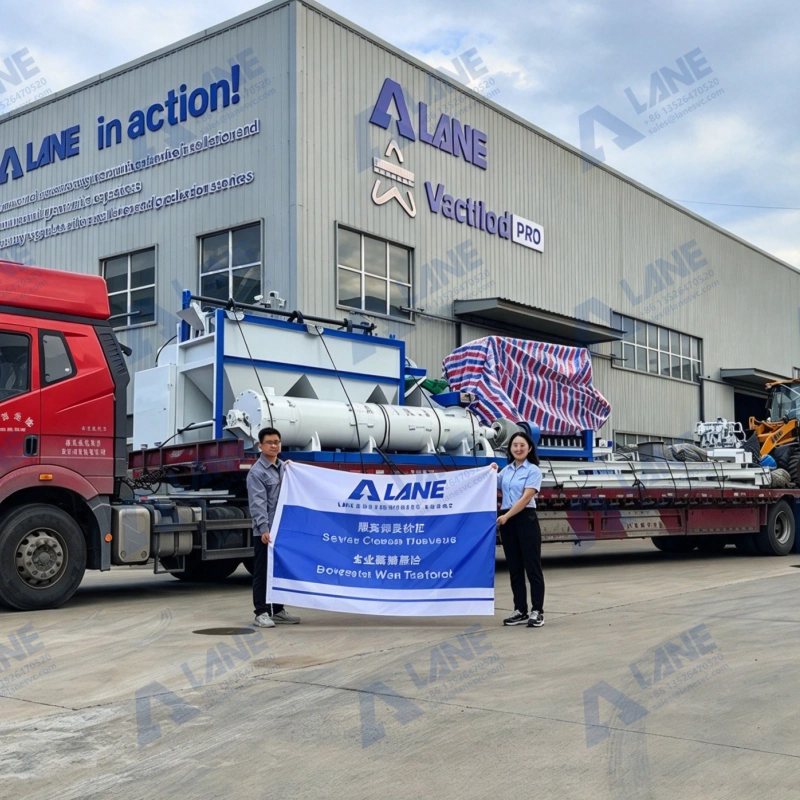
LANE’s equipment is rigorously tested before delivery, and the team provides installation and production services through commissioning, so the line reaches steady output fast and downtime stays short — uptime is revenue.
Buying DAP Across Borders: Compliance, Shipping, and Product Value
• In-transit loss from caking and crushing. Ask whether the granules carry anti-caking coating and hold enough crushing strength (3–4 kg+). Poorly protected cargo can lose 2–5% to caking and fines before it reaches your warehouse.
• Carbon-border cost. Importing into the EU or other CBAM markets adds a carbon penalty to high-carbon fertilizer. Ask the supplier for carbon-footprint documentation; low-carbon DAP lands at a lower cost and is easier to resell.
• Cadmium limits. Australia, the EU, and Canada cap cadmium in fertilizer, and an over-limit cargo can be refused at the port. Require cadmium certificates and put heavy-metal limits into your offtake contract.
• Phosphorus that reaches the crop. On fixing soils, plain DAP’s phosphorus utilization can fall to 10–20%. Micronutrient-infused or coated DAP lifts uptake, so total fertilizer cost per acre can drop even at a small premium.
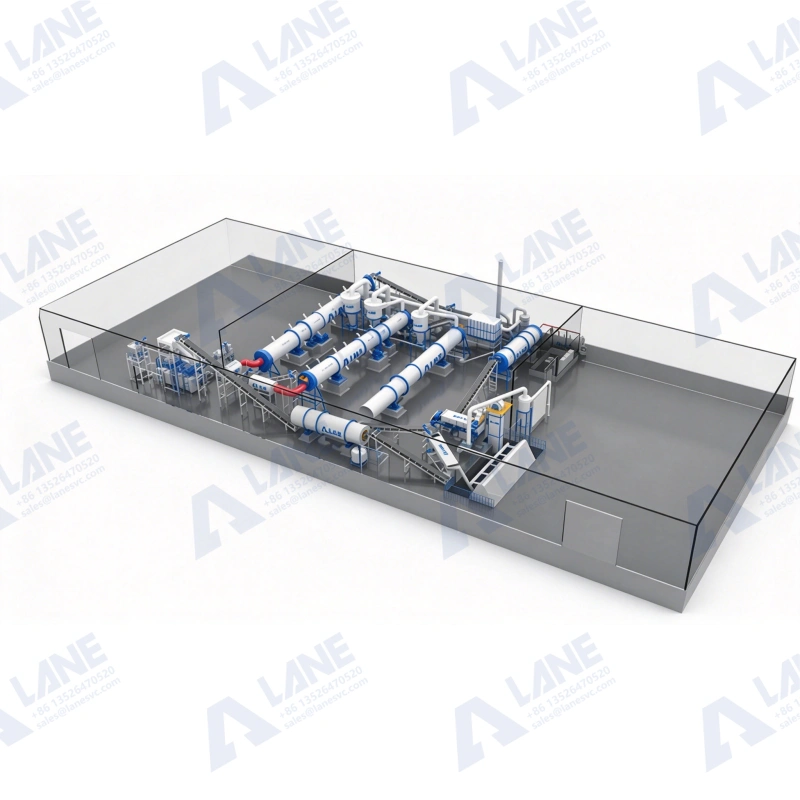
How a DAP Fertilizer Manufacturing Plant Should Be Designed
• Capacity first. Daily and annual production targets, operating hours, planned maintenance, and peak requirements define the material flow through the whole DAP fertilizer manufacturing plant. The first question is not “which granulator,” it is “how much finished DAP.”
• Raw-material conditions. Acid concentration, ammonia form and supply, temperature, moisture, impurities, and available utilities set the reaction and drying requirements.
• Finished-product specification. Nutrient grade, particle-size range, moisture limit, bulk density, packaging (bulk vs. 25–50 kg bags), and storage conditions determine the finishing and handling section.
• Material flow as one system. A practical layout minimizes unnecessary handling and treats the recycle route as part of the flow, so the return loop does not create long conveyors, extra transfer points, or bottlenecks.
|
Process section
|
Typical equipment
|
Main purpose
|
|
Reaction
|
Reactor / preneutralizer / pipe reactor
|
React phosphoric acid with ammonia
|
|
Granulation
|
Ammoniator-granulator / rotary drum granulator
|
Complete reaction, form granules
|
|
Drying
|
Rotary dryer
|
Remove excess moisture
|
|
Cooling
|
Rotary cooler
|
Reduce product temperature
|
|
Screening
|
Vibrating / multi-deck screen
|
Separate product-size material
|
|
Crushing
|
Crusher / mill
|
Reduce oversized granules
|
|
Recycle
|
Conveyors, elevators, recycle system
|
Return off-size material to granulation
|
|
Environmental control
|
Cyclone, scrubber, fan, ducting
|
Control dust and process gases
|
|
Packaging
|
Packing machine / bulk loading
|
Prepare product for shipment
|
How LANE Approaches a DAP Fertilizer Manufacturing Project
For new DAP projects, equipment selection should be based on process requirements, not the other way around. LANE approaches design from the data-driven perspective: analysis of raw materials and process conditions, production capacity planning, process flow design, equipment matching, material handling design, drying and cooling configurations, screening and recovery systems, integrated dust control, as well as packaging and finished product handling.
The workflow sequence is as follows:
Target Production Capacity → Raw Material Specifications → Process Calculations → Equipment Selection → Plant Layout → Installation and Commissioning
This sequence is particularly important in DAP fertilizer manufacturing because the reaction, granulation, drying, and recovery processes cannot be designed as isolated, independent steps. If the raw materials and production capacity are determined in advance, the process flow and equipment can be tailored around these parameters—allowing the plant to be designed for actual operational goals rather than remaining merely a plan on paper.
LANE offers DAP manufacturing lines based on granulation and evaporation-crystallization technologies, allowing the process route to be flexibly tailored to your raw materials, target product form, and production capacity, without being limited to a single technical approach.
FAQ About DAP Fertilizer Manufacturing
DAP stands for diammonium phosphate. A common commercial grade is 18-46-0, which contains approximately 18% nitrogen and 46% available phosphorus pentoxide (P₂O₅) and contains no potassium oxide (K₂O).
How is DAP fertilizer manufactured?
Industrial-grade DAP is produced by reacting phosphoric acid with ammonia to form a slurry, which is then granulated, dried, and cooled, and screened by particle size. Material that is too large or too small is recycled back into the granulation system for reuse.
What equipment is required for a DAP fertilizer manufacturing plant?
A typical plant includes a reaction or pre-neutralization system, an ammoniation-granulation unit, a rotary dryer, a cooler, screening equipment, a crusher, a recovery conveyor, a dust collection system, and packaging or bulk loading equipment.
Why is recycling necessary?
Recycled material serves as the solid bed in the granulation process, returning oversized granules to the process stream to ensure continuous circulation and help control particle size.
Is the configuration the same for every DAP fertilizer plant?
No. The configuration depends on raw materials, production capacity, product specifications, utilities, environmental requirements, layout, and the selected process technology.
Conclusion
To ensure the production line runs stably, all stages of the DAP line must coordinate effectively: the reaction section produces qualified slurry, the granulation unit forms uniform particles, drying controls moisture content, cooling ensures storage stability, and screening with a recirculation system maintains particle size consistency. On this basis, configurations that can further enhance the factory’s competitiveness include: waste heat recovery from tubular reactors, closed-loop washing, multi-product production, wear-resistant materials, anti-caking treatment, and particle crushing strength control.
Therefore, when undertaking a DAP fertilizer manufacturing, it is essential to first clarify the process conditions and production capacity targets; one should not jump straight to selecting equipment. Once the raw materials, production capacity, product specifications, and site conditions are all confirmed, we will then customize the processes and equipment based on the actual project requirements to ensure the production line can achieve the designed output capacity.