Dry Fertilizer Production Line: Process Design, Equipment Selection and Practical Considerations
Producing fertilizer granules from dry powder looks straightforward until the material starts moving through an actual plant. A powder that feeds smoothly during a test may behave differently when production runs continuously. Changes in moisture, particle size, formulation, or feed rate can affect extrusion, screening, and final product quality.
This is why designing a dry fertilizer production line requires more than selecting a granulator according to the expected capacity. The preparation of the powder, the accuracy of batching, the performance of the extrusion section, and the handling of off-size material all need to match the final product requirement.
From the equipment side, LANE usually looks at the project as a complete dry fertilizer production line. The purpose is not simply to supply several fertilizer machines, but to make sure that each stage can provide suitable material for the next stage.
What Is a Dry Fertilizer Production Line?
A dry fertilizer production line is a fertilizer processing system that converts prepared fertilizer powders into granules mainly through mechanical compaction. Unlike many wet granulation processes, the forming stage does not depend on adding a large amount of liquid to create the initial granule structure.
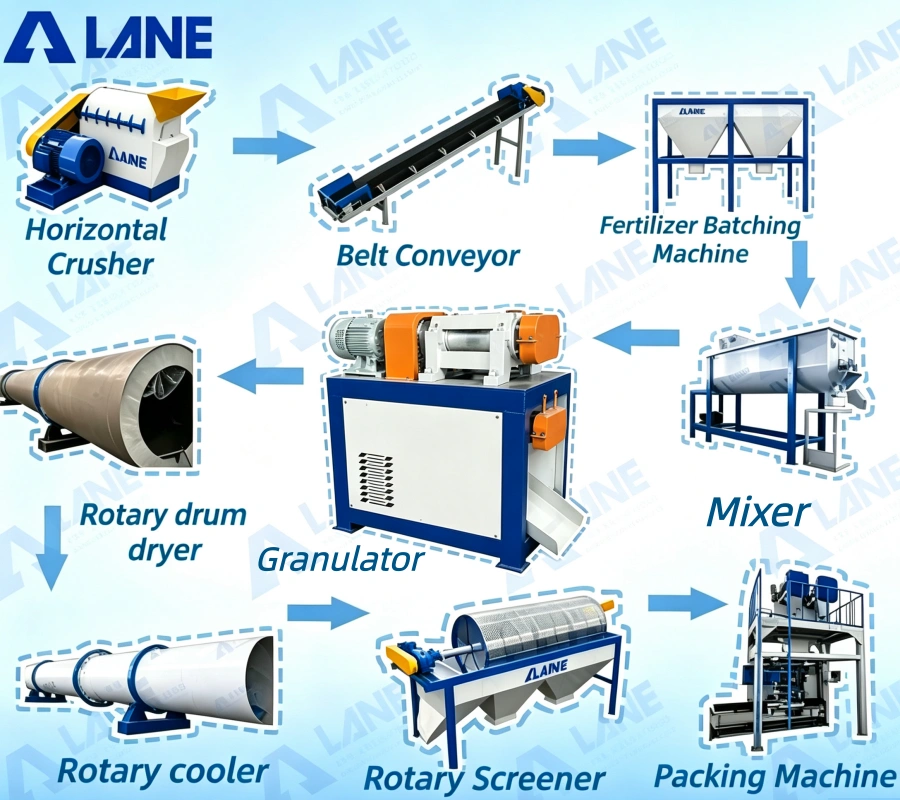
A typical dry fertilizer production line process is:
Raw Material Preparation → Batching and Mixing → Dry Extrusion → Crushing and Screening → Recycling → Packaging
The exact equipment configuration depends on the fertilizer formula, raw materials, required capacity, and target granule size. A small plant producing one stable formula may have a relatively simple arrangement, while a commercial facility handling several formulas may require more controlled batching, conveying, dust collection, and packaging systems.
The important point is that dry granulation should be considered as a complete material-handling process. The granulator is the central forming machine, but it is not the entire production line.
> How Dry Granulation Differs From Wet Granulation
The main difference is how the fertilizer particles are brought together.
In dry fertilizer production line, prepared powder is compacted mechanically. The compact is then processed into the required granule size through crushing and screening. This can reduce the need for the drying and cooling stages normally associated with wet granulation.
A wet production line generally introduces liquid during granulation. The newly formed fertilizer granules then need further moisture removal before they can be cooled, screened, and packed.
This difference can have a direct effect on plant layout, energy consumption, equipment investment, and operating requirements. However, a shorter process is not automatically the better process. The raw material still has to be suitable for mechanical compaction.
> What Determines Whether dry fertilizer production line Is Suitable?
The suitability of dry extrusion depends largely on the physical behavior of the fertilizer powder.
Several factors deserve attention before equipment selection:
• Moisture content
• Particle size
• Bulk density
• Flowability
• Compressibility
• Fertilizer formulation
• Required granule size
• Required production capacity
For example, a powder with relatively stable moisture and good compressibility may form a compact effectively. A material that is excessively sticky or difficult to feed may require a different process arrangement.
This is why LANE does not recommend choosing a dry fertilizer production line only from a nominal machine capacity. The material itself needs to be part of the design discussion.
How Should Raw Materials Be Prepared Before Granulation?
Before the powder reaches the extrusion section, it may need crushing, screening, or other preparation.
This stage is sometimes treated as a simple preliminary operation. In practice, it has a direct influence on the consistency of the downstream process.
If raw materials arrive with large lumps or a wide particle-size distribution, the batching and mixing stages have to deal with a less uniform feed. The extrusion section then receives material that may not behave consistently under pressure.
> Particle Size and Crushing Requirements
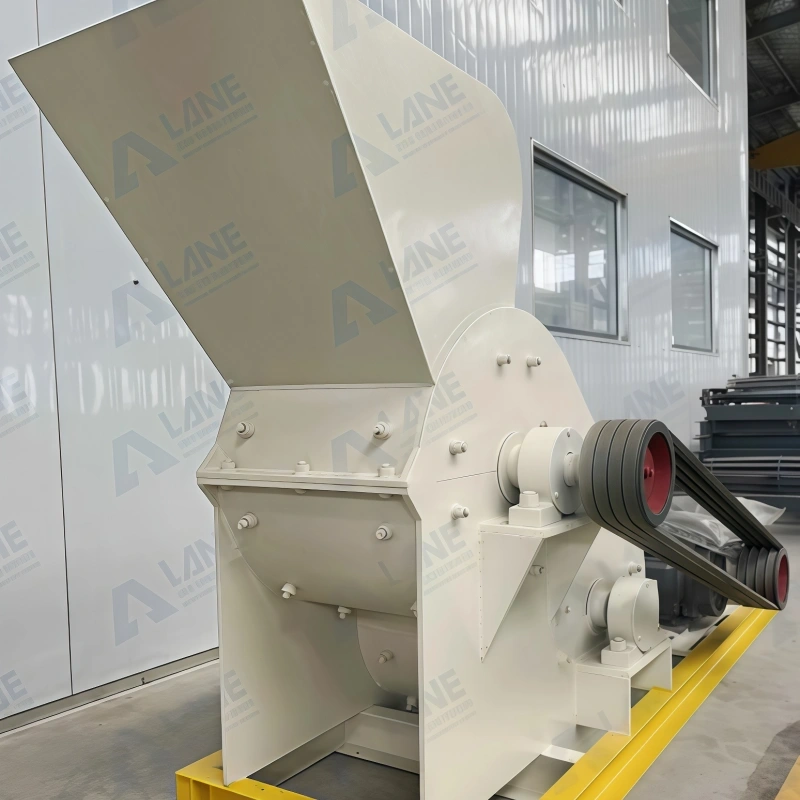
A fertilizer crusher is normally selected according to the condition of the incoming material rather than simply to make the powder as fine as possible.
Oversized particles can interfere with material feeding and may reduce the consistency of the mixture. At the same time, excessive crushing can create unnecessary dust and change the flow characteristics of the powder.
The right crushing condition therefore depends on what the next stage requires.
For a dry fertilizer production line, the objective is to create a suitable and repeatable feed condition for batching, mixing, and extrusion.
> Moisture Needs to Be Considered Early
Moisture is another important material parameter.
A fertilizer powder may appear dry but still contain enough moisture to affect its flowability or behavior during compaction. A change in moisture between batches can also make production less stable even when the equipment settings remain unchanged.
There is no universal moisture value that applies to every fertilizer formula. The suitable range depends on the material and the forming process.
For a new project, actual moisture testing is more useful than relying on appearance or a general assumption that the powder is “dry.”
External link opportunity: fertilizer material moisture specifications
How Do Batching and Mixing Affect Granulation?
Once the raw materials have been prepared, they need to be combined according to the fertilizer formulation.
The basic arrangement is:
Prepared Materials → Batching → Mixing → Extrusion
The purpose is not simply to combine different powders. The mixture must remain reasonably uniform when it reaches the extrusion equipment.
This becomes particularly important for compound fertilizers containing several components with different densities, particle sizes, and flow characteristics.
> Accurate Batching Keeps the Formula Consistent
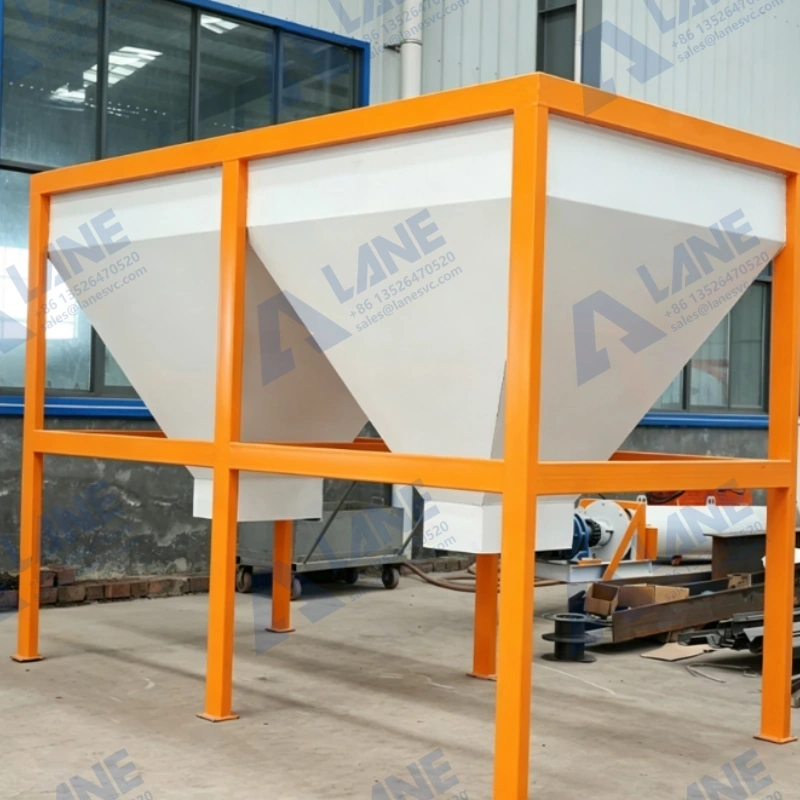
Suppose a fertilizer formula contains several raw materials in different proportions. If one material enters the mixer faster than expected while another is delayed, the actual mixture may temporarily differ from the intended formulation.
An automatic batching system helps control this variation.
For a commercial dry fertilizer production line, batching accuracy can therefore influence more than the nutrient ratio. It can also affect the physical behavior of the material entering the granulator.
> Mixing Should Create a Stable Feed, Not Just a Mixed Appearance
A material can look well mixed and still separate during storage or conveying.
This is more likely when the components have significant differences in particle size or density. Heavy particles and light particles may move differently as the material travels toward the granulation section.
For this reason, the mixer should be considered together with the transfer and feeding system.
A stable fertilizer blend at the mixer outlet is useful only if that condition can be maintained until the powder reaches the extrusion section.
How Does Dry Extrusion Form Fertilizer Granules?
The extrusion section is the core of a dry fertilizer production line.
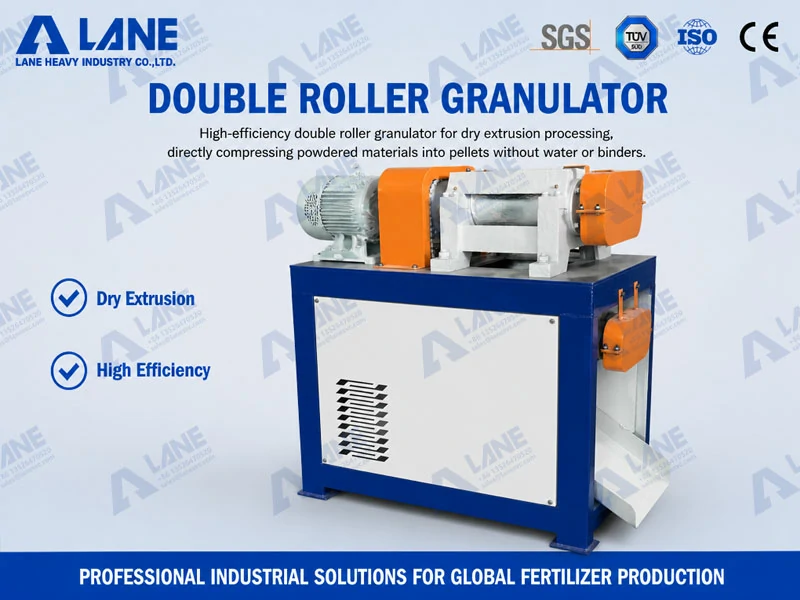
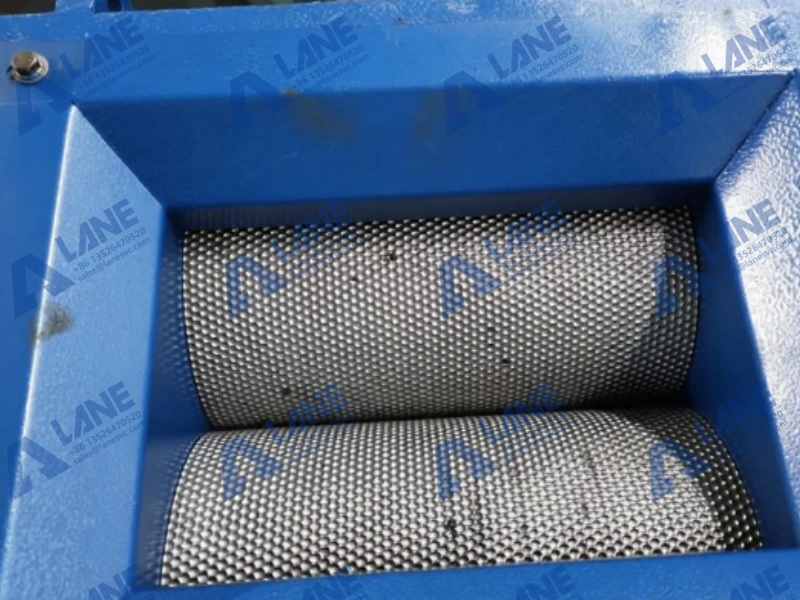
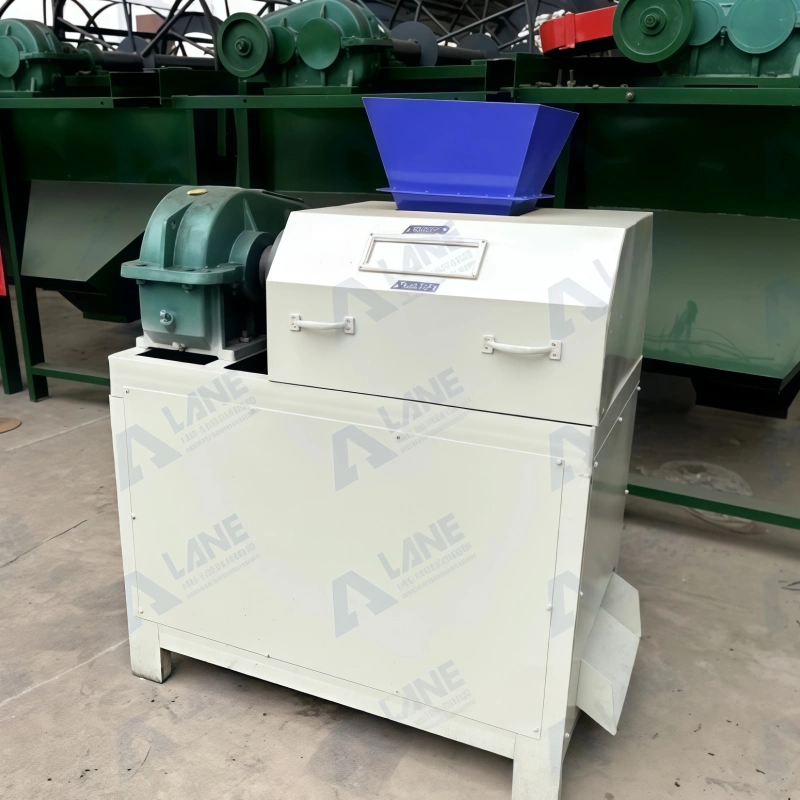
The prepared powder enters a double roller extrusion granulator, where two rollers rotate toward each other and apply mechanical pressure to the material. The powder is compacted into a denser form before moving to the next processing stage.
The principle is simple, but the operating result depends on several variables.
> Stable Feeding Is Important for Consistent Compaction
The material should enter the roller area at a reasonably stable rate.
If the feed fluctuates significantly, the amount of powder being compacted can change. This may influence roller loading and the consistency of the compact.
In actual fertilizer projects, unstable feeding can sometimes look like a granulator problem even when the granulator itself is correctly selected.
The feeder, hopper, mixer, and granulator should therefore be considered as one connected section.
> Roller Pressure Should Be Adjusted With the Material in Mind
When fertilizer granules are weak, increasing roller pressure may appear to be the simplest solution.
It is not always the correct first adjustment.
Before changing the pressure substantially, the operator should consider material moisture, particle size, feed rate, powder density, formulation, and compressibility. Roller pressure and roller gap also need to be considered together.
If the powder does not compact effectively, applying more pressure may increase mechanical loading without producing a proportional improvement in granule quality.
This is one reason material testing can be valuable when planning a dry fertilizer production line.
> Why Material Testing Can Save Equipment Problems Later
A production test can reveal information that a material specification sheet cannot always provide.
The powder can be observed during feeding, compaction, crushing, and screening. The resulting compact can then be checked for strength and particle-size distribution.
This provides a more realistic basis for deciding whether the selected extrusion method and supporting equipment are appropriate.
For a new fertilizer formula, this type of evaluation can reduce the risk of designing an entire plant around assumptions about material behavior.
Why Crushing and Screening Are Part of the Dry Fertilizer Production Line
The material leaving the roller section is not necessarily ready for packaging.
Depending on the extrusion configuration and target product size, the compacted material may need further crushing or shaping before screening.
The process is generally:
Extrusion → Crushing/Shaping → Screening
The purpose is to obtain the required commercial granule fraction while returning unsuitable material for reprocessing.
> How the Crushing Stage Influences Final Granule Size
The crushing stage should be matched to the compact produced by the extrusion section.
If the compact is very hard, excessive crushing may generate a high percentage of fines. If the crushing action is insufficient, oversized pieces may reach the screening section.
For example, when the finished product requirement is 2–5 mm, the crushing process should help create a particle distribution that can be efficiently separated by the screen.
This is why crushing should not be selected independently from the granulator and screening equipment.
> Screening Controls the Qualified Product Fraction
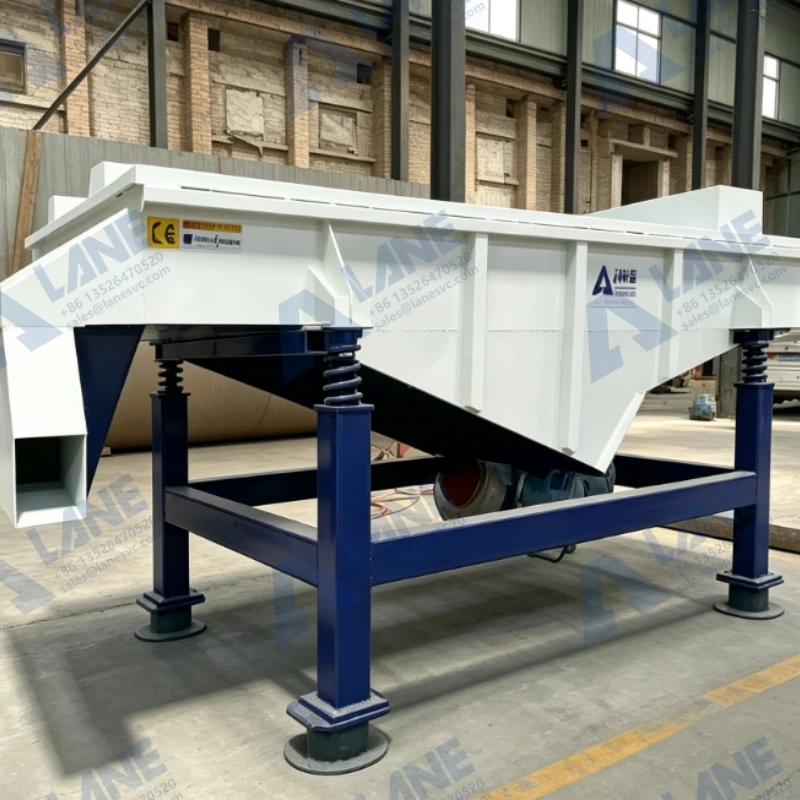
Screening separates the material according to the required particle size.
For a 2–5 mm fertilizer product, the general separation can be understood as:
Below 2 mm → Recycling | 2–5 mm → Finished Product | Above 5 mm → Reprocessing
The actual screen configuration depends on the product requirement and material characteristics.
A screen that is too small may become a bottleneck. A poorly matched screening arrangement may also increase the amount of material that needs to circulate through the system.
Internal link opportunity: vibrating screen / trommel screen
What Causes Too Many Fines in Fertilizer Granules?
Excessive fines are one of the more useful warning signs during production because they can originate from several sections.
It is tempting to blame the screening machine first, but that is not always correct.
The real cause may have developed earlier in the process.
> Check the Compact Before Changing the Screen
If the compact produced by the roller is weak, it can break into smaller particles during crushing.
In this situation, changing the screen may change the separation result but does not solve the original problem.
The investigation should move backward through the process:
Screening → Crushing → Compaction → Feeding → Material
This approach helps distinguish a screening problem from a granulation problem.
> Recycling Rate Also Affects Effective Output
A high percentage of fines means more material must return to the process.
For example, a line may move 10 tons of material through its granulation section in an hour, but the finished product output will be lower if a significant proportion repeatedly returns for reprocessing.
This is why finished-product capacity is a more useful project indicator than the throughput of the granulator alone.
A properly designed dry fertilizer production line should control both production throughput and the amount of material returning to the process.
How Should Screening and Recycling Be Designed?
Once the target granule size is known, the screening and recycling arrangement can be developed around it.
This is especially important for commercial fertilizer production because product specifications are usually more precise than simply “granules.”
> Match the Screen to the Product Requirement
A fertilizer plant may produce 2–4 mm, 2–5 mm, or another specified particle-size range.
The screen needs to separate the finished fraction without creating unnecessary recirculation.
The screening capacity should also match the expected material flow from the extrusion and crushing sections.
A screen is therefore part of the production capacity calculation, not merely a finishing machine.
> Avoid Excessive Internal Circulation
Some recycling is expected.
However, if too much material repeatedly returns to the granulation section, the internal material load increases.
That can affect the effective capacity of the dry fertilizer production line and may place additional demands on conveyors, screens, and storage hoppers.
The design objective is not to eliminate recycling completely. It is to keep the recycling flow reasonable while maintaining the required finished-product quality.
Which Supporting Equipment Is Needed?
The equipment configuration depends on the project, but the machines should be selected according to their position in the material route.
The front section may include a fertilizer crusher, batching system, and mixer. The forming section centers on the double roller extrusion granulator. The back section may include crushing, screening, conveying, and packing equipment.
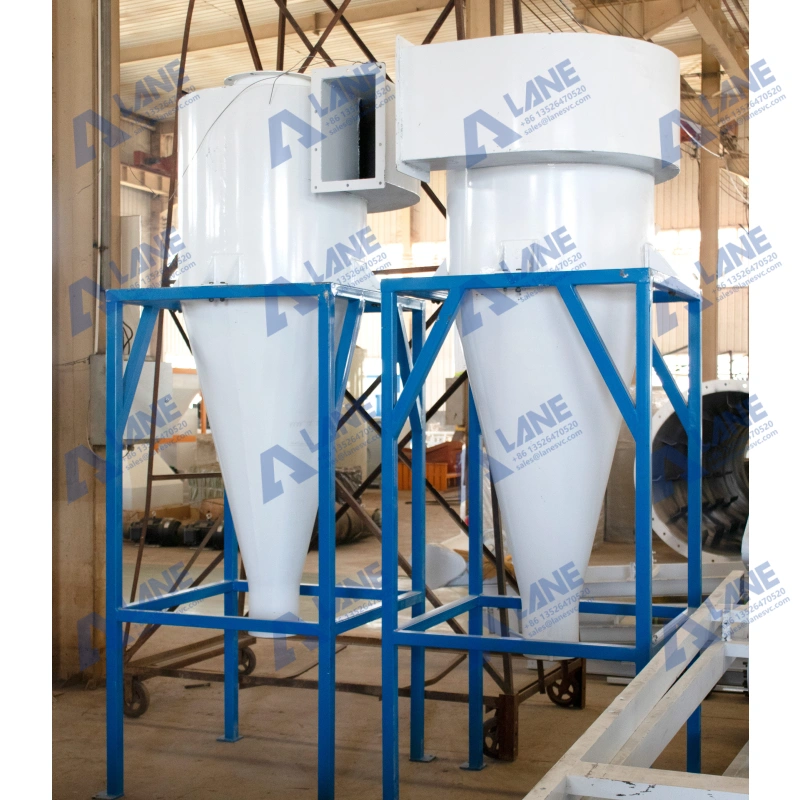
A belt conveyor can be used where material needs to travel between separate processing areas. Dust collection can be added around crushing, screening, and other dusty transfer points.
For finished fertilizer, an automatic packing machine can provide controlled bag filling and improve the consistency of final packaging.
The key is not to install every available machine. Each piece of equipment should solve a specific process requirement.
Dry Fertilizer Production Line vs. Conventional Wet Processing
Dry and wet fertilizer production should be compared according to the material and final product, not simply according to the number of machines.
> Where Dry Processing Can Be More Convenient
When the fertilizer powder has suitable compaction properties, mechanical extrusion can provide a relatively direct route from powder to granules.
The process can avoid the conventional liquid addition and subsequent drying and cooling stages associated with many wet granulation systems.
This can simplify the plant layout and reduce the number of major thermal-processing stages.
However, the actual benefit depends on the raw material and production requirements.
> When Wet Processing May Still Be Preferred
Some materials do not respond well to dry compaction.
If the material is excessively sticky, has unsuitable moisture characteristics, or cannot form a stable compact, another granulation method may be more appropriate.
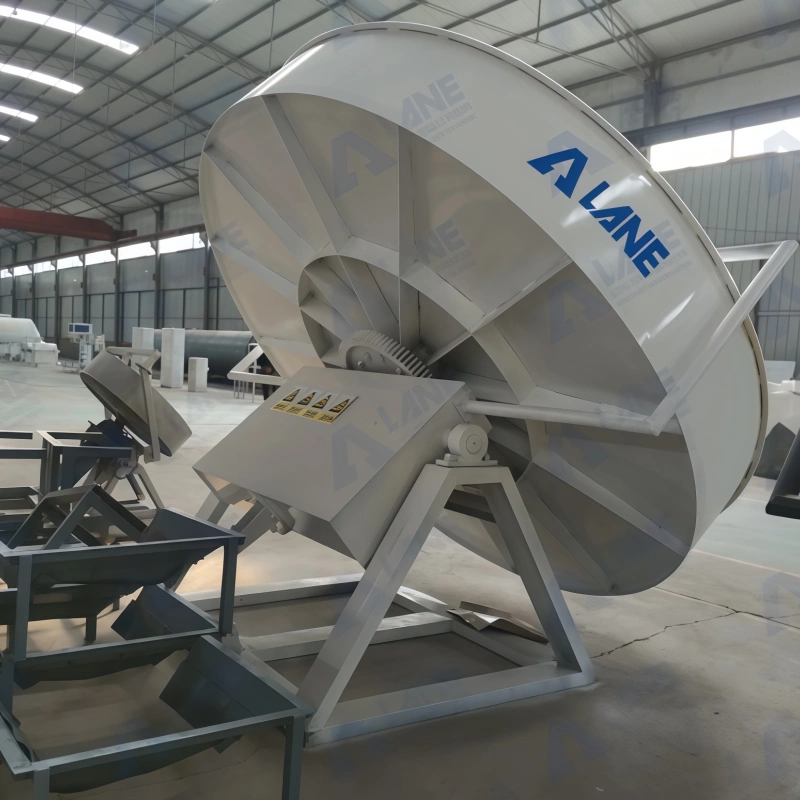
A wet process may include a rotary granulator, rotary dryer, and rotary cooler before screening and packaging.
Therefore, the choice should be made after considering:
• Raw material properties
• Fertilizer formulation
• Target granule size
• Required granule strength
• Production capacity
• Energy and plant requirements
The goal is to select the process that provides a reliable finished product rather than simply choosing the shorter equipment list.
How Do You Choose the Capacity of a Dry Fertilizer Production Line?
Capacity is usually expressed in tons per hour, but the number needs to be defined carefully.
A customer may request a 5 t/h, 10 t/h, or 20 t/h system. The important question is whether that figure refers to raw material throughput or finished fertilizer output.
> Consider Finished Product Capacity
If the target is 10 t/h of finished fertilizer, the equipment upstream of the screening section must be able to support that production level while also handling off-size material.
The complete material route should be considered:
Raw Material → Preparation → Mixing → Extrusion → Screening → Recycling → Packaging
A machine rated for 10 t/h does not automatically make the entire line a 10 t/h finished-product system.
> Leave Enough Capacity for the Supporting Sections
The batching, mixer, conveyors, screening equipment, and packing system should not become restrictions.
This is particularly important when the fertilizer formula changes or when the raw material properties fluctuate.
At LANE, equipment selection is therefore based on the complete production requirement rather than only the nameplate capacity of the main granulator.
What Information Should You Prepare Before Buying the Equipment?
A more detailed project brief usually leads to a more accurate equipment proposal.
> Raw Material and Formula
Provide the raw material names, approximate proportions, moisture condition, and particle-size information if available.
If several formulas will be produced, explain how frequently the formula changes.
> Product and Capacity Requirements
The target fertilizer formula, granule size, production capacity, and packaging weight should be clearly stated.
For example:
Product: NPK fertilizer
Target size: 2–5 mm
Finished output: 10 t/h
These details give the equipment supplier a much clearer basis for process design.
> Plant Conditions
The available installation area, electrical conditions, working hours, packaging method, and local environmental requirements can also affect the final configuration of a dry fertilizer production line.
This information helps determine conveyor arrangement, dust collection, equipment placement, and packaging capacity.
How LANE Designs a Dry Fertilizer Production Line
At LANE, the equipment list normally comes after the process requirements have been understood.
The project discussion starts with the material and product:
Raw Material → Formula → Moisture → Capacity → Granule Size → Equipment Configuration
This does not mean every project needs a complicated design.
In fact, a good system is often the one that uses the necessary equipment without adding unnecessary process stages.
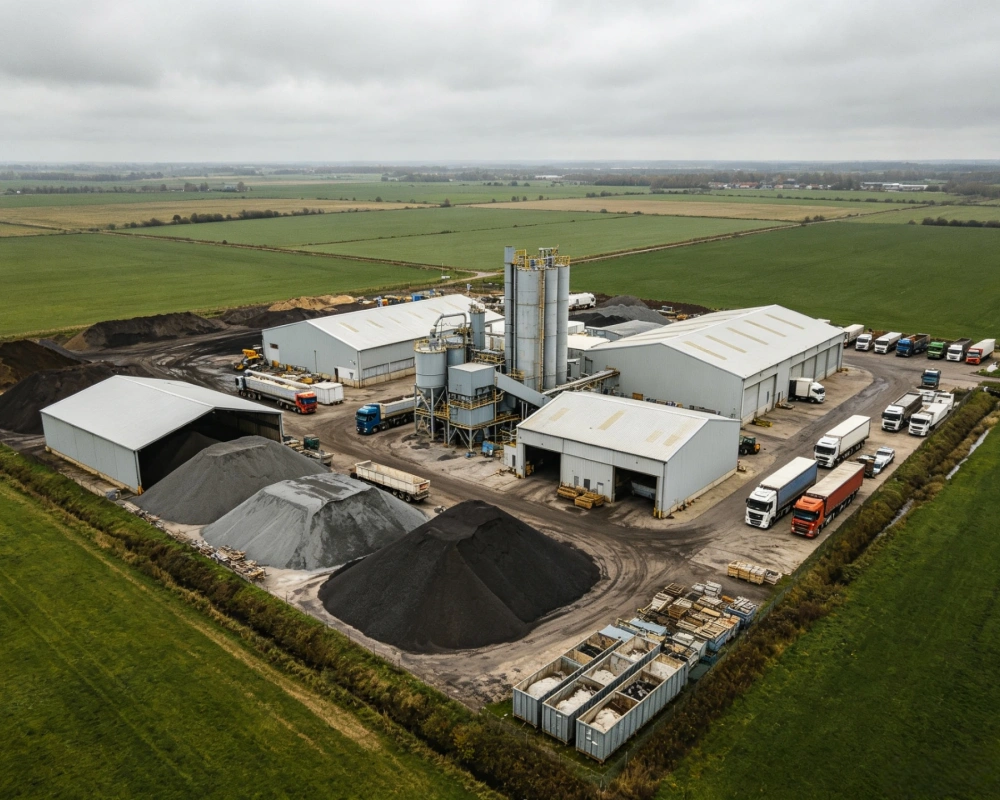
For a suitable dry fertilizer formula, the configuration of a dry fertilizer production line may focus on crushing, batching, mixing, extrusion, screening, recycling, conveying, and packaging. If the material requires additional preparation or dust control, those sections can be added according to the actual plant conditions.
For a dry fertilizer production line, the same principle applies to capacity. A small production project and a large commercial fertilizer plant may use the same basic process concept while requiring very different equipment sizes and layouts.
LANE’s role is to connect these requirements into a workable equipment configuration rather than treating each machine as a separate purchase.
Five Questions to Answer Before You Order
1. What Are the Actual Raw Materials?
The fertilizer name alone is not enough.
The equipment supplier needs to understand what materials are actually being processed in a dry fertilizer production line, because different powders can behave differently during feeding and extrusion.
2. What Is the Moisture Condition?
Actual moisture information can help determine whether the powder is suitable for dry extrusion and whether additional preparation is required.
This should be checked before the final equipment configuration is confirmed.
3. What Granule Size Do You Need?
A clear requirement such as 2–5 mm affects the crushing and screening arrangement of a dry fertilizer production line.
It also influences how finished-product quality should be evaluated.
4. Does the Capacity Refer to Feed or Finished Product?
This should be agreed before equipment selection.
The difference becomes particularly important when a significant amount of material is returned through recycling.
5. Has the Material Been Tested?
For unfamiliar raw materials or new fertilizer formulas, a practical extrusion test can provide valuable information about feeding, compaction, crushing, and screening for a dry fertilizer production line.
It gives the design team a better basis for selecting a dry fertilizer production line that matches the actual material.
A Practical Approach to Building the Line
The easiest way to understand the dry fertilizer production line is to follow the material from the beginning to the finished bag.
Start with raw material preparation. Remove oversized particles and establish a consistent feed condition. Then use controlled batching and mixing to create the required fertilizer blend.
After that, the prepared powder enters the dry extrusion section, where mechanical compaction forms the fertilizer compact. The compact is then crushed or shaped and screened according to the required particle-size range.
Finally, qualified granules move to conveying and packaging, while fines and oversize material return to the appropriate stage for reprocessing.
This gives the dry fertilizer production line a clear purpose at every stage instead of treating it as a collection of unrelated fertilizer machines.
Conclution
The most important part of fertilizer equipment selection is not finding the machine with the largest capacity number.
It is making sure that the complete process matches the material and the finished product.
A stable dry fertilizer production line should provide consistent raw material preparation, accurate formulation, reliable feeding, effective extrusion, controlled crushing, efficient screening, and manageable recycling.
For LANE, this is the practical basis of line design. The equipment configuration should follow the customer’s material, formula, capacity, granule size, plant conditions, and packaging requirements.
When those factors are understood before equipment selection, the result is more than a collection of fertilizer machines. It becomes a production system designed around how the material actually behaves in the plant.