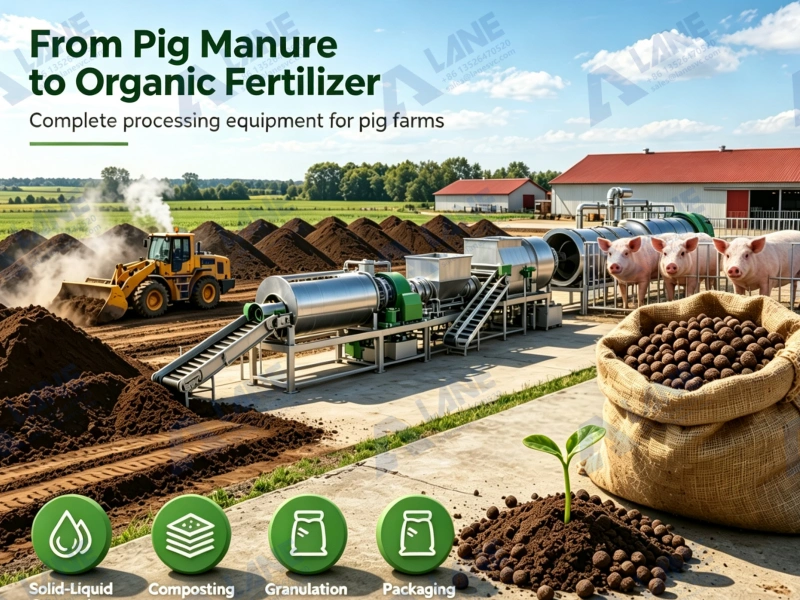
Fertilizer Dust Reduction: How Polishing Helps Improve Finished Fertilizer Quality
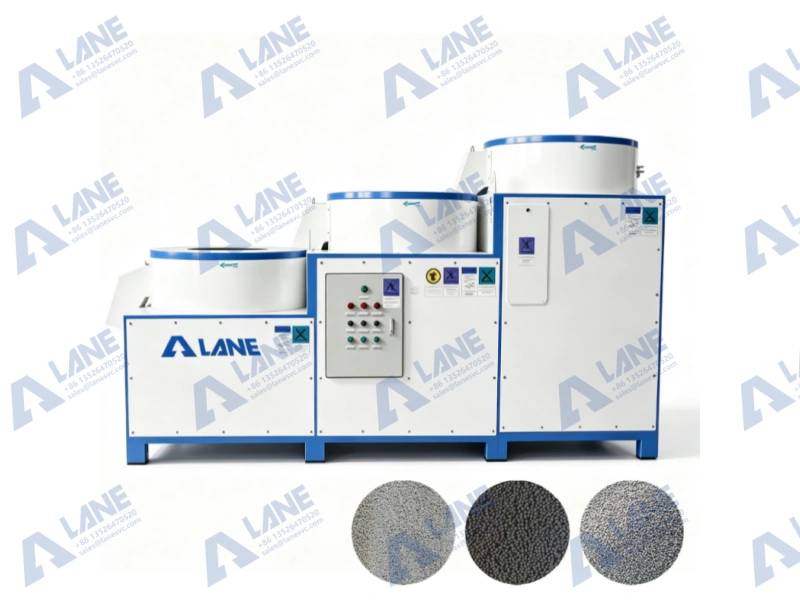
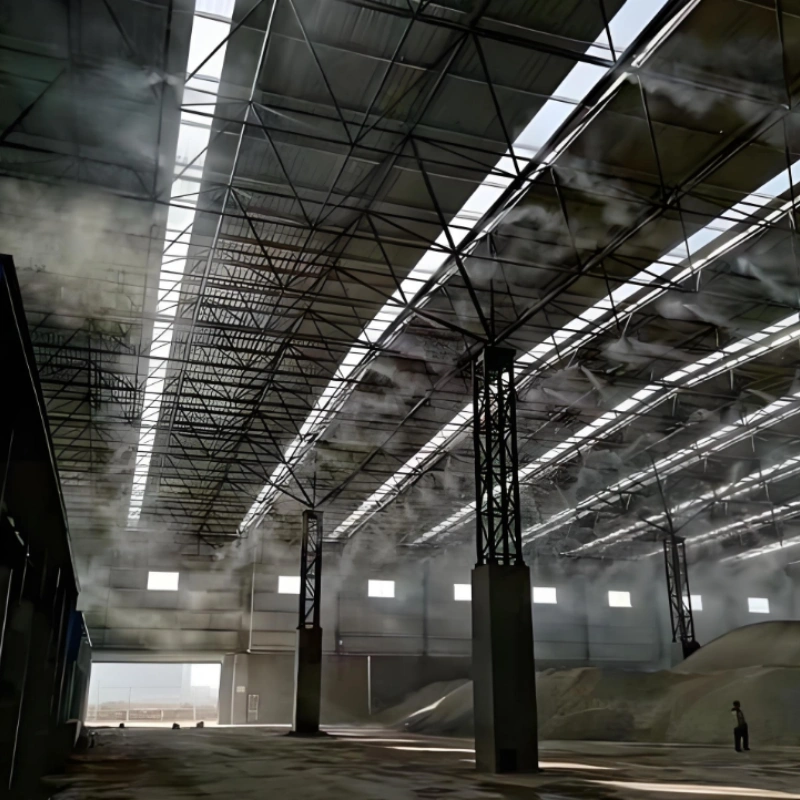
There is a serious dust problem in the finished product workshop of many organic fertilizer factories. The irregular edges of the particles will produce a lot of powder during the conveying, screening, and packaging processes. Most operators only use the dust collector, but the effect is limited. Effective fertilizer dust reduction should start with the treatment of particle surfaces. The fertilizer polishing machine can smooth the rough edges of the particles, reducing the generation of powder from the source.
Harm Caused by Excessive Fine Powder without Proper Fertilizer Dust Reduction
Factory managers often treat fertilizer dust only as a workshop environmental issue. In fact, excess fine powder brings multiple hidden losses for production, product sales and staff health, far beyond simple air pollution. Uncontrolled fine powder without effective fertilizer dust reduction will trigger a chain of quality and economic losses for fertilizer enterprises.
> Workshop Dust Threats to Operator Health and Site Safety
Suspended fertilizer dust floats in the workshop air for a long time. Operators who work in such environments for years will face respiratory discomfort and occupational health risks.
In addition, accumulated dry fertilizer dust on equipment and ground has potential explosion risks. Standard fertilizer dust reduction eliminates such hidden safety hazards fundamentally.
> Fine Powder Speeds up Caking of Packaged Fertilizer Goods
Fine powder has stronger hygroscopicity than regular fertilizer granules. Excessive fine powder mixed in finished products will absorb air moisture during storage and transportation.
This situation accelerates internal caking of packaged fertilizer. Even qualified granules processed via professional rotary screener will cake easily if without fertilizer dust reduction polishing treatment.
> Excess Dust Lowers Commercial Value of Granular Fertilizer
Customers and distributors judge fertilizer quality through appearance first. Dusty fertilizer products with rough particle surfaces look unprofessional and low-grade.
Effective fertilizer dust reduction polishes particle surfaces to form smooth and uniform granules, greatly improving product appearance and commercial grade.
> Powder Loss Creates Direct Raw Material Waste
A large amount of fine powder drifts away with air during production and packaging. These powders are qualified fertilizer raw materials but turn into waste due to poor fertilizer dust reduction.
Long-term dust loss will reduce finished product yield and compress factory profit margins continuously.
How Fertilizer Polishing Machine Works for Fertilizer Dust Reduction
Granules directly from granulator often have sharp corners and rough surfaces. These uneven surfaces break easily under collision and friction. The fertilizer polishing machine uses centrifugal rolling friction to smooth particle surfaces, which is the core mechanism for fertilizer dust reduction. It works together with rotary screening equipment to form a complete set of fertilizer particle optimization solutions.
> The main structure of fertilizer polishing machine
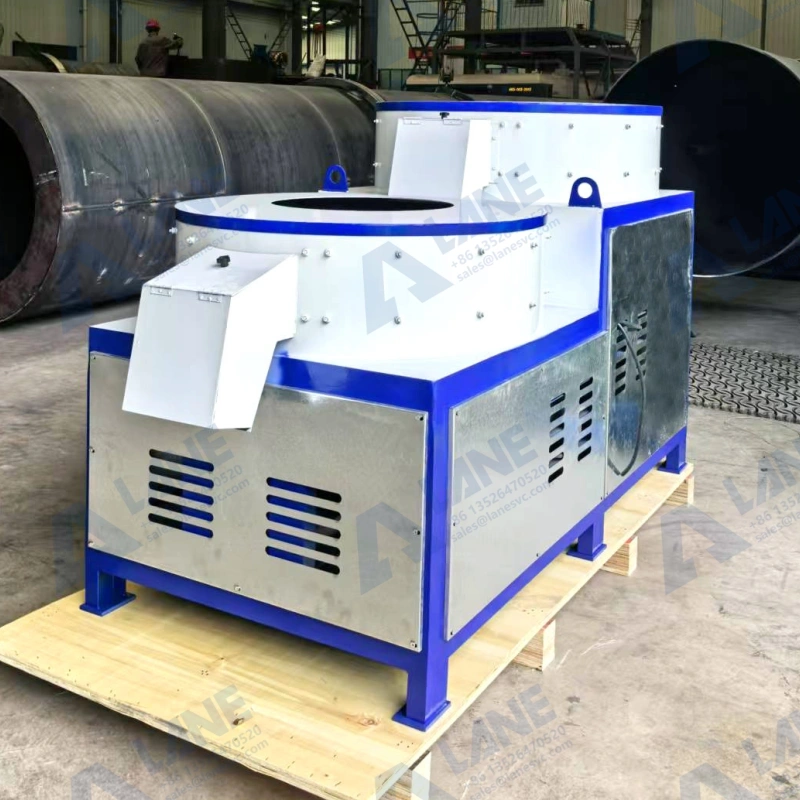
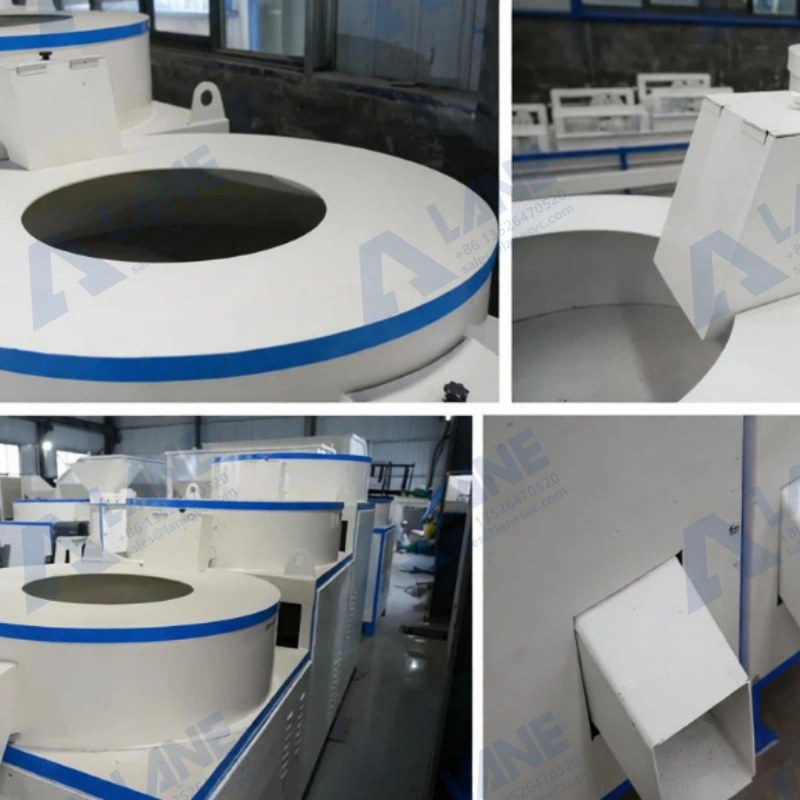
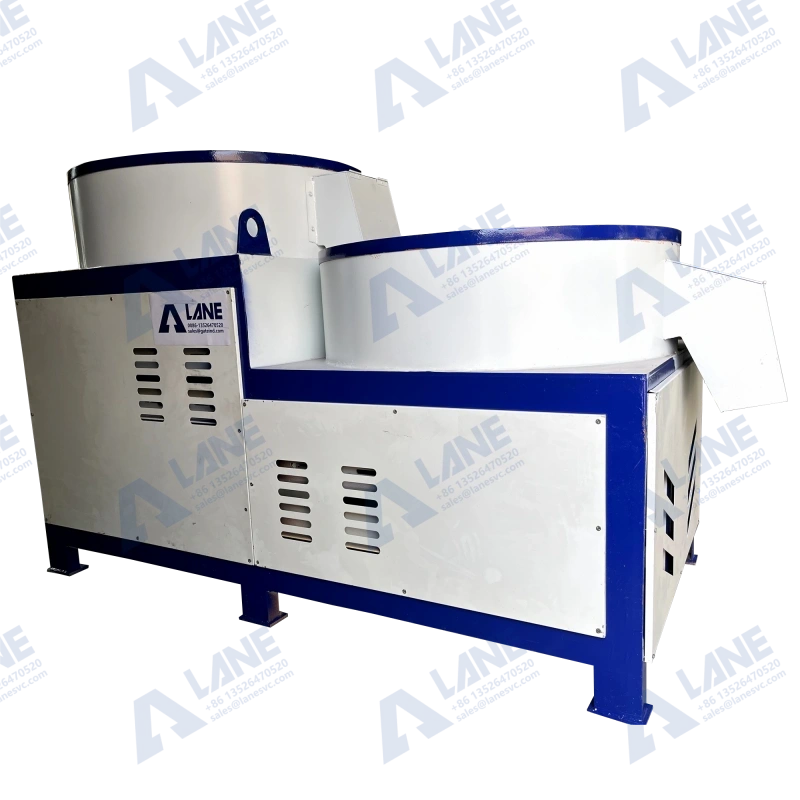
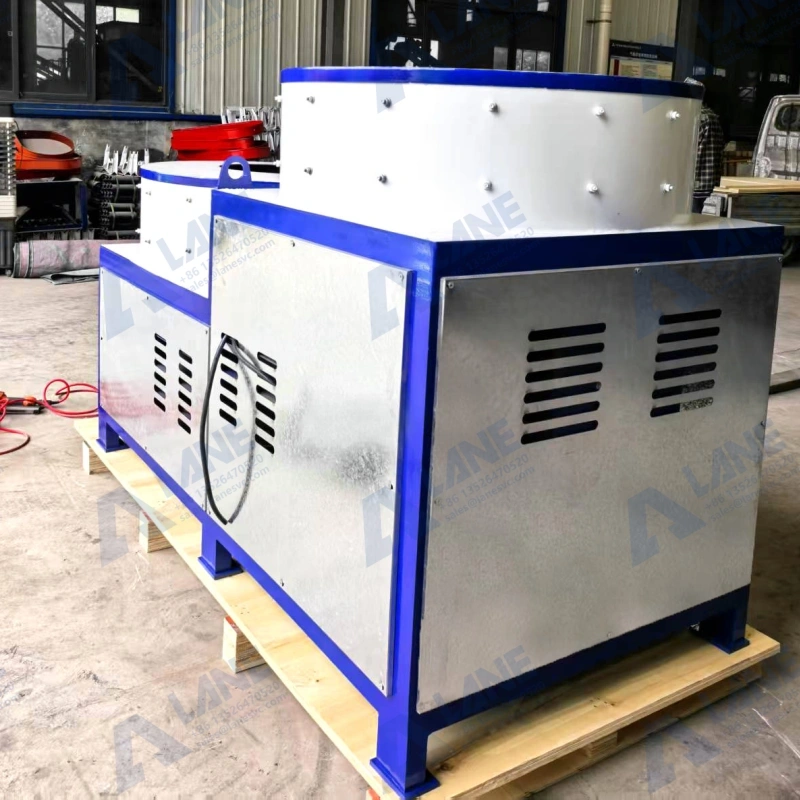
The fertilizer polishing machine consists of a rotating polishing disc, a sealed casing, an inlet, an outlet trough, and a driving system. The design of each component is intended to achieve continuous dust removal and particle polishing.
The fully sealed machine shell can prevent dust from escaping during operation, and achieve on-site dust reduction while processing granular fertilizers.
> Centrifugal rolling to remove the sharp corners of fertilizer particles
In the polishing chamber, fertilizer particles produce continuous friction and collisions under high-speed centrifugal rotation.
The sharp corners and rough burrs on the surface of the particles were gradually smoothed out. This physical polishing fundamentally avoids the generation of new fine powder and achieves a stable fertilizer dust reduction effect.
> Built-in grading discharge chute and timely separation of fine powder
The built-in graded discharge structure can screen and separate fine powder and qualified particles in real time during polishing.
The fine powder generated in the previous process is completely discharged and recycled, preventing it from being mixed with the finished product again, thus helping to reduce dust precisely.
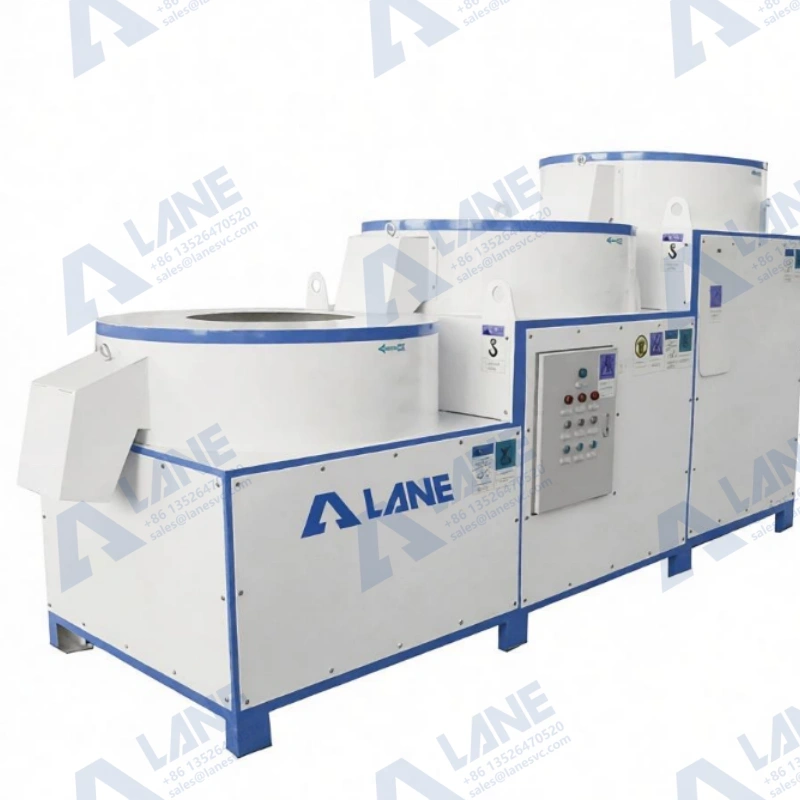
Key Structural Features of LANE Fertilizer Polishing Machine
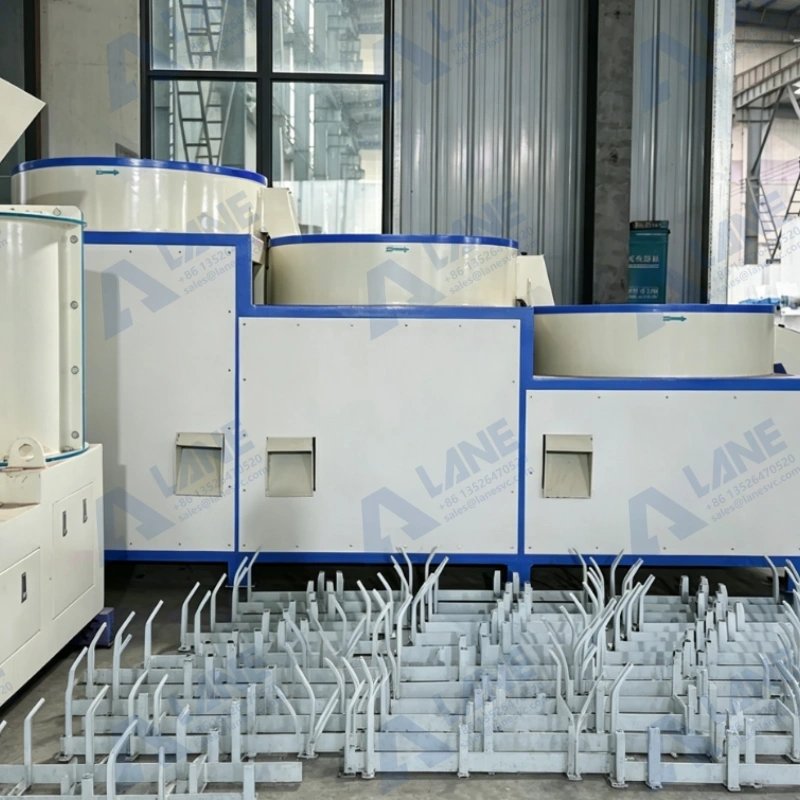
Simple rotating disc design cannot meet continuous mass‑production requirements. Our fertilizer polishing machine adopts multi‑layer continuous polishing structure, and each component is optimized for real organic fertilizer plant conditions. It supports stable fertilizer dust reduction under long‑time continuous operation.
> Heavy‑duty Vertical Shaft and Spherical Bearing Assembly
The vertical main shaft and spherical bearing assembly adopt reinforced wear-resistant design. They can bear long-term high-load rotation without deformation or damage.
Stable power output ensures consistent polishing strength and uniform fertilizer dust reduction effect in every batch.
> Large‑diameter Rotary Disc for Multi‑particle Collision and Polishing
Equipped with customized large-diameter polishing disc, the machine increases particle contact area and collision frequency.
Single-pass polishing effect is more thorough, effectively removing residual burrs and fine powder to improve fertilizer dust reduction efficiency.
> Reasonable Layout of Feeding and Discharge Chute
The optimized feeding and discharge structure avoids material accumulation and dead angles inside the machine. It ensures smooth material circulation and no powder residue.
This structural design guarantees continuous and uninterrupted fertilizer dust reduction for assembly line production.
Core Benefits of Polishing Treatment for Fertilizer Dust Reduction
Compared with only adding dust removal fans, polishing improves granule physical properties fundamentally. It brings multiple extra production benefits besides fertilizer dust reduction. Cooperated with rotary screener for fertilizer particle size control, it forms a complete high-quality fertilizer production system.
> Less Fine Powder Reduces Burden for Subsequent Dust Collecting Equipment
Traditional dust collectors need to process massive floating powder, leading to frequent filter screen blockage and high maintenance frequency.
Polishing treatment reduces fine powder generation at source. It greatly lowers the working pressure of dust collectors and extends equipment service life via effective fertilizer dust reduction.
> Improved Granule Roundness Reduces Particle Breakage in Conveying
Polished fertilizer granules have smooth surfaces and regular roundness. They will not break easily during long-distance conveying and elevating.
Stable particle shape avoids secondary dust generation in subsequent processes, maintaining long-term fertilizer dust reduction effect.
> Higher Pellet Strength Lowers Return Material Rate
Centrifugal rolling polishing makes particle internal structure denser. Finished pellets have higher hardness and compression resistance.
Fewer broken particles and unqualified powders reduce return material volume, improving overall production efficiency while realizing fertilizer dust reduction.
> Good Surface Condition Improves Storage Stability of Organic Fertilizer
Smooth particle surfaces reduce contact area with air and moisture. Polished fertilizer is not easy to absorb humidity and agglomerate during long-term storage.
Fertilizer dust reduction and surface optimization greatly improve product storage stability and customer satisfaction.
Common Mis‑operations That Weaken Fertilizer Dust Reduction Effect
Even with high‑quality fertilizer polishing machine, wrong parameter settings or improper feeding will make polishing performance drop quickly. Many factories ignore operating specifications and cannot get ideal fertilizer dust reduction results. Standardized operation is the key to maintain stable dust removal and particle polishing effect.
> Uncontrolled Material Moisture before Entering Polishing Machine
Excessively wet fertilizer granules will stick together in the polishing chamber. Adhered particles cannot be polished evenly and cause internal powder accumulation.
Too dry materials will break excessively during friction. Uncontrolled moisture directly destroys fertilizer dust reduction stability.
> Improper Rotary Speed Setting Causes Over‑crushing of Granules
Blindly increasing rotating speed to pursue better dust effect will cause over-polishing. Hard fertilizer granules will be crushed into fine powder.
Unreasonable speed setting generates new dust instead of fertilizer dust reduction, causing counterproductive results.
> Overfeeding Leads to Insufficient Polishing Time for Pellets
Excessive instantaneous feeding leads to material overstocking in the polishing area. Each granule cannot get enough friction and polishing time.
Incomplete polishing leaves residual burrs and hidden dust risks, failing to meet fertilizer dust reduction standards.
> Ignore Regular Clearing of Powder Accumulation inside Machine
Long-term production will leave residual fine powder inside the machine. Accumulated powder will mix with new materials and cause repeated dust problems.
Lack of regular cleaning will gradually weaken fertilizer dust reduction performance.
Practical Operation Tips to Optimize Fertilizer Dust Reduction
Simple daily adjustments can give full play to polishing machine performance. These practical steps help operators keep stable fertilizer dust reduction in long‑run production. Combined with rotary screener operation standards, it can realize full-link quality control of fertilizer granules.
> Match Raw Material Moisture before Feeding into Polishing Process
Operators need to detect fertilizer moisture before polishing. Keep material moisture within the standard range to ensure uniform polishing effect.
Qualified moisture content is the premise of stable fertilizer dust reduction and complete particle polishing.
> Adjust Rotary Speed According to Hardness of Fertilizer Granules
Different organic fertilizer materials have different particle hardness. Soft granules need low speed to avoid crushing, while hard granules need proper high speed for thorough polishing.
Targeted speed adjustment ensures optimal fertilizer dust reduction effect for different materials.
> Maintain Uniform and Steady Feeding Volume Continuously
Equip with quantitative feeding device to avoid sudden material surge. Steady feeding ensures every single granule gets sufficient polishing treatment.
It avoids incomplete polishing and guarantees consistent fertilizer dust reduction in batch production.
> Carry Out Periodic Inspection and Internal Powder Cleaning
Arrange daily inspection for polishing disc and discharge chute. Clean internal residual powder regularly to prevent powder accumulation and secondary mixing.
Regular maintenance keeps long-term efficient fertilizer dust reduction performance of the equipment.
FAQ
Organic fertilizer plant operators often raise questions related to particle polishing and fertilizer dust reduction. We collect five high‑frequency practical questions from overseas project communication records. All answers focus on actual production problems of fertilizer factories.
Q1: Can fertilizer polishing machine realize complete fertilizer dust reduction with zero fine powder?
A1: The polishing machine can eliminate more than 97% of loose and floating fine powder to achieve standard fertilizer dust reduction. A tiny amount of fine powder tightly bonded on particle surfaces cannot be removed physically. This effect fully meets international organic fertilizer production and packaging standards.
Q2: What granule status is suitable to send into fertilizer polishing machine?
A2: Fertilizer granules with standard particle size and qualified moisture are the best choice. It is recommended to complete fertilizer particle size control via rotary screener first, then carry out polishing and dust reduction, which can maximize finished product quality.
Q3: Can polishing machine work well together with existing rotary screener and dust collector?
A3: It has extremely high compatibility. The polishing machine is designed for matching with screening and dust removal equipment. The three devices form a front-to-back linkage production line to realize integrated fertilizer particle optimization and fertilizer dust reduction.
Q4: Will high‑speed polishing cause extra new fine powder to generate?
A4: Reasonable speed setting will not produce new dust. Only excessive speed for hard granules leads to over-crushing. According to our factory operation guide, adjusting speed by material hardness can avoid secondary dust and ensure effective fertilizer dust reduction.
Q5: What is the normal service cycle for wearing parts inside polishing machine?
A5: Under 24-hour continuous production, the polishing disc and wearing parts can work for 7 to 12 months. Timely replacement of vulnerable parts ensures stable fertilizer dust reduction and polishing accuracy without attenuation.
Conclusion
Effective fertilizer dust reduction cannot rely solely on dust removal equipment. Polishing treatment changes the surface condition of the particles through centrifugal friction and rolling. LANE fertilizer polishing machine can smooth the sharp corners of particles, reduce the generation of powder from the source, and improve the strength and storage performance of particles. Combining standardized feed, speed adjustment, and regular maintenance, fertilizer manufacturers can reduce workshop dust, reduce raw material loss, and improve the overall market competitiveness of finished organic fertilizer. In conjunction with the rotary screen used for complete fertilizer particle size control, it helps the factory to achieve high-quality fertilizer production throughout the entire process.