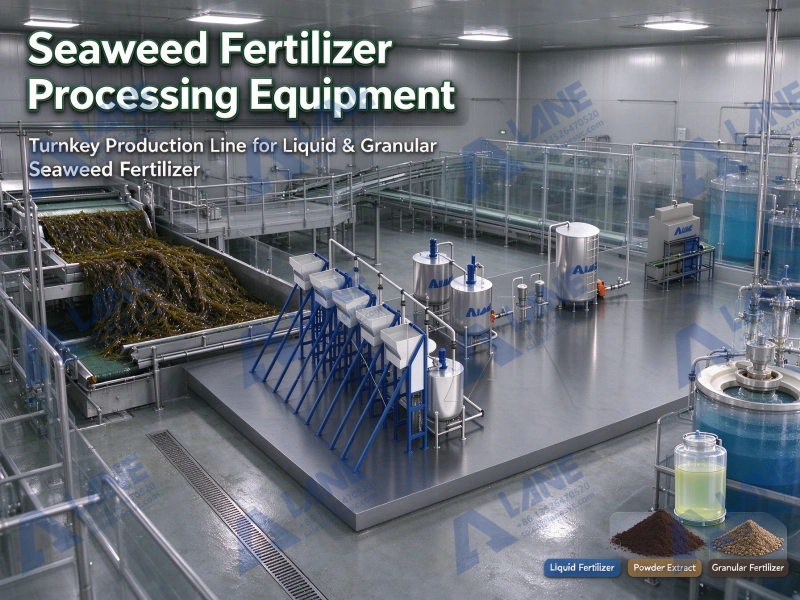
Fertilizer Mixer Material Build-Up: Why Does Material Stick Inside the Mixer?
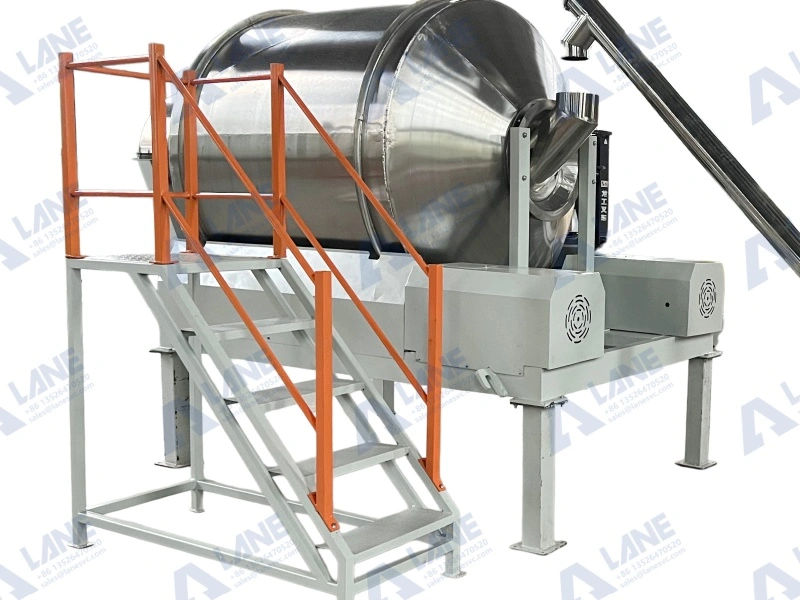
I have worked as a process engineer for fertilizer complete production line commissioning for 8 years. I visited more than 90 BB fertilizer and organic fertilizer factories to fix daily mixing line faults. Fertilizer Mixer Material Build-Up is the most frequent small fault that slowly drags down overall production quality. Wet organic fertilizer raw materials, high-salt compound fertilizer formulas and casual daily equipment cleaning will form thick hardened material layers on the inner wall of the mixing cylinder day by day.
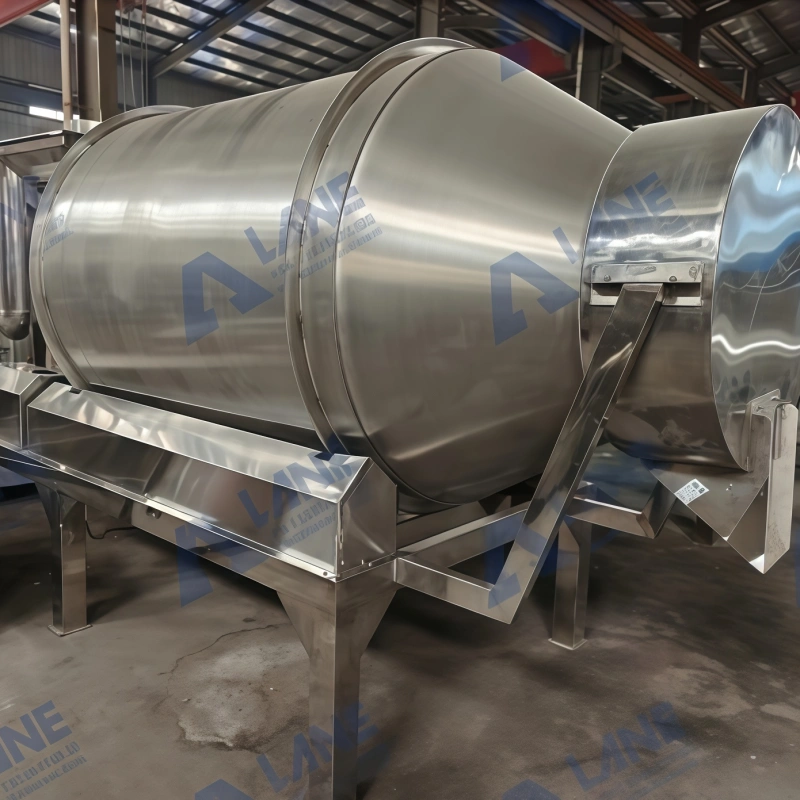
The LANE fertilizer rotary blender uses mirror polished 304 stainless steel cylinder body to help fertilizer plants cut down wall adhesion troubles fundamentally. Long-term unhandled Fertilizer Mixer Material Build-Up will lower fertilizer mixing uniformity sharply and add extra manual cleaning work every working day.
Direct Production Hazards Caused by Fertilizer Mixer Material Build-Up
Continuous fertilizer material accumulation on the cylinder wall will break the gravity diffusion mixing logic of rotary blender equipment. Hardened fertilizer chunks will fall off randomly during cylinder rotation and crush intact qualified fertilizer granules. Continuous unstable feeding will mess up the follow-up packaging and storage procedures of the whole fertilizer factory.
> Unqualified Fertilizer Mixing Uniformity for BB Fertilizer Products
Hardened lumps shedding from the cylinder wall intermittently break the fixed N-P-K nutrient proportion of finished BB fertilizer. The nutrient test data of fertilizer finished products will have excessive fluctuation. The LANE shaft-free rotary blender can keep mixing uniformity above 98% under normal operation, while mixers with severe Fertilizer Mixer Material Build-Up will drop uniformity below 90%. Unstable nutrient content will bring frequent complaints from farming customers and increase finished product return risks for fertilizer manufacturers.
> Extra Power Load for Main Drive Motor
Thick solid fertilizer buildup increases the dead weight of the whole mixing cylinder. The variable frequency drive motor runs under high current status for long hours, making power consumption rise by 25% to 35% compared with standard operation state. Sudden load surge will trigger the PLC overload protection program of the mixer, leading to emergency shutdown and material breakage on the whole fertilizer production line.
> Hardened Fertilizer Block Damages Cylinder Weld and Support Roller
Hard fertilizer blocks squeeze the cylinder steel plate welding seams during rotary movement, which will lead to cylinder cracking after long-term friction. The eccentric weight formed by wall buildup makes the support rollers bear uneven pressure, creating unilateral roller wear and abnormal operation noise during production.
> Blocked Manhole Cover and Inspection Port for Daily Maintenance
Thin fertilizer layers will solidify around the equipment inspection door and manhole cover over time. Maintenance staff cannot open the overhaul port smoothly for internal inspection and residue cleaning. Small internal faults cannot be found in time and evolve into large-scale equipment breakdown.
> Mixed Impurity Residue Contaminates Fresh Fertilizer Batches
Aged fertilizer buildup on the cylinder wall will go through deliquescence and mildew in humid workshop environment. Moldy old fertilizer will mix into newly blended fertilizer materials, causing finished fertilizer mildew and deterioration, which cannot be used for agricultural application.
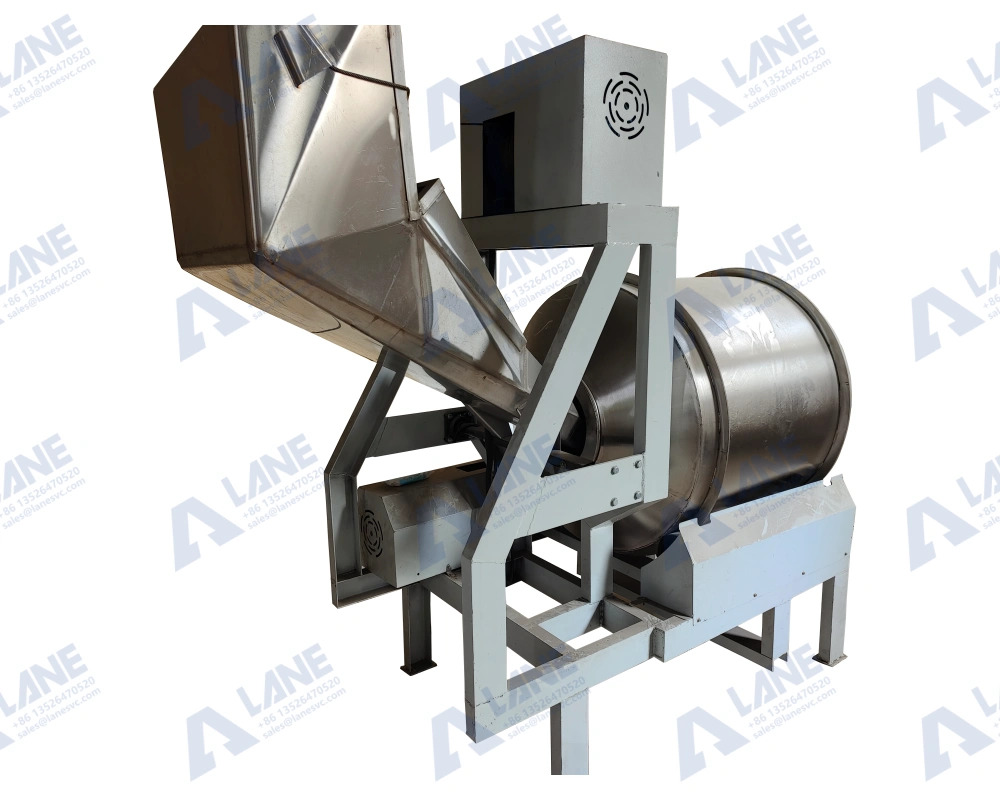
Core Root Causes Triggering Fertilizer Mixer Material Build-Up
We sorted fault records from more than 90 domestic and overseas fertilizer production lines. Material physical property, original equipment structural design and daily operation specification are three root categories that lead to continuous Fertilizer Mixer Material Build-Up on the mixer cylinder wall.
> High Moisture and High Oil Content of Fertilizer Raw Materials
Direct feeding of decomposed organic manure and liquid coated fertilizer will make material moisture content exceed 22%. Poor material fluidity makes wet materials cling tightly to the metal inner wall. Coating grease and chelating liquid fertilizer will solidify after cooling and stick to the cylinder wall layer by layer to form thick buildup.
> Rough Inner Cylinder Surface Without Polishing Treatment
Ordinary carbon steel cylinder and uneven welding seams form concave gaps on the inner wall. Fine fertilizer powder will sink into these gaps and accumulate continuously. The LANE mixer adopts 304 stainless steel cylinder with full mirror polishing treatment, seamless smooth inner wall has almost no hanging points for fertilizer residue accumulation.
> Long-term Overloading Feeding and Short Mixing Cycle Setting
Fertilizer plants feed materials over the rated cylinder volume to boost hourly output. Materials cannot get full tumbling movement inside the cylinder and attach to the inner wall directly. Insufficient timed mixing time leads to static surface materials solidifying on the cylinder wall easily.
> Irregular Daily Cleaning and Residual Material Overnight Accumulation
Factories do not empty the mixing cylinder completely after daily production shutdown. Residual fertilizer inside the cylinder absorbs moisture and crystallizes overnight, adhering firmly to the cylinder wall. Acidic fertilizer residue will corrode the metal inner wall and increase the adhesion force of follow-up fertilizer materials.
> No Anti-sticking Auxiliary Configuration for Special Fertilizer Formulas
Production lines for high-salt potash fertilizer and oil-coated seed fertilizer use standard general mixers without customized anti-sticking attachments. The single cylinder structure cannot cope with high-viscosity fertilizer materials, leading to rapid wall buildup in continuous production.
| Model | LAFB-1000 | LAFB-2000 |
|---|---|---|
| Drum Volume | 1000 | 2000 |
| Loading capacity(kg/batch) | 300 | 600 |
| Power(KW) | 3 | 5.5 |
| Speed(rpm) | Continuously adjustable | Continuously adjustable |
| Production capacity(t/h) | 3-5 | 8-10 |
Formula Adjustment to Reduce Fertilizer Mixer Material Build-Up From Raw Material End
Optimizing the mixing ratio of fertilizer raw materials can lower the overall viscosity of mixed materials fundamentally. This practical adjustment cuts the wall adhesion probability of wet organic fertilizer in continuous production.
> Add Dry Powder Filler to Lower Overall Material Moisture
Mix bentonite, crop straw powder or mineral powder at a proportion of 5% to 8% into high-humidity organic fertilizer. The dry filler improves material bulkiness and flow performance, preventing wet material agglomeration and cylinder wall adhesion effectively.
> Control Liquid Coating Agent Spraying Volume During Mixing
Carry out segmented low-volume spraying for coating grease and chelated liquid fertilizer. One-time large-dose liquid spraying is forbidden to avoid grease condensation and layered buildup on the cylinder inner wall.
> Classified Mixing for Acidic and Alkaline Fertilizer Raw Materials
Mix acidic nitrogen fertilizer and alkaline calcium fertilizer in separate production batches. Avoid acid-base chemical reaction inside the cylinder which generates crystalline salt. Crystalline salt is hard to fall off and forms rigid buildup on the cylinder wall quickly.
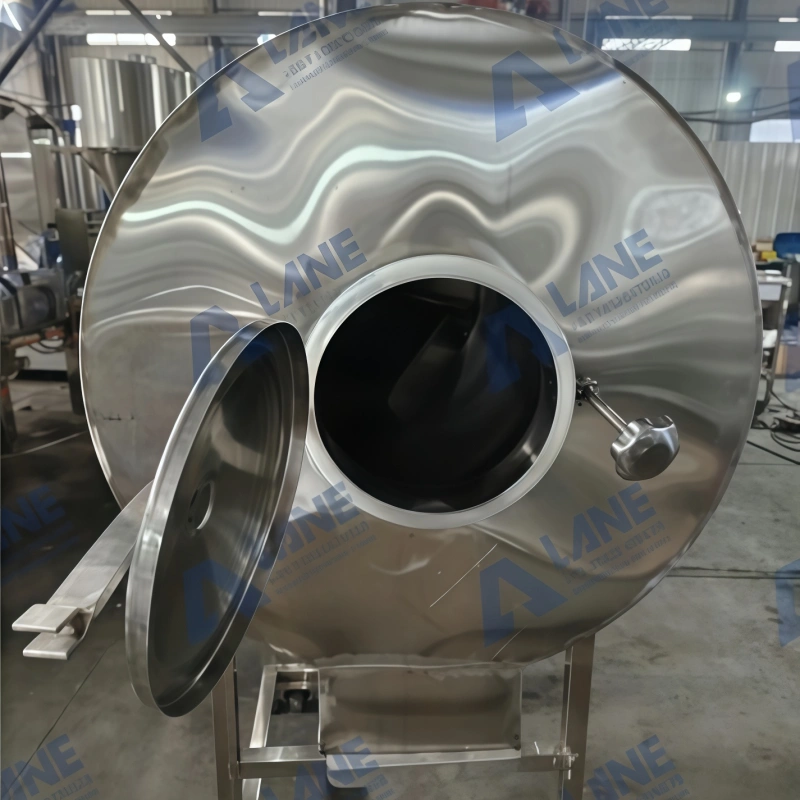
Equipment Structure Optimization to Prevent Fertilizer Mixer Material Build-Up
Upgrading the internal structure of the fertilizer mixer is the long-term stable solution for fertilizer processing plants. The LANE fertilizer rotary blender completes targeted anti-sticking structural optimization for fertilizer production working conditions.
> Adopt Mirror Polished 304 Stainless Steel Cylinder Body
The cylinder body is made of thickened 3mm stainless steel plate with full integrated welding. Mirror grinding removes all welding protrusions on the inner wall, fertilizer materials slide down by self-weight without residue accumulation. The stainless steel material adapts to acidic, alkaline and salt-containing corrosive fertilizer raw materials.
> Install Detachable Internal Scraper for Regular Wall Cleaning
Users can select spiral scraper accessories for LANE rotary blender. The scraper removes thin material layers on the cylinder wall during forward rotation mixing and reverse rotation discharging. It stops thin fertilizer layers from thickening and hardening on the cylinder wall.
> Equip Hot Air Auxiliary Drying System for High-humidity Production
Feed circulating hot air into the cylinder during organic fertilizer production in rainy and humid seasons. Hot air eliminates condensed water vapor on the cylinder inner wall and prevents fertilizer moisture absorption and wall adhesion caused by water vapor condensation.
Standardized Daily Operation to Control Fertilizer Mixer Material Build-Up
Unified feeding standard, scientific mixing parameter setting and thorough shutdown cleaning will eliminate artificial wall buildup faults caused by rough on-site operation habits.
> Strictly Follow 70% Volume Feeding Limit of Rated Capacity
Never feed materials to the full rated volume of the mixing cylinder. Reserve sufficient tumbling space for internal materials. Centrifugal force and gravity help materials break away from the cylinder wall and shorten the static adhesion time on the inner wall.
> Set Reasonable Timing Mixing Time According to Material Viscosity
Set 10 to 15 minutes mixing cycle for dry powder fertilizer materials. Extend mixing time to 20 to 25 minutes for high-humidity organic fertilizer. Full circular mixing avoids local static materials sticking and solidifying on the cylinder wall.
> Complete Full Cylinder Cleaning After Daily Production Shutdown
Use the quick-opening overhaul door of the mixer to clean residual materials at dead corners, blow fine powder on the cylinder wall with compressed air. Wipe condensed water on the cylinder wall with dry cloth in humid workshops to stop residual fertilizer crystallization overnight.
Emergency On-site Treatment for Hardened Fertilizer Mixer Material Build-Up
Do not start the mixer forcibly once thick hardened fertilizer chunks form on the cylinder wall. We adopt physical residue cleaning plus low-load trial operation repair for on-site fault disposal.
> Shut Down and Use Air Pick to Break Hardened Blocks Safely
Cut off the main power supply and lock the power cabinet before cleaning. Workers break large hardened fertilizer blocks with air picks. Hard metal tools are forbidden to knock the cylinder steel plate to protect the polished inner wall from scratch damage. Scratches will accelerate follow-up Fertilizer Mixer Material Build-Up severely.
> Run No-load Rotation With Dry Sand for Inner Wall Polishing Repair
After cleaning all hardened blocks, add quartz sand into the cylinder and run no-load rotation for 1 hour. Quartz sand polishes tiny scratches on the inner wall to recover the smooth finish of the cylinder wall, restoring the basic anti-sticking condition of the equipment.
> Adjust Formula to Reduce Material Viscosity for Next Batch Production
After emergency cleaning, increase the proportion of dry powder conditioner in the first production batch. Gradually restore the normal production rhythm to prevent repeated cylinder wall buildup faults in continuous processing.
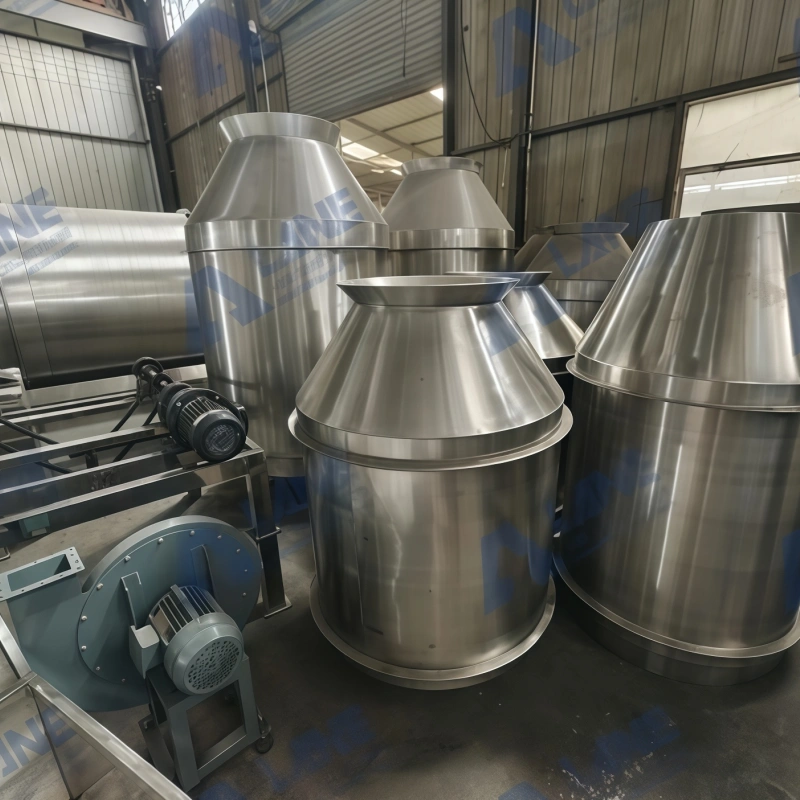
Fertilizer Mixer Model Selection to Avoid Long-term Fertilizer Mixer Material Build-Up
Many small-scale fertilizer factories choose low-cost carbon steel mixers to cut initial investment cost. This wrong selection leads to recurring wall buildup troubles in long-term continuous production.
> Select Stainless Steel Rotary Blender Instead of Shaft-type Mixer
Internal stirring shaft structure has many protruding hanging points for fertilizer residue accumulation. The LANE shaft-free rotary blender has no internal blocking components inside the cylinder. Materials flow smoothly with almost no residue hanging positions on the inner wall.
> Match Equipment Capacity According to Peak High-humidity Fertilizer Output
Reserve extra equipment processing capacity when organic fertilizer output rises in rainy seasons. Avoid long-term full-load processing of high-humidity viscous fertilizer materials, reducing the probability of wall buildup from capacity overload.
> Choose Customized Anti-sticking Configuration for Special Fertilizer Formulas
For high-salt fertilizer and oil-coated fertilizer production lines, order the mixer with pre-installed internal scraper and hot air drying components directly from the factory. Finish anti-sticking configuration before delivery to skip later equipment modification work.
Frequently Asked Questions
Q1:How to judge early Fertilizer Mixer Material Build-Up signs before hardened block formation?
Answer: Three obvious early warning signals can help on-site operators intervene early. First, irregular lump discharge of finished fertilizer materials. Second, slow continuous rise of main motor operating current. Third, abnormal rotating noise from the mixing cylinder. Operators can arrange cylinder cleaning immediately once these signals appear.
Q2:Can scratches on the inner wall of the mixer accelerate Fertilizer Mixer Material Build-Up?
Answer: Tiny scratches form concave grooves to store fine fertilizer powder. Obvious thick material buildup will form on scratched areas within 7 working days. Timely repair of inner wall polishing scratches is necessary to maintain anti-sticking performance.
Q3:Is hot air blowing a permanent solution for high humidity fertilizer wall sticking?
Answer: Hot air drying only works as an auxiliary relief measure. Only the combination of mirror polished cylinder, raw material moisture control formula and standardized operation can realize long-term anti-wall-buildup effect. Single hot air supply cannot eliminate the root cause of material adhesion.
Q4:Will intermittent production increase the speed of Fertilizer Mixer Material Build-Up?
Answer: Yes. Residual fertilizer inside the cylinder stays static for several days during production shutdown. Static fertilizer absorbs moisture and crystallizes rapidly to form hard buildup. Continuous daily production with regular daily cleaning has far lower wall buildup risk.
Q5:What is the best daily cleaning tool for LANE fertilizer rotary blender?
Answer: Compressed air blower for daily fine powder cleaning, soft plastic scraper for thin wall residue removal, and dry cotton cloth for wiping condensed water on the polished cylinder wall. Hard metal cleaning tools are prohibited to protect the mirror surface.
Conclusion
Fertilizer Mixer Material Build-Up belongs to a chronic hidden fault on BB fertilizer and organic fertilizer continuous production lines. Material moisture content, cylinder inner wall smoothness and daily operation standards jointly decide the severity of wall material accumulation. The LANE fertilizer rotary blender equipped with mirror stainless steel cylinder and optional detachable scraper accessories can greatly reduce the occurrence frequency of wall buildup faults for fertilizer manufacturers.
Combine targeted raw material formula adjustment, standardized daily operation management and scientific equipment model selection, fertilizer processing factories can achieve long-term stable fertilizer mixing production, cut equipment maintenance expenditure steadily and upgrade finished fertilizer product quality continuously.