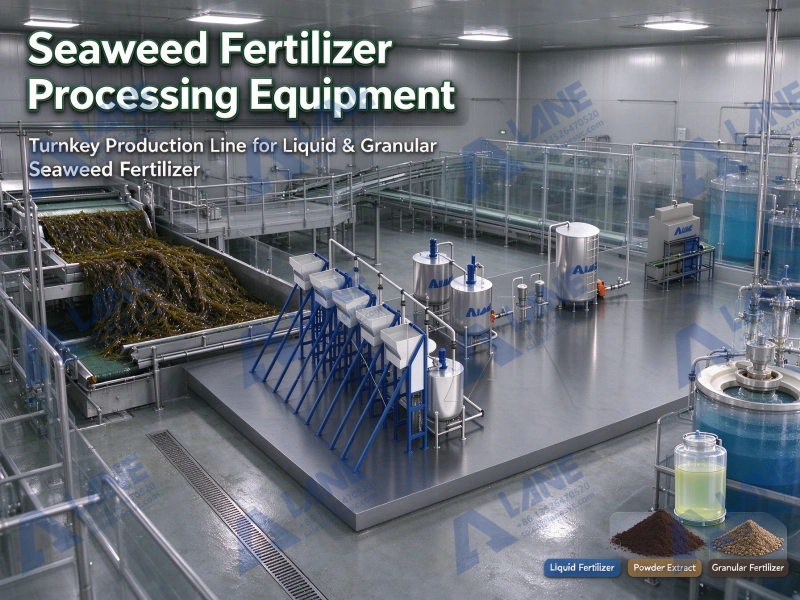
Fertilizer Screening Machine: Solve Clogging & Low Precision Troubles in Fertilizer Granule Classification
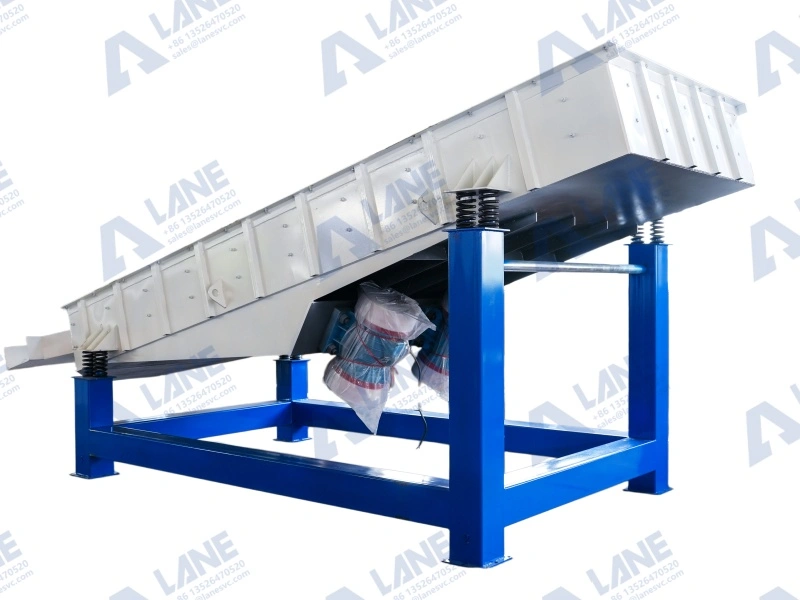
Why Traditional Screening Equipment Limits Fertilizer Production, and How Fertilizer Screening Machine Fixes It
The entire process of fertilizer production cannot do without precise particle sorting. Impurities in raw materials, oversized lumps, and substandard semi-finished product particles all need to be screened out before the granulation, drying, and packaging processes. Many fertilizer factories still use outdated and simple screening equipment, and have long faced three major production problems: First, damp organic fertilizers stick to the screen mesh, frequently blocking the mesh, and the screening efficiency is directly reduced by more than half;
Second, a single-layer screen cannot achieve multi-level classification, and the size of the finished fertilizer particles is uneven, resulting in weak market competitiveness; Third, the old screening equipment has high energy consumption and frequent failures, and the daily maintenance process is cumbersome.
As professional supporting equipment for fertilizer production lines, our factory’s full range of fertilizer screening machines are divided into two core models: rotary screen and vibrating screen. Both devices adopt targeted structural designs to eliminate these problems at their roots and achieve stable, high-precision, and low-energy continuous screening operations for organic fertilizers, compound fertilizers, and nitrogen, phosphorus, and potassium fertilizers.中
Rotary Screener – A Low-Blockage Fertilizer Screening Machine for Bulk Fertilizer Raw Material
Internal Structure & Working Principle of This Fertilizer Screening Machine
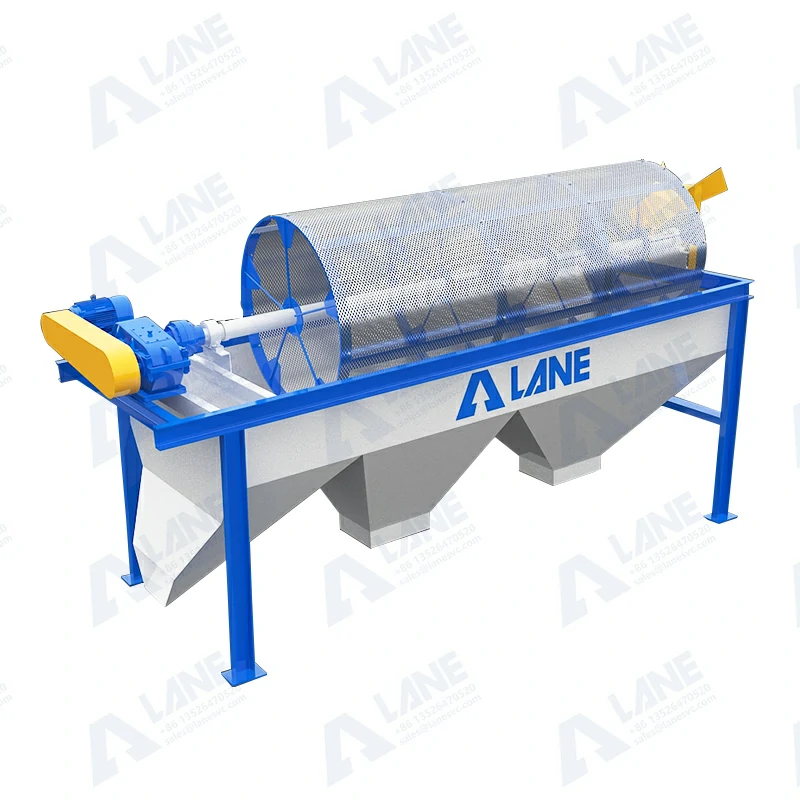
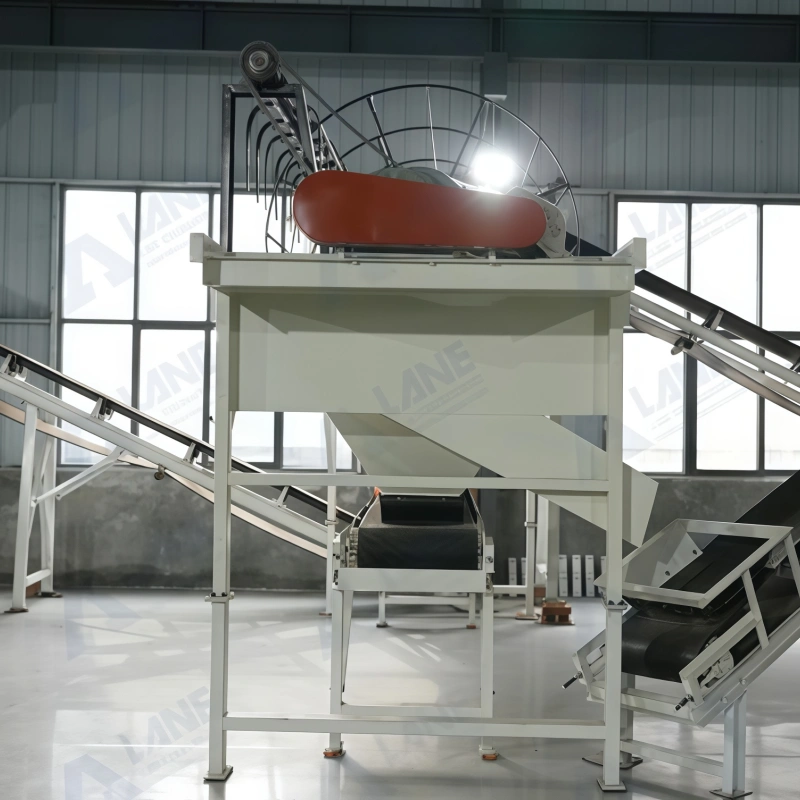
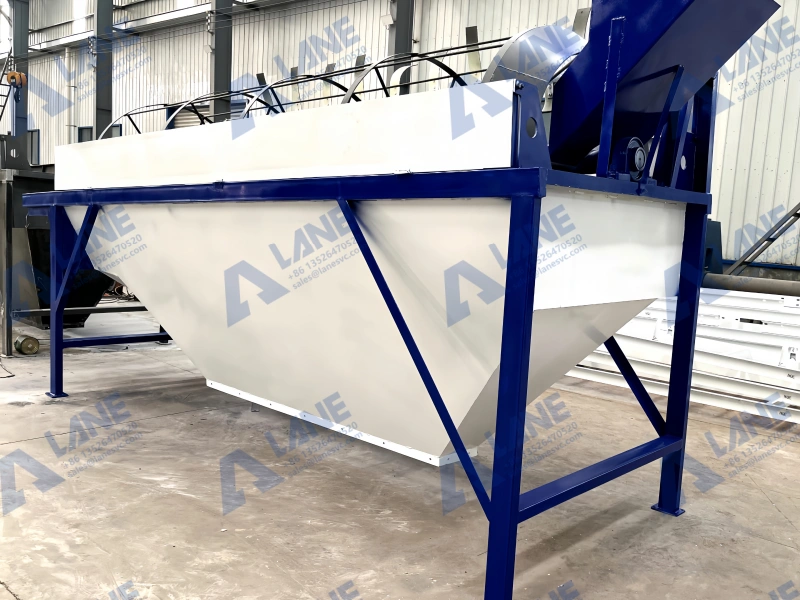
The rotary screener belongs to the core model of our fertilizer screening machine series. Its core separation cylinder is installed in an inclined state relative to the ground, supported by a gearbox deceleration drive system to realize slow and stable rotation. Multiple circular flat steel rings form the screen mesh inside the cylinder.
When the equipment is in operation, a large quantity of fertilizer raw materials are fed from the upper end of the sorting cylinder. During the rotation of the cylinder, fine and qualified fertilizer particles pass through the gaps of the steel ring screen and fall to the finished product discharge port; the coarse and lumpy, and unqualified large particles slide along the inclined cylinder wall and are discharged from the lower end, directly sent back to the crusher for re-crushing.
The built-in plate-type automatic cleaning and screening mechanism is the core design feature of this fertilizer screening machine. During operation, it generates relative motion with the screen body and continuously combs the surface of the screen mesh. Even when processing high-humidity and decomposed raw materials, the sieve holes can remain unobstructed, and there is no need for frequent manual shutdown for cleaning.
| Model | Capacity(tph) | Drum Diameter(m) | Drum Length(m) | Tilt Angle(°) | Rotation Speed(r/min) | Power(kw) |
|---|---|---|---|---|---|---|
| LAS-0.8*2M | 1-2.5 | 0.8 | 2 | 2-3 | 22 | 3 |
| LAS-0.8*3M | 1.5-3 | 0.8 | 3 | 2-3 | 22 | 3 |
| LAS-1*3M | 2-4 | 1 | 3 | 2-3 | 22 | 3 |
| LAS-1.2*4M | 3-5 | 1.2 | 4 | 2-3 | 17 | 4 |
| LAS-1.5*4M | 4-8 | 1.5 | 4 | 2-3 | 17 | 4 |
| LAS-1.5*5M | 5-10 | 1.5 | 5 | 2-3 | 14 | 5.5 |
| LAS-1.5*6M | 5-10 | 1.5 | 6 | 2-3 | 14 | 7.5 |
| LAS-1.8*7M | 10-12 | 1.8 | 7 | 2-3 | 14 | 7.5 |
| LAS-2*6M | 12-15 | 2 | 6 | 2-3 | 14 | 15 |
Four Core Advantages of Rotary Screener Fertilizer Screening Machine
- First, the continuous screening efficiency is high. The rotating cylinder is combined with an integrated multi-layer steel ring screen, enabling continuous feeding and sorting. Customizable screens with different aperture sizes can be used to achieve ultra-fine particle classification, ensuring the accuracy of fertilizer product screening.
- Second, the material adaptation range is wide. This fertilizer screening machine can handle dry powders, high-humidity and viscous decomposed fertilizers, granular compound fertilizers, and blocky raw materials. Besides the fertilizer production line, it can also be adapted for screening operations in the mining, chemical, and building materials industries.
- Third, the operating energy consumption is lower. The motor is driven by a reducer to rotate the cylinder, with a smooth transmission resistance. The entire screening process operates continuously with low power loss, and the structure of the cylinder is optimized to further reduce unnecessary energy consumption.
- Fourth, the structure is simple and the operation and maintenance are convenient. The reducer and the cylinder adopt a separate and independent structure. It is very convenient to disassemble, replace, and repair on-site. The screen is fixed inside the removable screen frame and can be quickly removed. Different-sized steel ring screens can be replaced according to production needs.
Vibrating Screener – High-Precision Multi-Grade Fertilizer Screening Machine for Finished Fertilizer Grading
Product Introduction & Working Value Of Vibrating Screener Fertilizer Screening Machine
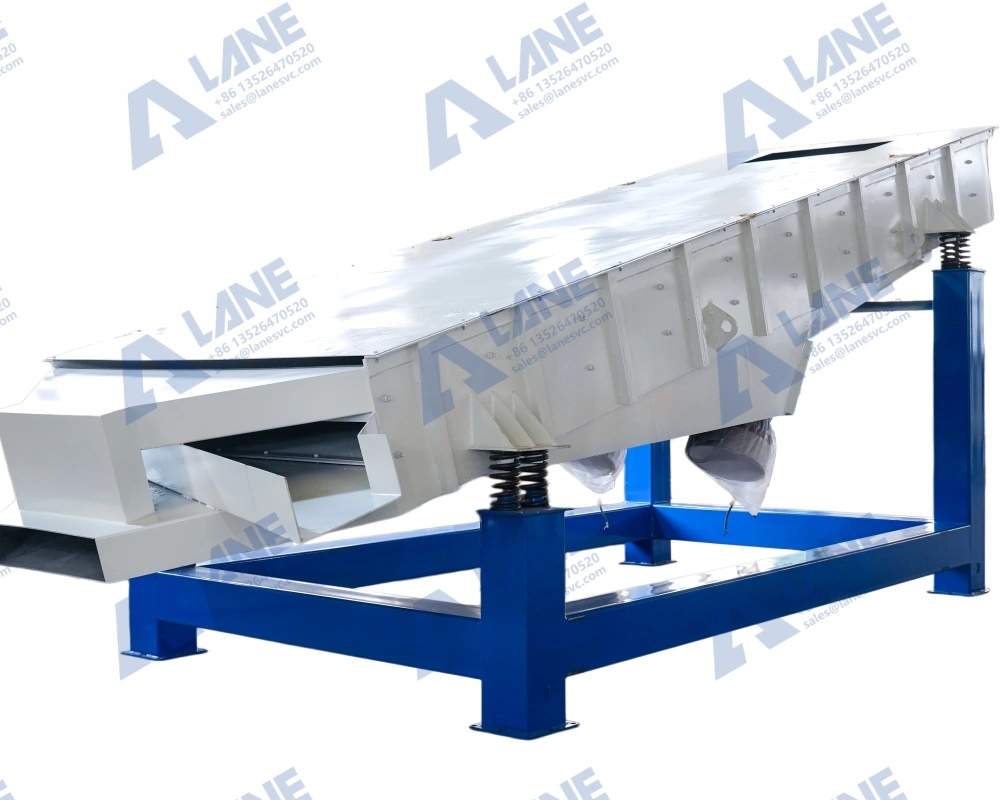
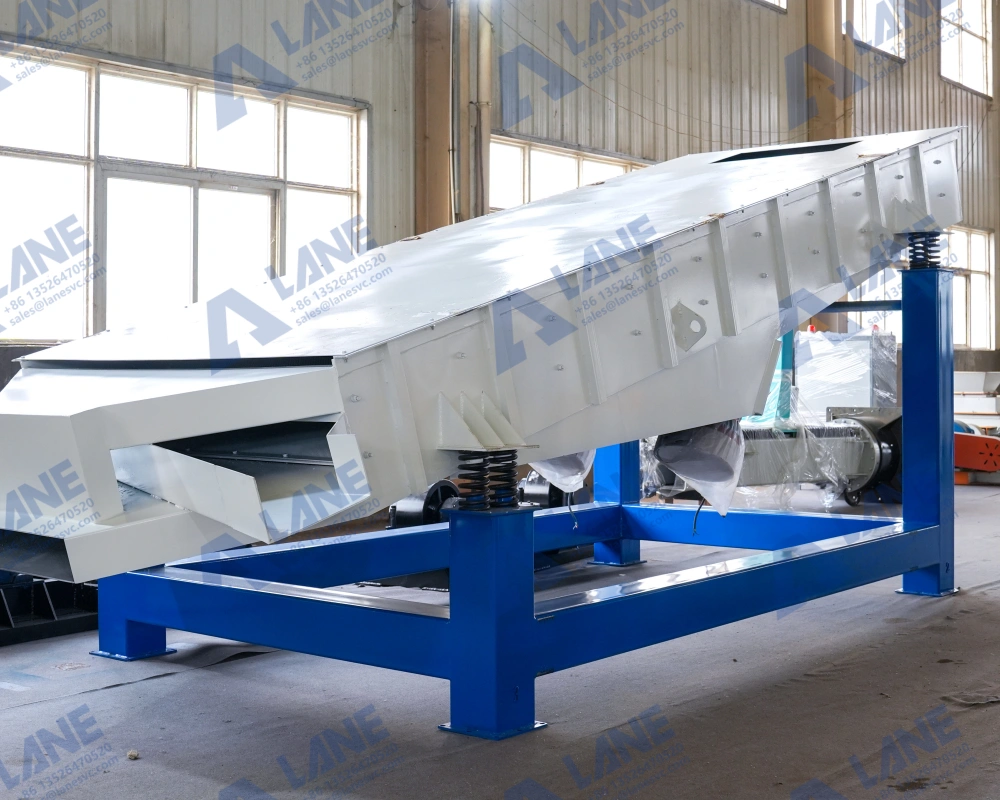
Our vibrating screener is independently optimized and developed for fertilizer production demands, absorbing mature foreign screening equipment technology and combining years of domestic fertilizer equipment manufacturing experience. It serves three core screening links in fertilizer lines: raw material pre-screening, semi-finished intermediate screening and finished fine grading.
Equipped with this fertilizer screening machine, impurities and oversized particles in the raw materials can be removed, thereby improving the purity and uniformity of the fertilizer products. Unqualified particles are recycled back to the granulation equipment for re-shaping, significantly enhancing the overall processing capacity of the entire fertilizer production line. The multi-layer screen structure enables multi-level particle size classification in one go, ensuring that the finished fertilizer fully meets the market particle standard requirements.
Compared with ordinary screening equipment on the market, our vibrating screen has a large single-machine processing capacity, strong structural rigidity, low operating noise, and a complete series of specifications. It can completely replace imported screening equipment for use in fertilizer plants.
Seven Outstanding Strengths of Vibrating Screener Fertilizer Screening Machine
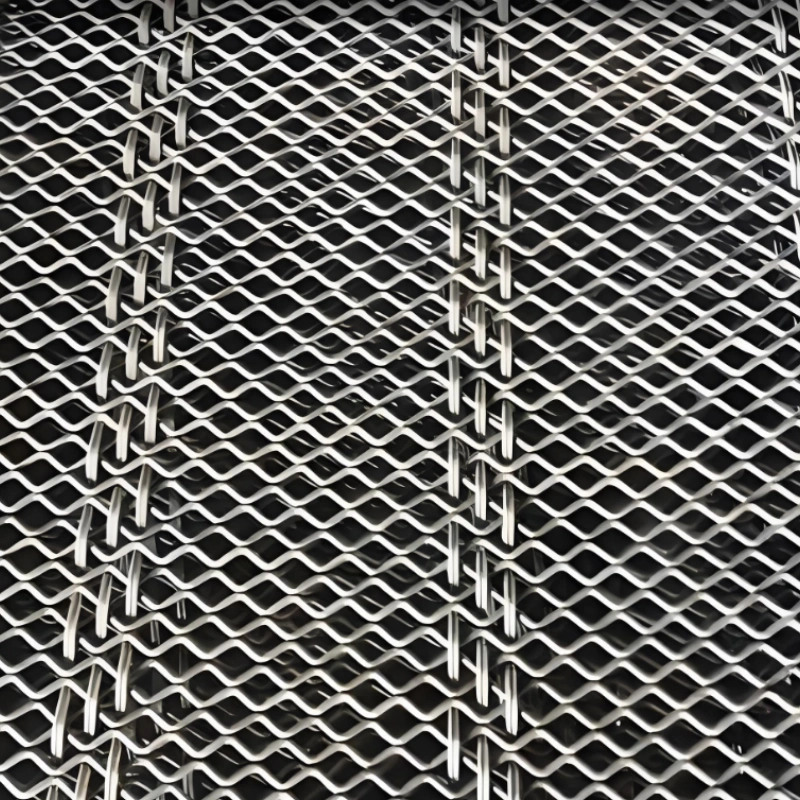
- High screening efficiency and large processing capacity: The vibrating force drives the screen surface to operate, quickly completing the separation of large quantities of materials, and there will be no problem of material accumulation on the screen.
- Multi-layer synchronous classification: Equipped with stacked multi-layer screen nets, this fertilizer screening machine can complete multiple rounds of particle classification with a single feed, meeting the requirements of various particle size standards.
- Extremely high sorting accuracy: The vibrating working mode allows the materials to be fully dispersed on the screen surface, and precise sorting is carried out strictly according to the set particle size.
- Flexible parameter adjustment: The vibration amplitude and frequency can be freely modified, suitable for different humidity, viscosity, and particle size of fertilizer materials, achieving the best screening effect.
- Screen surface anti-blocking and anti-sticking: The vibrating screen layer has its own self-cleaning ability, effectively avoiding the problem of wet fertilizer sticking and blocking the holes, prolonging the service life of the screen net, and maintaining a stable screening efficiency over the long term.
- Simple structure, low failure rate: Integrated streamlined structure design, installation and daily maintenance operations are simple, reducing the downtime due to faults.
- Wide application across industries: In addition to various fertilizer classification, this fertilizer screening machine can also be used for particle material separation in the metallurgy, mining, grain, and building materials industries.
| Model | Capacity(tph) | Overall Size(mm) | Tilt Angle(°) | Amplification(mm) | Power(kw) |
|---|---|---|---|---|---|
| ZDS-0520-1 | 0.03-5 | 2140*808*848 | 5 | 5-7 | 0.4 |
| ZDS-0520-2 | 0.03-5 | 2140*808*880 | 5 | 5-7 | 0.55 |
| ZDS-0520-3 | 0.03-5 | 2140*808*920 | 5 | 5-7 | 0.75 |
| ZDS-1025-1 | 0.1-15 | 2300*1300*1500 | 5 | 5-7 | 0.75 |
| ZDS-1025-2 | 0.1-15 | 2300*1300*1550 | 5 | 5-7 | 1.1 |
| ZDS-1025-3 | 0.1-15 | 2300*1300*1600 | 5 | 5-7 | 1.5 |
How to Choose the Right Fertilizer Screening Machine for Your Fertilizer Production Line
When many fertilizer factories purchase fertilizer screening machines, they often struggle to determine which type of screen to choose – the rotary screen or the vibrating screen. These two models are designed for completely different production processes and material characteristics. Please refer to the following matching rules for selection.
If the following conditions are met, the rotary screen model of the fertilizer screening machine should be preferred: mainly for screening large quantities of decomposed raw materials; the raw materials have high moisture content and are prone to sticking to the screen; the screening process is located at the front end of the crushing and feeding section, and the core requirement is to remove large lumps.
In the following scenarios, the vibrating screen model of the fertilizer screening machine is recommended: high-precision multi-level classification is required for the finished fertilizer particles; the materials are semi-finished or finished granular compound fertilizers; the sales of finished fertilizers have strict unified particle size standards, and the workshop requires low noise and stable operation.
If your production line includes both raw material pre-sieving and finished product fine classification processes, our factory supports the combination of rotary screen and vibrating screen for layout, forming a complete integrated fertilizer screening machine system covering all sorting stages from raw materials to finished products.
Standard Installation, Operation & Maintenance Rules for Our Fertilizer Screening Machine
Installation & No-Load Debugging Standards for Fertilizer Screening Machine
All the fertilizer screening machines in our factory are assembled and debugged before leaving the factory. After the equipment arrives, all components are first checked for any damage caused by transportation impacts; the horizontal deviation of the entire machine must not exceed 2 millimeters per meter. It is strictly prohibited to stack additional heavy objects on the sieve body to prevent damage to the structural rigidity.
Before the no-load test run, all bolts and fasteners must be tightened. Start the equipment with no load and run it continuously for 2 hours. Observe throughout whether there are any abnormal impacts or noises. The temperature rise of the bearings must not exceed 70 degrees Celsius. After confirming that the no-load operation is stable, conduct a 8-hour load test run with uniform feeding before officially commencing production. During the operation of the fertilizer screening machine, any adjustment operations on the internal components are strictly prohibited.
Daily Operation & Shutdown Specifications of Fertilizer Screening Machine
Before starting the machine, thoroughly check the circuit, the lubrication status of the bearings, and the integrity of the screen mesh. Manually rotate the rotary or vibrating screen to confirm that it rotates smoothly without any jamming. The fertilizer screening machine must be started without load. After the operation stabilizes, then evenly feed the material. Inconsistent feeding will reduce the screening accuracy and cause blockage of the local screen mesh.
Before stopping the machine, stop the raw material feeding in advance, keep the equipment running until all the materials in the sieve are emptied, and then cut off the power supply. If the equipment stops unexpectedly due to a fault, before restarting, it is necessary to clean up the residual materials on the rotary or screen surface to avoid excessive torque from tearing the screen mesh. During production, conduct hourly inspections of the discharge particle size, dust leakage, and temperature rise of components, and promptly eliminate potential fault hazards.
Lubrication & Regular Maintenance Guide for Fertilizer Screening Machine
Sufficient lubrication is the key measure to extend the service life of the fertilizer screening machine. The bearing housing of the rotary screen uses calcium-based lubricating grease, and the reducer is filled with 220# gear oil; the bearing housing at both ends of the equipment is reserved with independent lubrication ports, and the lubrication operation must be completed when the equipment is stopped.
Assign a dedicated person to be responsible for the daily inspection of the equipment. At the end of each shift, clean the residual fertilizer residue adhering to the screen to avoid long-term solidification and blockage of the holes. Under normal operating conditions, the temperature rise of the bearings should be controlled within 40℃, and the maximum temperature should not exceed 70℃; if the temperature exceeds the limit, immediately shut down the fertilizer screening machine to investigate and solve the faults. All disassembly and maintenance work must be operated after power disconnection.
LANE Custom Fertilizer Screening Machine Matching Solutions for All Kinds Of Fertilizer Lines
Lane focuses on the independent research and development of the complete set of fertilizer production supporting equipment. Our own fertilizer screening machine series includes two core models: rotary screen and vibrating screen. We can customize the screen mesh size, equipment processing capacity, overall machine size and dust-proof supporting devices according to the actual fertilizer types of the customers, hourly production capacity of the workshop, and the size of the workshop site.
The fertilizer screening machine can be combined with our factory’s large-angle belt conveyor, fertilizer granulator, dryer, and packaging machine to build a fully automated closed-loop fertilizer production line. Relying on the complete production manufacturing strength and full-cycle after-sales technical support, Lane helps fertilizer plants solve the bottleneck of all-process screening from raw material sorting to finished product particle classification.
Get Custom Fertilizer Screening Machine Layout & Quotation for Your Factory
Are you still suffering from frequent blockages of the screens, uneven particle sizes of fertilizers, and low screening capacity? Our factory’s multi-model fertilizer screening machines can solve all the particle classification problems in organic fertilizer, compound fertilizer, and nitrogen-phosphorus-potassium fertilizer production lines in one go.
Our professional technical team will provide a free one-on-one layout plan for the fertilizer screening machine production line. Based on your raw material moisture content, production capacity, and finished product particle size standards, they will precisely match rotary screens or vibrating screens.
Leave the factory’s hourly production capacity, fertilizer types, and workshop space requirements in the comment section below, or contact the sales team directly. You can obtain the parameter drawings and the latest quotations for the fertilizer screening machine within 24 hours. We will specially design a low-maintenance and high-capacity screening system for your fertilizer production line.