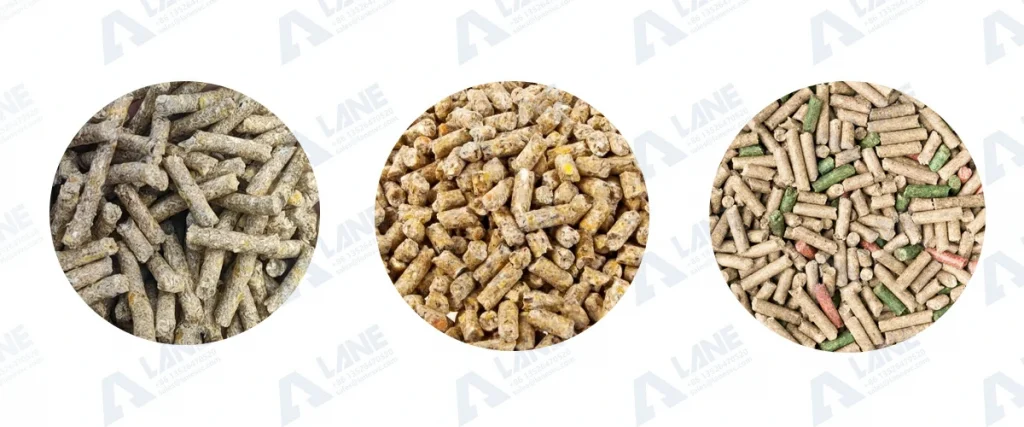
Flat Die Granulator Blockage: Why Does Material Build Up During Pelletizing?
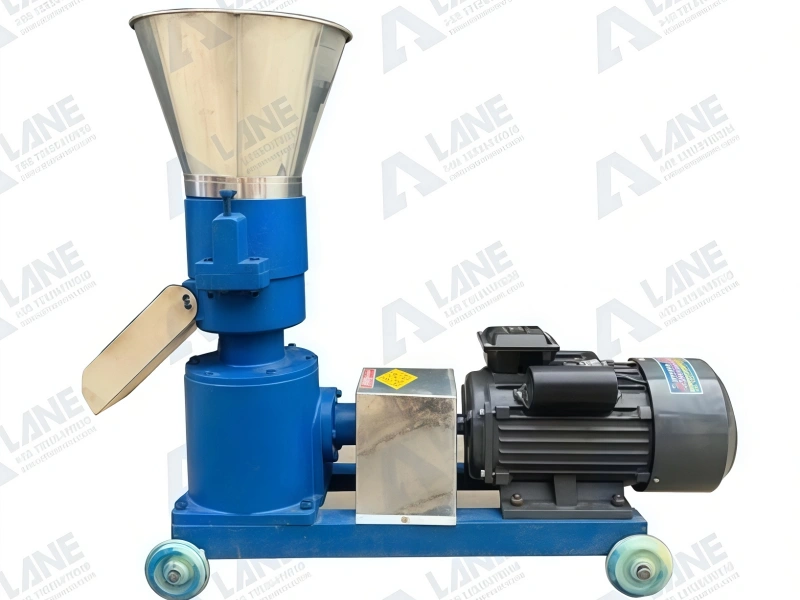
Many small-scale farms and micro-fertilizer processing plants frequently encounter blockage failures in the production of granules when using flat-mold granulator. Sudden blockage will force the equipment to stop frequently, directly compress the daily particle production, and at the same time increase the cost of maintenance and replacement of the mold and roller. The feed inlet and pressing chamber structure of the Ryan flat die granulator is optimized, which can effectively alleviate the problem of material accumulation. Inadequate pretreatment of raw materials and errors in feeding operations are the two major causes of frequent jamming of the on-site granulator.
Long-term unaddressed blockage will not only delay order delivery, but also shorten the service life of core wearing parts of pellet equipment. Most factory operators only choose to clean up blocked materials after faults occur, ignoring the root causes hidden in raw materials, operation and equipment status.
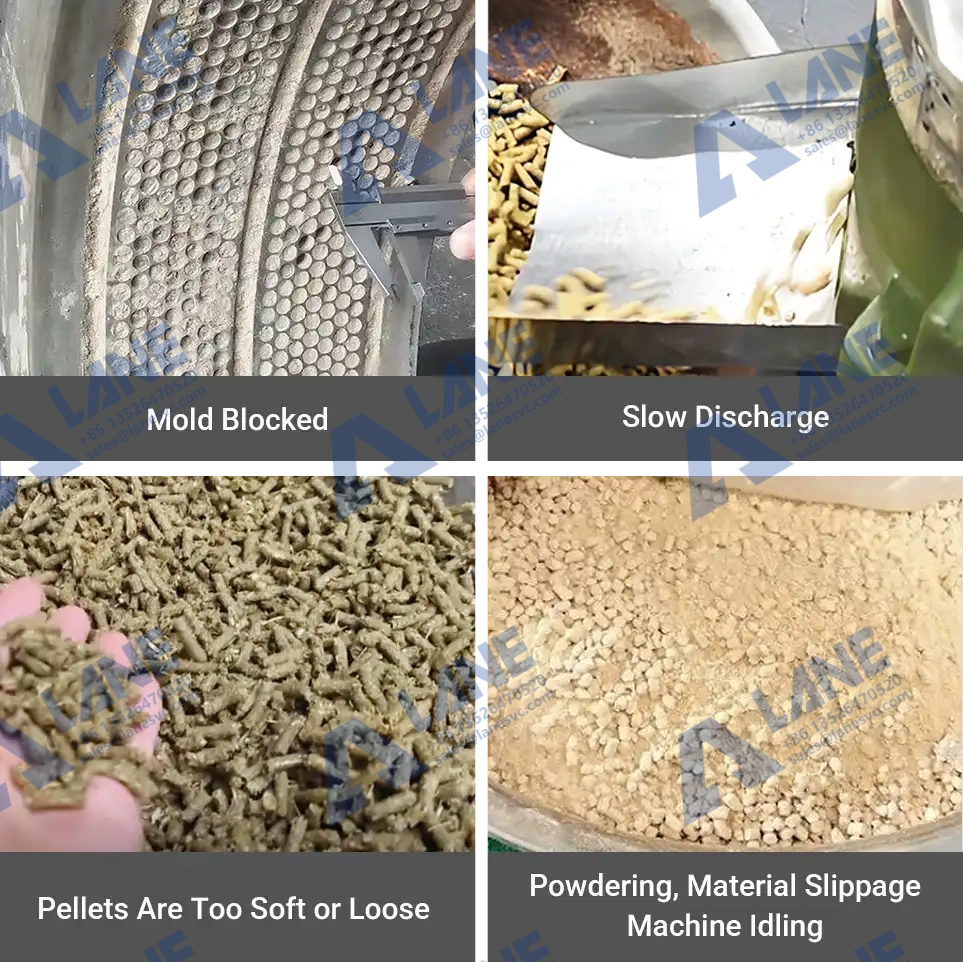
Four Core Causes Triggering Flat Die Granulator Blockage on Production Site
Flat Die Granulator Blockage never comes from a single factor. It usually forms by the combination of raw material state, feeding control, mold status and equipment parameter setting. We break down on-site actual faults to let users locate blockage causes quickly during daily inspection.
• Excessive Moisture Inside Organic Raw Materials
Fermented cow dung and chicken manure stored outdoors will absorb rainwater, and material viscosity surges once moisture content exceeds 32%. High-viscosity materials cannot be extruded and shaped quickly after entering die holes.
The wet material sticks firmly to the inner wall of die holes, gradually sealing the discharge channel completely. Ultra-dry powder will also heat up and agglomerate under friction to block pellet outlets.
• Oversized Raw Material Particles Enter Pressing Chamber Directly
Uncrushed crop straw and caked mineral fertilizer are directly put into the feeding hopper. Massive hard materials jam the gap between pressing roller and flat die instantly.
Large materials block downward extrusion of fine materials, trigger cavity accumulation rapidly and directly cause Flat Die Granulator Blockage to shut down the whole machine.
• Overfeeding Causes Material Overload Inside Pelletizing Chamber
Workers pour raw materials in one big batch manually, making the feeding hopper full and overflowing. Pressing rollers cannot perform even rolling and extrusion under full-load material pressure.
Surface materials slip and pile up continuously, failing to penetrate die holes for discharging. The whole chamber material is compacted and locked to stall the equipment.
• Worn Flat Die and Roller Destroy Normal Extrusion Effect
Long-term operation leads to burrs on the inner wall of die holes and out-of-round deformation of the pressing roller outer ring. Material extrusion resistance rises sharply after component wear.
Broken residual pellets stay inside die holes during production. Long-term accumulation fully blocks the die holes and brings periodic Flat Die Granulator Blockage.
Direct Economic Losses Caused by Long-Term Flat Die Granulator Blockage
Continuous Flat Die Granulator Blockage will not only pause production, but also bring extra recurring costs to small-scale pellet production workshops. We calculate tangible cost losses for factory operators for reference.
• Sharp Drop of Daily Pellet Finished Output
Each blockage shutdown and manual cleaning takes more than 30 minutes of effective production time. Multiple blockages per day will compress effective working hours severely.
A device with a designed daily output of 3 tons will have its actual production capacity cut in half, failing to finish fixed customer orders on schedule.
• Accelerated Abrasion of Flat Die and Press Roller Parts
When the chamber is blocked, the motor runs at high load idling status. Pressing rollers squeeze compacted hard materials forcibly under abnormal load pressure.
The wear-resistant layer on die hole walls and roller surface peels off rapidly, and the replacement cycle of core vulnerable parts is shortened by more than half.
• Burnt Motor Risk from Long-Time Overload Operation
Material locking leads to sharp motor load surge and abnormal current rise. Old pellet machines without overload protection face high risks of motor coil burnout.
Motor rewinding or new motor procurement will generate one-time high maintenance cost and long production downtime for repair work.
• Unqualified Pellet Products with Uneven Size
Intermittent blockage leads to unstable discharging flow, formed pellets have huge differences in length and the proportion of broken materials rises greatly.
Fertilizer pellets and feed pellets have poor commodity appearance, downstream distributors refuse to accept finished products and cause finished product backlog loss.
Structural Optimization of Flat Die Granulator to Prevent Flat Die Granulator Blockage
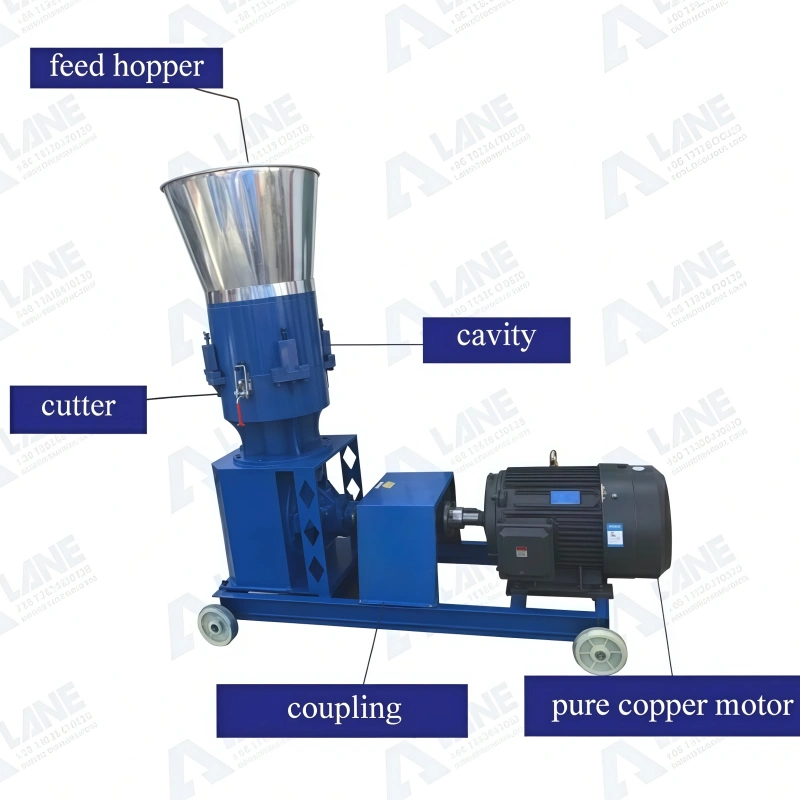
LANE upgrades key structures targeting the high-frequency jam points of traditional pellet machines to curb Flat Die Granulator Blockage from the equipment side. All optimized structures are displayed on our physical machine for customers to inspect on site.
• Wide Inclined Feeding Hopper Avoids Material Arching Blockage
The widened hopper inner wall adopts smooth arc transition treatment. High-humidity manure and fiber materials will not arch in the middle of the hopper for bridging blockage.
Raw materials slide down smoothly into the pressing chamber, realizing source-side blockage prevention at the feeding inlet of the granulator.
• Adjustable Roller Gap Matches Different Raw Material Viscosity
Operators widen the roller gap for high-viscosity organic fertilizer with high moisture, and narrow the gap for dry and hard powder raw materials.
The extrusion state matches raw material characteristics perfectly, avoiding material slipping and accumulation caused by unreasonable gap setting to stabilize continuous discharging.
• Thickened Wear Resistant Flat Die with Chamfered Die Hole Entrance
The inlet of each die hole is processed with chamfer flaring. Materials are guided into die holes by pressing rollers more easily, and residual materials are hard to get stuck at hole openings.
Thickened steel plate flat die has extremely low deformation probability, maintaining regular die hole shape for long-term use and reducing die hole blockage probability effectively.
• Built-In Overload Protection Motor Cuts Power When Material Jams
Once the internal chamber material locks and the load exceeds the safety threshold, the supporting motor will cut off power automatically to stop operation.
It avoids spindle and mold damage from high-load forced rotation, meanwhile helping staff open the chamber quickly to clean accumulated blocked materials.
• Detachable Pressing Chamber Shell for Fast Blockage Cleaning
The pressing chamber shell uses snap-on fastening structure, users do not need to disassemble multiple whole-machine bolts for opening the chamber.
A single worker can take out compacted agglomerated materials quickly, greatly shortening the maintenance downtime caused by Flat Die Granulator Blockage cleaning.
Practical On-Site Operation Skills to Reduce Flat Die Granulator Blockage Frequency
Cooperate optimized operation rules with LANE flat die granulator to further cut the probability of pellet machine blockage in daily production. All operation methods can be put into use directly without complicated transformation.
• Control Raw Material Moisture Within 20% To 28% Before Pelletizing
Mix dry straw and rice husk powder into over-wet manure to balance overall moisture content. Spray a small amount of atomized water to increase humidity for ultra-dry powder materials.
Keep raw material moisture within the golden forming range of 20%-28% for flat die extrusion, preventing mold sticking from over-wet material and agglomeration blockage from over-dry material.
• Crush All Bulk Raw Materials Below 5mm Before Feeding
Use a small hammer mill to crush caked organic fertilizer and hard mineral fertilizer completely before feeding to the flat die granulator.
No oversized hard blocks enter the roller gap to cause jamming, guaranteeing fine and uniform raw materials enter the forming chamber for stable extrusion.
• Adopt Uniform Continuous Feeding Instead of Batch Pouring
Match a small screw feeder for steady quantitative feeding. Maintain the filling volume of chamber materials at 60%-70% during continuous production.
Reserve enough space for material rolling and extrusion, avoiding full-cavity compaction accumulation that triggers Flat Die Granulator Blockage.
• Preheat The Flat Die with Dry Powder Before Formal Production
Start the machine and run empty with dry bran and husk materials for 5 minutes before formal pellet production to raise the temperature of the flat die mold.
Wet raw materials will not adhere to the hot mold hole wall easily, reducing the situation that wet materials stick to die holes and block the outlets.
Routine Maintenance Checklist to Keep Anti-Blockage Performance of Flat Die Granulator
Fixed daily maintenance can keep the extrusion and feeding performance stable, and avoid recurrent Flat Die Granulator Blockage caused by equipment aging. We sort out simple daily inspection items for workshop management.
• Clean Residual Pellet Residue Inside Die Holes After Daily Shutdown
Use special punching needles to dredge every die hole thoroughly after daily production shutdown. Residual pellets will harden with moisture and seal die holes completely overnight.
Complete die hole dredging at the end of work is the lowest-cost daily maintenance step to avoid startup blockage on the next working day.
• Check Roller Roundness and Surface Wear Every Five Working Days
Carry out visual inspection and rotation test for pressing rollers every 5 working days. Repair or replace rollers immediately once unilateral wear and depression appear on roller surface.
Out-of-round pressing rollers cannot realize uniform rolling of raw materials, which is a hidden reason for local material accumulation and blockage inside the chamber.
• Clear Fiber Winding on Roller Shaft and Hopper Inner Wall Daily
Long fibers from straw and forage crops are easy to wind around the roller shaft and hopper inner wall to form hard agglomerates after accumulation.
Strip wound fibers every day to prevent large fiber agglomerates falling into the pressing chamber to cause sudden blockage failure.
• Check Seal and Fastener of Pressing Chamber Regularly
Material leakage from chamber gaps accumulates around the transmission structure, which reversely drags materials to cause disordered feeding and unstable extrusion.
Tighten snap fasteners and replace aging sealing strips regularly to keep the pressing chamber closed and neat for smooth material operation.
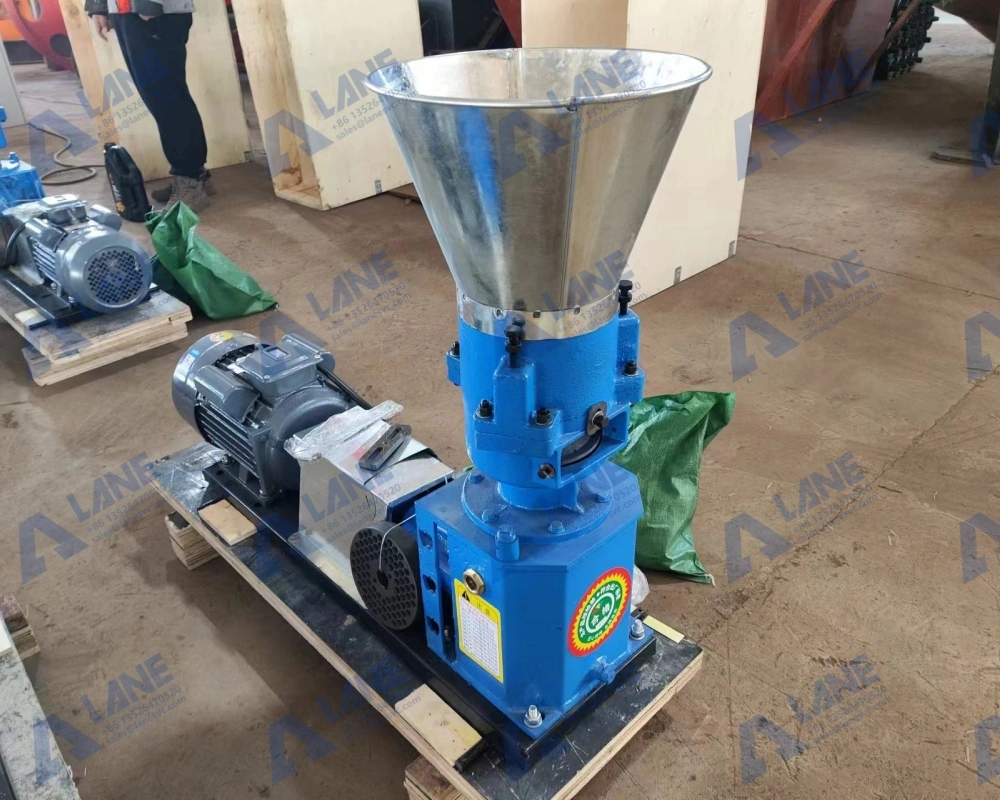
Model Matching Suggestion for Flat Die Granulator Based on Raw Material Features
Select targeted LANE flat die granulator model according to raw material fiber length and moisture to prevent Flat Die Granulator Blockage from source. Reasonable model selection can cut fault probability by more than 60%.
• Short Fiber Dry Feed Material: Standard Base Model
Formula feed for poultry and livestock, fish meal mixed materials have stable low moisture and short fiber characteristics. Choose our standard basic flat die granulator model.
Basic anti-blockage structure can meet continuous pelletizing demand perfectly, ideal for small family farms to process self-use feed pellets.
• Medium Humidity Organic Fertilizer: Reinforced Hopper Model
For decomposed cattle and sheep manure organic fertilizer production lines, we recommend the reinforced model with widened anti-bridging feeding hopper.
It adapts to stable feeding of semi-wet organic materials and acts as the main pelletizing equipment for small and medium organic fertilizer processing plants.
• High Moisture Sludge & Long Fiber Straw: Heavy Duty Reinforced Model
Biogas residue, garden straw and other high-viscosity hard-to-form materials need our heavy-duty reinforced flat die granulator configuration.
Thickened chamber body and high-torque motor provide strong extrusion force to break viscous agglomerates for high-difficulty raw material pelletizing work.
| Model | Capacity(kg/h) | Weight(kg) | Power(kw) |
|---|---|---|---|
| LA125 | 80-100 | 35 | 3-4 |
| LA150 | 90-150 | 40 | 3-4 |
| LA160 | 150-200 | 45 | 4.5 |
| LA210 | 200-300 | 110 | 7.5 |
| LA230 | 350-450 | 150 | 11 |
| LA260 | 400-500 | 190 | 15 |
| LA300 | 500-700 | 400 | 22 |
| LA360 | 700-800 | 600 | 22 |
| LA400 | 900-1200 | 750 | 30 |
Customer Frequently Asked Practical Questions
Q1: Can LANE flat die granulator run continuously with high moisture cow manure?
After adjusting raw material moisture via dry and wet material blending, the granulator with widened feeding bin and high-power pressing roller can realize 8-hour non-stop pelletizing work.
Compared with ordinary flat die granulator models, the blockage frequency drops by more than 65% in actual production tests.
Q2: How to quickly release severe Flat Die Granulator Blockage on site?
Cut off the power supply and shut down the machine immediately to avoid forced startup damage. Open the detachable chamber cover to dig out compacted bulk materials manually.
Dredge all die holes completely, then run empty with dry materials to preheat the mold before resuming formal pellet production.
Q3: Does larger die hole size effectively reduce granulator blockage?
Enlarged die holes are suitable for pelletizing long fiber raw materials, but excessive aperture will lead to loose pellets that cannot maintain forming shape.
Adjust raw material moisture and feeding speed first, then match the die hole size according to finished pellet specification demand.
Q4: Is regular mold polishing helpful to avoid Flat Die Granulator Blockage?
Regular polishing for die hole inner walls can remove burrs and residual sticky materials, reduce material extrusion resistance and stickiness on mold surface.
Polishing maintenance every 15 working days can keep smooth die hole surface and cut sticky blockage probability obviously.
Q5: Can mobile wheel base of LANE granulator affect anti-blockage performance?
The movable wheel base is only for flexible equipment relocation, the overall pressing chamber and feeding structure are consistent with fixed base models.
It will not change the anti-blockage structural advantages of the flat die granulator during pelletizing operation.
Conclusion
The flat die granulator blockageis a comprehensive problem covering the pretreatment of the covering raw material, the feeding operation, and the equipment condition. After the failure, simply clearing the blockage cannot cure the hidden danger. The Lane flat die granulator is equipped with a special anti-blockage structure, which optimizes the stability of granulation operations. With standardized raw material conditioning, uniform feeding, and daily maintenance, granule processing plants can achieve long-term stable continuous production and reduce unnecessary downtime losses
We provide customized model selection, on-site operation guidance and after-sales maintenance support for global pellet processing customers. Contact our engineering team to get targeted anti-blockage production solutions for your raw materials.