Hot Fertilizer Storage Problems: Why Cooling Is Important before Packaging
I’ve worked as a process engineer with dozens of fertilizer factories, and I’ve noticed one common mistake across most plants. Many organic and compound fertilizer producers pack pellet fertilizer right after rotary drying, without cooling the material first.
Most plant managers overlook the risks of packaging hot fertilizer. This simple operating error causes multiple storage problems and leads to direct economic losses, such as fertilizer caking, bag damage and reduced nutrient levels. Based on years of on-site production experience, this article sorts out the actual risks of hot fertilizer packaging and storage. It also explains how rotary coolers fix these issues fundamentally on the production line.
Main Hot Fertilizer Storage Problems Caused by High-temperature Packing
Fertilizer pellets stay very hot after coming out of the rotary dryer. If workers skip the cooling step and pack pellets right away, heat gets trapped inside sealed bags. Long-term stacking in the warehouse will trigger a variety of fertilizer storage issues. Below are the most common problems found on production sites.
> Fertilizer Pellets Clump and Form Hard Blocks inside Bags
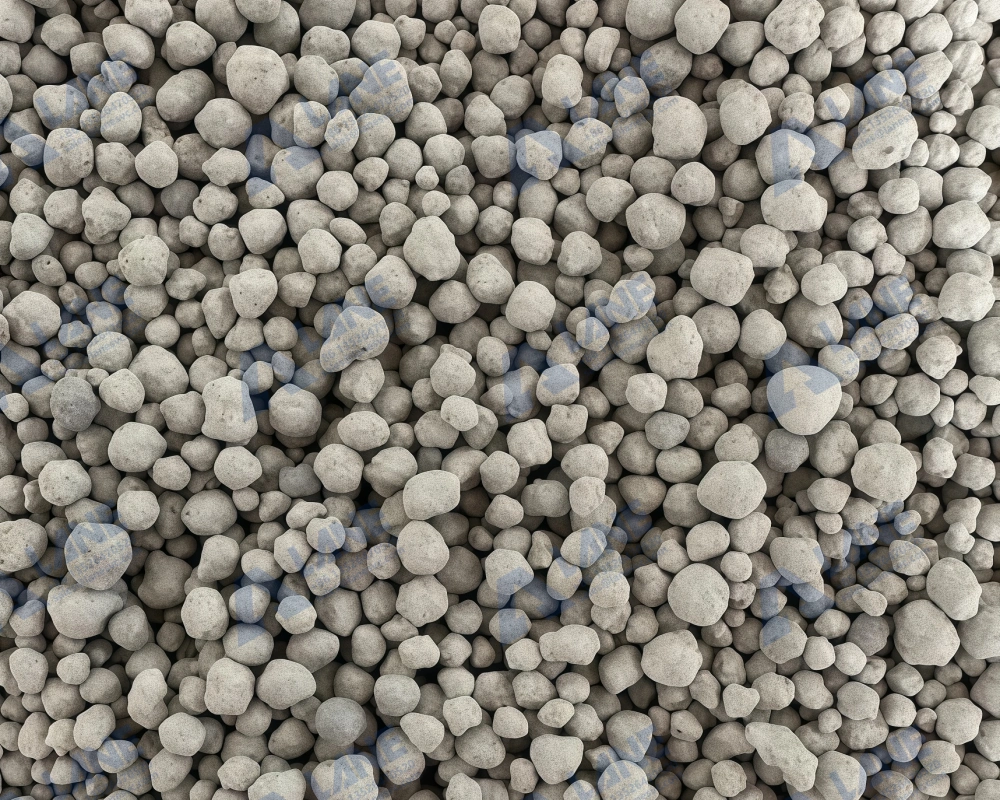
High temperature speeds up the dissolution and recrystallization of salt components in fertilizer pellets. During storage, hot pellets stick firmly to one another and form hard lumps. Farmers cannot spread caked fertilizer evenly on farmland. This directly causes customer complaints and product returns for fertilizer factories.
> High Temperature Accelerates Loss of Active Nutrient Content
Sealed fertilizer bags trap continuous heat, which speeds up the volatilization of nitrogen elements. The actual nutrient content of finished fertilizer will drop below the labeled standard. The products fail to meet official specifications, bringing market inspection risks and reputation losses to manufacturing plants.
> Heat Build-up Damages Plastic Packaging Bags
Heat accumulated inside sealed bags gradually softens plastic packaging films. The bags are easy to crack during long-time warehouse storage and transportation. Broken packages lead to fertilizer waste, increase production cost, and cause messy and unclean warehouse environments.
How Uncooled Fertilizer Triggers Hot Fertilizer Storage Problems
Most on-site operators believe short-term high temperature of fertilizer will not cause serious issues. In fact, sealed fertilizer bags form a closed space with very slow heat dissipation. The trapped heat keeps acting on fertilizer pellets and gradually aggravates all storage problems. The material physical changes below clearly explain the internal mechanism.
> Slow Heat Dissipation inside Sealed Fertilizer Bags
Stacked fertilizer bags squeeze tightly together. There is almost no air circulation between stacked layers. After packaging, residual heat stays inside the fertilizer pile for many days and cannot dissipate naturally.
> Temperature Rise Boosts Internal Moisture Migration
The internal and external temperature difference pushes moisture inside fertilizer pellets to move toward bag walls. Water vapor condenses on the inner surface of plastic bags. The damp inner environment further makes fertilizer pellets absorb moisture and accelerate caking.
> Continuous Thermal Reaction Changes Pellet Structure
Long-term thermal pressure reduces the mechanical strength of fertilizer pellets. The pellets become fragile and easily break into fine powder during handling and transportation. Excessive powder affects fertilizer appearance and brings bad user experience for farmers.
Common Wrong Solutions to Hot Fertilizer Storage Problems
When hot fertilizer storage problems occur, most factories only adjust warehouse management rules. Few plant managers choose to optimize front-end production processes. These temporary solutions only relieve surface symptoms instead of solving the root cause. Meanwhile, they bring extra operating costs to fertilizer manufacturers.
> Extending Natural Cooling Time Occupies Large Workshop Space
Spreading hot fertilizer for natural cooling requires large workshop space. It also extends the overall production cycle and limits daily production output. Factories have to invest more to expand workshop area if they want to improve production capacity.
> Increasing Bag Thickness Cannot Block Internal Heat Accumulation
Thicker plastic bags only isolate external moisture. Packaging materials have no heat dissipation function at all. Internal heat still gathers inside sealed bags after stacking, which eventually causes various hot fertilizer storage problems.
> Adding Extra Anti-caking Agent Raises Raw Material Cost
Many factories add more anti-caking agents to reduce pellet caking. However, this method cannot eliminate the fundamental high-temperature inducement. Fertilizer caking will still happen after long-term storage of finished products.
Why Rotary Cooler Is the Reliable Way to Prevent Hot Fertilizer Storage Problems
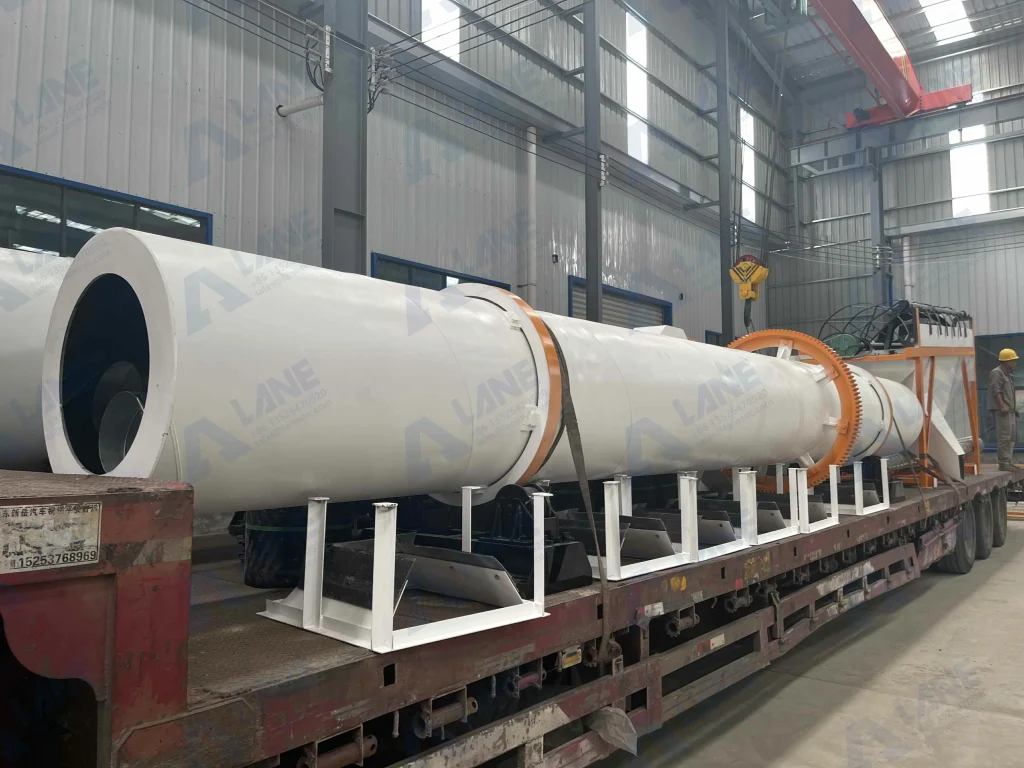
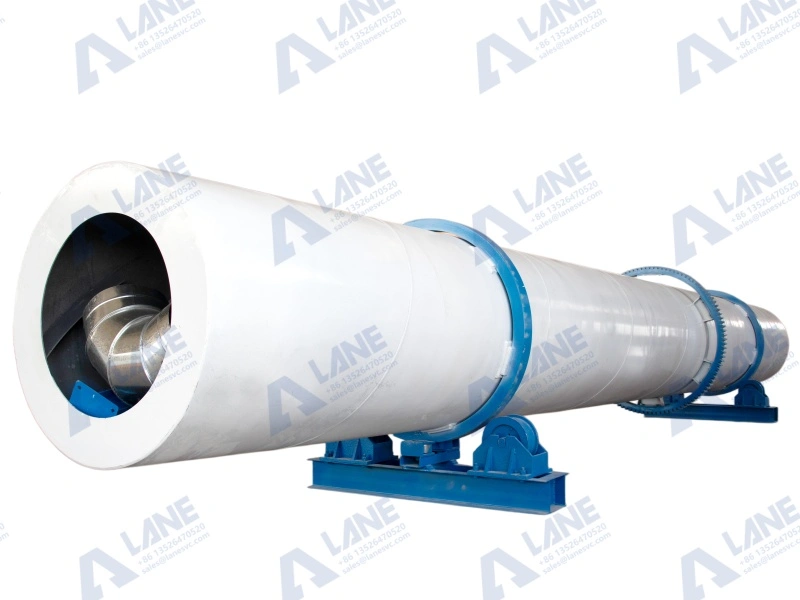
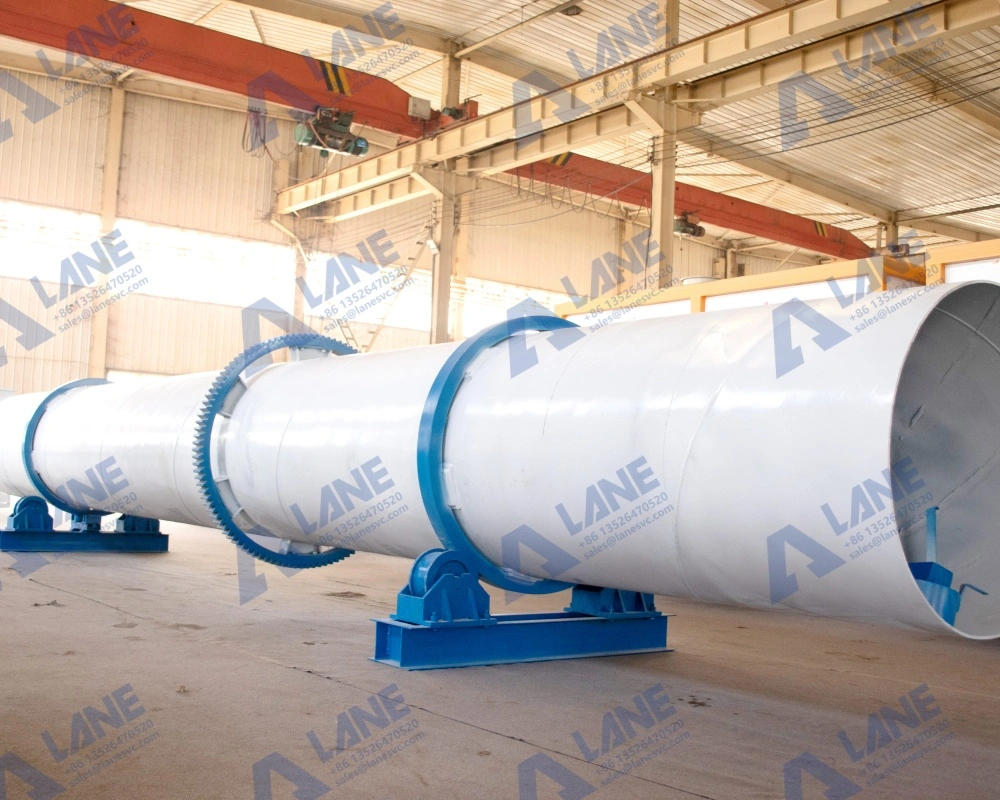
To solve hot fertilizer storage problems fundamentally, factories must stabilize fertilizer temperature after drying and before packaging. Rotary coolers achieve continuous and uniform cooling through cylinder rotation and convection air cooling. The equipment perfectly matches large-scale compound and organic fertilizer production lines. Our LANE rotary cooler is composed of support frame, transmission unit, gear ring, riding belt and main cylinder body, ensuring long-term stable operation.
> Continuous Material Turning Achieves Uniform Cooling
Lifting plates fixed inside the rotary cylinder continuously lift and flip hot fertilizer pellets. Cold air can fully contact every single pellet. This structural design completely avoids uneven temperature of fertilizer materials.
> Stable Temperature Drop Matches Continuous Production Rhythm
The rotary cooler supports 24-hour non-stop operation. It can be perfectly connected with rotary dryers and screening machines on fertilizer production lines. The entire production workflow will not be interrupted during cooling operation.
> Sturdy Structure Adapts to Harsh Fertilizer Production Environment
The cylinder body is made of welded medium carbon steel plates. Wear-resistant lifting plates can resist slight corrosion from fertilizer materials. The whole machine maintains a low failure rate during long-term continuous operation.
Practical Operation Tips for Rotary Cooler to Lower Fertilizer Temperature
After equipping a rotary cooler, reasonable adjustment of operating parameters is very important. Correct parameter settings can maximize cooling performance and steadily avoid all hot fertilizer storage problems. The following are adjustable parameters applicable to on-site fertilizer production.
> Adjust Rotation Speed to Control Material Residence Time
Operators can reduce the cylinder rotation speed when dealing with extra hot fertilizer. Lower speed extends material residence time inside the cylinder and improves cooling effect. If incoming pellets have relatively low temperature, the rotation speed can be increased properly to boost production efficiency.
> Keep Stable Feeding Volume to Avoid Unstable Cooling Effect
Sharp fluctuation of feeding quantity will cause unstable outlet temperature. Some fertilizer pellets cannot cool down to the safe temperature before entering packaging equipment. Workers must keep a steady feeding speed during formal production.
> Check Internal Lifting Plates Regularly to Maintain Turning Effect
Worn lifting plates cannot fully lift and flip fertilizer pellets. The heat exchange efficiency between cold air and materials will drop gradually. Factories need to include lifting plate inspection in daily equipment maintenance plans.
Supporting Management Measures to Avoid Hot Fertilizer Storage Problems
The combination of rotary cooler cooling and standardized warehouse management forms double protection for finished fertilizer. It greatly reduces the occurrence probability of hot fertilizer storage problems. Stable production equipment and standardized on-site management work together to guarantee long-term fertilizer storage quality.
> Test Fertilizer Outlet Temperature before Packaging
Factories need to set a fixed safe temperature threshold for finished fertilizer. Materials that fail to meet the temperature standard are not allowed to enter packaging machines. Unqualified pellets must be sent back to the rotary cooler for secondary cooling.
> Avoid Tall Stacking of Newly Packed Fertilizer Bags
Even after cooling, newly packaged fertilizer still has residual heat. Do not stack the fertilizer bags into high piles immediately after packaging. Keep low stacks to allow residual heat to dissipate slowly.
> Keep Ventilation inside Finished Product Warehouse
Smooth air flow in the warehouse can take away residual heat around fertilizer stacks. Good ventilation reduces external heat load of packaged fertilizer and slows down storage deterioration during long-term placement.
| Model | Capacity(tph) | Drum Size(mm) | Rotation Speed(r/min) | Steel Plate Thickness(mm) | Lift Plate Thickness(mm) | Power(kw) |
|---|---|---|---|---|---|---|
| LARC0808 | 1-2 | Φ800*8000 | 5 | 8 | 4 | 5.5 |
| LARC1010 | 2-3 | Φ1000*10000 | 5 | 10 | 6 | 5.5 |
| LARC1212 | 3-5 | Φ1200*12000 | 5 | 10 | 6 | 7.5 |
| LARC1515 | 5-8 | Φ1500*15000 | 5 | 12 | 6 | 15 |
| LARC1616 | 8-12 | Φ1600*16000 | 5 | 12 | 6 | 18.5 |
| LARC1818 | 12-15 | Φ1800*18000 | 4 | 14 | 6 | 22 |
| LARC2020 | 20-25 | Φ2000*20000 | 4 | 14 | 6 | 37 |
| LARC2222 | 25-30 | Φ2200*22000 | 4 | 16 | 6 | 37 |
| LARC2424 | 30-35 | Φ2400*24000 | 4 | 16 | 6 | 45 |
| LARC2626 | 35-40 | Φ2600*26000 | 3 | 18 | 6 | 55 |
| LARC2828 | 40-45 | Φ2800*28000 | 3 | 18 | 6 | 75 |
| LARC3028 | 45-50 | Φ3000*28500 | 3 | 18 | 6 | 90 |
FAQ
We have collected typical questions frequently raised by overseas fertilizer plant clients. These questions cover the whole drying and cooling workflow of compound fertilizer and organic fertilizer production lines.
Q1: What target temperature should fertilizer reach to avoid hot fertilizer storage problems?
Generally speaking, the temperature difference between fertilizer pellets and ambient temperature should stay within 10℃. In hot summer environments, it is better to control the fertilizer outlet temperature below 45℃. This temperature range can effectively prevent most hot fertilizer storage problems.
Q2: Can rotary cooler work together with rotary dryer in a complete fertilizer line?
Yes. Rotary coolers are specially designed to connect right after rotary dryers. Hot fertilizer flows out of the dryer and directly enters the rotary cooler for continuous cooling. LANE can customize matched dryer and rotary cooler sizes according to your actual production capacity.
Q3: How long does it take for rotary cooler to lower hot fertilizer to safe temperature range?
Material residence time depends on cylinder length, rotation speed and fertilizer material characteristics. For most compound fertilizer, 15 to 25 minutes of residence time can achieve an ideal cooling effect. Our engineers will adjust equipment parameters according to your actual fertilizer samples.
Q4: Is natural air cooling enough or do we need to install forced fans on rotary cooler?
Natural air convection is enough for small-capacity production lines. Medium and large-scale fertilizer plants are recommended to install induced draft fans. Forced air circulation improves heat exchange efficiency and completely avoids hot fertilizer storage problems.
Q5: Will low fertilizer output affect cooling performance of the rotary cooler?
Low feeding volume will not damage the rotary cooler itself. However, insufficient materials reduce the contact area between fertilizer pellets and cold air, causing temperature fluctuation. Therefore, keeping stable feeding quantity is essential during production.
Conclusion
Most hot fertilizer storage problems are caused by uncontrolled high temperature before fertilizer packaging. Fertilizer caking, nutrient loss and package damage keep cutting down the profit margins of fertilizer manufacturers. Installing a rotary cooler between drying and packaging processes realizes continuous and uniform material cooling, eliminating high-temperature risks from the production source.
Combined with strict temperature detection and standardized warehouse stacking rules, the long-term storage stability of finished fertilizer is greatly improved. LANE rotary cooler adopts wear-resistant and anti-corrosion structural parts, supporting long-term and stable operation for global fertilizer factories. It effectively helps plants reduce unnecessary losses caused by hot fertilizer storage projects.