Organic Fertilizer Grinding Machine: Unlocking the Power of Precision in Fertilizer Production
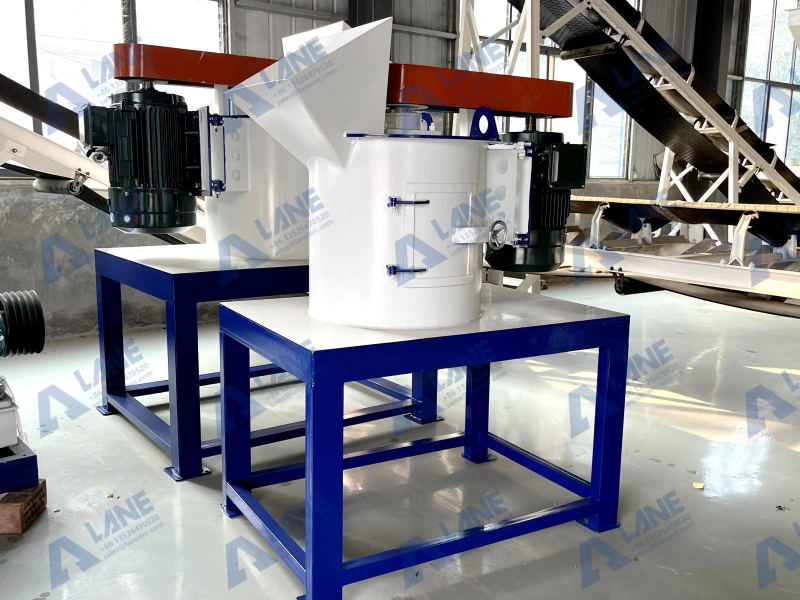
In the world of organic farming, the quality of fertilizer can make or break the success of crops. Achieving the right consistency and particle size in organic fertilizers is crucial for optimal nutrient absorption by plants. Enter the Organic Fertilizer Grinding Machine—a specialized piece of equipment designed to refine raw organic materials into fine particles, ensuring that your organic fertilizer is as effective as possible.
Understanding the Role of the Organic Fertilizer Grinding Machine
The Organic Fertilizer Grinding Machine is an essential tool in the production of high-quality organic fertilizers. Its primary function is to crush and pulverize raw organic materials—such as compost, manure, or plant residues—into fine particles. This grinding process is vital for creating a uniform texture in the fertilizer, which enhances its effectiveness and ensures even distribution when applied to the soil.
Key Features and Components:
- High-Speed Rotating Blades: Crush and pulverize organic materials into fine particles.
- Adjustable Grinding Fineness: Allows customization of particle size to meet specific crop requirements.
- Robust Construction: Built to handle various types of organic materials with ease.
- Dust Collection System: Minimizes airborne particles, ensuring a cleaner working environment.
Types of Organic Fertilizer Grinding Mchine
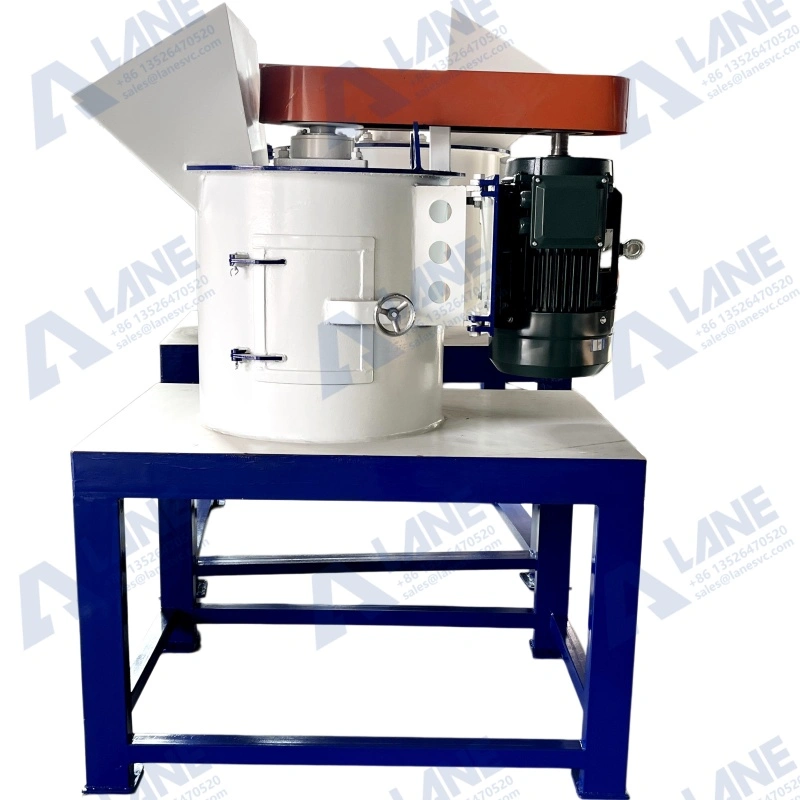
- Vertical Shaft Crusher
The vertical pulverizer is widely used in organic fertilizer,compound fertilizer and other fertilizer production lines. The drive shaft is driven by a motor, so that the hammer, chain, or hammer head on the drive shaft rotate at high speed to achieve the purpose of crushing materials.
Model Capacity(tph) Power(kw) Overall Size(mm) Input Size(mm) Output Size(mm) Main Shaft Diameter(mm) Grinding Bin Diameter(mm) Grinding Bin Height(mm) LAC-60V 4-6 18.5/4 1650*700*950 400*500 350*350 φ65 600 650 LAC-80V 7-10 30/4 2100*1200*1100 400*500 350*350 φ80 800 750 LAC-100V 9-12 37/4 2500*1300*1100 400*500 450*450 φ100 1000 900 LAC-120V 12-15 55/4 1960*1316*2623 1000*1200 φ500 φ120 1200 753 - Double Shaft Crusher
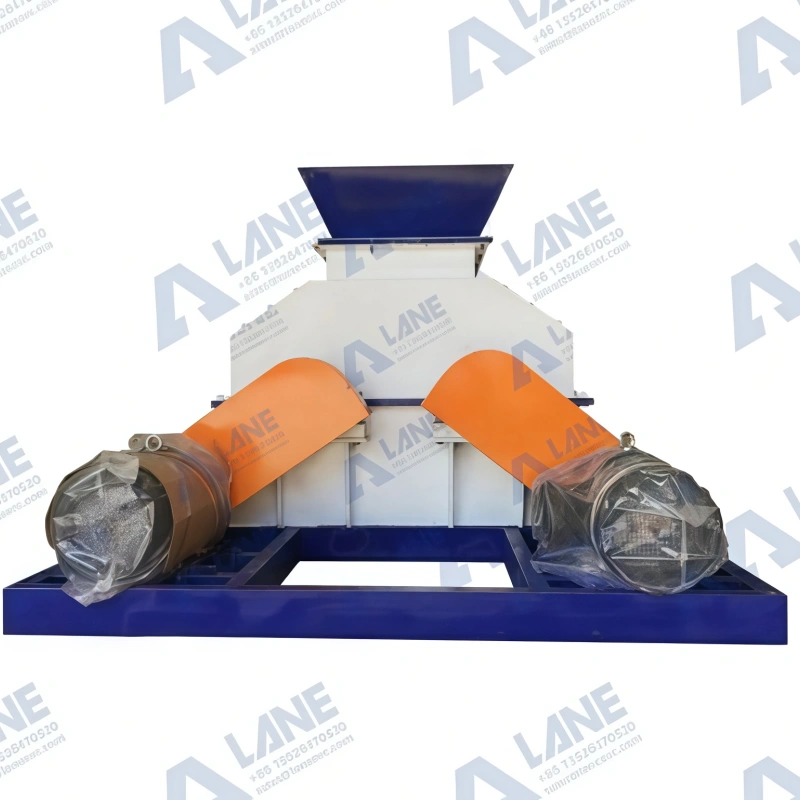
The double material cavity and two sets of rotors connected in series allow the materials crushed by the upper rotor to be finely crushed again by the hammer head of the rapidly rotating lower rotor. The materials in the cavity collide with each other rapidly and crush each other to achieve hammer powder. The effect is directly removed, The output can be in-creased by 50%, so it is called double shaft crusher. - Cage Crusher
The cage crusher is designed based on the principle of impact crushing. The two sets of inner and outer cage bars rotate in opposite directions at high speed, The material is crushed by the impact of the cage bars from the inside out. The fineness of crushing is controlled by the distance between the two rollers. The smaller the distance, the finer the crusher. The finer the thickness, the lower the yield will be. - Semi-wet Crusher
The semi-wet material crusher is a new type of high-efficiency crusher, which is mainly used to process materials with a moisture content of 30%-60%,such as livestock manure crop straw, municipal waste, river sludge, kitchen waste and other organic fertilizer raw materials.
How the Organic Fertilizer Grinding Machine Works
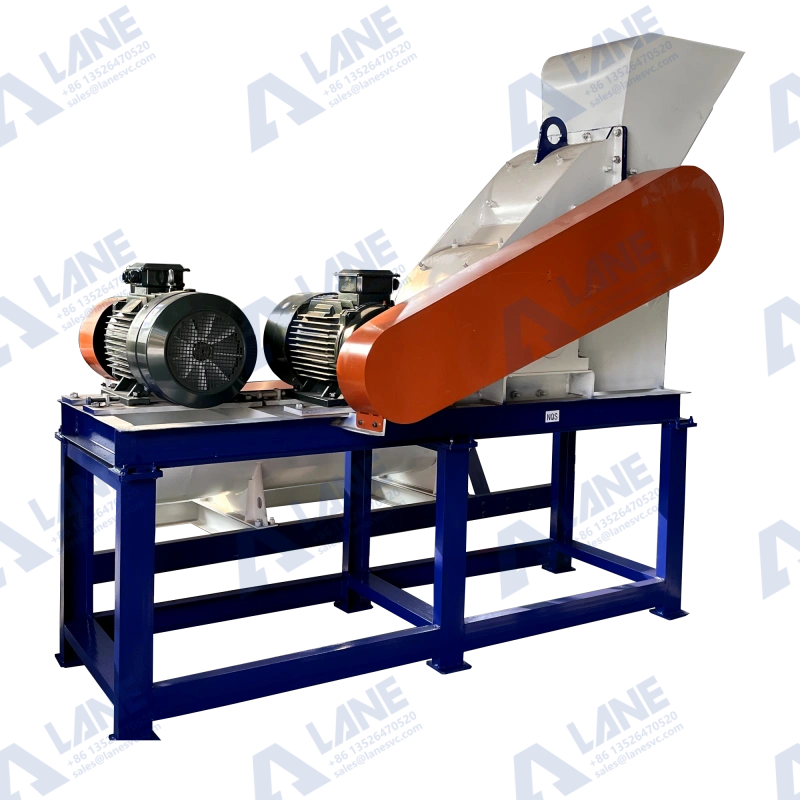
The process of grinding organic materials into fine particles involves several key steps, each contributing to the production of a superior fertilizer:
- Material Feeding
Raw organic materials are fed into the machine through a hopper. This can include compost, animal manure, plant residues, or other organic waste. The materials are typically pre-processed to remove any large or non-organic debris.
- Crushing and Pulverizing
Once inside the machine, the materials encounter high-speed rotating blades. These blades work to crush and pulverize the organic matter into smaller, finer particles. The machine’s design ensures that the grinding process is efficient, quickly reducing the material to the desired size.
- Adjusting Particle Size
The grinding machine allows operators to adjust the fineness of the grind. This feature is crucial because different crops may require fertilizers with different particle sizes. By customizing the grind, the machine ensures that the final product meets the specific needs of the crops being grown.
- Dust Collection
During the grinding process, fine particles can become airborne. The Organic Fertilizer Grinding Machine is equipped with a dust collection system that captures these particles, preventing them from contaminating the workspace and ensuring that the final product is as clean and pure as possible.
- Output and Collection
After grinding, the finely pulverized material is collected and either processed further (such as granulation) or packaged directly for use as a powder fertilizer. The uniform particle size ensures that the fertilizer is easy to apply and effective in delivering nutrients to plants.
Why Use an Organic Fertilizer Grinding Machine?
- Enhanced Nutrient Availability
Grinding organic materials into fine particles increases the surface area of the fertilizer, allowing plants to absorb nutrients more efficiently. This results in better crop growth and higher yields.
- Improved Fertilizer Uniformity
A consistent particle size ensures that the fertilizer is evenly distributed when applied to the soil. This uniformity prevents the clumping of materials and ensures that nutrients are evenly available to all plants.
- Customization for Specific Crops
Different crops have varying nutrient requirements, and the ability to adjust the particle size allows for the production of fertilizers tailored to specific needs. This customization leads to more effective fertilization and better crop outcomes.
- Reduced Waste
By finely grinding organic materials, the Organic Fertilizer Grinding Machine minimizes waste and ensures that all available nutrients are utilized. This efficiency translates to cost savings and a more sustainable production process.
- Cleaner Working Environment
The dust collection system integrated into the machine helps maintain a cleaner work environment by capturing airborne particles during the grinding process. This feature is particularly important in large-scale operations where dust can become a significant issue.
- Versatility
The machine’s robust design allows it to handle a wide range of organic materials, making it versatile enough for use in various types of organic fertilizer production, from small-scale farms to large industrial operations.
Applications of the Organic Fertilizer Grinding Machine
The Organic Fertilizer Grinding Machine is indispensable in various stages of organic fertilizer production:
- Composting
Before compost can be used as a fertilizer, it needs to be refined into a finer, more uniform product. The grinding machine is used to break down composted material, making it easier to blend with other nutrients or apply directly to the soil.
- Manure Processing
Animal manure is a rich source of nutrients but often requires grinding to create a more manageable and effective fertilizer. The grinding machine is particularly useful in reducing the particle size of manure, making it easier to handle and apply.
- Plant Residue Management
Plant residues, such as crop stalks and leaves, are valuable organic materials but need to be ground into smaller particles before they can be used as fertilizer. The Organic Fertilizer Grinding Machine efficiently processes these residues, turning them into a fine, nutrient-rich product.
- Biofertilizer Production
For biofertilizers that contain living microorganisms, particle size is crucial. The grinding machine ensures that the organic carrier material is finely ground, providing an optimal environment for the microorganisms to thrive and deliver their benefits to the soil.
- Pre-Granulation
Before organic materials are granulated into pellets, they need to be ground into a fine powder. The Organic Fertilizer Grinding Machine plays a key role in this stage, ensuring that the material is prepared correctly for granulation.
Conclusion
The Organic Fertilizer Grinding Machine is a critical tool in the production of high-quality organic fertilizers. By refining raw organic materials into fine, uniform particles, it enhances the effectiveness of the fertilizer, leading to better nutrient absorption and improved crop yields. Whether you’re producing compost, processing manure, or managing plant residues, this machine is essential for creating the best possible organic fertilizer.
Investing in an Organic Fertilizer Grinding Machine means taking a significant step toward more efficient, sustainable, and effective organic farming. It’s not just about making fertilizer—it’s about making it better, ensuring that every particle counts in the quest for healthier crops and richer soils.