Oil Palm Waste Composting: Turning Palm Residues into Commercial Organic Fertilizer
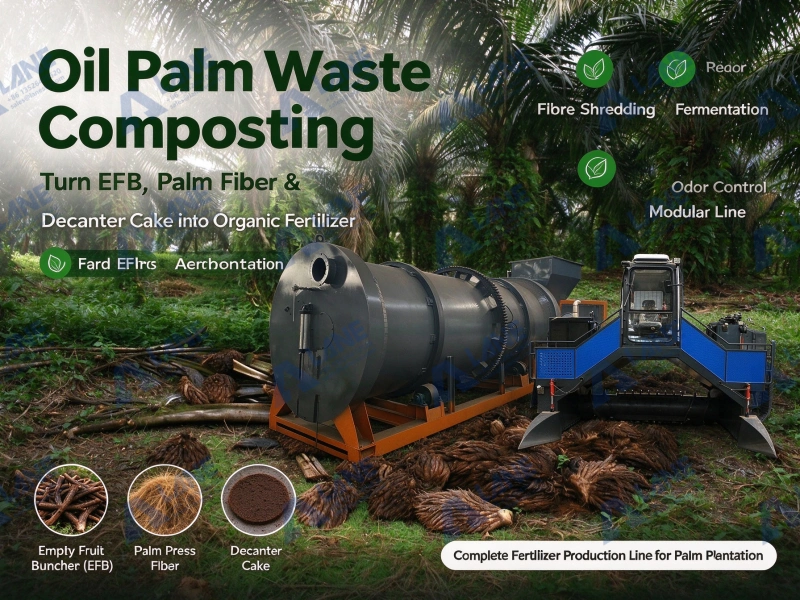
The global palm oil industry generates hundreds of millions of tonnes of empty fruit bunches (EFB) and fiber waste every year. Traditional dumping and burning are facing increasingly strict environmental penalties. Through scientific Oil Palm Waste Composting, these mountains of solid waste can be converted into high-value commercial organic fertilizer, giving fertilizer producers a practical way to turn waste into profit and capture green-market opportunities.
Palm residues are rich in organic matter and nutrients such as potassium, nitrogen, and phosphorus, making them valuable fertilizer feedstocks. With an efficient Oil Palm Waste Composting process and a complete set of fertilizer equipment, investors can use low-cost raw materials to produce premium granular fertilizer at scale, help address soil compaction in plantations, and create attractive commercial opportunities.
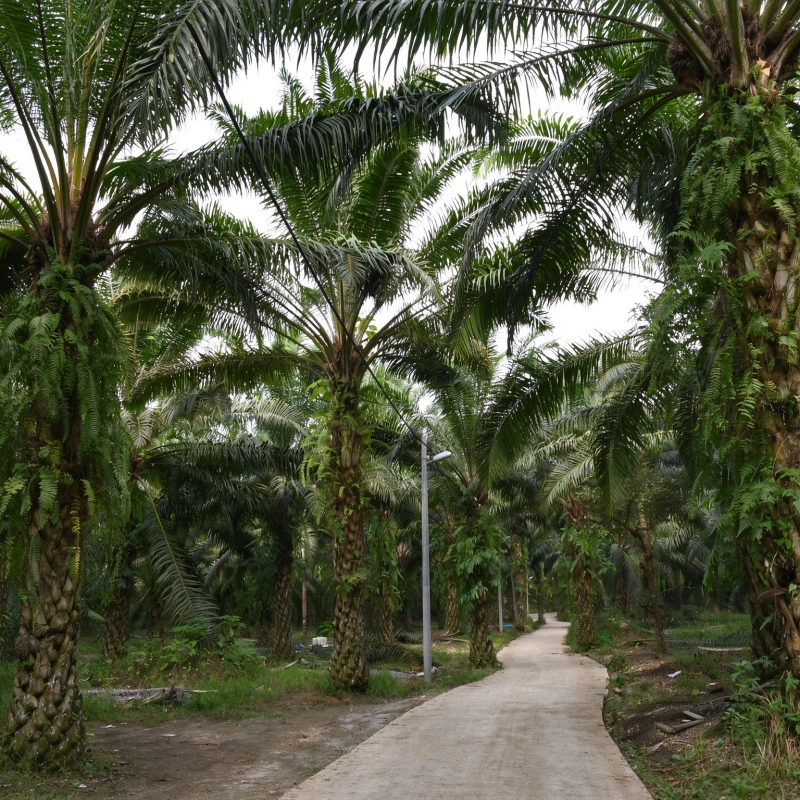
1. What Types of Oil Palm Waste Can Be Composted?
Waste from different stages of palm oil processing varies considerably in physical and chemical properties. To improve output and fermentation efficiency in Oil Palm Waste Composting, each feedstock must be assessed and pretreated appropriately.
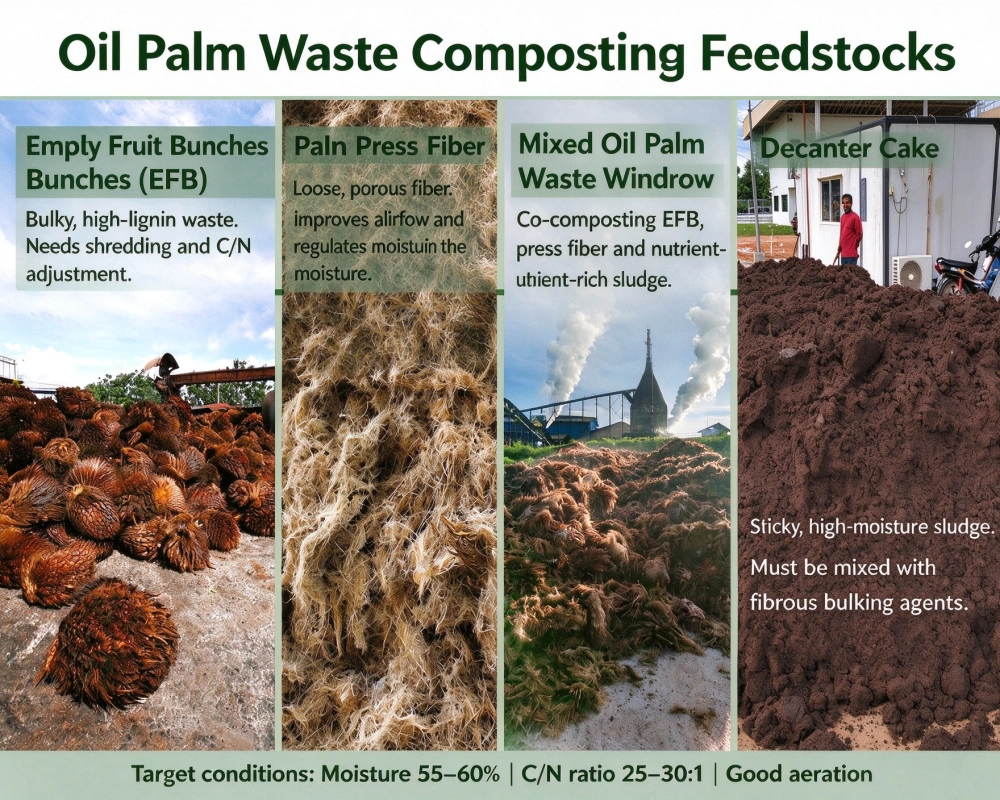
Empty Fruit Bunches (EFB)
- Physical form: Large, bulky bunch residues with a tough, rigid structure.
- Initial moisture content: Very high; fresh EFB typically contains 60%–70% moisture.
- Fiber characteristics: High lignin and coarse-fiber content make EFB tough and naturally slow to decompose.
- Pretreatment and blending:
- Shredding is essential: Use a dedicated EFB shredder and crusher to cut the material into small fibers approximately 3–5 cm long.
- Why it matters: Without shredding, moisture cannot escape easily and air cannot penetrate the pile, causing oxygen deficiency and unpleasant odors.
- Adjust the C/N ratio: EFB has a high carbon-to-nitrogen ratio and is difficult to heat up when composted alone, so it must be blended with nitrogen-rich supplementary materials.
Palm Press Fiber and Decanter Cake
Palm Press Fiber
- Physical form and fiber characteristics: Short fibers remaining after pressing; relatively loose and porous.
- Initial moisture content: Lower, usually around 35%–40%.
- Role in the process: In Oil Palm Waste Composting, press fiber acts as a natural process regulator. It increases air-filled pore space in the pile and provides aerobic microorganisms with oxygen pathways.
Decanter Cake
- Physical form: Sticky, fine-textured sludge or paste.
- Initial moisture content: High, commonly around 65%–75%.
- Chemical characteristics: Rich in protein, nitrogen, and trace nutrients, making it a useful organic fertilizer feedstock.
- Pretreatment and blending:
- Blend fiber with sticky sludge: Press fiber is relatively dry and porous, while decanter cake is wet and prone to sticking and clogging.
- Why it matters: Composting decanter cake alone can cause severe oxygen deficiency and anaerobic fermentation.
- A balanced combination: Mix the two materials in a suitable ratio. The loose structure of press fiber helps break up sticky decanter cake and balance moisture and airflow.
Combining Palm Residues with Other Organic Materials
- Blending principles: Successful Oil Palm Waste Composting should target three conditions: moisture content of 55%–60%, a C/N ratio of 25–30:1, and good air permeability.
- Common blending options:
- Add liquid nutrients: Blend wet EFB fiber and press fiber with palm oil mill effluent (POME).
- Process advantage: Using wastewater instead of fresh water helps regulate moisture and adds soluble nitrogen, putting waste to productive use.
- Add livestock manure: Mix an appropriate amount of chicken or cattle manure with palm residues.
- Process advantage: Palm residues are generally nitrogen-deficient, while livestock manure supplies nitrogen and microorganisms. This can help the pile reach above 60°C within 48 hours, supporting the reduction of pathogens and weed seeds.
2. What Equipment Is Needed for Oil Palm Waste Composting?
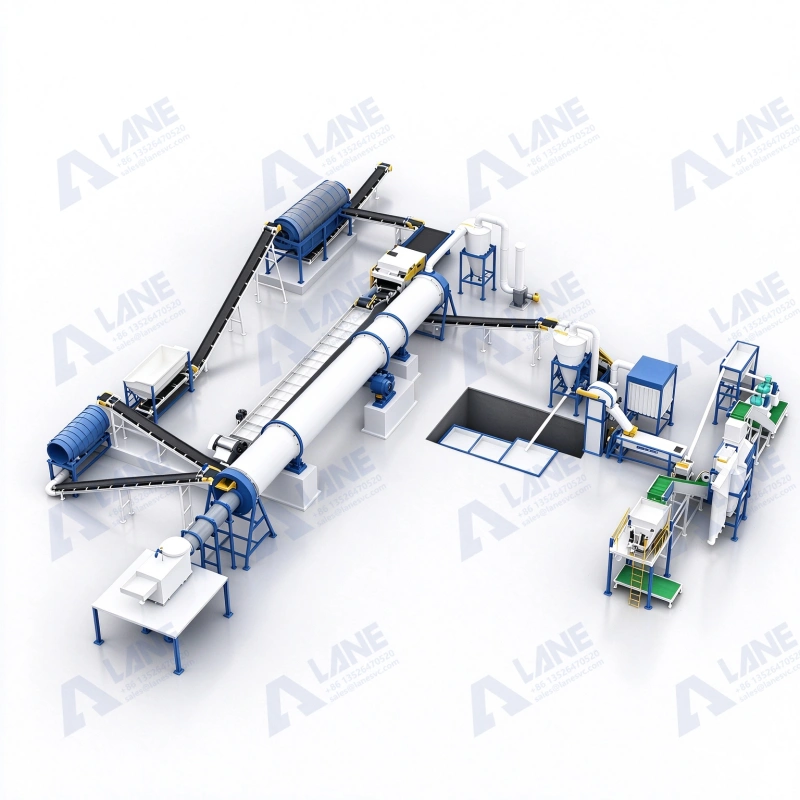
An efficient, standardized Oil Palm Waste Composting plant needs equipment configured for the selected process. The following are the core machines and their functions.
Core Equipment and Functions
| EQUIPMENT | FUNCTION | KEY VALUE |
|---|---|---|
| Crusher / Shredder | Reduces the size of fibrous raw materials. | Breaks down tough, long EFB fibers and increases the surface area available for microbial activity. |
| Mixer and Dosing System | Blends raw materials and adjusts the formulation. | Mixes shredded fibers with wet decanter cake and fermentation inoculants to achieve the target C/N ratio and moisture content. |
| Compost Turner | Turns the material and improves airflow. | Periodically turns the pile to supply oxygen for aerobic fermentation and release excess heat and moisture. |
| Aeration System (Pipes / Blowers) | Provides forced ventilation where suitable. | Delivers air through perforated pipes beneath the pile, supplying oxygen to microorganisms. |
| Conveyor System | Transports raw materials and compost. | Connects shredding, blending, fermentation, and screening for automated material flow. |
| Screening Machine (Rotary Drum / Vibrating Screen) | Separates coarse impurities and off-spec material. | Removes large, incompletely decomposed palm shells and other coarse material to produce organic fertilizer powder with consistent fineness. |
Key Selection Tip: Compost Turner or Forced Aeration System?
Investors sometimes assume that every item on an equipment list must be installed. However, a Compost Turner and an Aeration System do not necessarily need to be installed together. The choice depends on the Oil Palm Waste Composting process.
- Option A: Trough or windrow composting
- Process: Material is piled in fermentation troughs or outdoor windrows.
- Equipment: A compost turner may be sufficient.
- Operating principle: Mechanical turning and throwing can provide the required aeration and heat dissipation without the additional cost of underground aeration pipes.
- Option B: Aerated static pile (ASP) composting
- Process: The material is not mechanically turned during fermentation.
- Equipment: An aeration system with blowers and pipes may be sufficient.
- Operating principle: Air is forced through pipes beneath the pile, reducing the need to invest in a large compost turner.
3. Core Fermentation Processes and Equipment Selection: Two Independent Routes
When planning an Oil Palm Waste Composting project, customers must choose between open or trough-based composting and enclosed tank-based fermentation. The following guide focuses on equipment selection for palm residues.
Route 1: Open Aerobic Composting (Core Equipment: Compost Turner Series)
This is often a cost-effective option. Materials are spread on the ground or placed in fermentation troughs, and Oil Palm Waste Composting turners provide mechanical mixing and aeration.
| TURNER TYPE | TECHNICAL ADVANTAGES FOR PALM COMPOSTING | LIMITATIONS AND SELECTION WARNINGS | RECOMMENDED APPLICATIONS |
|---|---|---|---|
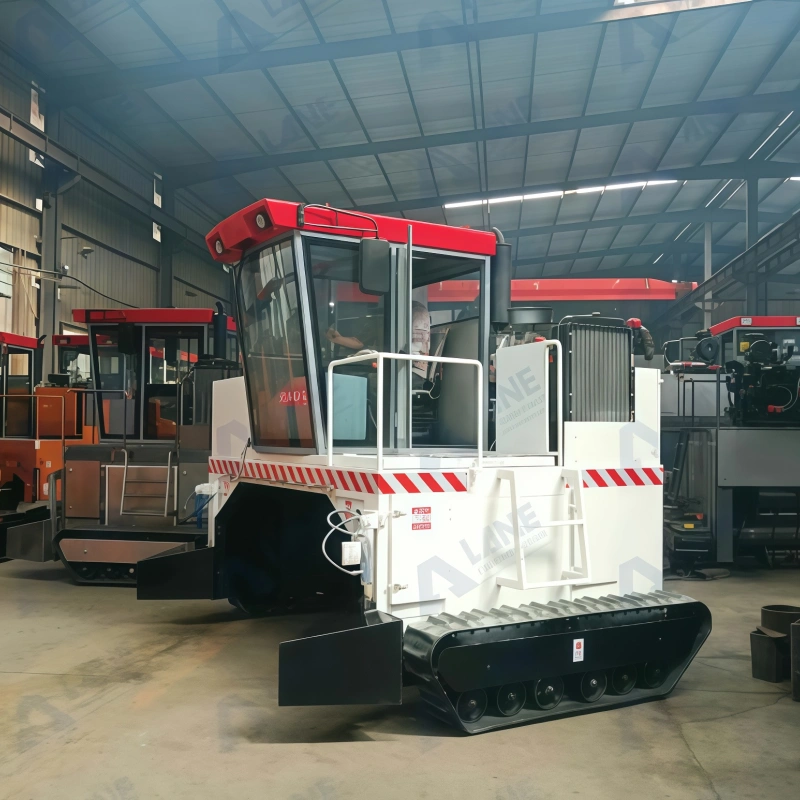
| Crawler Self-Propelled Turner | Fully hydraulic drive with high torque. It can turn heavy palm fibers without slipping on muddy or soft outdoor ground. | Outdoor windrows need a large area and are vulnerable to tropical downpours. | Customers with spacious sites and medium budgets who want to start production quickly on a concrete surface. |
| Trough Turner | Strong secondary size-reduction capability. Staggered alloy-steel blades cut long fibers and help prevent them from wrapping around the shaft. | Requires upfront civil works, including fermentation troughs. | Medium and large fertilizer plants seeking standardized indoor facilities in rainy regions. |
| Wheel / Disc Turner | Highly energy-efficient, with a large-diameter turning disc. It can use 70% less electricity than a trough-type unit at the same throughput, with a turning depth of up to 3 m. | Feed-size requirements are strict; long fibers can reduce energy efficiency if EFB is not shredded thoroughly. | Large and extra-large centralized treatment centers handling very high volumes of palm biomass waste. |
| Chain Plate Turner | Deep turning with minimal dead zones. Chain scrapers lift material diagonally from the trough bottom and provide strong rearward conveying capacity. | Scrapers may wear faster when handling highly resilient palm fibers and require regular maintenance. | Flexible fertilizer lines requiring full automation and continuous feeding and discharge. |
Route 2: Vertical Intelligent Fermentation (Core Equipment: High-End Fermentation Tanks)
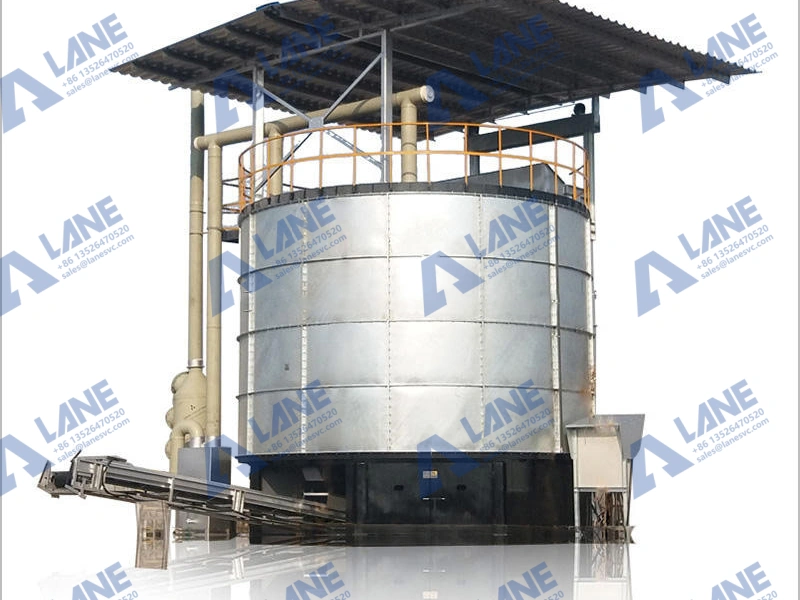
This enclosed route is designed for a high level of environmental control. It replaces conventional windrow turning by carrying out the Oil Palm Waste Composting process inside sealed steel tanks. Three main tank types can accommodate different budgets and site requirements.
Oil Palm Waste Composting Technical Comparison of Palm Fermentation Tanks
| FERMENTATION TANK TYPE | STRUCTURE AND OPERATING PRINCIPLE | TECHNICAL ADVANTAGES | RECOMMENDED APPLICATIONS |
|---|---|---|---|
| Vertical Fermenter | Vertical steel tower with top feeding; a heavy-duty central shaft mixes the material. | Very small footprint; heavy-duty hydraulic discharge; helps overcome resistance from compacted decanter cake. | High-end plants with very limited land, strict environmental requirements, and a need for automated continuous output. |
| Horizontal Fermenter | Horizontal cylindrical structure with high-torque mixing paddles. | Excellent mixing uniformity; thorough mixing of fibers and wastewater; axial drive helps reduce dead zones. | Plants processing a high proportion of decanter cake and requiring uniform nutrient distribution. |
| Rotary Drum Fermenter | A large rotating drum tumbles the material as the tank rotates through 360 degrees. | No internal mixing shaft, helping prevent fiber wrapping; internal lifting plates turn the material; even heating and a low failure rate. | Projects using long fibers from incompletely shredded EFB and seeking low-maintenance operation. |
Why Can Our Fermentation Tanks Address the Main Challenges of Palm Composting?
- Enclosed negative-pressure exhaust helps control odors and reduce the risk of environmental penalties
- High-strength palm oil mill effluent (POME) can readily generate unpleasant odors.
- Sealed tanks collect exhaust air through top-mounted negative-pressure extraction and send it to a biofilter, helping control plant odors.
- Intelligent multi-point oxygen and temperature control can improve process efficiency
- During Oil Palm Waste Composting, sensors inside the tank monitor operating conditions.
- The system controls forced air through bottom pipelines, helping microorganisms maintain activity.
- Result: Under suitable operating conditions, fermentation may be shortened from several months with traditional turning to 7–10 days, even during heavy tropical rain.
4. High-Value Applications and Global Markets for Oil Palm Waste Composting
High-quality powdered organic fertilizer produced through Oil Palm Waste Composting is rich in humic substances and natural potassium. It has three major potential applications in sustainable agriculture.
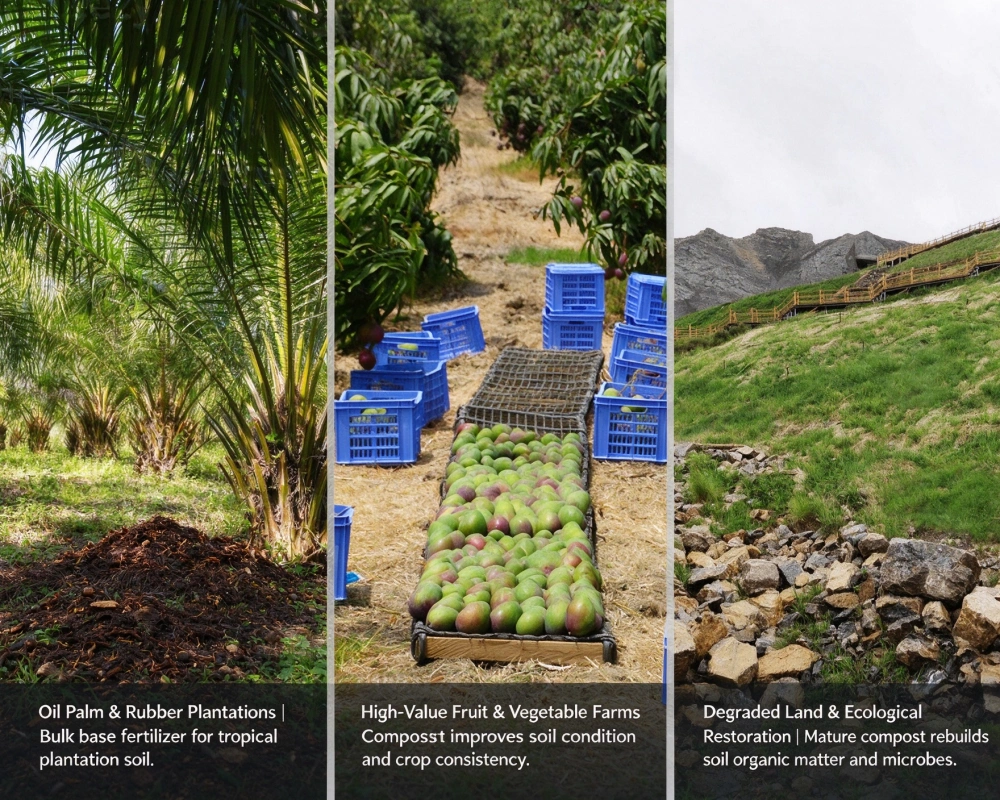
1. Oil Palm and Rubber Plantations (Bulk Base Fertilizer)
- Problem addressed: Soil compaction and excessive acidity in tropical soils associated with long-term chemical fertilizer use.
- Application: Oil Palm Waste Composting,Applied as a base fertilizer during soil preparation in plantations.
- Key benefit: Supplies natural plant-derived potassium, matching oil palm nutrient needs and potentially improving fruit set.
2. Export-Oriented, High-Value Fruit and Vegetable Farms
- Problem addressed: Premium-fruit growers need to improve soil conditions, crop quality, and product consistency.
- Application: Used as a soil-improvement fertilizer in premium orchards and vegetable farms.
- Key benefit: Properly managed high-temperature treatment during Oil Palm Waste Composting helps sanitize the material and reduce the risk of immature compost damaging plant roots. Actual effects on sweetness and marketable yield depend on the finished product and field conditions.
3. Degraded Land and Ecological Restoration Projects
- Problem addressed: Over-cultivated land and areas near mining sites may have degraded soil structure and depleted microbial communities.
- Application: Spread over large areas for ecological restoration and soil improvement.
- Key benefit: Mature compost adds organic matter and can introduce beneficial microorganisms, helping improve soil conditions and support the recovery of soil fertility.
5. FAQ: Frequently Asked Questions About Oil Palm Waste Composting
Q1: How long does composting empty fruit bunches (EFB) usually take?
- Traditional open-air composting: Without precise temperature and oxygen control, the process often takes 60–90 days or longer.
- Turner-based process: Periodic mechanical turning and aeration can shorten the Oil Palm Waste Composting cycle to around 15–20 days, depending on raw materials and operating conditions.
- Fully enclosed fermentation tanks: Intelligent temperature control and multi-point aeration may reduce high-temperature composting to as little as 7–10 days under suitable conditions.
Q2: Why do odors develop during composting, and how can they be controlled?
- Cause: High-moisture decanter cake is sticky and can compact the pile. Oxygen deficiency may then trigger anaerobic fermentation and unpleasant odors.
- Turner-line solution:
- Control the blending formula and add porous press fiber or dry bulking materials.
- Use a heavy-duty compost turner periodically to break up compacted material and replenish oxygen.
- Fermentation-tank solution:
- Use sealed tanks throughout the Oil Palm Waste Composting process.
- Extract odors under negative pressure and send the exhaust air to a biofilter, helping achieve odor-controlled plant operation.
Q3: Palm fibers are highly resilient. How can equipment wrapping and jamming be prevented?
- Industry challenge: When ordinary wood chippers or chicken-manure turners process EFB, long fibers can wrap around shafts, potentially causing blockages, motor overload, and shutdowns.
- Equipment upgrades:
- Install a dedicated shredder in pretreatment to cut fibers to 3–5 cm.
- Use staggered alloy-steel blades and anti-wrapping shafts throughout the turning and fermentation systems.
- Upgrade the drive system with appropriately sized motors and heavy-duty hydraulic reducers to provide high torque and support stable operation.
A successful Oil Palm Waste Composting project should be configured according to the raw-material mix, moisture content, required throughput, available space, environmental requirements, and desired level of automation.