Rotary Dryer Rust and Corrosion: Causes, Repair, and Prevention
A rotary dryer works under continuous exposure to heat, moisture, dust, chemicals, and moving bulk materials. Over time, these conditions can affect the drum shell, lifting flights, welds, seals, and other internal components. Among the problems that can shorten equipment life, Rotary Dryer Rust and Corrosion deserves particular attention because it may develop gradually before becoming visible.
For fertilizer, mineral, chemical, biomass, and other industrial drying applications, corrosion is rarely caused by one factor. High feed moisture, acidic materials, condensation, material buildup, poor surface protection, and unsuitable construction materials can all contribute to Rotary Dryer Rust and Corrosion.
The most effective solution is therefore not simply removing rust after it appears. Operators need to understand where corrosion starts, why certain sections are more vulnerable, how to repair damaged surfaces, and how dryer design and operating conditions can reduce the risk from the beginning.
This guide explains the causes of Rotary Dryer Rust and Corrosion, the most vulnerable parts of a rotary dryer, practical rust removal and repair methods, and prevention strategies for long-term industrial operation.
What Is Rotary Dryer Rust and Corrosion?
Rotary Dryer Rust and Corrosion refers to the deterioration of metal surfaces caused by chemical or electrochemical reactions with the surrounding environment.
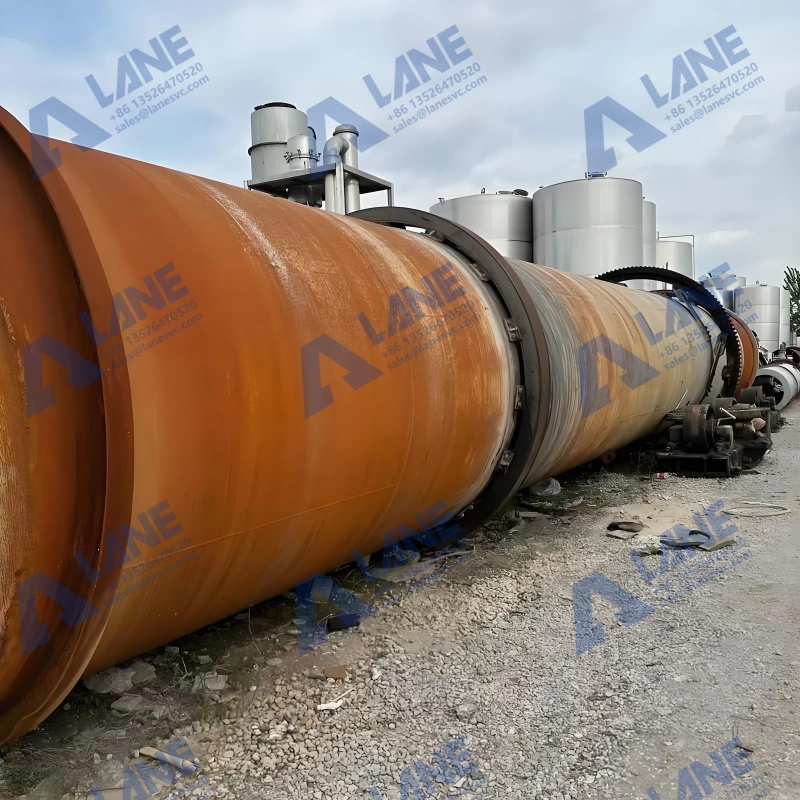
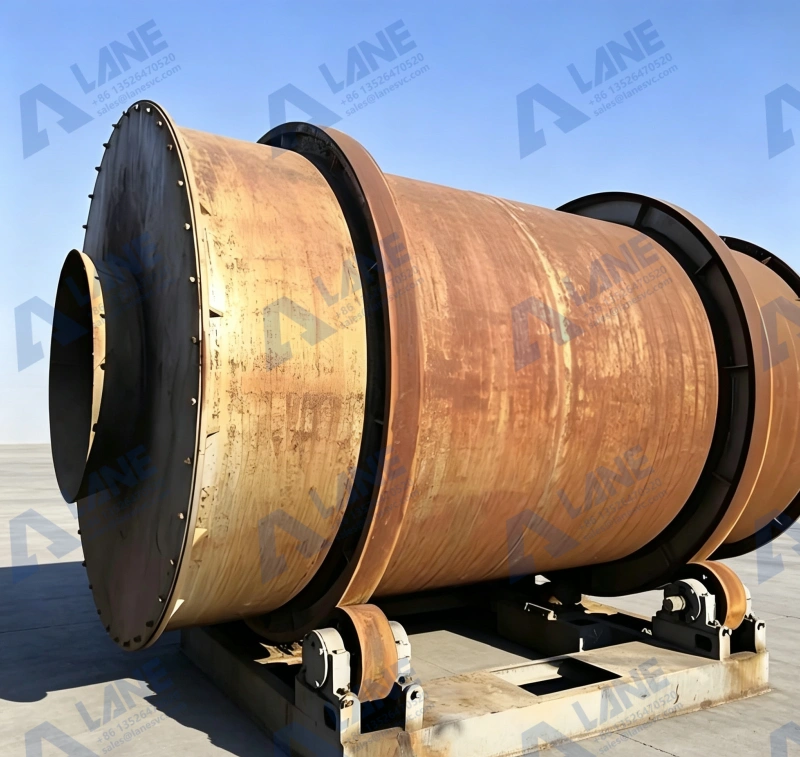
Rust is one visible form of corrosion. When iron or steel is exposed to moisture and oxygen, oxidation produces iron oxides that commonly appear as reddish-brown deposits.
However, corrosion inside a rotary dryer does not always look like ordinary rust.
It can appear as:
• Brown or reddish surface discoloration
• Blackened or chemically stained areas
• Pitting
• Flaking metal
• Localized thinning
• Corrosion around welds
• Damaged lifting flights
• Coating failure
• Cracks or perforations in severe cases
This distinction matters because Rotary Dryer Rust and Corrocsion an exist beneath material buildup or protective coatings before operators notice obvious rust on the surface.
It is also important to distinguish corrosion from abrasion.
Abrasion occurs when particles physically wear the metal surface. Corrosion results from chemical reactions. In many industrial dryers, however, the two problems happen simultaneously.
For example:
Moisture + chemicals → corrosion
Solid particles + movement → abrasion
Corrosion + abrasion → accelerated material loss
What Causes Rotary Dryer Rust and Corrosion?
Understanding the causes of Rotary Dryer Rust and Corrosion is the first step toward selecting an effective prevention strategy.
High feed moisture
Moisture is one of the most important factors.
The feed entering a rotary dryer normally contains its highest moisture content at the beginning of the drying process. This means the inlet area can remain exposed to wet material while evaporation is taking place.
If the material contains dissolved salts, acids, or other chemically active components, moisture can increase their contact with the metal surface.
The basic relationship is:
High moisture → longer wet contact → higher corrosion potential
This is particularly important in fertilizer drying because different fertilizer formulations can have significantly different moisture and chemical characteristics.
A fertilizer dryer therefore needs to be evaluated according to the actual material entering the drum rather than simply according to its nominal capacity.

Acidic or chemically aggressive materials
Some raw materials are much more corrosive than others.
Phosphate fertilizers are a good example. Phosphoric acid incorporated into phosphate fertilizer can create corrosion concerns during drying, particularly around the inlet where moisture content is high. Industry guidance recommends considering corrosion-resistant alloys and reinforcing high-wear areas when selecting phosphate drying equipment.
This means Rotary Dryer Rust and Corrosion cannot be separated from raw material selection.
The design relationship is:
Material composition → chemical environment → construction material → corrosion resistance
For one material, carbon steel may be suitable for most sections. For another, selected areas may require stainless steel, special alloys, protective coatings, or replaceable corrosion-resistant components.
This targeted approach can be more practical than using expensive corrosion-resistant material throughout the entire drum.
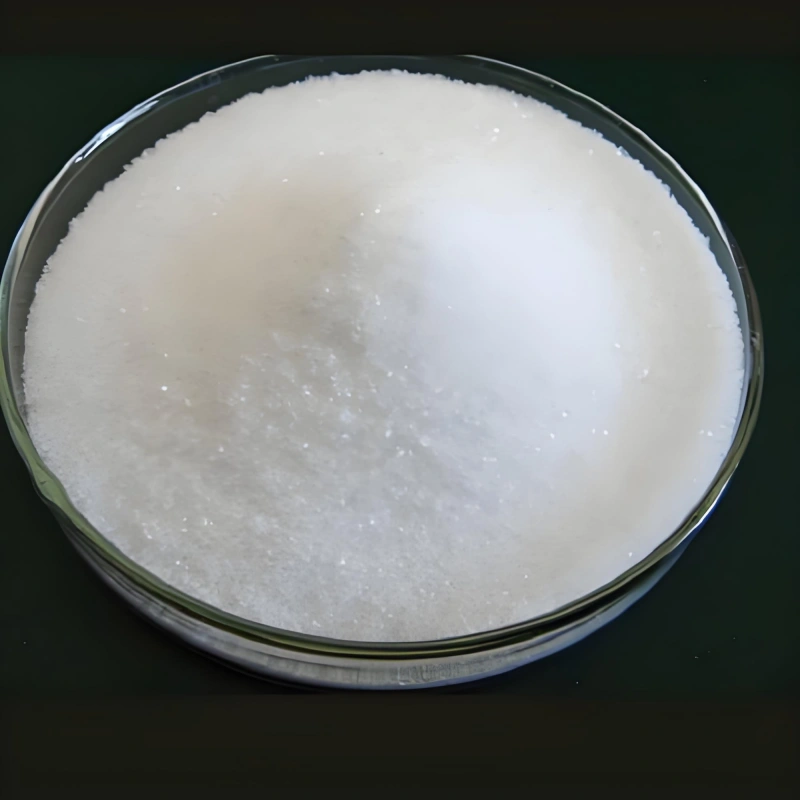
磷酸盐
Material buildup inside the drum
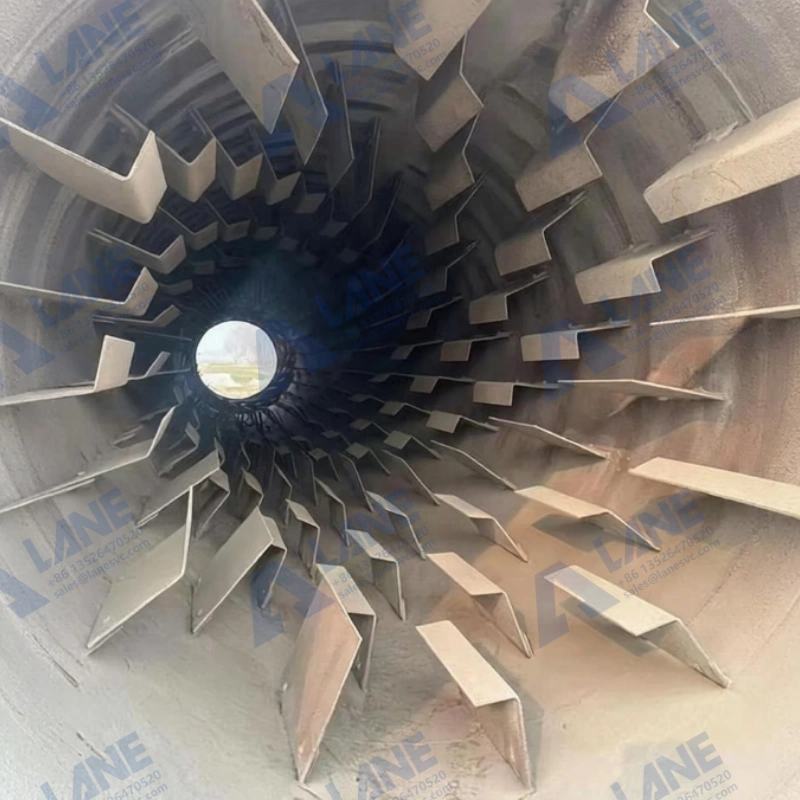
Material buildup is another major cause of Rotary Dryer Rust and Corrosion.
When wet or sticky material adheres to the drum shell or lifting flights, the deposit can trap moisture and corrosive compounds against the metal.
The process can develop into:
Wet material → buildup → trapped moisture → prolonged chemical contact → localized corrosion
Buildup also affects drying performance. It can reduce effective heat transfer, change material residence time, and place additional stress on internal components.
Chemical Engineering guidance for rotary dryers notes that corrosive buildup can promote excessive corrosive wear on dryer walls and flights.
This creates a strong internal-link opportunity for an article about material buildup in rotary dryers or how to prevent rotary dryer buildup.
Condensation
Condensation is another source of Rotary Dryer Rust and Corrosion that is easy to overlook.
A rotary dryer may contain hot, humid air during operation. When a cooler metal surface comes into contact with this air, water can condense.
This may occur during:
• Startup
• Shutdown
• Low-load operation
• Long periods of downtime
• Poor exhaust control
• Insufficient insulation
If condensed water remains on a metal surface, corrosion can continue even when the dryer is not actively processing material.
For this reason, corrosion prevention should cover both production and shutdown conditions.
Poor cleaning practices
Cleaning is important, but improper cleaning can also increase Rotary Dryer Rust and Corrosion.
Excessive water left inside the drum can increase moisture exposure. At the same time, aggressive chemicals may damage coatings or react with the construction material.
A better cleaning procedure should consider:
• What material has accumulated?
• Where is the buildup located?
• What cleaning method is compatible with the drum material?
• Can the surface be completely dried afterward?
The goal is not simply to make the drum look clean.
The goal is to remove corrosive deposits without creating a new moisture problem.
Which Parts Are Most Vulnerable to Rotary Dryer Rust and Corrosion?
Not every section of a rotary dryer experiences the same level of Rotary Dryer Rust and Corrosion.
The following areas deserve particular attention during inspection.
Feed inlet
The feed inlet is often one of the highest-risk areas.
Incoming material normally has its highest moisture content here. If the material is acidic or chemically aggressive, the combination of moisture and chemical exposure can accelerate corrosion.
This is especially relevant for phosphate fertilizer dryers. Industry sources specifically identify the dryer inlet as a corrosion-sensitive area because moisture content is higher there.
A useful internal link can be placed here to your fertilizer drying machine or fertilizer production line page.
Drum shell
The drum shell is the main containment surface of the drying process.
Surface corrosion may initially appear harmless, but localized metal loss can gradually reduce shell thickness.
Operators should check for:
• Rust patches
• Pitting
• Flaking
• Uneven surface thickness
• Cracks
• Deformation
• Previous repair areas
The shell should receive additional attention wherever wet material tends to remain attached.
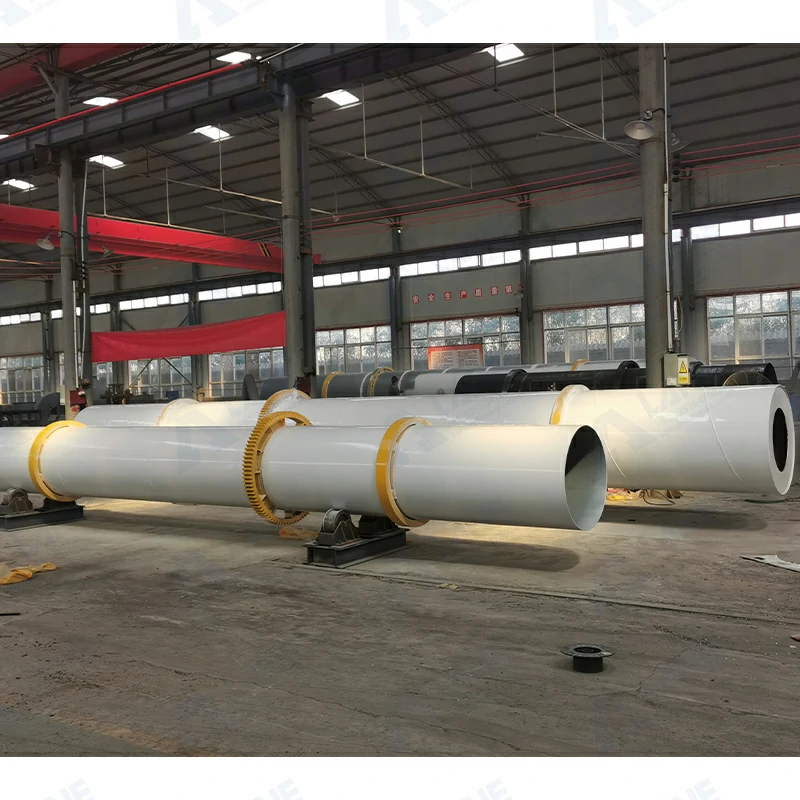
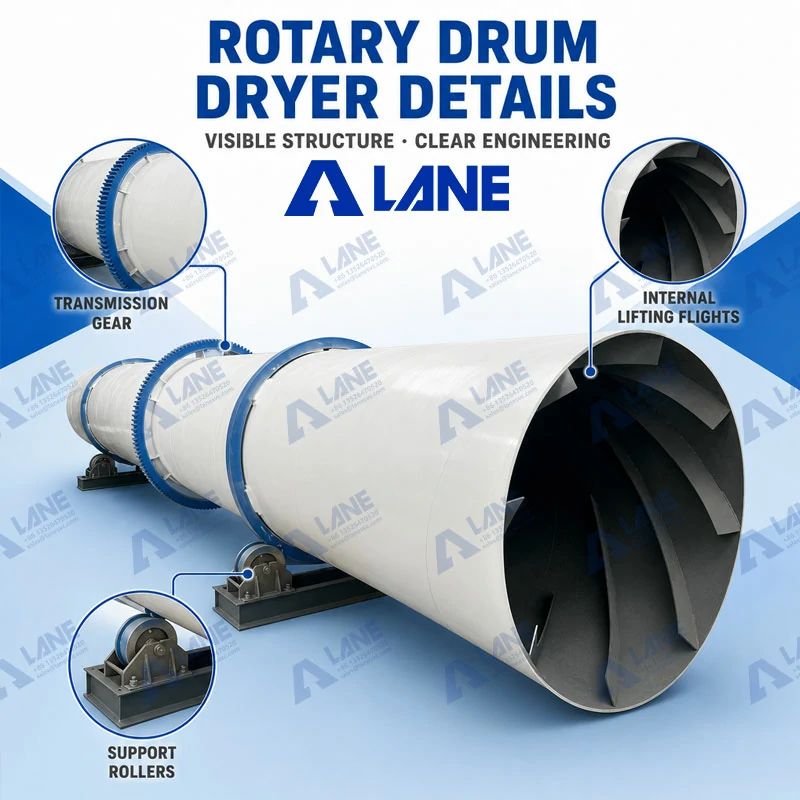
Lifting flights
Lifting flights repeatedly contact the processed material and therefore experience both chemical and mechanical stress.
They are exposed to:
- Moisture
- Chemicals
- Abrasive particles
- Repeated heating and cooling
- Material impact
- Material buildup
Severe Rotary Dryer Rust and Corrosion on flights can weaken their structure and eventually affect material lifting and heat transfer.
This section is also an excellent place to internally link to content about rotary dryer lifting flights or rotary dryer material buildup.
Welded areas
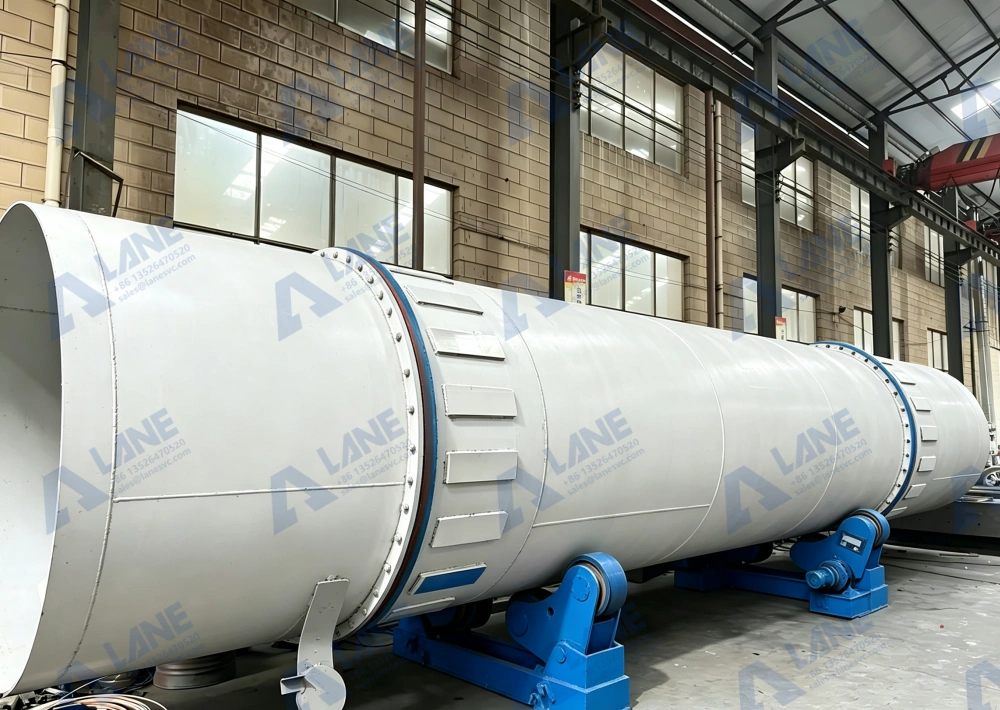
Welded areas deserve special inspection because surface irregularities, crevices, residual stress, and poor finishing can create localized weak points.
For phosphate drying equipment, industry guidance recommends grinding welds smooth to reduce locations where material can collect and corrode. It also recommends properly welding internal flights to help deter corrosion.
Therefore, Rotary Dryer Rust and Corrosion prevention is not only about choosing the right steel.
It also involves fabrication quality.
Discharge and exhaust areas
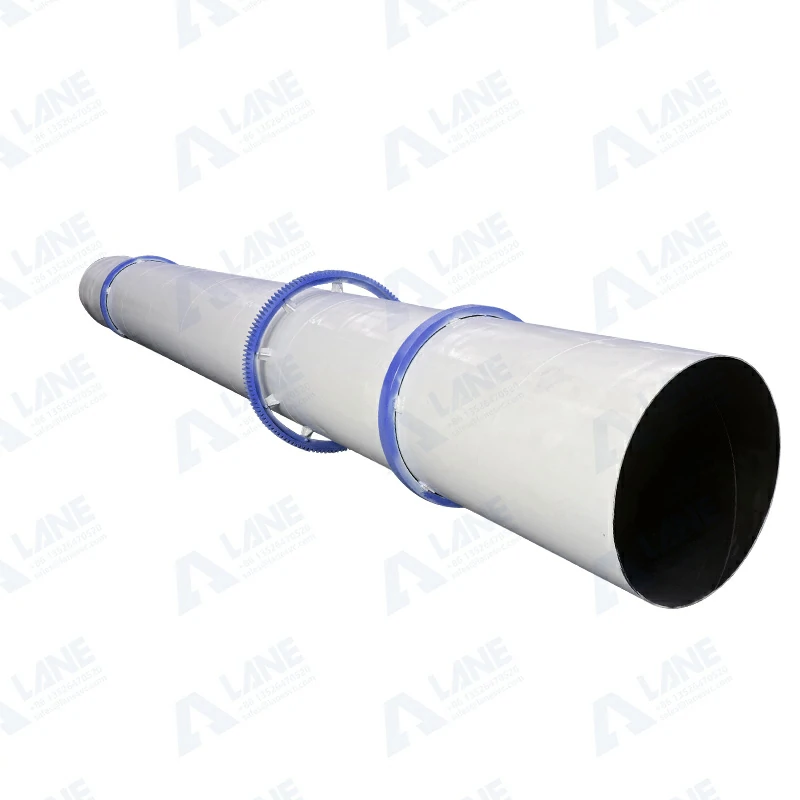
The discharge and exhaust sections experience different conditions from the feed end.
Hot and humid exhaust gas can create condensation when temperatures fall unexpectedly.
Therefore, an inspection for Rotary Dryer Rust and Corrosion should cover the entire process path rather than focusing only on the area where rust is most visible.
How to Identify Rotary Dryer Rust and Corrosion Early
Early detection can prevent a small problem from becoming an expensive repair.
Operators should watch for:
• Reddish-brown rust
• Dark discoloration
• Flaking surfaces
• Small pits
• Coating failure
• Rust around welds
• Corrosion beneath buildup
• Damaged lifting flights
• Unusual dust leakage
• Localized holes or thinning
One of the most important warning signs is localized corrosion.
A drum may look acceptable from the outside while significant corrosion is developing underneath accumulated material.
For this reason, visual inspection should be combined with physical inspection when necessary.
Depending on the severity of Rotary Dryer Rust and Corrosion, maintenance teams may need thickness measurements or other inspection methods to determine whether the shell remains suitable for continued operation.
The earlier the problem is identified, the more likely the repair will remain localized.
How to Remove Rust From a Rotary Dryer
Removing visible rust is only part of the solution.
A practical rotary dryer rust removal process should determine whether the damage is superficial or structural.
Step 1: Stop and isolate the dryer
Before maintenance begins, stop and isolate the dryer according to the site’s safety procedures.
Allow the equipment to cool to a suitable maintenance temperature.
Step 2: Remove material buildup
Remove accumulated material before evaluating the metal surface.
Otherwise, deposits can hide the actual extent of Rotary Dryer Rust and Corrosion.
Pay particular attention to:
• Feed sections
• Lifting flights
• Welded areas
• Shell joints
• Discharge sections
Step 3: Remove loose rust
For light surface rust, appropriate mechanical cleaning can be used depending on the construction material and maintenance procedure.
Possible methods include:
• Wire brushing
• Mechanical abrasion
• Sanding
• Suitable abrasive blasting
The objective is to expose the actual metal surface.
Step 4: Inspect the exposed surface
After rust removal, inspect the metal again.
Ask:
• Is the corrosion superficial?
• Are there pits?
• Has the metal become thinner?
• Is the weld damaged?
• Is cracking present?
• Are flights severely weakened?
• Has the protective coating failed?
This step is critical because painting over damaged metal does not restore lost thickness.
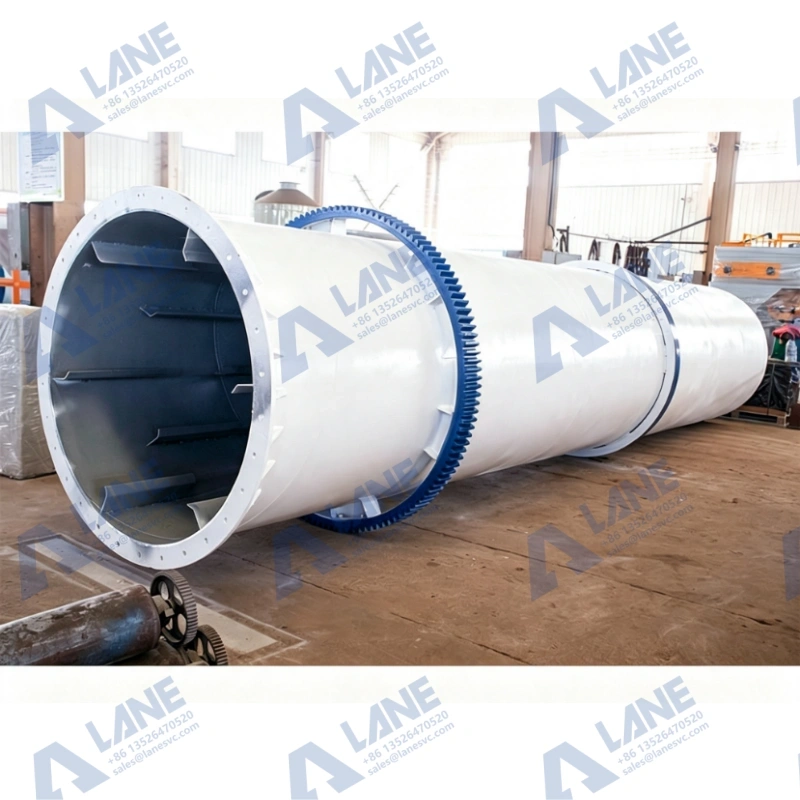
How to Repair Rotary Dryer Rust and Corrosion
The correct repair method depends on the severity of Rotary Dryer Rust and Corrosion.
Minor surface corrosion
For light surface corrosion:
Clean → Remove rust → Inspect → Treat surface → Apply protection
The surface should be properly prepared before a protective coating is applied.
Localized corrosion
If corrosion has caused measurable metal loss in one section, the damaged area may require:
• Local plate replacement
• Flight replacement
• Reinforcement
• Surface restoration
• Protective coating
• Corrosion-resistant replacement material
The objective is to restore the affected area and address the reason corrosion developed there.
Severe shell corrosion
If the drum shell has significant metal loss, cracks, or holes, simply applying a coating is not enough.
A qualified maintenance or engineering team should evaluate the structural condition.
Depending on the damage, a shell section may need to be replaced or reconstructed.
This is why early inspection of Rotary Dryer Rust and Corrosion is usually much more practical than waiting until a major shutdown is required.
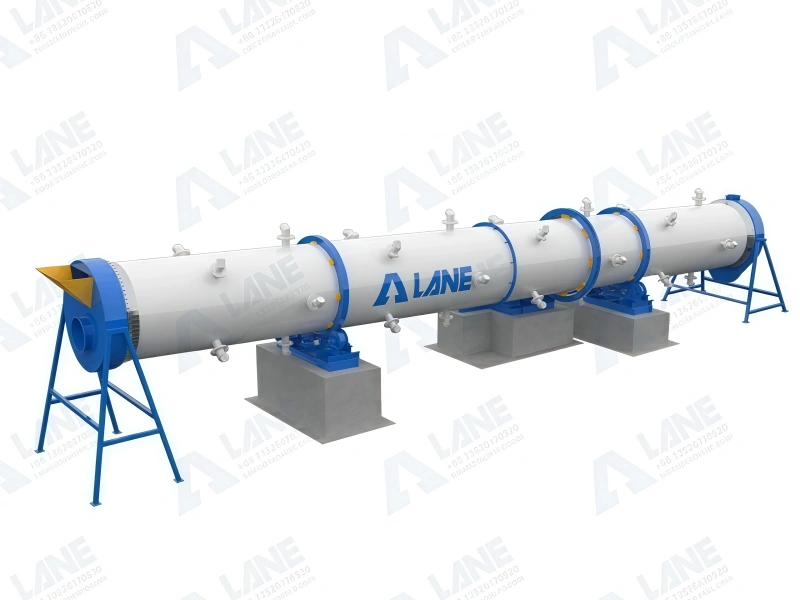
How to Prevent Rotary Dryer Rust and Corrosion
Effective Rotary Dryer Rust and Corrosion Prevention begins with equipment design and continues through daily operation.
Select materials according to the processed material
Construction materials should be selected according to the actual feed characteristics.
Important factors include:
• Chemical composition
• Moisture content
• Acidity or alkalinity
• Chloride content
• Abrasiveness
• Operating temperature
• Material residence time
• Cleaning conditions
It notes that selecting stainless steel or suitable alloys can help minimize corrosion and that construction material should be considered in relation to the material being processed.
The most economical solution is not necessarily to build the whole dryer from premium material.
A more targeted approach can be:
High-risk section → corrosion-resistant material
High-wear section → wear-resistant material
Normal section → suitable standard construction material
This approach can balance equipment life and investment cost.
Protect high-risk areas
High-risk areas can receive additional protection through:
- Corrosion-resistant alloys
- Protective coatings
- Replaceable components
- Reinforced plates
- Improved surface finishing
This is especially useful when the corrosion risk is concentrated around the wet feed end.
For example:
Wet inlet zone → higher corrosion protection
Middle drying zone → standard protection
Dry discharge zone → condition-based protection
The exact configuration should depend on the processed material and operating conditions.
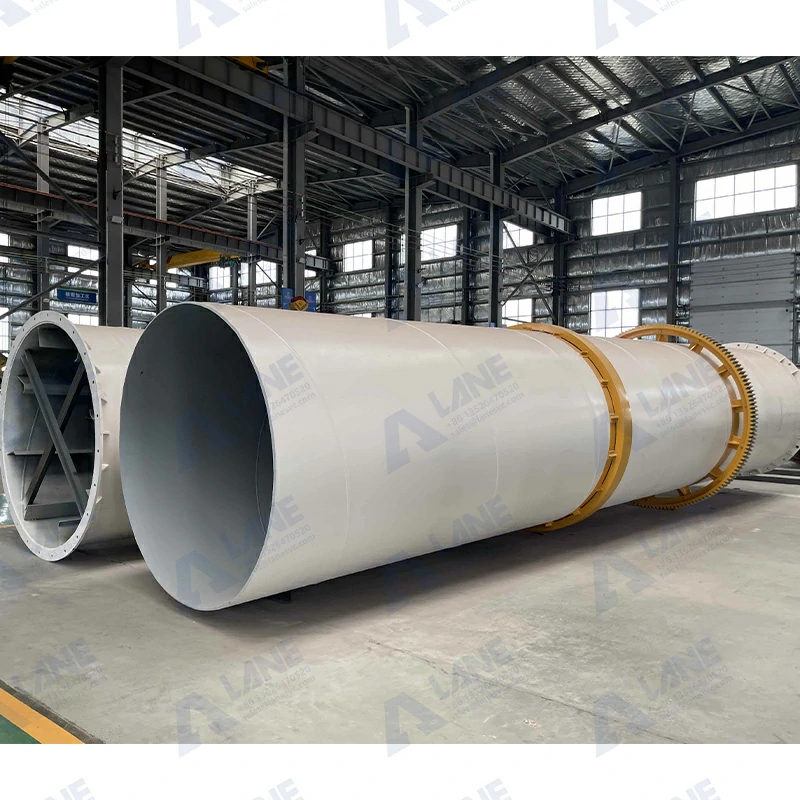
Improve weld and surface design
Good fabrication practices can reduce Rotary Dryer Rust and Corrosion by minimizing areas where moisture and material can remain trapped.
Design and fabrication should pay attention to:
• Weld quality
• Smooth surface finishing
• Crevices
• Material catch points
• Internal flight connections
• Previous repair locations
This is particularly important for corrosive fertilizer materials.
A smoother internal surface makes it harder for wet material to remain attached and reduces the opportunity for localized corrosion.
Control material buildup
Controlling buildup is one of the most practical methods of reducing Rotary Dryer Rust and Corrosion.
Operators should monitor:
• Feed moisture
• Feeding rate
• Material stickiness
• Drum speed
• Drying temperature
• Airflow
• Flight condition
When buildup begins:
Identify the cause → Remove buildup → Correct operating conditions → Inspect the metal surface
Mechanical knockers and other buildup-control methods can also be considered depending on the dryer design and material characteristics.
This provides another natural internal-link opportunity to an article about how to prevent material buildup in a rotary dryer.
How Temperature Control Affects Rotary Dryer Rust and Corrosion
Temperature control does not automatically create Rotary Dryer Rust and Corrosion, but unstable drying conditions can indirectly increase corrosion risk.
For example:
High feed moisture → increased evaporation load → unstable drying → wet material zones → buildup → longer chemical contact → higher corrosion risk
At the same time, excessive temperature can change material behavior, increase thermal stress, or cause unwanted product reactions.
Therefore, dryer operation needs to balance:
Heating capacity + airflow + feed rate + material moisture + drum speed
This is closely related to Rotary Dryer Temperature Control Problems, which can affect moisture consistency, energy consumption, drying capacity, and overall equipment performance. LANE’s existing technical article discusses how heat-source supply, airflow, material feeding, and dryer configuration interact to maintain stable drying conditions.
This section should contain an internal link to your existing Rotary Dryer Temperature Control Problems article.
That gives the two articles a clear topical relationship:
Corrosion article → temperature control article
Temperature control article → corrosion article
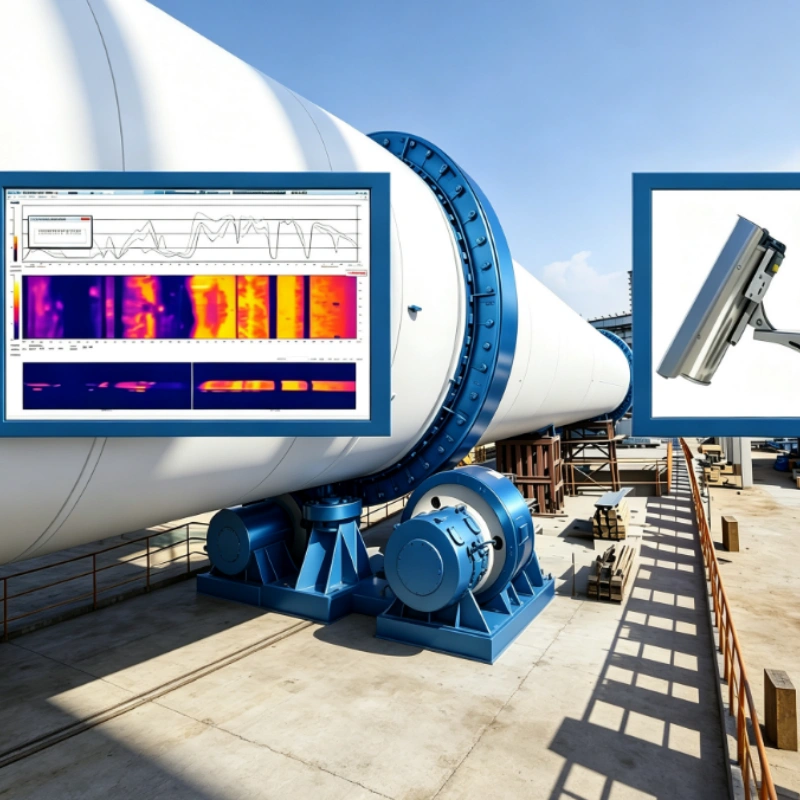
Rotary Dryer Rust and Corrosion in Fertilizer Production
Fertilizer production deserves special attention because fertilizer materials can combine moisture, chemicals, fine particles, and buildup tendencies.
Phosphate fertilizer
Phosphate fertilizer can create significant corrosion challenges during drying.
Because phosphoric acid can be present, corrosion may be particularly important around the wet feed end. Industry guidance recommends corrosion-resistant alloys and reinforcement of high-wear sections for suitable phosphate drying applications.
The internal-link opportunity here is your phosphate fertilizer production or fertilizer production line content.
NPK fertilizer
NPK fertilizer production usually requires drying after granulation.
A simplified process can be represented as:
Raw Material Preparation → Crushing → Batching → Mixing → Granulation → Rotary Dryer → Rotary Cooler → Rotary Screener → Packaging
The dryer therefore works as part of a larger system rather than as an isolated machine.
Drying performance affects:
• Final moisture
• Granule strength
• Screening efficiency
• Packaging performance
If you have a dedicated NPK fertilizer production line page, this section is a natural place to add an internal link.
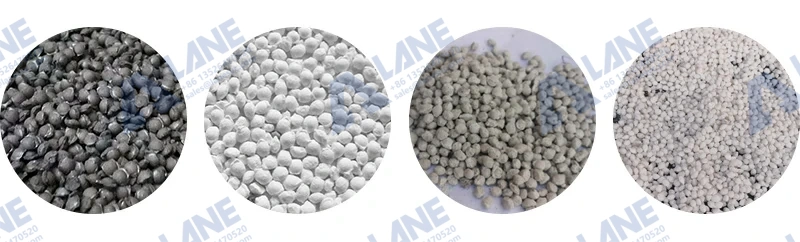
Organic fertilizer
Organic fertilizer materials can contain significant moisture and may behave differently during drying depending on the formulation.
Some materials can become sticky during the early drying stage, increasing the risk of buildup.
That creates the following relationship:
Organic material → high moisture → sticking → buildup → trapped moisture → corrosion risk
Therefore, controlling buildup is important for both drying efficiency and Rotary Dryer Rust and Corrosion prevention.
This section can naturally link to an organic fertilizer production line article or an organic fertilizer dryer page.
Why Buildup and Corrosion Should Be Solved Together
One of the most important points in Rotary Dryer Rust and Corrosion prevention is that corrosion and buildup can reinforce each other.
Consider the following cycle:
Sticky material → surface buildup → trapped moisture → chemical exposure → corrosion → rougher surface → easier material adhesion → more buildup
Once this cycle begins, simply removing rust may not solve the problem.
The operator also needs to determine why the material is sticking.
Possible causes include:
• Excessive feed moisture
• Incorrect drying temperature
• Poor airflow
• Incorrect drum speed
• Unsuitable lifting-flight configuration
• Material characteristics
• Insufficient cleaning
This is why corrosion analysis should consider both the metal surface and the process conditions.
- If you are interested, please refer to the models below.
| Model | Capacity(tph) | Drum Size(mm) | Rotation Speed(r/min) | Steel Plate Thickness(mm) | Lift Plate Thickness(mm) | Power(kw) |
|---|---|---|---|---|---|---|
| LARD0808 | 1-2 | Φ800*8000 | 5 | 8 | 4 | 5.5 |
| LARD1010 | 2-3 | Φ1000*10000 | 5 | 10 | 6 | 5.5 |
| LARD1212 | 3-5 | Φ1200*12000 | 5 | 10 | 6 | 7.5 |
| LARD1515 | 5-8 | Φ1500*15000 | 5 | 12 | 6 | 15 |
| LARD1616 | 8-12 | Φ1600*16000 | 5 | 12 | 6 | 18.5 |
| LARD1818 | 12-15 | Φ1800*18000 | 4 | 14 | 6 | 22 |
| LARD2020 | 20-25 | Φ2000*20000 | 4 | 14 | 6 | 37 |
| LARD2222 | 25-30 | Φ2200*22000 | 4 | 16 | 6 | 37 |
| LARD2424 | 30-35 | Φ2400*24000 | 4 | 16 | 6 | 45 |
| LARD2626 | 35-40 | Φ2600*26000 | 3 | 18 | 6 | 55 |
| LARD2828 | 40-45 | Φ2800*28000 | 3 | 18 | 6 | 75 |
| LARD3028 | 45-50 | Φ3000*28500 | 3 | 18 | 6 | 90 |
Rotary Dryer Rust and Corrosion Maintenance Checklist
A practical maintenance program should combine daily observation with scheduled inspection.
During operation
Monitor:
• Feed moisture
• Material flow
• Inlet temperature
• Outlet temperature
• Exhaust conditions
• Material buildup
• Unusual vibration
• Dust leakage
During routine inspection
Check:
• Feed inlet
• Drum shell
• Lifting flights
• Welds
• Discharge section
• Exhaust section
• Seals
• Protective coatings
• Previous repair areas
During shutdown
Use a basic sequence:
Material removal → Cleaning → Internal inspection → Corrosion assessment → Repair → Surface protection → Final inspection
This systematic approach makes Rotary Dryer Rust and Corrosion easier to control before it develops into a major equipment problem.
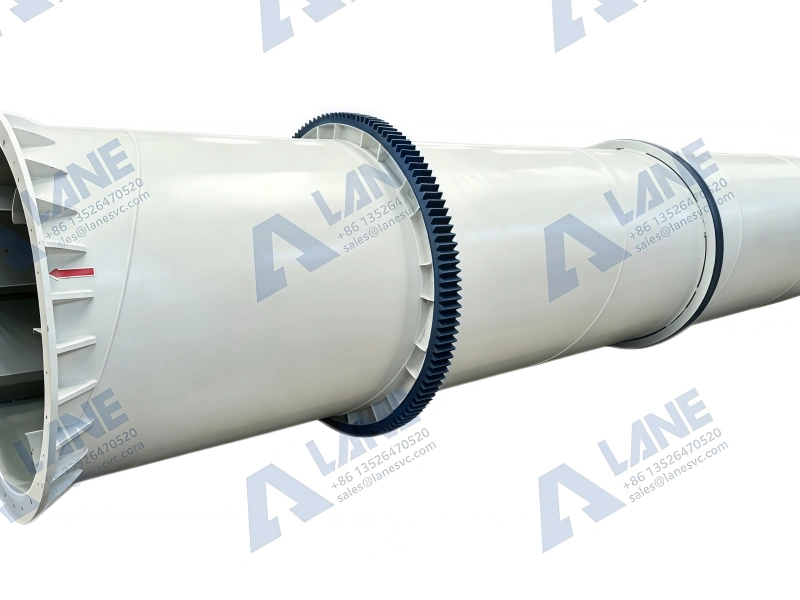
How LANE Approaches Rotary Dryer Rust and Corrosion Control
For a fertilizer equipment manufacturer, Rotary Dryer Rust and Corrosion should be considered during equipment selection and process design, not only after the dryer has been installed.
LANE Machinery provides fertilizer machinery and complete fertilizer production solutions. Its rotary dryer design approach can consider factors such as raw material characteristics, initial moisture, production capacity, drying requirements, heat source, airflow, and equipment configuration.
The design logic can be summarized as:
Raw material → Material characteristics → Moisture analysis → Drying requirement → Dryer configuration → Heating system → Operating parameters → Corrosion protection
This approach is particularly useful when the material has high moisture, acidic characteristics, or a tendency to form buildup.
For example, a dryer processing phosphate fertilizer may require more attention to corrosion-resistant materials around the wet inlet section, while a dryer processing sticky organic fertilizer may require greater attention to buildup prevention.
LANE can therefore consider Rotary Dryer Rust and Corrosion as part of the overall drying-system configuration rather than treating it only as a maintenance issue.
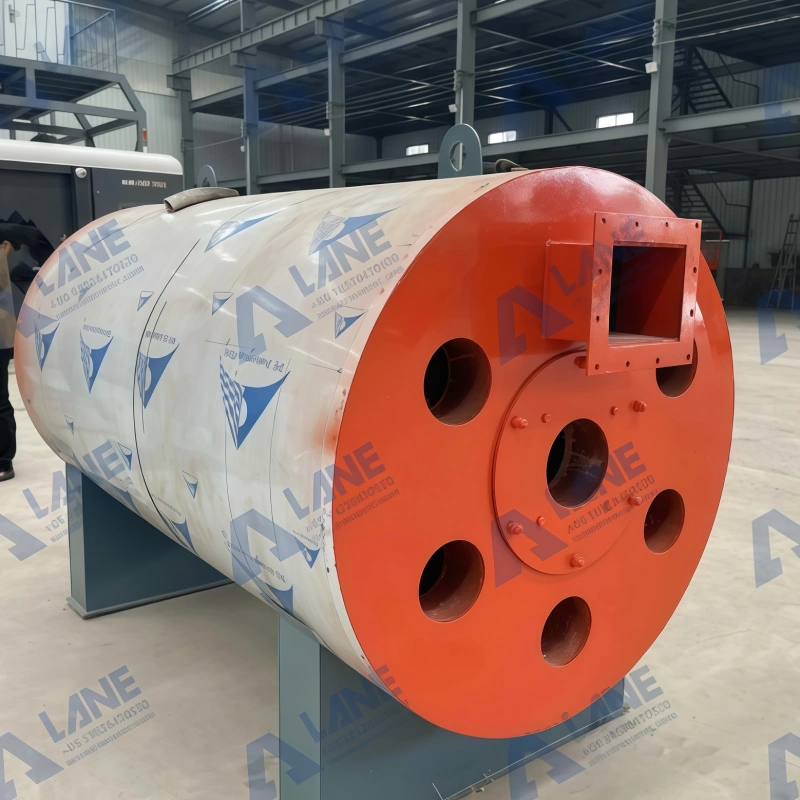
The dryer also needs to work together with other equipment in the production line, including the Hot Blast Stove, Rotary Cooler, Rotary Screener, conveying equipment, and other fertilizer processing machines.
This is where a complete fertilizer production line approach becomes more useful than selecting a dryer based only on capacity.
Conclution
Rotary Dryer Rust and Corrosion is not simply a cosmetic problem.
It can begin with moisture, chemical exposure, condensation, or material buildup and gradually develop into pitting, metal loss, damaged flights, weakened welds, or serious structural problems.
The most effective strategy is therefore:
Identify the cause → Inspect vulnerable areas → Remove buildup → Remove rust → Evaluate metal loss → Repair damaged sections → Improve protection → Stabilize operation → Inspect regularly
For fertilizer drying applications, particular attention should be given to the wet feed inlet, acidic materials, lifting flights, welded areas, and locations where material buildup occurs.
The key is to prevent the corrosion cycle before it becomes difficult to control.
A well-designed rotary dryer should therefore consider not only drying capacity, but also:
• Material characteristics
• Moisture profile
• Chemical properties
• Abrasion
• Buildup tendency
• Construction materials
• Surface protection
• Temperature control
• Maintenance requirements
When these factors are considered together, Rotary Dryer Rust and Corrosion can be managed more effectively while maintaining stable drying performance and extending equipment service life.