Rotary Screener Blocking Solutions for Sticky High-Moisture Fertilizer Pellets in Organic Fertilizer Production
- By LANE
- 04/08/2026
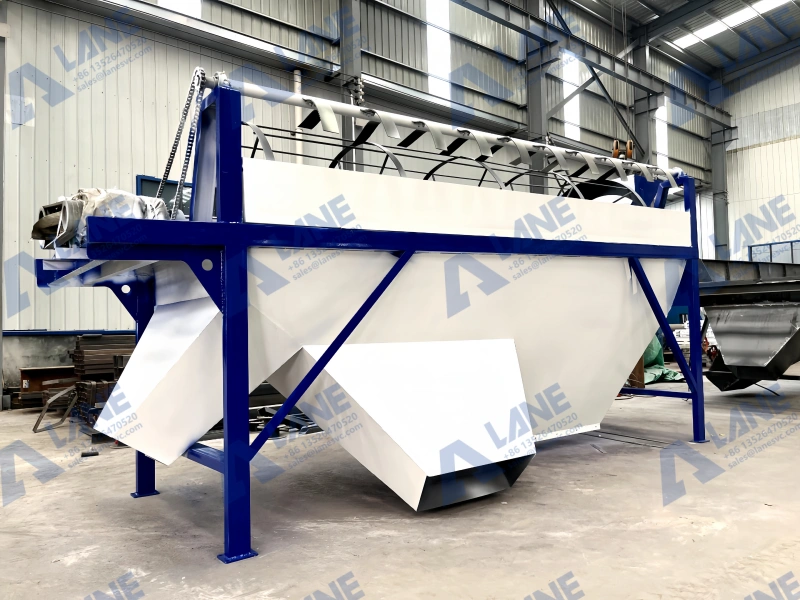
When you run an organic fertilizer or compound fertilizer production plant, the rotary screener undertakes the core grading and returning material separation task after granulation and drying. Qualified spherical fertilizer pellets pass through the screen mesh for finished product collection, oversized agglomerates and hard lumps get sent back to the crusher for re-granulation, so the whole production line can run circularly and smoothly.
However, when dealing with chicken manure compost, cow dung fermentation materials, unseasoned organic waste with high water content, production operators always face a tough trouble. Wet fertilizer materials cling tightly to the screen mesh surface, block the round holes one by one, narrow the effective screening area sharply. Workers have to stop the whole production line every several hours to chisel sticky fertilizer off the screen by hand. Frequent shutdown cleaning cuts down daily output, raises labor cost, and causes unstable particle size of finished fertilizer products.
Adopting targeted Rotary Screener Blocking Solutions is the core prerequisite to restore continuous production, stabilize fertilizer quality and reduce unnecessary manual maintenance work for fertilizer manufacturers.
Core Causes Triggering Rotary Screener Blockage During Sticky Fertilizer Screening
Screen clogging on rotary drum screening machine never comes from a single factor. Most factory foremen only replace the damaged screen mesh repeatedly to deal with blockage, yet the clogging issue reappears soon after startup. We summarize on-site screening fault records from dozens of fertilizer production line commissioning projects, sort out three root causes for sticky fertilizer screen blockage for your reference. Understanding these root causes is the first step toward effective Rotary Screener Blocking Solutions.
• Excessive Raw Material Moisture Makes Fertilizer Form Adhesive Wet Mass
Livestock manure compost, mushroom residue organic fertilizer and kitchen waste fermentation fertilizer retain high free water if the aerobic fermentation cycle is shortened or the front-end drying process is insufficient. The wet fertilizer has strong surface adhesion. Once touching the metal screen mesh of the rotary screener, fine powder and small pellets stick to the mesh holes rapidly. As the drum keeps rotating, adhered fertilizer accumulates layer by layer, completely covering the screen holes. Even small qualified fertilizer pellets cannot penetrate the screen for separation. This moisture-related issue is one of the primary targets of Rotary Screener Blocking Solutions.
• Under-crushed Fertilizer Agglomerates Exert Extra Load on Screen Surface
After fermentation, hard fertilizer lumps fail to be fully broken by the cage crusher or chain crusher ahead of the screening station. Large soft agglomerates and hard blocks directly enter the rotary screener. These big blocks roll along the inclined drum surface, press the sticky fine fertilizer into the screen holes firmly. Meanwhile, oversized materials block the discharging outlet of coarse materials, cause material backflow inside the drum, and accelerate overall screen blockage. Proper Rotary Screener Blocking Solutions must address this agglomerate-related factor.
• Uncontrolled Overfeeding Breaks Balanced Screening State of Rotary Screener
Many production teams increase the feeding belt speed blindly when the granulator runs at full capacity. A large amount of wet sticky fertilizer rushes into the rotary screener drum in a short time. The drum rotation cannot flip and disperse the materials evenly. Thick material bed covers the whole screen mesh, the internal self-cleaning structure cannot contact the screen normally, and screen blockage becomes inevitable. Overfeeding control is a critical component of comprehensive Rotary Screener Blocking Solutions
Practical Rotary Screener Blocking Solutions for On-Site Production Rectification
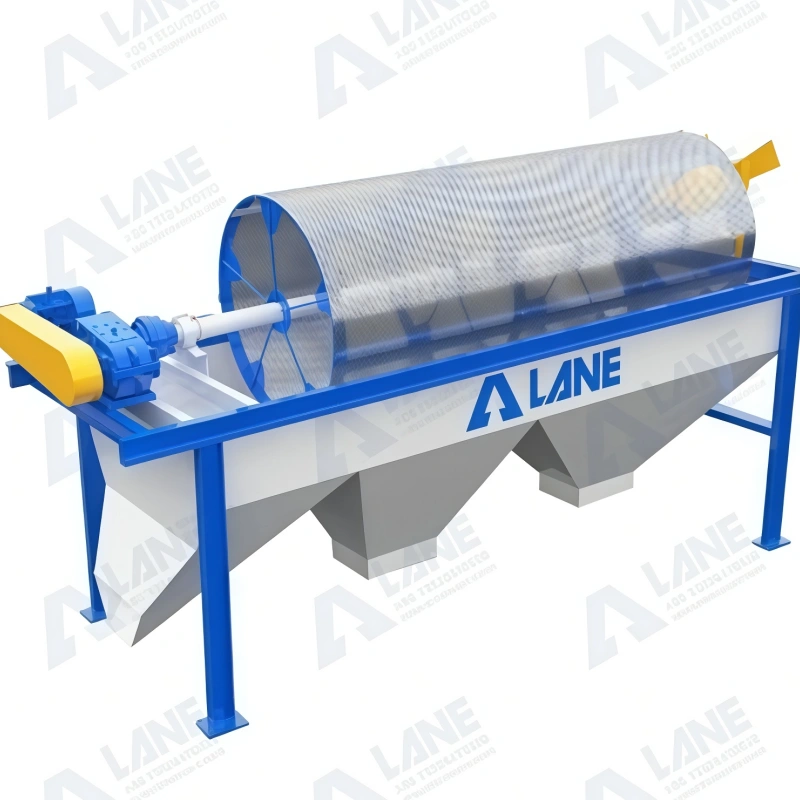
We divide Rotary Screener Blocking Solutions into front-end process adjustment, on-site equipment transformation and daily operation optimization three dimensions. All measures can be implemented without large-scale production line reconstruction, which helps fertilizer plants cut blockage frequency rapidly. These practical Rotary Screener Blocking Solutions have been proven effective across numerous fertilizer production sites.
> Adjust Front-End Material Moisture and Crushing Condition to Reduce Sticky Materials
First, extend the compost turning cycle for raw manure materials to complete full aerobic fermentation, lower internal free water content of organic fertilizer raw materials. Second, check the hammer head and chain tooth wear condition of the front crusher regularly, replace worn accessories timely to ensure thorough crushing of fertilizer agglomerates. Stable raw material quality can cut over 60% sticky material entering the rotary drum screening machine. This front-end adjustment is one of the most fundamental Rotary Screener Blocking Solutions.
> Activate Built-In Plate-Type Automatic Sieve Cleaning Mechanism for Anti-Clogging
LANE rotary screener is equipped with plate-type automatic sieve cleaning device inside the drum. During normal drum rotation, the cleaning plate keeps reciprocating friction with the inner side of the screen mesh, continuously combing the sticky fertilizer attached on screen holes. The cleaning structure runs synchronously with production, no extra power consumption, keeps screen holes unobstructed for 24-hour continuous screening. This automatic cleaning mechanism is a core technology in our Rotary Screener Blocking Solutions.
> Adopt Variable-Frequency Feeding Control to Realize Uniform Material Feeding
Install frequency converter for the feeding belt conveyor before rotary screener. Set fixed feeding frequency according to the hourly processing capacity of the rotary drum screening machine, avoid instantaneous material surge. Even thin material layer on the screen mesh makes full use of drum rotation flipping effect, fine fertilizer penetrates the screen smoothly, no thick material accumulation leading to blockage. Variable-frequency feeding is an essential part of effective Rotary Screener Blocking Solutions.
| Model | Capacity(tph) | Drum Diameter(m) | Drum Length(m) | Tilt Angle(°) | Rotation Speed(r/min) | Power(kw) |
|---|---|---|---|---|---|---|
| LAS-0.8*2M | 1-2.5 | 0.8 | 2 | 2-3 | 22 | 3 |
| LAS-0.8*3M | 1.5-3 | 0.8 | 3 | 2-3 | 22 | 3 |
| LAS-1*3M | 2-4 | 1 | 3 | 2-3 | 22 | 3 |
| LAS-1.2*4M | 3-5 | 1.2 | 4 | 2-3 | 17 | 4 |
| LAS-1.5*4M | 4-8 | 1.5 | 4 | 2-3 | 17 | 4 |
| LAS-1.5*5M | 5-10 | 1.5 | 5 | 2-3 | 14 | 5.5 |
| LAS-1.5*6M | 5-10 | 1.5 | 6 | 2-3 | 14 | 7.5 |
| LAS-1.8*7M | 10-12 | 1.8 | 7 | 2-3 | 14 | 7.5 |
| LAS-2*6M | 12-15 | 2 | 6 | 2-3 | 14 | 15 |
Targeted Rotary Screener Blocking Solutions for Different Fertilizer Raw Materials
Different fertilizer raw materials have different viscosity and moisture characteristics. One-size-fits-all anti-blocking adjustment cannot reach ideal screening effect. We formulate exclusive Rotary Screener Blocking Solutions for three mainstream organic fertilizer raw materials for your production reference. These tailored Rotary Screener Blocking Solutions ensure maximum screening efficiency for each material type.
• Anti-Blockage Scheme for Chicken Manure Compost Rotary Screening
Chicken manure compost features high nitrogen content, strong viscosity and slow water dissipation. Before screening, add a small amount of dry straw powder or weathered coal powder to mix evenly to reduce material surface adhesion. Appropriately increase the inclination angle of the rotary screener drum, accelerate the forward flow speed of materials inside the cylinder, shorten the contact time between wet chicken manure and the screen mesh to prevent adhesion blockage. This anti-blockage scheme is a specialized example of our Rotary Screener Blocking Solutions.
• Blockage Prevention Measures for High-Moisture Organic Fertilizer Screening
For organic fertilizer with moisture higher than 28%, match the rotary screener with larger round screen aperture moderately. Choose thickened anti-sticking steel screen mesh instead of ordinary thin screen, reduce the contact area between fertilizer and metal screen surface. Cooperate with the internal automatic sieve cleaning mechanism to clear residual sticky fertilizer on the screen in real time. These blockage prevention measures are vital Rotary Screener Blocking Solutions for high-moisture conditions.
• Screening Optimization Plan for Fertilizer with Uneven Particle Agglomeration
If fertilizer finished products have a large number of irregular large blocks, strengthen the inspection frequency of the front granulator and crusher. Adjust the rotary screener drum rotating speed properly, lower rotation speed to extend the rolling time of bulk agglomerates inside the cylinder, so coarse lumps can be discharged out of the coarse material outlet completely, avoiding large blocks squeezing fine fertilizer into screen holes to form blockage. This optimization plan is among the most practical Rotary Screener Blocking Solutions for uneven materials.
Key Points to Select Qualified Rotary Drum Screening Machine for Sticky Fertilize
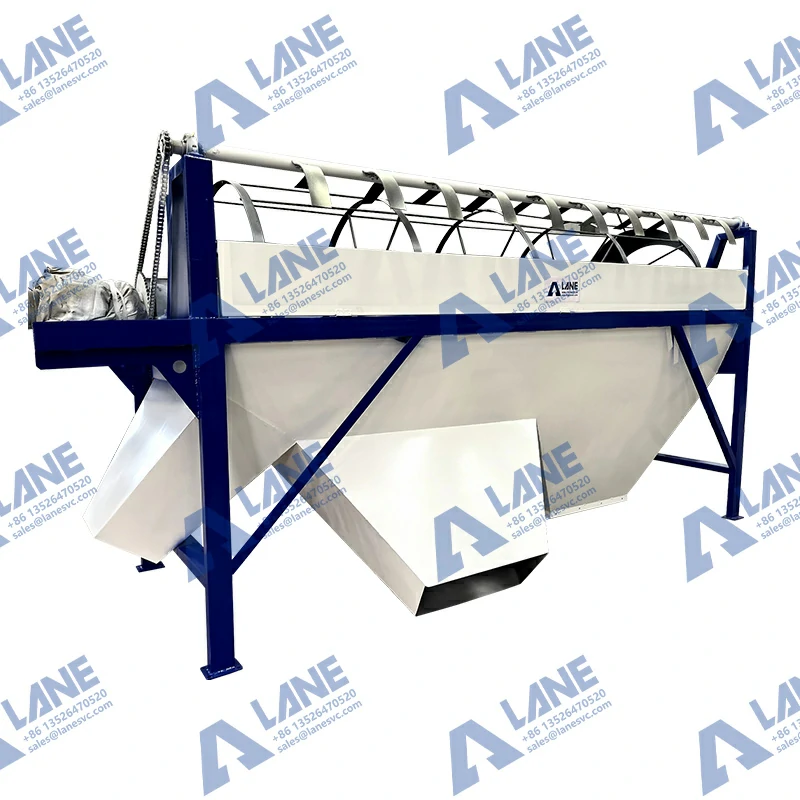
If screen blockage occurs frequently even after full process optimization, the aging rotary drum screening machine cannot adapt to sticky fertilizer working conditions. Selecting targeted configuration rotary screener can solve blockage troubles from the equipment foundation. Proper equipment selection is the foundation of long-term Rotary Screener Blocking Solutions.
- Match Machine Hourly Output with Actual Production Line Throughput
Calculate the peak hourly output of your fertilizer production line, select the rotary screener with 1.2 times rated processing capacity as the matching model. Leave sufficient surplus screening load for the equipment, avoid the screener running at full load for a long time which causes material accumulation and blockage. LANE supplies rotary screeners with 1t/h to 30t/h multiple specifications for small, medium and large fertilizer plants. Capacity matching is a key consideration in our Rotary Screener Blocking Solutions.
- Confirm Screen Mesh Aperture According to Finished Fertilizer Standard
Common finished organic fertilizer pellets adopt 2mm–4mm screen mesh, compound fertilizer finished products use 3mm–5mm screen aperture. Too small screen holes are easy to be blocked by fine sticky powder, oversized mesh leads to unqualified small lumps mixing into finished products. LANE supports customized screen mesh aperture replacement according to customer finished fertilizer standards. Proper aperture selection is an important aspect of Rotary Screener Blocking Solutions.
- Guarantee Complete Matching Between Screener and Front & Rear Equipment
The whole fertilizer production line follows the flow: Crusher → Horizontal Mixer → Rotary Drum Granulator → Rotary Drum Dryer → Rotary Screener → Packaging Machine. LANE rotary screener reserves standard butt joint ports for feeding, coarse material returning and finished material discharging. It can connect with original production line equipment directly without pipeline transformation, realize fast equipment replacement and production resumption. Complete line matching ensures that our Rotary Screener Blocking Solutions work seamlessly.
Advantages Of LANE Rotary Screener for Sticky Fertilizer Anti-Block Screening
We design rotary screeners focusing on high-moisture sticky fertilizer screening pain points, integrate multiple anti-blocking structures inside the drum to reduce the dependence on manual screen cleaning for fertilizer manufacturers. These design advantages translate into superior Rotary Screener Blocking Solutions for our customers.
- Integrated Plate-Type Automatic Sieve Cleaning Structure for Continuous Anti-Clogging
Different from ordinary rotary screeners without self-cleaning parts, LANE rotary screener installs fixed anti-block cleaning plates inside the cylinder. The cleaning plate keeps rubbing the inner wall of the screen mesh during drum rotation, peel off sticky fertilizer on screen holes in real time. No shutdown cleaning is needed in daily continuous production, improve overall equipment operation rate. This automatic cleaning structure is the centerpiece of our Rotary Screener Blocking Solutions.
- Thickened Wear-Resistant Screen Mesh and Detachable Combined Screen Frame
The screen frame adopts split combined structure, when local screen mesh is worn or severely blocked, workers only replace the damaged single screen section instead of the whole screen cylinder, cut spare parts cost. The thickened steel screen mesh has strong anti-adhesion performance, not easy to deform under the extrusion of fertilizer agglomerates, maintain stable screen hole shape for long-term screening. These durable components enhance the effectiveness of our Rotary Screener Blocking Solutions.
- One-Stop Fertilizer Production Line Overall Supporting Service
Except for independent rotary screener supply, LANE can undertake overall planning for organic fertilizer and compound fertilizer production lines. From raw material fermentation equipment, crushing, mixing, granulation, drying to screening and packaging finished equipment, we provide integrated process layout, equipment installation guidance and post-sales technical debugging, help new fertilizer factories avoid equipment mismatch and screening blockage problems in the early construction stage. This one-stop service ensures comprehensive Rotary Screener Blocking Solutions from project inception.
Frequently Asked Questions About Rotary Screener Blocking Solutions
Why does the rotary screener block frequently when screening fermented livestock manure fertilizer?
The top reason is insufficient fermentation leading to excessive free water in manure materials, the second cause is uneven feeding leading to material accumulation on the screen surface. You can test raw material moisture first, optimize the compost fermentation process, and match variable-frequency feeding to solve the problem from two aspects. These are basic but effective Rotary Screener Blocking Solutions.
Can the LANE rotary screener work steadily for high moisture organic fertilizer screening?
Yes. The built-in automatic sieve cleaning mechanism, inclined drum design and anti-sticking thickened screen mesh work together to adapt to organic fertilizer with moisture below 30%. Cooperate with front-end moisture control, the equipment can realize non-stop continuous screening operation. LANE equipment delivers reliable Rotary Screener Blocking Solutions even under challenging conditions.
How long can we reduce screen cleaning downtime after adopting anti-blocking transformation?
After using targeted Rotary Screener Blocking Solutions including process adjustment and equipment anti-blocking transformation, manual screen cleaning shutdown can be reduced by over 85%. Most fertilizer production lines only need monthly routine inspection for the screener, no daily emergency shutdown for blockage cleaning. These tangible results demonstrate the value of our Rotary Screener Blocking Solutions.
Does LANE provide on-site technical guidance for screener anti-blocking debugging?
We offer overseas on-site installation commissioning and production process debugging services for overseas fertilizer clients. Professional technicians adjust drum inclination, rotating speed, feeding volume and screen mesh configuration on site according to your actual raw material conditions, formulate exclusive anti-blocking screening parameters for your production line. This hands-on support ensures that our Rotary Screener Blocking Solutions are properly implemented.
Conclusion
Rotary screener blockage triggered by sticky high-moisture fertilizer is a universal production bottleneck for organic fertilizer and compound fertilizer manufacturers. Blind screen replacement and frequent shutdown cleaning only relieve surface faults, stable production must rely on complete Rotary Screener Blocking Solutions covering front-end raw material treatment, on-site equipment optimization and standardized operation management. Implementing comprehensive Rotary Screener Blocking Solutions is the only way to achieve long-term production stability.
If your old screening equipment cannot adapt to viscous fertilizer materials after repeated transformation, choosing LANE customized anti-block rotary drum screening machine is a cost-effective long-term solution. Our equipment delivers proven Rotary Screener Blocking Solutions that can lower screen blockage probability, cut maintenance labor and spare parts expenditure, stabilize finished fertilizer particle grading quality, and support long-term high-load continuous operation of the whole fertilizer production line. LANE’s Rotary Screener Blocking Solutions are designed to maximize your production uptime and profitability.
If you have demands for fertilizer screening equipment transformation, new machine selection or full production line layout, send your raw material type, raw material moisture and hourly production demand to our sales team. We will deliver targeted equipment configuration and production process suggestions featuring our professional Rotary Screener Blocking Solutions for you within one working day.