Troubleshooting Uneven Particle Size after Hammer Crusher Crushing
Many organic fertilizer processing plants will encounter the problem that the output particle size of hammer mill is not uniform in the process of raw material crushing and pretreatment. The size of the raw materials is not uniform, which will directly affect the subsequent granulation process, reduce the qualified rate of fertilizer products, and lower the production efficiency of the entire production line.
Particle size imbalance is a high-frequency fault of hammer mill, and most factories only temporarily adjust the machine and can’t find the root cause. This article systematically sorts out the core reasons for the uneven output of hammer mill, the step-by-step investigation method, the on-the-ground solution measures, and the equipment standard operation method, and thoroughly solves the production problem of the double-rotor hammer mill with mixed particle size.
Main Causes Triggering Uneven Particle Size after Hammer Crusher Crushing
In order to completely solve the problem of uneven grain size, we must first find the source of the fault. The debugging and maintenance plan for different causes is completely different. Blindly adjusting not only cannot solve the problem, but will also aggravate the wear and tear of the equipment.
Severe Wear of Hammer Crusher Alloy Hammer Heads
The hammer head is the core crushing component of the sieve-less hammer-type crusher, and the equipment will continuously wear the edge of the hammer head as it crushes various organic fertilizer raw materials for a long time. If the wear degree of each hammer head is not consistent, the crushing impact force will be unbalanced, and some materials will be fully crushed and some materials will directly flow out, resulting in a mixture of coarse and fine particle sizes in the output.
Improper Gap between Hammer Head and Strike Plate
The gap between the hammer and the counterattack lining directly determines the size of the material after crushing. The gap is too large, and the large lumps of material cannot be fully crushed, and the output is direct; If the left and right gap of the crushing chamber is not symmetrical, the crushing force inside the equipment is unbalanced, and the finished product particle specification will be chaotic and cannot be unified.
Unstable Feeding Speed and Unbalanced Raw Material Properties
In the production process, the feeding speed is irregular, which will cause the filling density of the material in the crushing chamber to be unstable. At the same time, if the organic fertilizer raw material is unevenly dry and mixed with lumps, the equipment cannot maintain a stable crushing rhythm, and the problem of non-standard particle size will continue to occur in continuous production.
Desynchronization of Double Rotor Operation
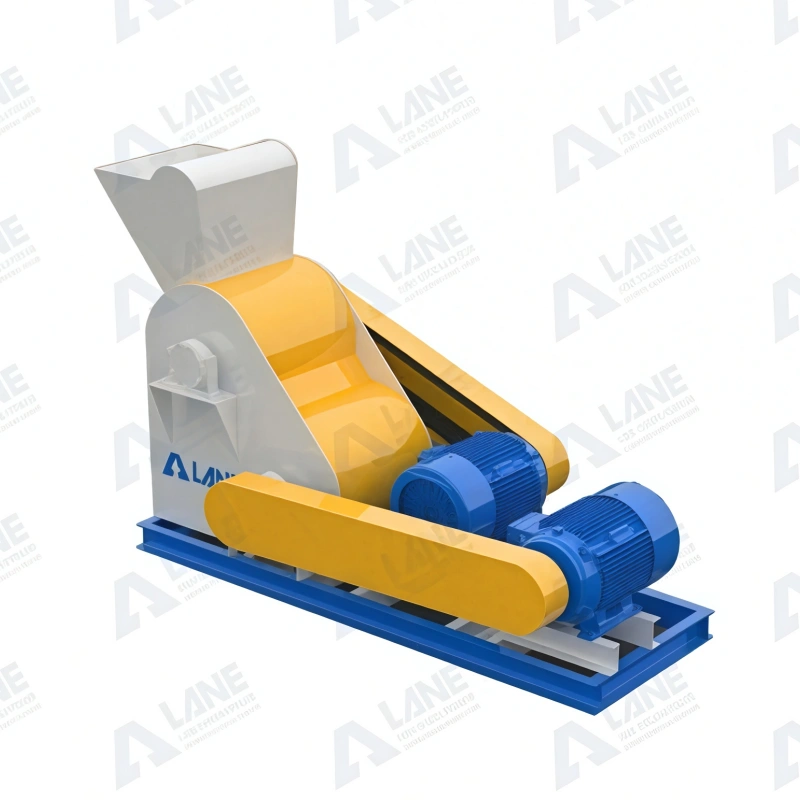
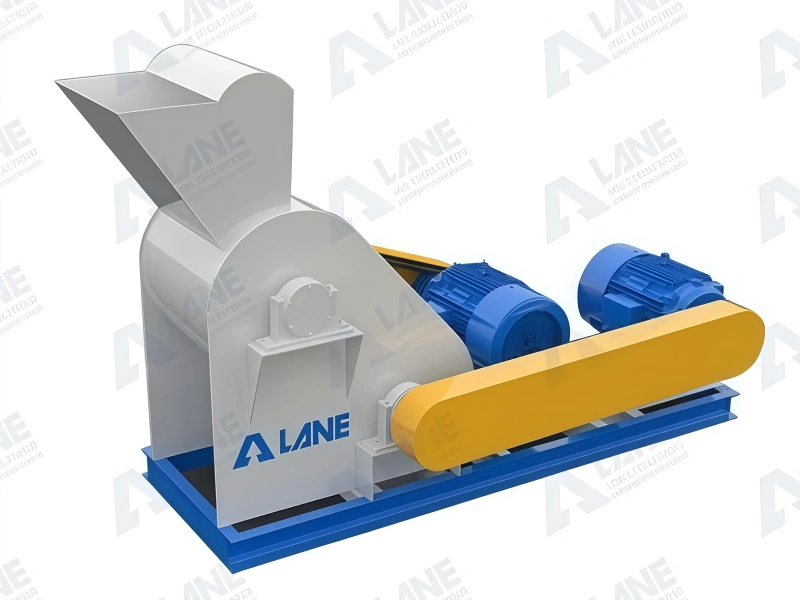
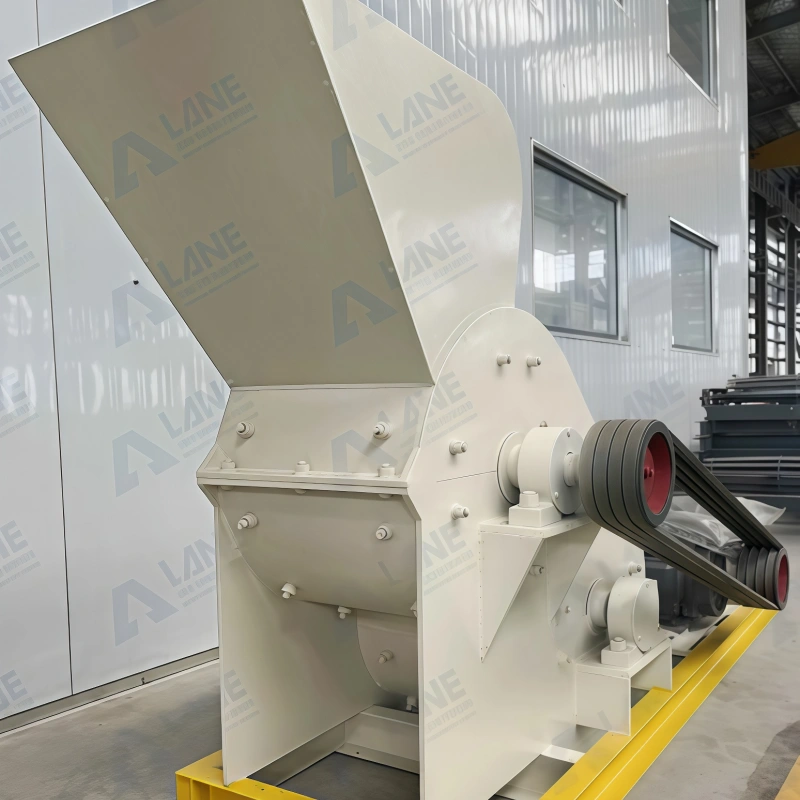
Our factory’s double-rotor hammer crusher relies on the cooperation of the upper and lower double rotors for two-stage crushing. Once the rotational speed and operation rhythm of the two sets of rotors are not synchronized, the crushing force of the two stages in front and back will deviate, and the degree of crushing of the material will not be consistent, which will directly cause the overall output particle size to be uneven.
High Humidity Materials Lead to Internal Blockage
Organic fertilizer raw materials with high water content, such as manure and sludge, are extremely sticky and easily adhere to the inner wall of the crushing chamber. Long-term accumulation of material will form a cushion layer, weakening the impact crushing effect of the hammer head, and the material cannot be fully crushed, which is a common cause of uneven particle size in wet material crushing.
Step-by-Step Troubleshooting for Uneven Particle Size after Hammer Crusher Crushing
For the problem of uneven grain size, there is no need to blindly disassemble the machine for inspection. By following the standardized steps, you can quickly locate the problem and greatly save the maintenance time of the factory. It is suitable for the rapid resumption of organic fertilizer production lines.
Visual Inspection of Hammer Head Wear Status
First, stop the machine and turn off the power, open the inspection port of the equipment, and check the wear of all hammers one by one. Mark the worn, deformed, and severely damaged hammers, compare the wear differences of each group of hammers, and judge whether the particle size imbalance is caused by the loss of accessories.
Calibrate the Crushing Clearance inside Hammer Crusher
Accurately measure the distance between the left and right sides of the crushing chamber, the hammer and the counterattack plate. By fine-tuning the position of the counterattack lining plate, we can ensure that the gap around the cavity is uniform and consistent, and prevent the deviation of the crushing particle size caused by the asymmetry of the gap.
Test Raw Material Humidity and Feeding Continuity
On-site detection of the moisture content of raw materials to check whether there are problems such as excessive moisture and severe clumping. At the same time, check the working condition of the feeding equipment to ensure that the feeding is uniform and stable, and avoid sudden large-scale feeding causing insufficient crushing.
Check Synchronous Working Status of Dual Rotors
The equipment is started with an empty load, and the operation rhythm of the upper and lower rotors is observed. Check the drive belt and motor accessories, check the slip of the belt and the aging of the accessories, and ensure that the rotor rotates at the same speed to ensure that the two rotors operate at the same speed.
Practical Solutions to Eliminate Uneven Particle Size after Hammer Crusher Crushing
Combined with the on-site practical experience of dozens of organic fertilizer plants, the corresponding rectification plan can be directly implemented to completely cure the problem of uneven particle size and ensure the stable quality of grinding for a long time.
- Adjust Position or Replace Worn Hammer Heads
Our hammer mill supports the fine adjustment of the gap, and the slightly worn hammers can be adjusted to the installation position to restore the effective impact length. Hammer heads with serious wear and deformation need to be replaced in batches to ensure that all hammer heads have the same crushing force and stabilize the particle size of the output from the root.
- Optimize Discharge Granularity by Adjusting Clearance
Accurately adjust the gap between the hammer and the counterattack plate according to the requirements of the back end granulation process. The output particle size of organic fertilizer granulation raw material is recommended to be controlled within 3mm, which is suitable for subsequent granulation and screening processes to ensure the uniform quality of finished fertilizer.
- Stabilize Feeding and Control Raw Material Moisture Content
Accompanied by a uniform feeding equipment, it can prevent the feeding from being too much or too little. For wet raw materials with water content exceeding 32%, it is necessary to do a uniform wet pretreatment in advance to reduce the problem of material sticking and blockage, and to adapt to the wet material crushing condition of the sieve-less hammer crusher.
- Establish Routine Maintenance Rules for Hammer Crusher
Establish a weekly inspection system, regularly inspect the hammer head, rotor, and transmission system accessories, and establish a maintenance record book. Anticipate the wear of spare parts in advance, and complete the replacement of spare parts and equipment commissioning before the occurrence of abnormality in particle size.
| Model | Capacity(tph) | Power(kw) | Overall Size(mm) | Number Of Hammers | Hammer Weight(kg) | Weight(t) |
|---|---|---|---|---|---|---|
| LACD-400*400 | 5-10 | 7.5+7.5 | 2200*900*1200 | 24 | 2.5 | 0.6 |
| LACD-600*400 | 10-15 | 18.5+18.5 | 2600*950*1500 | 24 | 3.5 | 1 |
| LACD-600*600 | 15-20 | 22+22 | 2600*1170*1500 | 40 | 3.5 | 1.3 |
| LACD-600*800 | 20-30 | 30+22 | 2800*1350*1700 | 48 | 3.5 | 1.8 |
| LACD-800*600 | 30-40 | 45+37 | 3200*1250*2000 | 40 | 8 | 3 |
| LACD-800*800 | 40-50 | 55+45 | 3200*1400*2000 | 48 | 8 | 3.5 |
| LACD-1000*800 | 50-60 | 55+75 | 3950*1750*2280 | 48 | 10 | 5.5 |
| LACD-1000*1000 | 60-90 | 90+75 | 4000*1900*2400 | 52 | 10 | 7 |
Operation Guidance of Hammer Crusher for Organic Fertilizer Crushing
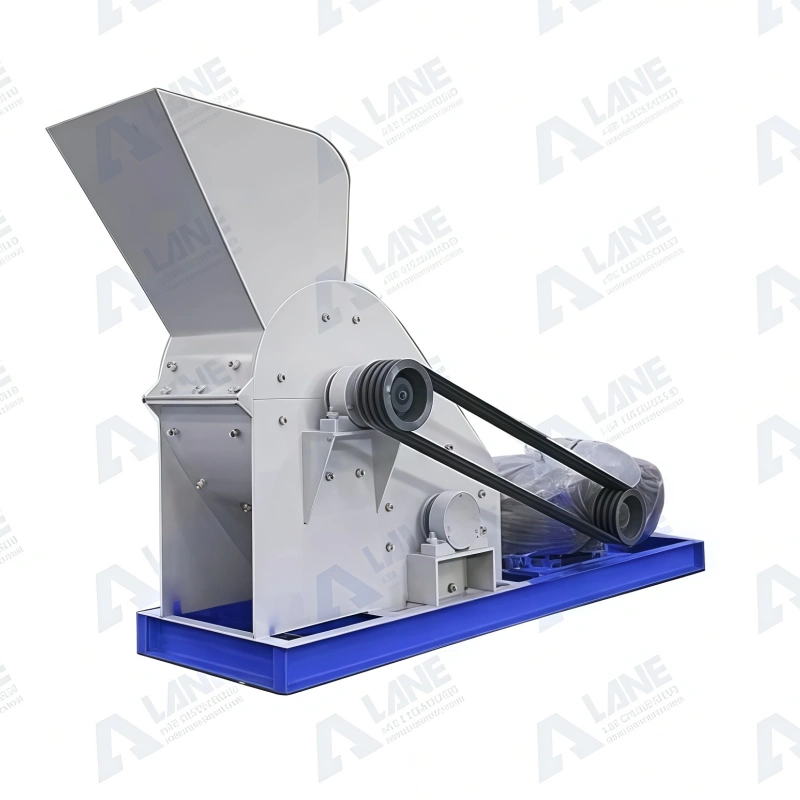
Most irregular grain size failures are caused by improper daily operations. Standardized operation can stabilize the effect of wet material crushing, extend the service life of wearable parts, and avoid the problem of particle imbalance in daily production.
- Features of No-Sieve Hammer Crusher for Wet Raw Materials
Different from the traditional sieve-equipped crusher, our factory’s double-rotor sieve-free hammer crusher eliminates the bottom sieve plate, completely avoiding the problem of sieve blockage during the crushing of wet manure, sludge, and fermentation waste, and is specially designed for continuous crushing of high-moisture organic fertilizer raw materials.
- Standard Operation to Prevent Uneven Crushing Granularity
The equipment must be started with an empty load before feeding, and it is strictly forbidden to feed a large amount of material at once. Before production, stone and hard impurities should be sorted in advance to avoid damage caused by single-sided impact of the hammer head, and to prevent particle size deviation caused by uneven force on the rotor and hammer head.
Frequently Asked Questions
Question 1: What is the most common cause of uneven particle size after hammer crusher crushing?
Answer: Uneven hammer head wear, asymmetric crushing gap, and unstable feed are the three core reasons. In addition, the non-synchronous operation of the dual-rotor and the sticking of wet material to the wall are also high-frequency causes in wet fertilizer processing.
Question 2: Can adjusting the hammer gap improve the problem of uneven particle size?
Answer: When the hammer head accessories are in good condition, adjusting the gap can effectively optimize the particle size. If the hammer head is severely worn and deformed, adjusting the clearance will not meet the standard, and the accessory must be replaced.
Question 3: Will high humidity organic fertilizer raw materials cause uneven particle size?
Answer: Yes. High humidity material adheres to the wall and forms a buffer layer, weakening the crushing force, resulting in incomplete crushing of the material. Balancing the moisture of raw materials in advance and clearing the material in the cavity can effectively solve this problem.
Question 4: How often should the hammer mill be maintained to avoid the problem of uneven particle size?
Answer: It is recommended to conduct a comprehensive inspection of the continuous production line every week. According to the hardness of the raw material and the production time, replace the worn hammers in batches every 1-3 months to ensure the stable operation of the equipment.
Question 5: Why does the double rotor structure affect the uniformity of material grinding?
Answer: The double-rotor equipment relies on the two-stage collaborative crushing. If the rotation of the rotor is not synchronized, it will lead to inconsistent crushing force in the front and back, different crushing degree of the material, and finally, the output particles are coarse and disordered.
Comprehensive Conclusion on Hammer Crusher Particle Uniformity Control
After hammer crusher crushing, the particle size of the material is uneven, which is a very common repetitive fault in organic fertilizer production line. The factory can maintain the uniformity of material crushing for a long time by regularly checking the wear of hammers, calibrating the crushing gap, stabilizing the feeding condition, and standardizing the daily maintenance.
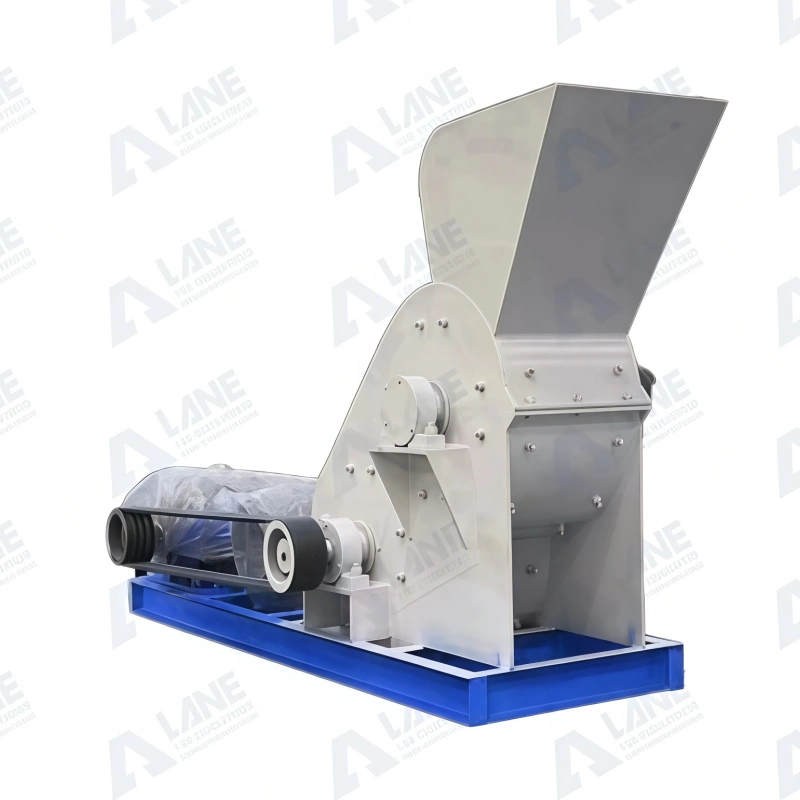
Our factory’s double-rotor sieve-less hammer crusher is specially optimized for the crushing of high-moisture, high-fiber organic fertilizer raw materials, and specifically solves the problems of wet material blockage and uneven particle size. If your production line has problems such as inadequate crushing particle size and frequent equipment failures, you can contact us at any time to obtain professional equipment commissioning and production line matching solutions.