Wet Food Waste Processing: Tackle High-Moisture Kitchen Waste Leachate & Odor with On-Site Commercial Composting Machine
For food and beverage operators, school logistics managers, and fresh food supermarket managers, daily wet food waste processing is a recurring operational problem that continues to increase operating costs and environmental assessment points. Vegetable scraps, leftover main dishes, expired cooked food, and fruit and vegetable flesh contain a large amount of free water and animal fat, and the accumulated garbage leaks dark brown sewage into the ground, and the foul-smelling anaerobic fermentation gas generated in the closed garbage can in the storage area of the kitchen.
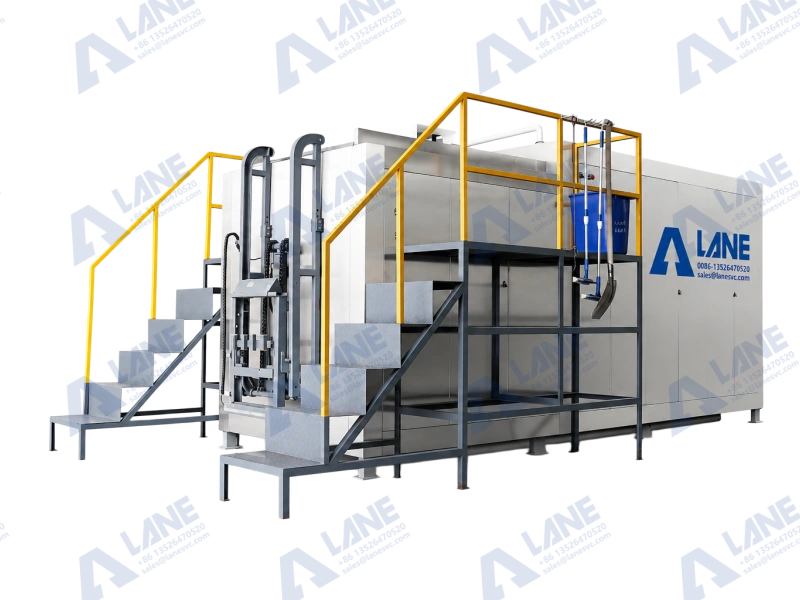
Many venue managers previously chose third-party garbage removal services, but high freight charges and environmental fines could not cure the core problem of high-moisture kitchen waste. The Lane commercial kitchen waste composting machine is equipped with a one-piece physical dehydration + aerobic microbial fermentation structure, which completes the whole wet food waste processing workflow directly at the garbage production site, cutting off garbage transfer and secondary pollution at the source.
Core Troubles Generated by Excessive Moisture During Regular Wet Food Waste Processing
When I conduct organic waste project site surveys for commercial clients, excess moisture inside kitchen organic wastetriggers nearly all daily operation malfunctions for conventional wet food waste processing plans.
- Leachate Spillage Triggers Municipal Environmental Penalties & Ground Corrosion
Untreated kitchen organic waste destined for wet food waste processing holds moisture content over 72%. Liquid leachate drips continuously during truck transportation along municipal roads. Urban environmental law enforcement regularly issues fines for road contamination, and long-term sewage corrosion damages concrete floors in waste temporary storage yards.
- Sticky Organic Residues Adhere to Transfer Equipment for Labor-Intensive Daily Cleaning
Congee residues, pasta scraps and rotten fruit pulp have strong viscous adhesion. In daily wet food waste processing operations, waste material sticks firmly to bin inner walls, belt conveyors and lifting equipment. Frontline sanitation staff spend 2 to 3 hours every working day on manual scrubbing to maintain equipment availability.
- Sealed Waste Pile Anaerobic Fermentation Spreads Pungent Odor to Customer Activity Areas
High moisture content is the primary challenge in wet food waste processing, as it blocks air circulation inside stacked food waste. Anaerobic microbes multiply rapidly and release hydrogen sulfide odor. The foul smell drifts to restaurant dining halls, school canteens and supermarket shopping areas, directly hurting customer experience and brand reputation.
- High Water Proportion Inflates Long-Distance Waste Haulage Total Expenditure
Water makes up the largest proportion of wet kitchen waste weight. Enterprises pay freight charges for transporting useless moisture instead of solid organic waste, making it the primary cost driver in wet food waste processing logistics. Monthly waste disposal expenditure rises steadily with daily haulage frequency.
- Unstable Moisture Ratio Ruins Subsequent Centralized Compost Fermentation Quality
Centralized composting plants cannot adjust moisture flexibly for incoming kitchen waste with fluctuating water content, disrupting downstream wet food waste processing consistency. Constant temperature fermentation cannot be sustained, finished compost products feature uneven maturity and unstable organic fertilizer efficiency.
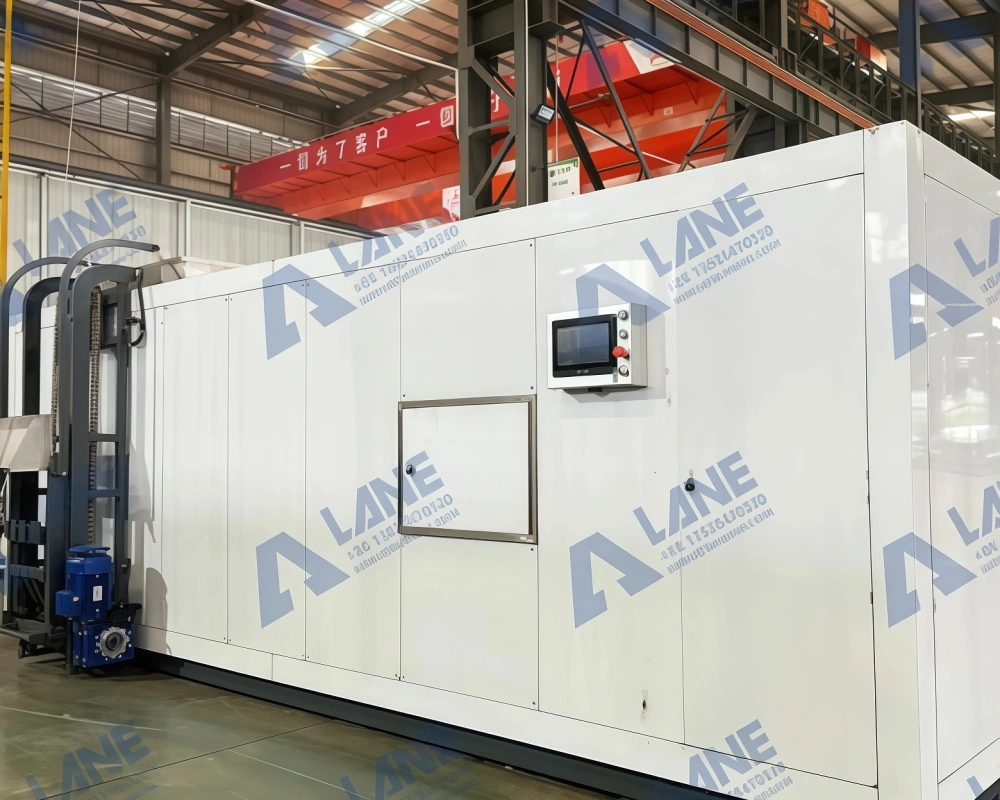
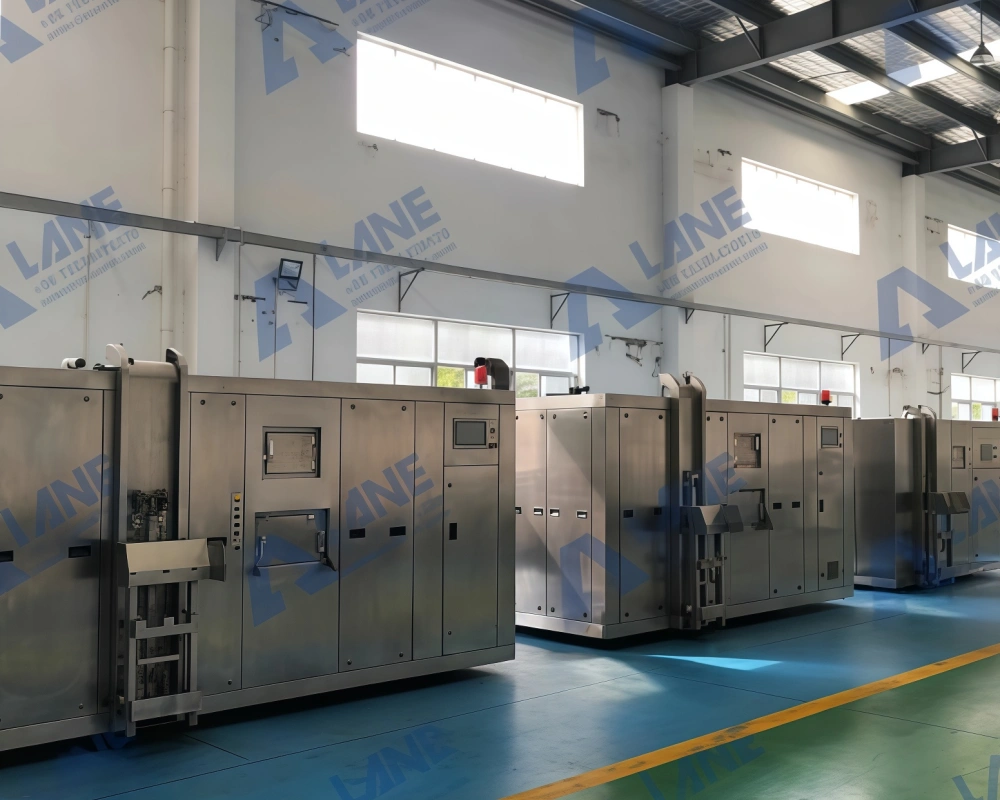
LANE Commercial Food Waste Composter Modular Design or Targeted Wet Food Waste Processing
Each functional module of the LANE commercial food waste composter is customized to adapt to high-moisture kitchen waste physical traits, achieving staged water removal and stable aerobic fermentation inside one integrated cabinet for standardized Wet Food Waste Processing.
- Front-End Sorting Platform Blocks Hard Impurities to Protect Crushing Components
Workers remove plastic packaging, large animal bones and metal fragments on the sorting platform before feeding wet waste into the main wet food waste processing unit. Hard foreign objects avoid impact damage to high-speed crushing cutter heads inside the fermentation host.
- Integrated Oil-Water Separator Discharges Free Grease & Wastewater in Advance
The built-in oil-water separation tank diverts floating grease and free wastewater out of the main equipment independently. Front-end dehydration reduces raw material moisture content by nearly 19%, lowering heating and fermentation load for the rear fermentation chamber.
- Crushing & Mixing System Refines Material Texture & Balances Overall Humidity
High-speed crushing blades break bulk kitchen waste into fine granular pulp. The horizontal stirring shaft evenly blends dry conditioning filler with crushed materials to adjust moisture to the optimal 55%-60% fermentation range.
- Fully Sealed Fermentation Chamber Executes Aerobic Decomposition & Deep Dehydration
The closed fermentation cabin automatically regulates internal temperature, oxygen supply and humidity. Aerobic microbial strains break down organic compounds, while circulating hot air continuously evaporates residual internal moisture inside waste materials.
- Combined Heating & Deodorization System Purifies Wet Exhaust Gas & Water Vapor
Hot humid waste gas generated during fermentation flows into the multi-stage deodorization tower for purification treatment. No odorous gas or water vapor leaks out to the workshop or external surrounding environment.
- PLC Intelligent Control Cabinet Stabilizes Full-Cycle Humidity Regulation
The intelligent PLC control panel displays real-time material moisture, cabin temperature and air circulation volume. Operators adjust operating parameters with one button according to daily wet waste raw material conditions.
| Type | Model | Standard Configuration | Optional Configuration | Processing Capacity / Day | Dimensions (L × W × H) | Power (Customizable) |
| Integrated Type | LAJL-02T | Automatic Feeding | Sorting Platform | 0.2t | 3.3 × 1.21 × 1.8 m | 13kW |
| LAJL-05T | Shredding | Screw Press Dewatering | 0.5t | 3.8 × 1.35 × 2.2 m | 18kW | |
| LAJL-1T | Mixing | Oil-Water Separator | 1t | 3.8 × 1.6 × 2.5 m | 22kW | |
| LAJL-2T | Fermentation & Deodorization | Wastewater Treatment Equipment | 2t | 4.9 × 2.0 × 2.8 m | 43.8kW | |
| LAJL-5T | Odor Removal System | 5t | 7.3 × 2.35 × 3.3 m | 70kW | ||
| LAJL-10T | 10t | Equipment Footprint: Approx. 220 m² | 150kW | |||
| Modular Type | LAJL20T-LAJL1000T | Automatic Feeding | Wastewater Treatment | Customized | Customized | Customized |
| Apron Conveyor | Odor Removal | |||||
| Sorting | Granulation | |||||
| Shredding | ||||||
| Dewatering | ||||||
| Mixing | ||||||
| Screw Conveyor | ||||||
| Fermentation | ||||||
| Spray Tower | ||||||
| Carbon Box | ||||||
| Oil-Water Separation |
Full On-Site Disposal Workflow of LANE Composter for Wet Food Waste Processing
The complete waste disposal workflow follows pre-inspection impurity removal, front-end dehydration, material crushing and conditioning, constant temperature aerobic fermentation, tail gas purification and finished compost discharge to form a closed-loop on-site organic waste disposal route.
- Manual Pre-Sorting + Hydraulic Lifter Automatic Feeding to Cut Manual Labor
After impurity screening on the sorting platform, high-moisture kitchen waste is lifted to the equipment feeding inlet via hydraulic lifting frame, eliminating heavy physical labor from manual dumping of saturated wet organic waste.
- Oil-Water Separator Separates Waste Grease for Renewable Resource Utilization
Mixed grease and sewage are guided out of the main machine separately. Collected waste grease can be sold to biodiesel manufacturers for raw material reproduction to create additional sideline economic income for facility operators.
- Crushed Organic Waste Fully Blends with Special Aerobic Microbial Agents
Finely crushed kitchen waste mixes evenly with professional aerobic microbial inoculant and dry conditioning material. Homogeneous raw material mixture lays a solid foundation for synchronous and rapid aerobic fermentation reaction.
- Constant Temperature Aerobic Fermentation Realizes Remarkable Waste Volume Reduction
Inside the sealed fermentation bin, beneficial microbes decompose organic substances completely. Hot air circulation evaporates excess water, waste volume achieves sharp reduction within 8 to 24 continuous operating hours.
- Multi-Stage Tail Gas Deodorization Ensures Exhaust Reaches Local Emission Standards
Fermentation waste gas passes through spray deodorization and activated carbon adsorption dual filtration. Processed tail gas meets local environmental protection emission indicators for direct atmospheric discharge.
- Fully Mature Compost Discharged for Agricultural Planting & Landscape Greening Use
Fully decomposed organic compost discharges from the bottom discharge port of the fermentation chamber. Nutrient-rich finished compost applies to garden green belts, orchard cultivation and commercial flower base planting projects.
Practical Performance Advantages for High-Moisture Wet Food Waste Processing Scenarios
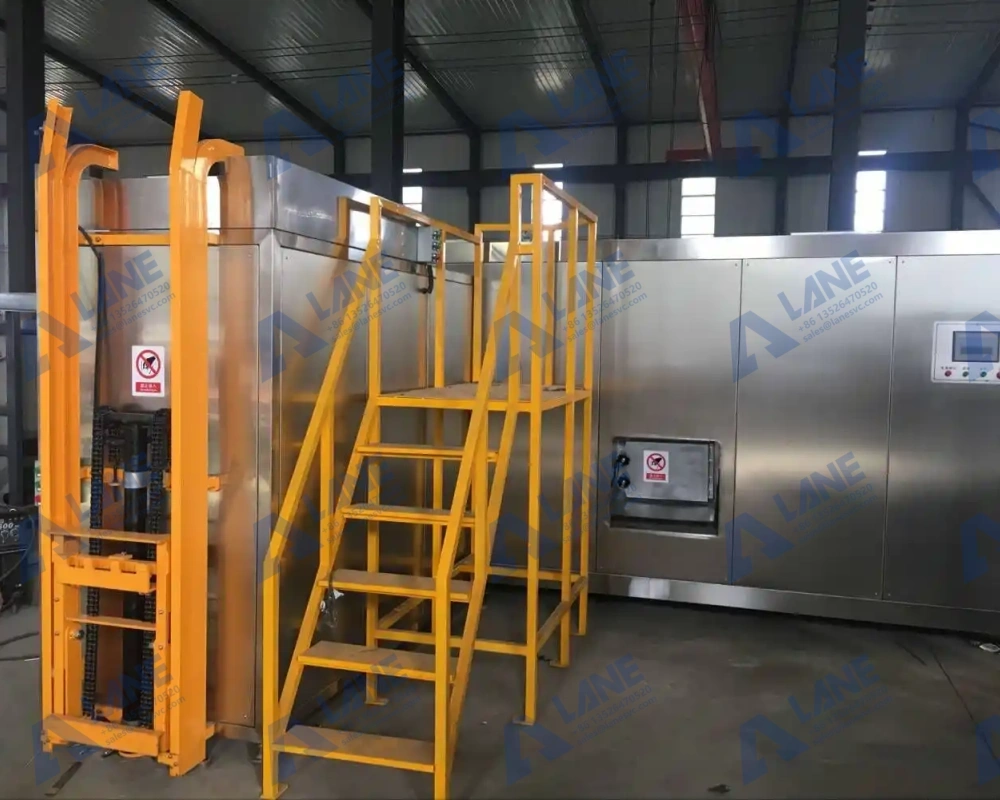
Compared with traditional open-air static composting and full outsourcing waste transportation modes, the integrated LANE commercial composter solves all core pain points of high-moisture kitchen waste disposal through tangible equipment operating performance.
- 80%–95% Waste Volume Reduction Slashes Recurring Transportation Costs
After fermentation and deep dehydration, wet kitchen waste weight and volume shrink drastically. Facility operators cancel daily wet waste hauling vehicle scheduling to cut continuous long-term transportation overheads.
- Full-Sealed Equipment Structure Prevents Leachate Overflow & Odor Diffusion
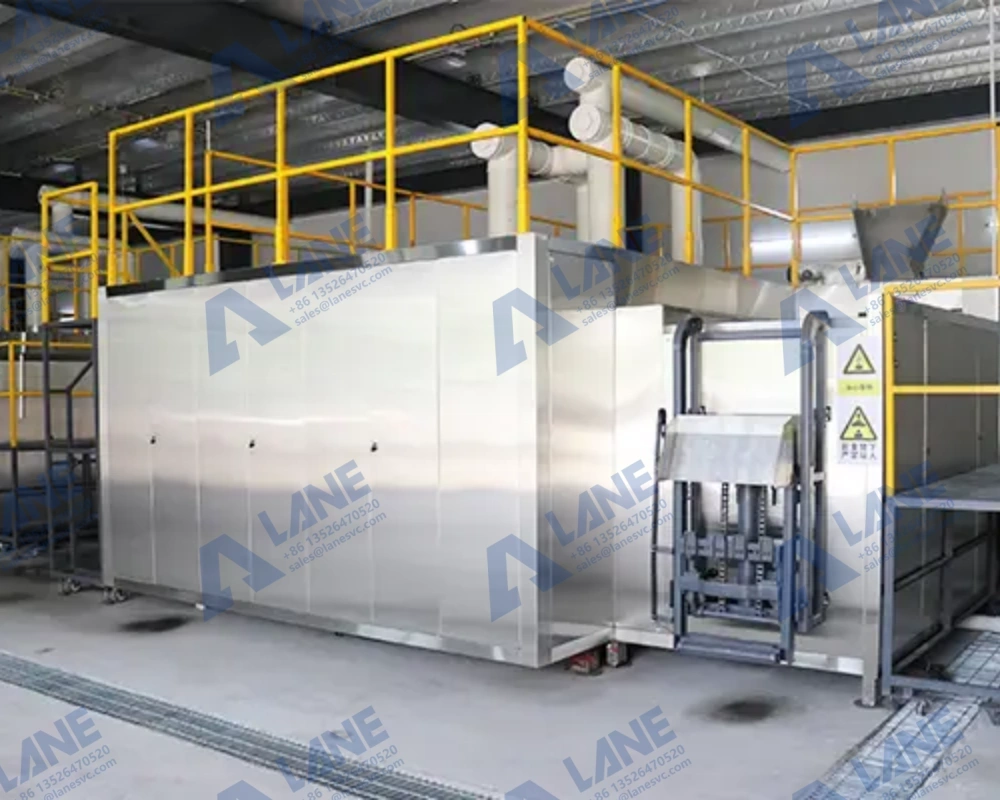
The whole machine adopts fully sealed metal shell structure. Even when placed inside underground canteen equipment rooms or narrow back-kitchen utility rooms, no sewage leakage or odor outward diffusion occurs.
- PLC Automatic Operation Reduces Daily On-Site Labor Input
Daily operation only requires one staff member for routine patrol inspection and auxiliary feeding work. Automatic stirring, constant temperature heating and tail gas deodorization cut long-duration manual on-duty workload significantly.
- Integrated Compact Cabinet Fits Limited Indoor Installation Space
All processing functional modules are integrated inside one cabinet body. The equipment does not demand large outdoor yard space, perfectly matching the compact layout characteristics of catering back kitchens and school indoor waste rooms.
- Customizable Daily Processing Capacity Matches Diversified Waste Generation Scenarios
We supply small commercial models with 500kg daily treatment capacity for individual restaurants, up to large industrial equipment supporting 10 tons daily waste handling capacity, matching actual daily waste output of hotels, comprehensive universities and food processing factories.
- Organic Waste Resource Conversion Delivers Circular Economic Benefits
Discarded saturated wet food waste transforms into high-quality organic compost. Catering groups and campus management teams can utilize self-produced compost for internal courtyard greening to lower purchased organic fertilizer procurement expenses.
Targeted Equipment Configuration Advice for Different Wet Food Waste Processing Sites
The wet kitchen waste generated by different commercial places is different in water content and material composition, and we provide targeted equipment configuration optimization schemes according to the actual physical characteristics of the garbage on the spot.
- Hotel Central Kitchen High-Grease Wet Organic Waste Disposal Scheme
Hotel kitchen waste contains high concentrations of edible cooking grease. We upgrade the oil-water separator interception structure to strengthen grease capture capacity, avoiding grease coating organic particles to slow down aerobic fermentation speed.
- University Canteen Stable Large-Volume Balanced Wet Waste Solution
University student canteens generate stable daily wet waste output. Continuous feeding type composting equipment is selected to realize uninterrupted batch kitchen waste disposal for daily canteen catering service demand.
- Fresh Supermarket Ultra-High-Moisture Fruit & Vegetable Residue Treatment
Supermarket fruit and vegetable trimming waste features ultra-high initial moisture content. We increase dry conditioning material feeding proportion and adjust host heating power to accelerate internal moisture evaporation speed of raw materials.
- Food Processing Factory Fibrous Organic Residue Disposal Configuration
Food factory waste contains fruit pomace, vegetable stalks and leftover raw fibrous materials. Heavy-duty thickened crushing cutter assemblies are configured to adapt to crushing operation for tough fibrous organic waste.
Daily Routine Maintenance Guidance to Maintain Stable Wet Food Waste Processing Capacity
Basic scheduled maintenance keeps the composter’s dehydration and fermentation performance stable, avoiding unplanned equipment shutdown during peak kitchen waste production hours at lunch and dinner.
- Clean Oil-Water Separator Grease Trap Every Two Working Days
Accumulated solidified grease blocks internal drainage pipelines inside the separator. Regular grease tank cleaning guarantees smooth discharge of free wastewater from high-moisture kitchen waste raw materials.
- Weekly Inspection for Crushing Cutter Head Wear & Tear Degree
High-moisture fibrous organic waste creates abrasive wear on crushing cutter blades. Timely replacement of worn cutting blades ensures fine crushing granularity for uniform fermentation reaction.
- Monthly Inspection for Deodorization Filter Cartridge Blockage Condition
Water vapor carries organic dust to block the deodorization tower filter element. Regular cleaning or replacement of filter cartridges maintains stable tail gas emission compliance status.
- Regular Inspection of Fermentation Cabin Sealing Strip Integrity
Aging rubber sealing strips lead to odor and hot steam leakage from the fermentation chamber. Replacement of aged sealing rubber strips maintains closed high-temperature aerobic fermentation environment inside the cabin.
Project Cooperation Guidance for Commercial Wet Food Waste Processing Upgrading
Outsourced waste transportation and landfill disposal can no longer satisfy modern catering, campus and food manufacturing enterprises’ dual demands of environmental compliance and operation cost control for Wet Food Waste Processing.Effective wet food waste processing requires a solution that addresses moisture, odor, and logistics simultaneously. LANE commercial food waste composter relies on integrated pre-treatment, front-end dehydration and high-temperature aerobic fermentation technology to resolve four core bottlenecks of high moisture, leachate pollution, malodor diffusion and excessive transportation cost for on-site kitchen waste treatment.
The equipment helps facility operators achieve environmental compliance rectification, daily cost reduction and organic waste resource regeneration simultaneously. If your business plans kitchen waste disposal facility renovation or new organic waste treatment project construction, reach out to our solid waste engineering team for free site condition survey, equipment daily capacity customization and full-set waste disposal project budget quotation.