What to Do If 1-2T/H Cat Litter Production Line Produces Excessive Dust?
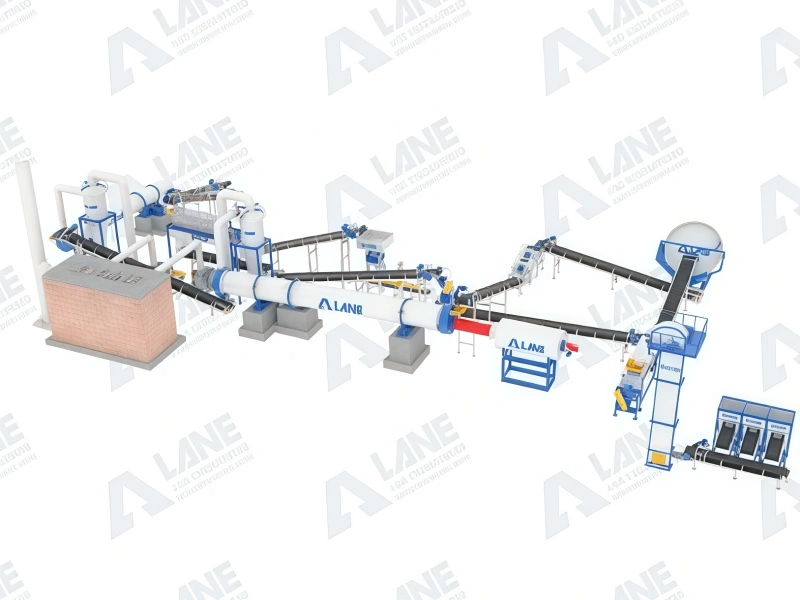
Excessive dust emission is the most common and troublesome problem for small and medium 1-2T/H cat litter production line in daily workshop operation. Most mini cat litter processing plants focus on output speed and particle molding quality, while ignoring fine dust overflow in mixing, screening and packaging links.
Sustained heavy dust not only pollutes the workshop environment and endangers operator health, but also causes raw material waste. A large amount of fine powder dust is discharged without recycling, which directly reduces the finished product yield of the 1-2T/H cat litter production line and lowers economic benefits.
Many factory owners blindly add dust removal equipment but fail to solve the problem fundamentally. We can divide all contents into two major modules: root causes of dust generation and targeted improvement solutions.
Root Causes of Excessive Dust on 1-2T/H Cat Litter Production Line
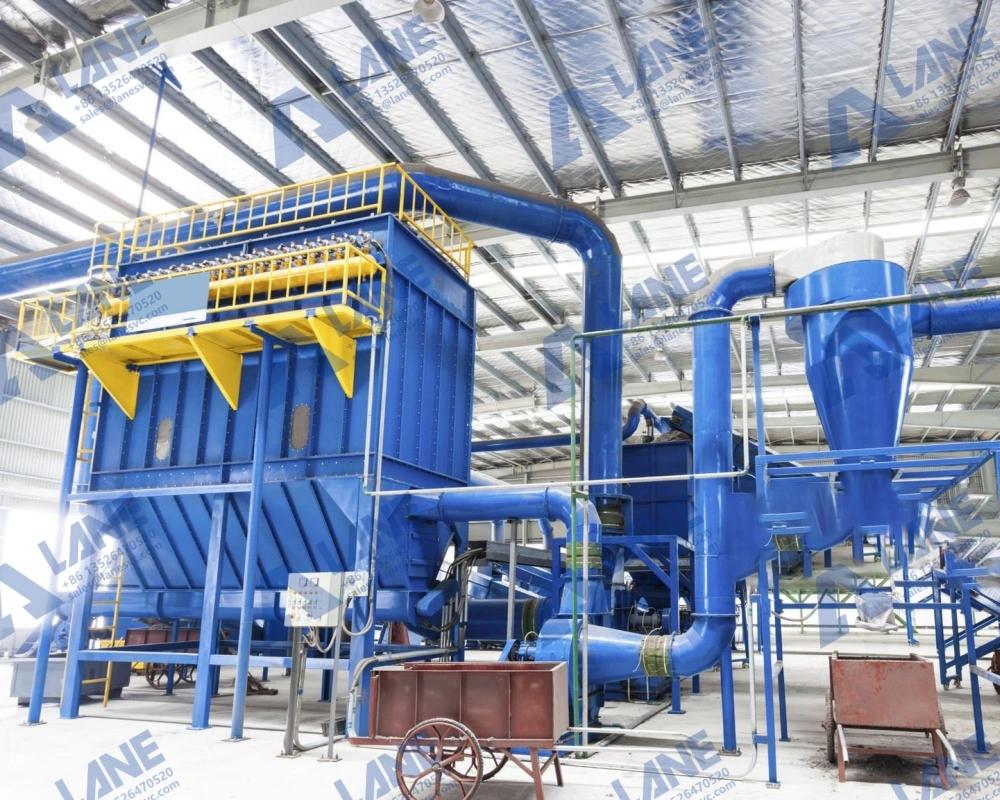
Before installing additional dust removal equipment, the factory technicians need to systematically investigate all sources of dust generation. Dust leakage rarely occurs due to a single factor. A 1-2 ton per hour cat litter production line often has multiple hidden problems simultaneously.
- Improper Pre-treatment of Raw Materials
Raw materials such as bentonite, tofu cat litter base powder, and cornstarch naturally contain ultra-fine dry powders. If manufacturers omit the moisture adjustment and pre-screening processes, these loose fine powders will scatter widely during material conveying and mixing stages.
- Aging & Damaged Equipment Sealing Components
The 1-2 ton per hour cat litter production line has a compact layout and contains many narrow gaps. During long-term continuous operation, the rubber gaskets at the feeding ports of the mixer, the discharge chute, and the screening box have aged and cracked, forming a continuous leakage channel for fine powder inside.
- Mismatched Dust Removal System Configuration
Many workshop owners simply purchase general dust collectors without matching the operating parameters for a 1-2 ton per hour cat litter production line. If the wind speed is too high, it will suck away the qualified finished particles; if the wind speed is too low, it will fail to capture the suspended dust in the air.
- Irregular Daily Operating Habits
Operators quickly dumped raw materials, frequently started and stopped equipment, and omitted routine equipment cleaning. These irregular operations disrupted the stable airflow within the 1-2 ton per hour cat litter production line, causing secondary dust in the workshop.
Targeted Solutions to Reduce Dust On 1-2T/H Cat Litter Production Line
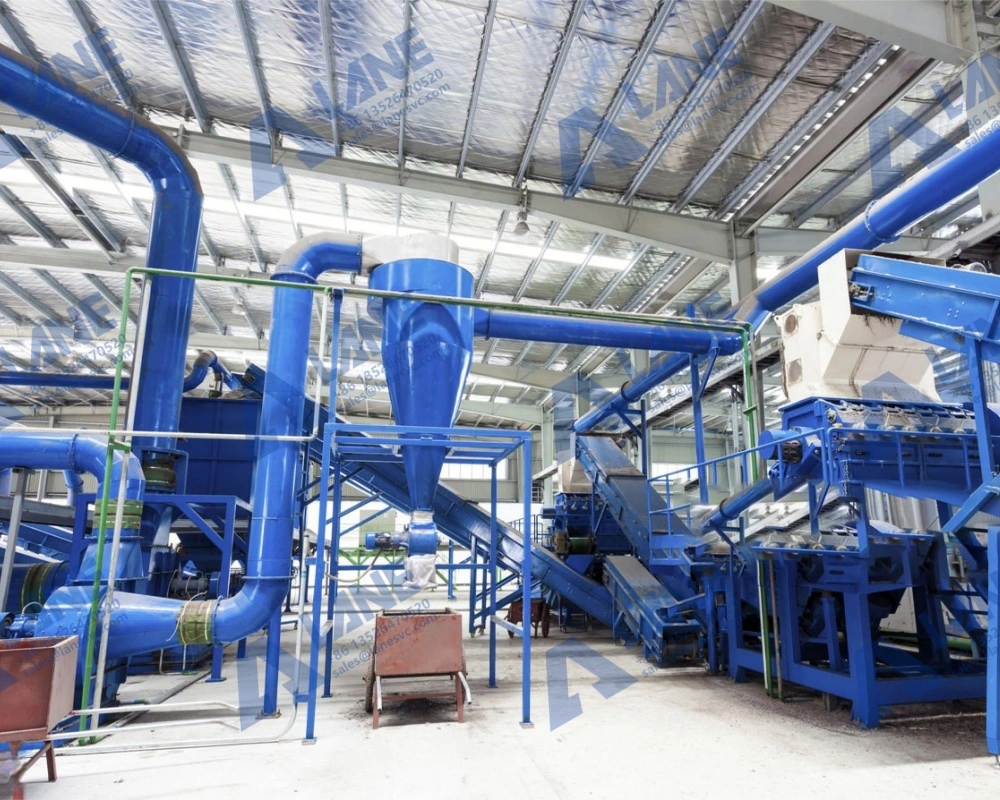
After identifying all the dust-producing sources, the factory can implement the renovation and adjustment in stages. Our factory has reserved space for dust suppression renovations in the entire optimized 1-2 tons per hour cat litter production line, making it convenient for the workshop to complete the upgrade with lower investment.
Standardize Raw Material Preprocessing Procedures
Before feeding, an additional process of uniform atomization humidification and pre-sieving is added. The moisture content of the raw materials is stabilized at 12%-15%, enhancing the adhesion of the powder. Our factory’s 1-2 ton per hour cat litter production line is equipped with an in-feed mixer that comes with a water spraying component, enabling stable humidity control.
Replace Sealing Parts & Transform Closed Conveying Structure
Every three months, replace the hardened ordinary gaskets with thick and flexible sealing strips, and upgrade the semi-opened die-cutting channel to a fully enclosed structure. Our factory’s new generation 1-2 ton per hour cat litter production line adopts a fully sealed design for all material transfer positions, preventing dust from escaping.
Match Professional Multi-Point Dust Collection Equipment
Select low-power pulse bag dust collectors specially adapted to small-scale production.
Arrange dust suction ports at mixer outlet, screening machine and packaging hopper to realize full-process dust removal. The matched dust removal system for the 1-2T/H cat litter production line forms stable negative pressure, which removes floating dust without absorbing qualified cat litter particles, ensuring clean workshop environment and zero material loss.
Establish Fixed Standard Operation Specifications
Formulate unified operating rules for staff, advocate continuous uniform feeding and reduce unnecessary emergency shutdown. Rapid feeding causes material splashing and instant dust explosion in the workshop.
Carrying out equipment surface cleaning after each shift prevents accumulated fine powder from forming secondary dust during next startup of the 1-2T/H cat litter production line. Standardized operation can greatly reduce manual-induced dust generation.
| Product Name | Yield | Detail | Speed | Power |
| Dynamic Batching System | PVC drive belt: width 0.5m, length 2m | SBD series reducer | 5-10 m/min | 1.1-2.2KW |
| Vertical Crusher | 1-12t/h | Crushing fineness: 0.5-5mm | 1450r/min | 7.5-37KW |
| Double Roller Extrusion Granulator | 0.8-4.5t/h | ZY series reducer | 1450r/min | 11-30KW |
| Polishing Machine | 2-10t/h | Double bearing | 1450r/min | 3-7.5KW |
| Rotary Drum Drying Machine | 1-25t/h | ZQ series reducer | 1450r/min | 5.5-22KW |
| Pellet Packing Machine | 4-20 bags/min | ZQ series reducer | 1450r/min | 50Hz/60Hz/220V/380V |
Additional Strategy: Recycle Collected Dust for Reproduction
Many workshops treat captured dust as waste and directly discard it. In fact, most powder captured by dust collectors can be reused, bringing extra benefits for factories using the 1-2T/H cat litter production line.
Reasonable dust recycling not only reduces pollution, but also improves the overall material utilization rate of the entire production line.
1. Re-Granulation Process of Recycled Fine Powder
Dust mainly consists of unformed cat litter fine powder and broken small particles. Mix recycled powder evenly with fresh raw materials according to a reasonable proportion, and transport the mixture to the granulation section of the 1-2T/H cat litter production line for secondary forming.
The recycled fine powder has fine texture and strong adhesion, which can actually improve the smoothness of finished cat litter particles after reprocessing.
2. Realize Near Zero Waste Production
Our integrated 1-2T/H cat litter production line supports full-cycle dust recycling design. Rational reuse of recovered powder reduces raw material purchase cost and avoids waste discharge caused by excessive dust.
Small-scale cat litter workshops can effectively improve economic benefits while meeting environmental protection production standards.
Overall Summary of Dust Control For 1-2T/H Cat Litter Production Line
Solving excessive dust cannot rely on a single transformation measure. Factory managers need to combine raw material management, equipment maintenance, dust removal matching and staff operation standards for comprehensive optimization of the 1-2T/H cat litter production line.
Single dust removal equipment installation only solves surface floating dust, while standardized process and equipment optimization can fundamentally suppress dust generation. Workshops that adopt our improved 1-2T/H cat litter production line and implement all above schemes can effectively cut floating dust, protect workers’ health, raise finished product rate and build a more compliant and clean production workshop.