Why Hammer Crusher Output Particle Size Is Uneven and How to Solve It?
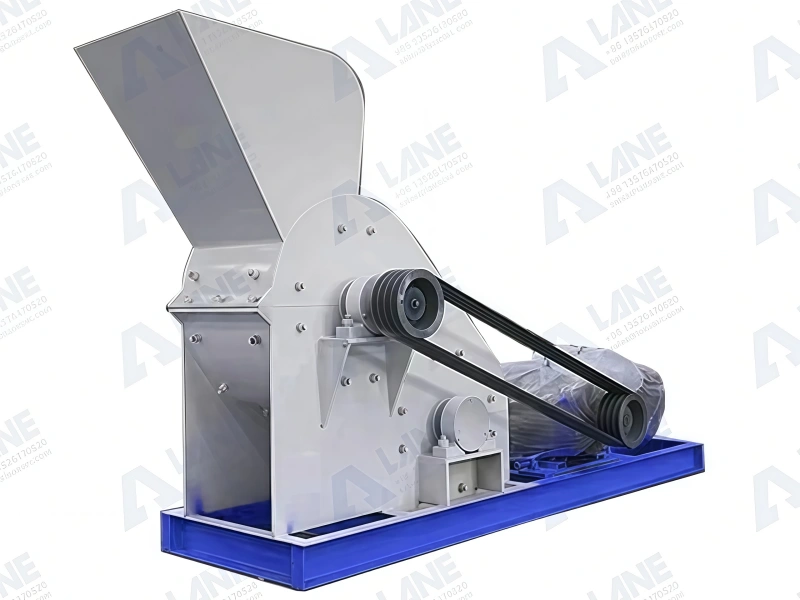
Many organic fertilizer factories use hammer crushers to process animal and poultry manure and fermentation raw materials. Workshop operators often encounter a common problem, that is, the size of the crushed material particles is uneven. This problem will directly interfere with the subsequent granulation process, and uneven granules are easy to cause poor appearance of the finished product and a decrease in the granulation forming rate. Many manufacturers are looking for hammer crushers suitable for organic fertilizer production lines to improve this problem.
Common Working Conditions That Cause Uneven Output Particle Size
Many operators only make simple adjustments to the clearance when they find abnormality in the particle size, but ignore the impact of the production conditions. The characteristics of the raw material itself and the way of feeding will change the final crushing effect. Only by clarifying all kinds of causes can we deal with them in a targeted manner, so that the hammer crusher can output uniform materials stably.
Raw Material Moisture Fluctuates Widely
Characteristics of raw materials: the dry and wet state of the raw materials in the organic fertilizer workshop often changes.
Production impact: Moisture-rich materials are prone to clumping and sticking together.
Final performance: the bundled material cannot be fully dispersed, and large pieces of material and fine powder appear at the same time when the material is discharged.
Unstable Feeding Speed and Uneven Material Thickness
The rhythm of the operator’s feeding is fast and slow, and the thickness of the material layer in the crusher continues to change. The impact force of the hammer head on the material is strong and weak, and the crushing effect is difficult to be consistent.
Mixed Raw Materials with Different Hardness
The factory often puts feces, straw, and clay into the crusher at the same time. The hardness of various materials is different, hard materials are difficult to break, and soft materials are very easy to crush. The difference in particle size is naturally formed after mixing the raw materials.
Equipment Internal Problems Leading to Uneven Particle Size
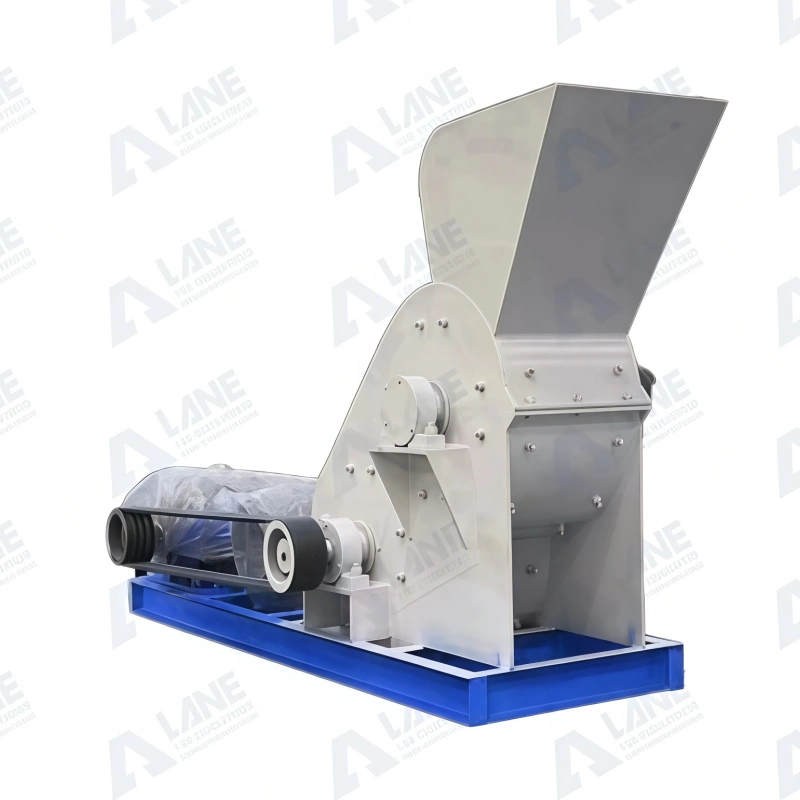
After excluding the raw material factor, you need to check the internal parts of the crusher. The wear of parts and misalignment of installation are the core reasons for the uneven particle size for a long time. We take the double-rotor hammer crusher without screen as an example to explain.
Hammer Heads Wear Unevenly After Long Time Running
Wear law: the hammer head continues to hit the material, and the local position wears out faster.
Equipment impact: the effective striking force of the hammer becomes unbalanced.
Actual result: There is a significant difference in the degree of material crushing in different areas of the cavity.
The Gap Between Hammer Head and Impact Plate Is Not Uniform
If the gap values on the left and right sides are different. The material in the narrow gap area is fully crushed, and the material in the wide gap area flows quickly and is not crushed enough, resulting in a significant difference in the final product particle size.
Loose Rotor Components Cause Operation Vibration
The rotor pin plate is easy to loosen after long-term operation. The equipment continues to vibrate while rotating, and the position of the hammer striking the material keeps shifting, causing the crushing process to lose stability.
The Negative Impact of Uneven Particle Size on Fertilizer Production
Many managers are prone to underestimate the problem of granularity and think that as long as the material can be crushed, it is fine. In fact, the hidden danger of uneven grain size will continue to cause losses along the entire production line. Choosing the right crushing equipment can stabilize fertilizer quality and reduce unnecessary losses.
- Low Granulation and Molding Rate, Increasing Rework Costs
The granulation process has strict requirements for the particle size of the raw material. The fine powder and large pieces are mixed together in the granulator, and the material is subjected to uneven force, resulting in a significant decrease in the forming rate. A large number of defective particles were sifted out, and they could only be broken and re-melted, which cost twice as much labor.
- Uneven Finished Product Appearance, Hurting Market Appeal
Fertilizer dealers and farmers first look at the appearance of the granules. The particles made from uneven-sized raw materials are big and small, and the color is not consistent. The appearance of the finished product is not good, and the customer’s willingness to buy is directly discounted, making it difficult to raise the price.
- Increased Drying Energy Consumption, Raising Production Costs
The performance of large and small particles in the dryer is completely different. Fine powder dries quickly, while large pieces still have a high moisture content. In order to reduce the moisture content of large pieces of material, the drying system can only extend the time, and the natural gas and electricity bills will rise for nothing.
- Reduced Screening Efficiency, Resulting in Material Waste
The vibrating screen is particularly difficult to handle when it comes to materials with large particle size differences. It is common for coarse particles to block the screen, and fine powder will directly pass through the screen holes and become waste. Compared with the normal situation, the yield rate of the whole line is much lower.
Practical On-Site Solutions to Stabilize Hammer Crusher Discharge Granularity
Below is a sharing of the adjustment plan that can be directly implemented in the fertilizer workshop, which is divided into two major directions: raw material control and equipment commissioning, and is used to solve the problem of uneven particle size of crushing materials.
- Control Raw Material Humidity Before Feeding
Before the raw material is sent to the crusher, water control should be done to maintain the moisture of the material in an appropriate range. Avoid wet material clumping and prevent large lumps of adhesive material from entering the crushing chamber.
- Keep Continuous and Uniform Feeding Speed
Adjust the feeding equipment to stabilize the feeding, and prevent the feeding from being too much or too little. A stable and uniform material layer can ensure that the material receives a stable and consistent impact crushing effect.
- Regularly Check and Adjust Hammer Head Clearance
Inspection requirement: Check the gap between the hammer and the counterattack plate every week.
Operation standard: Ensure that the gap value on both sides of the cavity is uniform.
Expected effect: timely correction of deviations caused by wear, maintaining stable crushing effect.
- Replace or Reverse Worn Hammer Heads in Time
Both sides of the hammer head can be used, and if one side wears out severely, it can be turned over to continue working. Hammer heads that have reached the limit of wear will be replaced in batches.
LANE Hammer Crusher Design Advantages to Reduce Particle Size Deviation
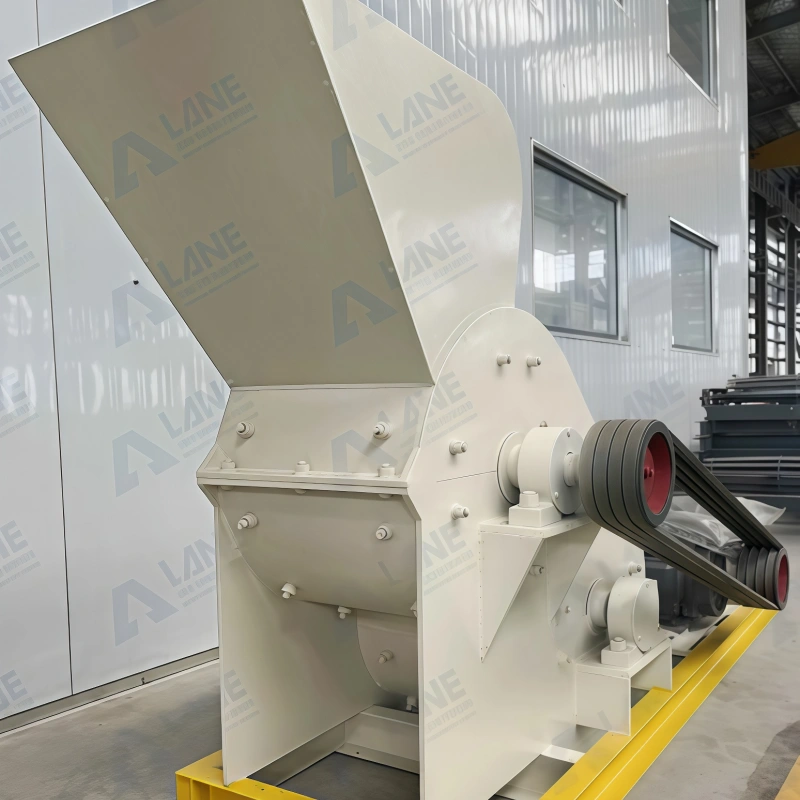
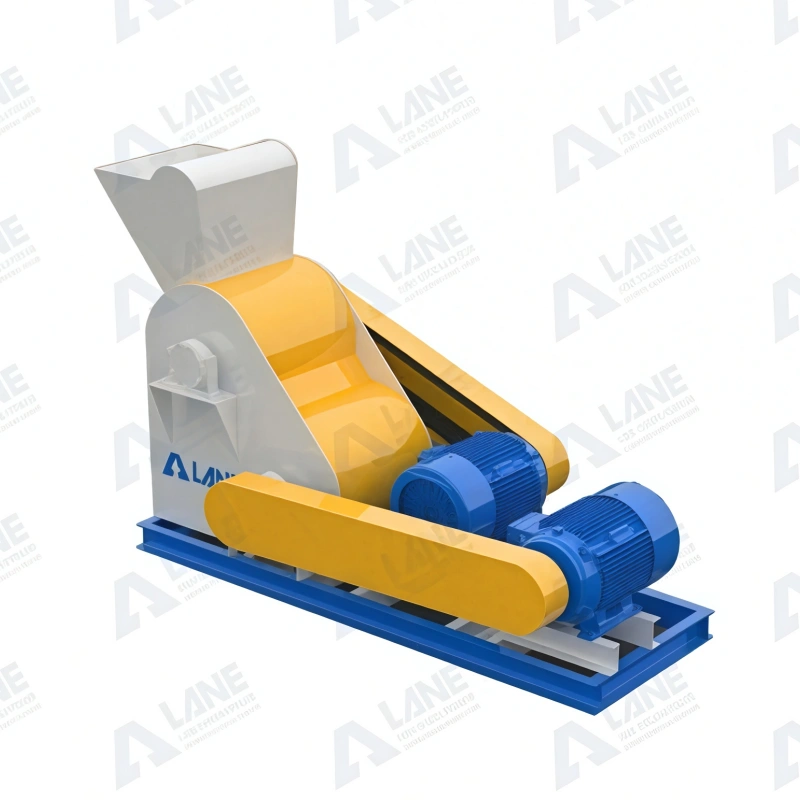
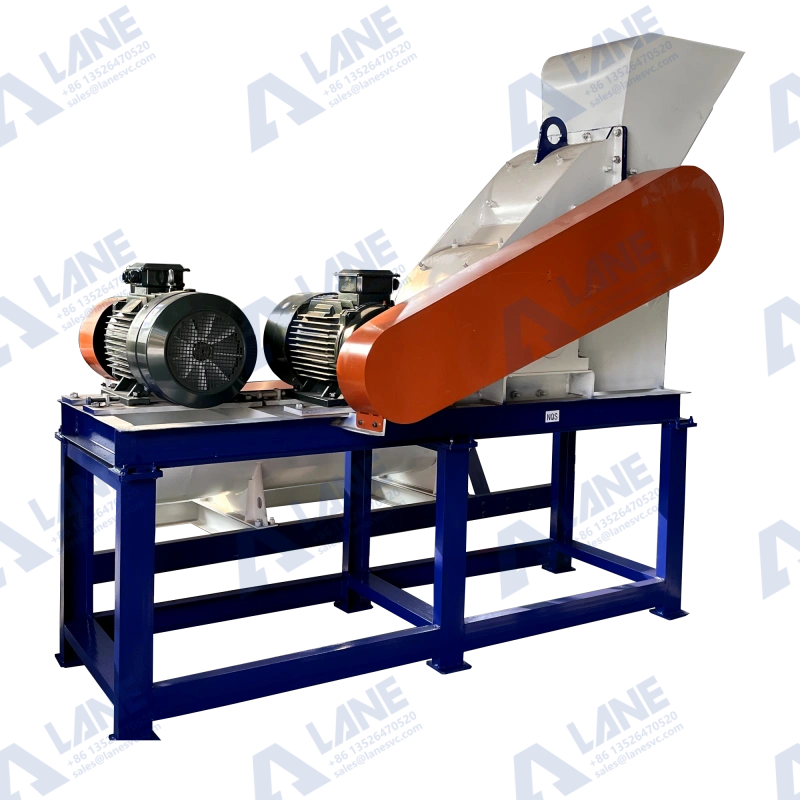
The LANE hammer crusher continuously optimizes the structure in combination with the high-moisture material condition of organic fertilizer, and specifically improves the problem of fluctuating particle size in the wide-slot composting project, which is the wet material crusher equipment suitable for composting project.
> Double Rotor Serial Crushing Structure for Secondary Impact
Structural characteristics: two sets of rotors complete the crushing operation successively.
Workflow: The material first undergoes the initial impact of the upper rotor and then undergoes the deep crushing of the lower rotor.
Advantages of use: Two-stage impact crushing is easier to produce evenly sized fine materials.
> High-Alloy Wear-Resistant Hammer Head with Bidirectional Adjustable Position
The wear-resistant hammer head can work with sticky manure and straw mixtures for a long time. After the hammer head is slightly worn, the operator can adjust the installation position to continue using it, without frequent procurement of new accessories, reducing downtime for maintenance.
> No Screen Structure, Avoid Blockage Caused by Wet Organic Materials
Conventional crushers with screen block easily when dealing with wet manure. LANE Hammer Crusher cancels screen. Materials break through mutual collision without frequent jamming.
> Balanced Rotor Assembly to Reduce Operation Vibration
Symmetric load layout lowers vibration during long-distance travel. The machine runs smoothly along guide rails. Stable moving speed guarantees equal turning frequency for materials from center to trough sides.
| Model | Capacity(tph) | Power(kw) | Overall Size(mm) | Number Of Hammers | Hammer Weight(kg) | Weight(t) |
|---|---|---|---|---|---|---|
| LACD-400*400 | 5-10 | 7.5+7.5 | 2200*900*1200 | 24 | 2.5 | 0.6 |
| LACD-600*400 | 10-15 | 18.5+18.5 | 2600*950*1500 | 24 | 3.5 | 1 |
| LACD-600*600 | 15-20 | 22+22 | 2600*1170*1500 | 40 | 3.5 | 1.3 |
| LACD-600*800 | 20-30 | 30+22 | 2800*1350*1700 | 48 | 3.5 | 1.8 |
| LACD-800*600 | 30-40 | 45+37 | 3200*1250*2000 | 40 | 8 | 3 |
| LACD-800*800 | 40-50 | 55+45 | 3200*1400*2000 | 48 | 8 | 3.5 |
| LACD-1000*800 | 50-60 | 55+75 | 3950*1750*2280 | 48 | 10 | 5.5 |
| LACD-1000*1000 | 60-90 | 90+75 | 4000*1900*2400 | 52 | 10 | 7 |
Daily Inspection Checklist to Prevent Recurring Particle Size Problems
No matter how good the Hammer Crusher is, it will still produce unstable particle size without proper daily management. Simple regular checks and operation rules prevent new granularity troubles after long production.
Check Hammer Head Wear Condition Every Working Week
Fixed Inspection Task: Record the abrasion degree of each hammer set weekly.
Preventive Measure: Make adjustment or replacement plan before wear reaches the limit.
Management Value: Stop uneven crushing problems from appearing in advance.
Confirm Rotor Fastening Parts Before Startup
Check pins, disks and bolts of rotor every day before starting the machine. Tighten loose components to prevent rotor shaking during travelling.
Continuously Monitor Raw Material Humidity
Set fixed positions to test material humidity. Stop feeding overly wet raw materials in time. Do not let sticky materials enter the crushing cavity.
Record Discharge Particle Condition to Track Equipment Changes
Take simple notes on particle situation every day. Operators can find potential equipment faults before particle difference becomes serious.
Frequently Asked Questions
Question 1: Can Hammer Crusher handle high moisture manure materials without blocking?
Answer: Our double rotor Hammer Crusher adopts no screen design. It works well for wet compost and manure. Serious blockage rarely happens under standard feeding management.
Question 2: How often should operators adjust the hammer head gap to stabilize particle size?
Answer: We suggest checking the gap every 7 days. Carry out adjustment immediately once you find obvious difference between coarse and fine materials.
Question 3: Is it necessary to replace all hammer heads when partial wear occurs?
Answer: Not necessary. You can reverse slightly worn hammer heads for reuse. Only replace those severely damaged hammer heads in batches.
Question 4: Can LANE hammer crusher produce materials below 3mm steadily?
Answer: Yes. With proper hammer gap setting and steady feeding, it can continuously output materials less than 3mm for organic fertilizer production.
Question 5: What kind of raw materials are not suitable for this double rotor hammer crusher?
Answer: It fits organic materials such as manure, straw and compost. Hard stones and metal blocks cannot enter the machine. They will cause heavy damage to hammer heads.
Conclusion
Uneven discharge particle size is a common headache for organic fertilizer production lines. Two main factors cause this problem: unstable raw material conditions and worn equipment components.
Standard feeding management plus regular equipment maintenance can effectively improve this situation and adjust hammer crusher discharge granularity. LANE Hammer Crusher adopts double rotor structure without screen. It solves many crushing troubles for fertilizer factories that process wet compost materials.
If your wide fermentation troughs are troubled by repeated dead zones, contact us with your trough width, daily output and material types. Our team will provide a targeted equipment configuration solution for your factory