Farm Waste Fertilizer Production: Turning Manure and Crop Residues into Valuable Organic Fertilizer
For decades, family farms and large livestock breeding sites have struggled with two prominent troubles. Piled livestock manure emits foul odor and contaminates surrounding soil and groundwater, while leftover corn stalks, rice straw are either burned in open air or discarded casually. Long-term single use of chemical fertilizer hardens topsoil, cuts crop yield stability, and pushes growers to seek low-cost organic fertilizer supplies. Stable Farm Waste Fertilizer Production helps farmers dispose agricultural waste properly and produce qualified organic fertilizer for self-use or external sales at the same time.
The Practical Value of Farm Waste Fertilizer Production for Family Farms and Large Breeding Bases
Running breeding farms or planting bases brings continuous waste output, and traditional waste disposal always costs extra cash and labor. Launching Farm Waste Fertilizer Production reuses waste materials to solve multiple operational pain points for agricultural operators.
> Cut Waste Disposal Cost for Livestock Breeding Farms
Large pig, cattle and poultry farms used to hire professional waste disposal teams to haul away manure every week, and the transportation and treatment fees account for a notable part of breeding running cost.
After putting into Farm Waste Fertilizer Production, fresh manure goes into fermentation pile directly on the farm. No extra outsourcing expense is needed for manure disposal, and the saved cost can be invested in feed or seed procurement.
> Reduce Soil Degradation Caused by Long-term Chemical Fertilizer Application
Orchard and greenhouse growers rely heavily on compound chemical fertilizer year after year. Soil organic matter keeps dropping, soil compaction appears frequently, fruit sugar degree and vegetable taste decline obviously.
Organic fertilizer made from farm waste adds abundant humus and beneficial bacteria into soil. Farm Waste Fertilizer Production supplies low-cost organic fertilizer for field application, gradually loosen hardened soil and restore soil fertility.
> Create Extra Stable Income from Agricultural Waste Recycling
Many planting cooperatives have surplus fermented manure and straw raw materials after satisfying self-fertilizer demand. They lack mature processing equipment to make finished organic fertilizer for wholesale to surrounding small growers.
Standardized Farm Waste Fertilizer Production supports batch finished fertilizer production. Processed bagged organic fertilizer can be sold to local agricultural stores and scattered growers, forming a steady secondary profit channel for the farm.
Key Pre-treatment Steps to Standardize Farm Waste Fertilizer Production
Raw material pre-treatment decides the upper limit of finished organic fertilizer quality. Simple stacking and mixing of untreated manure and straw will lead to incomplete fermentation and uneven nutrition distribution. Standard pre-treatment procedures lay solid foundation for subsequent mixing and granulation work in Farm Waste Fertilizer Production.
• Decompose Fresh Livestock Manure Through Composting Fermentation
Fresh livestock manure carries high moisture and harmful bacteria. Direct processing without fermentation will cause fertilizer secondary fermentation inside packaging bags and burn crop roots after application.
Control compost turning frequency every 3 to 5 days, keep fermentation temperature between 55℃ to 65℃ for more than 15 days. High temperature kills pathogen and parasite eggs inside manure, stabilize raw material moisture value for follow-up processing.
• Crush Crop Straw, Corn Stalk and Other Dry Residues
Whole corn stalk, wheat straw have large volume and tough fiber texture. Complete straw cannot blend evenly with wet fermented manure, leading to layered raw materials inside storage silo.
Use straw crusher to smash crop residues into 3cm to 5cm fragments. Broken straw adjusts raw material carbon nitrogen ratio easily, and avoids large fiber blocking follow-up conveying pipelines.
• Adjust Carbon Nitrogen Ratio by Blending Different Farm Raw Materials
Pure fermented manure features high nitrogen content and low carbon content. If directly made into organic fertilizer, the finished product is prone to damp caking during storage. Single straw material has too high carbon content, which slows down nutrient release after field spreading.
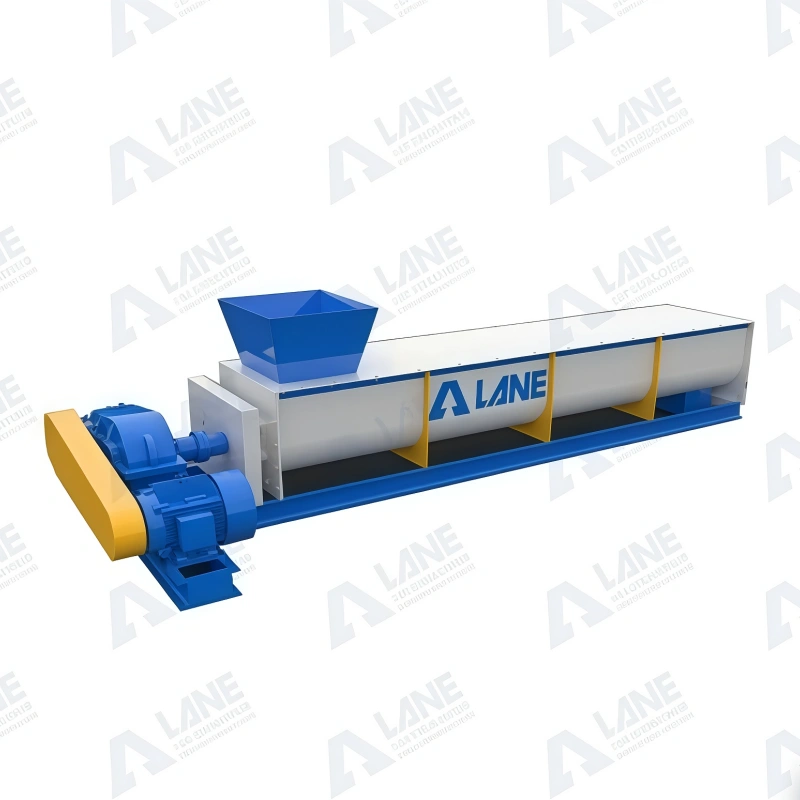
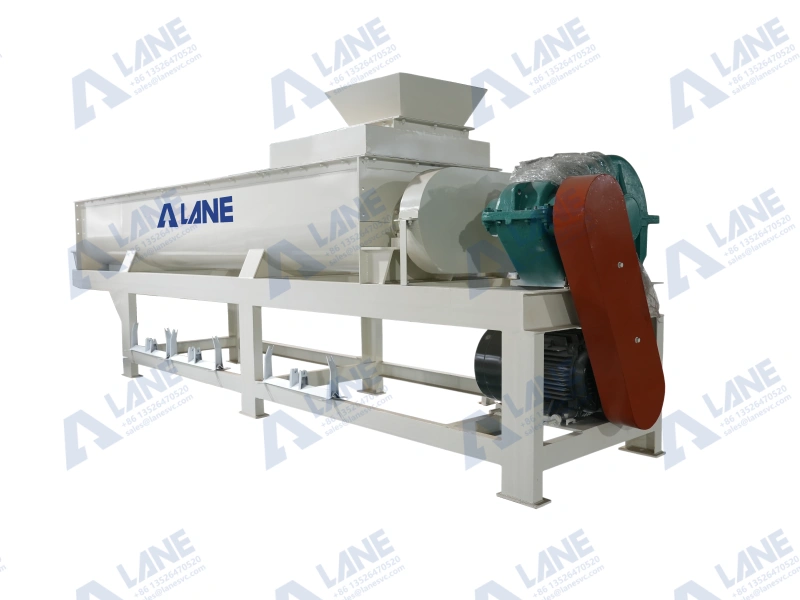
The ideal carbon nitrogen ratio for organic fertilizer raw materials stays at 25:1 to 30:1. Manual material mixing cannot reach even blending effect. LANE Twin Shaft Mixer matches wet manure and dry crushed straw in fixed proportion, balance carbon nitrogen index of mixed raw materials for Farm Waste Fertilizer Production.
| Model | Capacity(tph) | Drum Size(mm) | Size(mm) | Power(kw) | Drum Volume(m³) | Mixing Shaft Size(mm) |
|---|---|---|---|---|---|---|
| LAM-0830D | 6-10T/H | 800*3000 | 3950*1650*800 | 18.5 | 1.6 | 102*8 |
| LAM-0840D | 8-12T/H | 800*4000 | 4950*1650*800 | 18.5 | 2.1 | 102*8 |
| LAM-1040D | 10-14T/H | 1000*4000 | 4950*2050*1000 | 22 | 2.6 | 118*10 |
| LAM-1050D | 12-16T/H | 800*4000 | 5950*2050*1000 | 22 | 3.3 | 133*14 |
| LAM-1240D | 12-16T/H | 1200*4000 | 5150*1960*1160 | 30 | 3.1 | 159*17.5 |
| LAM-1250D | 14-18T/H | 1200*5000 | 6150*2250*1200 | 30 | 3.9 | 159*17.5 |
| LAM-1550D | 16-20T/H | 1500*5000 | 6600*2200*1250 | 30 | 4.9 | 219*20 |
| LAM-1560D | 18-22T/H | 1500*6000 | 7250*2500*1500 | 30 | 5.9 | 219*20 |
Uniform Raw Material Mixing Decides the Final Quality of Farm Waste Fertilizer Production
Many small fertilizer processing workshops cut cost by using manual mixing or single-shaft horizontal mixer for farm waste blending. Non-uniform mixing becomes the top cause of unstable organic fertilizer quality in Farm Waste Fertilizer Production. Even feeding proportion cannot offset the defect of insufficient mixing equipment.
- Hazards of Manual or Single Shaft Mixing for Farm Waste Ingredients
Manual turning only mixes surface materials, and materials at the bottom of mixing pool keep original single-component state. Single-shaft mixer only pushes materials to one direction without mutual extrusion between different raw materials.
After granulation and packaging, some fertilizer bags have too much manure to cause damp caking, while other bags contain excessive straw to make fertilizer ineffective in early growth stage of crops. Retail customers will raise return requests continuously due to inconsistent fertilizer effect.
- Structural Composition of LANE Twin Shaft Mixer for Farm Waste Blending
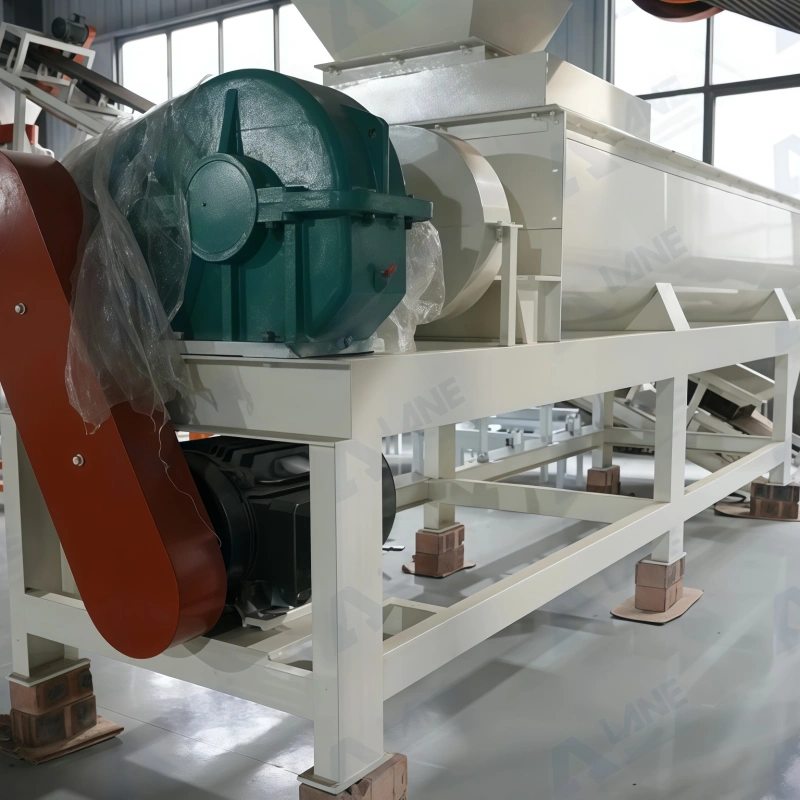
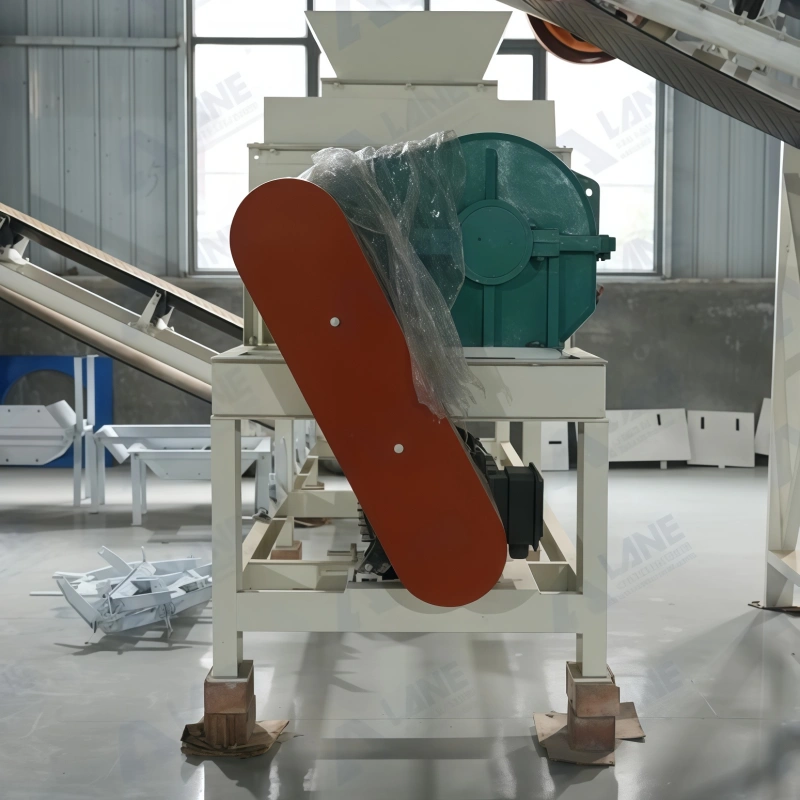
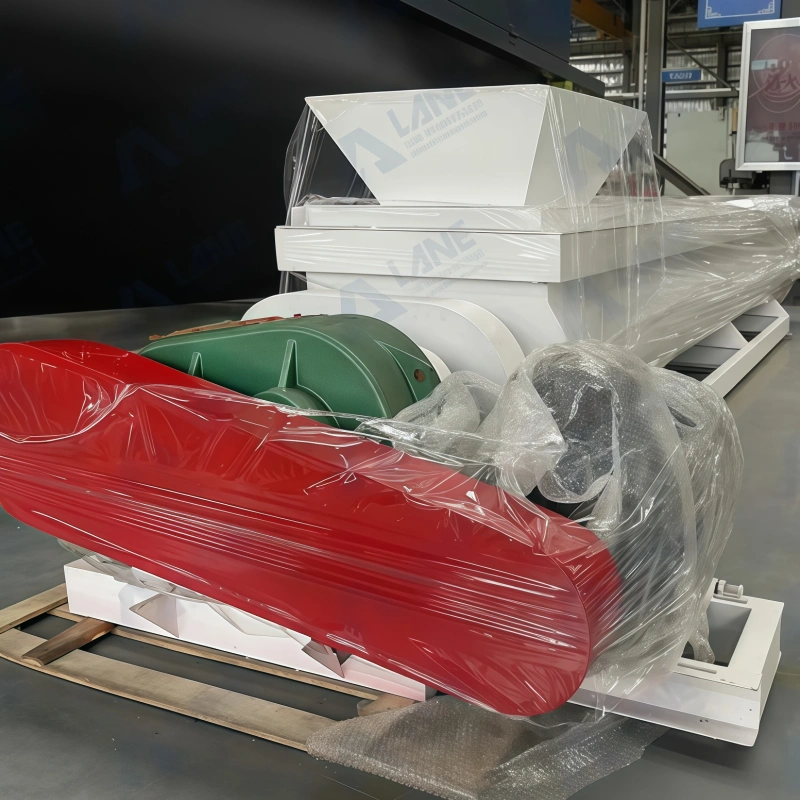
LANE Twin Shaft Mixer adopts integrated welded shell structure made of thick steel plates and section steel. The sealed shell forms independent mixing chamber to contain all farm waste materials during operation.
The core twin spiral shaft assembly includes left and right counter-rotating spiral shafts, bearing pedestal, wear-resistant alloy blades and gear drive unit. The motor and reduction gearbox serve as power source to drive two spiral shafts to run reversely.
The outer chain protective cover wraps driving gears completely to prevent raw material dust from entering gear clearance and causing gear jamming failure during Farm Waste Fertilizer Production continuous operation.
- Working Logic of Twin Shaft Mixer in Farm Waste Fertilizer Production Line
Crushed straw and fermented manure enter the mixer feeding port according to set proportion at first.
Two spiral shafts rotate toward opposite directions under motor drive, and spiral blades push materials to move forward while flipping materials up and down.
At the overlapping zone of two stirring shafts, materials moving in two directions squeeze and rub mutually, break large damp manure clumps and wrap straw fragments evenly with manure slurry.
Whole mixing process takes 2 to 4 minutes only. Mixed raw materials have consistent carbon nitrogen ratio and no local concentrated single material, perfectly matching follow-up organic fertilizer granulation working condition for Farm Waste Fertilizer Production.
Core Advantages of LANE Twin Shaft Mixer for Farm Waste Fertilizer Production
When we design mixing equipment for agricultural waste fertilizer processing, we fully consider high moisture, high fiber, easy dust generation characteristics of livestock manure and straw materials. LANE Twin Shaft Mixer targeted upgrades structural details to adapt Farm Waste Fertilizer Production harsh working conditions.
> Closed Shell Design Eliminates Dust Pollution During Waste Mixing
The top feeding port and both ends of the mixer shell adopt sealing baffle design. Dry straw crushing dust and fermented manure odor will not escape outward during mixing operation.
For farms near residential areas, closed mixing avoids neighbor complaints about dust and peculiar smell. The operation workshop keeps clean, and workers will not suffer from respiratory discomfort caused by long-term dust inhalation during Farm Waste Fertilizer Production daily work.
> Bidirectional Rotation Realizes Even Mixing of Wet Manure and Dry Straw
Ordinary single-shaft mixer only achieves horizontal pushing of materials, wet manure adheres on tank wall easily and dry straw floats on material surface.
Counter-rotating double shafts generate cross tumbling flow inside mixing tank. High-humidity manure clumps are broken by mutual extrusion force, dry straw fragments are fully wrapped by manure, mixed material has uniform moisture and nutrition distribution after discharging.
Organic fertilizer made from evenly mixed raw materials has stable decomposition speed after field application, no sudden fertilizer burn or slow fertilizer efficiency problems for fruit trees and vegetables.
> Wear-resistant Blade Structure Lowers Long-term Maintenance Cost
The stirring blade adopts thickened wear-resistant alloy steel material, specially reinforced for sharp straw fiber friction impact. Blade fixing bolt adopts anti-loose structure to prevent blade loosening under long-term material impact.
When blade wear happens after long-time operation, operators only need to replace single worn blade instead of the whole spiral shaft assembly. Replacement operation finishes within half an hour, spare parts procurement cost is controlled at a low level for Farm Waste Fertilizer Production long-term running.
> Robust Overall Structure Supports Long-time Continuous Production
The base frame of LANE Twin Shaft Mixer uses channel steel overall welding, the whole machine weight is evenly distributed on the foundation to reduce operation vibration. Gear drive system is covered by protective housing to avoid material residue corrosion.
For medium-scale Farm Waste Fertilizer Production lines that run 8 hours per day, the mixer can keep stable continuous operation for 12 months without shutdown overhaul. Frequent equipment halt will not interrupt the organic fertilizer production schedule during peak sales season.
Complete Matching Process Flow for Farm Waste Fertilizer Production with Twin Shaft Mixer
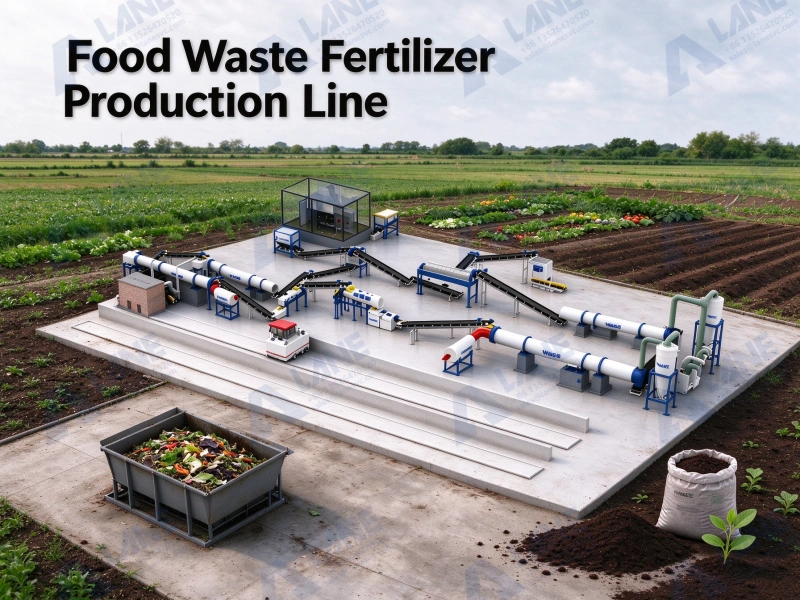
The twin shaft mixer sits in the middle link of the whole farm waste organic fertilizer production line. Front-end raw material pre-treatment and back-end granulation, drying links rely on stable mixed raw material supply from the mixer to keep smooth production rhythm.
• Feeding and Proportional Batching of Fermented Manure and Crop Residue
Use belt conveyor to send fermented manure and crushed straw into two independent feeding hoppers separately. Adjust conveyor speed to control feeding volume of two raw materials according to required carbon nitrogen ratio.
Set feeding continuity to ensure raw materials enter the twin shaft mixer steadily without intermittent feeding which causes mixing proportion fluctuation.
• Intensive Mixing Inside Twin Shaft Mixer
Raw materials fall into the mixing chamber and start reverse stirring mixing. Keep material residence time inside the mixer at 3 minutes to get ideal blending effect.
Discharge port opens automatically after mixing completion, qualified mixed raw materials fall into bottom conveyor and deliver to granulation workshop directly.
• Subsequent Granulation, Drying and Packaging After Mixing
Uniform mixed farm waste raw materials are sent to organic fertilizer granulator to make spherical fertilizer particles.
Wet fertilizer particles go into rotary dryer for low-temperature drying, cool down naturally, then screen and pack into finished organic fertilizer bags for storage and sales.
Common Mixing Faults in Farm Waste Fertilizer Production and Equipment Optimization Tips
In actual Farm Waste Fertilizer Production site operation, improper feeding parameter setting and daily maintenance negligence will trigger typical mixing equipment faults. Targeted adjustment can quickly restore normal mixing performance.
> Material Caking Inside Mixing Tank
Excessively high moisture fermented manure is fed into the mixer in a short time, large manure lumps cannot be broken fully, sticking on tank wall and blades to form thick material accumulation.
Reduce instantaneous feeding quantity of wet manure, increase straw proportion appropriately to lower overall material moisture. Clean residual bonded materials on tank wall and blades during daily shutdown maintenance.
> Uneven Nutrient Distribution in Finished Organic Fertilizer
Two feeding conveyors have obvious speed difference, leading to unstable raw material proportion into the mixer. Or material residence time inside mixer is too short to finish full mixing.
Calibrate conveyor speed with frequency converter to fix feeding proportion, extend mixing residence time to 3 minutes for high-fiber farm waste materials.
> Excessive Equipment Vibration During Operation
Uneven material accumulation on left and right spiral blades causes unbalanced weight of rotating shafts. Or the equipment foundation fixing bolt loosens after long-term vibration.
Shut down the machine to clear asymmetric material accumulation on blades, tighten all foundation bolts, add shock absorption rubber pad under equipment base to weaken vibration conduction.
FAQ Bilingual Q&A for Farm Waste Fertilizer Production and Twin Shaft Mixer Application
Q1:What raw material ratio fits twin shaft mixer in farm waste fertilizer production?
A:The mixer supports flexible proportion adjustment of wet manure (moisture 50% to 60%) and crushed straw. The recommended mixing ratio is 3 parts fermented manure plus 1 part straw to reach standard carbon nitrogen ratio for organic fertilizer production.
Q2:How long is the service cycle of mixing blades for manure raw materials?
A:For daily 8-hour continuous processing of livestock manure and straw, the alloy mixing blade can keep normal use for 10 to 12 months. Replace the blade once obvious thinning and edge wear appear.
Q3:Can this mixer handle high moisture fresh chicken manure directly?
A:It is not recommended to feed fresh chicken manure with moisture over 65% directly. Fresh manure needs aerobic composting for 15 days first to cut moisture, then use the twin shaft mixer for formula blending to avoid severe tank wall adhesion.
Conclusion
Farm waste fertilizer production will turn the troublesome breeding manure and waste crop residues into finished organic fertilizer with commercial value, solving the problem of waste disposal for agricultural operators, repairing the soil of degraded arable land, and opening up a new profit channel for farms.
Uniform raw material mixing acts as the decisive link to guarantee organic fertilizer finished product quality. LANE Twin Shaft Mixer adopts reverse double-shaft extrusion mixing, sealed dust-proof structure and wear-resistant easy-repair design. It adapts the complex high-humidity, high-fiber working condition of farm waste raw materials perfectly, delivering stable mixed raw materials for the whole Farm Waste Fertilizer Production line.
If you plan to build a farm waste organic fertilizer processing line, send your raw material type, daily processing capacity demand and factory layout size to our technical team. We will customize twin shaft mixer model and overall production line layout drawing for you within one working day.