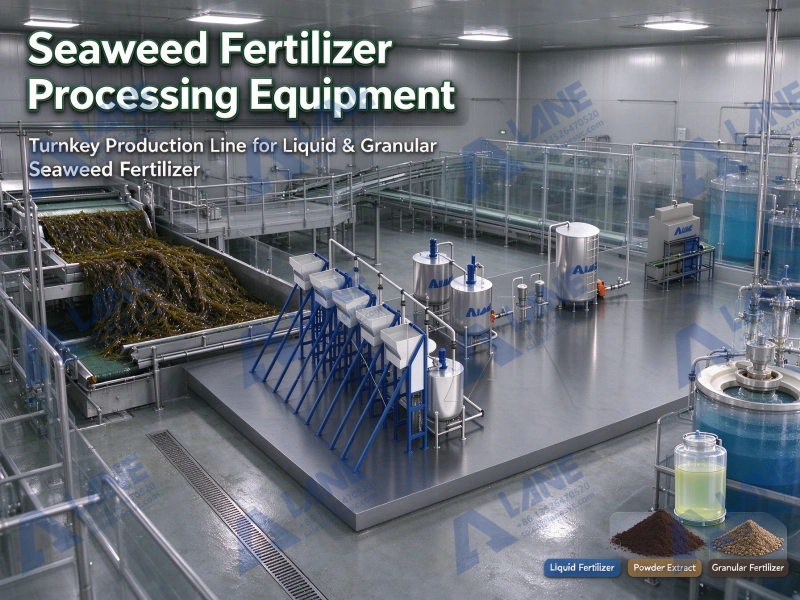
Fertilizer Raw Material Feeding: How a Forklift Feeder Ensures Stable Material Supply for Fertilizer Production
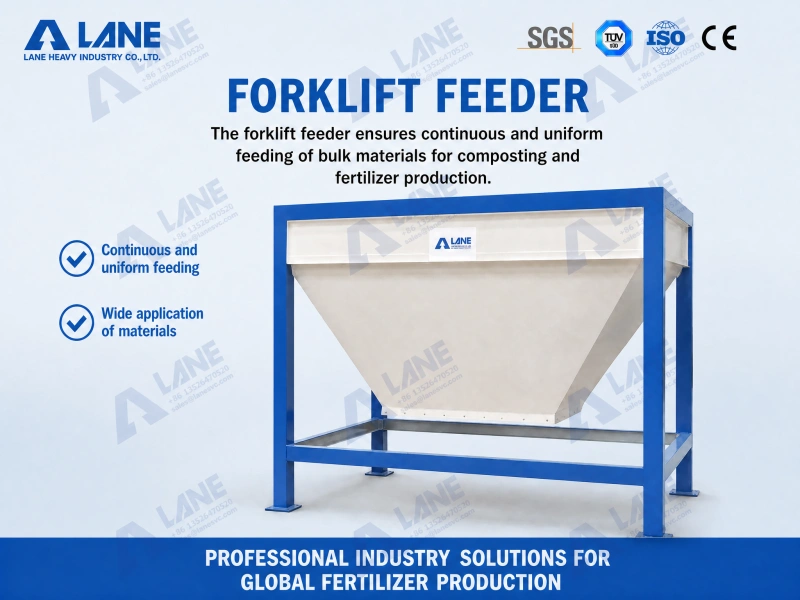
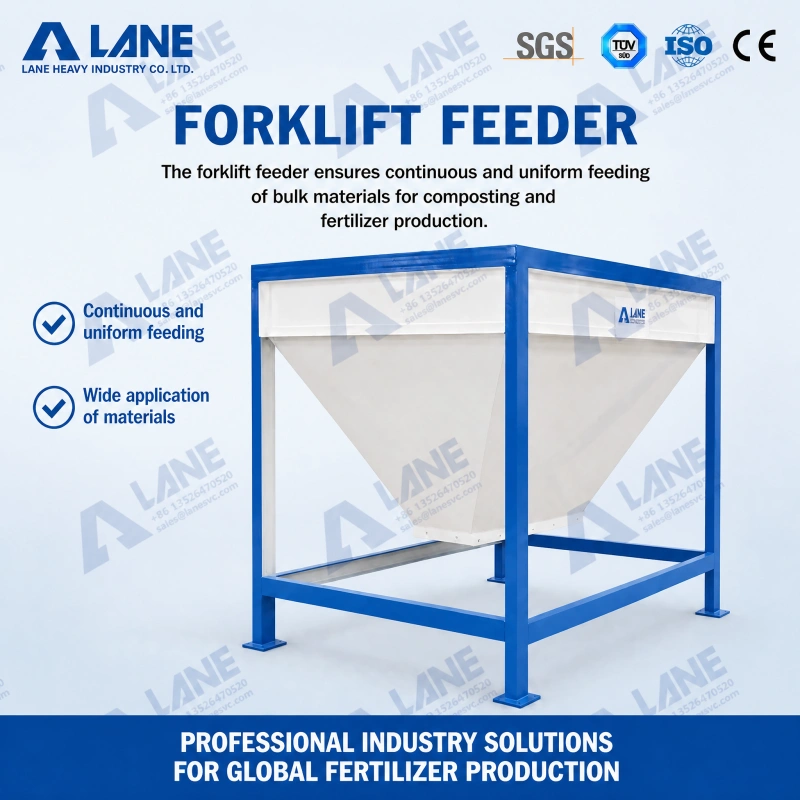
Common Troubles Caused by Unstable Fertilizer Raw Material Feeding
In daily fertilizer production, unstable fertilizer raw material feeding is the most overlooked but critical efficiency bottleneck. Most downstream equipment blockages, low finished product quality and reduced line output all stem from unregulated feeding. Without a professional forklift feeder to stabilize feeding, fertilizer plants cannot achieve long‑term high‑efficiency operation.
Unstable fertilizer raw material feeding creates frequent sudden material surges. Manual feeding has no fixed flow standard, making feeding completely unpredictable. Without a forklift feeder to control feeding volume, wet and sticky compost accumulates rapidly at crusher and granulator inlets, causing serious blockages and forced line shutdowns.
Traditional manual feeding requires full‑time forklift operators to work in shifts. Continuous fertilizer raw material feeding relies on repeated manual dumping, which consumes massive labor resources. Replacing manual operation with an automatic forklift feeder standardizes feeding and cuts most labor costs for feeding links.
Manual feeding cannot screen or break oversized compost lumps. Excessive lumpy materials directly enter crushing equipment and cause incomplete processing. A professional forklift feeder optimizes fertilizer raw material feeding status, pre‑breaks large clumps and delivers uniform materials for downstream processing.
Manual feeding is easily interrupted by staff rest, vehicle scheduling and other human factors. Discontinuous feeding makes production lines run intermittently. A reliable forklift feeder maintains 24‑hour stable fertilizer raw material feeding, ensuring the production line runs at rated capacity continuously.
Basic Working Logic of Forklift Feeder for Fertilizer Raw Materials
To solve various defects of manual feeding, the forklift feeder is professionally designed for organic fertilizer production scenarios. Its core design concept is to stabilize fertilizer raw material feeding, standardize flow rate and avoid material blockage and intermittent supply. The whole working process fully adapts to high‑moisture, lumpy fertilizer raw materials.
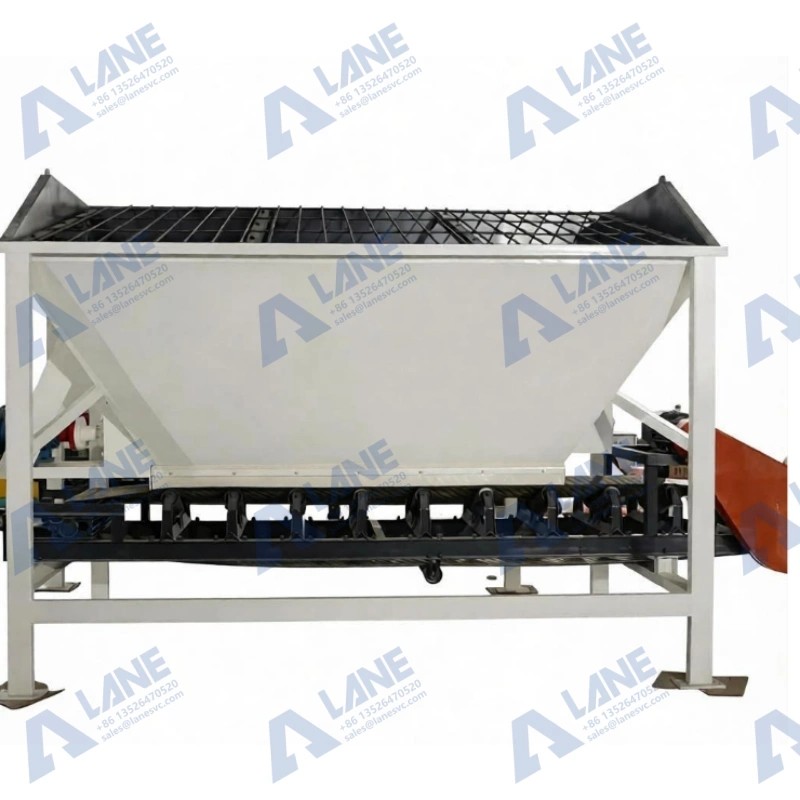
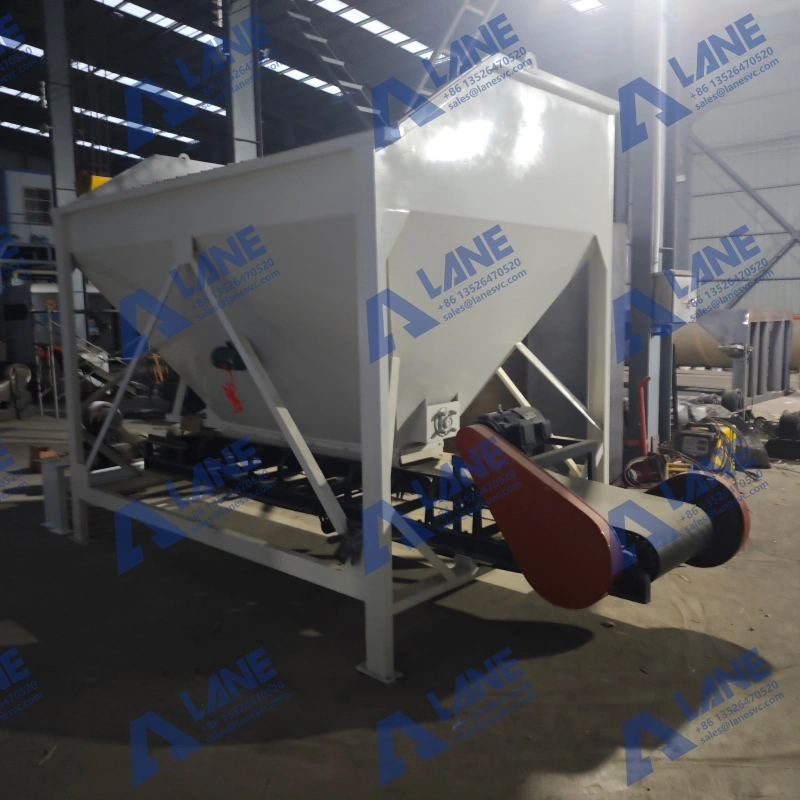
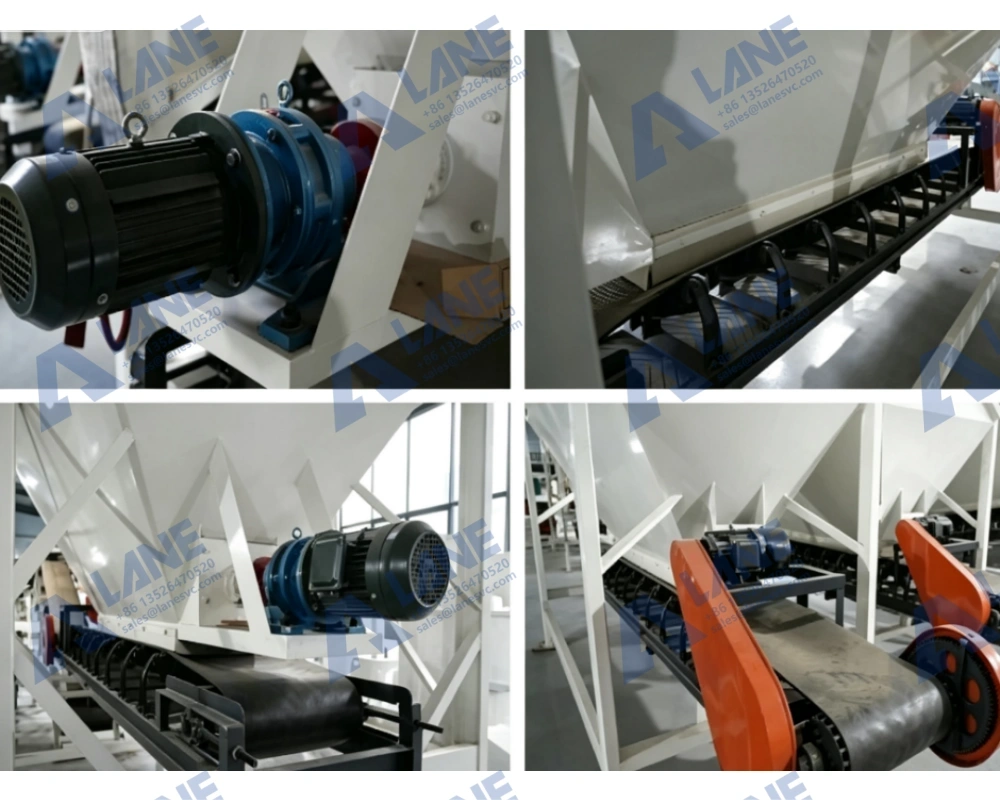
High‑moisture fertilizer raw materials are prone to arching and bonding, which affects continuous feeding. The equipment’s built‑in rotor shaft is driven by the main motor to rotate continuously. It breaks compacted material arches in real time and ensures smooth downward material flow for uninterrupted fertilizer raw material feeding.
The customized herringbone anti‑slip belt is the core conveying component for stable fertilizer raw material feeding. It effectively prevents wet fertilizer raw materials from slipping and backflowing. Whether for powdery, granular or lumpy materials, it maintains consistent feeding speed.
Large unbroken compost and manure clumps are the main cause of fluctuating feeding. The fixed internal baffles cooperate with the rotating rotor to break oversized material lumps. This preprocessing step ensures uniform material status and further stabilizes fertilizer raw material feeding quality.
Long‑term continuous feeding will cause normal wear on belts, rollers and transmission parts. These wearable components support independent on‑site replacement. It avoids equipment shutdown caused by component aging and ensures long‑term stable feeding for production lines.
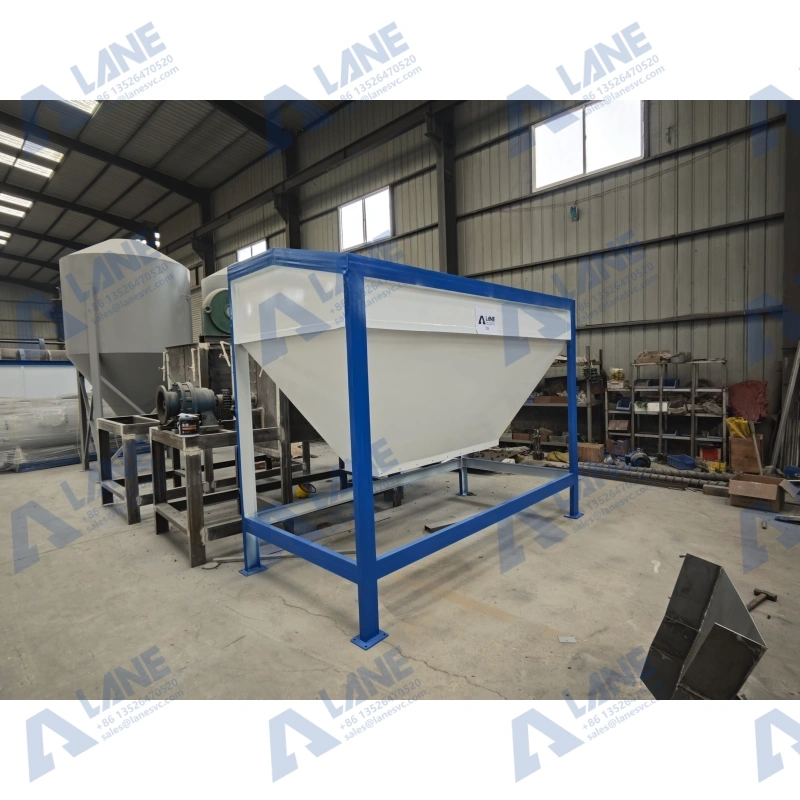
| Model | Capacity(tph) | Silo Size(m) | Silo Thickness(mm) | Overall Size(mm) | Breaking Motor Power(kw) | Vibration Motor Power(kw) | Conveyor Width(mm) | Conveyor Power(kw) | Mixing Shaft Diameter(mm) | Mixing Shaft Length(mm) |
|---|---|---|---|---|---|---|---|---|---|---|
| LAH-1-2 | 5-10 | 1*2 | 4 | 2250*1050*1590 | 0.75 | 0.37 | 500 | 3 | 60 | 2 |
| LAH-1.5-3 | 7-12 | 1.5*3 | 4 | 3250*1550*1720 | 0.75 | 0.37 | 650 | 4 | 60 | 3 |
| LAH-2-3 | 9-15 | 2*3 | 5 | 4250*1550*1720 | 0.75 | 0.37 | 650 | 4 | 60 | 3 |
| LAH-2-4 | 12-17 | 2*4 | 5 | 4250*2050*1850 | 0.75 | 0.37 | 800 | 4 | 76 | 4 |
Key Structural Parts That Support Stable Fertilizer Raw Material Feeding
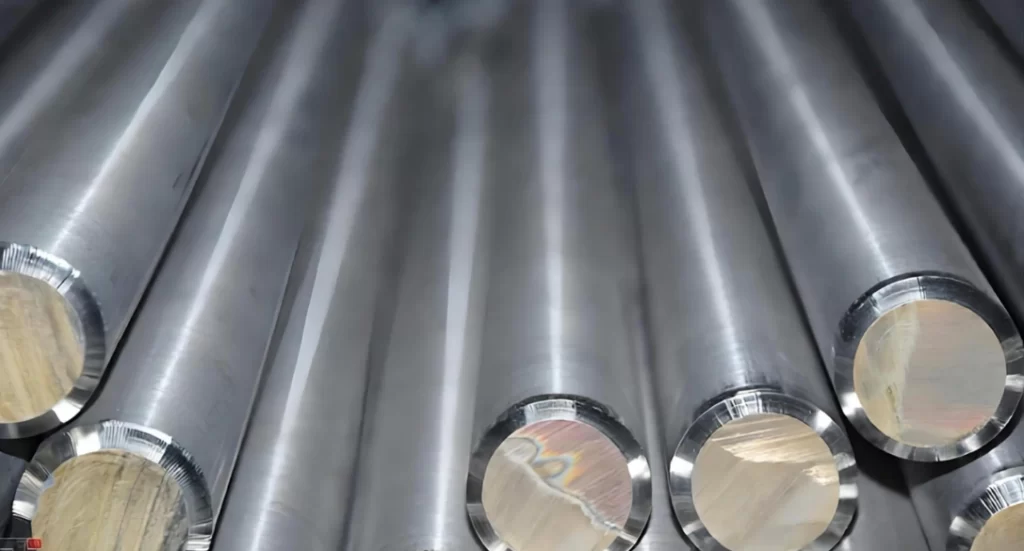
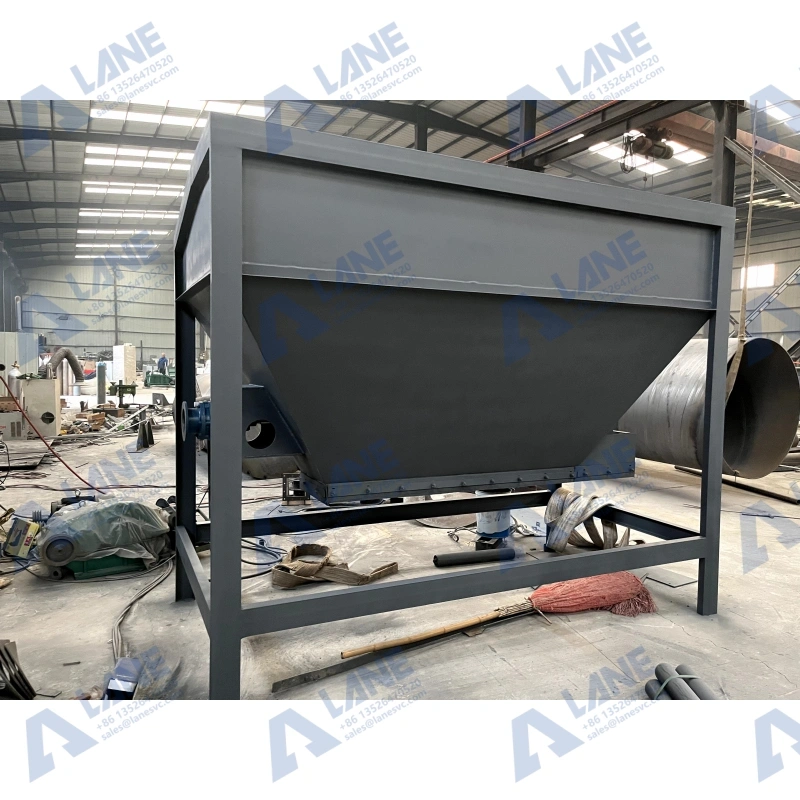
The thickened medium‑carbon steel shell directly contacts abrasive fertilizer raw materials. It resists long‑term friction and corrosion from wet compost and manure. A durable equipment structure avoids deformation and leakage, ensuring consistent feeding stability.
The integral channel steel welded frame bears the full weight of fertilizer raw materials and operating components. It will not deform under long‑term heavy‑load feeding. The stable mechanical foundation guarantees continuous and reliable feeding operation.
Stable power output is the key to uniform feeding. The matched motor‑reducer and chain‑sprocket structure provides steady torque. Even when sticky fertilizer raw materials cause operation resistance, it maintains fixed feeding speed and stable feeding rhythm.
The unique linkage shovel structure assists in uniform material discharge. It cooperates with the conveying belt to avoid material stagnation and accumulation at the outlet. This auxiliary structure further optimizes feeding continuity for full‑process production.
Practical Advantages of Forklift Feeder Within Organic Fertilizer Lines
Adjustable and uniform feeding rhythm perfectly matches the processing speed of crushers and granulators. It eliminates material surge and shortage problems caused by irregular manual feeding, making downstream equipment operate under constant and stable load.
The automatic working mode simplifies the whole feeding process. Workers only need to finish regular material dumping, and the equipment independently completes follow‑up quantitative feeding. It greatly reduces on‑site manual operation pressure.
The forklift feeder requires no complex foundation construction and supports flexible workshop layout. It adapts to compact fertilizer workshops, realizing efficient feeding without occupying excessive production space.
Compared with large‑scale automatic feeding systems, the forklift feeder has lower procurement costs. Standard wearable parts make daily maintenance convenient and cheap. It ensures long‑term stable feeding with lower operating investment.
Suitable Raw Materials and Real‑world Application Scenarios
It covers all mainstream organic fertilizer raw materials including shredded crop straw, animal manure and mixed compost. No matter single or mixed materials, it can complete stable and quantitative fertilizer raw material feeding.
In most fertilizer production lines, the forklift feeder is installed in front of coarse crushers. It realizes uniform feeding for pre‑crushing procedures, avoiding instantaneous impact load on crushing equipment.
While focusing on feeding work, the equipment also applies to agricultural waste treatment, coal processing and building material production. It delivers stable quantitative feeding for various bulk materials.
Single‑unit equipment meets the feeding demand of small‑scale fertilizer plants. Multiple sets of forklift feeders can work simultaneously to support high‑volume feeding for medium‑sized factories.
Daily Operation Tips to Keep Steady Fertilizer Raw Material Feeding
Oversized hard lumps will damage internal structures and disrupt uniform feeding. Operators need to break super‑large clumps before dumping materials to ensure stable feeding operation.
Worn belts and rollers are the main causes of fluctuating feeding. Regular inspection and timely replacement of wearable parts can always keep feeding in the best state.
Overfilled silos will cause excessive load on transmission components and affect feeding uniformity. Maintaining reasonable material stock ensures stable and efficient feeding.
Hardened residual materials will block the silo and conveyor parts, leading to unstable feeding in the next production. Timely cleaning effectively eliminates hidden troubles of feeding fluctuation.
FAQ
A1: The forklift feeder achieves the best feeding effect when material moisture is between 25% and 45%. Too wet materials will cause adhesion and affect feeding uniformity, while too dry materials will produce dust and cause material loss.
A2: Yes, it can handle mixed materials stably. As long as the straw length is controlled within the allowable range, the equipment can maintain uniform and continuous feeding without winding or blockage.
A3: Prepare spare herringbone belts, rollers, chains and sprockets. These core wearable parts directly affect feeding stability. Timely replacement avoids feeding interruption caused by component wear.
A4: It is applicable for granulator front‑end feeding after material crushing and screening. It is mostly used for coarse crusher feeding in conventional production lines to stabilize front‑end feeding.
A5: Judge according to downstream equipment operation status. Material accumulation means excessive feeding speed, while equipment idling and material shortage means insufficient feeding volume, which requires timely speed adjustment.
Conclusion