How Can Fertilizer Fermentation Temperature Management Be Improved?
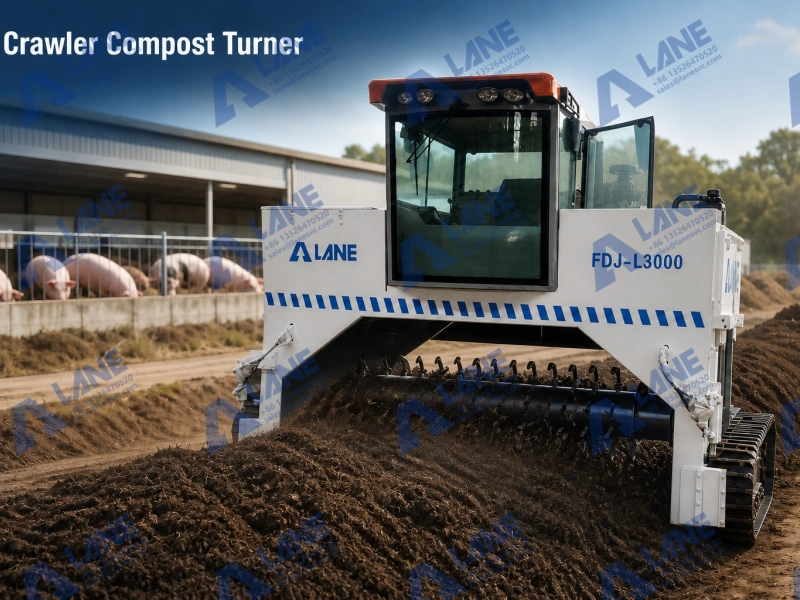
Is the fermentation temperature rising too quickly? Does the center of the pile become overheated while the outer material remains relatively cool? Or does the temperature stay low for several days even though the material has already been placed in the fermentation area?
These are common problems in organic fertilizer production. They are also the reason why Fertilizer Fermentation Temperature Management should be treated as an operating process rather than simply a temperature measurement.
In a well-controlled process, temperature should change with the fermentation stage:
Raw Material Preparation → Moisture Adjustment → Mixing → Temperature Rise → High-Temperature Fermentation → Turning and Aeration → Temperature Reduction → Maturation
The objective of Fertilizer Fermentation Temperature Management is not to keep the material at one fixed temperature. The objective is to understand why the temperature changes, identify abnormal temperature patterns early, and use turning, aeration, moisture adjustment, and suitable fermentation equipment to keep the process moving in the right direction.
What Does Fermentation Temperature Tell You?
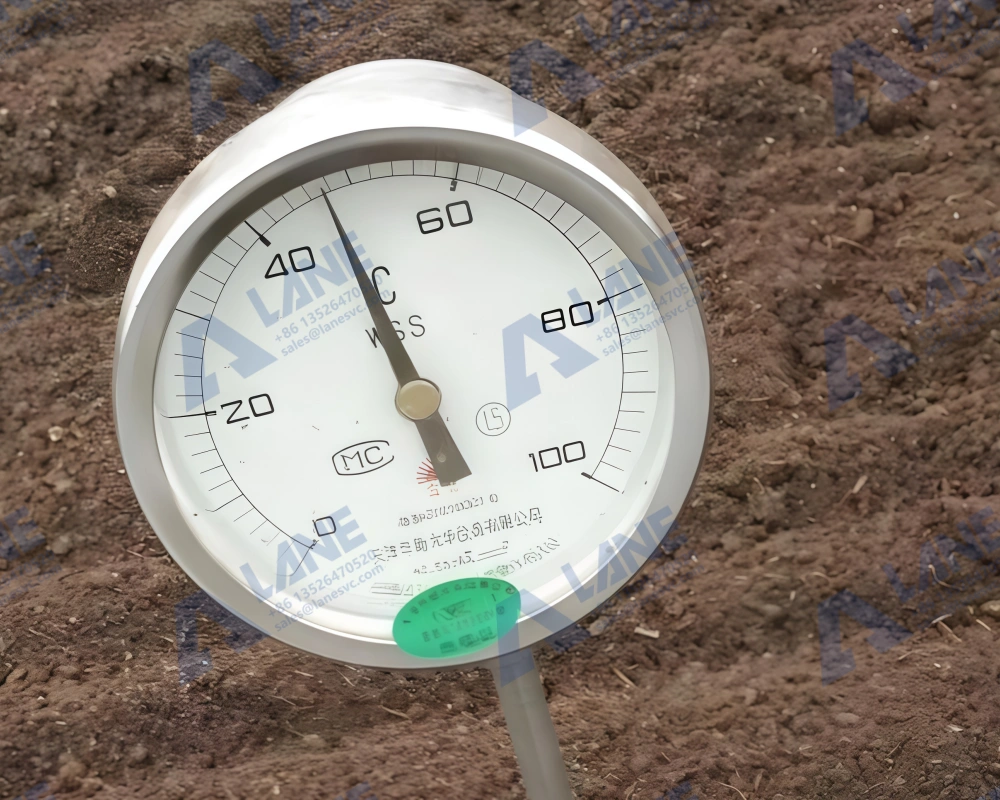
Temperature is one of the most practical indicators available during organic fertilizer fermentation.
When microorganisms actively decompose biodegradable organic matter, heat is generated inside the material. As the available organic matter changes, microbial activity also changes, causing the fermentation temperature to rise, stabilize, and eventually fall.
For operators, this means temperature can be used to judge the condition of the fermentation material.
• Temperature rising → Microbial activity increasing
• Temperature remaining high → Active decomposition continues
• Temperature becoming uneven → Heat or oxygen distribution may be uneven
• Temperature falling gradually → Fermentation may be entering the cooling or maturation stage
This is why Fertilizer Fermentation Temperature Management starts with monitoring the temperature trend instead of looking at only one temperature reading.
A Practical Temperature Pattern
A typical fermentation process can be understood in three broad stages:
Initial heating → Thermophilic fermentation → Cooling and maturation
During the initial heating stage, microorganisms begin consuming easily degradable organic matter. The temperature gradually increases.
During the high-temperature stage, microbial activity is strong and the material requires sufficient oxygen and suitable moisture. Excessive heat should be avoided because extremely high temperatures can reduce microbial activity.
During the cooling stage, the easily degradable organic matter has been reduced and heat generation gradually decreases. The material then continues to stabilize and mature.
The exact temperature range depends on the raw material, moisture content, fermentation method, pile dimensions, aeration conditions, and local process requirements. Therefore, Fertilizer Fermentation Temperature Management should focus on the temperature trend and material condition rather than applying one number to every project.
Why Does Fermentation Temperature Become Too High or Too Low?
In Fertilizer Fermentation Temperature Management, when fermentation temperature becomes abnormal, operators should not immediately treat the temperature itself as the problem.
Temperature is usually the result of several conditions inside the fermentation material.
The main factors are:
• Moisture content
• Oxygen supply
• Material structure
• Carbon-to-nitrogen balance
• Raw material composition
• Pile size
• Mixing uniformity
• Turning frequency
• Fermentation environment
The relationship can be simplified as:
Raw Material Condition → Microbial Activity → Heat Generation → Temperature Change
If the first part of this chain is not controlled, simply increasing or reducing turning frequency may not solve the problem.
When the Temperature Is Too High
A high fermentation temperature can occur when heat is being generated faster than it can be released.
Typical causes include:
• Excessively wet material
• Dense fermentation piles
• Poor internal air movement
• Oversized piles
• Insufficient turning
• Uneven mixing
• Excessive accumulation of easily degradable organic matter
A common situation is:
High Moisture → Material Compaction → Reduced Airflow → Heat Accumulation → Local Overheating
This is why Fertilizer Fermentation Temperature Management should connect temperature monitoring with moisture and aeration checks.
If the material is compacted, simply waiting for the temperature to fall may not be effective. The pile may need turning to break compacted areas, redistribute heat, and introduce fresh air, which is a practical operation tip of Fertilizer Fermentation Temperature Management.
When the Temperature Is Too Low
Low temperature can have completely different causes.
The material may be:
• Too dry
• Too small in volume
• Poorly mixed
• Low in readily degradable organic matter
• Lacking suitable moisture
• Poorly balanced in carbon and nitrogen
• Exposed to conditions that cause excessive heat loss
The basic logic becomes:
Unsuitable Moisture / Material Composition → Low Microbial Activity → Limited Heat Generation → Slow Temperature Rise
Therefore, Fertilizer Fermentation Temperature Management is not simply about cooling overheated material. It also involves creating conditions in which the fermentation process can generate and retain enough heat.
How Should Fertilizer Fermentation Temperature Be Controlled?
Once an abnormal temperature pattern is identified, the next step is to determine what operating condition is causing it.
A practical control cycle is:
Temperature Monitoring → Problem Identification → Corrective Action → Temperature Recheck
The corrective action may involve turning, aeration, moisture adjustment, mixing, or changing the fermentation conditions.
Use Temperature Changes to Decide the Next Operation
Operators should pay attention to both temperature and temperature change.
For example:
Temperature rises steadily → Continue monitoring
Temperature rises rapidly → Check moisture, pile density, and aeration
Center temperature is much higher → Check pile structure and turning uniformity
Temperature remains low → Check moisture, raw material composition, and pile size
Temperature gradually falls → Check whether the material has entered the cooling stage
This approach makes Fertilizer Fermentation Temperature Management more practical because the operator is responding to the actual condition of the material.
It also avoids a common mistake: using the same turning schedule for every batch.
Turning Is More Than Simply Mixing the Material
Turning is often described as a way to “lower temperature,” but this explanation is incomplete.
The actual effects are broader:
• Breaks compacted material
• Increases internal pore space
• Introduces fresh air
• Releases accumulated heat
• Redistributes moisture
• Moves cooler material into hotter areas
• Makes fermentation conditions more uniform
The process can be understood as:
Turning → Loosening Material → Improving Airflow → Redistributing Heat and Moisture → More Uniform Fermentation
Therefore, Fertilizer Fermentation Temperature Management should not be based on a fixed rule such as “turn once every day.”
One critical factor in Fertilizer Fermentation Temperature Management is that the appropriate turning frequency depends on the temperature trend, moisture content, material structure, pile size, and fermentation stage.
How Do Moisture and Aeration Affect Temperature Together?
Moisture and oxygen should be considered together because they strongly influence the internal condition of the fermentation pile.
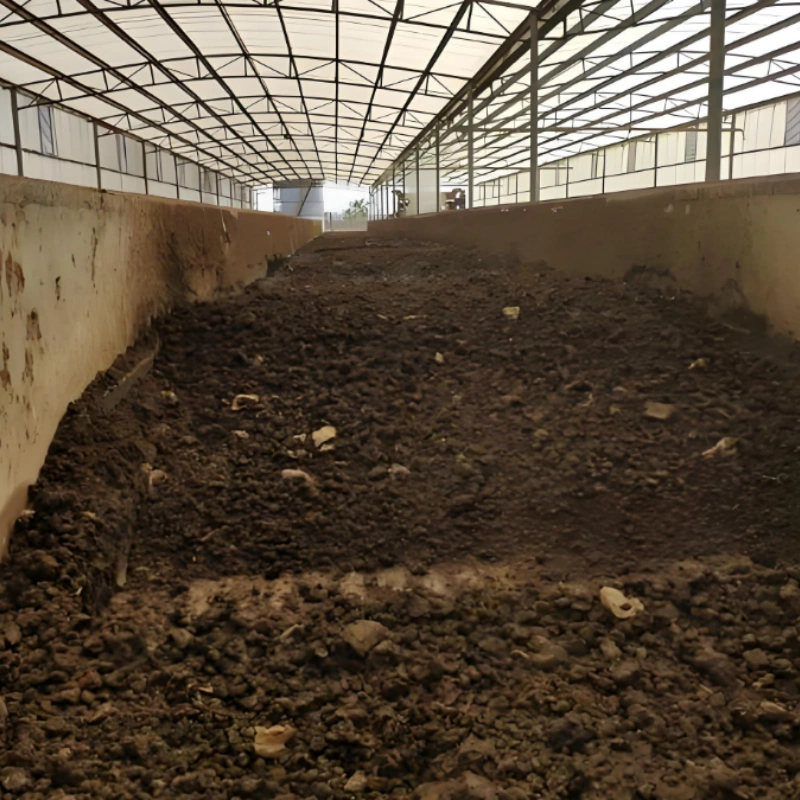
A common challenge in Fertilizer Fermentation Temperature Management is that when organic material contains excessive moisture, particles can stick together and fill the spaces through which air normally moves.
The result can be:
Excess Moisture → Compaction → Poor Oxygen Movement → Uneven Fermentation
This is particularly important when processing livestock manure, food waste, and other wet organic materials.
If the material is too dry, however, microbial activity can also slow down. Adding excessive water is not the solution because this may create compaction later.
The better approach is to control moisture before and during fermentation.
Raw Material Analysis → Moisture Adjustment → Mixing → Fermentation
A properly designed Fertilizer Fermentation Temperature Management process therefore begins before the material reaches the fermentation area.
For some projects, crushing and mixing equipment is also important. Large lumps or poorly mixed raw materials can create different moisture and density zones inside the fermentation pile, and this problem deserves attention during Fertilizer Fermentation Temperature Management.
A fertilizer crusher can reduce oversized material, while a fertilizer mixer can improve the distribution of moisture and different raw materials before fermentation.
Which Equipment Can Improve Fertilizer Fermentation Temperature Management?
Fermentation equipment does not “create” the correct temperature by itself.
Its main role is to provide the mechanical actions required to control the fermentation environment.
Depending on the process, these actions may include:
Turning → Aeration → Mixing → Heat Redistribution → Moisture Redistribution
Different fermentation layouts require different equipment configurations.
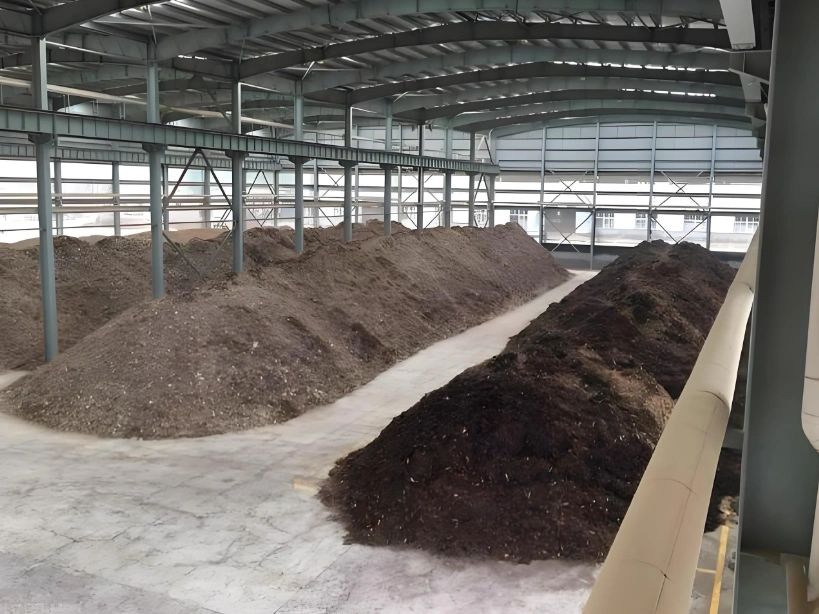
Windrow Compost Turner — For Open Windrow Fermentation
If organic material is arranged into long windrows with sufficient operating space, a windrow compost turner is a practical choice.
The machine travels along the fermentation row and turns the material continuously.
It is suitable when the main temperature-control requirements are:
• Regular turning
• Heat release
• Oxygen replenishment
• Moisture redistribution
• Uniform fermentation
For an open windrow system, the relationship is straightforward:
Long Windrow → Mechanical Turning → Better Aeration → More Uniform Temperature
This makes the windrow compost turner particularly useful for projects where the fermentation material needs repeated mechanical turning.
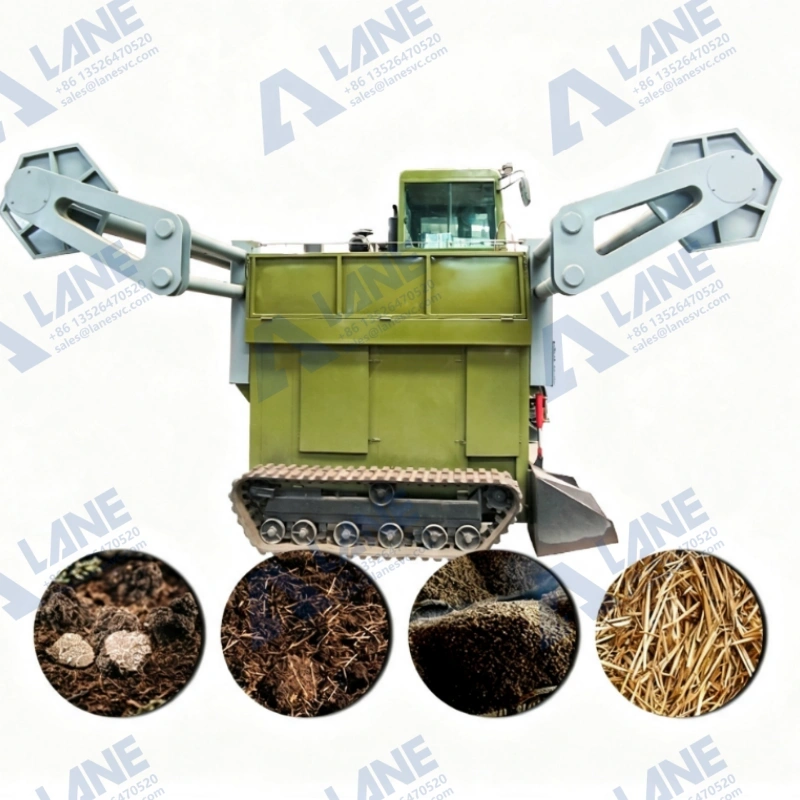
Tracked Compost Turner — For Large-Scale Fermentation
Large organic fertilizer projects may have long fermentation rows and high daily processing volumes.
In these projects, a tracked compost turner can be used when the working area and production capacity require a larger-scale turning solution.
A core advantage in Fertilizer Fermentation Temperature Management lies not in simply processing more material, but in enabling consistent regular turning operations across the entire large fermentation area.
This can help reduce differences between the center, sides, and different sections of the fermentation rows.
Trough Compost Turner — For Fixed Fermentation Areas
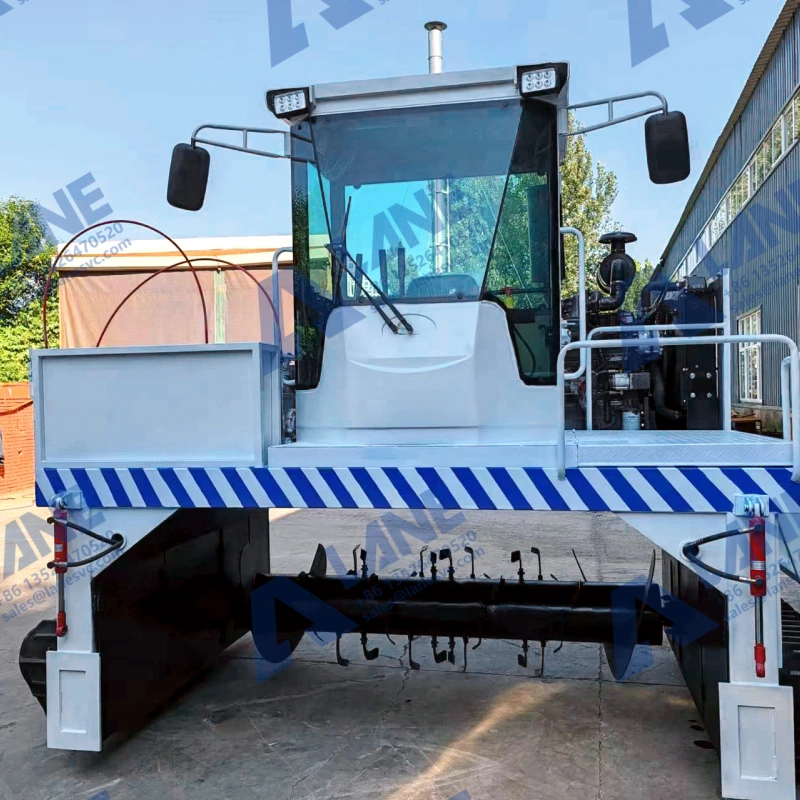
A trough compost turner is more suitable when the fermentation process is arranged in fixed fermentation channels.
The material stays within the trough while the machine travels along the fermentation area.
The process can be represented as:
Fixed Trough → Mechanical Turning → Aeration + Mixing → Temperature Equalization
This configuration is useful when the fertilizer plant has a planned fixed fermentation layout and wants the fermentation process to become part of a more structured production line.
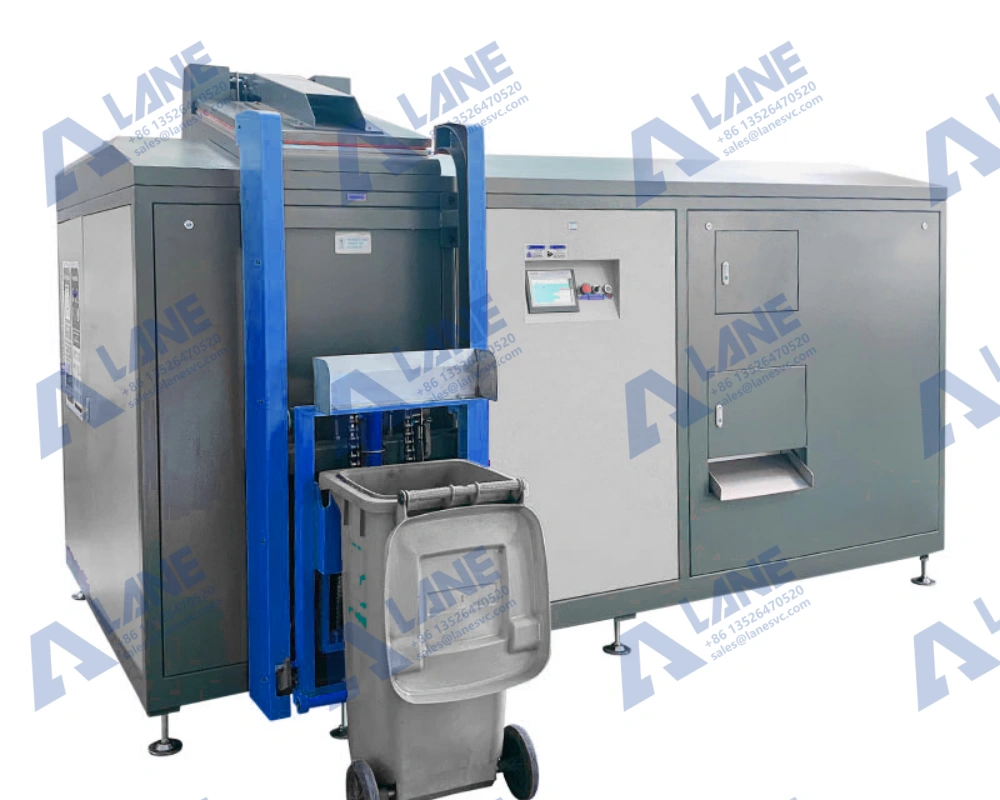
Horizontal Fermentation Tank — For Enclosed Processing
For projects that require a more enclosed fermentation environment, a horizontal fermentation tank can provide a different solution.
The material is processed inside enclosed equipment rather than being exposed in an open windrow.
This can be considered when the project places greater importance on:
• Compact equipment layout
• Enclosed operation
• Controlled ventilation
• Temperature monitoring
• Reduced dependence on open fermentation space
The choice is therefore not simply “which machine is better?”
It is:
Open Windrow → Windrow Turner
Large-Scale Windrow → Tracked Turner
Fixed Trough → Trough Turner
Enclosed Fermentation → Horizontal Fermentation Tank
This equipment-to-process relationship is an important part of Fertilizer Fermentation Temperature Management.
What Happens When Temperature Is Uneven Inside the Same Pile?
Uneven temperature is often more useful as a warning signal than a single high-temperature reading.
For example, suppose the center of a fermentation pile is very hot while the outside remains noticeably cooler.
This may indicate that:
• The pile is too large
• The center is retaining too much heat
• Oxygen cannot reach the center effectively
• The material was not mixed evenly
• Turning is insufficient
• Moisture is distributed unevenly
The operating logic becomes:
Temperature Difference → Check Material Structure → Check Moisture → Check Aeration → Adjust Turning → Recheck
This is a more useful approach to Fertilizer Fermentation Temperature Management than simply measuring the average temperature of the whole pile.
Large fermentation piles should therefore be monitored at multiple positions rather than relying on one measurement point.
A Practical Fertilizer Fermentation Temperature Management Example
Consider a manure-based organic fertilizer project.
The raw material enters fermentation with relatively high moisture. After several days, the operator notices that the temperature in the center of the fermentation pile continues to increase, while the outer material remains cooler, which is a frequent monitoring scenario in Fertilizer Fermentation Temperature Management.
At first glance, the problem appears to be excessive fermentation temperature.
However, further inspection shows:
High Moisture → Dense Material → Poor Internal Aeration → Heat Accumulation in the Center
The solution is not simply to wait.
The fermentation material needs to be turned to:
• Break compacted areas
• Redistribute heat
• Introduce fresh air
• Redistribute moisture
• Improve temperature uniformity
After turning, the temperature is monitored again.
If the temperature becomes more uniform and later begins to decrease gradually, the material may be progressing into the cooling and maturation stage.
This example demonstrates the practical purpose of Fertilizer Fermentation Temperature Management: identifying what is happening inside the material and connecting the temperature reading with the correct mechanical operation.
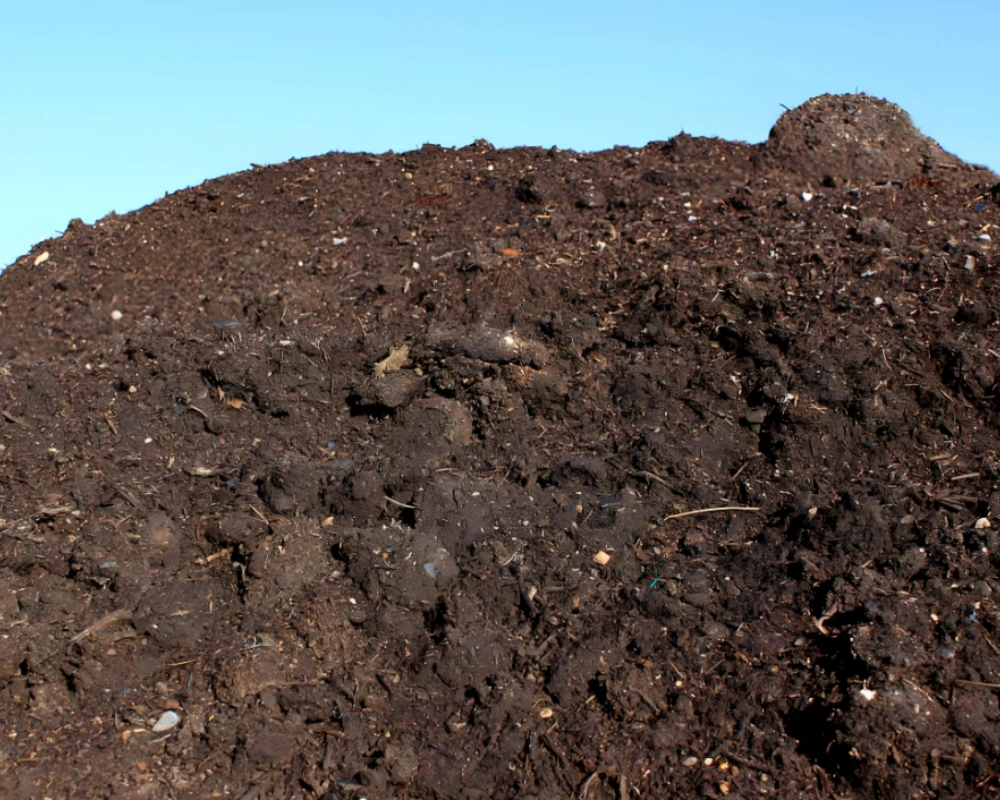
How Does Fermentation Affect the Rest of the Fertilizer Production Line?
Fermentation should not be considered an isolated process.
The condition of the fermented material directly affects the downstream equipment.
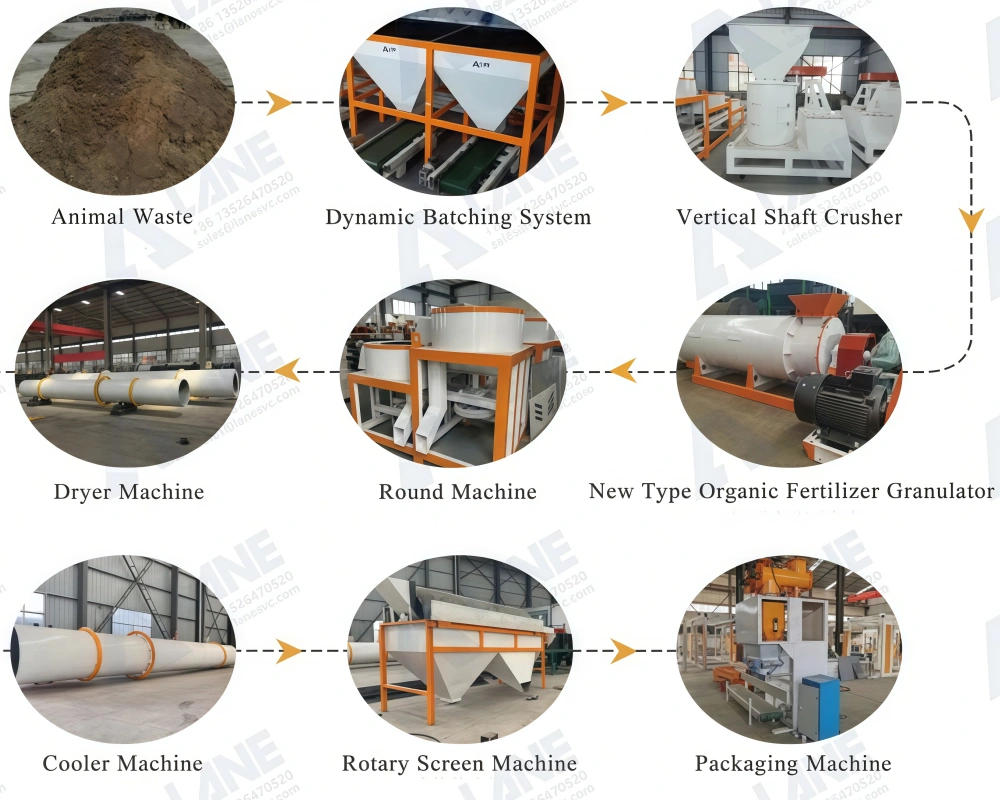
A typical organic fertilizer production process may follow:
Raw Material Preparation → Crushing → Mixing → Fermentation → Maturation → Crushing → Granulation → Drying → Cooling → Screening → Packaging
If fermentation is incomplete or the material remains excessively wet, the downstream process can become unstable.
For example:
Poor Fermentation → High Moisture / Large Lumps → Difficult Crushing and Granulation
After fermentation, a fertilizer crusher can be used to break up oversized material before granulation.
For granular fertilizer production, a suitable fertilizer granulator then shapes the processed material into the required particle form.
After granulation:
Granulation → Drying → Cooling → Screening → Packaging
A fertilizer dryer can reduce excess moisture, while a fertilizer cooling system can reduce product temperature before screening and packaging.
This is why Fertilizer Fermentation Temperature Management has an effect beyond the fermentation area. Stable fermentation creates a more consistent feedstock for the equipment that follows.
How Can You Build a More Stable Fertilizer Fermentation Process?
A stable system should be designed around the raw material rather than around one individual machine.
Before selecting equipment, evaluate:
• Raw material type
• Initial moisture content
• Daily processing capacity
• Material density
• Fermentation method
• Available fermentation space
• Required fermentation time
• Final fertilizer type
• Required level of automation
Then establish the process:
Raw Material Analysis → Crushing → Mixing → Moisture Adjustment → Fermentation → Temperature Monitoring → Turning / Aeration → Maturation → Crushing → Granulation → Drying → Cooling → Screening → Packaging
At each stage, the previous process should prepare the material for the next one.
Good Fertilizer Fermentation Temperature Management therefore depends on the entire process chain.
The right fermentation equipment can make turning more consistent. The right mixing equipment can improve raw material uniformity. Proper moisture adjustment can reduce compaction. Downstream crushing and granulation equipment can then process the fermented material more reliably.
Final Recommendations for Fertilizer Fermentation Temperature Management
When the fermentation temperature is abnormal, start by looking for the cause within the materials themselves rather than rushing to adjust the equipment. Follow this sequence for troubleshooting: temperature, moisture, material structure, oxygen supply, uniformity of mixing, frequency of turning, fermentation stage. If the temperature is too high, increase the turning and ventilation; if it is too low, check the moisture and raw materials; if the center is overheated, it indicates that the pile is too large or the airflow is not smooth; if the temperature difference is large, it indicates that the mixing and turning are not done properly; if the material is wet and dense, adjust the moisture and increase ventilation. For large-scale piles, it is recommended to use mechanical turning. This is the practical basis of “Fertilizer Fermentation Temperature Management”.
For a complete fertilizer project, LANE matches the equipment based on the characteristics of the raw materials, moisture content, processing volume, fermentation method, and product requirements. If you are planning a new project or solving temperature issues on an existing production line, provide the type of raw materials, processing volume, moisture content, fermentation method, and product form, and you can determine the fermentation process, turning equipment, and subsequent configurations for crushing, granulation, drying, cooling, screening, and packaging.