How to Choose a Small Organic Fertilizer Machine for Manure
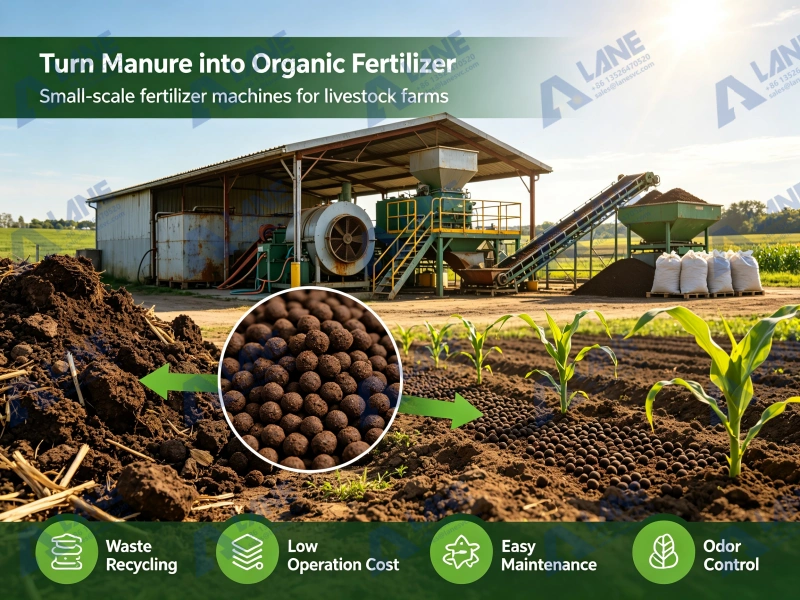
Turning manure into organic fertilizer sounds straightforward until you actually start handling the material. Fresh chicken manure, cow manure, pig manure, and composted manure behave very differently, especially when moisture, fiber content, and particle size change.
Choosing a Small Organic Fertilizer Machine for Manure should start with the manure itself, not with a machine catalog. A small farm may only need a crusher and screening machine. Another customer with a similar amount of manure may want to produce marketable granules and need several additional machines.
The right setup matches the amount and condition of manure you have, the fertilizer you want to make, and how you plan to operate the equipment.
What Is a Small Organic Fertilizer Machine for Manure?
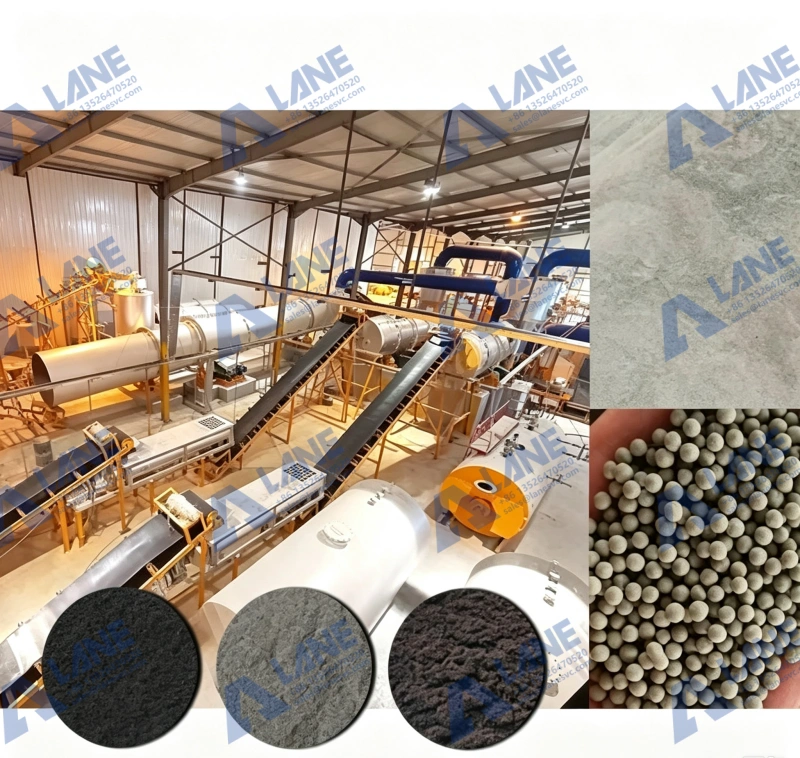
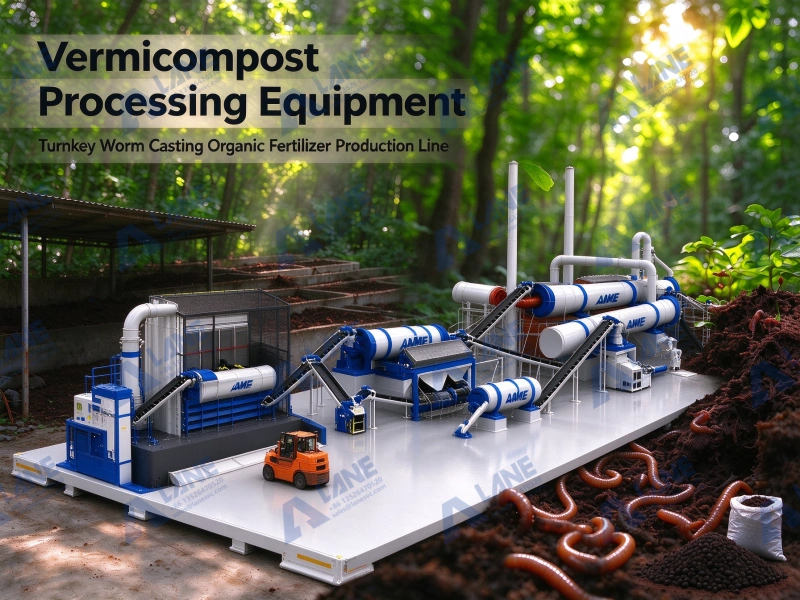
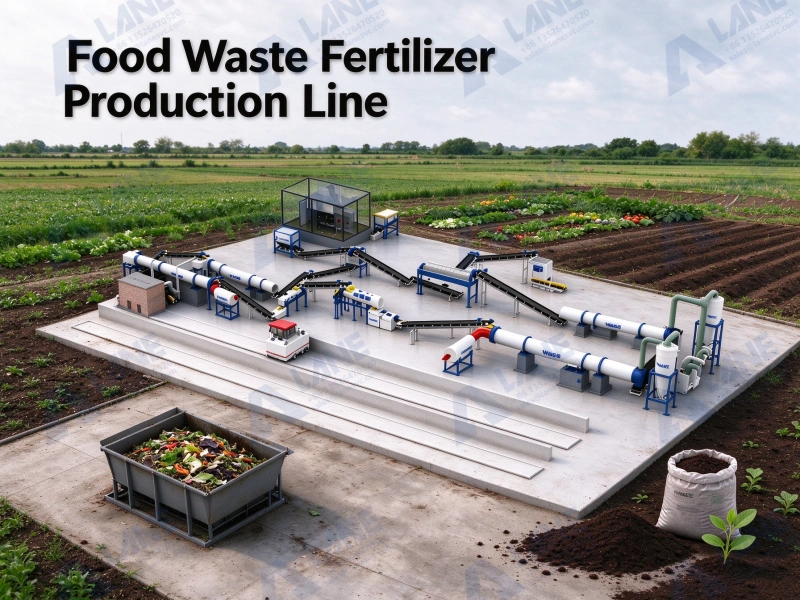
A Small Organic Fertilizer Machine for Manure processes relatively small quantities of animal manure into a usable organic fertilizer product. The equipment can range from a single machine to a small combination of machines.
There is no universal definition of “small.” A farm processing several hundred kilograms per day has very different requirements from a small commercial producer processing several tons per day.
The machine may be used for:
• Composting and turning manure
• Breaking up manure lumps
• Mixing manure with other organic or fertilizer materials
• Producing powder fertilizer
• Producing granular fertilizer
• Screening finished fertilizer
• Preparing the product for packaging
A customer who only wants to make composted manure easier to handle does not necessarily need a granulator. Someone planning to sell uniform fertilizer granules will need more than a machine that simply crushes manure.
When we receive a small-project inquiry at LANE, one of the first things we ask is what the customer actually wants to do with the manure. The answer often changes the equipment configuration more than the word “small” does.
Chicken Manure, Cow Manure, Pig Manure: Why They Need Completely Different Machines
A Small Organic Fertilizer Machine for Manure can be used with different types of livestock manure, but the raw materials should not be treated as identical.
| Manure Type | Physical Characteristics | Processing Consideration |
|---|---|---|
| Chicken manure | High moisture, sticky lumps, high nutrient content | Needs anti-clogging design; condition at machine entry matters more than source |
| Cow manure | High fiber, often mixed with straw or bedding | May need size reduction if large fibers or compacted pieces remain |
| Pig manure | High moisture, difficult feeding when not dewatered | Check moisture before selecting equipment |
| Horse manure | Contains bedding such as straw or sawdust | Equipment selection must account for the actual mixture |
| Mixed manure | Highly variable composition | Test the actual mixture before selecting equipment |
Before choosing a Small Organic Fertilizer Machine for Manure, check:
• Manure source
• Moisture content
• Fiber and bedding content
• Degree of composting
• Presence of stones, metal, plastic, or other foreign materials
• Daily manure availability
The “Wet & Sticky” Challenge: Why Fresh Manure Clogs Standard Mixers
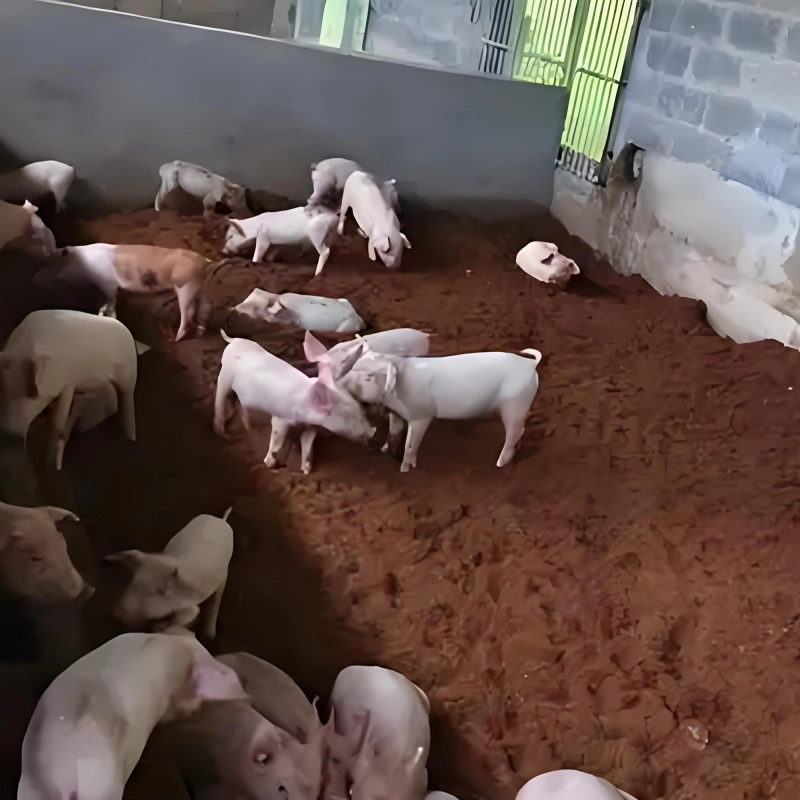
Fresh poultry and livestock manure are notorious for high moisture and high viscosity. Standard industrial mixers and crushers are designed for dry, free-flowing materials, not for the paste-like consistency of raw manure.
This is exactly why a Small Organic Fertilizer Machine for Manure must be selected and designed around the actual material it will receive, rather than around general-purpose mixing or crushing equipment.
This is where most small fertilizer projects run into trouble. The machine is not necessarily undersized. The material simply does not behave the way the equipment expects.
A Small Organic Fertilizer Machine for Manure should be designed for the material it will actually receive. Practical design considerations include:
• Anti-clogging auger geometry: Screw flight spacing that widens near the discharge zone prevents material accumulation and compression blockages.
• Self-cleaning contact surfaces: Continuous-shear paddles or scrapers reduce material build-up on drum walls and prevent dead zones where wet manure cakes and hardens.
• High-moisture tolerance: Some systems can process sticky raw inputs with moisture content up to 60%–65% without requiring large amounts of dry bulking agents.
• Consistent feeding: A controlled feeding mechanism is more effective than dumping wet manure into a hopper and hoping for the best.
The 4 Things to Check Before Manure Ever Touches Your Machine
The condition of the manure before it reaches a Small Organic Fertilizer Machine for Manure determines whether the machine operates smoothly or spends most of its time dealing with unstable material.
1. Check the moisture
Moisture affects feeding, crushing, mixing, granulation, and drying. There is no single moisture value that works for every fertilizer process.
If you skip this check, the most common result is a machine that jams, clogs, or produces soft, unstable granules that fail during transport.
2. Allow sufficient composting when required
If the objective is to produce organic fertilizer from livestock manure, composting or another suitable stabilization process may be required. A Compost Turner can help manage the material during composting by turning the manure and improving aeration and uniformity.
A Small Organic Fertilizer Machine for Manure should not be expected to replace the biological stabilization stage.
If you skip this stage and try to granulate fresh manure directly, the product may still smell, may not store well, and may fail to meet basic agricultural requirements.
3. Remove obvious foreign materials
Stones, metal, plastic, ropes, and other foreign materials can create unnecessary wear or blockages. This is especially important for farms that collect manure together with bedding or material from animal housing areas.
4. Check the particle condition
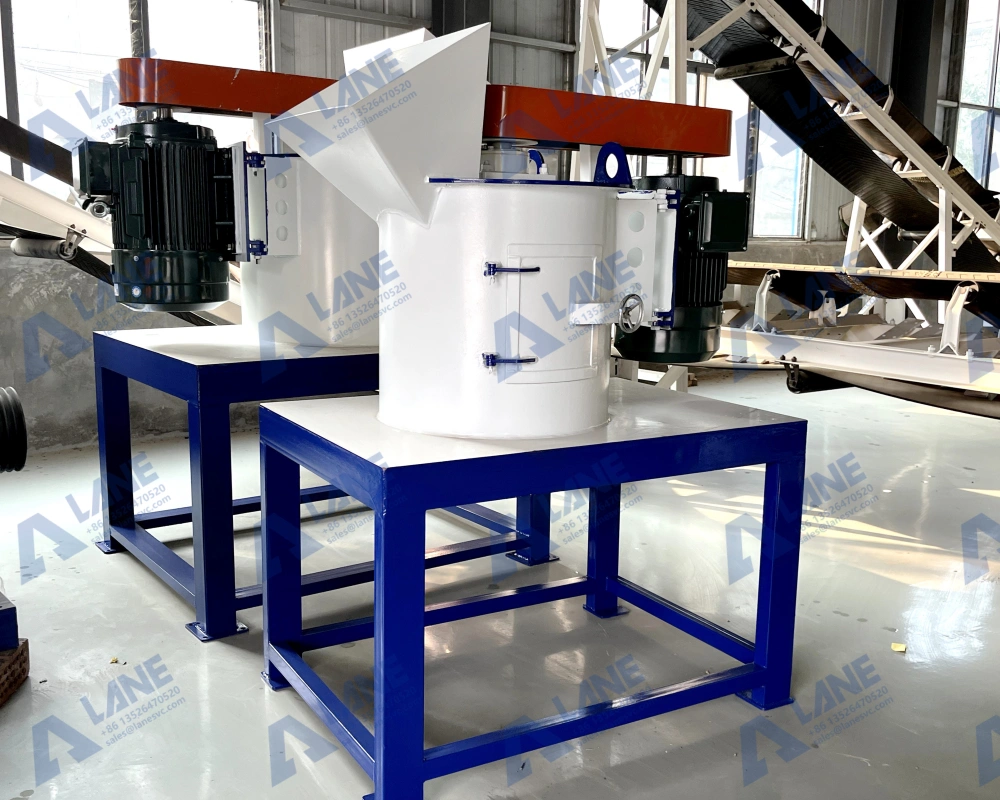
Large compacted pieces may need to be reduced before mixing or granulation. A Vertical Crusher can be considered when size reduction is actually required.
If the composted manure is already loose and uniform, do not add a crusher simply because a crusher appears in a standard fertilizer equipment list.
The “One-Man Farm” Reality: 15-Minute Wear-Part Swaps and Zero-Tool Maintenance
Small-scale fertilizer operations rarely have a dedicated mechanical crew. The equipment is usually operated by the farm owner or a single worker who also handles livestock, feeding, and other daily tasks.
If the machine is difficult to maintain, it will not be maintained. If it is not maintained, it will fail.
A practical Small Organic Fertilizer Machine for Manure should be designed around this reality:
• Quick wear-part replacement: Mixing blades or crusher hammers should be accessible and replaceable with basic hand tools. A realistic target is under 15 minutes per part, without dismantling the entire machine.
• Corrosion protection for high-ammonia environments: Manure gas is highly corrosive. Internal surfaces and structural welds should be protected with coatings or materials designed for high-ammonia conditions.
• Simple controls: A clear, graphical interface showing torque, temperature, and moisture at a glance is more useful on a working farm than a complex PLC with dozens of parameters.
• Accessible design: If a farmer cannot reach the wear zone, clean the sensor, or clear a blockage without calling a technician, the machine will spend more time idle than working.
Which Small Organic Fertilizer Machine for Manure Do You Need?
The right machine depends on what problem you need the equipment to solve. Start with the production requirement, not with a list of machines.
| Processing Need | Recommended Equipment | Main Purpose |
|---|---|---|
| Composting fresh manure | Compost Turner | Turn manure, improve aeration and uniformity during biological stabilization |
| Crushing composted manure | Vertical Crusher | Break compacted lumps and oversized material |
| Mixing manure with other materials | Horizontal Mixer | Combine manure with dry organic materials, fertilizer ingredients, or conditioning materials |
| Producing organic fertilizer granules | Disc Granulator / Flat Die Granulator / Rotary Drum Granulator | Form conditioned material into uniform fertilizer granules |
| Drying wet granules | Rotary Drum Dryer | Reduce excess moisture after granulation |
| Cooling hot granules | Rotary Drum Cooler | Cool and stabilize granules before screening and packaging |
| Screening finished fertilizer | Rotary Screening Machine | Separate qualified granules from oversized and undersized material |
Composting manure
If the manure is fresh and still needs biological treatment, a Compost Turner can be an important part of the setup. The machine is used during composting rather than as a replacement for the complete fertilizer-making process.
For a small farm, the appropriate turner type depends on available space, manure volume, turning method, and how the composting area is arranged.
Crushing composted manure
Once manure has been composted, it may still contain hard lumps or compacted material. A Vertical Crusher can be considered when size reduction is actually required.
If the manure is already fine and loose, do not add a crusher simply because a crusher appears in a standard fertilizer equipment list.
Mixing manure with other materials
A Horizontal Mixer is useful when manure needs to be combined with other organic materials, fertilizer ingredients, or conditioning materials. The mixer needs to provide reasonably uniform distribution rather than simply moving the material around.
Producing organic fertilizer granules
If the final product needs to be granular, the Small Organic Fertilizer Machine for Manure may include a Disc Granulator, Flat Die Granulator, or Rotary Drum Granulator.
The selection depends on moisture, formulation, required capacity, target particle size, and granule strength. Do not choose the largest or most complicated granulator simply because it can produce fertilizer granules.
Screening the fertilizer
A Rotary Screening Machine separates finished-size particles from oversized and undersized material. This is particularly useful when the customer wants a more uniform commercial product.
For a very small farm producing fertilizer mainly for its own use, screening requirements may be much simpler.
Powder or Pellets? The Decision That Doubles or Halves Your Equipment List
Not every customer needs to turn manure into granules.
| Production Route | Typical Equipment Flow | Suitable For |
|---|---|---|
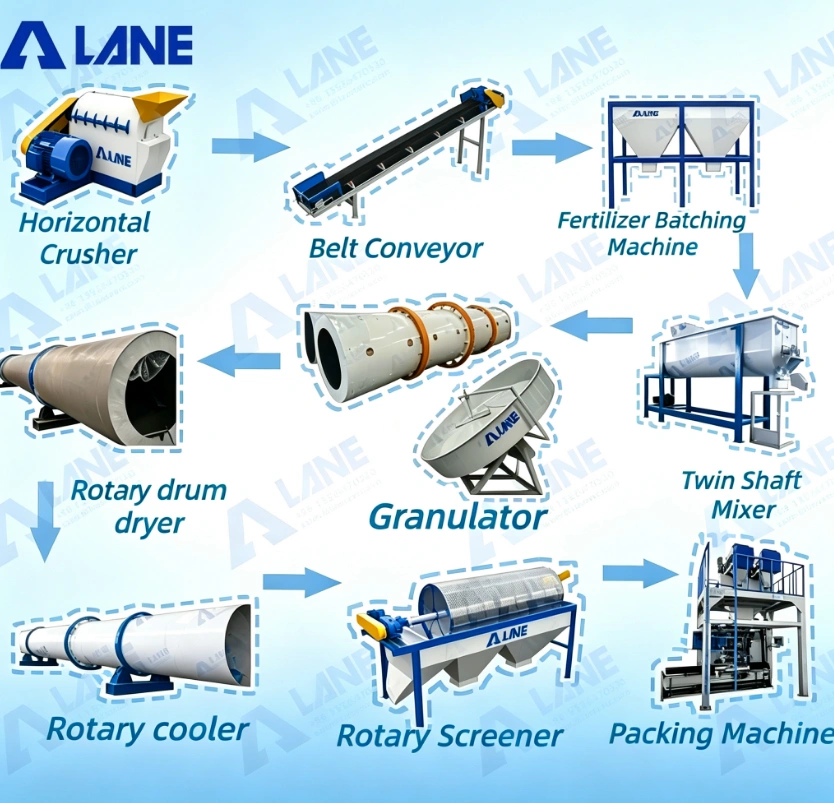
| Powder organic fertilizer | Composted manure → Vertical Crusher → Rotary Screening Machine → Packaging | Farm self-use, local sales, small-scale soil amendment, customers without specific granule size requirements |
| Granular organic fertilizer | Composted manure → Horizontal Mixer → Granulator → Rotary Drum Dryer → Rotary Drum Cooler → Rotary Screening Machine → Packaging | Customers expecting uniform particles, retail sales, commercial fertilizer production |
Powder organic fertilizer
A powder route can be relatively simple when the customer already has composted manure and only needs to make the material more uniform and easier to package.
The customer does not have to invest in granulation equipment if there is no commercial reason to do so.
Granular organic fertilizer
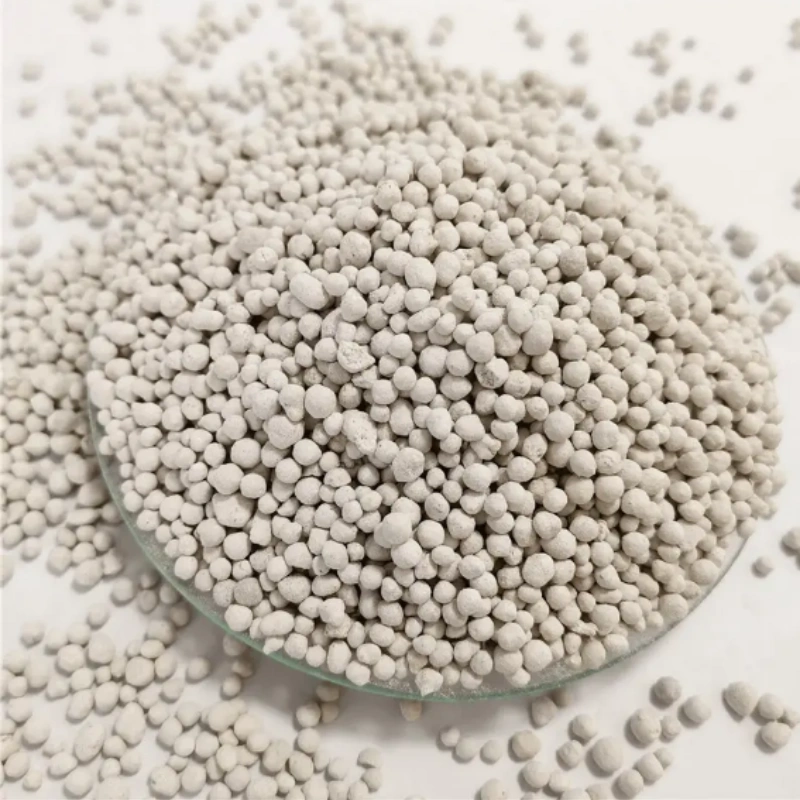
Granular fertilizer requires additional control over particle formation. Granular production normally involves more than one piece of equipment.
The customer also needs to consider the drying requirement. If the granulated material contains too much moisture after forming, it may require controlled drying before cooling and screening.
Which one should you choose?
• If you mainly need a usable organic fertilizer for your own farm, powder production may be enough.
• If customers expect uniform particles that are easier to handle and apply, granular fertilizer may make more sense.
• If you want to sell fertilizer through retail channels, product appearance, particle size, strength, moisture, and packaging become more important.
• If your budget is limited, define the product requirement first instead of buying every machine at once.
The Micro-ROI Blueprint: How 1 Ton of Manure Becomes a Marketable Asset
For many small farms, manure is a disposal cost. It takes up space, requires handling, and may even attract environmental complaints. A Small Organic Fertilizer Machine for Manure changes that equation.
Consider a small operation processing approximately 1 ton of composted manure per hour:
• Raw input: 1,000 kg of composted manure. If the farm pays for disposal, this is a negative-cost input. If stockpiled, it is a zero-cost input generating no return.
• Process cost: Small organic fertilizer equipment typically consumes around 12–15 kWh per ton of processed material, depending on moisture and product form.
• Output: The same 1,000 kg of raw manure produces 300–500 kg of powder or granules, depending on moisture loss and formulation.
• Payback horizon: For internal use, investment can be justified by reduced commercial fertilizer purchases. For local sales, many small operations reach breakeven within 8 to 14 months.
The exact numbers vary by region, manure type, and product form. The principle is consistent: manure that was once a liability can become a marketable asset.
No Complaints, No Fines, No Flies
Manure processing has a reputation problem: odor, flies, and dust. A properly designed Small Organic Fertilizer Machine for Manure can address these concerns directly.
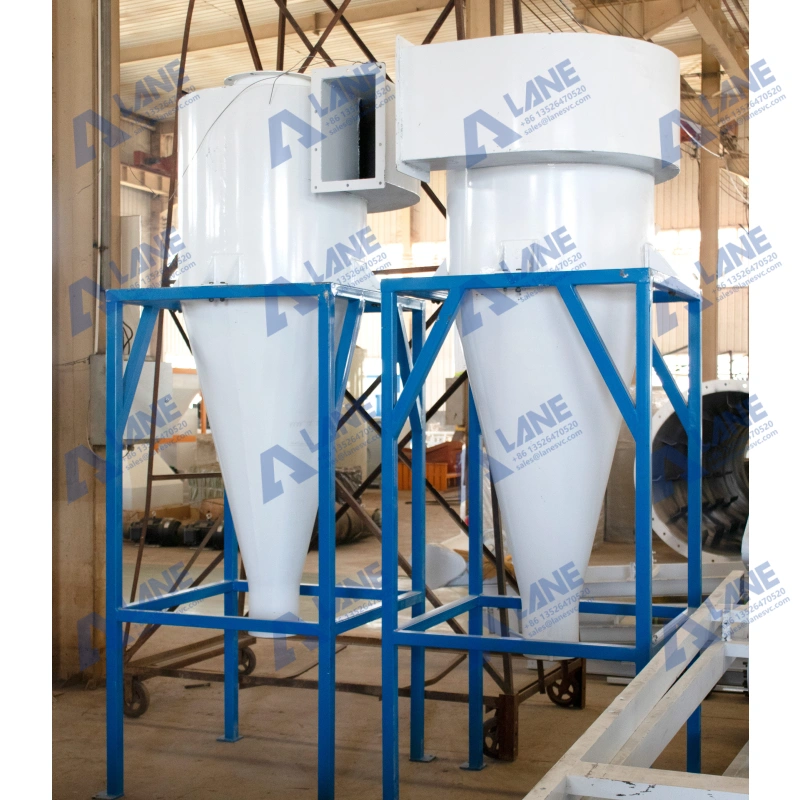
• Odor containment: Sealed or negative-pressure processing chambers trap volatile organic compounds and ammonia inside the system, routing them to an air filtration connection rather than releasing them into the surrounding area.
• Pathogen and vector control: Maintaining a stable thermophilic phase during composting or pre-processing (typically 55°C–65°C) helps kill weed seeds, salmonella, and insect larvae.
• Dust control: Crushing, mixing, and screening stages should include appropriate dust containment or suppression measures, especially when processing dry composted manure.
• Clean discharge: The finished fertilizer should be stable, low-odor, and safe to store near farm buildings or residential areas.
For farms located near residential areas or operating under environmental scrutiny, these are essential for continued operation.
Why No One Can Quote You a “Standard Price” for a Small Manure Machine
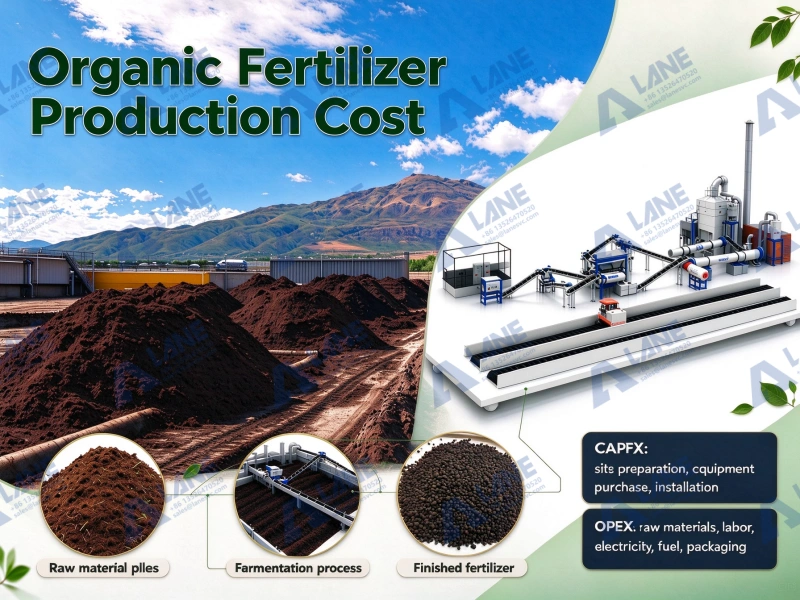
The price of a Small Organic Fertilizer Machine for Manure depends on what the machine actually needs to do. A single crusher cannot be compared directly with a small granular fertilizer system.
Main cost factors:
• Raw-material preparation: Dewatering, composting, storage, conditioning equipment
• Main processing equipment: Crushing, mixing, granulation, drying, cooling, screening
• Material handling: Conveyors, hoppers, elevators, return conveyors
• Packaging: Weighing and bagging equipment for commercial sales
• Site and utilities: Electrical installation, workshop space, ventilation, dust control
A customer processing 500 kg of composted manure per day just for their own farm shouldn’t get the same equipment setup as a business turning out several tons each hour to sell fertilizer commercially.
When LANE puts together a quote, we start by checking the raw material, output volume, fertilizer type and required equipment configuration. Pricing depends on your actual setup, not just because the project is labelled “small”.
Key Issues to Confirm Before Model Selection
When we receive an inquiry for a Small Organic Fertilizer Machine for Manure, we do not start by sending the customer a long equipment list. We first try to understand the material and the production target.
• What type of manure do you have? Chicken, cow, pig, horse, and mixed manure require different handling.
• How much manure is available every day? Actual raw material amount determines equipment size.
• What is the moisture content? Affects feeding, granulation, drying, and overall equipment selection.
• Has the manure already been composted? Fresh manure and stabilized compost are not the same feedstock.
• Do you want powder or granules? Completely changes the required equipment.
• What fertilizer capacity do you need? Hourly capacity determines the size of the main equipment.
• Is the fertilizer for your own farm or for sale? Commercial fertilizer requires more attention to particle size, appearance, strength, moisture, and packaging.
• What is the available site and power condition? A machine may look suitable on paper but be inconvenient if the site cannot accommodate it.
After these points are clear, we can decide whether the customer needs one Small Organic Fertilizer Machine for Manure or a small combination of machines.
For some customers, the correct answer may be a simple crushing and screening setup. For others, it may be a compact granular fertilizer configuration.
FAQ
What’s the best small organic fertilizer machine for manure?
There isn’t one machine that works for all manure projects. The right small organic fertilizer machine for manure depends on what kind of manure you have, its moisture level, compost status, your output needs, and whether you want powder or granular fertilizer.
Can small machines process fresh manure?
Some gear can work with fresh manure if conditions are right. But fresh manure usually needs composting, dewatering or pre-treatment before you turn it into fertilizer.
Can just one machine turn manure into fertilizer pellets?
Normally, a single machine can’t finish all steps from raw manure to sale-ready granules. People sometimes call the granulator the small organic fertilizer machine for manure, but you’ll likely also need crushing, mixing, drying, cooling and screening equipment.
How much manure can a small organic fertilizer machine handle?
Output differs based on machine model and material state. You can work out your actual needs by looking at how much manure you get each day and your planned working hours. Don’t forget to factor in moisture, bulk density, feeding method and your final product requirements.
Does LANE supply small manure fertilizer machines?
Yes. LANE can match equipment to your manure type, moisture content, daily processing volume, fertilizer form and site situation. Based on your project, we can recommend either a standalone small organic fertilizer machine for manure or a matched set of equipment.
Conclusion
When selecting Small Organic Fertilizer Machine for Manure, don’t blindly purchase a product just because it’s labeled “small.”
First, you should base your decision on the type of manure you actually have and the type of fertilizer you plan to produce.
Here are the specific steps for making a purchase:
• Examine your manure
• Determine its moisture content and composting status
• Decide what type of fertilizer you ultimately want to produce
• Calculate the required output
• Select only equipment that matches your workflow
• Compare the equipment cost with your production and sales projections
For small-scale farms, keeping the system simple is usually the wisest choice. If you operate a small commercial fertilizer business, a more comprehensive system may be more appropriate.
The purpose of small-scale organic fertilizer equipment is not to cram a large amount of equipment into a cramped workspace, but to provide sufficient processing capacity to convert manure into stable organic fertilizer while avoiding wasting money on equipment that isn’t truly necessary for your project.