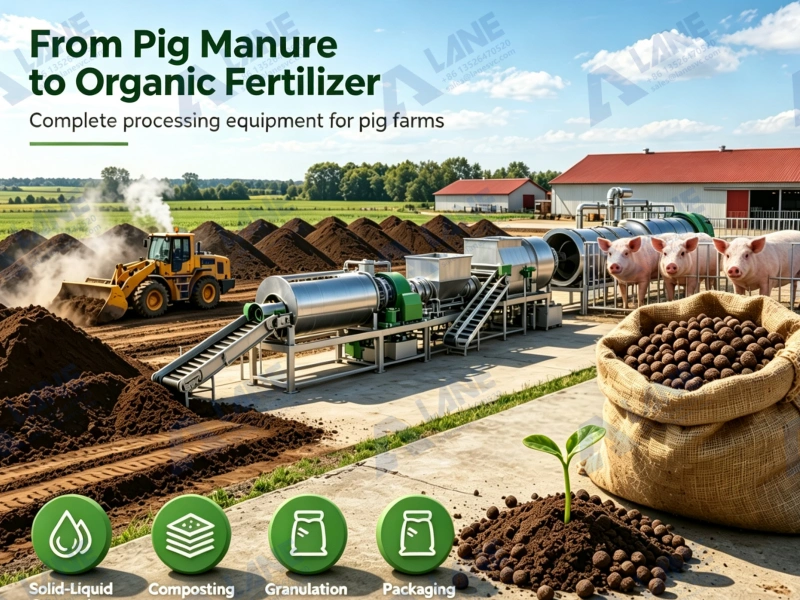
Potash Drying Process: How to Dry Potash for Efficient Fertilizer Production?
Potash does not become a marketable fertilizer material immediately after it is mined. Depending on the mining method, ore characteristics, and final product requirements, the material may pass through crushing, separation, debrining, dewatering, drying, screening, compaction, or granulation before reaching the finished-product stage.
Among these operations, the Potash Drying Process is particularly important because the remaining moisture can affect storage, transportation, feeding, granulation, and final product quality. After mechanical dewatering removes a large portion of the free water, thermal drying is used to remove the remaining moisture and bring the product to the required specification.
For fertilizer applications, the required moisture level depends on the potash source and final product. Potash feedstock used for fertilizer production typically needs to be below 0.5% moisture, although individual producers may specify different targets.
The objective of the Potash Drying Process is therefore not simply to heat the material. A properly designed system must remove moisture efficiently while maintaining particle quality, limiting caking and attrition, and providing stable operation at the required production capacity.
Why Is the Potash Drying Process Important?
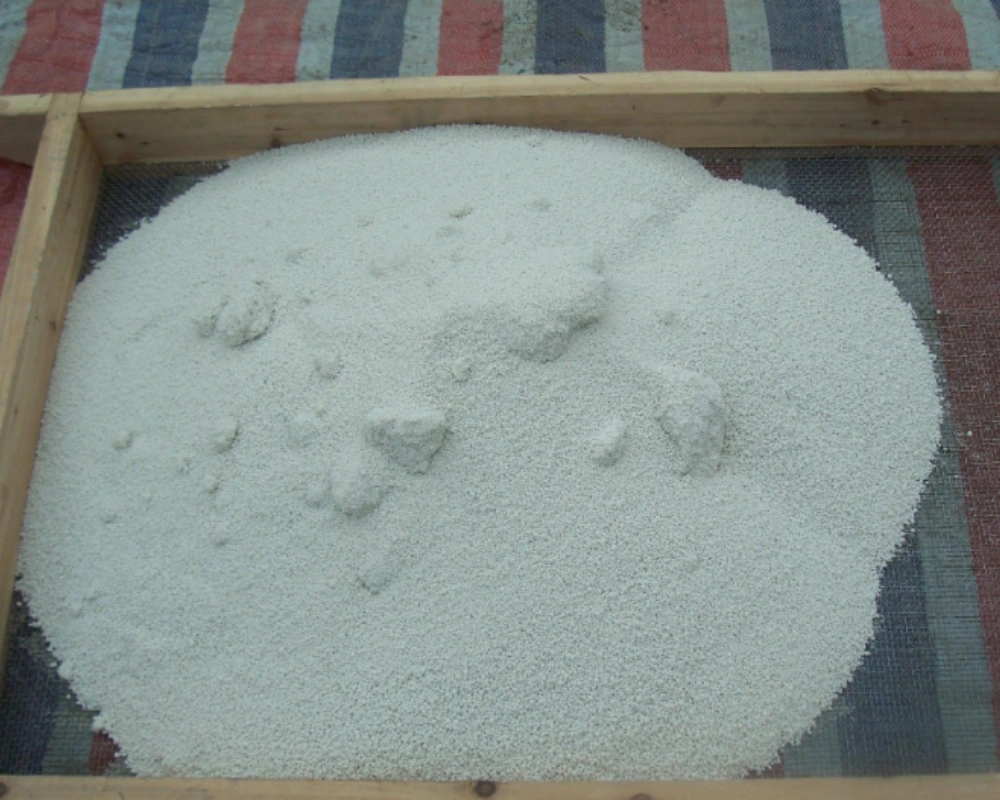
Potash has a tendency to cake or agglomerate when excessive moisture remains in the material. This becomes particularly problematic when the product has to be stored, transported, or accurately fed into another fertilizer process.
The Potash Drying Process helps control these problems by reducing residual moisture before the material reaches storage or downstream processing equipment.
> Reducing Caking During Storage
Moisture can cause individual potash particles to adhere to one another and gradually form larger lumps. Once these agglomerates become hard, they can interfere with discharge from storage bins and may require additional crushing or screening.
A controlled Potash Drying Process reduces the amount of moisture available to promote caking. This is particularly important when potash will be stored for an extended period before being processed into fertilizer.
> Improving Flowability
A fertilizer production line depends on stable material flow. Potash needs to move consistently through feeders, conveyors, mixers, granulators, screens, and other equipment.
If moisture is too high, the material may become sticky or form agglomerates. This can lead to irregular feeding and blockages.
By reducing moisture to the required level, the Potash Drying Process helps produce a more uniform and free-flowing material.
> Reducing Transportation Weight
Drying also has a direct logistics advantage.
Water adds weight but does not contribute to the commercial value of the potash product. Removing unnecessary moisture before transportation means that a larger proportion of the shipped weight consists of usable product.
For large-scale potash operations, this can make the Potash Drying Process relevant not only to product quality but also to transportation efficiency.
Where Does the Potash Drying Process Take Place?
The exact location of drying depends on the potash processing route, but thermal drying commonly follows mechanical dewatering or debrining.
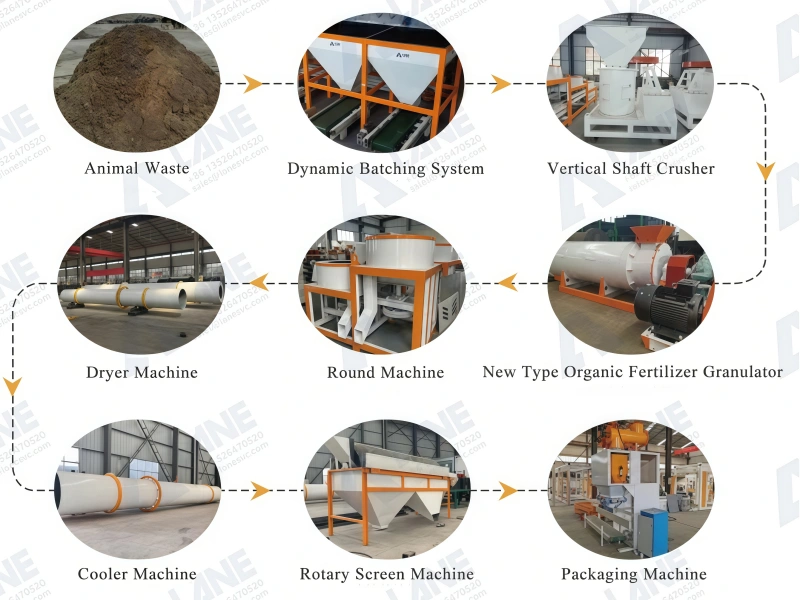
A simplified processing sequence can be expressed as:
Mining → Crushing and Separation → Dewatering/Debrining → Potash Drying Process → Cooling → Screening → Storage or Further Processing
Canadian government documentation describes screen-bowl centrifuges as commonly used in the potash sector to remove water or brine from flotation concentrates. The semi-dried product is then sent to a thermal drying stage to remove the remaining moisture.
This separation between mechanical dewatering and thermal drying is important.
A centrifuge or filter removes free liquid without requiring the energy needed to evaporate it. The dryer then handles the remaining moisture.
Consequently, an efficient Potash Drying Process should be designed together with the upstream dewatering system rather than treating the dryer as an isolated machine.
How Does the Potash Drying Process Work?
The basic principle is straightforward: heat is transferred from a hot gas stream to the wet potash, causing water to evaporate from the particles. The moisture-laden gas then leaves the drying system through the exhaust section.
In industrial applications, however, the actual Potash Drying Process involves controlling several variables simultaneously.
The feed moisture, particle size, material temperature, production rate, residence time, gas temperature, and airflow all influence the final result.>
> Feeding Wet Potash Into the Dryer
Stable feeding is essential for consistent drying.
If the feed rate suddenly increases, the amount of moisture entering the dryer also increases. If the incoming material becomes wetter than expected, the thermal load rises even if the production rate remains unchanged.
A properly engineered Potash Drying Process therefore starts with a realistic feed specification rather than relying only on the rated capacity of the dryer.
> Heat Transfer and Moisture Evaporation
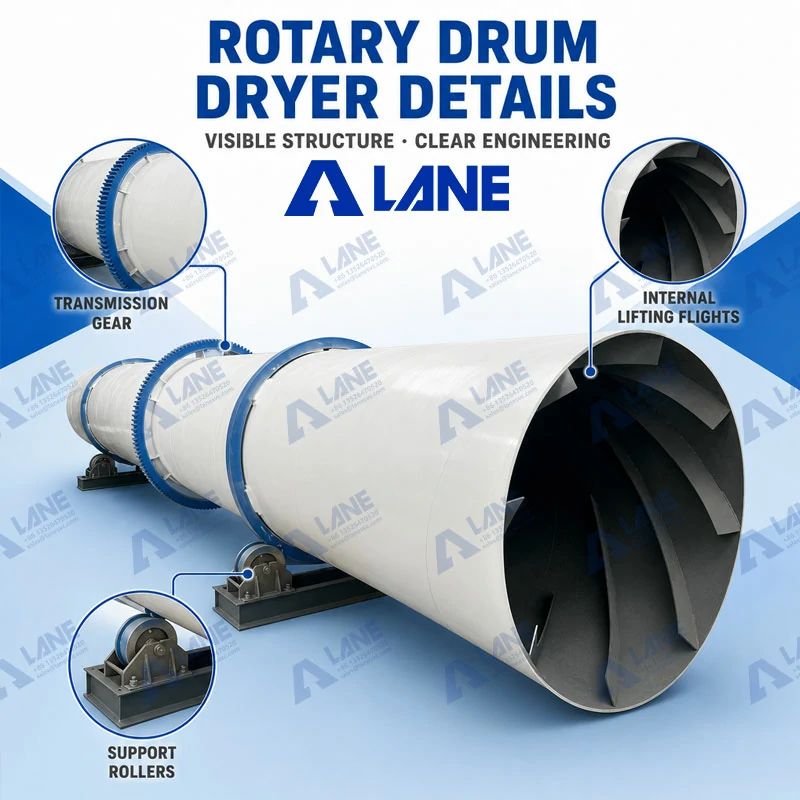
Inside a rotary dryer, internal flights lift the material and shower it through the hot gas stream.
This cascading movement increases contact between the solid particles and drying gas, improving heat and mass transfer while continuously moving the product toward the discharge end.
Rotary drying technology is already used in potash and phosphate processing, with the material being repeatedly lifted and dropped as the drum rotates.
> Controlling Residence Time
The material should remain inside the dryer long enough to achieve the required moisture reduction, but excessive residence time can increase energy consumption and particle attrition.
Drum speed, inclination, internal flight arrangement, feed rate, and airflow all influence residence time.
This makes residence-time control an important part of the Potash Drying Process, especially when the product has a narrow moisture specification.
What Moisture Level Should Potash Reach After Drying?
There is no single moisture target that applies to every potash product.
The required value depends on the raw material, product grade, storage conditions, transportation requirements, and final fertilizer application.
FEECO reports that fertilizer-grade potash feedstock commonly requires moisture below 0.5%, while published technical literature and patents describe processes achieving substantially lower levels under particular operating conditions. One documented gas-suspension process, for example, describes reducing potash from approximately 3–6 wt.% moisture to around 0.01–0.1 wt.%.
These figures should not be treated as universal operating specifications.
Instead, the Potash Drying Process should be designed around the customer’s actual required outlet moisture.
Over-drying can consume additional energy without providing a meaningful product benefit, while insufficient drying can increase caking and handling problems.
Potash Drying Process After Fertilizer Granulation
Drying is not limited to mined or processed potash feedstock.
It can also be an important finishing operation after potash has been converted into granular fertilizer.
Potash fertilizer is commonly produced through either compaction granulation or wet granulation. The role of drying differs between the two methods.
> Potash Compaction and the Role of Drying
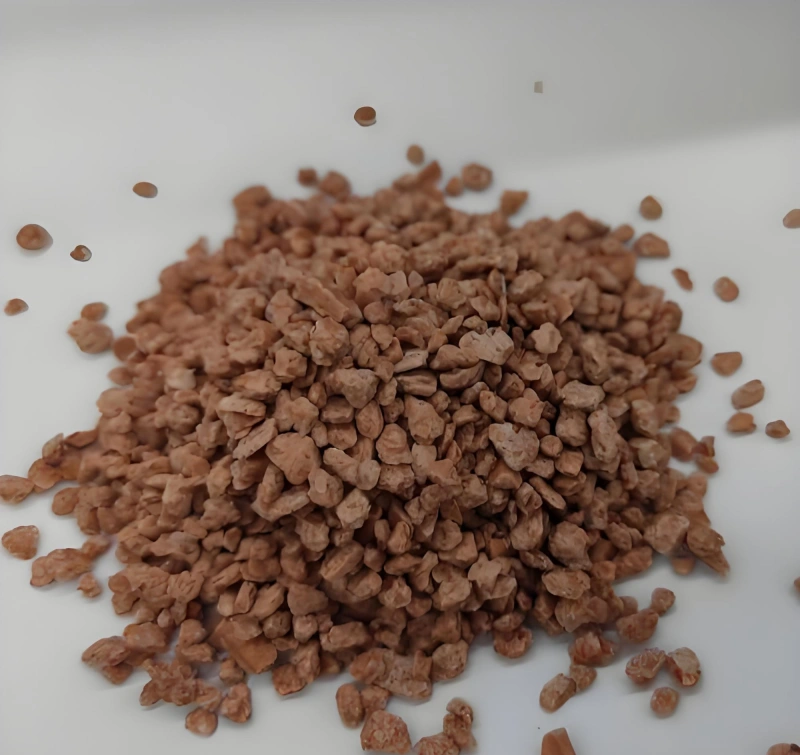
Compaction granulation generally uses a double-roll press to compress dry potash into sheets or flakes. These compacted pieces are subsequently crushed and screened into granules.
Because no liquid binder is normally required, the compaction stage itself does not require conventional drying.
However, compacted potash granules can have irregular edges and may generate fines through attrition.
In some applications, glazing is used to strengthen the granule surface. A small amount of water may be sprayed onto hot particles, after which the water is evaporated.
In this situation, the Potash Drying Process becomes part of the finishing treatment rather than a simple moisture-removal stage.
> Wet Granulation and Pelletizing
Wet granulation is different because a liquid binder or controlled amount of moisture is introduced during particle formation.
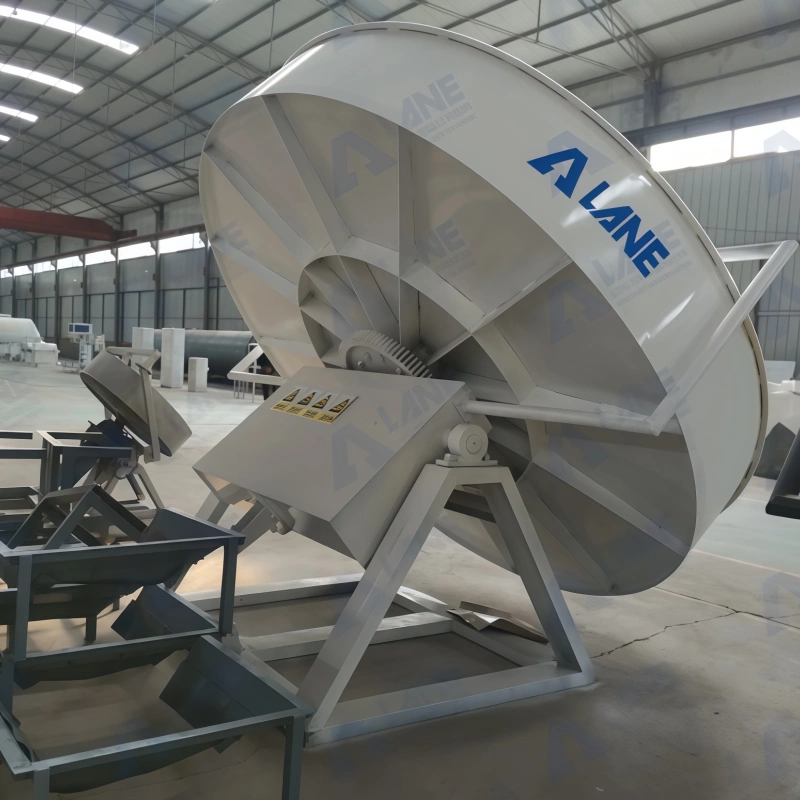
The material tumbles while smaller particles gradually build into larger granules. Disc pelletizers are commonly used for this type of process.
Because additional moisture is introduced, a drying stage is normally required afterward.
A typical route is:
Wet Granulation → Potash Drying Process → Cooling → Screening → Coating → Packaging
The drying stage removes the added moisture and stabilizes the finished granules before they enter storage or transportation.
Which Equipment Is Used in the Potash Drying Process?
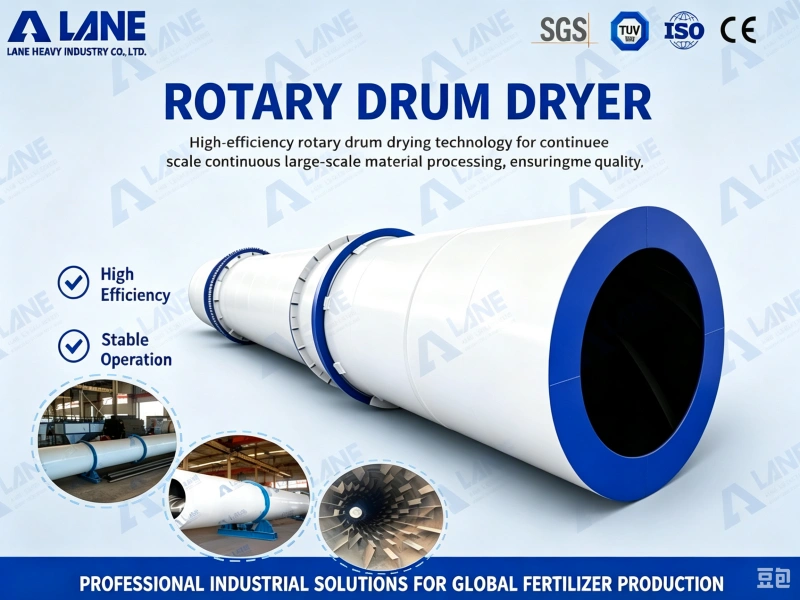
Several industrial drying technologies can be considered for potash, but rotary dryers and fluidized-bed dryers are particularly relevant.
The choice depends on particle characteristics, capacity, feed moisture, target moisture, energy source, and the complete process configuration.
> Rotary Dryer for Potash
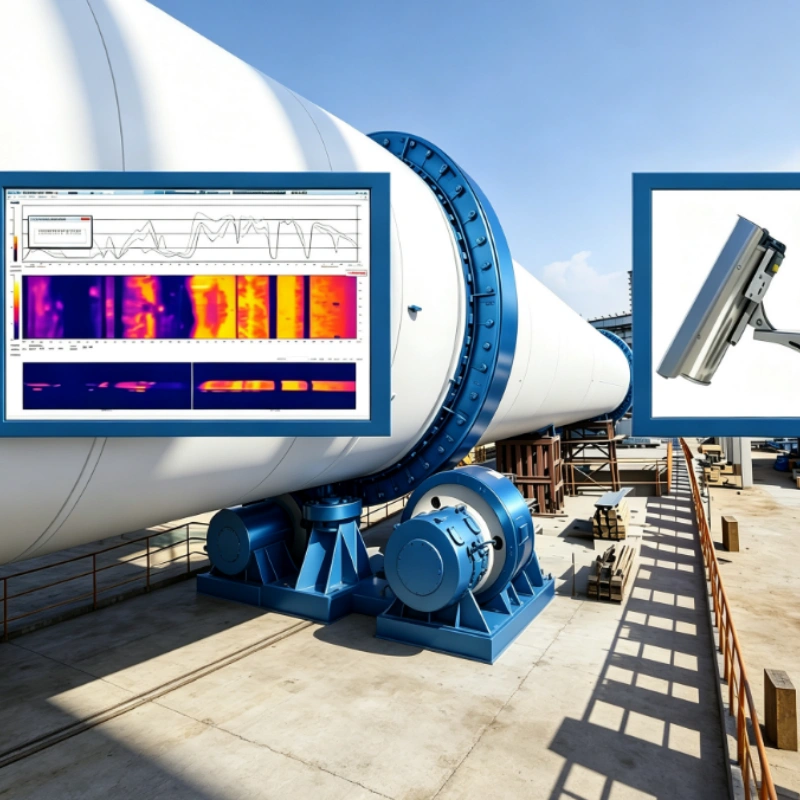
Rotary dryers are widely used for continuous mineral and fertilizer processing.
The rotating drum provides both conveying and mixing, while internal flights repeatedly lift the material into the hot gas stream.
For large-scale applications, the Potash Drying Process can benefit from this robust mechanical design because the equipment can handle continuous feed and relatively broad variations in particle characteristics.
Rotary dryers are also attractive where the process requires high throughput and integration with upstream conveyors, hot-air systems, dust collection equipment, and downstream coolers.
For LANE, this is an important consideration when configuring a drying section. Rather than selecting a rotary dryer only from its nominal capacity, the equipment can be matched to feed moisture, particle size, required outlet moisture, production rate, and the equipment connected before and after the dryer.
> Fluid Bed Dryer for Potash
Fluidized-bed drying is another established approach.
In a fluid bed system, heated air passes upward through a perforated distribution surface and suspends the particles. This creates intensive contact between the drying gas and the material.
Industrial sources confirm that fluidized-bed dryers are used for potash, alongside rotary drying systems.
Research on potash particles also shows that moisture strongly influences their cohesive behavior and drying characteristics. Experimental work has investigated drying at different gas temperatures and found that drying time changes significantly with operating temperature.
Therefore, a fluid bed can be effective in suitable applications, but particle behavior and fluidization characteristics need to be evaluated before selecting this technology.
> Rotary Dryer or Fluid Bed Dryer?
The choice should be based on the complete production requirement rather than the dryer type alone.
A rotary dryer may be preferred when the project requires:
• High continuous throughput
• Robust mechanical construction
• Tolerance to feed variation
• Strong material-handling capability
• Easy integration with other fertilizer equipment
A fluid bed dryer may be attractive when:
• Rapid heat transfer is important
• Particle fluidization is reliable
• Precise process control is required
• The material has suitable particle characteristics
Both technologies can form part of an effective Potash Drying Process, but the final selection should be based on actual material and process data.

Key Design Considerations for the Potash Drying Process
Potash is not an ordinary granular material. Its tendency to cake, its moisture sensitivity, and the potential for particle attrition all influence dryer design.
> Co-Current Airflow
Co-current airflow is often considered for potash drying because the wettest material encounters the hottest gas at the beginning of the dryer.
As the material becomes progressively drier, it moves into a cooler part of the drying environment.
This arrangement can help reduce excessive thermal exposure near the discharge end.
The Potash Drying Process therefore needs to consider airflow direction together with product temperature and moisture reduction.
> Corrosion Resistance
Material selection is another important consideration.
Potash processing environments can expose equipment to moisture and corrosive components. The appropriate construction material depends on the potash composition, operating temperature, moisture level, and process atmosphere.
For a commercial Potash Drying Process, these factors should be considered during engineering rather than after the dryer has already been manufactured.
> Caking and Material Build-Up
Moist potash can stick together and form deposits.
Inside a dryer, excessive build-up can reduce effective heat-transfer surfaces and interfere with material movement.
Internal design, appropriate airflow, feed conditioning, and cleaning arrangements can all help control this problem.
Some industrial systems also use mechanical methods to break up agglomerates before they become larger deposits.
> Particle Attrition
Drying should remove moisture without unnecessarily destroying the product.
Excessive mechanical impact can generate fines, particularly when granules have weak edges or surface defects.
The Potash Drying Process should therefore balance drying intensity with particle durability.
Drum speed, flight design, residence time, gas velocity, and material temperature all contribute to this balance.
How Can the Potash Drying Process Reduce Energy Consumption?
Thermal drying naturally requires energy because water must be evaporated.
One of the most effective ways to reduce the energy demand of the Potash Drying Process is to remove as much free water as possible before thermal drying.
Mechanical dewatering requires less energy than evaporating the same amount of water, so upstream centrifuges and filters can significantly affect the overall thermal load.
After that, the drying system can be optimized through:
• Stable feed rate
• Appropriate drying temperature
• Controlled residence time
• Efficient burner operation
• Proper insulation
• Optimized exhaust airflow
• Variable-speed drives
• Heat recovery where practical
Published research has also investigated the energy and exergy performance of fluidized-bed potash drying, showing that drying conditions such as inlet gas temperature and pulsation can influence process performance.
For an industrial project, energy efficiency should therefore be evaluated across the complete system rather than only at the dryer itself.
What Happens After the Potash Drying Process?
Drying is usually followed by one or more finishing operations.
Hot product leaving the dryer may need to be cooled before it is screened, coated, stored, or packaged.
A typical finishing section can therefore be arranged as:
Potash Drying Process → Cooling → Screening → Coating or Conditioning → Packaging
> Cooling the Dried Potash
Cooling lowers the product temperature after thermal drying.
This is especially useful before storage and packaging because excessive product temperature can contribute to handling problems and affect downstream coating or packaging operations.
A rotary cooler can be integrated after the dryer when continuous processing is required.
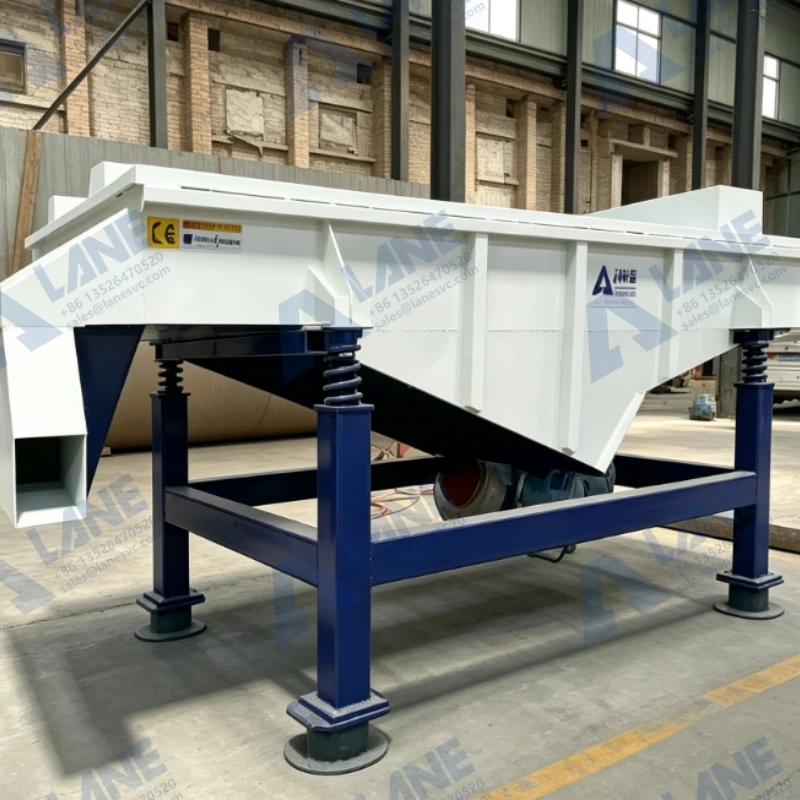
> Screening the Dried Product
Once the product has been dried and cooled, screening can separate particles according to size.
Canadian government documentation describes screening as the stage following potash drying, where mechanical agitation separates different product size fractions.
This means the Potash Drying Process should be considered together with screening requirements when designing the complete finishing line.
> Coating and Packaging
Depending on the product, a coating or conditioning stage may be added to improve storage and handling characteristics.
The final product can then move to an automatic packing machine or bulk loading system.
For LANE, this provides an opportunity to integrate the dryer with cooling, screening, conveying, coating, and packaging equipment instead of treating each machine as an independent unit.
How to Choose Equipment for the Potash Drying Process?
The correct dryer cannot be selected from capacity alone.
Before designing the Potash Drying Process, several basic material and production parameters should be established.
> Production Capacity
The required tonnes per hour directly affects the dryer dimensions, heat requirement, airflow, and material residence time.
A small laboratory or pilot result cannot simply be scaled up by multiplying the capacity. Industrial dryer design requires consideration of heat and mass balance as well as material behavior.
>Initial and Final Moisture
The difference between inlet and outlet moisture determines the thermal drying load.
For example, a feed that has already undergone effective mechanical dewatering will require a different dryer configuration from a material entering with several percentage points of moisture.
> Particle Size and Product Form
The material may enter the dryer as crystals, powder, compacted particles, or fertilizer granules.
Particle size influences surface area, heat transfer, residence time, and the tendency of the material to become entrained in the exhaust gas.
>Downstream Requirements
The dryer should also be designed around what happens next.
If the product enters a cooler, screen, coating machine, or packaging line immediately after drying, the outlet temperature and material flow need to match the requirements of that equipment.
This is where a complete Potash Drying Process design becomes more valuable than selecting a standalone dryer.
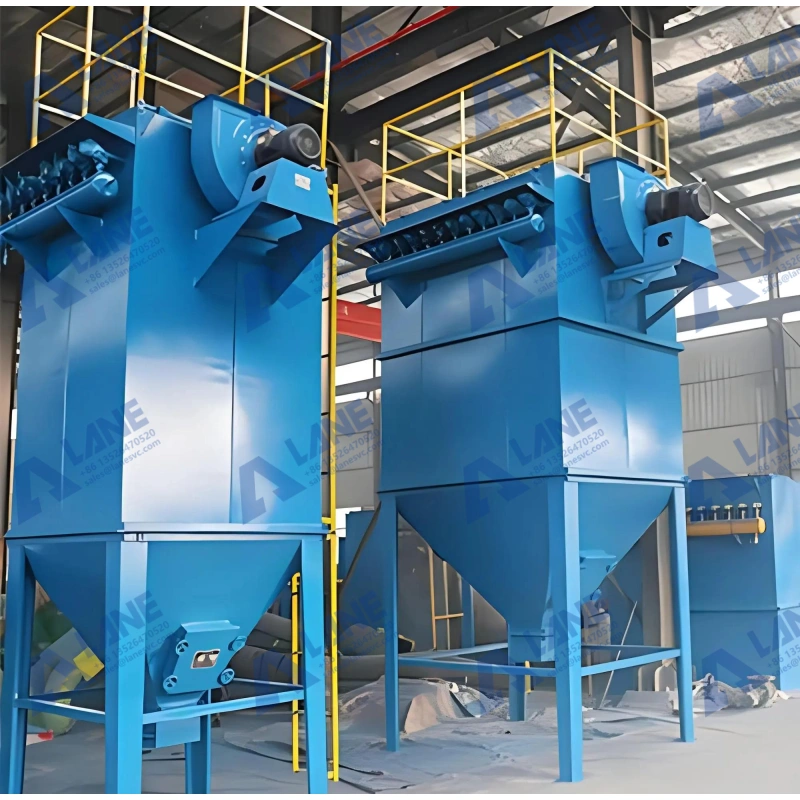
LANE can configure the drying section around the customer’s production conditions, including the rotary dryer, hot-air furnace, feeding equipment, dust collection, conveying, cooling, screening, and packing sections where required.
Why Work With LANE on a Potash Drying Project?
A potash drying system is not simply a standard machine with a fixed temperature and capacity.
Different projects can have different feed moisture, particle sizes, production capacities, fuel sources, and final moisture requirements. These variables affect dryer sizing and the configuration of the complete processing line.
LANE approaches the Potash Drying Process from the perspective of the complete production system.
The design can consider:
• Raw material characteristics
• Required production capacity
• Initial and final moisture
• Heat source
• Dryer configuration
• Cooling requirements
• Screening requirements
• Conveying distance
• Final packing method
This approach allows the drying equipment to work as part of the production line rather than becoming an isolated processing unit.
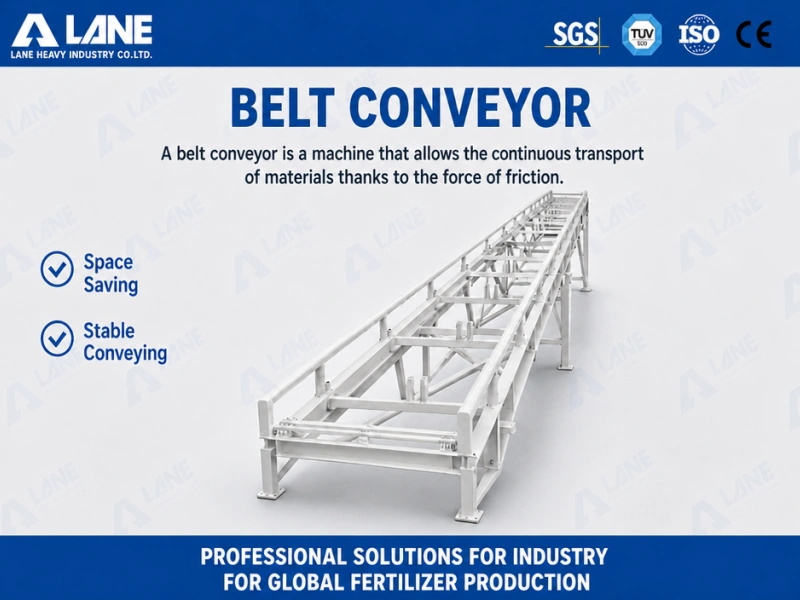
For projects requiring more than drying alone, LANE can also coordinate the connection between the dryer and downstream equipment such as rotary coolers, screening machines, coating equipment, conveyors, and fertilizer packing machines.
Common Questions About the Potash Drying Process
Is drying necessary after potash dewatering?
Yes, in many industrial processing routes. Mechanical dewatering removes a substantial amount of free water, but thermal drying is used to remove the remaining moisture and reach the required product specification.
Can a rotary dryer be used for potash?
Yes. Rotary dryers are an established option for industrial potash processing, particularly where continuous operation and high throughput are required.
Is a fluid bed dryer suitable for potash?
It can be, depending on the particle characteristics and process requirements. Fluidized-bed systems are used in potash applications, but the material’s cohesive behavior and fluidization characteristics need to be considered carefully.
Does wet-granulated potash need drying?
Normally, yes. Because wet granulation introduces moisture through a binder or liquid addition, a subsequent drying stage is generally required before cooling, screening, storage, or packaging.
What information is needed to design a potash dryer?
The most important information includes production capacity, initial moisture, target final moisture, particle size, product form, heat source, operating conditions, and downstream equipment requirements.
Conclusion
The Potash Drying Process is an important part of converting wet or partially dewatered potash into a stable, flowable, and marketable product. It helps reduce caking, improve material handling, lower unnecessary transportation weight, and prepare potash for further fertilizer processing.
The right drying technology depends on the material and the production target. Rotary dryers provide a robust option for continuous, high-capacity processing, while fluidized-bed systems can offer intensive heat transfer when the material is suitable for fluidization. Both approaches have established applications in potash processing.
For a complete fertilizer project, drying should also be considered together with dewatering, cooling, screening, coating, conveying, and packaging. By designing these stages as one connected system, producers can achieve more stable material flow and more consistent product quality.
For LANE, the goal is not simply to supply a dryer. It is to develop a drying configuration that matches the customer’s material, capacity, moisture target, heat source, and downstream process. When these factors are considered from the beginning, the Potash Drying Process can become a reliable and efficient section of a modern potash fertilizer production line.