As a technical engineer who has debugged and optimized dozens of industrial drying lines, I have encountered many on‑site failures related to
rotary dryer temperature control problems. Most production owners only focus on dryer output, ignoring tiny temperature changes during operation. Small temperature deviations will gradually evolve into unstable drying quality, excessive energy waste and frequent line shutdowns.
Stable temperature is the core foundation of all rotary dryer drying work. Whether drying fertilizer granules, biomass materials or mineral particles, the whole heat exchange process relies on fixed hot air temperature. Once rotary dryer temperature control problems occur, the matching relationship between heat energy and material load will be broken directly.
Uncontrolled temperature fluctuation brings four typical production losses. It causes uneven material moisture, prolongs overall drying cycle, raises fuel consumption, and leads to inconsistent finished product quality. Solving rotary dryer temperature control problems is the key to stabilizing long‑term drying efficiency.
Based on years of experience in fertilizer and industrial drying equipment manufacturing, Lane understands that rotary dryer performance depends not only on heating capacity, but also on the coordination between hot air circulation, material feeding and temperature control systems. Most rotary dryer temperature control problems are caused by mismatched system cooperation rather than single equipment failure.
Common Rotary Dryer Temperature Control Problems in Industrial Production
In actual workshop operation, rotary dryer temperature control problems rarely appear in a single form. Temperature instability, insufficient heating, overheating and uneven temperature distribution often appear alternately. These typical faults directly restrict drying line capacity and product qualification rate.
> Rotary Dryer Temperature Fluctuates Frequently During Operation
Real‑time temperature instability is the most common rotary dryer temperature control problem. Many operators find the inlet and outlet temperature jumps up and down without regular rules during continuous production.
The main causes include unstable fuel supply, improper burner parameter adjustment and disordered internal airflow. When the heat source output cannot maintain constant pressure and flow, hot air temperature will keep fluctuating, making material drying state chaotic.
For rotary dryers designed by experienced manufacturers like Lane, the heating system is pre‑optimized according to different material characteristics. The matched fuel supply and air intake structure effectively reduces temperature fluctuation and avoids such basic rotary dryer temperature control problems.
> Rotary Dryer Fails to Reach Preset Drying Temperature
Many factories set standard drying temperature according to process requirements, but the actual operating temperature always fails to reach the target value. This typical rotary dryer temperature control problem leads to incomplete material drying and high residual moisture.
Three major factors cause this fault. Insufficient heating capacity of the
hot blast stove , excessive instantaneous feeding volume, and ultra‑high initial moisture of raw materials will all overload the drying system. The heat energy released per unit time cannot offset material moisture evaporation consumption.
Lane rotary dryer solutions focus on matching heating system capacity with actual production requirements. Each set of equipment is configured with targeted heating power according to user’s material moisture and hourly output, helping avoid insufficient heat transfer caused by unreasonable equipment selection and eliminate this rotary dryer temperature control problem.
> Rotary Dryer Runs With Excessively High Internal Temperature
Contrary to insufficient heating, ultra‑high temperature is also a dangerous rotary dryer temperature control problem. Excessive fuel input, insufficient matching airflow and unreasonable operating parameters will make internal temperature far exceed the safe drying range.
Overheating brings obvious negative impacts. High temperature will burn organic materials, destroy material activity and reduce finished product quality. Meanwhile, long‑term overheating operation causes serious fuel waste and accelerates wear of internal lifting flights and sealing components.
> Uneven Temperature Distribution Inside Rotary Dryer Drum
Many operators only monitor inlet and outlet temperature, ignoring internal temperature uniformity. This hidden rotary dryer temperature control problem easily leads to partial over‑drying and partial undried materials in the same batch.
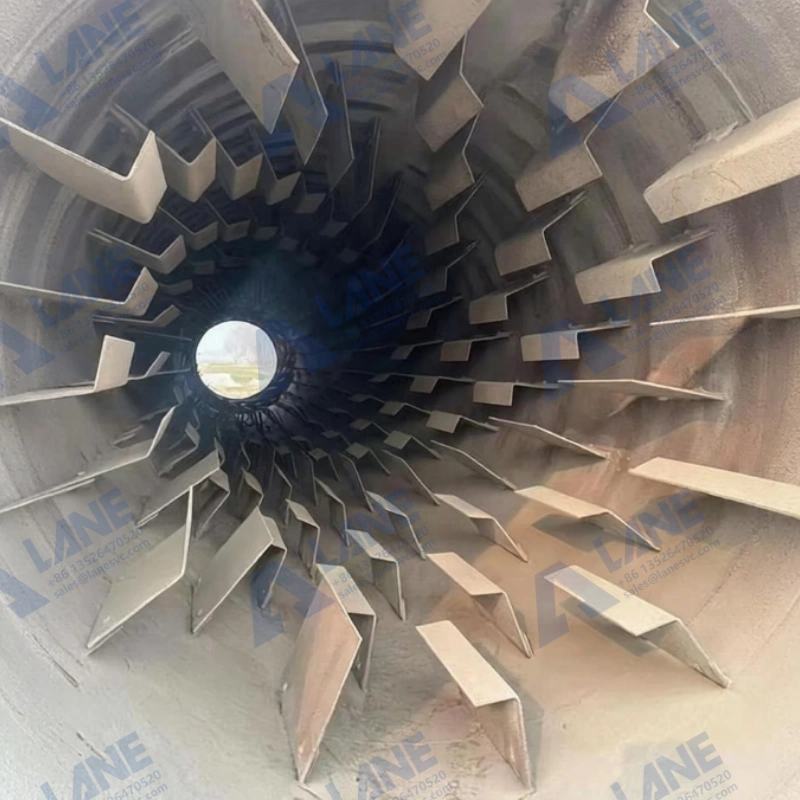
Poor hot air circulation, unreasonable drum rotation speed and mismatched lifting flight design are the core causes. Unreasonable structural design makes hot air gather in fixed areas, while some material running areas lack effective heat supply.
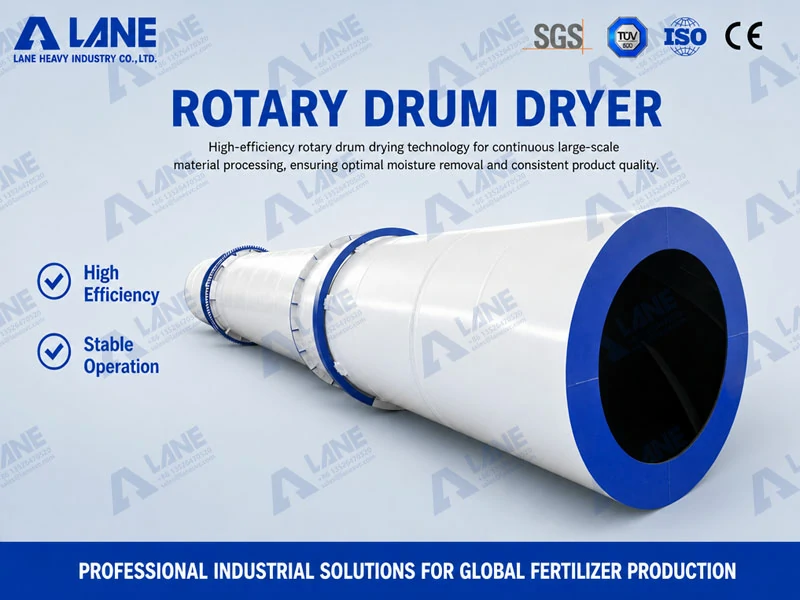
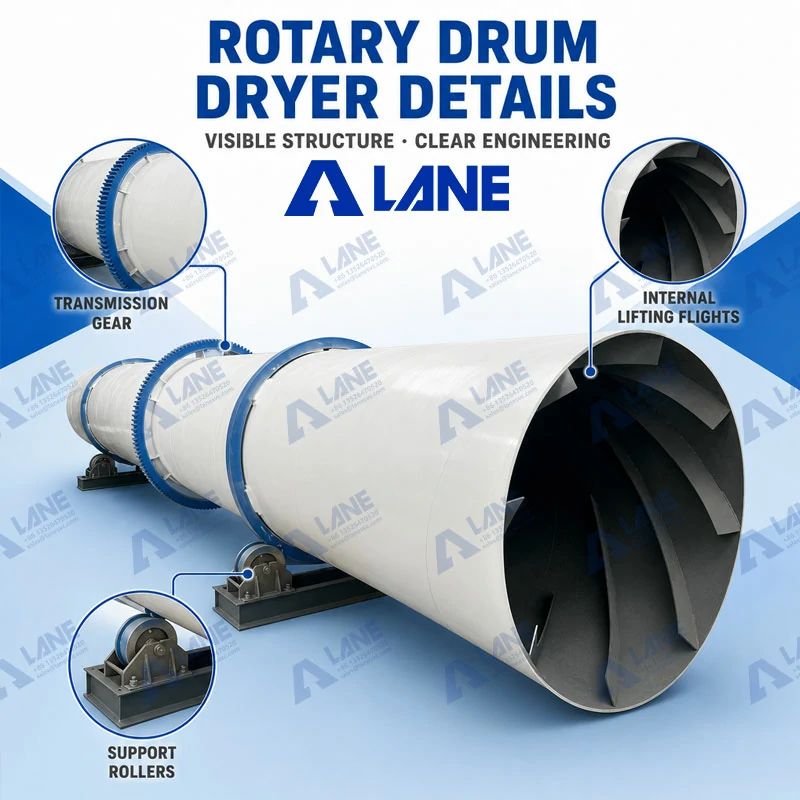
Lane pays special attention to the interaction between drum structure and heat transfer efficiency. Because internal temperature uniformity is closely related to material throwing state and residence time. Optimized lifting flight layout and airflow guiding structure balance internal temperature and solve this hidden rotary dryer temperature control problem.
Root Causes of Rotary Dryer Temperature Control Problems
All rotary dryer temperature control problems are not caused by single operational error. They originate from four core links: heat source supply, airflow adjustment, feeding condition and equipment heat preservation. Systematic optimization is required to completely eliminate hidden dangers.
> Unstable Heat Source Supply Fluctuates Basic Temperature Foundation
The
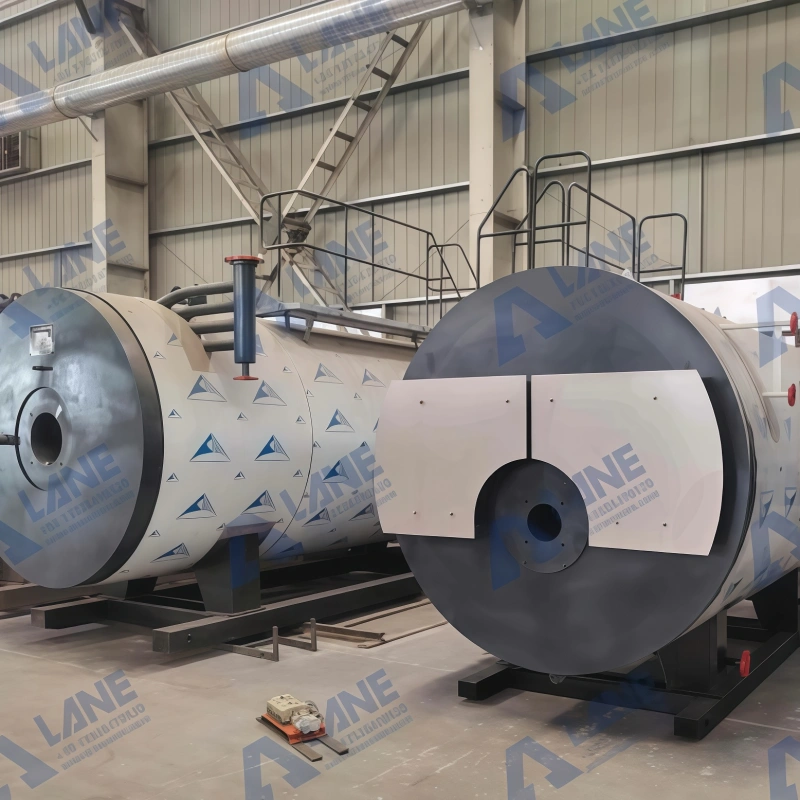
hot blast stove and combustion system are the core heat sources of rotary dryers. Unstable gas supply, blocked burner nozzles and incomplete combustion will cause fluctuating heat output. It directly leads to continuous temperature changes and triggers basic rotary dryer temperature control problems.
> Improper Airflow Adjustment Destroys Heat Exchange Balance
Air volume is the carrier of heat transmission. Excessively large airflow will take away a large amount of heat and reduce internal temperature. Insufficient airflow will cause hot air accumulation and local overheating. Either condition will break the heat and moisture exchange balance and induce rotary dryer temperature control problems.
> Uncontrolled Material Feeding Conditions Increase Drying Load Fluctuation
Material moisture, particle size and feeding speed are dynamic changing factors. Sudden increase of high‑humidity materials or instantaneous feeding surge will instantly increase drying load. The fixed heating system cannot adapt to variable load, resulting in temperature drop and drying failure.
> Poor Equipment Insulation Causes Serious Heat Loss
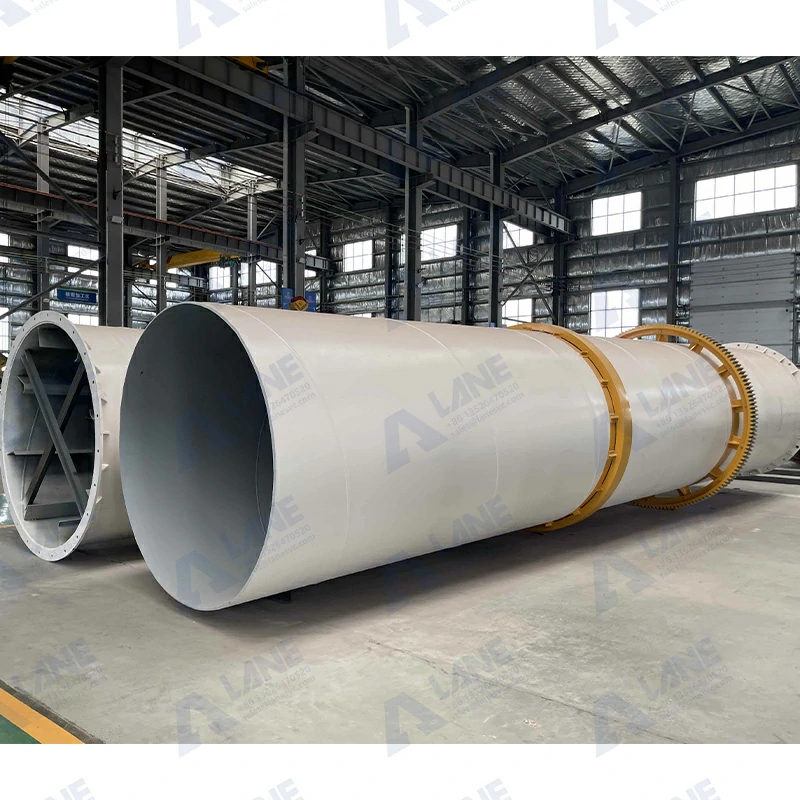
Aged insulation layers and poor flange sealing will cause continuous heat leakage. A large amount of generated heat dissipates through the drum shell instead of acting on material drying. To maintain production, operators have to increase fuel input, which further causes temperature disorder and energy waste.
Practical Solutions to Solve Rotary Dryer Temperature Control Problems
Aiming at the above‑mentioned rotary dryer temperature control problems and root causes, targeted and operable transformation and adjustment methods are summarized below. These on‑site solutions are suitable for most fertilizer, biomass and
mineral drying production lines.
> Install Automatic Real‑time Temperature Monitoring System
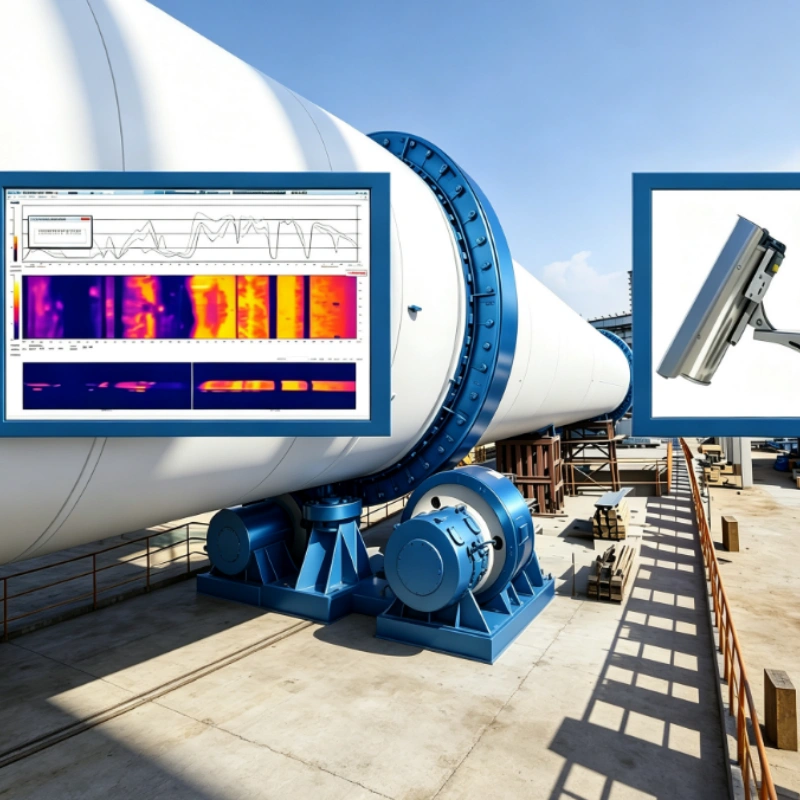
Traditional manual temperature reading has serious hysteresis and error. Installing a multi‑point temperature sensing system inside and outside the drum can monitor inlet temperature, outlet temperature and internal temperature in real time. The system automatically adjusts fuel volume and airflow to avoid sudden temperature changes.
> Optimize Hot Air Distribution and Internal Airflow Circulation
Transform the internal air guiding structure to avoid hot air dead zones and accumulation. Regularly clean air ducts and exhaust equipment to ensure smooth airflow circulation. Balanced hot air distribution effectively solves uneven temperature and local overheating problems.
> Adjust Feeding Speed According to Real‑time Material Moisture
Match feeding volume with drying temperature. When raw material moisture is high, properly reduce feeding speed to reduce drying load. When material moisture is stable, maintain uniform feeding to keep heat load balanced. This method avoids temperature drop caused by overload.
> Regular Maintenance of Burner and Heating System
Arrange regular cleaning and calibration for burners, fuel pipelines and hot blast furnaces. Remove nozzle blockages and carbon deposits to ensure sufficient and stable combustion. Routine maintenance can fundamentally avoid temperature fluctuation caused by insufficient heat source output.
> Upgrade Equipment Insulation and Sealing Performance
Replace aging insulation cotton and repair loose flange seals. Optimize the external thermal insulation structure of the drum to reduce heat dissipation. Reducing heat loss can stabilize internal temperature and lower long‑term fuel consumption.
With customized drying solutions and overall equipment optimization, Lane helps customers completely resolve various rotary dryer temperature control problems. It realizes stable temperature operation while cutting unnecessary energy consumption and improving overall drying benefits.
How Lane Rotary Dryer Solutions Improve Drying Temperature Stability
Different from ordinary modified debugging, Lane solves rotary dryer temperature control problems from equipment design and system matching. Four core design advantages ensure long‑term stable temperature control of drying lines.
> Customized Design According to Different Material Characteristics
Different materials have different heat resistance and moisture evaporation rules. Lane matches exclusive heating power, air volume and drum speed parameters according to user’s materials. Avoid universal model mismatching which easily causes rotary dryer temperature control problems.
> Optimized Internal Heat Transfer Structure
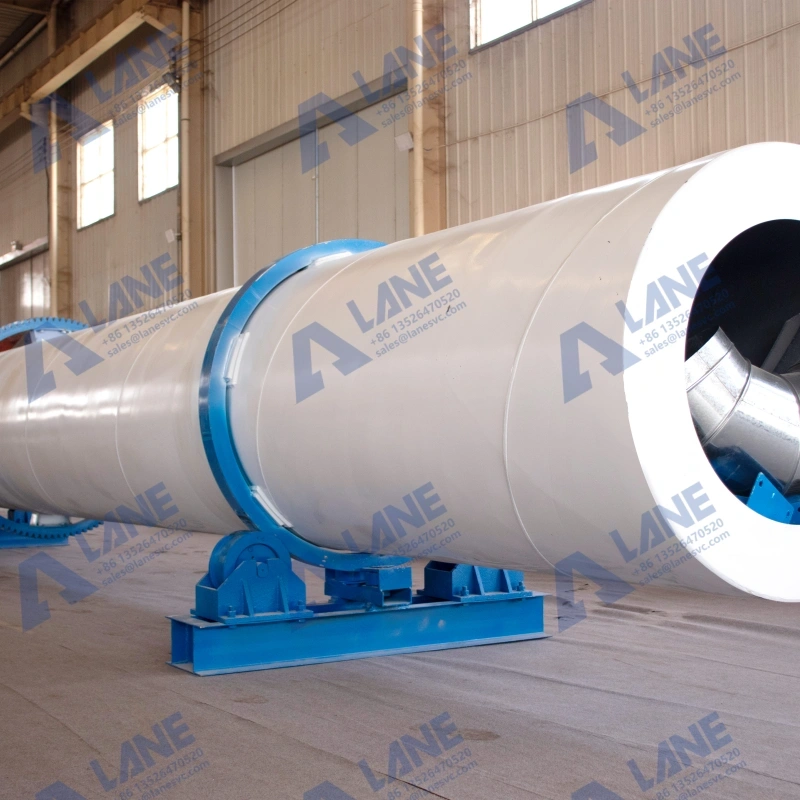
The upgraded multi‑stage lifting flight and air guiding structure realizes three‑dimensional hot air circulation. Materials are fully thrown and contacted with hot air evenly. It eliminates hot air dead zones and solves the problem of uneven internal temperature distribution.
> Accurate Matching of Heating Capacity and Production Load
Each Lane rotary dryer completes thermal calculation according to hourly output and material moisture. The heating system and host equipment are matched one‑to‑one to avoid insufficient heating or excess heat output. It maintains temperature stability under long‑term full‑load operation.
> Multi‑scenario Industrial Drying Adaptability
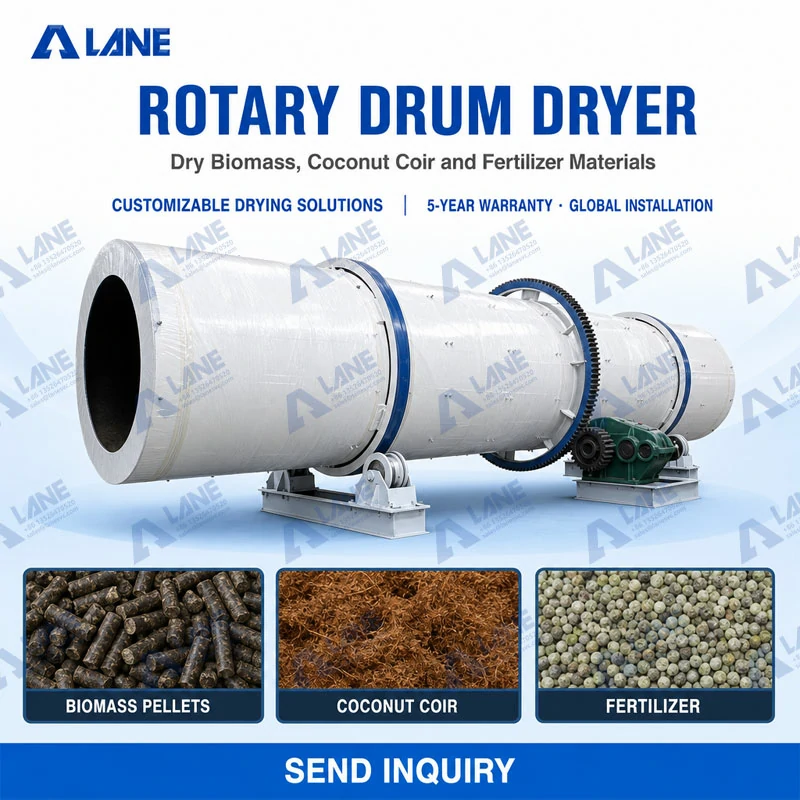
Lane rotary dryers are widely applicable to organic fertilizer, compound fertilizer, biomass, mineral and grain drying. The unified temperature control logic and structural optimization can adapt to complex working conditions and reduce failure rate of rotary dryer temperature control problems in different scenarios.
Daily Maintenance Tips to Avoid Rotary Dryer Temperature Control Problems
- > Long‑term stable temperature control relies on standardized daily maintenance. Simple daily inspections can effectively reduce the occurrence of rotary dryer temperature control problems and extend equipment service life.
- > Operators need to check temperature sensors every week to ensure sensitive and accurate data feedback. Clean dust and material accumulation on the sensor surface to avoid signal deviation.
- > Regularly clean the burner and heat exchanger to remove carbon deposits and blockages. Ensure sufficient combustion and stable heat output.
- > Monitor raw material moisture in real time, and adjust feeding speed and temperature parameters timely according to material changes.
- > Check the tightness of airflow ducts and exhaust fans to ensure unobstructed air circulation and balanced hot air distribution.
- > Inspect drum insulation and sealing parts monthly, replace aging accessories in advance to reduce heat loss.
| Model | Capacity(tph) | Drum Size(mm) | Rotation Speed(r/min) | Steel Plate Thickness(mm) | Lift Plate Thickness(mm) | Power(kw) |
| LARD0808 | 1-2 | Φ800*8000 | 5 | 8 | 4 | 5.5 |
| LARD1010 | 2-3 | Φ1000*10000 | 5 | 10 | 6 | 5.5 |
| LARD1212 | 3-5 | Φ1200*12000 | 5 | 10 | 6 | 7.5 |
| LARD1515 | 5-8 | Φ1500*15000 | 5 | 12 | 6 | 15 |
| LARD1616 | 8-12 | Φ1600*16000 | 5 | 12 | 6 | 18.5 |
| LARD1818 | 12-15 | Φ1800*18000 | 4 | 14 | 6 | 22 |
| LARD2020 | 20-25 | Φ2000*20000 | 4 | 14 | 6 | 37 |
| LARD2222 | 25-30 | Φ2200*22000 | 4 | 16 | 6 | 37 |
| LARD2424 | 30-35 | Φ2400*24000 | 4 | 16 | 6 | 45 |
| LARD2626 | 35-40 | Φ2600*26000 | 3 | 18 | 6 | 55 |
| LARD2828 | 40-45 | Φ2800*28000 | 3 | 18 | 6 | 75 |
| LARD3028 | 45-50 | Φ3000*28500 | 3 | 18 | 6 | 90 |
FAQ About Rotary Dryer Temperature Control Problems
Most on‑site temperature failures and operational confusions of rotary dryers are concentrated in the following five questions. Summarized from actual debugging cases, these answers help operators quickly troubleshoot rotary dryer temperature control problems.
Q1: Why does my rotary dryer have frequent temperature fluctuation?
A1: It is mainly caused by unstable heat source supply, unreasonable burner combustion adjustment, disordered internal airflow, and fluctuating feeding volume. These factors disrupt the heat balance and lead to unstable temperature operation.
Q2: How do you maintain stable temperature in a rotary dryer?
A2: Stable temperature relies on coordinated control of five core indicators: hot air temperature, fuel supply volume, internal airflow, feeding rate and drum rotation speed. Matching all parameters can avoid most rotary dryer temperature control problems.
Q3: What factors affect rotary dryer drying temperature?
A3: Heat source efficiency, airflow circulation state, material moisture and feeding load, equipment insulation performance and internal structural design are the key factors affecting drying temperature stability.
Q4: How does rotary dryer design influence temperature control effect?
A4: Reasonable lifting flight layout and air guiding structure can optimize hot air circulation and uniform heat transfer. Matched heating capacity and drum volume avoid insufficient or excessive heat, fundamentally reducing rotary dryer temperature control problems.
Q5: How to reduce energy consumption while stabilizing drying temperature?
A5: Solving temperature fluctuation can avoid repeated drying and fuel waste. Optimizing airflow distribution, upgrading insulation performance and adopting matched equipment design can improve heat utilization rate and reduce invalid energy consumption.
Conclusion
Temperature control is the core factor that determines rotary dryer operating efficiency, energy consumption and finished product drying quality. Various rotary dryer temperature control problems such as fluctuation, overheating, insufficient heating and uneven distribution will restrict long‑term stable production.
Through optimizing heating system, standardizing airflow management, matching feeding conditions and insisting on daily equipment maintenance, factories can effectively eliminate temperature hidden dangers. Choosing professionally customized
drying equipment solutions like
Lane can further improve heat utilization efficiency, stabilize drying quality, and reduce overall operating costs for industrial drying lines.