Tofu Cat Litter Production Process and Equipment
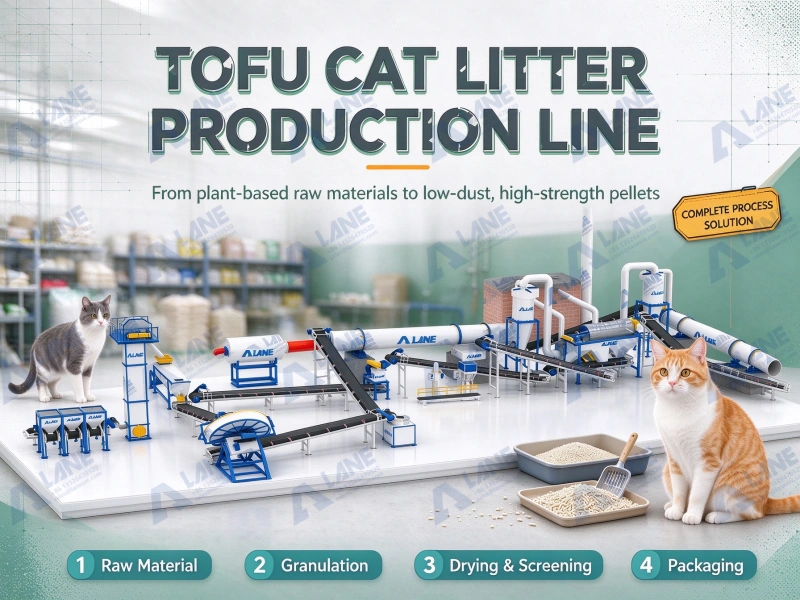
The global pet care market is shifting toward sustainability, and eco-friendly pet products are leading the charge. Among them, tofu cat litter has become the gold standard for cat owners due to its biodegradable, flushable, and dust-free properties. For entrepreneurs, feed mill owners, and pet supply distributors, investing in a high-efficiency tofu cat litter making machine is a highly lucrative business opportunity.
However, setting up a manufacturing plant involves complex machinery decisions. How do you choose the right production capacity? What technical features directly impact litter quality? In this comprehensive guide, LANE will break down the entire manufacturing process, detail essential equipment specifications, and help you select the ideal tofu cat litter making machine to maximize your return on investment
What Makes Tofu Cat Litter Production Different?
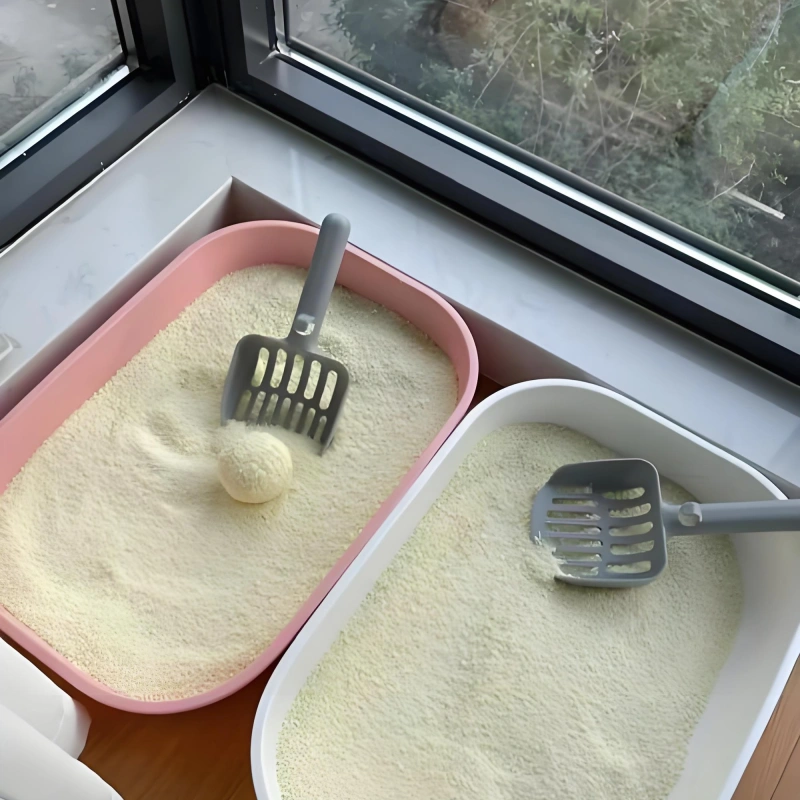
Tofu cat litter is generally made from plant-based materials rather than mineral clay. This changes almost every stage of the manufacturing process.
Soybean residue, for example, can contain significant moisture after tofu or soy milk processing. Its fiber structure is also different from bentonite or mineral materials. A production line designed for bentonite cannot simply be copied and used for tofu cat litter.
A typical tofu cat litter production process has to solve several problems at the same time:
• Moisture variation – wet soybean residue can change the feeding and forming behavior.
• Fiber structure – long or uneven fibers can make stable pellet formation more difficult.
• Binder distribution – insufficient mixing can produce weak or irregular granules.
• Drying – excessive drying can damage pellet structure, while insufficient drying reduces storage stability.
• Particle size – commercial products require controlled granule dimensions rather than random particle sizes.
• Dust generation – excessive fines reduce product quality and increase material loss.
• Packaging stability – the finished product must be cooled and screened before packing.
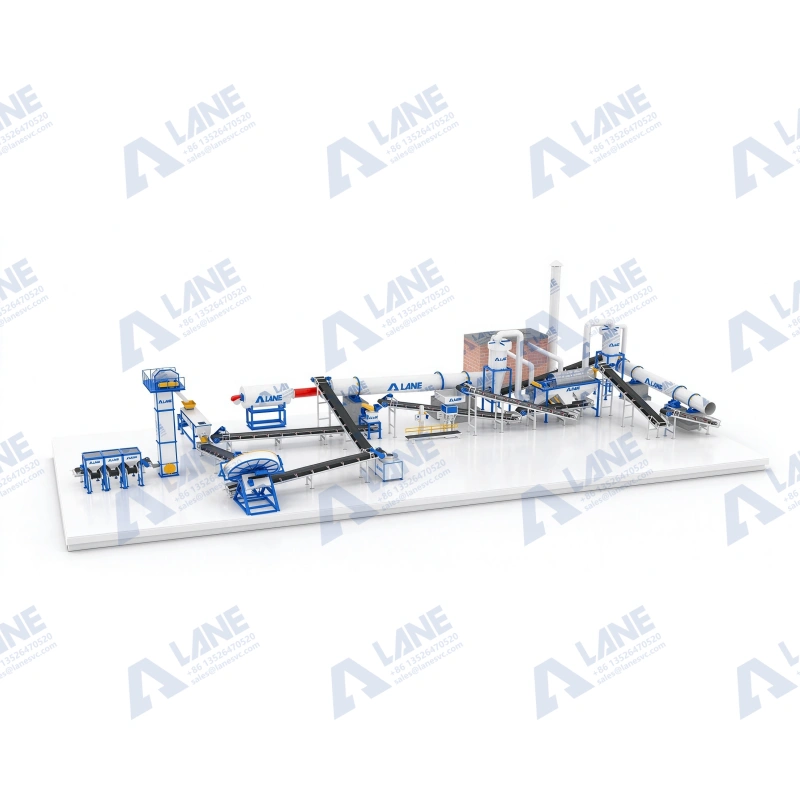
This is why a complete tofu cat litter production line normally includes several interconnected sections rather than relying on a single pellet machine.
Tofu Cat Litter Production Process
A practical tofu cat litter production process can be divided into several stages.
1. Raw Material Preparation
The first step is receiving and preparing soybean residue or other plant-based materials.
Depending on the supplier and production method, the raw material may arrive:
• Fresh and relatively wet
• Partially dried
• Already processed into fiber or powder
• Mixed with other plant-based materials
The first production decision should therefore be based on laboratory or sample testing rather than simply selecting a machine according to the name of the raw material.
For tofu cat litter production, important parameters include:
• Initial moisture
• Fiber length
• Bulk density
• Particle size
• Organic composition
• Natural binding properties
• Contamination level
If the raw material varies significantly from batch to batch, the tofu cat litter production line should have enough adjustment capacity to compensate for those changes.
2. Crushing, Drying and Grinding
Large or wet soybean residues may require size reduction before they can be mixed effectively.
Depending on the raw material condition, the process can include:
Feeding → crushing → drying → grinding → storage
Not every factory needs every machine in this sequence.
For example, a producer purchasing already dried and fine soybean fiber may need much less preprocessing than a factory receiving fresh tofu residue directly from a food-processing plant.
This is one of the most important principles in tofu cat litter production:
The equipment configuration should follow the raw material condition, not the other way around.
3. Mixing and Formula Preparation
After preprocessing, the plant-based material is mixed with binders and functional additives according to the target product formula.
A typical commercial formulation may involve:
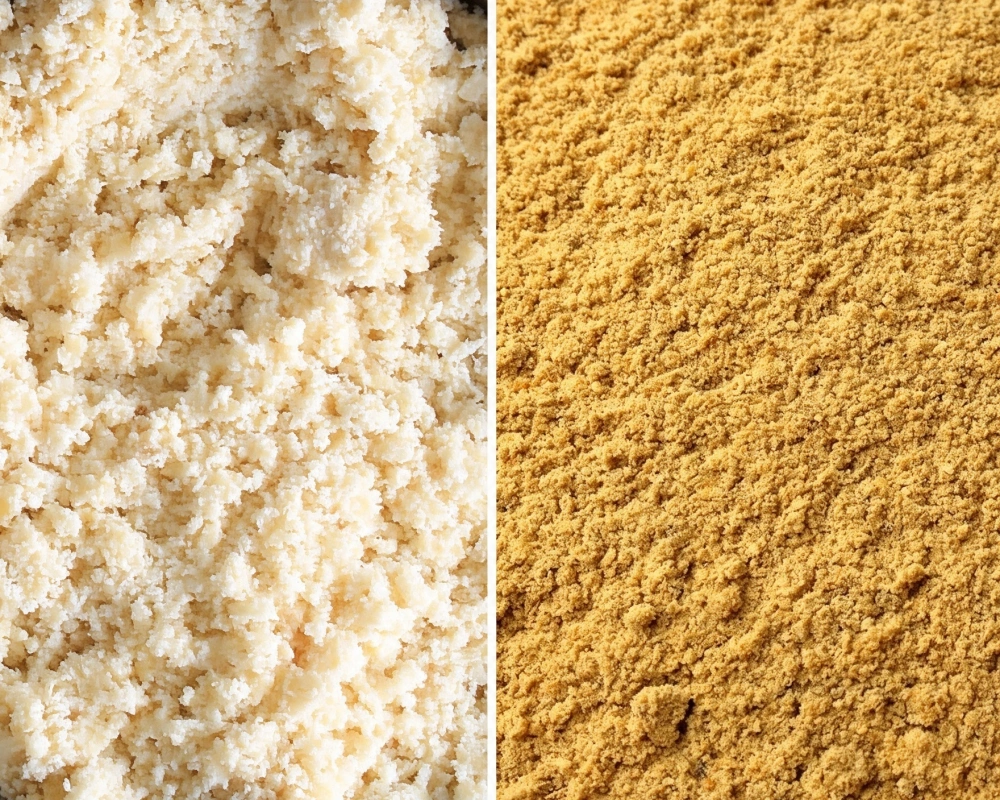
• Soybean residue or plant fiber
• Starch
• Natural binder
• Water
• Optional odor-control ingredients
• Optional functional additives
The mixer must distribute these components evenly.
Poor mixing can create two different problems. Some particles may contain too much binder and become overly dense, while others may not contain enough binder and break easily after drying.
For this reason, mixing is not simply a supporting operation in tofu cat litter production. It directly affects granule strength, absorption behavior, dust generation, and final product consistency.
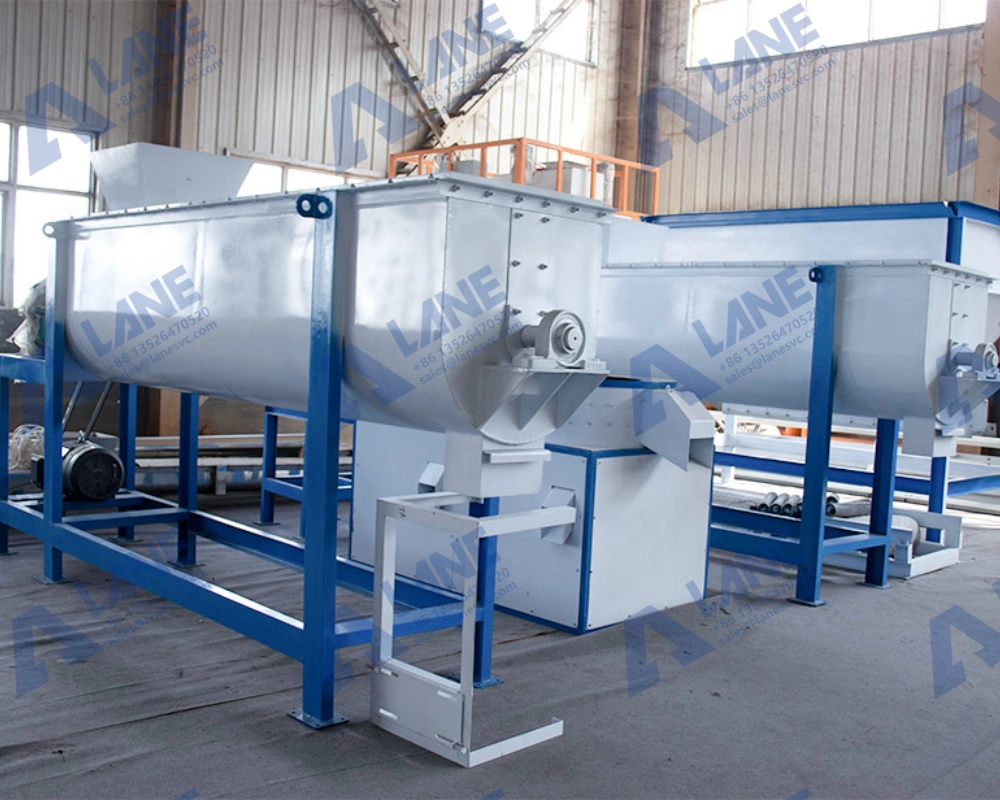
A ribbon mixer, paddle mixer, or other continuous or batch mixing system can be selected according to the formulation and required capacity.
4. Granulation: The Core of Tofu Cat Litter Production
Granulation is where the prepared material becomes a commercial cat litter product.
The forming technology has a direct effect on:
• Pellet diameter
• Pellet density
• Pellet hardness
• Surface quality
• Dust generation
• Production capacity
For plant-based cat litter, pellet mills and extrusion-based forming systems are commonly considered because they can compress fibrous materials into uniform cylindrical granules. Some commercial tofu cat litter production production lines use ring-die pellet mills, while other configurations use specialized extrusion or granulation equipment depending on the formulation.
A typical target may be around 2–5 mm, although the actual specification should be determined by the product being sold rather than copied from another factory. Different pellet diameters can be achieved through appropriate die selection and process adjustment.
The relationship can be simplified as:
Raw material condition → formula → moisture → forming pressure → die specification → pellet quality
This is why choosing a tofu cat litter machine only by its advertised capacity can be misleading.
A machine rated at 2 t/h does not automatically produce 2 t/h of saleable cat litter if the formulation, moisture, die, and screening system are not properly matched.
5. Drying: Where Product Quality Can Be Lost
Freshly formed tofu cat litter normally contains more moisture than the final packaged product can tolerate.
Drying therefore becomes one of the most important stages of tofu cat litter production.
The objective is not simply to remove as much water as possible.
The actual objective is:
Remove sufficient moisture while maintaining pellet strength, shape, absorption performance, and low dust.
Depending on capacity and material characteristics, a factory may consider rotary dryers, belt dryers, or other controlled drying systems. Some commercial tofu cat litter projects use belt drying because the process can provide controlled residence time and relatively gentle handling of formed pellets.
The drying system should be evaluated according to:
• Initial moisture
• Final moisture target
• Production capacity
• Heat source
• Residence time
• Pellet strength
• Energy consumption
• Dust control
For larger tofu cat litter production projects, drying capacity can become one of the main limitations of the whole plant.
A granulator may produce the required amount of pellets, but if the dryer cannot handle the same throughput, the actual production capacity will be determined by the dryer.
6. Cooling and Screening
After drying, the pellets are still warm and may contain undersized or oversized particles.
Cooling stabilizes the product before packaging.
Screening then separates:
• Qualified pellets
• Fine powder
• Oversized particles
• Irregular particles
The qualified fraction continues to packaging, while unsuitable material can potentially be returned to an earlier stage depending on the process design.
This closed-loop approach is particularly useful for tofu cat litter production because reducing fines can improve product yield and reduce unnecessary raw-material losses.
A commercial tofu cat litter production line therefore should not be judged only by the output of its pellet machine.
A better calculation is:
Saleable output = Formed material × drying stability × screening efficiency × acceptable product yield
A basic commercial tofu cat litter production line may include the following sections:
| Production Section | Main Equipment | Main Function |
|---|---|---|
| Raw material handling | Hopper, conveyor, elevator | Feeding and conveying |
| Size reduction | Crusher, grinder | Prepare uniform raw material |
| Drying | Rotary or belt dryer | Reduce moisture |
| Mixing | Ribbon or paddle mixer | Uniform formula distribution |
| Granulation | Pellet mill / granulator | Form cat litter pellets |
| Cooling | Cooler | Reduce pellet temperature |
| Screening | Vibrating or rotary screen | Control particle size |
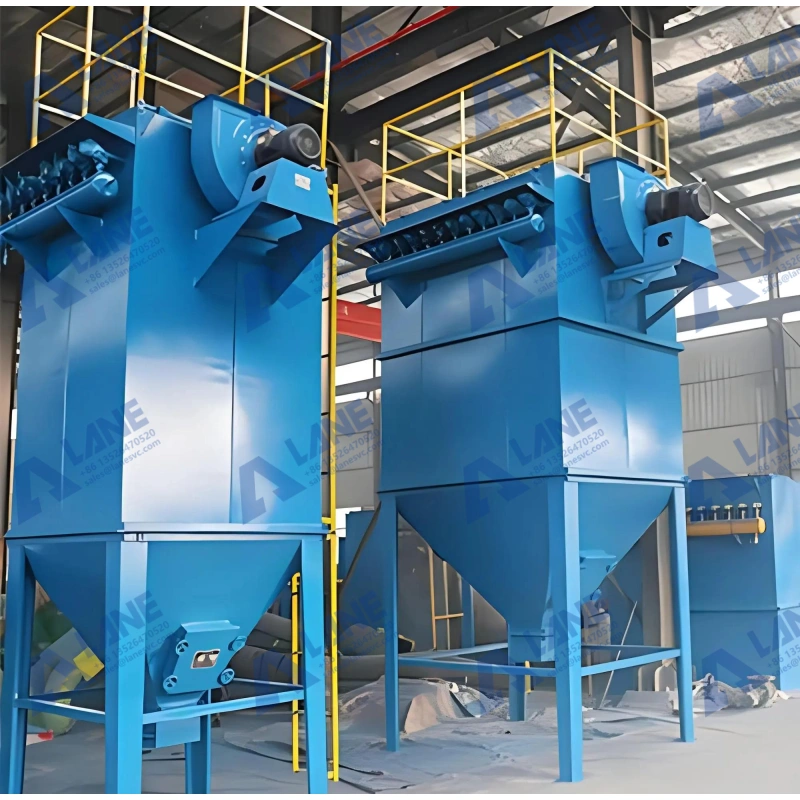
| Dust collection | Cyclone, bag filter | Control fines and dust |
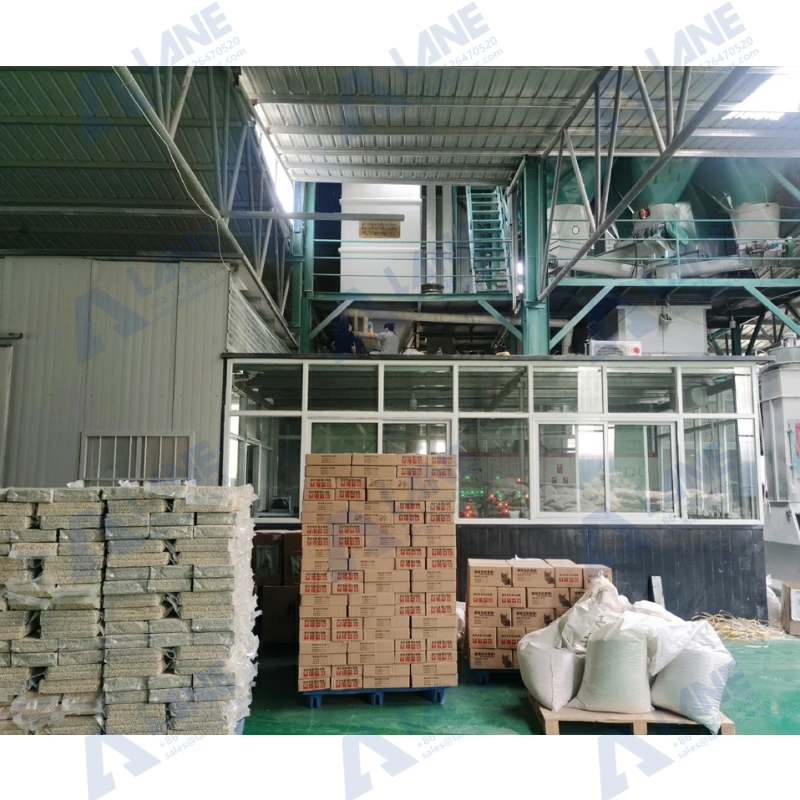
| Packaging | Automatic packing machine | Weighing, filling and sealing |
Why Dust Control Matters in Tofu Cat Litter Production
Dust is often treated as an environmental problem, but it is also a product-quality problem.
If a large percentage of the finished material becomes powder during conveying, drying, cooling, and screening, the factory loses part of its saleable output.
Dust can also accumulate around transfer points and affect working conditions.
For this reason, a commercial tofu cat litter production line should consider dust collection around:
• Raw-material feeding
• Crushing and grinding
• Mixing
• Pellet transfer
• Screening
• Packaging
Cyclones, bag filters, enclosed conveyors, and negative-pressure systems can be combined according to the plant layout.
The exact dust-control design should be determined by the material and local environmental requirements rather than installing the same system for every factory.
How to Choose a Tofu Cat Litter Production Machine
The right tofu cat litter machine depends on the product you want to sell.
Before selecting equipment, a manufacturer should define at least five parameters.
1. Raw Material
Is the material:
• Fresh tofu residue?
• Dried soybean residue?
• Soybean fiber?
• Corn fiber?
• Pea fiber?
• A mixture of several plant materials?
Different materials behave differently during drying and granulation.
2. Target Capacity
The required capacity could range from a small commercial plant to a large continuous production facility.
For example:
1 t/h → 8 t/day at an 8-hour shift
while:
3 t/h → 24 t/day at an 8-hour shift
The actual annual output depends on operating hours, maintenance, seasonal demand, and product yield.
Capacity should therefore be calculated from the finished product requirement rather than the nominal capacity of one machine.
3. Target Pellet Size
A manufacturer should decide whether the product will mainly use:
• 2–3 mm
• 3–4 mm
• 4–5 mm
• Another customized size
Die diameter, cutting configuration, moisture, and forming pressure all affect the final result.
4. Final Moisture
The final moisture target should be established through product testing.
Too much residual moisture can create storage problems, while excessive drying may increase energy consumption and weaken the economics of the process.
5. Packaging Format
The production line should also match the sales model.
A retail producer may require small bags such as 2 L, 5 L, or 10 L equivalents, while wholesale products may use larger packages.
Packaging speed should be matched to the actual line output rather than selected independently.
How to Avoid Common Pitfalls in Tofu Cat Litter Production
Many new factories struggle during their first few months because they focus solely on finding a cheap tofu cat litter making machine rather than focusing on its core engineering configuration. Watch out for these common manufacturing issues:
Pellets Molding Quickly: This happens if your drying tunnel is too short or if the cooling phase is rushed. Ensure your tofu cat litter making machine features precise inline moisture sensors.
High Dust & Broken Litter: If the extrusion pressure of the tofu cat litter making machine pelletizer is insufficient, the pellets will easily crumble during transit. A strong compression ratio in the ring die is mandatory.
Sticky Machinery Blocks: Soybean and starch blends become highly adhesive under heat. A premium tofu cat litter making machine must feature anti-sticking coatings or high-grade stainless steel finishes on all mixing and feeding components for easy cleaning.
By investing in a well-engineered tofu cat litter making machine from LANE, these structural flaws are eliminated through precise automated temperature, speed, and pressure control mechanisms.
Frequently Asked Questions (FAQ)
Q1: What raw materials are required for a standard tofu cat litter making machine?
A: The primary ingredients include bean dregs (tofu residue), pea fiber, corn starch, and natural clumping agents like guar gum. A high-quality tofu cat litter making machine can also process hybrid blends containing wood pulp or bentonite clay.
Q2: Can one tofu cat litter making machine produce different sizes and colors of litter?
A: Absolutely. By simply changing the ring die mold inside the tofu cat litter making machine, you can switch between 1.5mm, 2.0mm, or 3.0mm pellets. Colors and scents are adjusted by adding food-grade dyes and essential oils during the initial mixing stage.
Q3: What is the total power consumption for a 1 ton per hour tofu cat litter making machine line?
A: A standard 1 t/h automated tofu cat litter making machine line generally requires an installed power capacity of approximately 120 kW to 180 kW. This depends heavily on whether you choose gas, electricity, or steam for your drying system.
Q4: How long does it take to install a complete tofu cat litter making machine line?
A: Manufacturing and shipping a custom tofu cat litter making machine takes about 30-45 days. Once it arrives at your facility, LANE engineers can complete the physical installation, system calibration, and initial test runs within 7 to 10 days.
Q5: Does LANE provide custom turnkey factory layouts for this machinery?
A: Yes. LANE provides complete turnkey solutions for your tofu cat litter making machine project. This includes custom workshop blueprints, formula optimization engineering, on-site machine installation, and comprehensive staff training.
Partner with LANE
A successful tofu cat litter production project is not built around one powerful machine. It is built around a process in which raw-material preparation, formulation, granulation, drying, cooling, screening, dust control, and packaging are balanced with each other.
The most important decision is therefore not simply finding the cheapest tofu cat litter machine.
It is choosing a production configuration that matches the raw material, target product, capacity, energy conditions, and market.
For a small producer, a relatively simple semi-automatic system may be enough. For a commercial manufacturer targeting consistent retail quality, a complete tofu cat litter production line with controlled feeding, stable granulation, efficient drying, screening, dust collection, and automatic packaging can provide a much more reliable production base.
That is also why equipment suppliers should be involved before the final machine list is decided. When LANE evaluates a tofu cat litter production project, the focus is not only on individual machines, but on how the complete process will perform once the factory starts running.