Moist Material Crushing: How Moisture Affects Vertical Crusher Performance
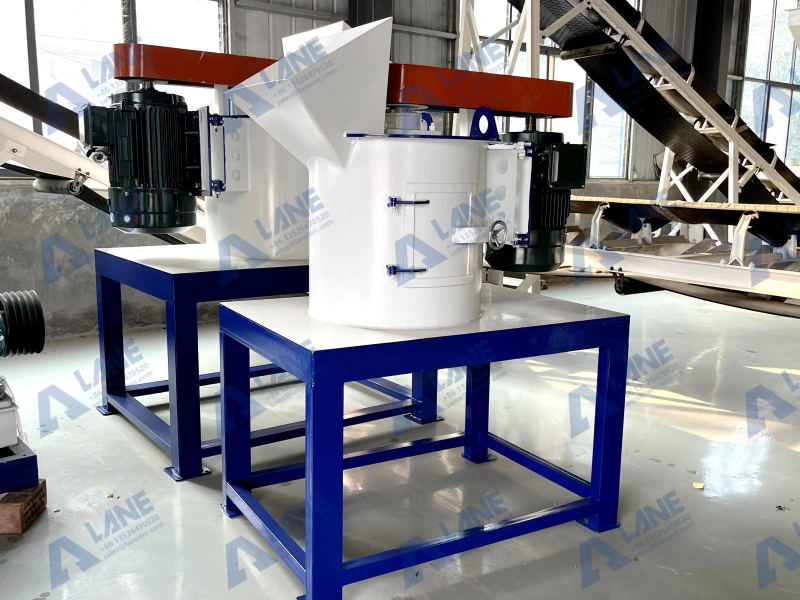
Most organic fertilizer manufacturers struggle with Moist Material Crushing during raw material pretreatment. High humidity livestock manure, fermented sludge and wet straw always stick to the crushing cavity of ordinary crushers, causing frequent blockage and downtime. LANE vertical crusher is tailor-made for high-humidity raw material crushing scenarios, weakening the negative impact of material moisture on crushing efficiency from equipment structure. Many factory operators ignore the correlation between material water content and crusher operation, leading to unstable finished particle size for a long time.
Negative Hazards Brought by Uncontrolled Moisture in Moist Material Crushing
Excessive or unstable water content will bring multiple hidden troubles to Moist Material Crushing work, covering equipment operation, finished material quality and follow-up pelletizing process.
> Cavity Bonding and Blockage Shuts Down Continuous Crushing
Wet raw materials with moisture above 30% will form sticky paste on the inner wall of the crushing shell. Accumulated paste will narrow the discharging channel and finally block the whole cavity, forcing workers to stop the machine for manual cleaning.
> Hammer Head Abrasion Accelerated by Adhesive Wet Materials
Wet viscous materials cling to the hammer head surface during high-speed rotation. The material layer will cause uneven stress on the hammer head, making partial wear far faster than crushing dry mineral raw materials.
> Uneven Discharged Particle Size Disturbs Follow-Up Flat Die Granulator Processing
Local blockage inside the crusher leads to irregular impact and crushing of materials. Coarse lumps and fine powder mix together after discharging, which is the key cause of Flat Die Granulator Blockage in the later pelletizing process.
> Motor Overload Operation Raises Power Consumption Sharply
Blocked crushing cavity increases the rotation resistance of the main shaft. The motor keeps running under overload state, and the unit power consumption per ton of crushed material rises obviously.
> Moldy Residual Materials Corrode Crusher Internal Components
Wet material residue left inside the machine will mildew in short time when production stops. Acid substances produced by mildew will corrode the shell, main shaft and bearing base, shortening equipment service life.
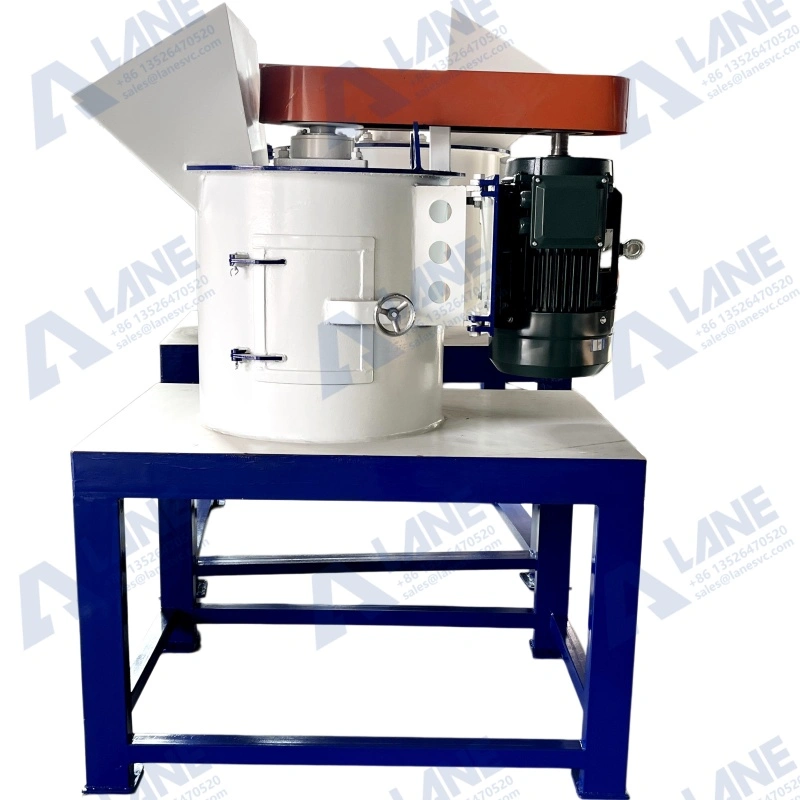
Structural Advantages of LANE Vertical Crusher for Stable Moist Material Crushing
LANE optimizes multiple core components against the pain points of Moist Material Crushing of high-humidity organic raw materials, realizing anti-blockage, low wear and continuous crushing effect.
> Vertical Falling Crushing Path Avoids Material Accumulation at the Bottom
Materials fall vertically from the top feeding port to the bottom discharging outlet. There is no dead corner for material accumulation in the crushing cavity, and wet paste materials can slide down smoothly with gravity.
> Open Maintenance Flap Door for Fast Residue Cleaning
A detachable flap door is reserved on the side of the machine shell. Operators can open the door to scrape off adhesive wet material without disassembling the whole equipment after daily production.
> High Toughness Forged Hammer Head Resists Wet Material Corrosion and Wear
The hammer head adopts integrated forging wear-resistant steel. It can resist the corrosion of organic acid in manure raw materials and keep stable crushing impact force for a long time in Moist Material Crushing.
> Dual Upper and Lower Bearing Seat Fixation Stabilizes High-Humidity Heavy Load Operation
The main shaft is fixed by upper and lower bearing seats to reduce shaking during heavy-load crushing. Vibration reduction prevents wet materials from splashing and sticking on the transmission part.
> Wide Caliber Bottom Discharge Port Reduces Discharging Resistance of Paste Materials
The bottom discharging opening widens the runner space for wet materials. Even raw materials with moisture close to 30% will not form arching blockage at the outlet position.
| Model | Capacity(tph) | Power(kw) | Overall Size(mm) | Input Size(mm) | Output Size(mm) | Main Shaft Diameter(mm) | Grinding Bin Diameter(mm) | Grinding Bin Height(mm) |
|---|---|---|---|---|---|---|---|---|
| LAC-60V | 4-6 | 18.5/4 | 1650*700*950 | 400*500 | 350*350 | φ65 | 600 | 650 |
| LAC-80V | 7-10 | 30/4 | 2100*1200*1100 | 400*500 | 350*350 | φ80 | 800 | 750 |
| LAC-100V | 9-12 | 37/4 | 2500*1300*1100 | 400*500 | 450*450 | φ100 | 1000 | 900 |
| LAC-120V | 12-15 | 55/4 | 1960*1316*2623 | 1000*1200 | φ500 | φ120 | 1200 | 753 |
Reference Water Content Range for Different Raw Materials in Moist Material Crushing
Controlling raw material moisture to the targeted range is the most economical way to optimize Moist Material Crushing effect without upgrading equipment.
> Livestock Manure (Cow Manure, Chicken Manure): Best Moisture 22%–28%
When manure moisture is higher than 28%, mix dry rice husk powder or straw powder to dilute humidity. If moisture is below 22%, spray a small amount of water to reduce flying dust during crushing.
> Fermented Sludge: Best Moisture 25%–30%
Sludge has strong viscosity after fermentation. Do not crush sludge with moisture over 30% directly, or serious cavity bonding will occur inside LANE vertical crusher.
> Crop Straw and Bagasse: Best Moisture 18%–25%
Over-wet straw will wind around the main shaft during crushing. Properly air-dry straw to control moisture, to avoid fiber winding failure of the rotating spindle.
> Compound Fertilizer Return Material: Best Moisture 15%–22%
Return fertilizer contains a lot of salt components. High humidity will lead to salt precipitation and hardening inside the crusher cavity, blocking the discharging channel.
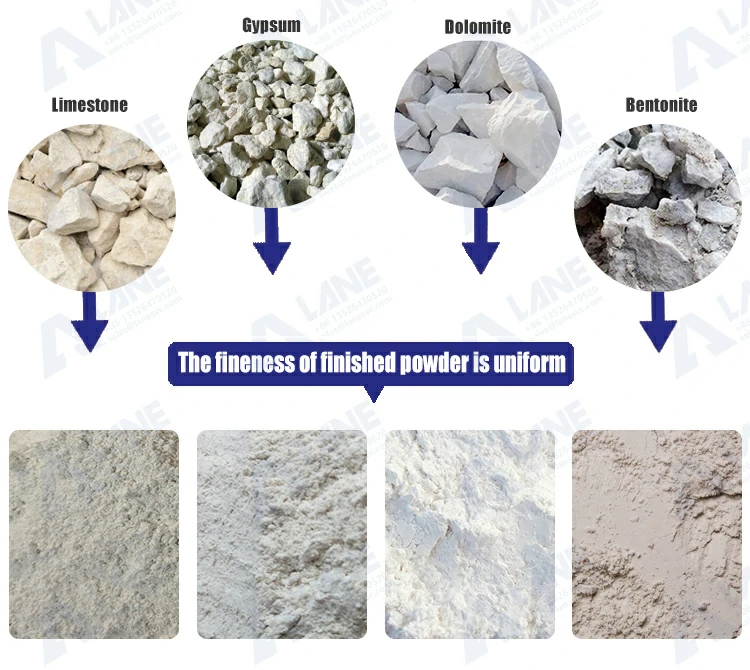
> Mineral Raw Material (Gypsum, Slag): Best Moisture 8%–15%
Mineral materials with moisture less than 8% will produce massive dust. A small amount of humidification can protect the workshop environment and reduce dust wear on the hammer head.
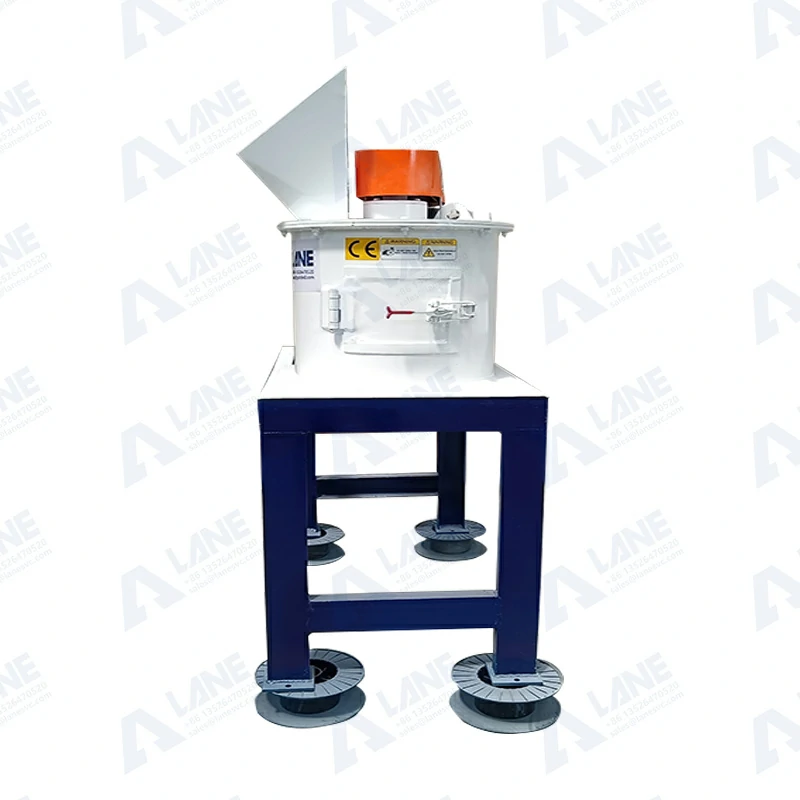
On-Site Operation Steps to Optimize Moist Material Crushing Efficiency
Cooperate standardized operation steps with LANE vertical crusher to maximize the anti-blockage advantage of the machine in Moist Material Crushing work.
> Empty Machine Pre-Running For 2 To 3 Minutes Before Feeding
Start the vertical crusher and run without materials to check abnormal vibration or noise. Only confirm stable operation can start continuous feeding of wet raw materials.
> Uniform Feeding with Small and Continuous Feeding Mode
Use a simple belt conveyor for slow and even feeding. Avoid pouring large batches of wet materials at one time to prevent instantaneous overload of the crushing cavity.
> Remove Iron Impurities in Wet Materials Before Crushing
Iron blocks mixed in wet manure will hit the hammer head at high speed and cause hammer head cracking. Install a magnetic iron remover on the feeding chute for impurity separation.
> Clean Cavity Adhesive Materials After Daily Production Shutdown
Open the side flap door to shovel wet residue on the inner wall and hammer head. Residue hardening after air drying will cause crushing failure on the next startup.
> Adjust Belt Pulley Speed According to Material Humidity
Increase the spindle speed appropriately for high-viscosity wet materials to strengthen impact crushing. Reduce speed for low-humidity materials to cut power consumption.
Daily Maintenance Points to Keep Vertical Crusher Adaptability for Moist Material Crushing
Regular targeted maintenance can slow down component aging caused by wet material corrosion and keep long-term stable performance for Moist Material Crushing.
> Monthly Inspection of Main Shaft Bearing Lubrication and Seal Condition
Humid gas inside the crusher easily invades the bearing seal. Supplement lubricating grease and replace aging sealing rings to prevent bearing rust failure.
> Check Hammer Head Wear and Replace Symmetrically Every 15 Working Days
Asymmetric hammer wear will lead to spindle shaking. Replace worn hammer heads in groups to maintain balance during high-speed crushing of wet materials.
> Anti-Rust Coating for the Whole Machine During Long-Term Idle Period
Wipe away all residual wet materials when the machine stops for more than 7 days. Brush anti-rust oil on the shell, main shaft and frame to resist damp corrosion.
> Fasten Shell Fixing Bolts Weekly to Avoid Gap Material Leakage
Long-term vibration will loosen the shell connecting bolts. Loose gaps let wet materials leak to the frame and cause bottom corrosion of the equipment.
> Test Motor Overload Protection Function Once Every Half Month
Overload protection can cut off power timely when the crushing cavity is blocked by wet materials. Test the protection function to avoid motor burnout from long-time overload jamming.
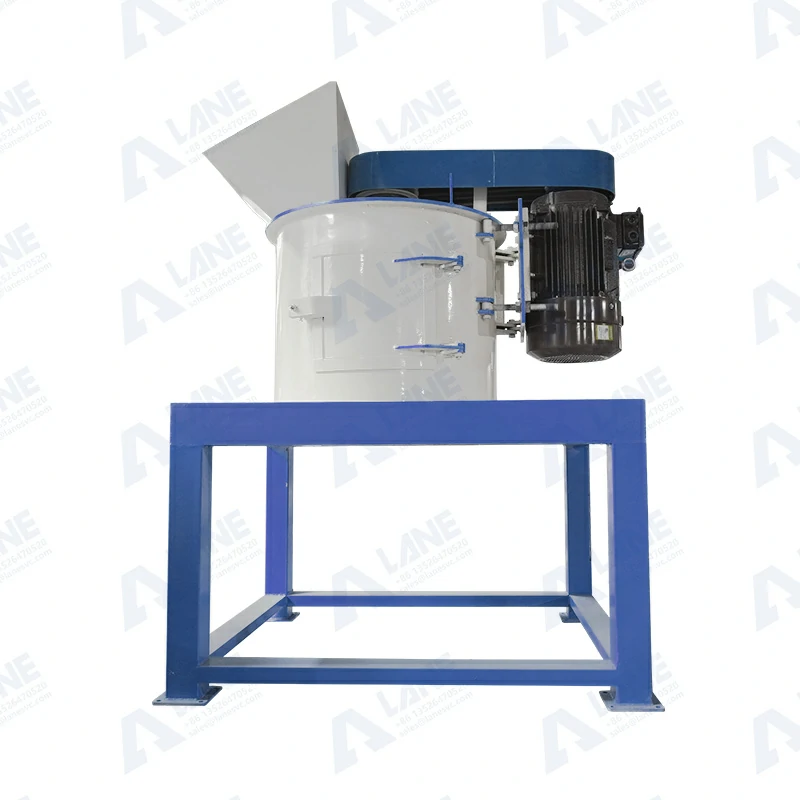
LANE Vertical Crusher Model Selection Suggestion Based on Moist Material Crushing Demand
Match the right LANE vertical crusher model according to raw material humidity, daily output and material type, to match your Moist Material Crushing production demand precisely.
> Small Workshop (Daily Output Below 10T, Medium Humidity Manure): Standard Vertical Crusher Model
Compact base model occupies small space, suitable for small organic fertilizer workshops to handle fermented chicken manure and cow manure with stable moisture.
> Medium Fertilizer Plant (Daily Output 10–30T, Variable Humidity Raw Materials): Reinforced Cavity Model
Thickened shell and widened discharging port adapt to raw materials with frequent moisture fluctuation, realize uninterrupted Moist Material Crushing for 8 hours.
> High-Humidity Sludge Treatment Plant (Moisture 28%–32%): Heavy-Duty Vertical Crusher Model
High-torque main shaft and thickened hammer head break massive sticky sludge blocks, solve the difficulty of Moist Material Crushing for super high humidity sludge raw materials.
> Compound Fertilizer Production Line (Return Material Recycling): Energy-Saving Conventional Model
Low energy consumption design matches dry and slightly wet return fertilizer crushing, reduce comprehensive power consumption for the whole compound fertilizer production line.
> Mobile Production Site: Wheel-Mounted Mobile Vertical Crusher Model
Integrated mobile base with universal wheels can move freely on the farm site, crush wet straw and manure on site without raw material transportation.
Customer Practical Q&A About Moist Material Crushing and Vertical Crusher Use
Q1: Can LANE vertical crusher handle fresh cow manure with moisture over 30% directly?
Direct crushing of fresh cow manure with moisture over 30% will still form partial cavity bonding. We suggest mixing 20% dry straw powder to adjust moisture before feeding for stable crushing.
Q2: How to solve slow discharging speed when crushing wet bagasse with vertical crusher?
Clean the fiber winding on the main shaft and hammer head first, then increase the spindle rotation speed moderately, and keep continuous thin feeding to improve discharging fluency.
Q3: Will long-time continuous Moist Material Crushing shorten the service life of the vertical crusher?
With daily cavity cleaning and regular bearing lubrication maintenance, LANE vertical crusher can achieve long-term continuous operation, and the service life will not be greatly affected.
Q4: Is it necessary to configure a dryer before vertical crusher for high-humidity organic raw materials?
If the daily output is small, adjust moisture by mixing dry auxiliary materials instead of a dryer. Large-scale production lines can equip a low-temperature dryer for stable moisture control.
Q5: What size crushed particle is the most suitable for follow-up flat die pellet machine granulation?
Control the crushed finished material below 3mm, this particle size can avoid Flat Die Granulator Blockage and form smooth and round fertilizer pellets.
Conclusion
Moist Material Crushing is a core pretreatment procedure for organic fertilizer and compound fertilizer production. Raw material moisture control and equipment selection jointly decide the stability of crushing work. LANE vertical crusher is developed for high-humidity material crushing defects, with anti-blockage structure, easy maintenance and strong adaptability. Match the proper model, cooperate with standardized operation and daily maintenance, fertilizer producers can eliminate blockage faults in the crushing link, stabilize raw material quality for pelletizing, and cut overall production loss caused by wet material processing problems.