Liquid Fertilizer Machine Plant Price: A Honest Breakdown for Growers, Distributors in 2026
Walk into any agricultural supply shop these days and you’ll notice the same thing — the liquid fertilizer shelf keeps getting wider. Bigger. More brands. Different colors. Growers have done the math: drip irrigation plus liquid fertilizer saves about two full labor days per mu, and bump yields by 10–15%. The numbers pencil out. So demand is moving upstream. More people are asking the same question — Can I just build my own liquid fertilizer plant? And the first thing they type into Google is usually one phrase: Liquid Fertilizer Machine Plant Price.
Here’s the honest answer. It’s not a single number. It’s a range, and it depends entirely on what you’re making, who you’re selling to, and how automated you want to go. This article walks you through it.
Why Now Is the Window
Three hard reasons the liquid fertilizer space is opening up right now.
Policy side. Water-fertilizer integration and the “fertilizer reduction + efficiency” mandate have been written into central policy for years. High-standard farmland projects come standard with drip lines. That infrastructure isn’t going away — it’s being built out every single season.
Technology side. Drip-irrigated area is growing 15%+ year over year. Drone aerial spraying exploded starting around 2020. Both of these are natural delivery channels for liquid fertilizer. You can’t run a granular through a drone. You can’t drop a granule into a drip tape without clogging it. The hardware is forcing the product format.
Cost side. Labor isn’t getting cheaper. A worker who used to spread granular by hand now costs double what it did five years ago. Liquid fertilizer mixes with water and goes straight through the drip line or the drone. The ROI for the grower is obvious, which means the demand for the product is obvious.
So the market exists. The question isn’t Is there demand? The question is What product do you make, what equipment do you buy, and what does the Liquid Fertilizer Machine Plant Price actually look like for your case?
Where the Demand Actually Lives: Application Scenarios
Before we talk about machines, we have to talk about what you’re making. Because the Liquid Fertilizer Machine Plant Price changes completely depending on whether you’re pouring clear NPK into a greenhouse drip system or brewing organic fermented liquid for export.
3.1 By Crop Type
| CROP TYPE | TYPICAL SCENARIO | PRODUCT REQUIREMENTS | MARKET CHARACTERISTICS |
|---|---|---|---|
| Greenhouse Vegetables / Flowers | Off-season cultivation, 3–5 growing cycles per year, and widespread adoption of drip irrigation. | Fully water-soluble, non-clogging, with stable electrical conductivity (EC). | High repeat-purchase rate; a reliable core market. |
| Fruit Trees (Citrus / Grapes / Apples) | Premium orchards using full drip-irrigation systems, with intensive nutrient application during fruit enlargement. | Balanced NPK and trace elements; strong demand for suspension fertilizers. | High spending per mu of cultivated land and strong profit margins. |
| Field Crops (Corn / Wheat / Rice) | Rapid growth in drone-based foliar spraying in recent years. | Low viscosity, high concentration, and compatibility with commonly used pesticides. | Largest-volume market; thin margins require economies of scale. |
| Cash Crops (Tea / Strawberries / Medicinal Herbs) | Quality-driven cultivation with demand for specialized, functional fertilizer products. | Formulations based on amino acids, seaweed extracts, or humic acid. | High profit potential per liter. |
Each of these crops pulls a different product format. Greenhouses want clean clear liquid that won’t clog a 12 mm drip emitter. Fruit orchards want suspension fertilizer that holds zinc and iron in solution. Drone operators want a concentrate you can mix into 10 liters of tank without gumming up the nozzles. The functional organic segment wants something with actual biological activity.
The product format dictates the machine. Remember that — we’ll come back to it when we talk about the Liquid Fertilizer Machine Plant Price range.
3.2 By Application Method
Drip / micro-sprinkler. This is the mainstream. It accounts for over 60% of liquid fertilizer consumption. The non-negotiable requirement: absolutely no particles that will clog emitters. That means filtration matters more than anything.
Drone aerial spraying. This is the fastest-growing segment. The constraint is viscosity — the stuff has to flow through a tiny nozzle at 3 meters per second without shearing. High concentration, low viscosity, compatible with tank-mixed pesticides.
Furrow / flood irrigation. Lowest barrier to entry, traditional, still a huge installed base. Less technical, more volume.
Foliar spray. This is where the functional products live — amino acids, seaweed extracts, chelated micronutrients. Smaller volume, higher margin.
3.3 By Customer Group
Large growers / cooperatives. They make it for themselves. Cost reduction is the whole game. They don’t need fancy packaging. They need bulk tanks and consistent quality.
Ag input distributors. They want private-label OEM. They need you to run their formula, bottle it under their brand, and they handle the sales channel. This is where a mid-tier automated line pays for itself.
Government / high-standard farmland projects. Tender-based. Big volumes. Consistency and paperwork matter more than the absolute lowest Liquid Fertilizer Machine Plant Price.
Export (Southeast Asia, Africa, Middle East). This is the incremental market. Different regulations, different packaging specs, different nutrient ratios. But the buyers are hungry for local supply instead of importing finished product from Europe.
Every one of these customer groups points to a different product, which points to a different line, which points to a different number when someone asks about the Liquid Fertilizer Machine Plant Price.
What Equipment Actually Goes Into a Liquid Fertilizer Plant
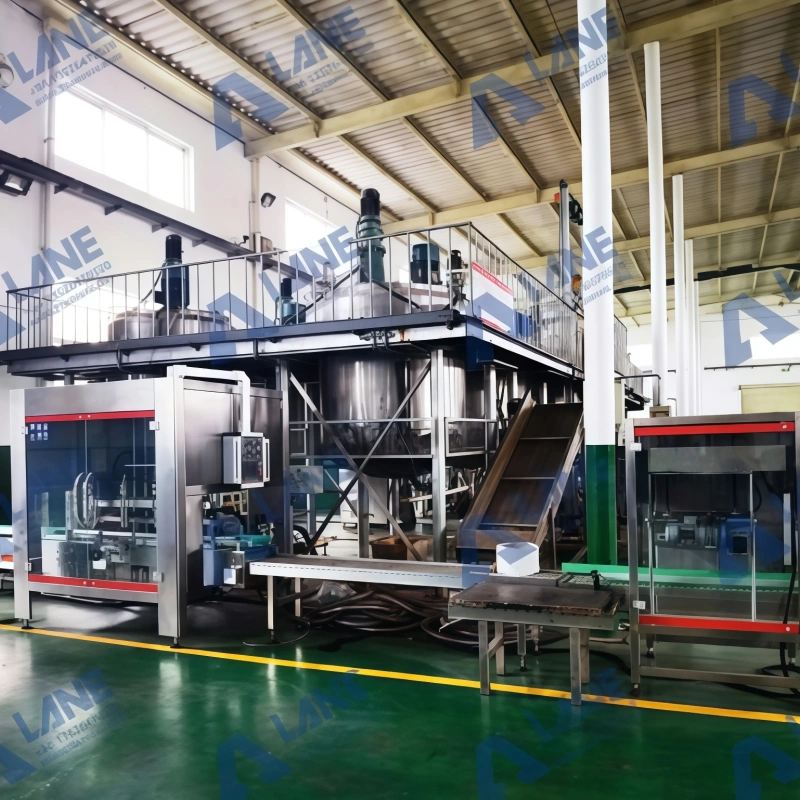
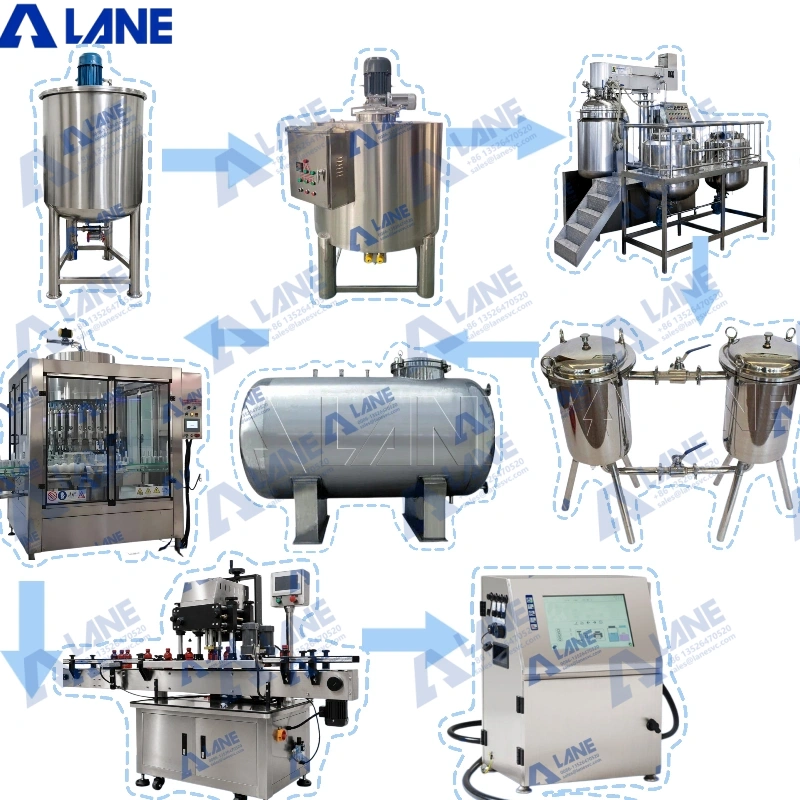
Let’s kill the myth first: a liquid fertilizer plant is not one machine. It’s a system. It’s a sequence of stages, each one feeding the next, and skipping a stage is how you end up with a clogged bottle or a separated product on the shelf.
4.1 The Core Modules Every Line Needs
No matter what you make, these stages are non-negotiable:
Water treatment. Reverse osmosis or at least a softener. If you make clear NPK with hard well water, you’ll precipitate calcium sulfate in the tank. Every time.
Dosing / weighing system. Load cells on the mix tank, or a volumetric dosing station for liquids. Accuracy is 1–2% if you’re doing it right.
Mixing / reaction vessel. Stainless steel (304 minimum, 316 if you’re running acids or chelates). Agitator speed depends on the product — low shear for clear solution, high shear for suspension.
Filtration. Bag filter, then a 50–100 micron cartridge before filling. This is the line between “doesn’t clog” and “comes back under warranty.”
Buffer / finished tank. Hold the batch, let any air bubbles escape, polish-filter one more time.
Filling line. Filling heads, capping, labeling, inkjet batch coding. For small bottles this is automatic; for IBC totes it can be semi-auto.
CIP cleaning system. Clean-in-place. You don’t want to manually scrub a 5,000 liter tank between batches.
Pumps, valves, piping. All wetted parts stainless. Food-grade seals.
PLC control cabinet. If you want repeatable batches instead of “the recipe in the engineer’s head.”
When a supplier quotes you a Liquid Fertilizer Machine Plant Price, check whether all nine of these are in the line item. Half the “cheap” quotes you’ll see skip the water treatment, skip the CIP, or give you a tiny filter that doesn’t actually do the job.
4.2 Add-Ons Depending on Product Type
Clear water-soluble NPK. The base line is enough. The core challenge is dissolving salts quickly without undissolved sludge at the bottom of the tank. A good dissolver and fine filtration do the heavy lifting.
Suspension fertilizer (scattered solids held in colloidal suspension). You add a high-shear homogenizer or a colloid mill. The whole point is that the solids never settle into a hard cake on the bottom of the bottle. This is a meaningful jump in the Liquid Fertilizer Machine Plant Price.
Fermented / organic liquid fertilizer. You add a fermentation reactor, solid-liquid separation, an odor scrubber, and a sterilization step. The hard part isn’t brewing — it’s not smelling like a feedlot when the truck pulls up, and not going rotten on the shelf.
Chelated / high-end specialty fertilizer. You add a temperature- and pH-controlled reaction vessel. Chelation is a chemistry reaction, not just mixing. If you don’t control pH and temp, the iron and zinc just precipitate and you’ve wasted your raw materials.
4.3 Automation Tier = Budget Tier
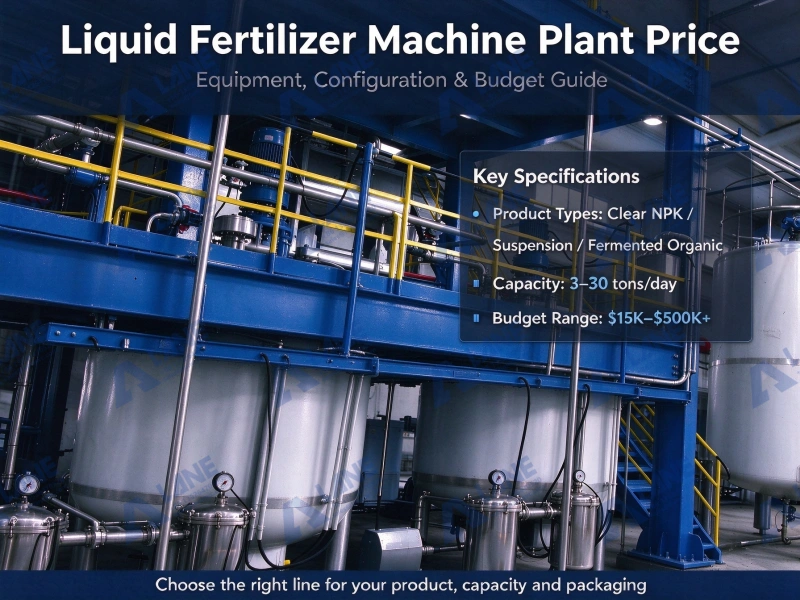
Manual / semi-auto. Dosing by hand, mixing with a single agitator, filling on a single-head piston filler. Cooperatives testing the waters. Roughly $15k–$50k range on the Liquid Fertilizer Machine Plant Price side.
Semi-auto line. Load-cell dosing, PLC-controlled mixing, automatic filling + capping + labeling. Distributor OEM work. $60k–$150k.
Full PLC automatic. Recipe management in the HMI, automated CIP, inline turbidity / EC monitoring, batch traceability. Factory-grade, export-grade. $150k–$500k+.
Scenario → Configuration → Budget: The Cheat Sheet
Here’s the table most people actually want. Different scenarios, different products, different core equipment, different Liquid Fertilizer Machine Plant Price brackets.
| APPLICATION SCENARIO | TYPICAL PRODUCT | CORE EQUIPMENT REQUIRED | EQUIPMENT YOU CAN SKIP | TARGET CAPACITY | LIQUID FERTILIZER PLANT PRICE RANGE |
|---|---|---|---|---|---|
| Greenhouse Drip Irrigation / Vegetables | Clear, Water-Soluble NPK Fertilizer | RO Water Treatment System + Dissolving Tank + Fine Filter + Filling Line | Homogenizer and Fermentation System | 3–10 tons/day | $15,000–$80,000 |
| Field Crops / Drone-Based Foliar Spraying | Low-Viscosity Foliar Fertilizer Concentrate | Fine Filtration System + Anti-Foam Filling Heads | Large IBC Tote Filling Line | 5–20 tons/day | $30,000–$100,000 |
| Orchards / Premium Cash Crops | Suspension Fertilizer / Functional Liquid Fertilizer | High-Shear Homogenizer + Chelation Reactor + Multi-Size Filling System | Simplified Fermentation System | 3–15 tons/day | $60,000–$200,000 |
| Organic Fertilizer / Manure Valorization | Fermented Liquid Biofertilizer | Solid-Liquid Separation System + Fermentation Tank + Sterilizer + Odor Scrubber | High-Precision Small-Bottle Filling System | 5–20 tons/day | $80,000–$300,000 |
| Agricultural Distributor / Private-Label Production | Multi-Category Fertilizers with Multiple Formulations | Automatic Batching System + Multi-Recipe PLC Control + CIP System + Product Traceability System | No major process equipment should be omitted without evaluating the product range and production requirements. | 10–30 tons/day | $100,000–$500,000+ |
Read this table twice. The reason two people can walk away with quotes that differ by 10x for the same “Liquid Fertilizer Machine Plant Price” question is that they’re actually building different plants. One is bottling clear NPK into 1-liter bottles for a local greenhouse. The other is brewing organic fermented liquid with a 20 m³ fermenter, a biofilter for the smell, and a full 6-head filling line running 5-liter jugs for export. Same industry, completely different budget.
The Hidden Costs About Liquid Fertilizer Machine Plant Price
If you only look at the sticker price on the equipment, you will get burned. The equipment itself usually accounts for only 60–70% of the total project investment — which means that tempting low Liquid Fertilizer Machine Plant Price you found online is only the down payment on the real number. The rest lives in the stuff that comes after the purchase order: freight, installation, civil works, environmental compliance, and the spare parts we just talked about.
This is exactly why smart buyers never evaluate a project on the Liquid Fertilizer Machine Plant Price alone — because the gap between the quoted Liquid Fertilizer Machine Plant Price and your actual cash-out-the-door total is where most budget overruns are born.
Factory utilities. You need 3-phase power (most of these lines run on 380V or 480V), adequate water supply, drainage for CIP wastewater, and sometimes steam if you’re doing heated reactions. If your building isn’t prepped, that’s a construction line item.
Environmental compliance. Fermentation lines smell. CIP wastewater carries dissolved salts and pH-adjustment chemicals. In many jurisdictions you can’t just dump it. You need a small wastewater treatment loop or an approved disposal contract. This is the line item that kills organic-fertilizer projects when it’s ignored.
Installation, commissioning, shipping, taxes. A line that ships from China to East Africa adds freight, port handling, import duty, and a commissioning engineer’s flight and hotel. That can easily add 15–25% on top of the equipment number.
Spares. O-rings, filter cartridges, pump seals, labeling heads. You’ll go through them. A supplier who doesn’t include a spares kit in the deal is betting you’ll pay them later at list price — and that “cheap” Liquid Fertilizer Machine Plant Price you thought you locked in won’t look so cheap once you’re reordering consumables at full retail, paying emergency freight, and eating the downtime. This is exactly why the lowest quoted Liquid Fertilizer Machine Plant Price is rarely the lowest total cost of ownership.
After-sales response time. When the line goes down on a Friday afternoon before a Monday shipping deadline, you want an engineer who answers the phone, not a ticket system. The Liquid Fertilizer Machine Plant Price that looks $20k cheaper but comes with 72-hour email support is actually more expensive.
How to Actually Pick a Supplier Without Getting Burned
Factory vs. trader. Ask for a live video walkthrough of the workshop. Watch the welding on the tanks. A trader will send you a clip of someone else’s factory and hope you don’t notice.
Case studies in your product. Ask for a video of a line running your product — not a generic line running clear water. If they’ve never run a suspension fertilizer before, you’ll be the test case.
Send your materials for a trial run. Most serious suppliers will take a small sample of your raw materials, run them through a test tank, and send you video. If they refuse, that’s a red flag.
Read the quote line by line. Is the Liquid Fertilizer Machine Plant Price quoted FOB, CIF, or landed? Is tax included? Is installation included? Is commissioning included? “The price” on the first email is almost never “the price” on the final invoice.
Stainless steel certificate. 304 is the baseline. 316L is better for acids and chelates. Ask for the mill certificate. Some lines look like stainless until you run them for six months and the tank starts rusting around the welds.
Write response time into the contract. 24-hour remote support, on-site engineer within 72 hours for major issues. Not as a “we’ll try” — as a contractual SLA.
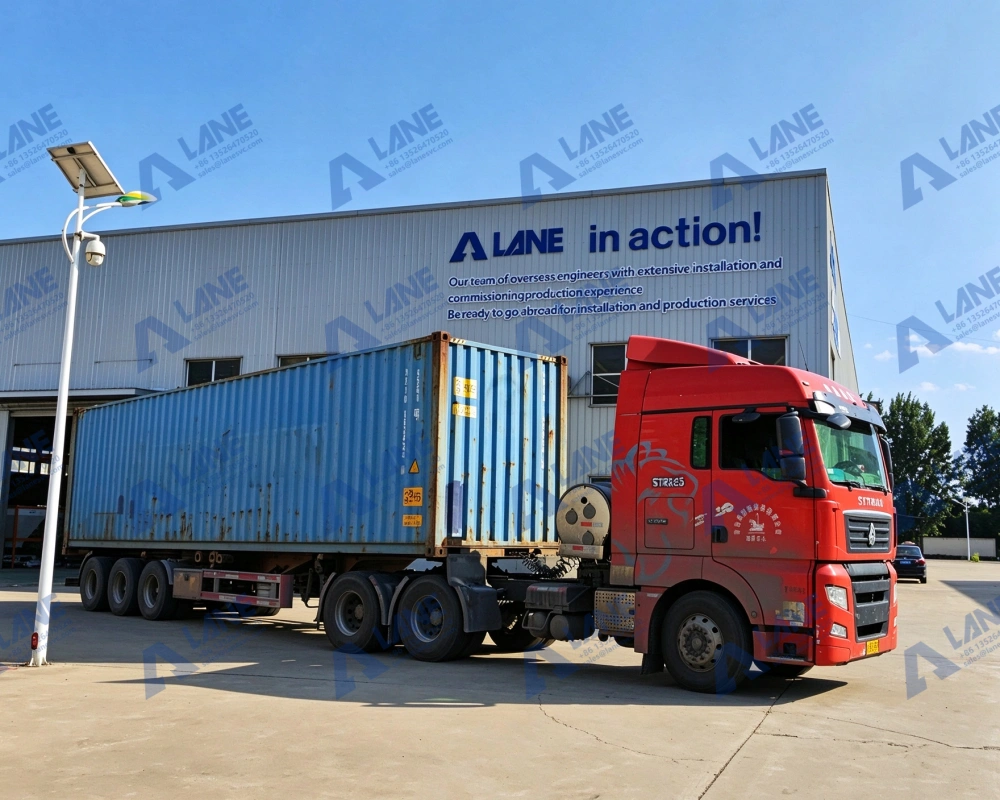
Next Step: Let’s Run the Numbers for Your Case
If you’re seriously evaluating a liquid fertilizer project right now, don’t just chase the lowest Liquid Fertilizer Machine Plant Price you can find. The cheapest line is almost always the one that ends up costing you more in downtime, product defects, and rework.
Send us three things:
- What product do you actually want to make? (Clear NPK / suspension / fermented organic / chelated specialty)
- What’s your daily capacity target? (3 tons? 10 tons? 30 tons?)
- What packaging sizes are you filling? (250 ml bottles? 5 liter jugs? IBC totes?)
We’ll come back with a preliminary configuration list and a realistic Liquid Fertilizer Machine Plant Price range for your exact setup. You don’t have to buy anything. The point is just to make sure you’re starting the project with the right numbers in hand, not the numbers the cheapest salesman wants you to see.