Cat Litter Granules Breaking Problems and How to Solve Them
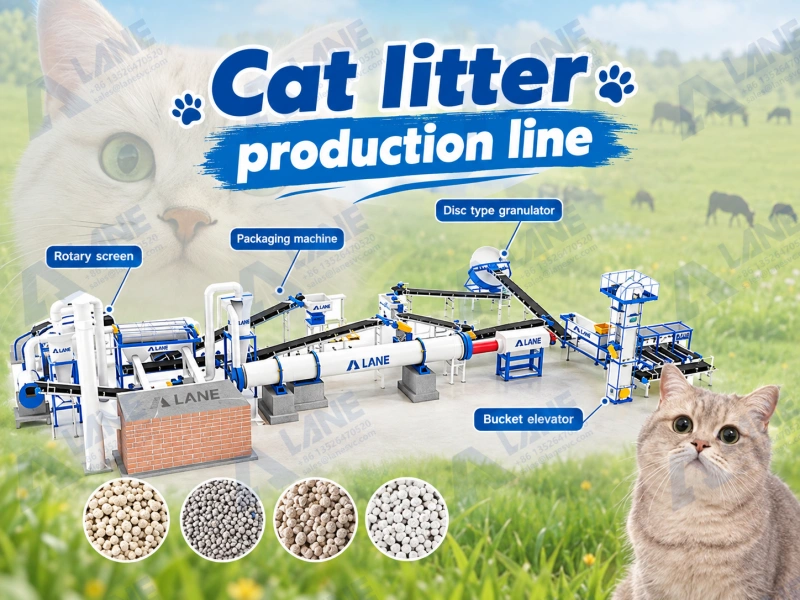
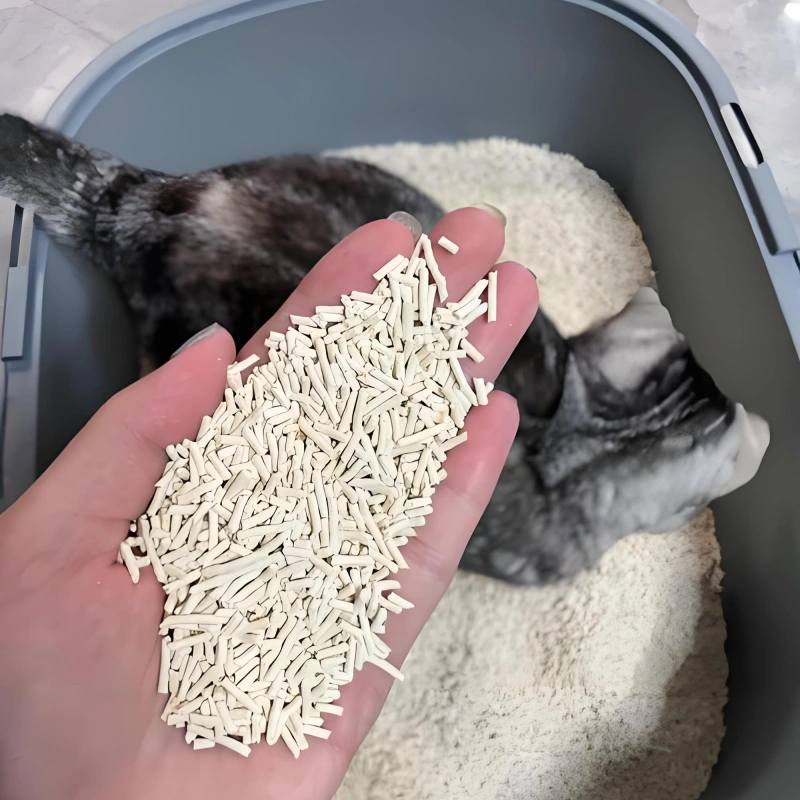
The problem of broken cat litter particles is usually not caused by a single machine. In the actual cat litter production process, the shape of the particles may still be qualified when they leave the granulator, but after drying, screening, conveying, or packaging, cracks, breakage, or powdering will occur.
This is why, when troubleshooting cat litter granules breaking problems, we need to look at the entire production conditions, rather than replacing the granulator right away. Raw material characteristics, moisture content, mixing uniformity, granulation pressure, drying conditions, and mechanical impact all affect the strength of the final particles
The good news is that most problems can be traced back to a relatively small number of causes. Once the cause is found, the solution is usually more practical than simply increasing the machine pressure or replacing the equipment.
1. Incorrect Raw Material Conditions Reduce Granule Strength
One common cause of Cat Litter Granules Breaking Problems is the condition of the raw material before granulation.
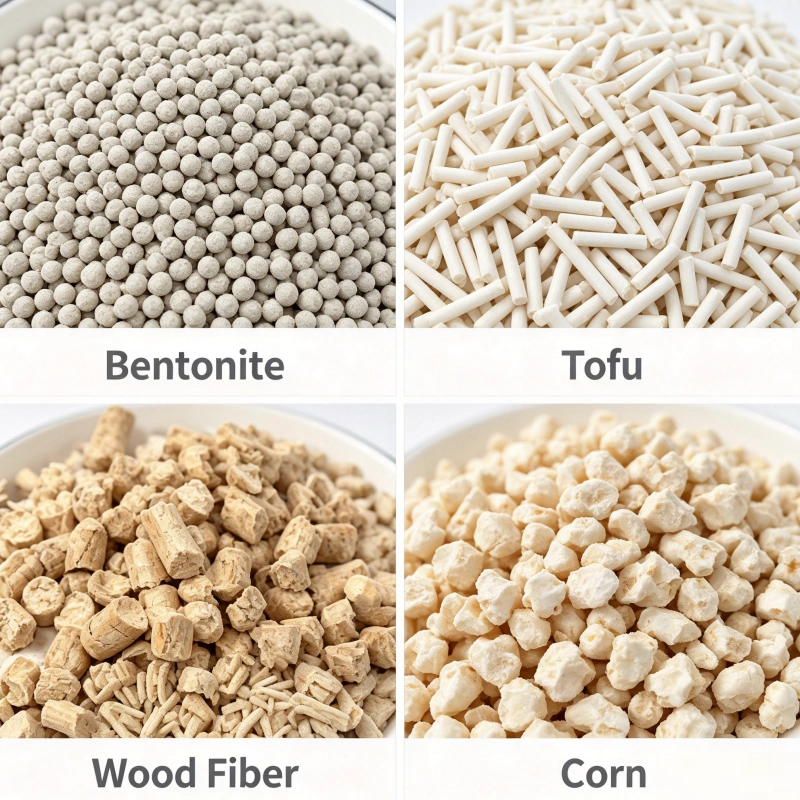
Different cat litter materials behave very differently during pellet formation. Bentonite-based materials, tofu cat litter, wood fiber, corn-based materials, and other plant-based materials do not have the same moisture absorption, bonding, or compression characteristics.
A material that looks suitable for granulation may still produce weak pellets if its particle size is too coarse, its moisture is uneven, or its fibrous content is too high.
For example, if part of the feed material contains more moisture than the rest, the granulator may produce a mixture of dense and weak pellets. The stronger pellets remain intact, while the weaker ones become broken granules during subsequent handling.
How to solve it
Before adjusting the granulator, check the material itself.
• Control the particle size of the raw material.
• Remove large impurities or oversized particles.
• Check whether moisture is evenly distributed.
• Keep the feeding composition stable.
• Adjust the formulation according to the material’s bonding characteristics.
A crusher may be needed when the incoming material contains oversized particles. More uniform feed material gives the granulator a better chance of forming pellets with consistent density.
This is an important point when dealing with Cat Litter Granules Breaking Problems: if the material condition is unstable, changing the granulator alone rarely gives a stable result.
2. Improper Moisture Content Makes Cat Litter Granules Fragile
Moisture is one of the first things we check when investigating Cat Litter Granules Breaking Problems.
Too little moisture can make the material difficult to compact. The particles may form a shape under pressure but lack sufficient internal bonding. These pellets often look normal at first and then break easily during drying or conveying.
Too much moisture creates another problem. The material can become soft and sticky, making pellet formation unstable. After drying, excessive moisture loss may also create internal cracks.
The problem is not simply “more moisture” or “less moisture.” The correct moisture condition depends on the material and granulation method.
How to solve it
The practical approach is to establish a stable moisture range before production.
• Measure raw material moisture instead of judging it by appearance.
• Add water gradually and mix thoroughly.
• Avoid local wet spots inside the material.
• Check moisture again when production conditions change.
• Adjust drying conditions according to the actual moisture entering the dryer.
When Cat Litter Granules Breaking Problems occur, moisture should be checked together with pellet density. A pellet can have acceptable surface moisture but still have a weak internal structure.
3. Uneven Mixing Creates Weak and Strong Granules in the Same Batch
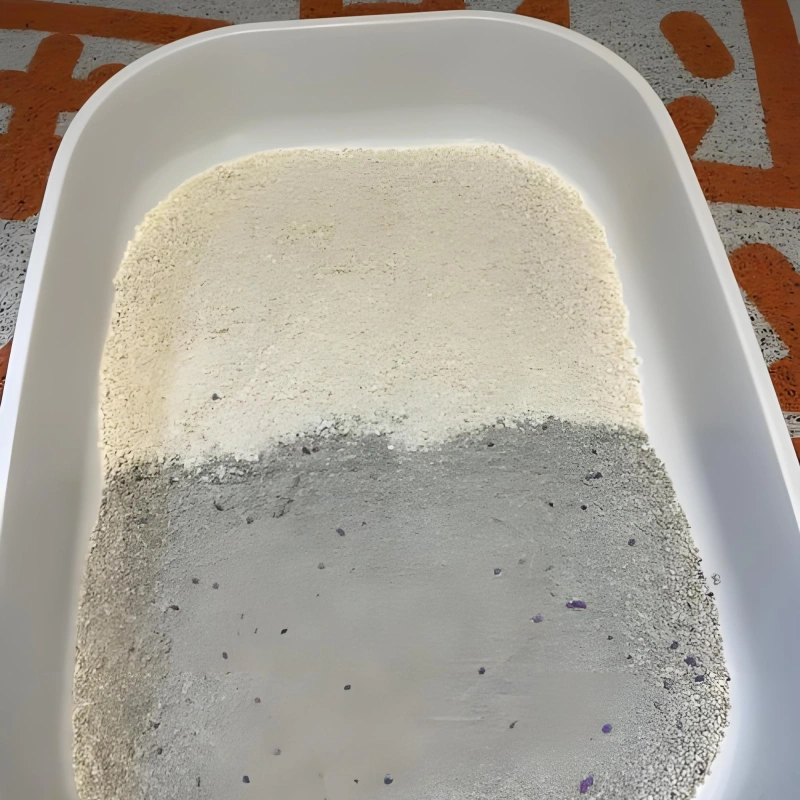
Another common source of Cat Litter Granules Breaking Problems is poor mixing.
This is especially important when the cat litter formula contains several raw materials or requires a binder. If the mixture is not uniform, some particles receive enough moisture and bonding material while others do not.
The result is easy to recognize in production: some granules have good strength, while others crumble with very little pressure.
How to solve it
The mixing stage should create a uniform material before it reaches the granulator.
A mixer should be selected according to the material characteristics and required production capacity. Mixing time should also be long enough to distribute moisture and additives evenly, but not so long that unnecessary material degradation occurs.
When diagnosing Cat Litter Granules Breaking Problems, check whether the broken granules are randomly distributed or whether the entire batch is weak.
If only part of the batch breaks, uneven mixing or feeding is often more likely than a simple granulator-pressure problem.
4. Weak Granulation Conditions Produce Poor Internal Structure
Sometimes the raw material and moisture are reasonable, but Cat Litter Granules Breaking Problems still appear immediately after granulation.
In this situation, the granulation conditions need to be checked.
A pellet needs sufficient compaction to develop internal strength. If the material is not compressed effectively, the outside may look smooth while the inside remains loose.
This can happen when:
• Feeding is unstable.
• Granulation pressure is too low.
• The equipment is not suitable for the material.
• The working parts are worn.
• The granulator is being pushed beyond its practical capacity.
For example, increasing the feed rate simply to reach a target output may reduce the actual residence time or compression effect. The machine may appear to have enough capacity on paper, but the resulting granules may not have enough strength.
How to solve it
Start with the actual condition of the material and the machine.
Check the feeding stability, granulation pressure, working parts, and actual throughput. If the granulator is worn, replacing or adjusting the relevant parts may restore pellet quality.
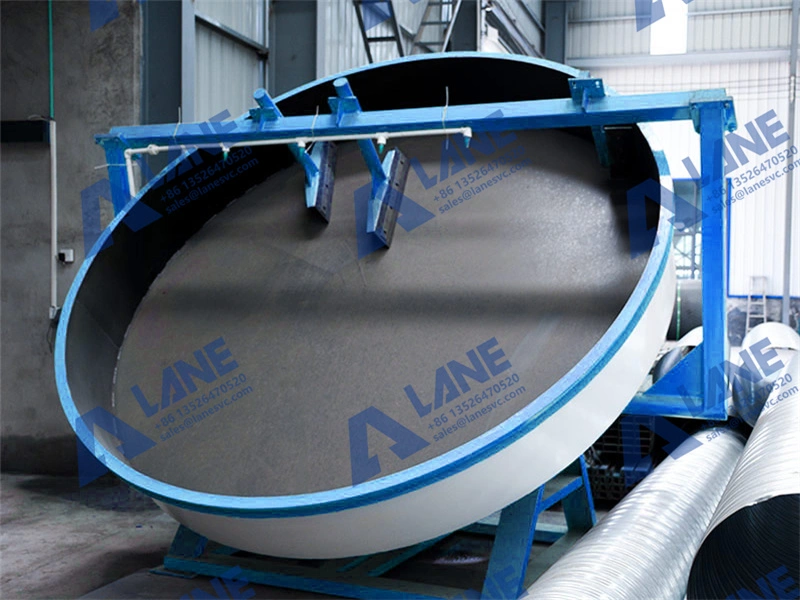
Depending on the raw material and required pellet shape, different equipment may be considered, including a disc granulator, flat die granulator, or other suitable granulation equipment.
The important point is not to choose a machine simply according to its advertised capacity. For Cat Litter Granules Breaking Problems, pellet strength and material compatibility are just as important as output.
5. Excessive Drying Makes the Granules Crack and Break
One of the most confusing Cat Litter Granules Breaking Problems occurs when pellets look good at the granulator outlet but become fragile after drying.
In this situation, the granulator may not be the main problem.
Drying removes moisture from the pellet. If the surface loses moisture much faster than the inside, internal stress can develop. This may cause cracks or make the pellet much more brittle.
Over-drying can create another problem. A pellet that becomes too dry may have enough initial strength but lose its resistance to impact.
How to solve it
The drying process needs to match the material rather than simply using the highest possible temperature.
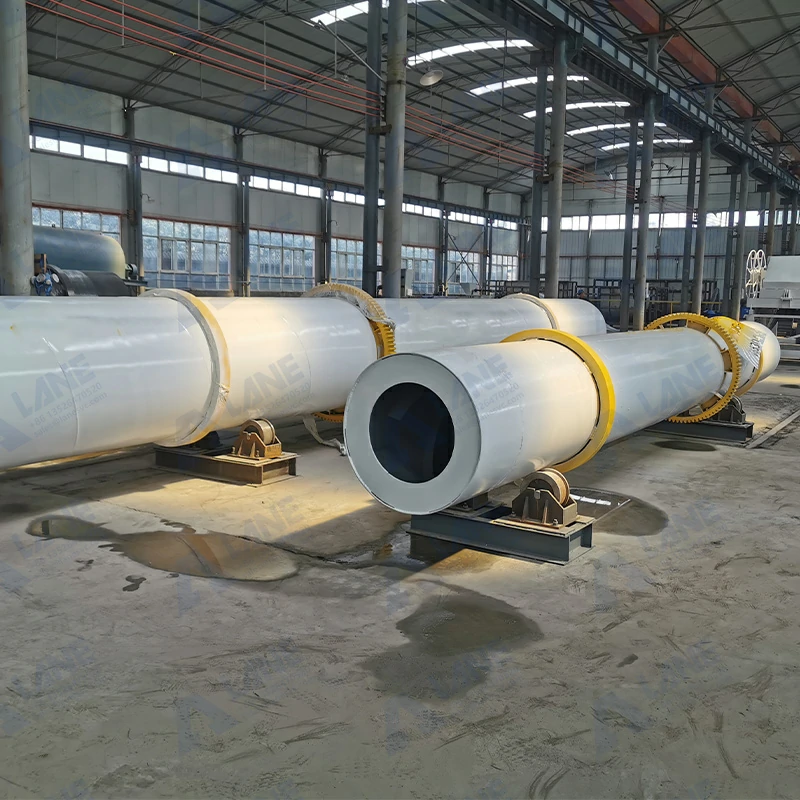
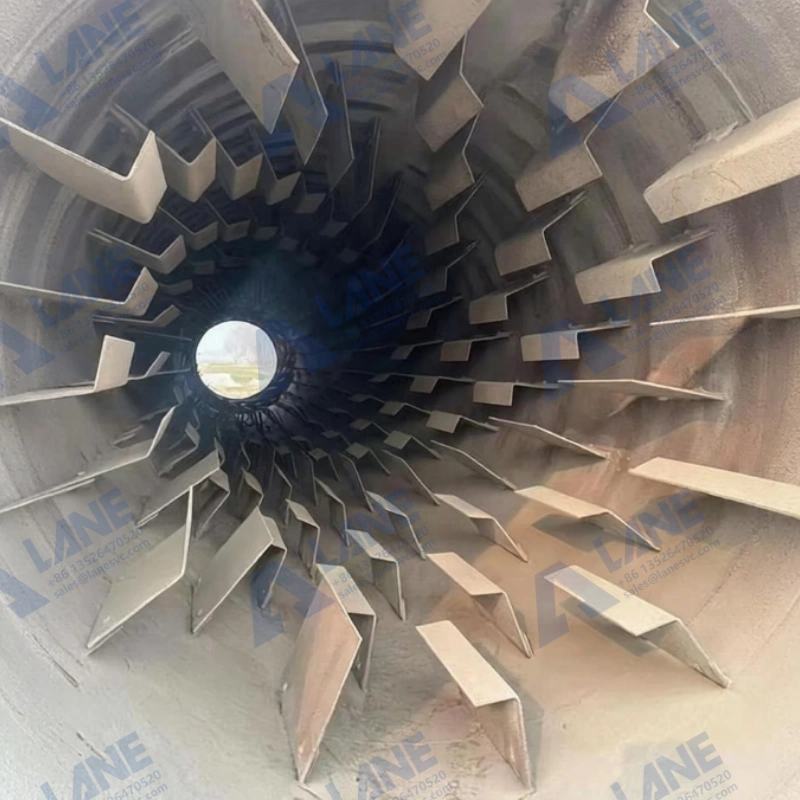
A rotary drum dryer can be configured according to the required capacity and material characteristics. The key factors include:
• Hot-air temperature
• Airflow
• Residence time
• Feeding rate
• Initial moisture
• Final moisture requirement
If Cat Litter Granules Breaking Problems only become obvious after drying, compare the pellet condition before and after the dryer. This simple check can quickly narrow down the source of the problem.
Do not immediately increase drying temperature when the final moisture is too high. A stronger drying condition may reduce moisture while making the granules more brittle.
6. Uneven Drying Creates Internal Cracks
Not every drying problem is caused by excessive temperature.
Uneven drying can also contribute to Cat Litter Granules Breaking Problems. If some pellets are exposed to stronger heat or airflow than others, the final moisture content may vary significantly.
Some pellets may remain relatively soft while others become very dry and fragile.
This creates inconsistent product quality even when the average moisture content looks acceptable.
How to solve it
The dryer should provide stable contact between hot air and material.
Check whether:
• Material is fed evenly.
• The dryer is overloaded.
• Hot air is distributed consistently.
• Pellets have enough residence time.
• Final moisture varies significantly between batches.
For larger production systems, drying conditions should be evaluated together with feeding and conveying capacity instead of adjusting the dryer independently.
This is one reason experienced manufacturers treat Cat Litter Granules Breaking Problems as a production-line issue rather than a single-machine issue.
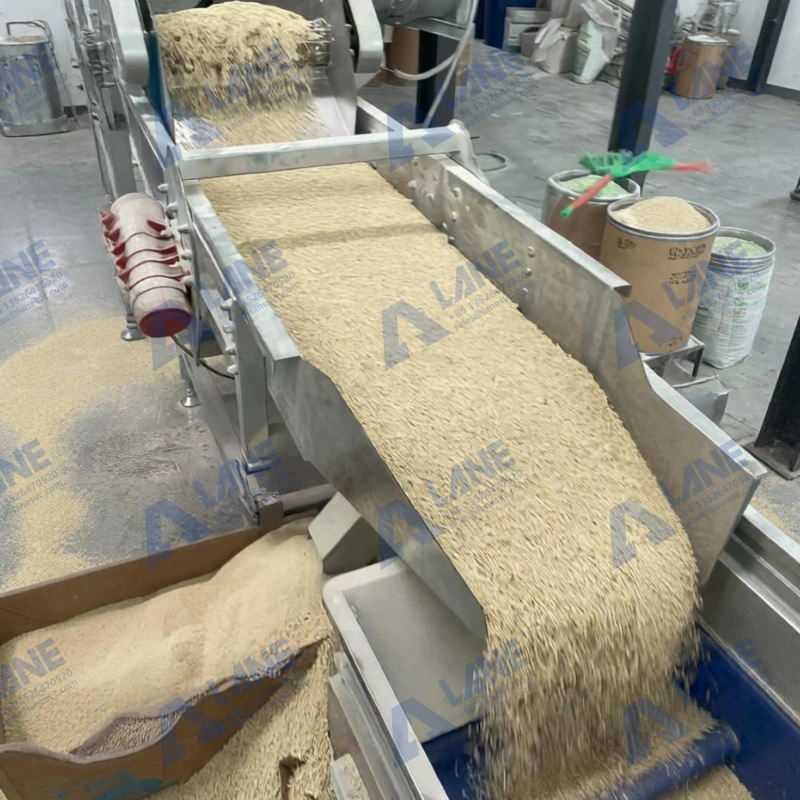
7. Mechanical Impact Breaks Otherwise Good Granules
Sometimes the pellets have enough strength, but they are simply handled too aggressively.
This is a frequently overlooked cause of Cat Litter Granules Breaking Problems.
Imagine that the pellets leave the dryer in good condition. They then fall from a high position onto a hard surface, pass through several transfer points, or experience strong mechanical impact during screening.
By the time they reach the packaging machine, the pellets may contain a large amount of fines.
How to solve it
Reduce unnecessary impact after the granules have reached the required strength.
Pay attention to:
• Drop height between equipment.
• Conveyor speed.
• Transfer-point design.
• Material accumulation.
• Excessive vibration.
• Repeated conveying.
A belt conveyor or screw conveyor should be selected according to the material characteristics and layout. The goal is not simply to move material from A to B, but to do so without creating unnecessary impact.
When we investigate Cat Litter Granules Breaking Problems, the conveying system is therefore part of the quality-control discussion.
8. Aggressive Screening Increases Broken Granules
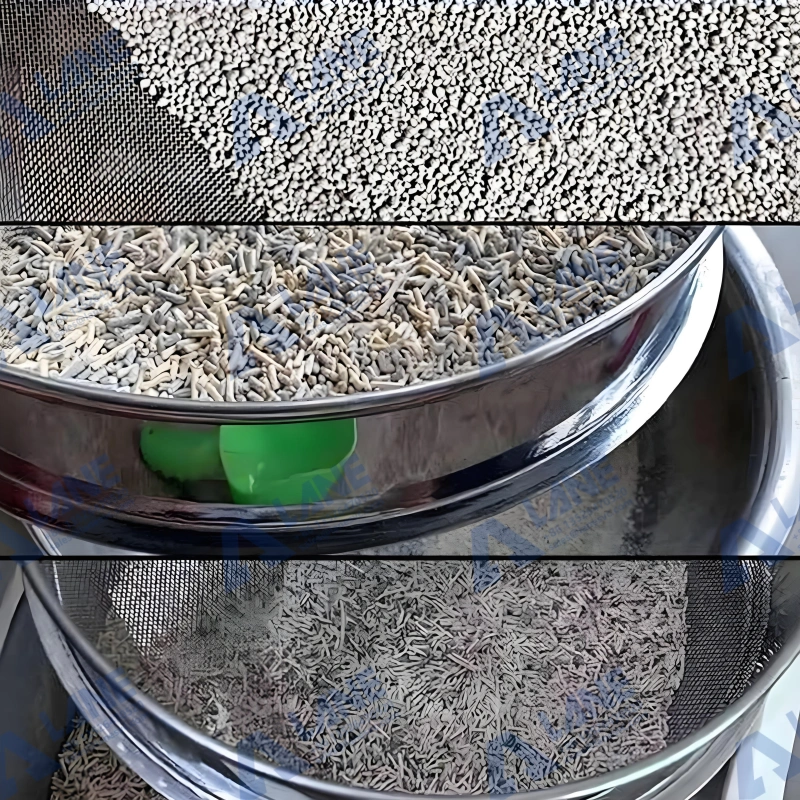
Screening is supposed to separate qualified granules from oversized or undersized material. However, if the particles are already relatively fragile, excessive screening impact can increase the amount of broken material.
This is another reason why Cat Litter Granules Breaking Problems should not automatically be blamed on the granulator.
A rotary screener can be used to separate different particle sizes, but the screen opening, rotation speed, feed rate, and material flow need to be matched with the pellet characteristics.
How to solve it
If the broken-particle percentage increases sharply after screening:
• Compare the material before and after screening.
• Check whether the screen is overloaded.
• Check rotation speed and feeding rate.
• Inspect whether pellets are repeatedly hitting hard surfaces.
• Check whether the pellets already have insufficient strength before screening.
If the pellets are already weak before entering the screen, simply changing the screen will not completely solve Cat Litter Granules Breaking Problems.
9. Packaging and Transportation Can Create More Fines
A common mistake is to check the production equipment but ignore what happens immediately before and after packaging.
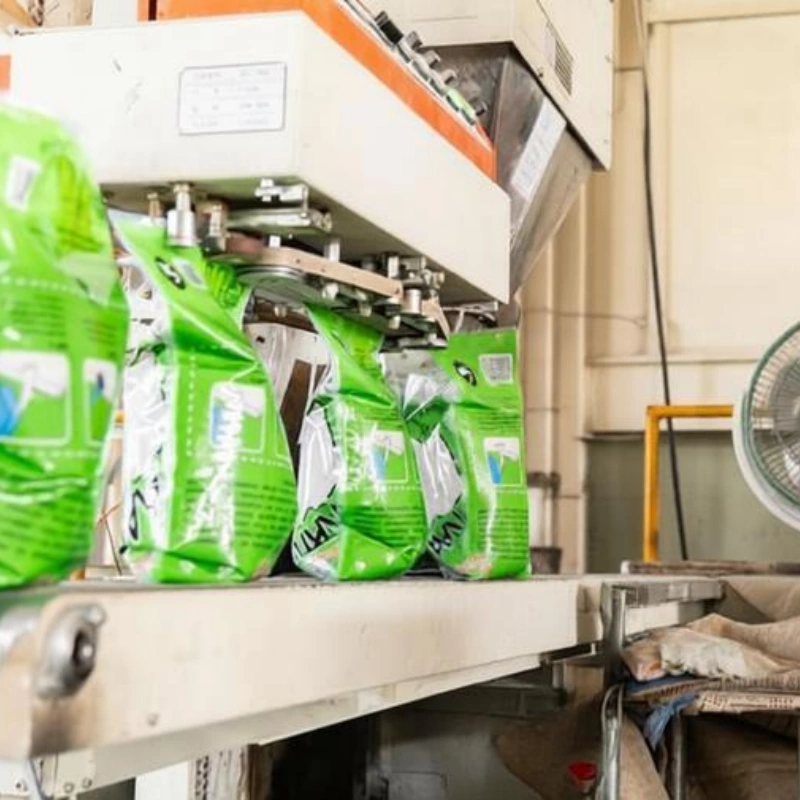
Fragile pellets can be damaged when they are dropped into bags, compressed during filling, or repeatedly moved during storage and transportation.
Therefore, Cat Litter Granules Breaking Problems may sometimes be discovered at the customer side even though the production line appeared normal during operation.
How to solve it
Before packaging, remove excessive fines and make sure the finished granules have sufficient mechanical strength.
The packaging system should also minimize unnecessary drop height and impact.
For bulk or long-distance shipment, the packaging method should consider the pressure and vibration that the product will experience during transportation.
A good cat litter product is not simply a pellet that looks good when it leaves the granulator. It needs to remain stable until it reaches the customer.
10. How to Find the Real Cause of Cat Litter Granules Breaking Problems
When a customer reports excessive broken granules, we recommend checking the problem from the point where the damage first appears.
A simple diagnostic method is:
Granulator outlet is already broken
→ Check raw material, moisture, mixing, feeding, and granulation conditions.
Granules are good before drying but crack afterward
→ Check drying temperature, airflow, residence time, and moisture distribution.
Granules remain intact after drying but break during screening
→ Check screen speed, feed rate, impact, and pellet strength.
Granules are good before conveying but become dusty afterward
→ Check drop height, transfer points, conveyor speed, and repeated handling.
Granules are acceptable before packaging but broken in bags
→ Check filling impact, compression, storage, and transportation conditions.
This method makes troubleshooting Cat Litter Granules Breaking Problems much faster because it identifies where the damage starts instead of changing several machines at the same time.
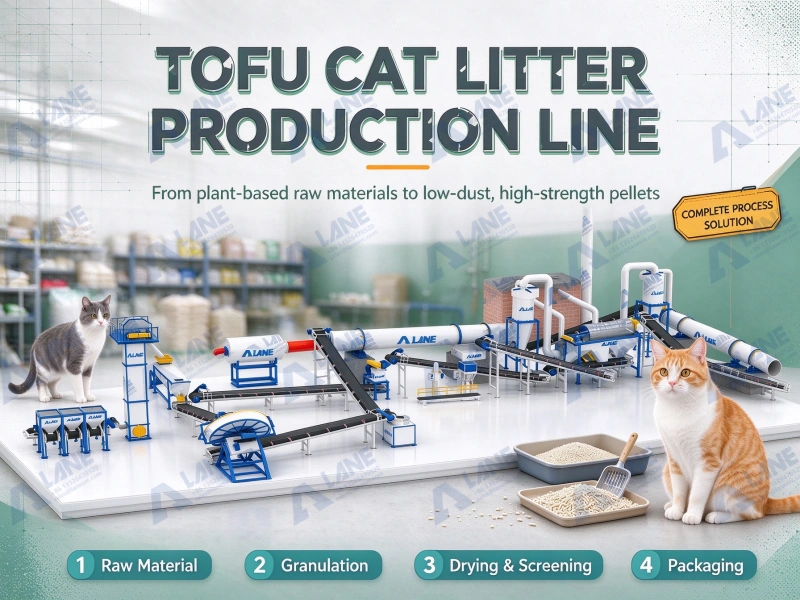
11. How a Complete Cat Litter Production Line Can Reduce Granule Breakage
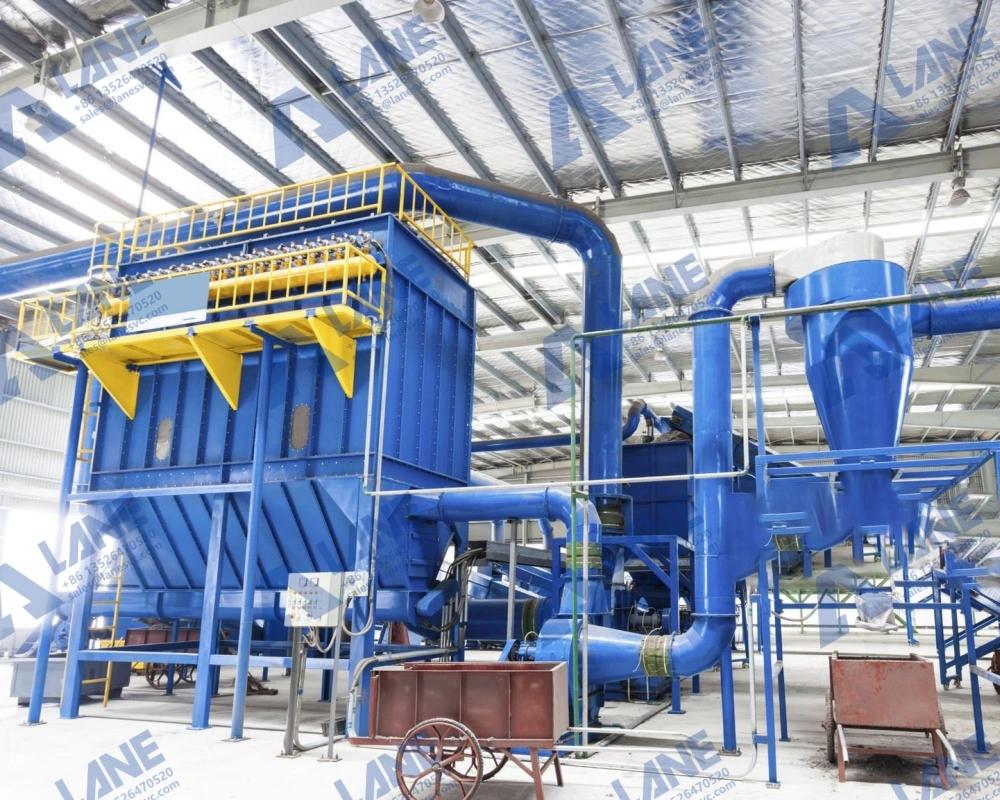
When Cat Litter Granules Breaking Problems continue across several production stages, the solution may need to move from one machine to the complete production line.
A complete cat litter production line should be matched according to:
• Raw material type
• Raw material moisture
• Required pellet size
• Production capacity
• Granulation method
• Drying requirement
• Screening accuracy
• Conveying distance
• Packaging method
The equipment should also work as a system.
For example, increasing granulator output without increasing drying and screening capacity can create an imbalance. Likewise, selecting a high-capacity dryer but using an unstable feeding system can still result in inconsistent final moisture.
This is where an experienced equipment manufacturer can provide more value than simply supplying individual machines.
At LANE, we normally look at Cat Litter Granules Breaking Problems from both the individual equipment level and the complete production-line level. The objective is not simply to produce pellets, but to maintain pellet quality through drying, screening, conveying, and packaging.
For a new project, the better approach is to determine the raw material characteristics and finished-product requirements first, then match the crushing, mixing, granulation, drying, screening, conveying, and packaging equipment around them.
That approach reduces the chance of solving one source of Cat Litter Granules Breaking Problems while creating another problem somewhere else in the line.
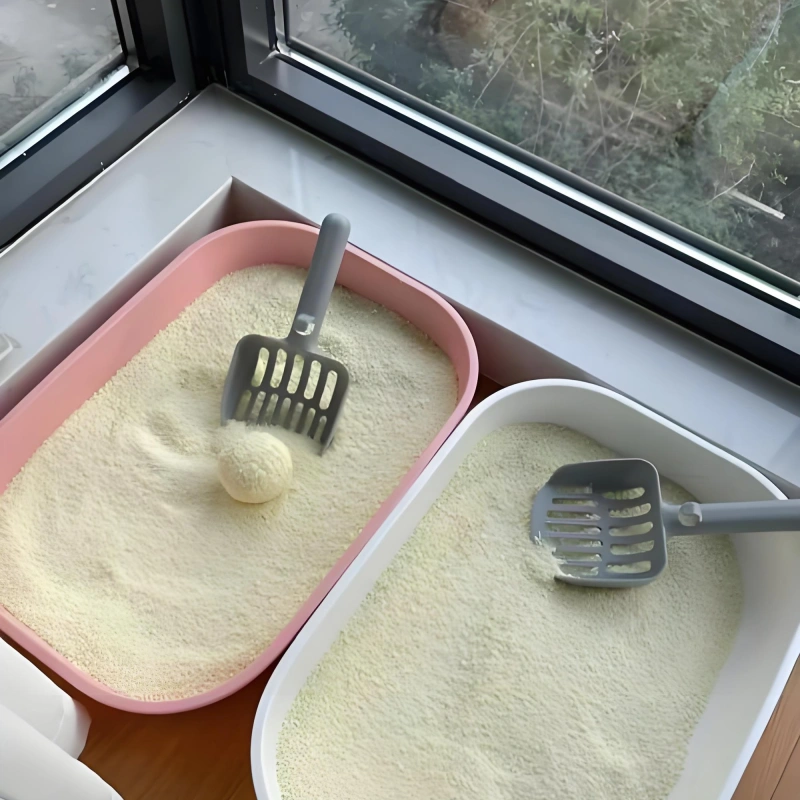
FAQ About Cat Litter Granules Breaking Problems
Why are my cat litter granules breaking so easily?
The most common reasons include unsuitable moisture, poor mixing, insufficient granulation pressure, weak internal structure, excessive drying, and mechanical impact during later handling. The first step is to identify where the breakage starts.
Can high moisture cause cat litter granules to break?
Yes. Excessive moisture can make the material difficult to form and may create uneven drying. After moisture is removed, the resulting internal stress can contribute to cracking and breakage.
Why do cat litter granules break after drying?
If the pellets are intact before drying but become cracked afterward, the drying conditions should be checked first. Excessive temperature, uneven airflow, rapid moisture removal, or over-drying can reduce pellet strength.
Can screening cause cat litter granules to break?
Yes. Fragile pellets can break during screening when the equipment is overloaded or the screening conditions create excessive impact. However, the underlying problem may still be insufficient pellet strength before screening.
How can a complete cat litter production line reduce broken granules?
The production line should control material preparation, moisture, mixing, granulation, drying, screening, conveying, and packaging as one system. Reducing mechanical impact and maintaining stable pellet strength throughout the line is more effective than relying on one machine to solve all Cat Litter Granules Breaking Problems.
Conclusion
Cat Litter Granules Breaking Problems are usually the result of several interacting factors rather than one isolated equipment failure.
Raw material condition, moisture, mixing, granulation, drying, screening, conveying, and packaging can all affect the final strength of cat litter granules.
The most effective solution is therefore to identify the first point where the pellets begin to lose strength and then correct that specific cause.
For individual equipment upgrades or a complete cat litter production line, the equipment should be selected around the raw material and final product requirements. With the right combination of process control and equipment matching, Cat Litter Granules Breaking Problems can be reduced while maintaining more consistent granule quality from production to packaging.