How Does Bulk Solid Cooling Improve the Quality of Dried Granules?
If you have ever walked through a fertilizer plant after the dryer, you already know that the product coming out of the dryer is not ready for bagging yet. The granules may look fine, but they are still hot. That is exactly where Bulk Solid Cooling becomes essential.
In our work with fertilizer processing equipment, Bulk Solid Cooling is usually treated as part of the whole production process rather than as a separate machine at the end of the line. Granulation creates the particles, drying removes excess moisture, screening separates the product size, and Bulk Solid Cooling brings the finished granules to a temperature that is much easier to handle, pack, and store. LANE, a specialized manufacturer in this field, has long focused on integrating cooling into the overall process flow rather than treating it as an afterthought.
A rotary cooler is commonly used for Bulk Solid Cooling because it can handle large quantities of granular material continuously. The machine itself is not the difficult part—getting the cooling conditions right is. Incoming material temperature, moisture, particle size, throughput, airflow, residence time, and required discharge temperature all affect the performance of Bulk Solid Cooling. That is why we prefer to discuss cooling from the process side first and the equipment side second.
Why Do Dried Granules Need Bulk Solid Cooling?
A common question is: “If the dryer has already finished the product, why do we need another machine?” The answer is that drying and Bulk Solid Cooling solve two different problems. The dryer removes moisture; cooling removes heat.
In a fertilizer line, granules can leave the dryer too hot for packaging or storage. Industry sources describe Bulk Solid Cooling as a final treatment step after granulation, drying, and screening.
Hot fertilizer in a warehouse can cause moisture migration, handling difficulties, and caking. So Bulk Solid Cooling is not about making the product “cold”—it is about preparing it for everything that comes next.
Where Does Bulk Solid Cooling Fit After Drying?
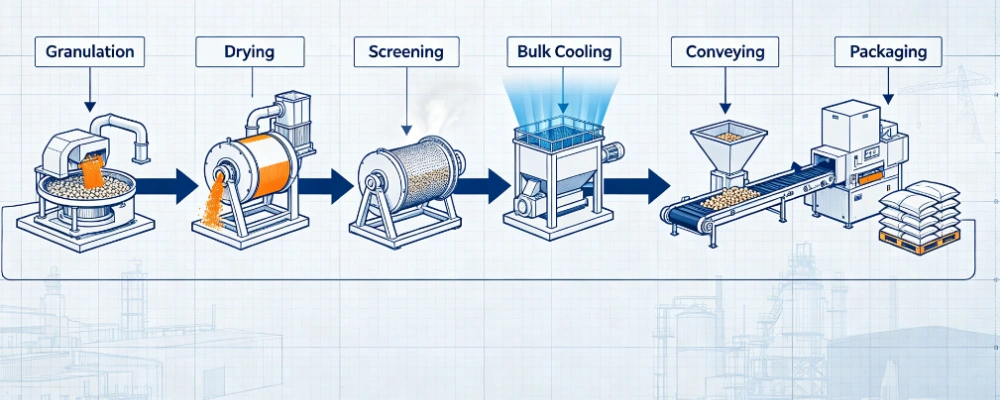
A typical line looks like this: Granulation → Drying → Screening → Bulk Solid Cooling → Conveying → Packing. The dryer and cooler work together, but they do different jobs.
This is why we never recommend choosing a cooler without examining the dryer and the material coming from it. A customer may say “30 tons per hour,” but that tells us little about the Bulk Solid Cooling requirement.
We need feed temperature, moisture, particle size, target outlet temperature, and whether the product goes to packing or bulk storage. These details are the foundation of any sound cooling system design.
How Does a Rotary Cooler Perform Bulk Solid Cooling?
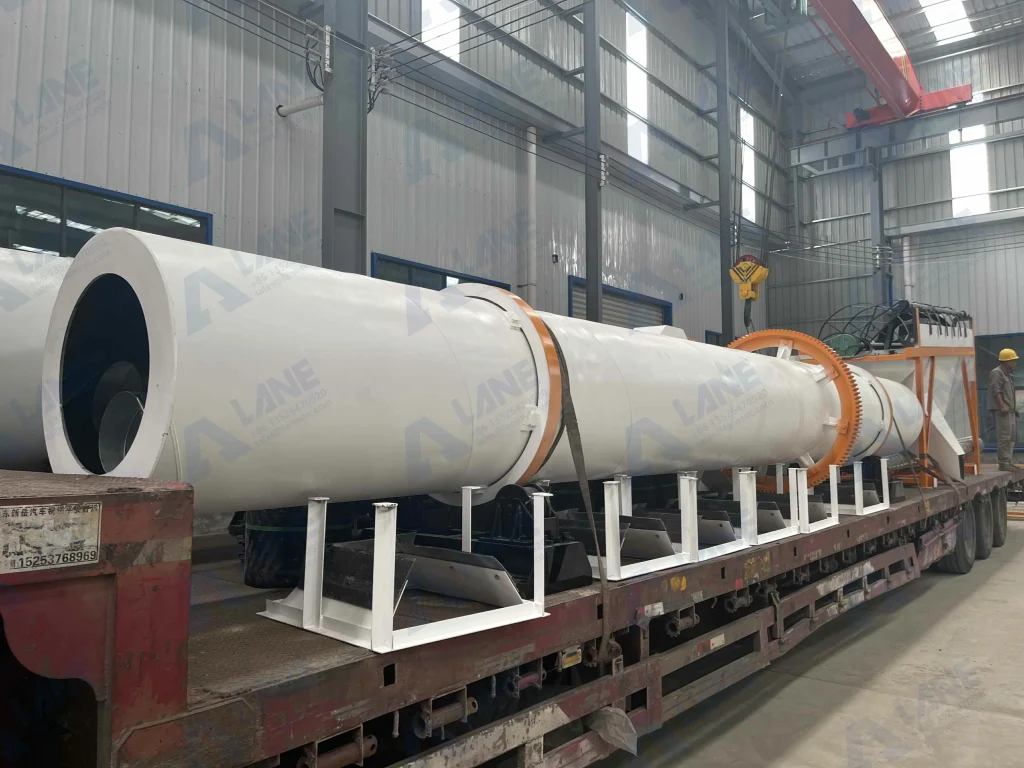
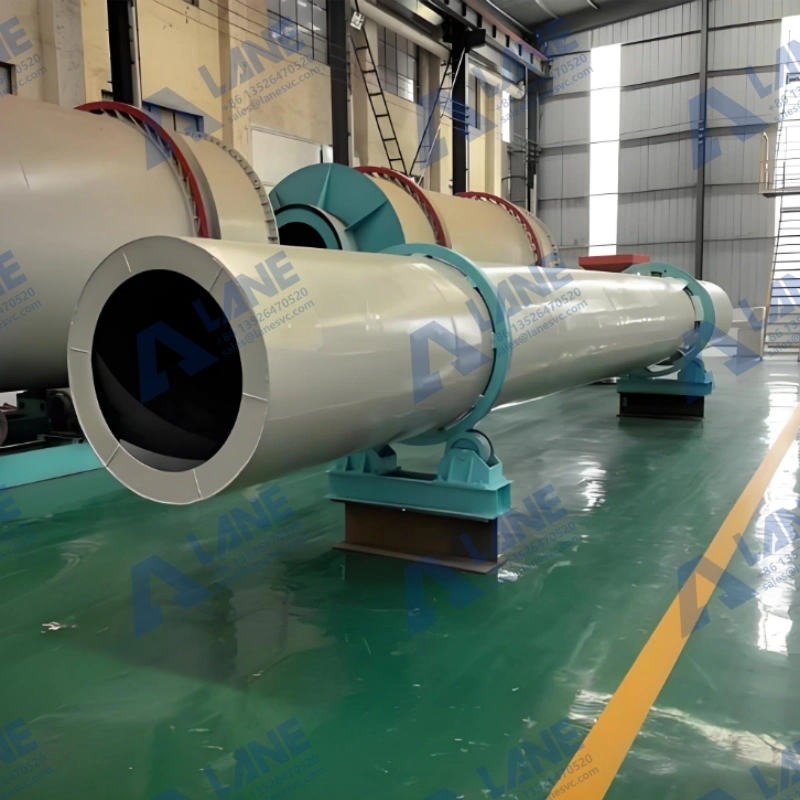
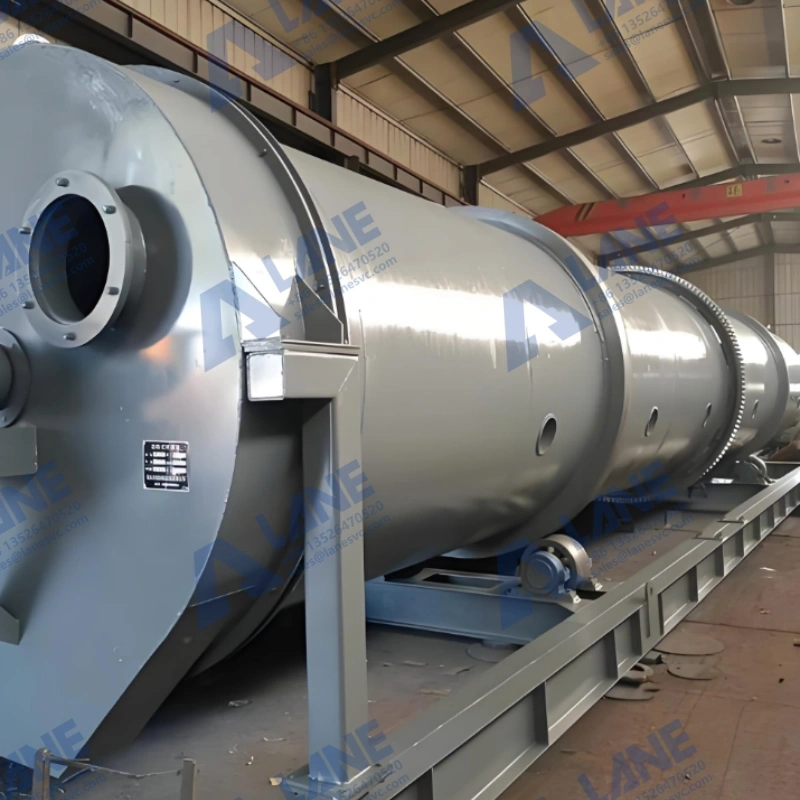
The working principle of a rotary cooler for Bulk Solid Cooling is straightforward. Hot solids enter the rotating drum. Flights lift the material and let it fall through the air, creating repeated contact with cooling air.
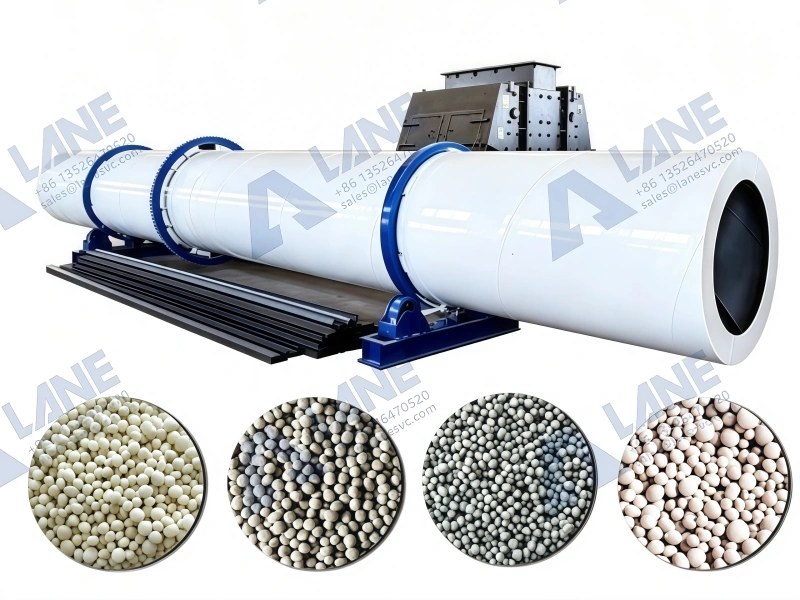
This continuous movement makes rotary equipment ideal for large-scale Bulk Solid Cooling. LANE offers a range of rotary coolers engineered specifically for continuous cooling applications, including fertilizers and materials discharged from dryers or kilns.
In a continuous fertilizer plant, cooling handles many tons per hour—not small batches—which changes the equipment requirements entirely.
> The Role of the Rotary Drum in Bulk Solid Cooling
Inside the drum, flights are critical for effective cooling. They create a cascading curtain that increases particle-air contact. Drum diameter, length, speed, flight design, and filling level all influence cooling effectiveness.
That is why a rotary cooler should be designed around the actual material, not a standard size chart.
LANE provides models ranging from LARC0808 (1-2 TPH) to LARC3028 (45-50 TPH), allowing customers to match the equipment to their specific cooling needs.
What Materials Can Be Handled by Bulk Solid Cooling?
Bulk Solid Cooling covers far more than fertilizer:
minerals, soil amendments, chemicals, animal feed, and biomass. For fertilizer, common materials include urea, NPK, DAP, MAP, ammonium sulfate, potash, phosphates, and organic granules.
But each behaves differently during cooling. Density, particle size, moisture, temperature, and flowability all affect the cooling system design. That is why two customers with the same capacity may need different cooling configurations.

What Determines Bulk Solid Cooling Efficiency?
This is where real engineering begins. A cooler may look adequate on paper but fail in practice if cooling conditions are wrong. Several key factors influence the efficiency of Bulk Solid Cooling.
> Inlet Material Temperature
If granules enter cooling at 70°C versus 45°C, the heat removal requirement is very different.
> Desired Discharge Temperature
There is no universal target—some fertilizers aim for 45–50°C after cooling for stable storage. This target must be defined before sizing cooling equipment.
> Material Moisture
Moisture changes cooling behavior. Hygroscopic fertilizers need careful attention to condensation, because uncontrolled moisture interferes with the process and promotes caking.
> Particle Size and Bulk Density
Different sizes and densities cool at different rates. Particle size distribution affects surface area for heat transfer. So “fertilizer” is not enough—we must know which fertilizer for proper cooling design.
Why Is Uniform Cooling Important in Bulk Solid Cooling?
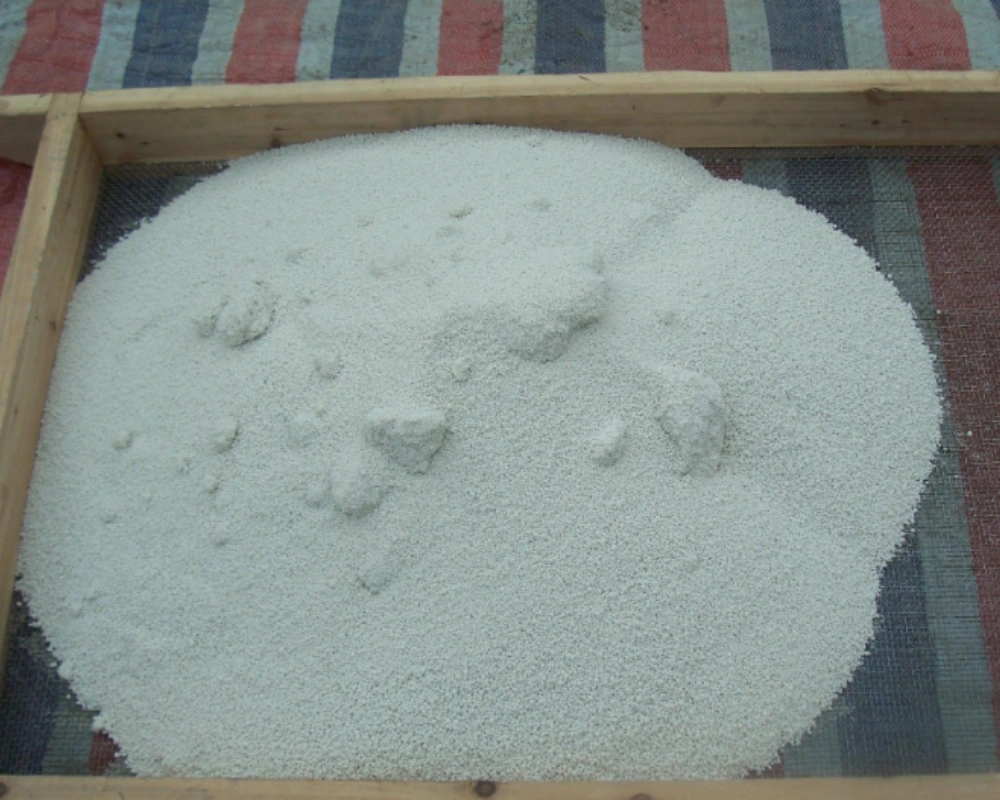
Average temperature is not enough—uniformity matters in Bulk Solid Cooling. If some granules leave at 42°C and others at 60°C, the product is unstable. Uneven cooling can cause moisture migration and caking. Insufficient or uneven cooling contributes to crystal bridging. Good cooling delivers a consistent product condition.
How Can Bulk Solid Cooling Reduce Caking?
Caking is a major concern, and Bulk Solid Cooling helps address it. While it does not solve every caking problem, proper cooling reduces one key driver: temperature-induced moisture movement. For hygroscopic fertilizers, this is even more critical. We always tell customers that cooling must work with the dryer, screen, coating, and storage—improving one machine rarely fixes the whole issue.
> What Cooling Method Is Suitable for Bulk Solid Cooling?
Rotary coolers, fluid bed coolers, and indirect systems all have their place in Bulk Solid Cooling.
Fluid beds offer strong heat transfer; indirect systems use water-cooled surfaces; rotary coolers excel in large-capacity applications. The right choice depends on material, capacity, and downstream needs.
We never say “rotary is always best”—that is poor engineering. Instead, we ask: what material, at what capacity, from what temperature to what temperature, and what happens after cooling?
> When Does a Rotary Cooler Make Sense for Bulk Solid Cooling?
Rotary coolers are common in large bulk solids plants because they are robust, handle continuous operation, and tolerate feedstock variation—all valuable traits for Bulk Solid Cooling.
A rotary cooler is worth considering when capacity is high, material is free-flowing, operation is continuous, and the plant already uses rotary equipment. But the final choice always depends on the material—the golden rule of cooling system design.
LANE’s rotary coolers are built with this principle in mind, offering robust construction and reliable performance for demanding cooling environments.
> What Information Is Needed to Select a Rotary Cooler for Bulk Solid Cooling?
For proper cooling design, we need: material name, capacity (TPH), inlet temperature, target outlet temperature, moisture, particle size, bulk density, flow characteristics, ambient conditions, space, cooling air data, and dust collection needs.
A customer may say “20 TPH NPK”—that is a starting point, not a spec. We still need the actual temperatures, moisture, and downstream handling details to design effective cooling.
What Happens If Bulk Solid Cooling Is Not Properly Controlled?
Problems show up downstream: hot product, uneven cooling, excess dust, packing issues, or storage difficulties.
Often the cooler itself is fine—but cooling fails because feed temperature or throughput changed. If production increases, the cooling load changes. If inlet temperature rises, the system must remove more heat. If ambient air warms, cooling performance drops. That is why we always examine the whole process, not just the machine.
> How Does a Rotary Cooler Fit Into a Fertilizer Line for Bulk Solid Cooling?
A typical line is: Raw Material → Crushing → Mixing → Granulation → Drying → Screening → Bulk Solid Cooling → Conveying → Packing.
The cooler must match upstream and downstream equipment. If the screen changes the feed, cooling sees a different load. If the dryer runs hotter, cooling must remove more heat. If packing requires lower temperature, cooling must achieve it. We always design cooling as part of a balanced production line.
LANE offers integrated solutions that cover mixing, granulation, drying, cooling, screening, and packaging, ensuring each stage supports the next.
> What About Dust During Bulk Solid Cooling?
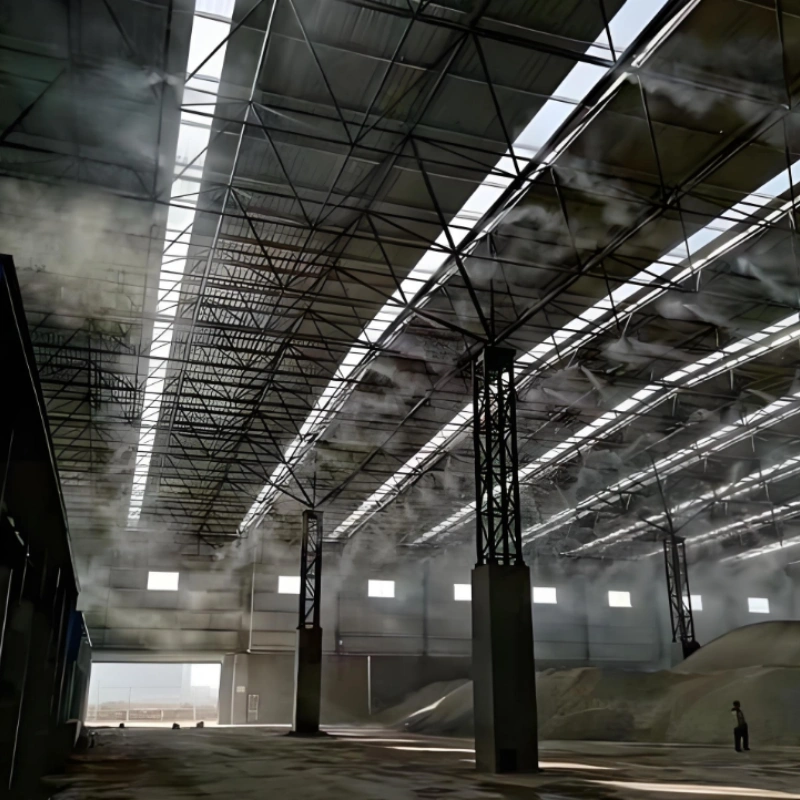
Dust is a practical concern in Bulk Solid Cooling. Dry granules falling through air can generate fines. The amount depends on product, particle size, drum design, and airflow.
A cooling system may need dust collection. But more air does not mean better cooling—air temperature, volume, heat transfer, and dust behavior must be balanced. A well-designed system removes heat without creating plant-wide issues.
> How Do We Approach a Bulk Solid Cooling Project?
We start with the material and production target.
First, understand the product. Then define incoming and outgoing conditions for cooling. Only then do we discuss equipment dimensions. This sequence saves time and prevents guesswork.
For standard fertilizers, existing data suffices for cooling design. For new materials, testing gives confidence in the solution.
LANE’s engineering team works closely with customers throughout this process, from initial consultation to after-sales support, with all equipment certified to ISO and CE standards and backed by a 5-year warranty.
FAQ About Bulk Solid Cooling
> What Is Bulk Solid Cooling?
Bulk Solid Cooling is the process of reducing the temperature of granular materials after drying, calcination, or other thermal treatment. In fertilizer production, it is used after drying and screening, before packaging or storage.
> Why Do Fertilizer Granules Need Bulk Solid Cooling After Drying?
Drying removes moisture, but product remains hot. Bulk Solid Cooling brings granules to a suitable temperature for conveying, packing, and storage, and helps reduce caking.
> Can a Rotary Cooler Handle Different Fertilizer Materials?
Yes. Rotary coolers can handle many materials, including potash, phosphates, NPK, and organics. The specific design depends on material properties.
> What Is the Difference Between a Rotary Cooler and a Dryer?
A dryer removes moisture; a cooler removes heat. In many lines, they work sequentially within the cooling process.
> What Temperature Should Fertilizer Reach After Bulk Solid Cooling?
There is no single number. It depends on product, storage, packaging, and ambient conditions—some aim for 45–50°C for stable storage.
> Is a Rotary Cooler Always the Best Choice?
No. Fluid bed and indirect coolers can also be suitable. The choice depends on throughput, material, dust, space, and energy considerations.
> What Information Should I Provide for Cooling Equipment?
Provide material type, capacity, inlet and outlet temperatures, moisture, particle size, bulk density, and operating conditions. With these, we can size equipment properly.
A Practical Way to Look at Bulk Solid Cooling
Bulk Solid Cooling is not just the last machine—it is where hot product is prepared for downstream conditions.
If product goes to packing, temperature must suit the equipment. If it goes to storage, it must remain stable—thanks to effective cooling. If it goes through conveyors, excess heat causes problems—which cooling prevents.
We look at the complete process: dryer removes moisture, screen delivers the right fraction, cooling removes heat, and conveyors handle the cooled product. A rotary cooler is simple, but simple does not mean guesswork.
Give us the material, capacity, inlet temperature, moisture, particle size, and target outlet—and we can design reliable cooling. With decades of experience and a 10,000-square-meter manufacturing facility, LANE delivers end-to-end Bulk Solid Cooling solutions that customers can trust.